Vermont Letter from Landlord to Tenant as Notice to remove unauthorized inhabitants
What is this form?
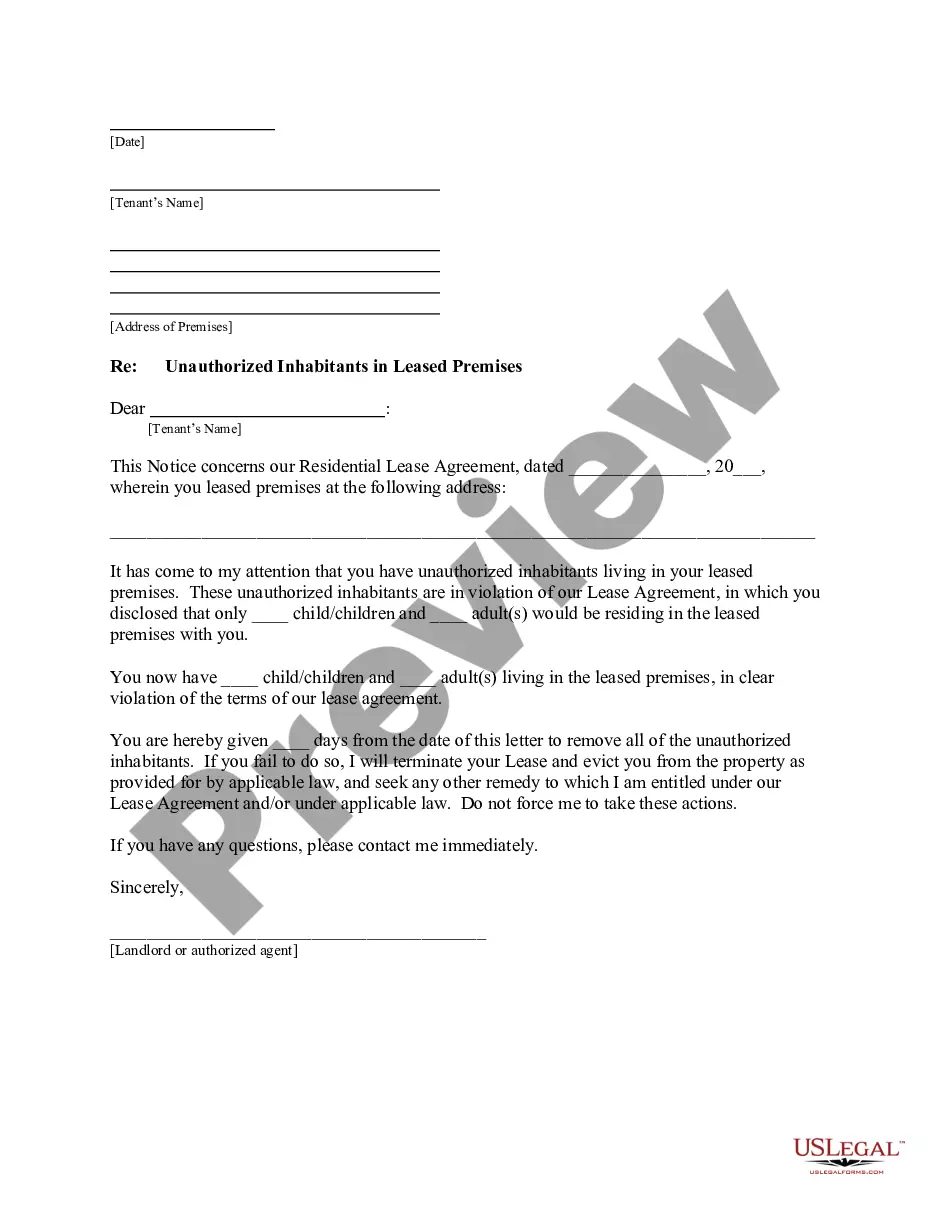
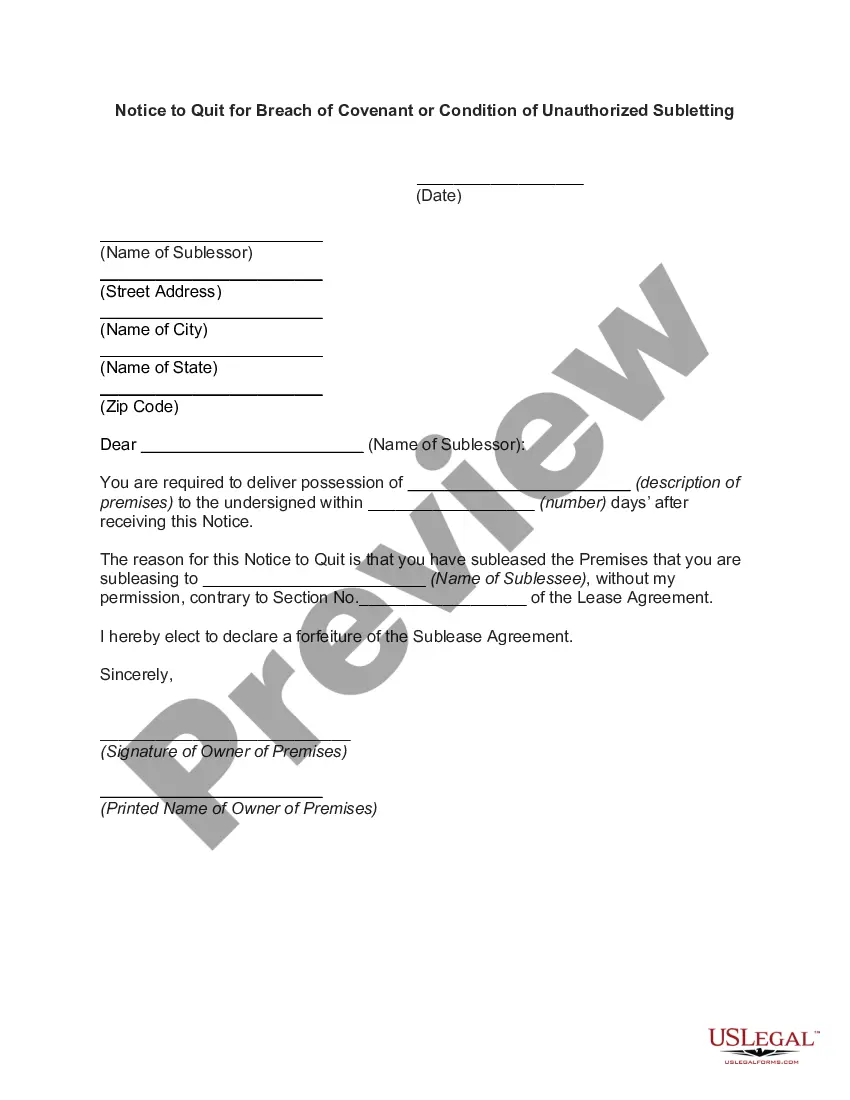
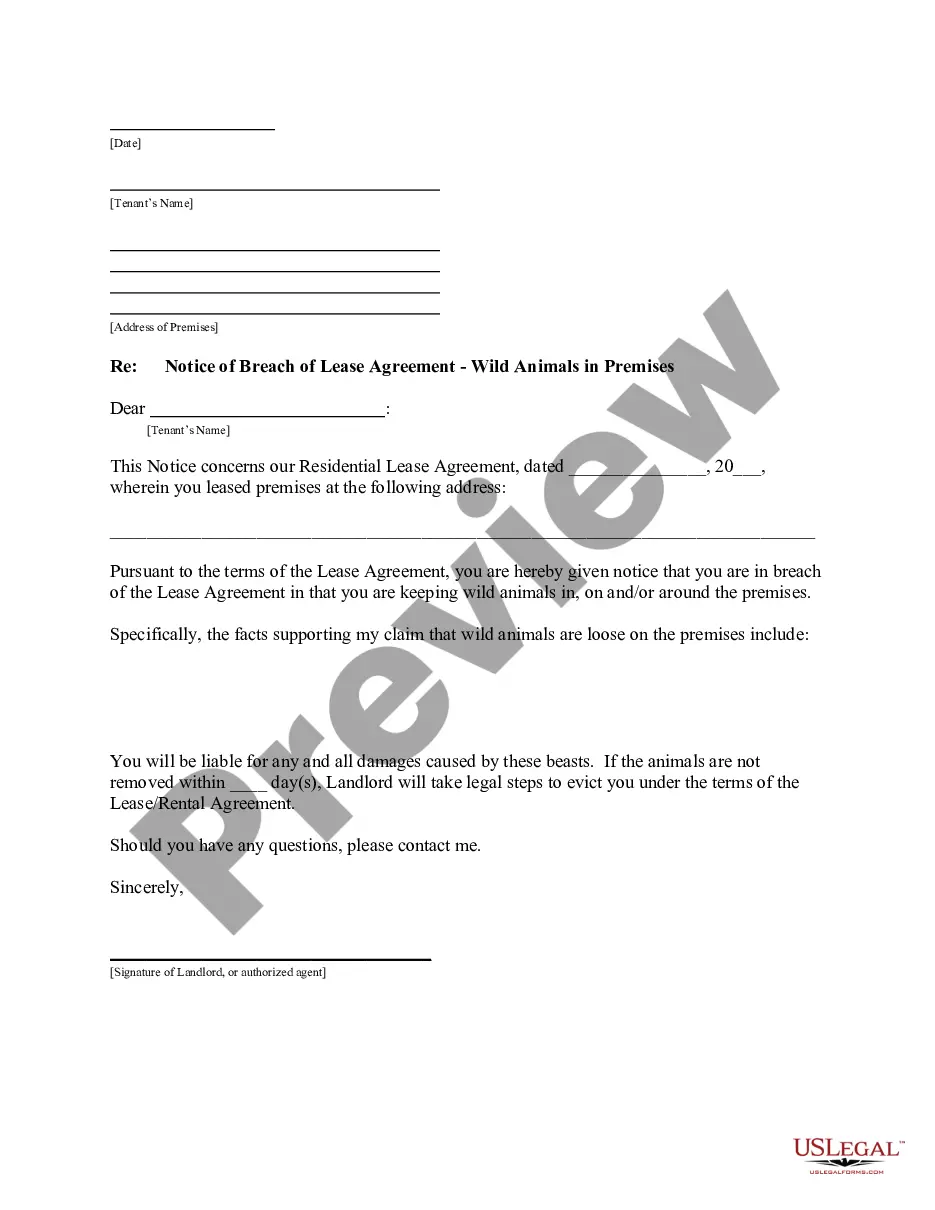
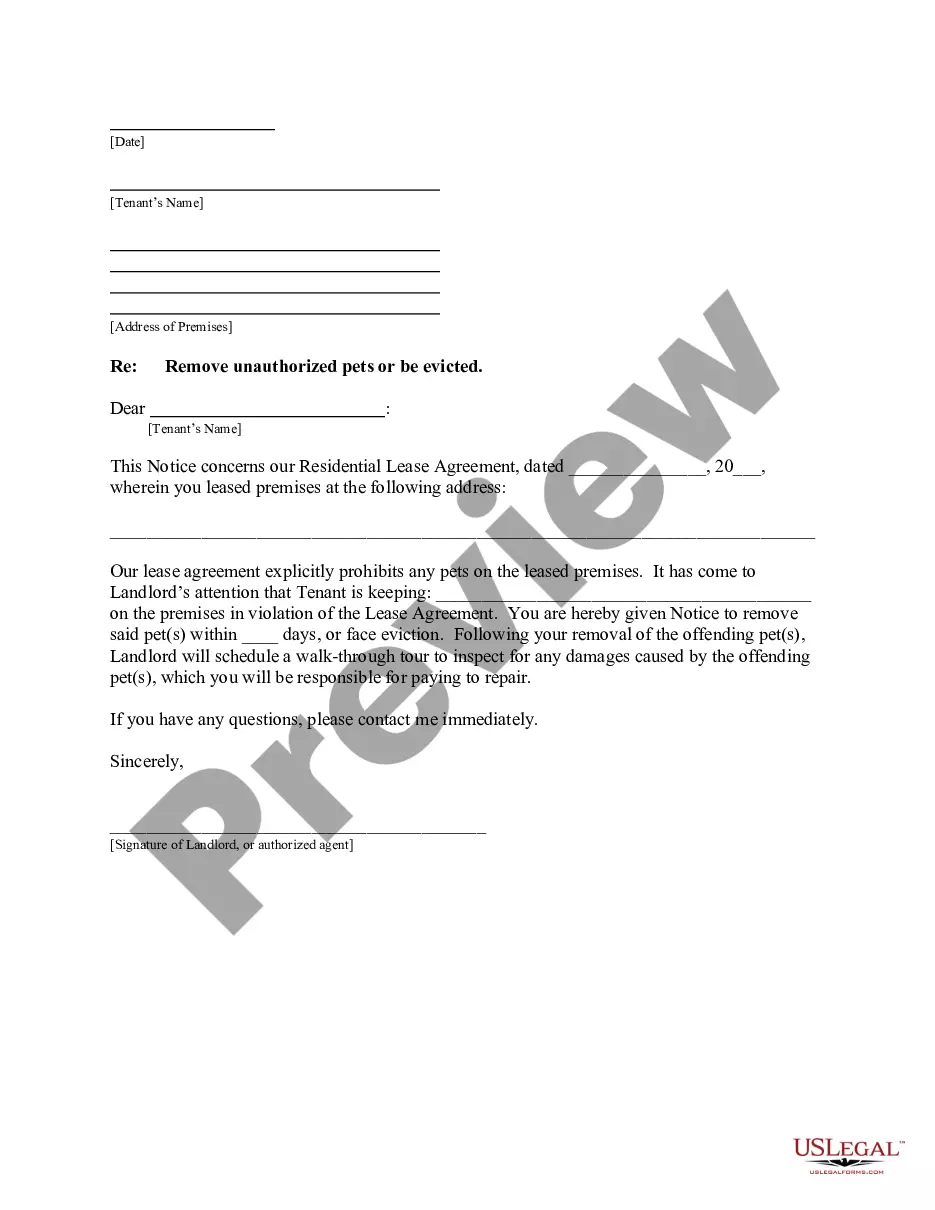
This "Letter from Landlord to Tenant as Notice to Remove Unauthorized Inhabitants" is a legal notice used by landlords to inform tenants of unauthorized individuals residing in a rental property. The purpose of this form is to formally request the removal of these inhabitants, which is essential for maintaining the integrity of the lease agreement. This form serves an important role in protecting landlords' rights, distinct from other notices like eviction notices, as it focuses specifically on unauthorized residents rather than termination of the lease itself.
Key parts of this document
- Date of the Residential Lease Agreement
- Tenant's information including address of the property
- Details of unauthorized inhabitants
- Specific disclosure of the allowed number of residents
- Deadline for the removal of unauthorized inhabitants
- Consequences for non-compliance, including potential eviction
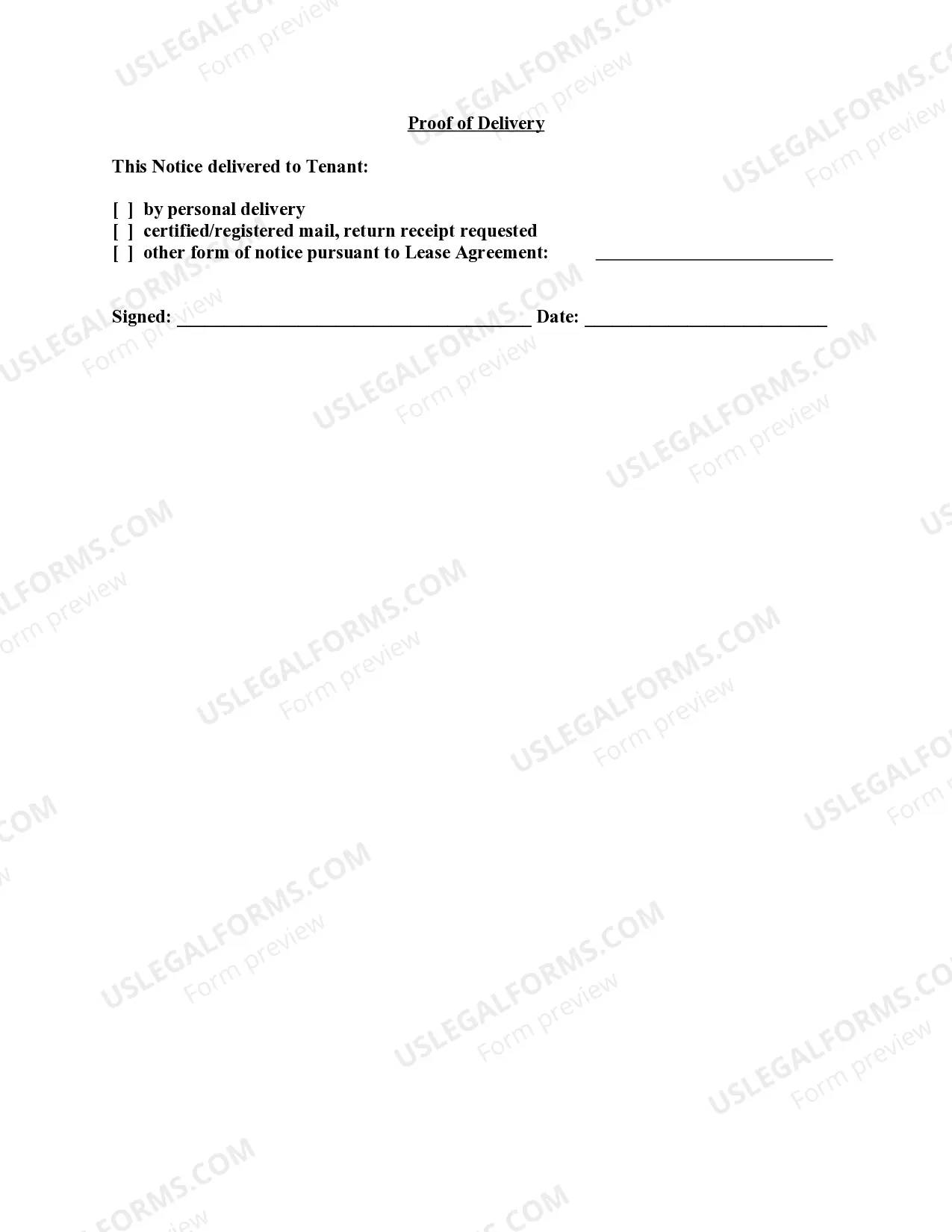
- Landlord's signature and proof of delivery method

When to use this form
Who can use this document
- Landlords who have tenants under a lease agreement
- Property managers acting on behalf of the property owner
- Real estate professionals dealing with rental properties
- Tenants wanting to understand their landlords' rights regarding unauthorized inhabitants
Steps to complete this form
- Enter the date of the Residential Lease Agreement.
- Fill in the tenantâs name and the address of the property being rented.
- Specify the current number of unauthorized inhabitants living on the premises.
- Indicate the number of residents that were originally disclosed in the lease agreement.
- Set a deadline for the unauthorized inhabitants to vacate.
- Sign the letter and include the method of delivery.
Is notarization required?
This form does not typically require notarization unless specified by local law. Ensure that you follow any additional legal requirements in your jurisdiction to safeguard the enforceability of the notice.
Get your form ready online
Our built-in tools help you complete, sign, share, and store your documents in one place.
Make edits, fill in missing information, and update formatting in US Legal Forms—just like you would in MS Word.
Download a copy, print it, send it by email, or mail it via USPS—whatever works best for your next step.
Sign and collect signatures with our SignNow integration. Send to multiple recipients, set reminders, and more. Go Premium to unlock E-Sign.
If this form requires notarization, complete it online through a secure video call—no need to meet a notary in person or wait for an appointment.
We protect your documents and personal data by following strict security and privacy standards.

Make edits, fill in missing information, and update formatting in US Legal Forms—just like you would in MS Word.

Download a copy, print it, send it by email, or mail it via USPS—whatever works best for your next step.

Sign and collect signatures with our SignNow integration. Send to multiple recipients, set reminders, and more. Go Premium to unlock E-Sign.

If this form requires notarization, complete it online through a secure video call—no need to meet a notary in person or wait for an appointment.

We protect your documents and personal data by following strict security and privacy standards.
Typical mistakes to avoid
- Failing to accurately identify the unauthorized inhabitants.
- Not providing a reasonable timeline for compliance.
- Neglecting to keep a copy of the notice for records.
- Using unclear language that could lead to misunderstandings.
Benefits of completing this form online
- Convenience of immediate access and downloading.
- Easy customization to fit specific circumstances.
- Reliability of using professionally drafted templates.
- Time-saving compared to creating a document from scratch.
- Clear instructions simplify the completion process.
Legal use & context
- This notice serves as a formal communication regarding lease violations.
- It provides a clear framework for landlords to follow before taking eviction actions.
- Compliance with this notice can prevent legal disputes and minimize the need for further action.
What to keep in mind
- Use this form to formally request removal of unauthorized inhabitants.
- Ensure you provide a specific timeframe for compliance.
- Be aware of your stateâs requirements regarding lease violations.
- This notice helps protect your rights as a landlord.
Looking for another form?



Form popularity
FAQ
Unconditional quit notices are used to order the tenant to leave the premises without the chance to remedy the situation. This is used for a serious breach of the lease agreement or chronic late rent payment.
To start a case, you must file a complaint with the court. In that complaint, you can ask for an eviction order. You must file your complaint no more than 60 days after the end date listed in your notice to the tenant. You will be the plaintiff and the tenant will be the defendant.
Once a notice to quit expires, there is no longer a landlord and tenancy relationship. By law, even though he is no longer regarded as a tenant to the landlord, the tenant is still expected to pay the rent he owes to the landlord whether he has been given a notice to quit or not.
Send a 3-day notice to fix or quit. If the tenant doesn't follow through with a fix, visit your local courthouse and begin a filing for eviction. In some states, you can file to only evict the unauthorized tenant. In others, you'll have the option to evict your tenant as well as the unauthorized occupant.
Unfortunately that is not the case. Once a break notice has been served is cannot be unilaterally withdrawn. Even if both parties agree that the notice is withdrawn, service of the notice terminates the existing lease and creates a new tenancy by implication. There are a number of consequences that flow from this.
An eviction notice must state a reason why you are being evicted, otherwise it is invalid.For tenants who lived in the property for more than 12 months, the landlord must provide at least 60 days prior notice to vacate, under California Civil Code 1946.
The landlord should always provide a minimum of two months between the dates. If the tenancy runs on a weekly basis there must be a notice period of eight weeks. It will be valid for 12 months from the end date. When they expire, the landlord must serve a new section 21, before they go to court.
Unfortunately that is not the case. Once a break notice has been served is cannot be unilaterally withdrawn. Even if both parties agree that the notice is withdrawn, service of the notice terminates the existing lease and creates a new tenancy by implication. There are a number of consequences that flow from this.