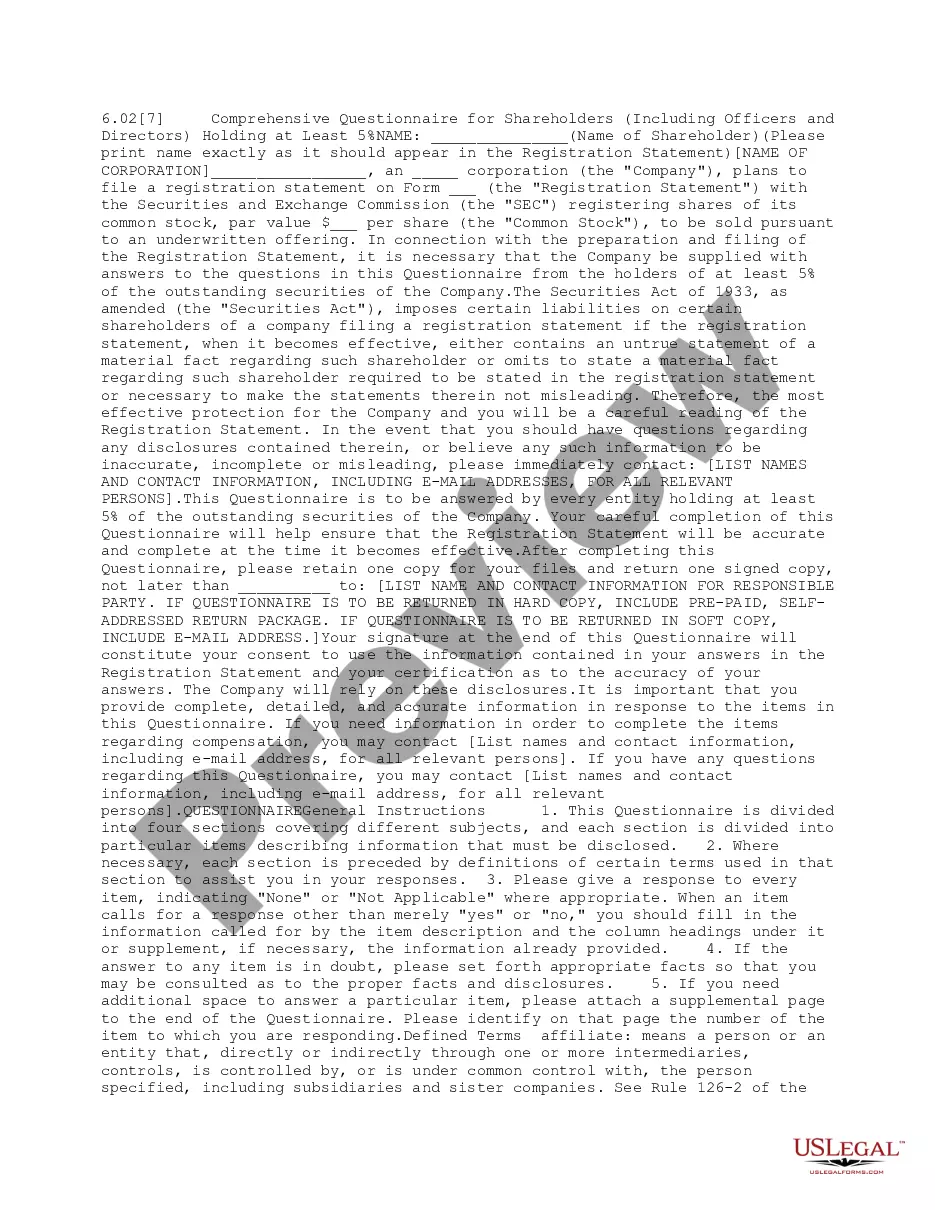
Vermont Letter from Landlord to Tenant as Notice to remove Wild Animals in Premises
About this form
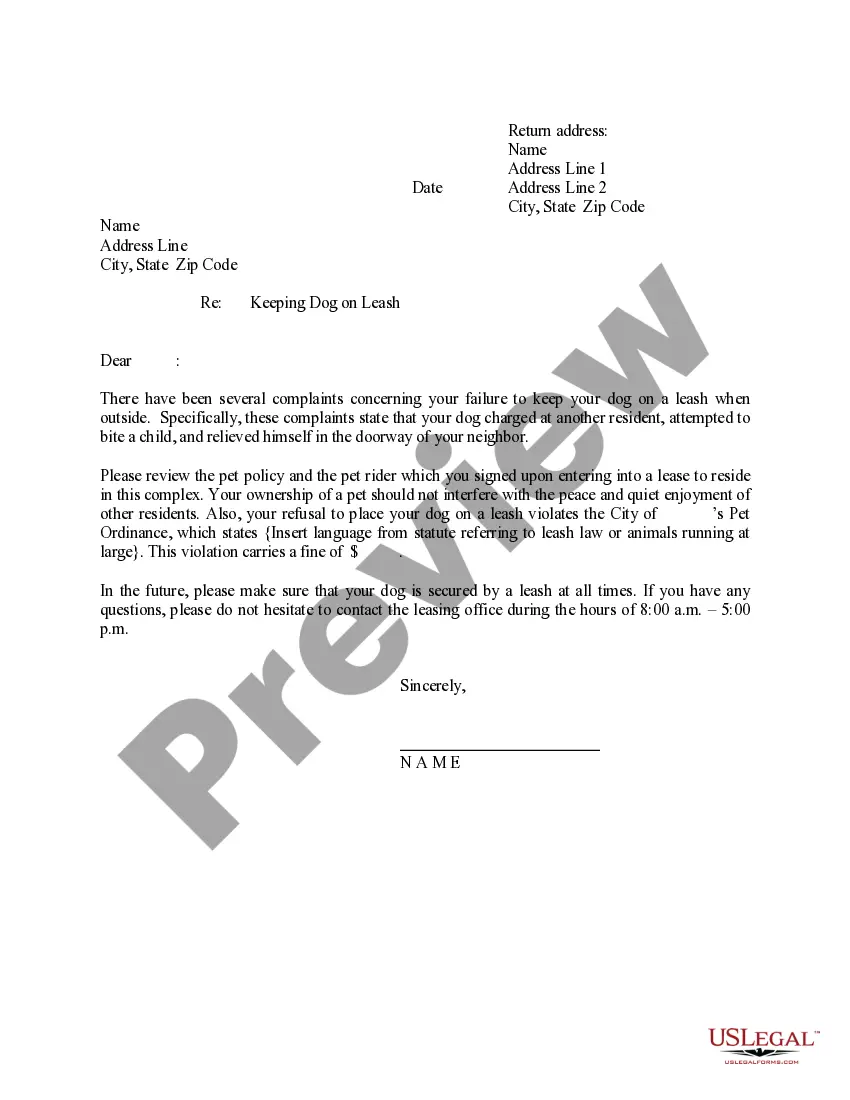
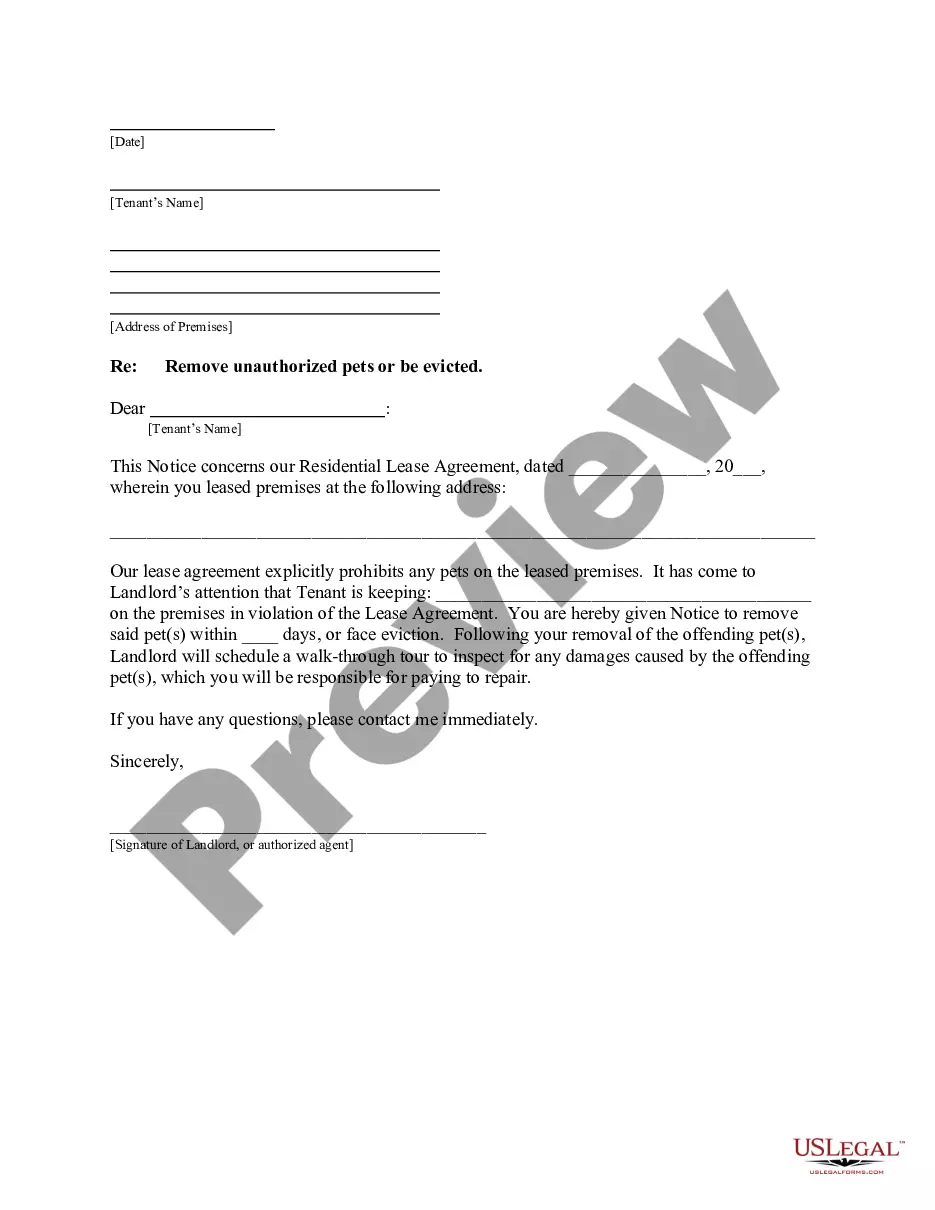
This form, known as the Letter from Landlord to Tenant as Notice to Remove Wild Animals in Premises, is used by landlords to formally notify tenants of a breach in the lease agreement due to the presence of wild animals. This document specifies the terms violated and outlines the landlord's concerns, distinguishing it from other types of eviction or lease violation notices. It aims to provide a clear communication channel for resolving the issue of unauthorized animals on the property.
Form components explained
- Identification of the parties involved: landlord and tenant.
- Statement of breach regarding keeping wild animals.
- Reference to specific terms of the lease agreement violated.
- Signature line for the landlord or authorized agent.
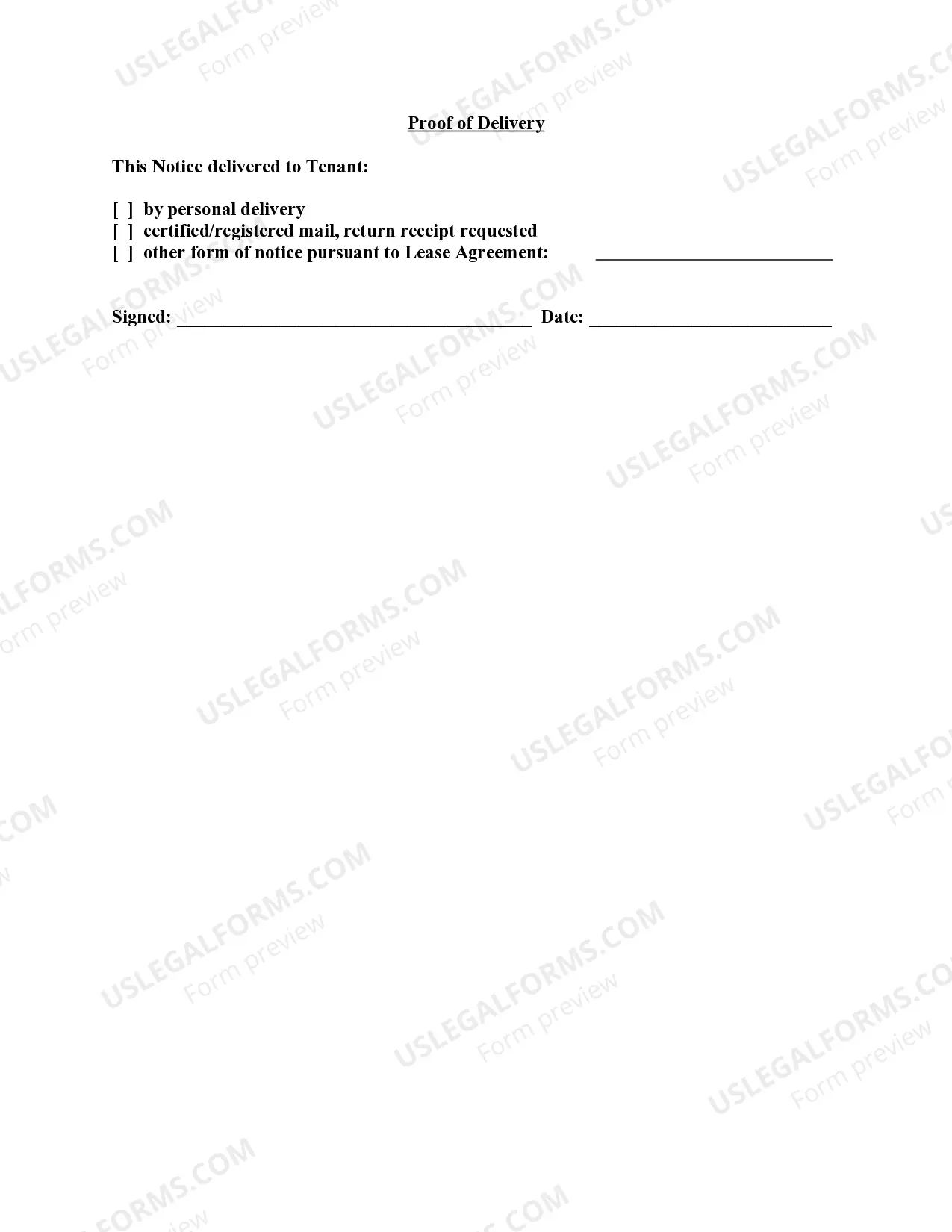
- Proof of delivery options, including personal delivery and mail methods.
Common use cases
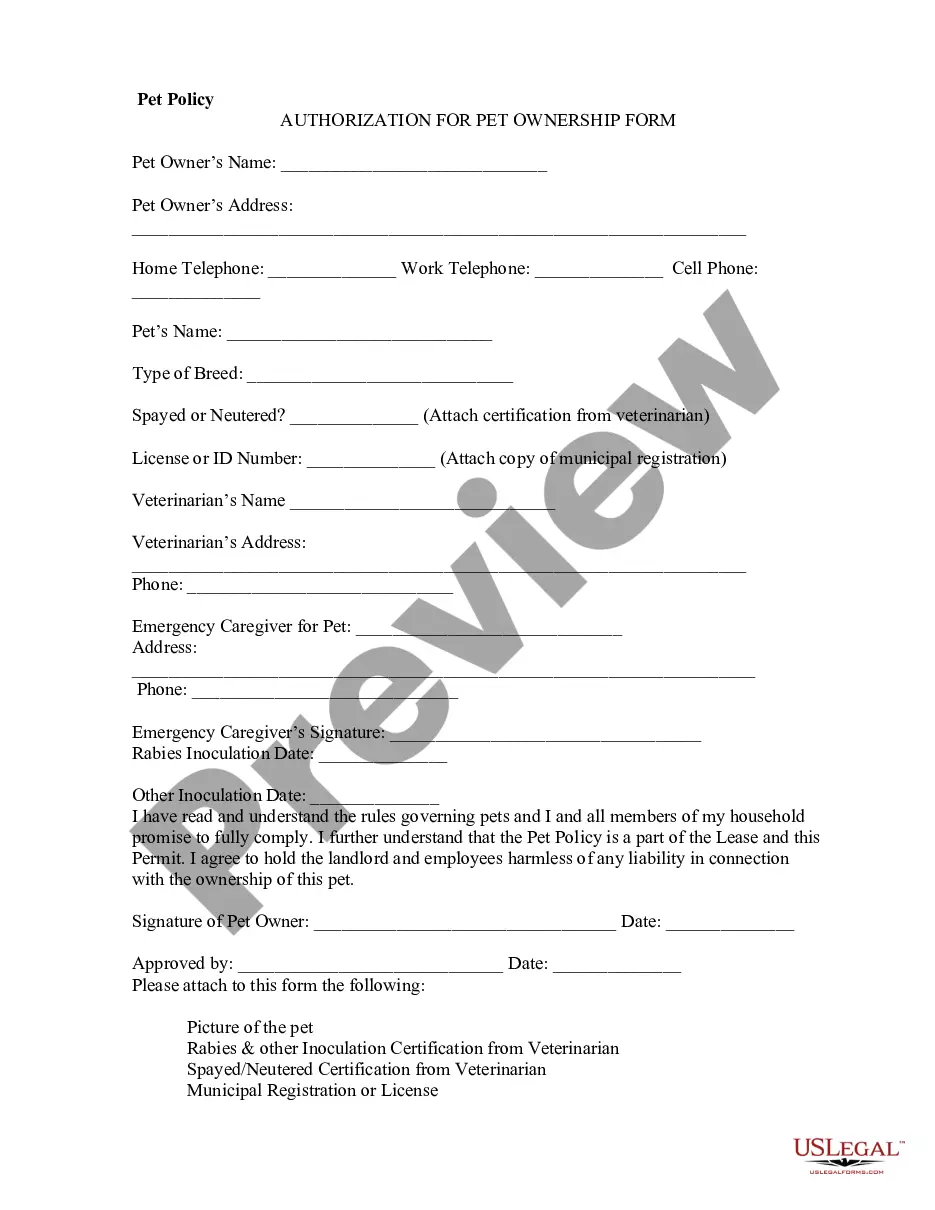
This form should be used when a landlord observes wild animals within or around the rental premises that breach the lease terms. Examples may include cases where tenants are keeping pets that are not allowed, or where wildlife is being improperly fed or maintained on the property, impacting safety and cleanliness.
Who needs this form
This document is intended for:
- Landlords who need to address lease violations with tenants.
- Property managers acting on behalf of a landlord.
- Tenants who need to understand their obligations under their lease.
Instructions for completing this form
- Identify the parties: Enter the landlord's and tenant's names.
- Specify the violation: Clearly mention the wild animals being kept.
- Reference the lease terms: Cite the specific clauses being violated.
- Sign the letter: The landlord or authorized agent must sign.
- Select proof of delivery: Choose how the notice will be delivered to the tenant.
Notarization requirements for this form
This form does not typically require notarization unless specified by local law.
Get your form ready online
Our built-in tools help you complete, sign, share, and store your documents in one place.
Make edits, fill in missing information, and update formatting in US Legal Forms—just like you would in MS Word.
Download a copy, print it, send it by email, or mail it via USPS—whatever works best for your next step.
Sign and collect signatures with our SignNow integration. Send to multiple recipients, set reminders, and more. Go Premium to unlock E-Sign.
If this form requires notarization, complete it online through a secure video call—no need to meet a notary in person or wait for an appointment.
We protect your documents and personal data by following strict security and privacy standards.

Make edits, fill in missing information, and update formatting in US Legal Forms—just like you would in MS Word.

Download a copy, print it, send it by email, or mail it via USPS—whatever works best for your next step.

Sign and collect signatures with our SignNow integration. Send to multiple recipients, set reminders, and more. Go Premium to unlock E-Sign.

If this form requires notarization, complete it online through a secure video call—no need to meet a notary in person or wait for an appointment.

We protect your documents and personal data by following strict security and privacy standards.
Mistakes to watch out for
- Failing to specify the terms of the lease that are violated.
- Not signing the document before delivery.
- Incorrectly addressing the tenant or using outdated contact information.
- Neglecting to provide proper proof of delivery.
Advantages of online completion
- Conveniently download and customize the form for your specific needs.
- Templates are reviewed by licensed attorneys to ensure legal compliance.
- Easy access from any device, allowing for quick modifications and printing.
- The notice serves as legal documentation of the breach.
- It is important for landlords to follow proper notice protocols to maintain enforceability.
- Failure to comply with local statutes regarding this notice could impact the landlord's rights.
Summary of main points
- The form is essential for landlords addressing unauthorized animals.
- Clear communication and documentation are key to resolving lease violations.
- Using a legally vetted form can protect landlords from future disputes.
Looking for another form?



Form popularity
FAQ
The term landlord refers to a person who owns property and allows another person to use it for a fee.The person using the property is called a tenant. The agreement between a landlord and a tenant is called a lease or rental agreement.
The process eviction literally can take anywhere between 14 days to 6-8 months, typically. I know, not the most useful answer! But the reality of how long an eviction will take is dependent on the circumstances; mostly what it boils down to is how wilful your tenant is.
Under Vermont state law if a landlord is terminating a tenancy for none of the reasons explained above or for no given reason (called a termination for no cause in legal language), and the tenant is renting by the month, the tenant is entitled to at least 60 days written notice, or 21 days written notice if renting
Notice to Tenants. Before an unlawful detainer lawsuit begins, the landlord must give the tenants a written notice. Tenants Don't Move. Tenant Response to the Lawsuit. Follow the Law.
TENANTS CAN BE EVICTED THROUGH A LEGAL COURT PROCCESS AT ANY TIME OF THE YEAR. THERE IS NO PROHIBITION ON WINTER EVICTIONS. BASIC RESPONSIBILITIES OF TENANTS UNDER VERMONT LAW 2022 Pay rent on time.
To start a case, you must file a complaint with the court. In that complaint, you can ask for an eviction order. You must file your complaint no more than 60 days after the end date listed in your notice to the tenant. You will be the plaintiff and the tenant will be the defendant.
In an eviction process for nonpayment of rent the landlord must begin by providing the tenant with a written termination notice giving the tenant at least 14 days to pay in full or to leave. The notice must specifically state how much rent is due.