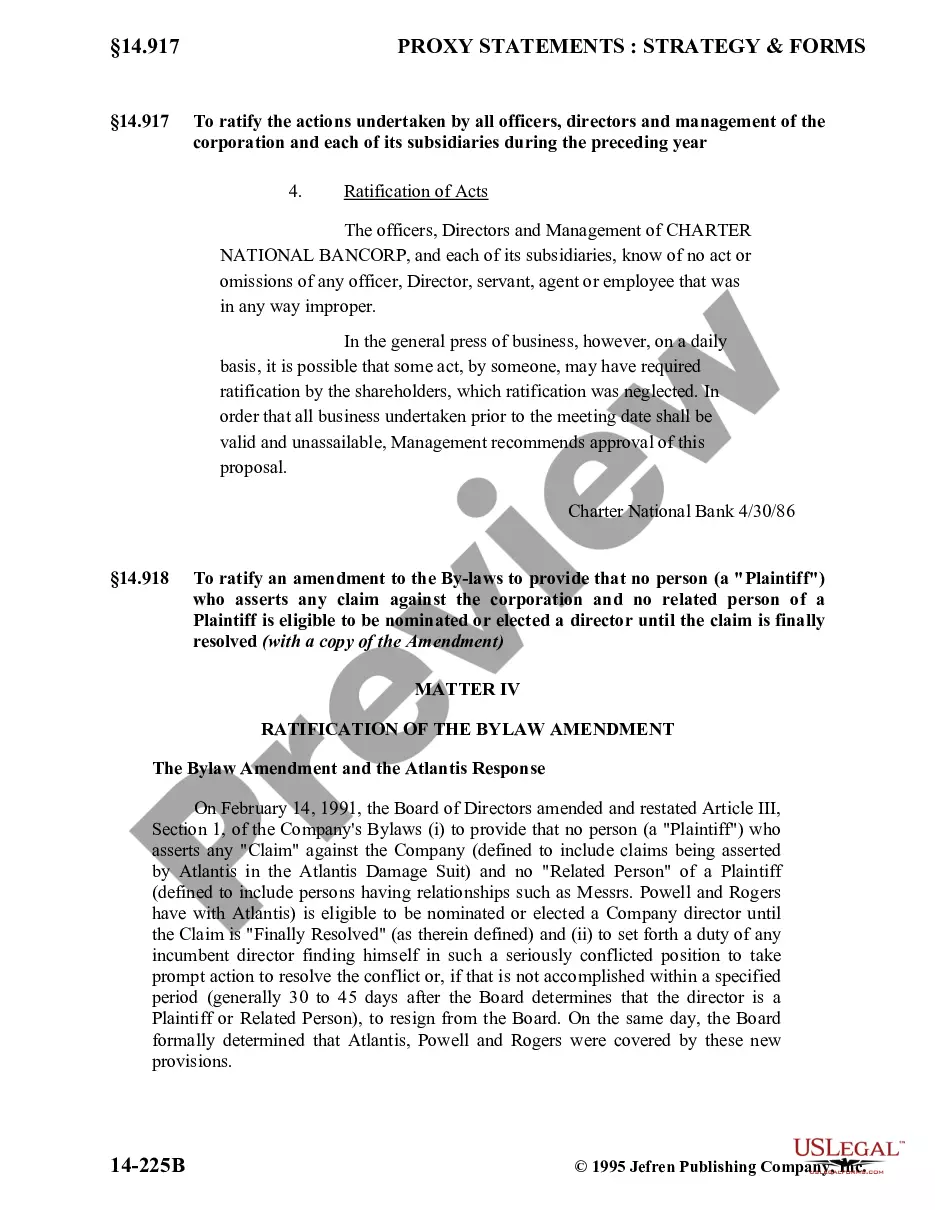
Vermont Bill of Sale of Automobile and Odometer Statement
What this document covers
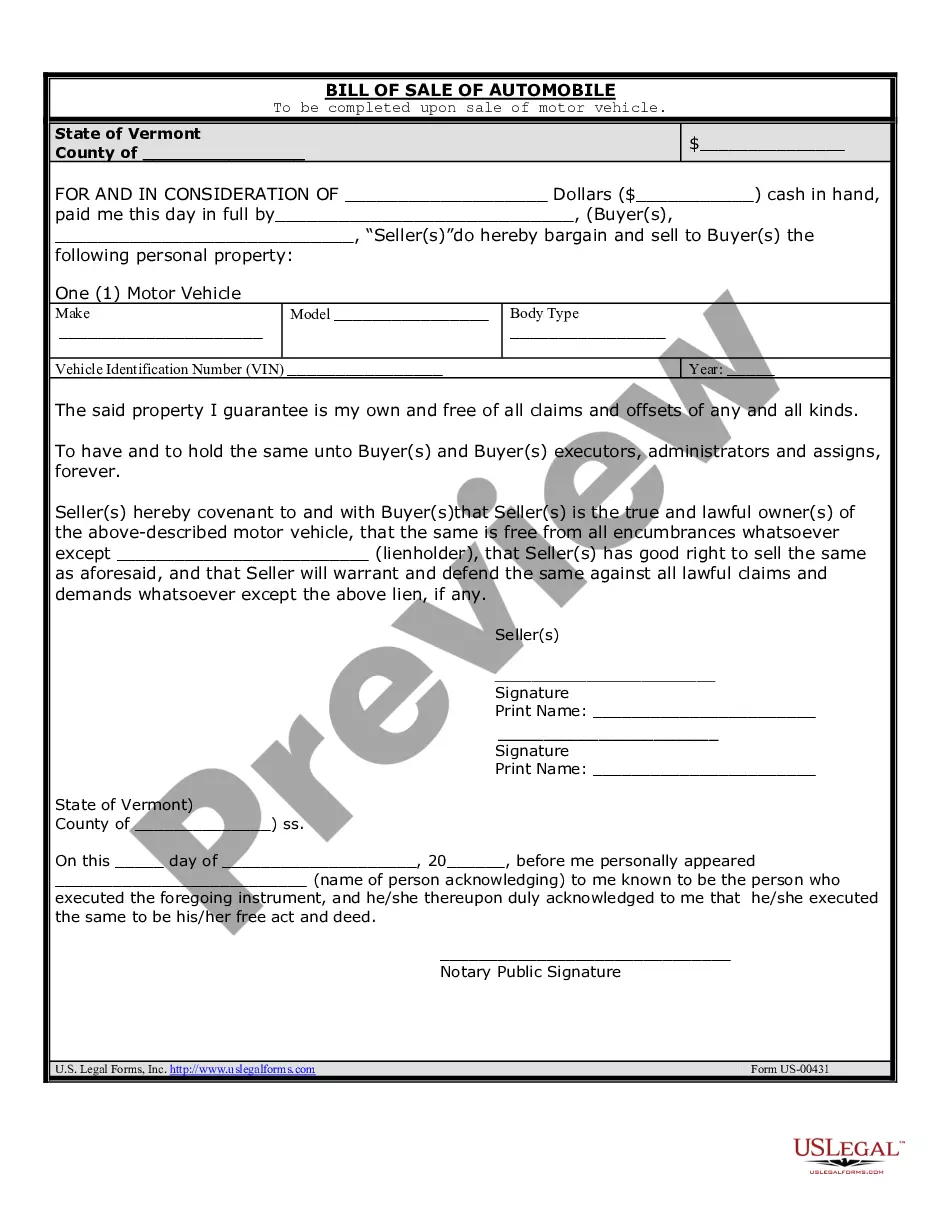
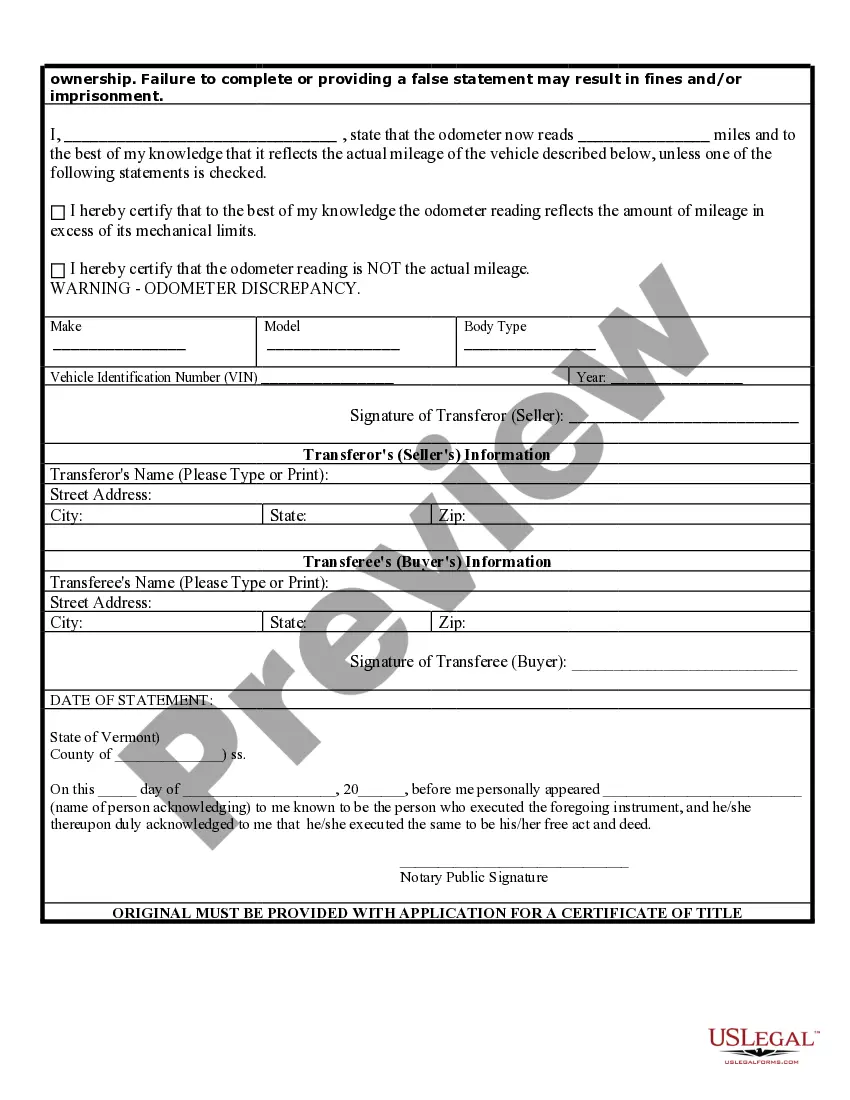
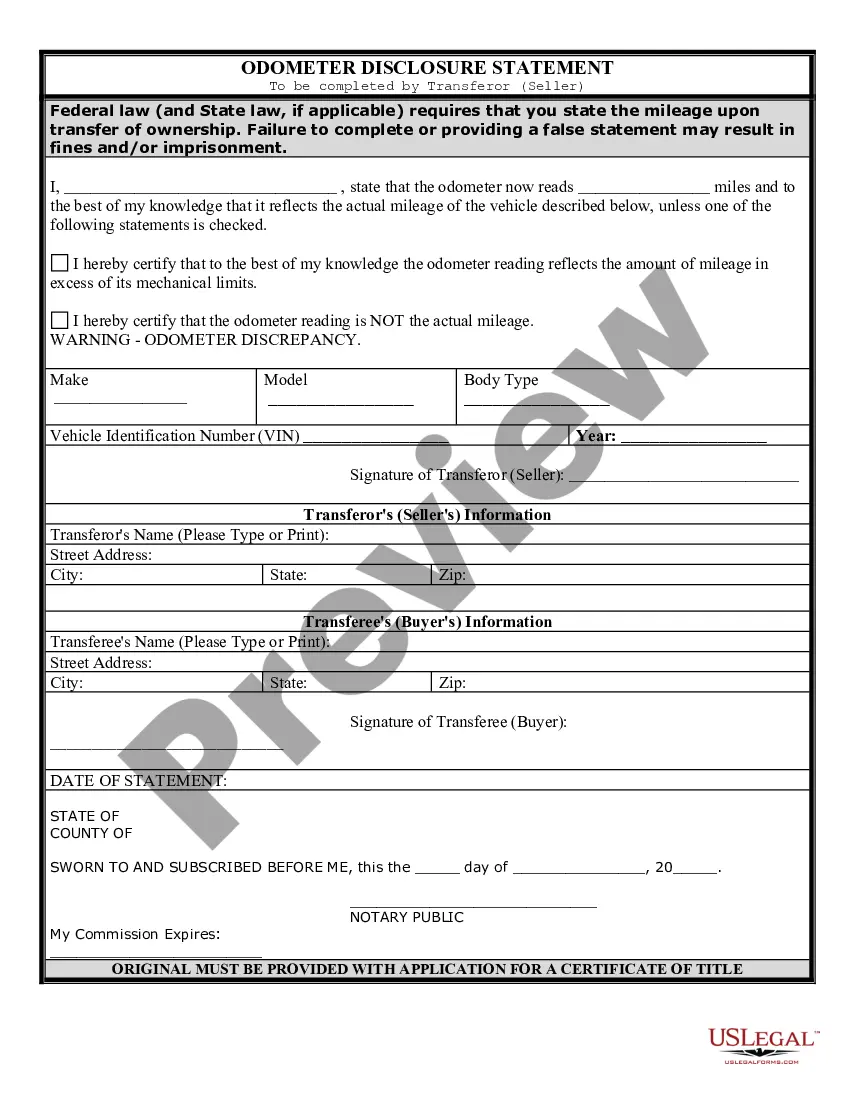
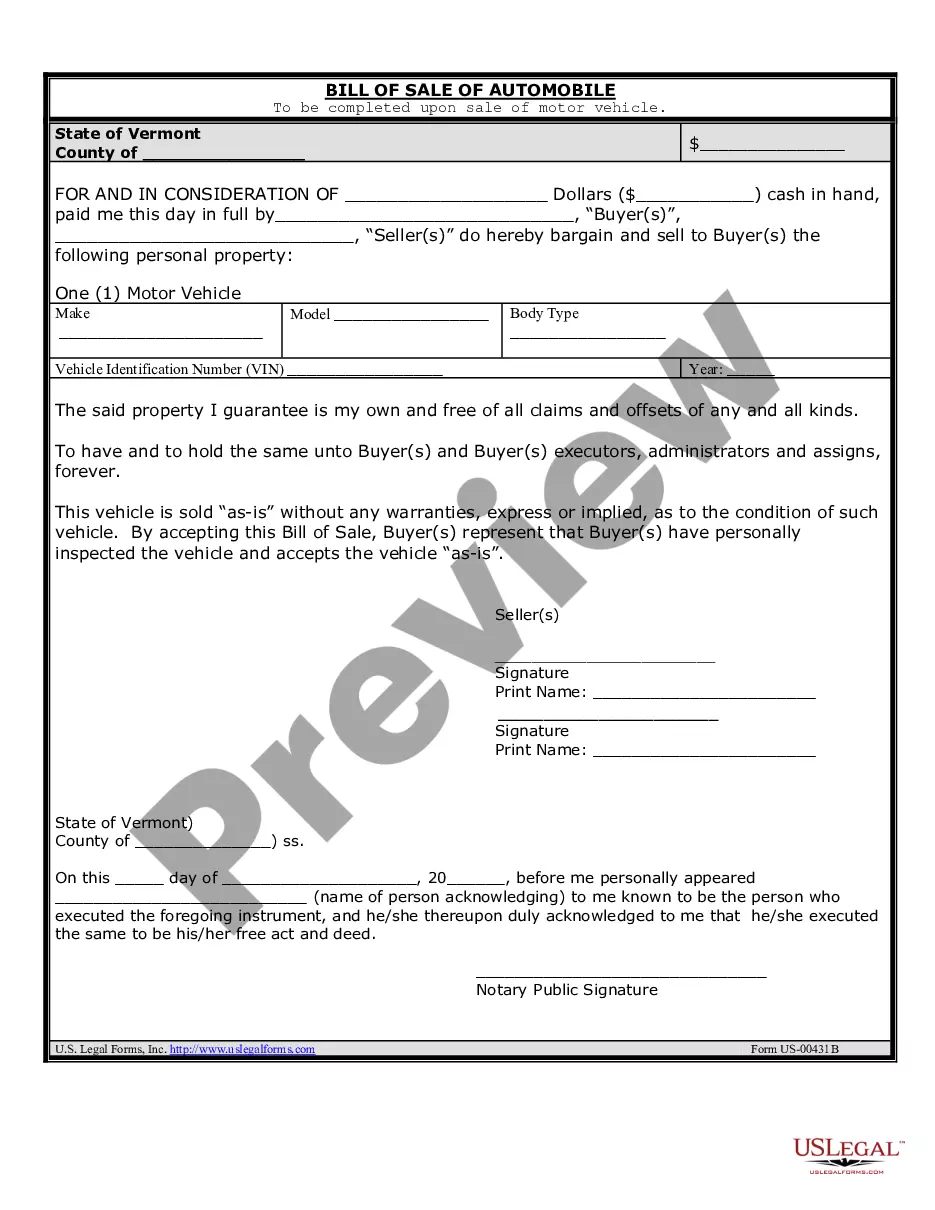
The Bill of Sale of Automobile is a legal document that facilitates the transfer of ownership of a motor vehicle from the seller to the buyer. It includes key details such as the vehicle's make, model, VIN, and the current odometer reading, ensuring both parties have a clear record of the transaction. This form not only confirms the sale but also provides the Odometer Disclosure Statement required by federal law, differentiating it from other simplified sale agreements.
Form components explained
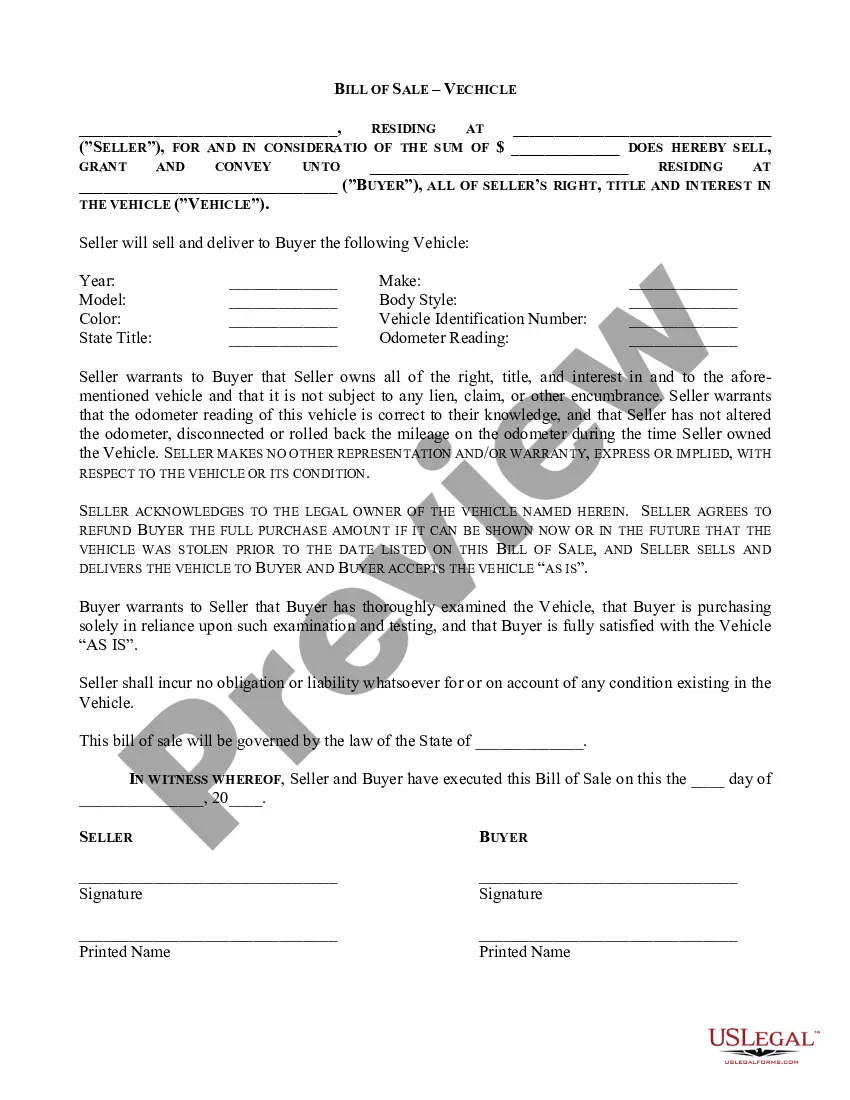
- Seller and buyer information, including names and signatures.
- Details of the motor vehicle, such as make, model, body type, year, and Vehicle Identification Number (VIN).
- Purchase price and payment confirmation.
- Seller's guarantees regarding ownership and free title.
- Odometer Disclosure Statement detailing mileage at the time of sale.
- Notary acknowledgment to validate the signatures.
When this form is needed
This form should be used when selling or buying an automobile. It is particularly important when a private sale occurs between parties, ensuring that all necessary information about the vehicle and transaction is documented. Use this Bill of Sale when the buyer and seller want to establish proof of sale for record-keeping, to apply for a new title, or for insurance purposes.
Who can use this document
This form is suitable for:
- Individual sellers and buyers engaged in a private vehicle sale.
- Dealers or businesses selling used vehicles to customers.
- Anyone needing to document the transfer of a motor vehicle for title and registration purposes.
How to complete this form
- Identify the parties involved by filling in the seller's and buyer's information.
- Specify the vehicle details, including make, model, body type, year, and VIN.
- Enter the agreed purchase price in both numerical and written form.
- Completed the Odometer Disclosure Statement by stating the current mileage.
- Both parties should sign and print their names in the provided fields.
- Have the document notarized to validate the transaction legally.
Is notarization required?
Yes, this form must be notarized to be legally valid. Having the signatures witnessed by a notary public provides an additional layer of security and legitimacy to the transaction. With US Legal Forms, you can utilize integrated online notarization, available 24/7 through secure video calls, eliminating the need to travel.
Get your form ready online
Our built-in tools help you complete, sign, share, and store your documents in one place.
Make edits, fill in missing information, and update formatting in US Legal Forms—just like you would in MS Word.
Download a copy, print it, send it by email, or mail it via USPS—whatever works best for your next step.
Sign and collect signatures with our SignNow integration. Send to multiple recipients, set reminders, and more. Go Premium to unlock E-Sign.
If this form requires notarization, complete it online through a secure video call—no need to meet a notary in person or wait for an appointment.
We protect your documents and personal data by following strict security and privacy standards.

Make edits, fill in missing information, and update formatting in US Legal Forms—just like you would in MS Word.

Download a copy, print it, send it by email, or mail it via USPS—whatever works best for your next step.

Sign and collect signatures with our SignNow integration. Send to multiple recipients, set reminders, and more. Go Premium to unlock E-Sign.

If this form requires notarization, complete it online through a secure video call—no need to meet a notary in person or wait for an appointment.

We protect your documents and personal data by following strict security and privacy standards.
Common mistakes to avoid
- Not providing complete vehicle details like VIN or year.
- Failing to accurately disclose the odometer reading.
- Not having the form notarized, which may affect its validity.
- Leaving out signatures or print names of involved parties.
Advantages of online completion
- Convenient access to a legally vetted document that saves time on drafting.
- Editable fields that allow you to customize for your specific transaction.
- Instant downloads ensure you can complete the form at your convenience.
- Reliability of a form created by licensed attorneys, ensuring compliance with legal standards.
What to keep in mind
- The Bill of Sale of Automobile is essential for documenting the sale of a vehicle.
- Ensure to have accurate vehicle details and complete the Odometer Disclosure Statement.
- Notarization is required to authenticate the bill of sale.
- Utilizing this form online simplifies the process and enhances reliability.
Looking for another form?


Form popularity
FAQ
If a vehicle is more than 15 years old, Vermont residents may apply for an exempt vehicle title.
Without the legal title signed over to you, your state's DMV will not issue you a title even if you have a bill of sale or receipt for the purchase.If the vehicle is more than 15 years old (2006 or older), the State of Vermont will accept a basic bill of sale to transfer ownership to your name.
An odometer disclosure statement is simply a declaration of a vehicle's mileage as indicated by its odometer, and if whether or not it's an accurate reading.On a California vehicle title, the box underneath the two stacked signatures is provided specifically for the odometer disclosure statement.
So, The Vermont Loophole is totally real. Totally do-able. As long as you aren't in a rush.
Vermont will issue you a registration and license plate regardless of if you live in VT or bought the vehicle in VT.So, for an old motorcycle or old car, there would be no VT title at all2026 so your state will recognize this, and will issue you a new title for your state.
Is a bill of sale required in California? While a bill of sale is not a legal requirement in California, it's a good idea to have one if you sell or purchase a vehicle. There is no specific form required, but the California Department of Motor Vehicles (DMV) has a bill of sale form.
The date of the sale. A description of the car, including its: Year, make and model. The selling price of the car. If the car is a gift or partial gift, you should still create a bill of sale. Warranty information. The full names, addresses and signatures of the buyer and seller.
A sticker inside the vehicle often reads when the car had its last oil change and what its mileage number was at the time. The interior of the car is evenly important. Examine the usage and wear of the wheel, gear lever and pedals and compare this to the mileage number on the odometer.
So, The Vermont Loophole is totally real. Totally do-able. As long as you aren't in a rush.