Virginia Last Will and Testament for Married person with Minor Children from Prior Marriage
Overview of this form
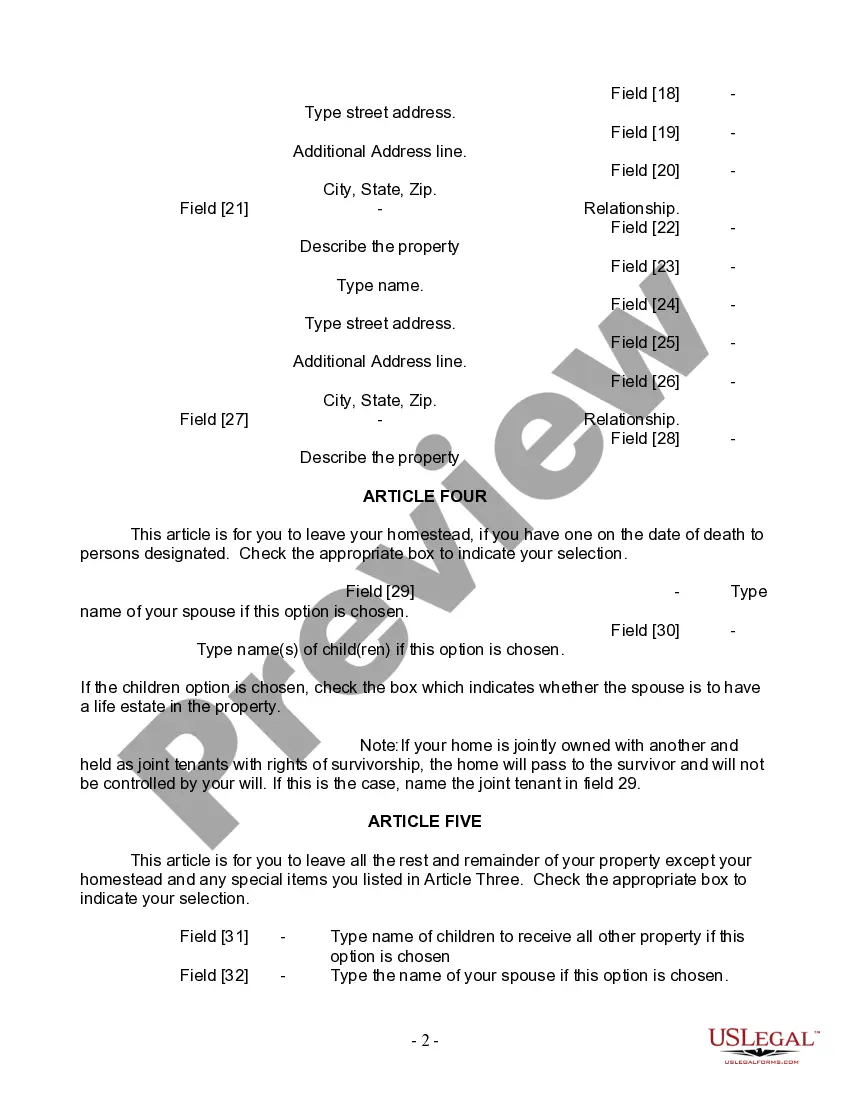
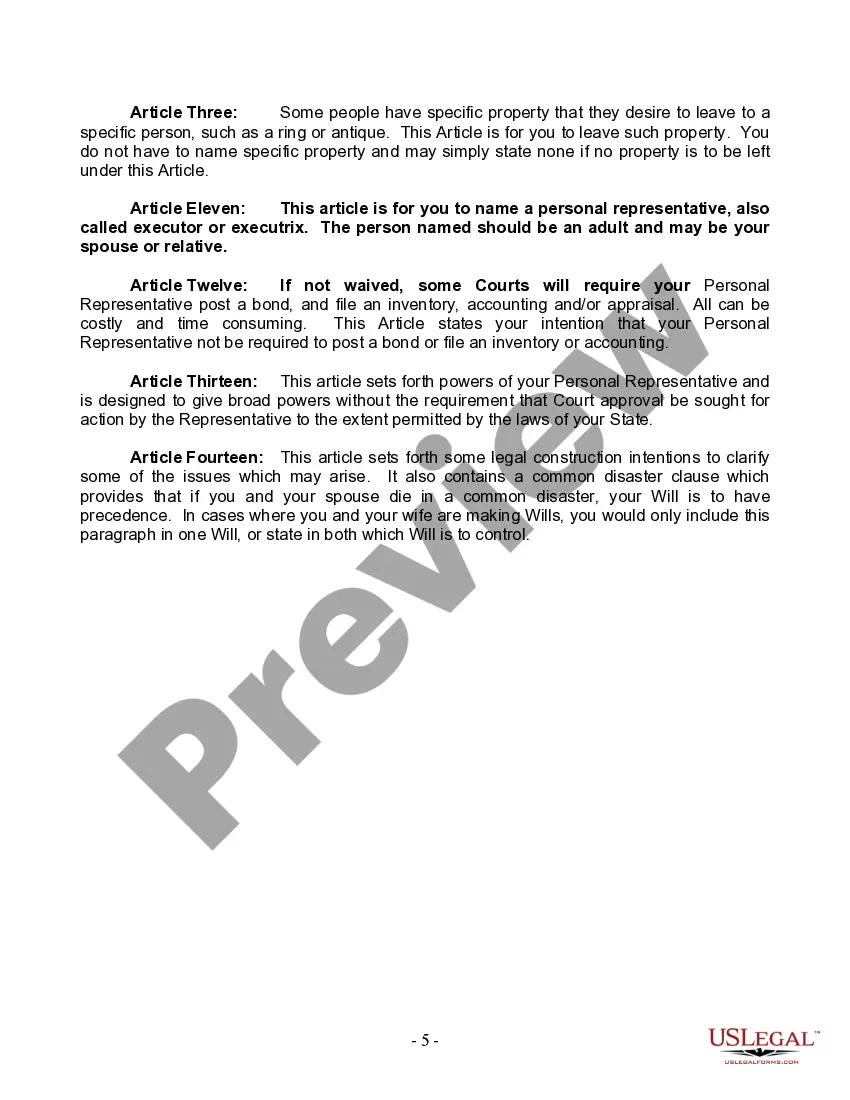
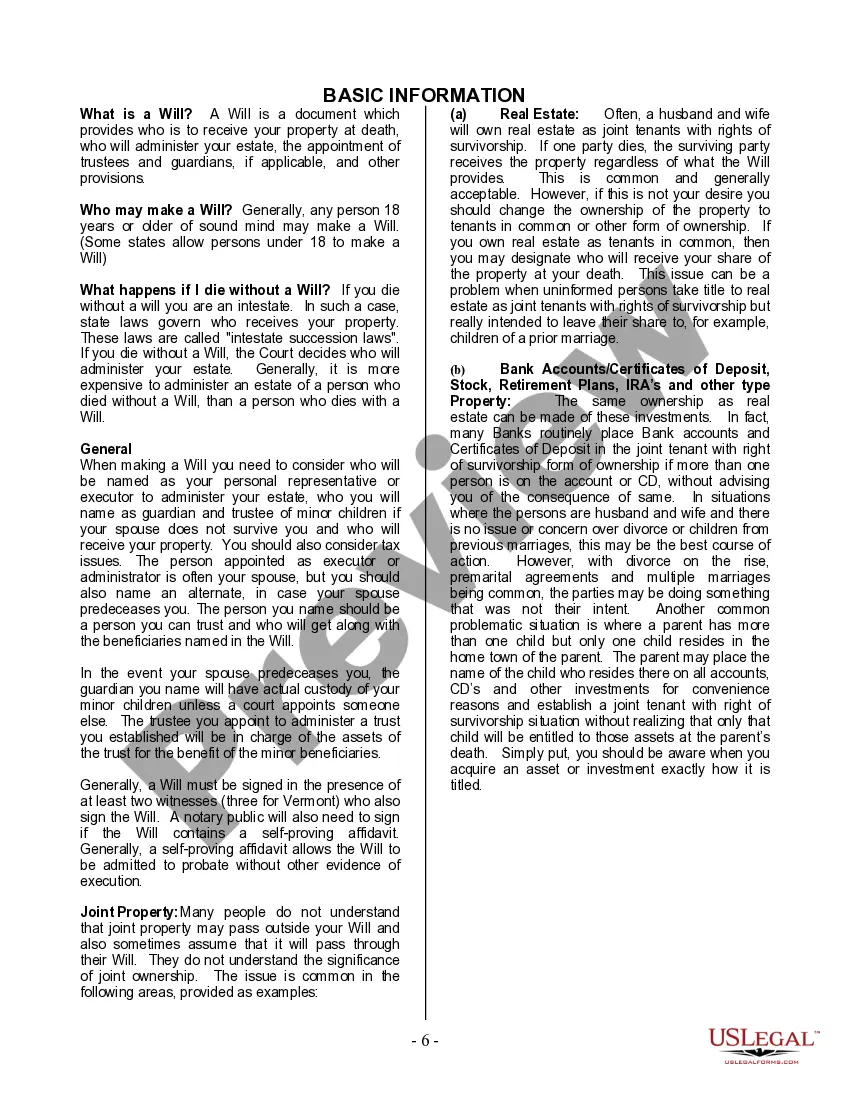
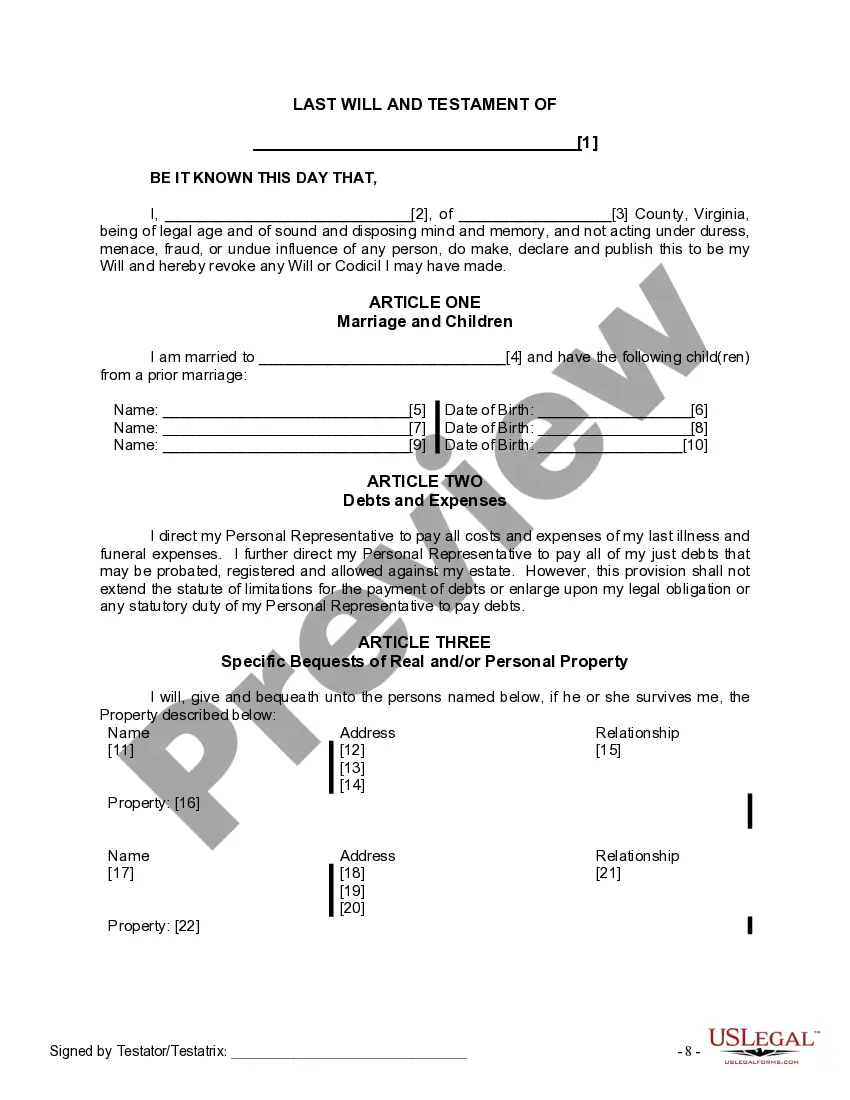
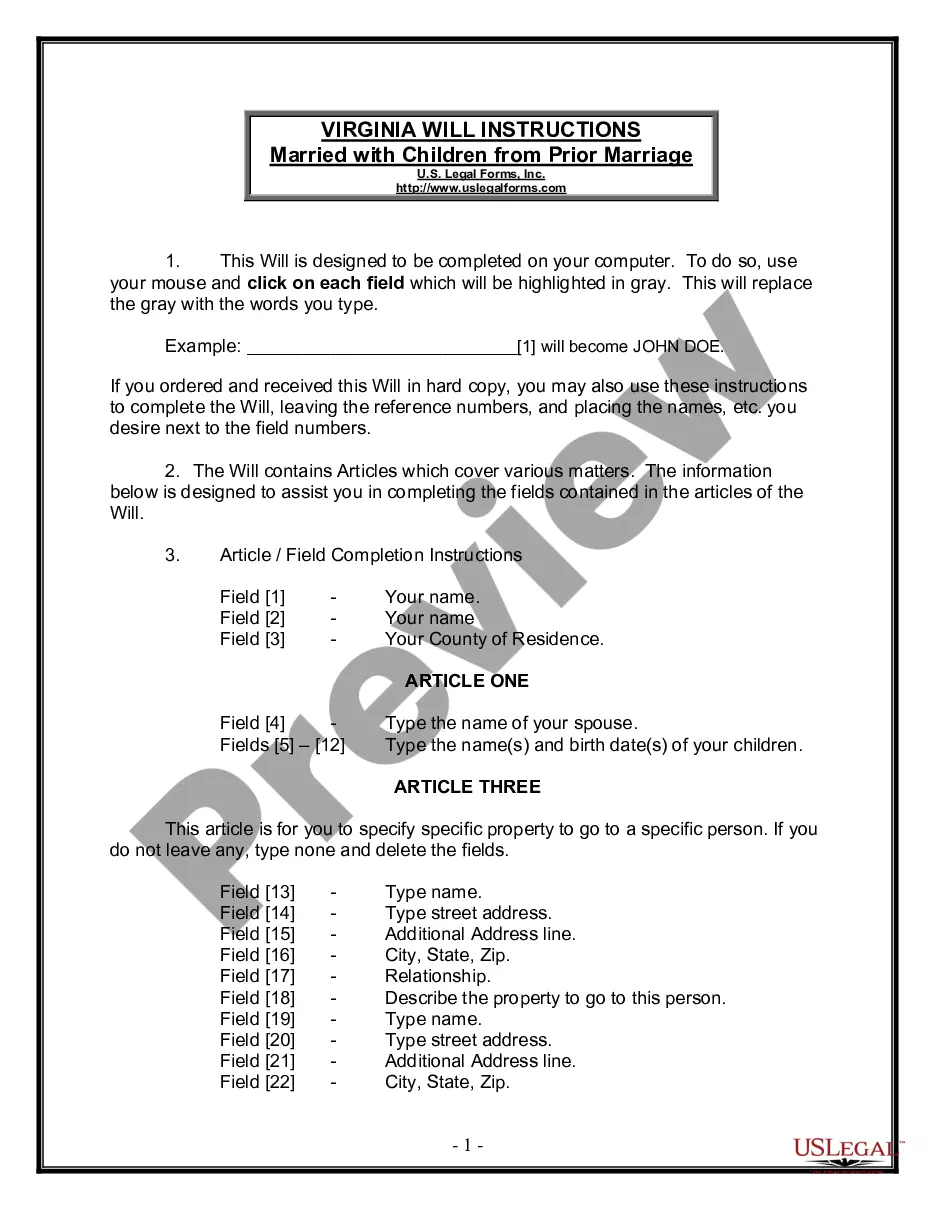
This Last Will and Testament is specifically designed for married individuals with minor children from a prior marriage. Its primary purpose is to clearly outline how your assets should be distributed after your death, taking into account both your current spouse and children from a previous marriage. Unlike other wills, this form includes provisions for the appointment of a personal representative and a trustee for minor children's assets, ensuring that all parties are appropriately provided for after your passing.
Form components explained
- Appointment of a personal representative to manage the estate.
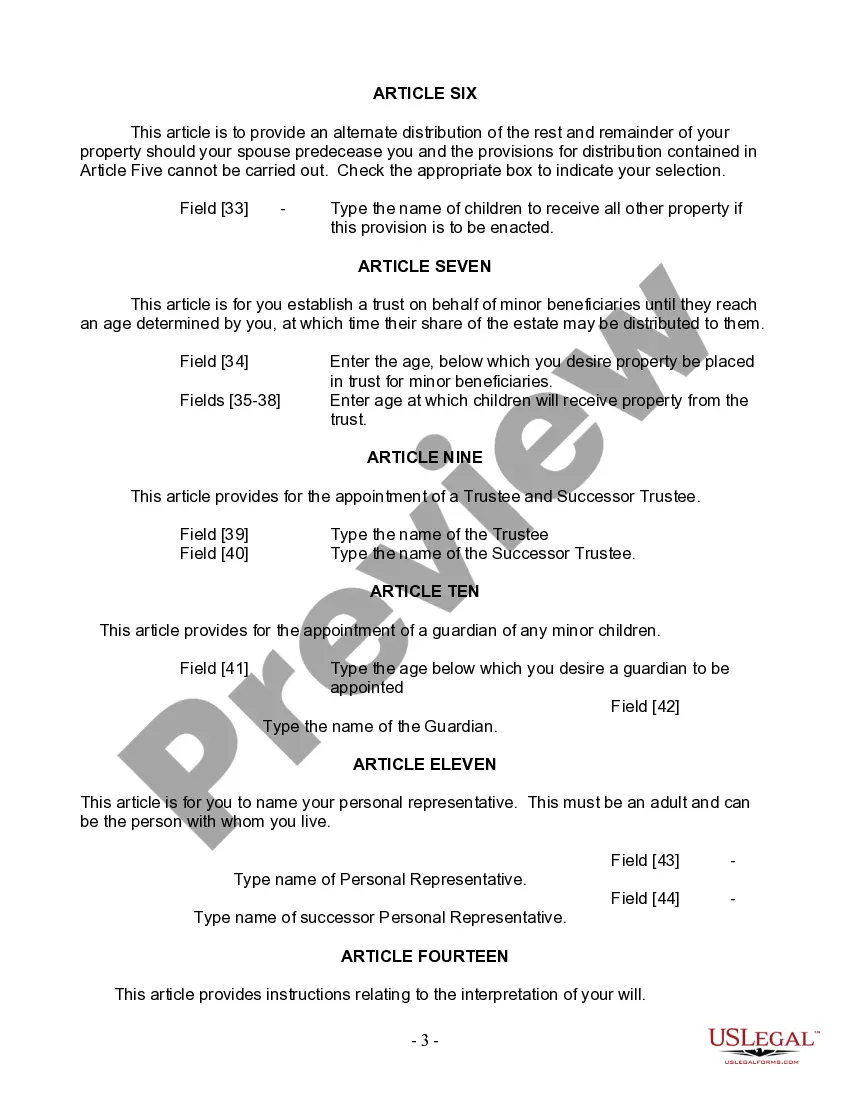
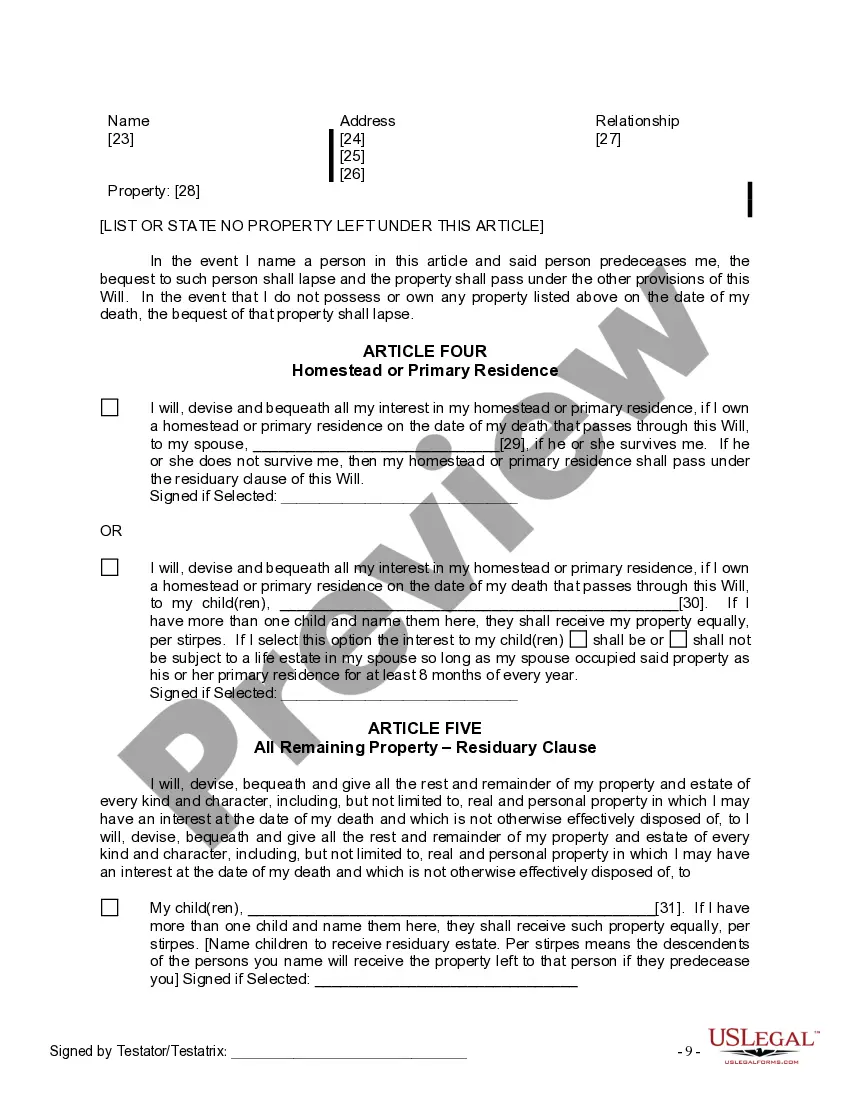
- Specifications for property distribution among spouse and children.
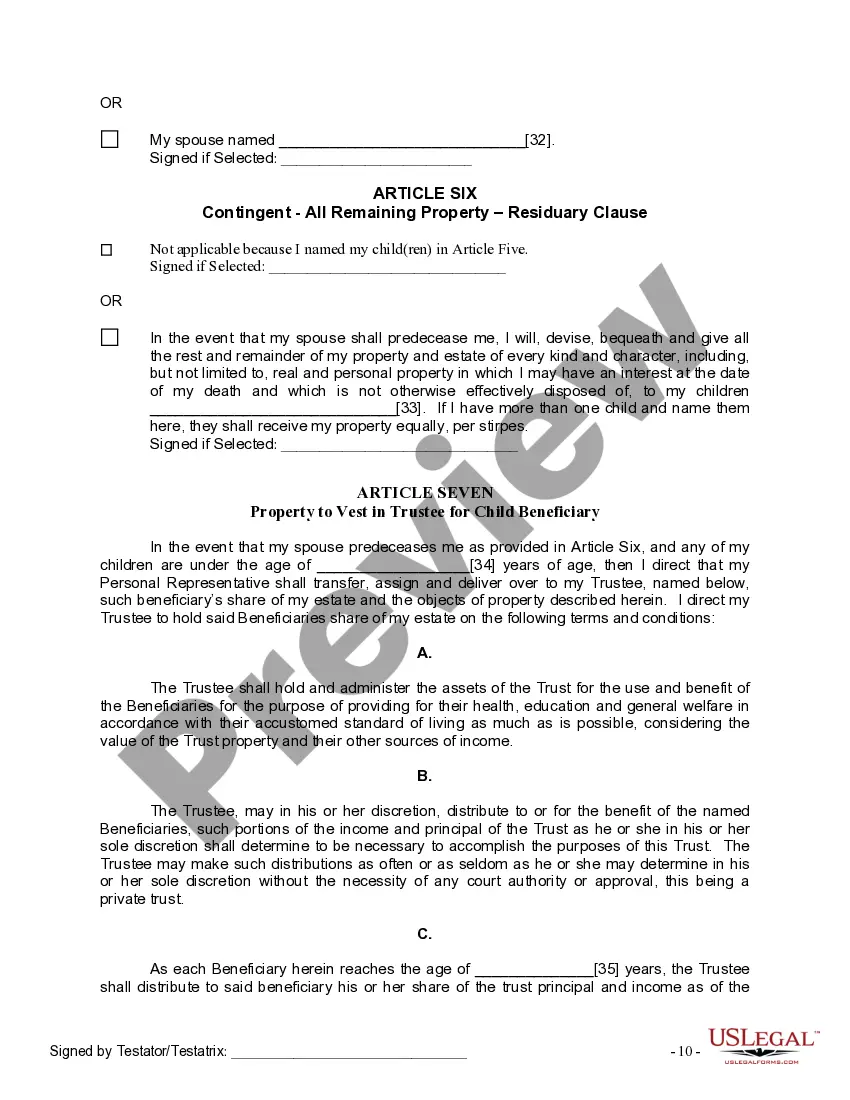
- Provisions for minor children, including trusts for their inheritance.
- Appointment of a guardian for any minor children.
- Instructions for handling homestead or primary residence.
- Self-proving affidavit for easier probate processing.




When to use this form
This will should be used when a married person has minor children from a previous marriage and wants to ensure that their estate is divided according to their wishes. It is particularly relevant in situations involving blended families, where careful consideration must be given to the rights of both current spouses and children from prior relationships. It can be used to avoid confusion and disputes following the testator's death.
Who should use this form
- Married individuals with minor children from a previous marriage.
- People seeking to ensure their estate is distributed according to their specific wishes.
- Individuals who want to designate a guardian for their children.
- Those who wish to create trusts for minor children to manage their inheritances.
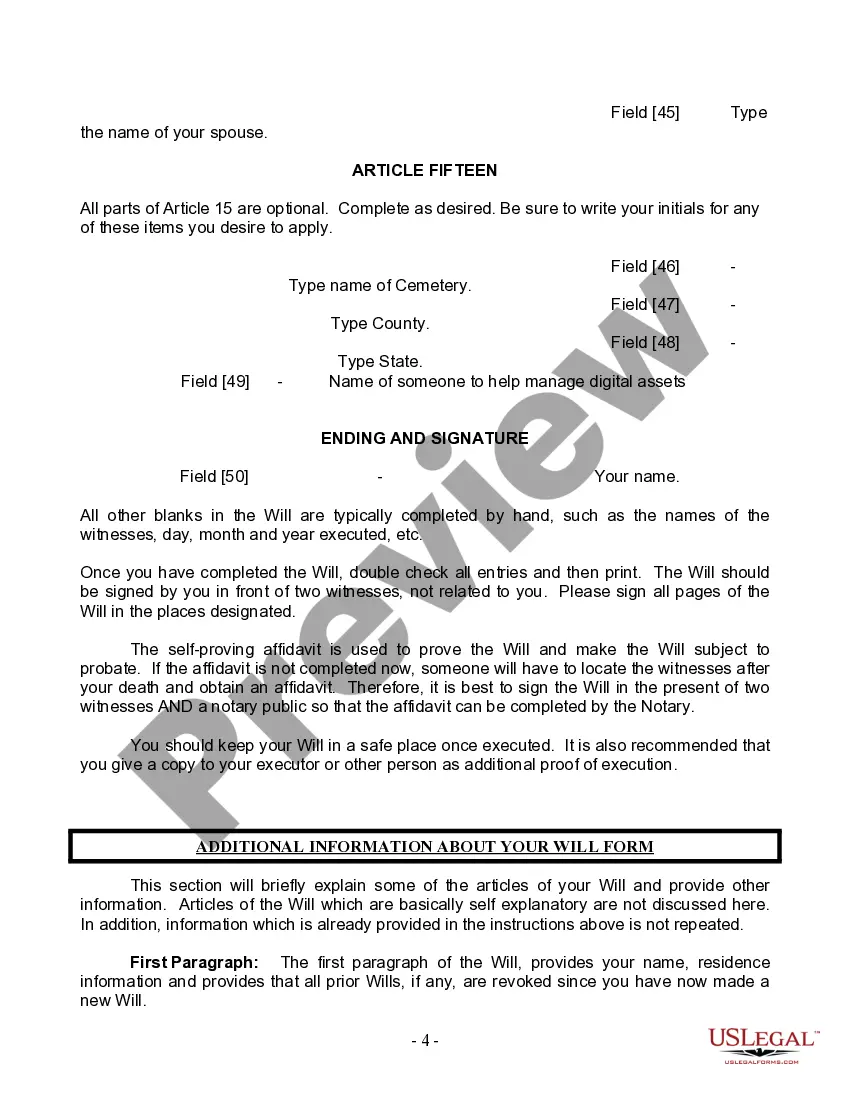
How to complete this form
- Begin by entering your full name and county of residence as the testator.
- List the name of your spouse and include the names and birthdates of all children from your prior marriage.
- Designate specific property to individuals and specify if it should go to your spouse or children.
- Complete the sections for guardianship, trusteeship, and personal representatives.
- Ensure the document is signed in the presence of two witnesses and a notary public if required.
Notarization requirements for this form
Yes, this form must be notarized to be legally valid. It is advisable to sign the will in the presence of two witnesses as well as a notary public, as this will ensure that the affidavit is completed, making the will subject to probate without further evidence of execution.
Get your form ready online
Our built-in tools help you complete, sign, share, and store your documents in one place.
Make edits, fill in missing information, and update formatting in US Legal Forms—just like you would in MS Word.
Download a copy, print it, send it by email, or mail it via USPS—whatever works best for your next step.
Sign and collect signatures with our SignNow integration. Send to multiple recipients, set reminders, and more. Go Premium to unlock E-Sign.
If this form requires notarization, complete it online through a secure video call—no need to meet a notary in person or wait for an appointment.
We protect your documents and personal data by following strict security and privacy standards.

Make edits, fill in missing information, and update formatting in US Legal Forms—just like you would in MS Word.

Download a copy, print it, send it by email, or mail it via USPS—whatever works best for your next step.

Sign and collect signatures with our SignNow integration. Send to multiple recipients, set reminders, and more. Go Premium to unlock E-Sign.

If this form requires notarization, complete it online through a secure video call—no need to meet a notary in person or wait for an appointment.

We protect your documents and personal data by following strict security and privacy standards.
Common mistakes
- Not signing the will in front of the required number of witnesses.
- Failing to update the will after significant life changes, such as remarriage or the birth of additional children.
- Overlooking important details in trust or guardianship designations.
- Neglecting to communicate your wishes with family members, potentially causing disputes.
Why complete this form online
- Convenient access to a professionally drafted legal document.
- Easy to edit and customize according to your specific needs.
- Instant download for immediate use.
- Guidance provided at every step to ensure accurate completion.
Looking for another form?

Form popularity
FAQ
In Virginia, the signing of a will must generally be witnessed by two competent persons, who also must sign the will in front of the testator.If the will includes a notarized Self-Proving Affidavit, the will is presumed to be properly executed and is accepted by the court without testimony from the witnesses.
In Virginia, the signing of a will must generally be witnessed by two competent persons, who also must sign the will in front of the testator.If the will includes a notarized Self-Proving Affidavit, the will is presumed to be properly executed and is accepted by the court without testimony from the witnesses.
When real estate is in Virginia, but outside the county having jurisdiction of probate, the will is still recorded in the county having jurisdiction.A certified copy of the will list of heirs and probate order are prepared for the person presenting the will to record in the county where the real estate is located.
Dying intestate means dying without a will. Virginia's laws of intestate succession state that when a person dies leaving a spouse and children, one-third of the person's assets pass to the spouse and two-thirds of the person's assets pass to the children.
Heirs/Heirs at Law: the persons who would inherit the decedent's estate if the decedent died intestate, as determined by law at the time of the decedent's death.
California is a community property state, which means that following the death of a spouse, the surviving spouse will have entitlement to one-half of the community property (i.e., property that was acquired over the course of the marriage, regardless of which spouse acquired it).
Virginia is a common law property state. This means that in cases of intestacy, the estate is automatically inherited by the spouse.Therefore, if there is a surviving spouse, the spouse will receive the deceased's portion of all marital properties.
WHO INHERITS THE PROPERTY OF AN INTESTATE? someone other than the surviving spouse in which case, one-third goes to the surviving spouse and the remaining two-thirds is divided among all children. f0a7 if no surviving spouse, all passes to the children and their descendants.
While joint wills do exist, they are generally discouraged in practice. Editor's Note: Joint wills are generally no longer accepted in Virginia. This means that you should rewrite your joint will into two separate wills if you move to Virginia from another state.