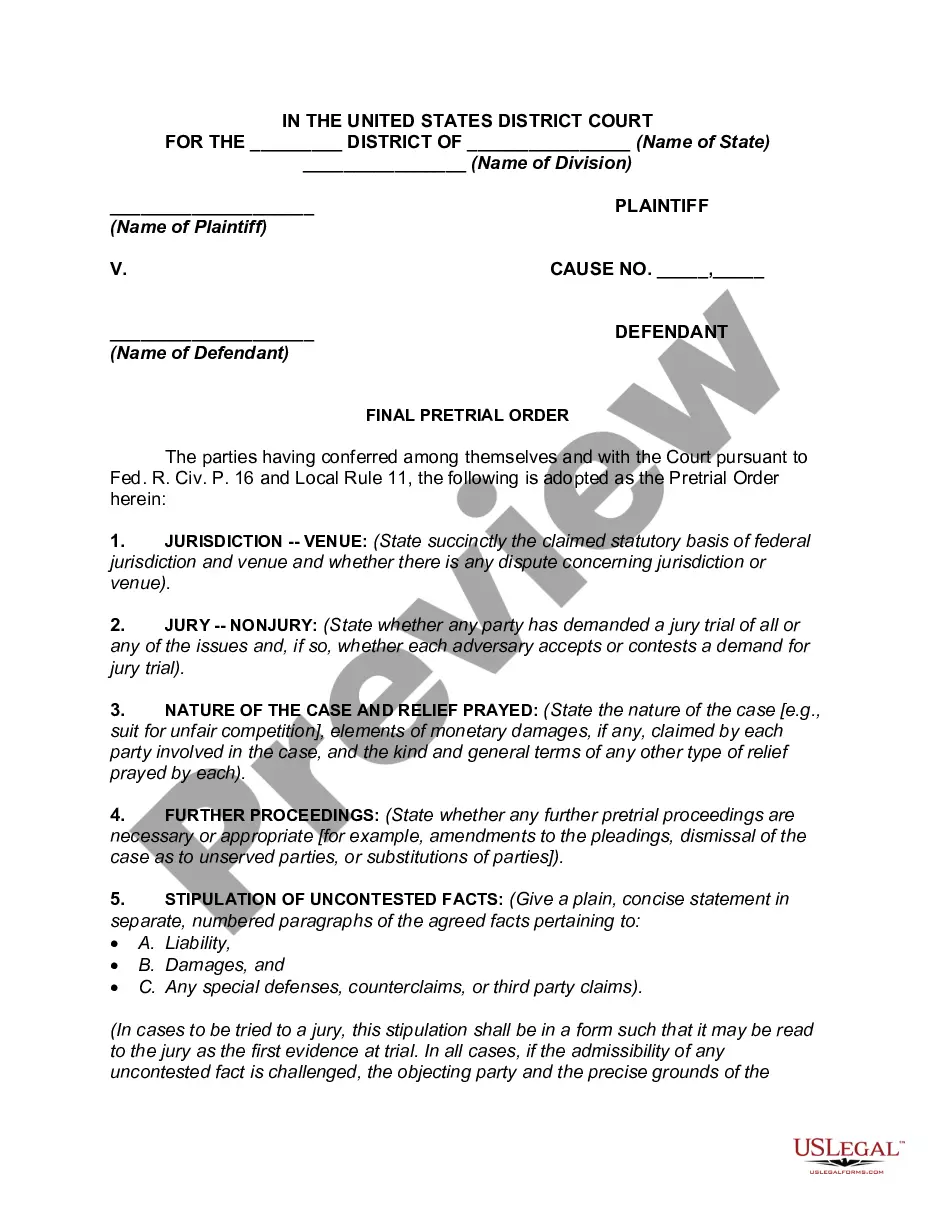
Virginia Final Notice of Default for Past Due Payments in connection with Contract for Deed
Understanding this form
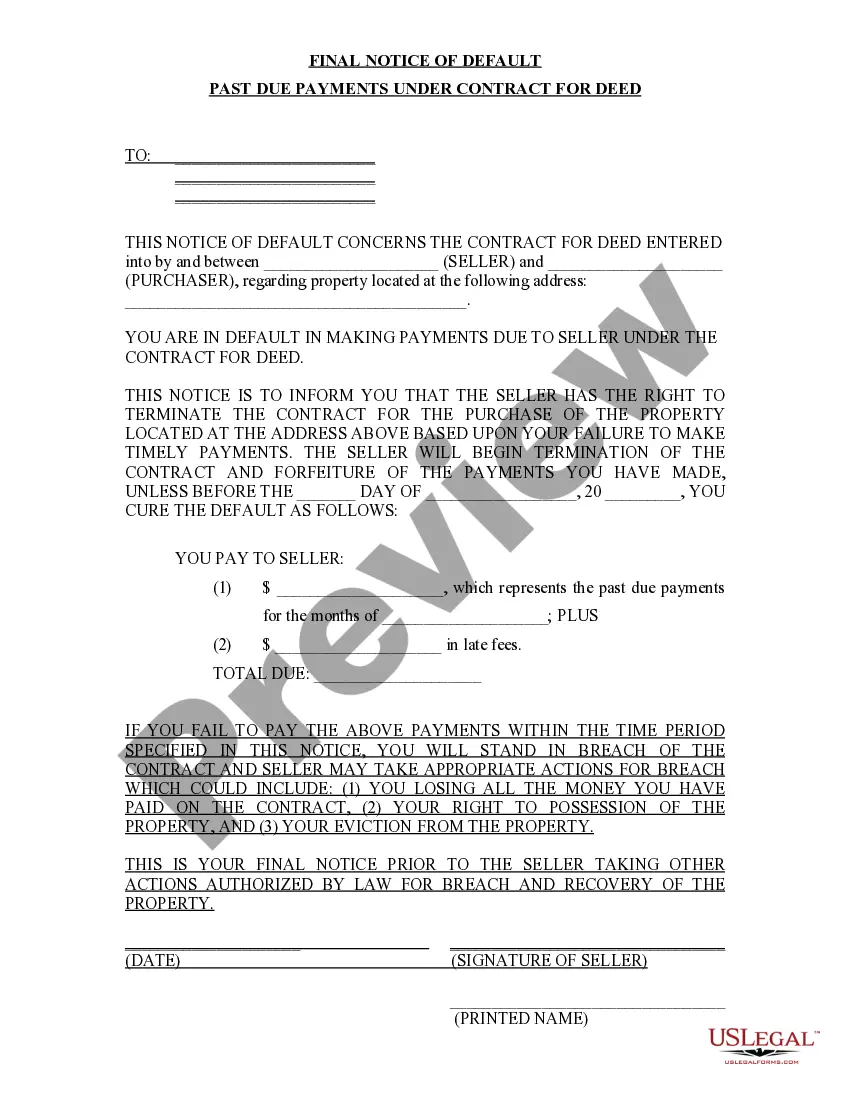
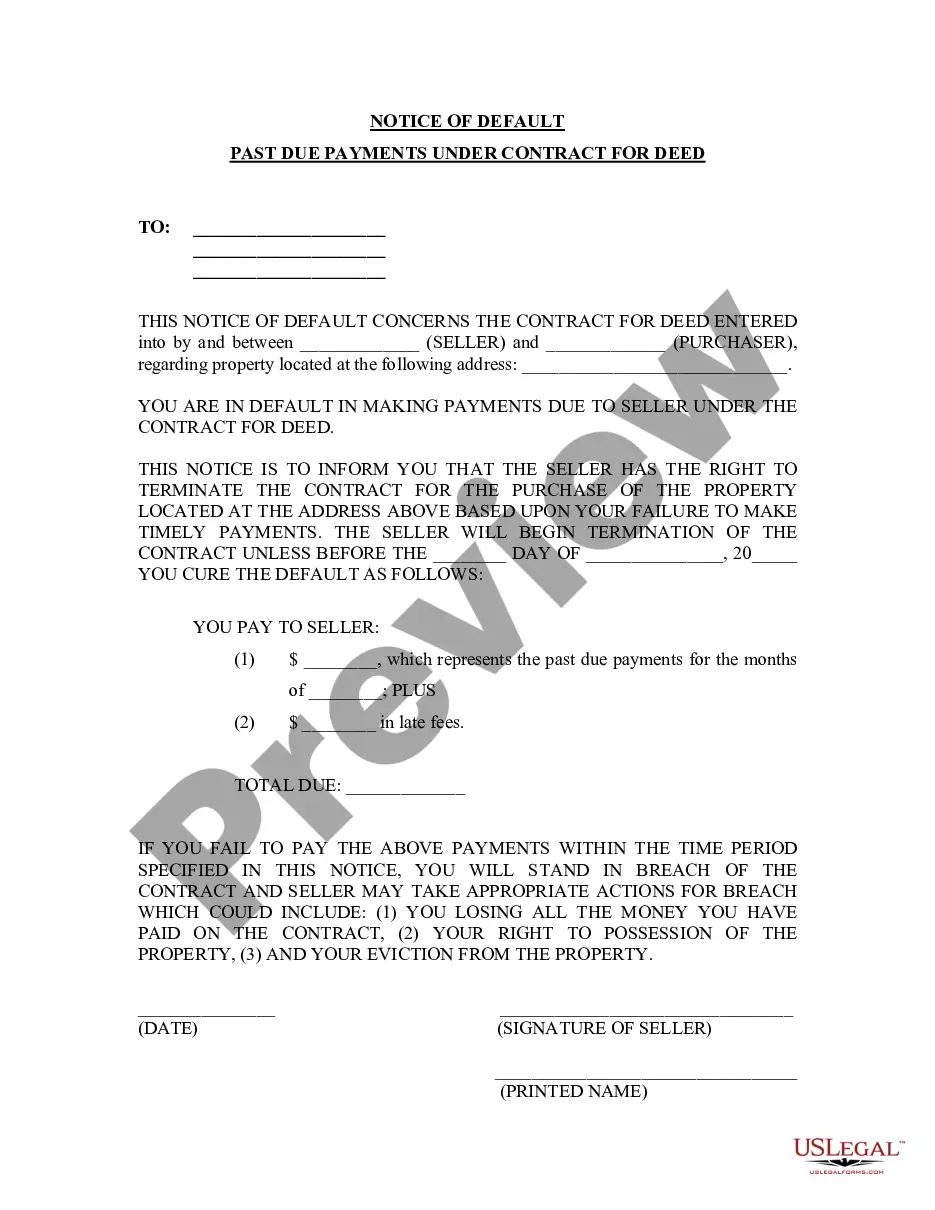
The Final Notice of Default for Past Due Payments in connection with Contract for Deed is a formal document issued by a seller to notify a purchaser of their failure to make timely payments under the terms of a contract for deed. This document serves as the seller's final notice, outlining the potential consequences of continued non-payment, including the risk of losing possession of the property and any payments made. The unique aspect of this form compared to other notices is its designation as a final warning before further legal actions may be pursued.
Key parts of this document
- Parties involved: Names of the seller and purchaser.
- Property details: Address of the property under contract.
- Payment details: Amount due, including past due payments and late fees.
- Deadline for curing default: Specific date for payment to prevent contract termination.
- Consequences of non-payment: Information on potential eviction and loss of payments.
When to use this document
This form is used when a purchaser fails to make required payments on a property purchased through a contract for deed. It is appropriate for sellers seeking to notify purchasers of their default status and to warn them of the impending consequences if they do not rectify their payment situation. This notice should be sent after other attempts to collect past due payments have been unsuccessful.
Who should use this form
- Sellers of properties under a contract for deed who have not received timely payments.
- Purchasers who need to understand the implications of their non-payment.
- Real estate professionals assisting clients in contract for deed transactions.
Instructions for completing this form
- Identify the parties: Clearly fill in the names of the seller and purchaser.
- Specify the property: Enter the complete address of the property involved in the contract.
- Enter payment details: State the amount of past due payments and any applicable late fees.
- Set a deadline: Indicate the date by which the purchaser must cure the default.
- Obtain signatures: Have the seller sign and print their name alongside the date of signing.
Notarization guidance
This form does not typically require notarization unless specified by local law. It is advisable to check your state's regulations to ensure compliance.
Get your form ready online
Our built-in tools help you complete, sign, share, and store your documents in one place.
Make edits, fill in missing information, and update formatting in US Legal Forms—just like you would in MS Word.
Download a copy, print it, send it by email, or mail it via USPS—whatever works best for your next step.
Sign and collect signatures with our SignNow integration. Send to multiple recipients, set reminders, and more. Go Premium to unlock E-Sign.
If this form requires notarization, complete it online through a secure video call—no need to meet a notary in person or wait for an appointment.
We protect your documents and personal data by following strict security and privacy standards.

Make edits, fill in missing information, and update formatting in US Legal Forms—just like you would in MS Word.

Download a copy, print it, send it by email, or mail it via USPS—whatever works best for your next step.

Sign and collect signatures with our SignNow integration. Send to multiple recipients, set reminders, and more. Go Premium to unlock E-Sign.

If this form requires notarization, complete it online through a secure video call—no need to meet a notary in person or wait for an appointment.

We protect your documents and personal data by following strict security and privacy standards.
Mistakes to watch out for
- Failing to accurately list all due payments and fees.
- Not providing the correct property address.
- Missing signatures or dates, rendering the notice invalid.
- Not sending the notice within the appropriate time frame.
Benefits of using this form online
- Convenient access anytime, allowing you to prepare documents at your own pace.
- Editable templates ensure that you can tailor the form to your specific circumstances.
- Reliable legal forms drafted by licensed attorneys provide peace of mind.
Legal use & context
- This form serves as an official notification of default and is important for protecting the seller's rights.
- Failure to respond to the notice can lead to loss of property rights and possible eviction.
What to keep in mind
- This Final Notice of Default is an essential step in addressing unpaid debts under a contract for deed.
- Using accurate details and adhering to deadlines can help prevent legal complications.
- The form protects the seller's rights to the property while providing the purchaser a clear chance to rectify the issue.
Looking for another form?
Form popularity
FAQ
Contract for Deed Seller Financing. A contract for deed is used by some sellers who finance the sale of their homes. Seller's Ownership Liability. Buyer Default Risk. Seller Performance. Property Liens Could Hinder Purchase.
A real estate deal can take a turn for the worst if the contract is not carefully written to include all the legal stipulations for both the buyer and seller.You can write your own real estate purchase agreement without paying any money as long as you include certain specifics about your home.
Generally, contract for deed sellers use IRS Form 6252 to report installment sales in the year in which they take place. You also use Form 6252 during each year you receive income from your contract for deed.
Should I record the contract? The seller must record the contract or a memorandum of the contract within 10 days of the date of sale. They must do this at the county recorder of deeds where the property is located.
A contract for deed is an agreement for buying property without going to a mortgage lender. The buyer agrees to pay the seller monthly payments, and the deed is turned over to the buyer when all payments have been made.
A disadvantage to the seller is that a contract for deed is frequently characterized by a low down payment and the purchase price is paid in installments instead of one lump sum. If a seller needs funds from the sale to buy another property, this would not be a beneficial method of selling real estate.
A disadvantage to the seller is that a contract for deed is frequently characterized by a low down payment and the purchase price is paid in installments instead of one lump sum.The legal fees and time frame for this process will be more extensive than a standard Power of Sale foreclosure.
A contract for deed is a legal agreement for the sale of property in which a buyer takes possession and makes payments directly to the seller, but the seller holds the title until the full payment is made.
Usually the contract requires the buyer to make payments over time with interest payable on the unpaid balance. Once a buyer pays all of the payments called for under the contract, the owner transfers to the buyer a deed to the property.
The buyer should record the contract for deed with the county recorder where the land is located and does so normally within four months after the contract is signed, though the time may vary depending on state law.