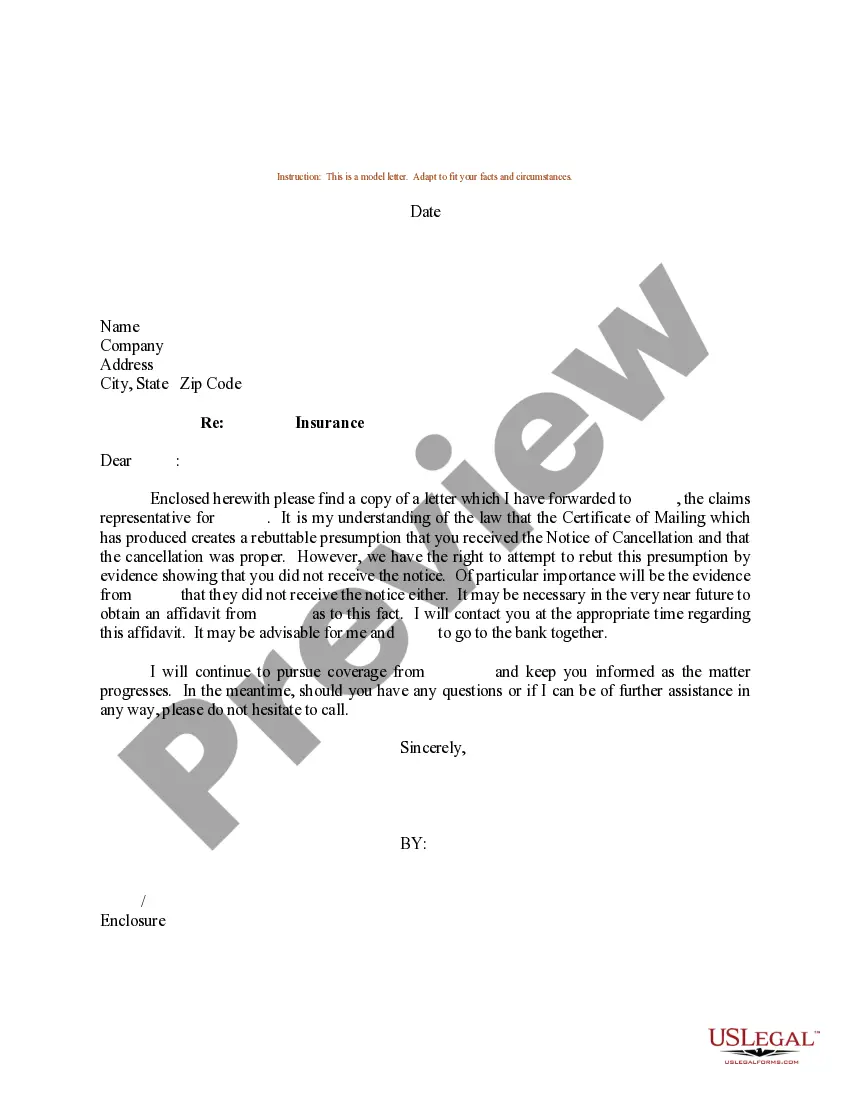
Utah Last Will and Testament for Divorced Person Not Remarried with No Children
Understanding this form
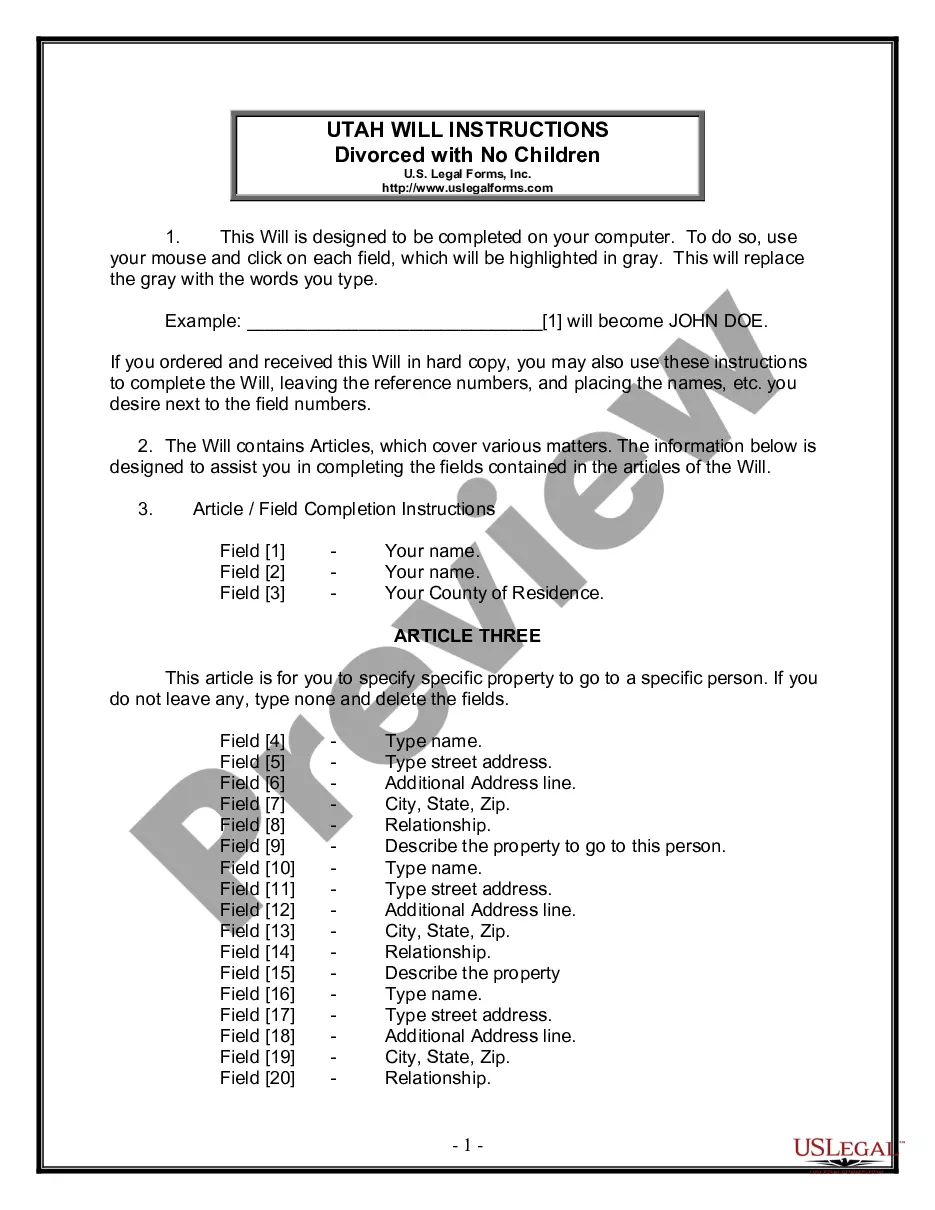
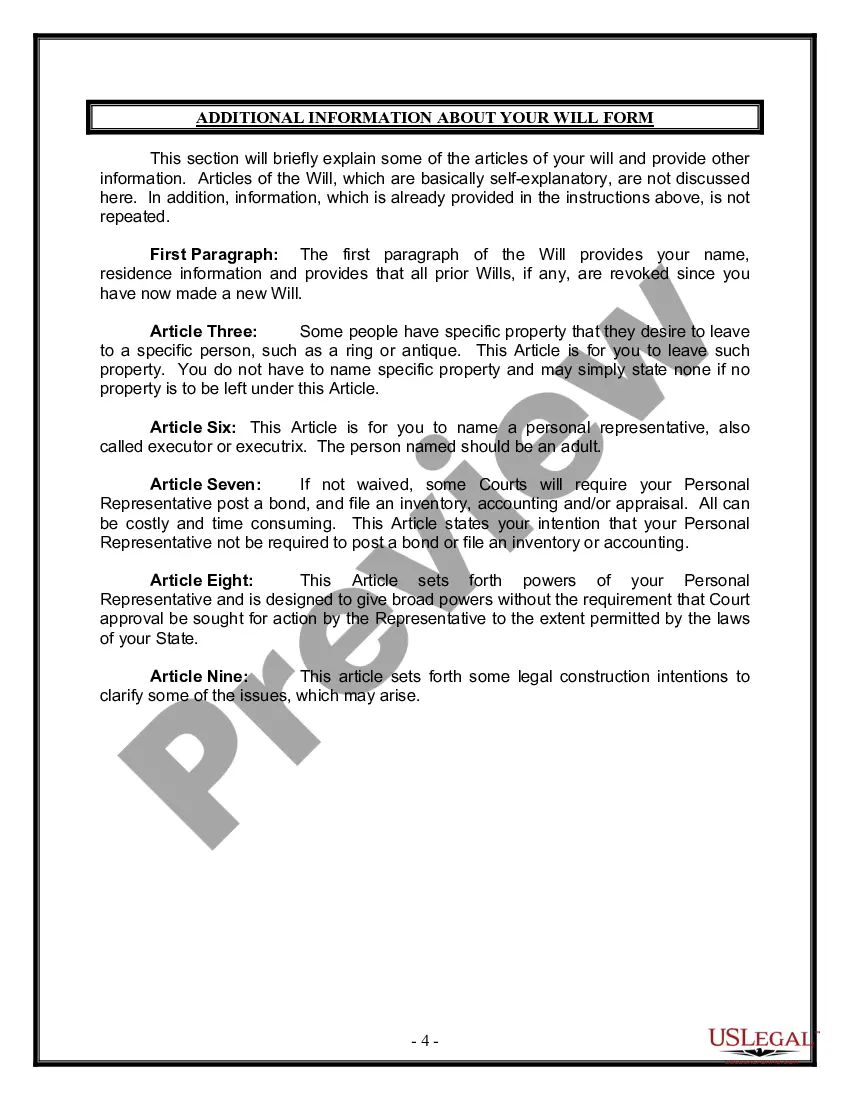
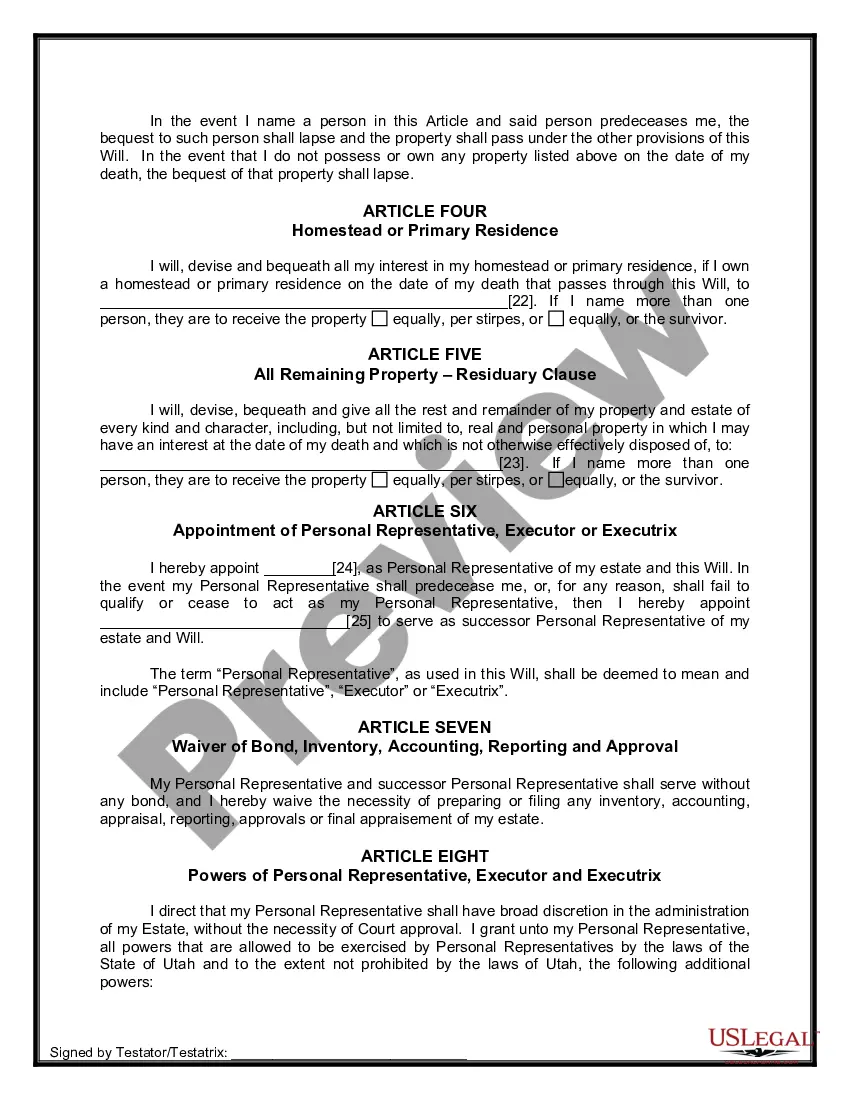
The Last Will and Testament for a divorced person not remarried and with no children is a legal document that outlines how a person's assets will be distributed after their death. This form is specifically tailored for individuals who have experienced divorce, do not have children, and wish to clearly define their estate plans. Unlike other wills, this form accounts for the unique circumstances of divorced individuals, ensuring that their wishes are respected and legally documented.
Key parts of this document
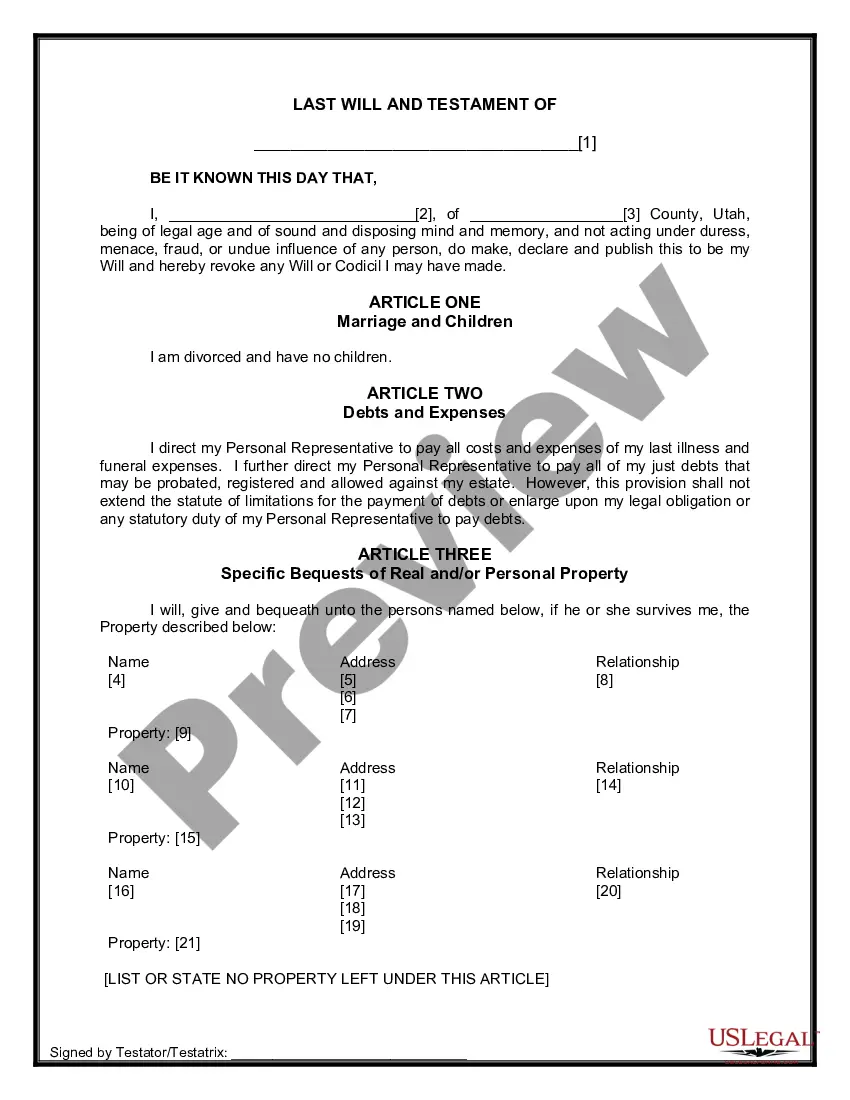
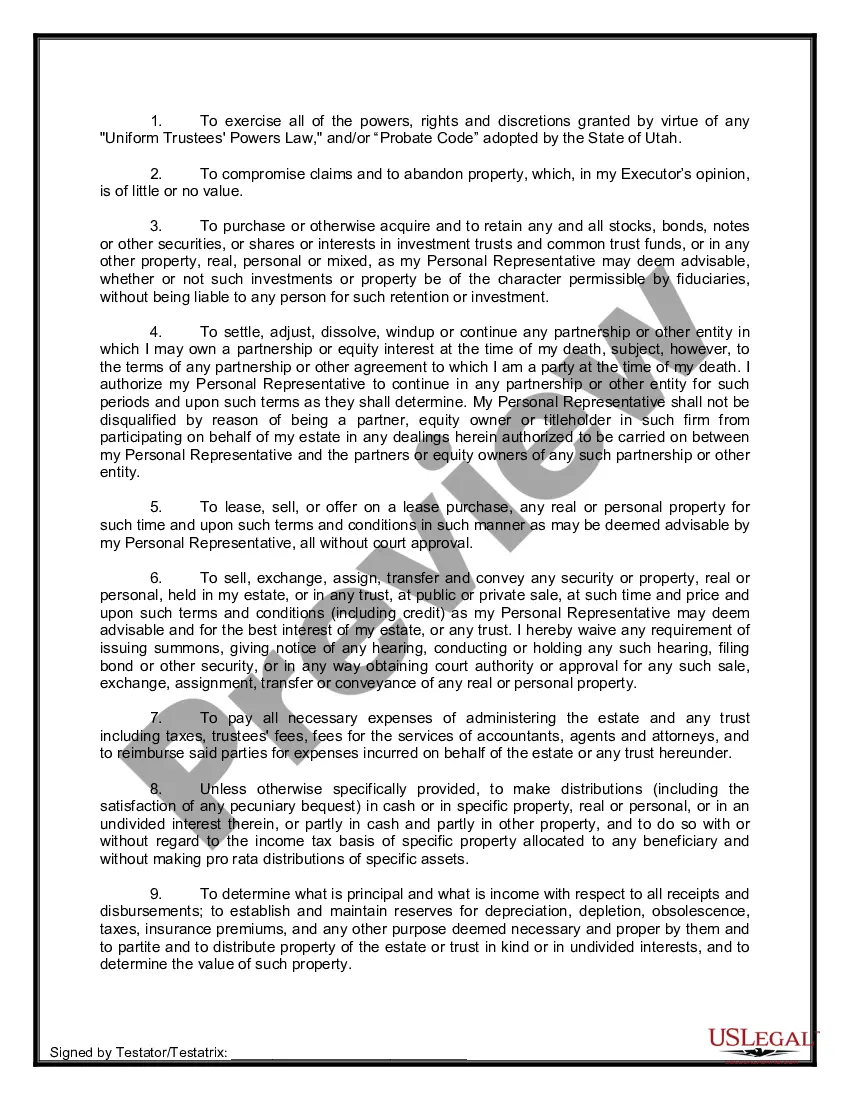
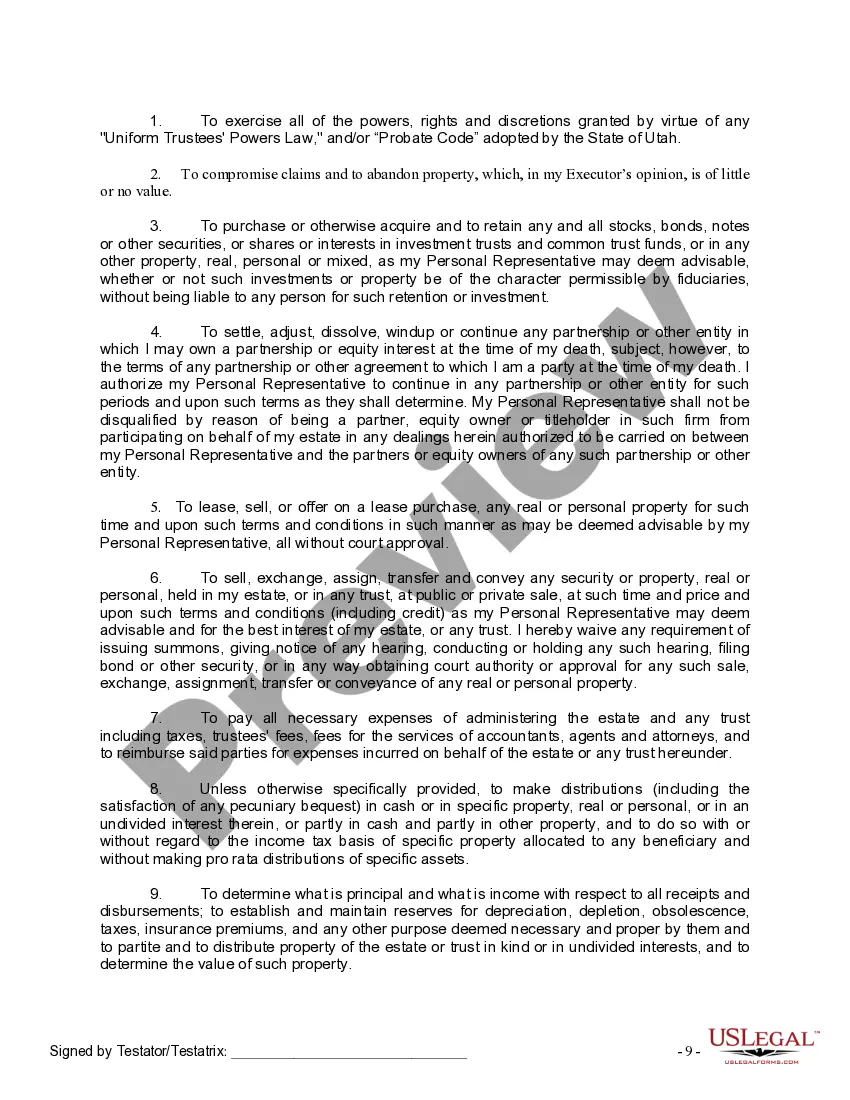
- Appointment of a Personal Representative or Executor: Designation of an authorized person to manage the estate.
- Specific Bequests: Provisions for particular items or assets to be given to specific individuals.
- Homestead Bequest: Instructions regarding the handling and distribution of the primary residence.
- Residuum Clause: Allocation of remaining assets not specifically mentioned in the will.
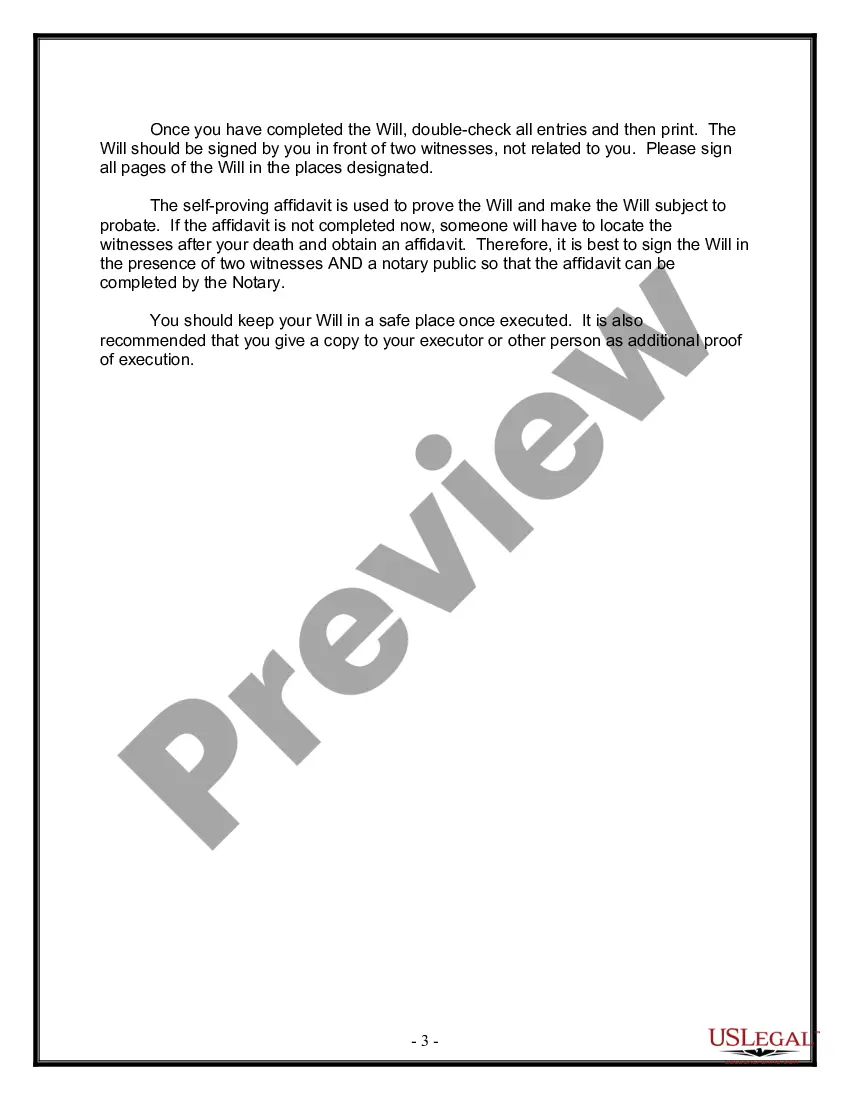
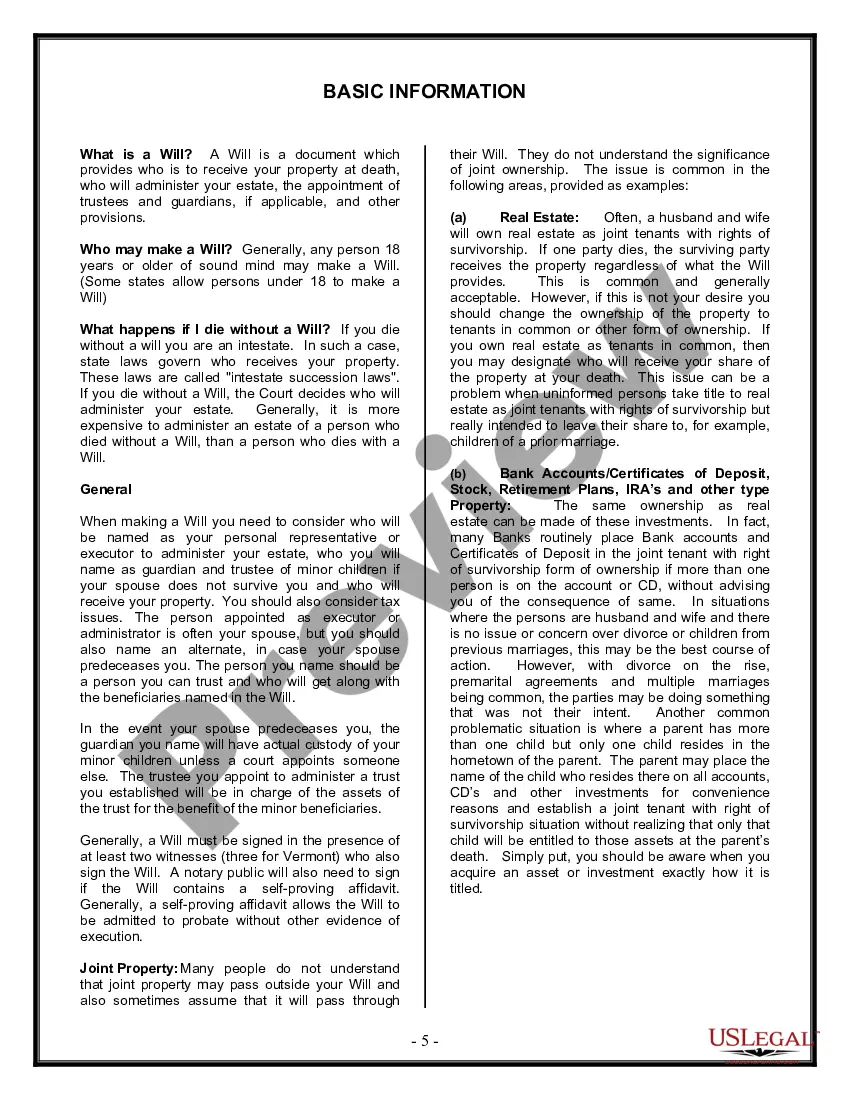
- Witness Requirements: The will must be signed in front of two non-related witnesses for validity.

Situations where this form applies
This form is necessary when an individual who is divorced and has no children wishes to specify how their assets should be distributed after their death. It is especially useful for those who want to ensure their estate goes to chosen family members, friends, or organizations without the complications that can arise when there are children or a current spouse involved.
Who this form is for
This form is for:
- Divorced individuals who have not remarried.
- People with no children wishing to detail their estate plans.
- Anyone wanting to ensure their specific wishes regarding asset distribution are legally recognized.
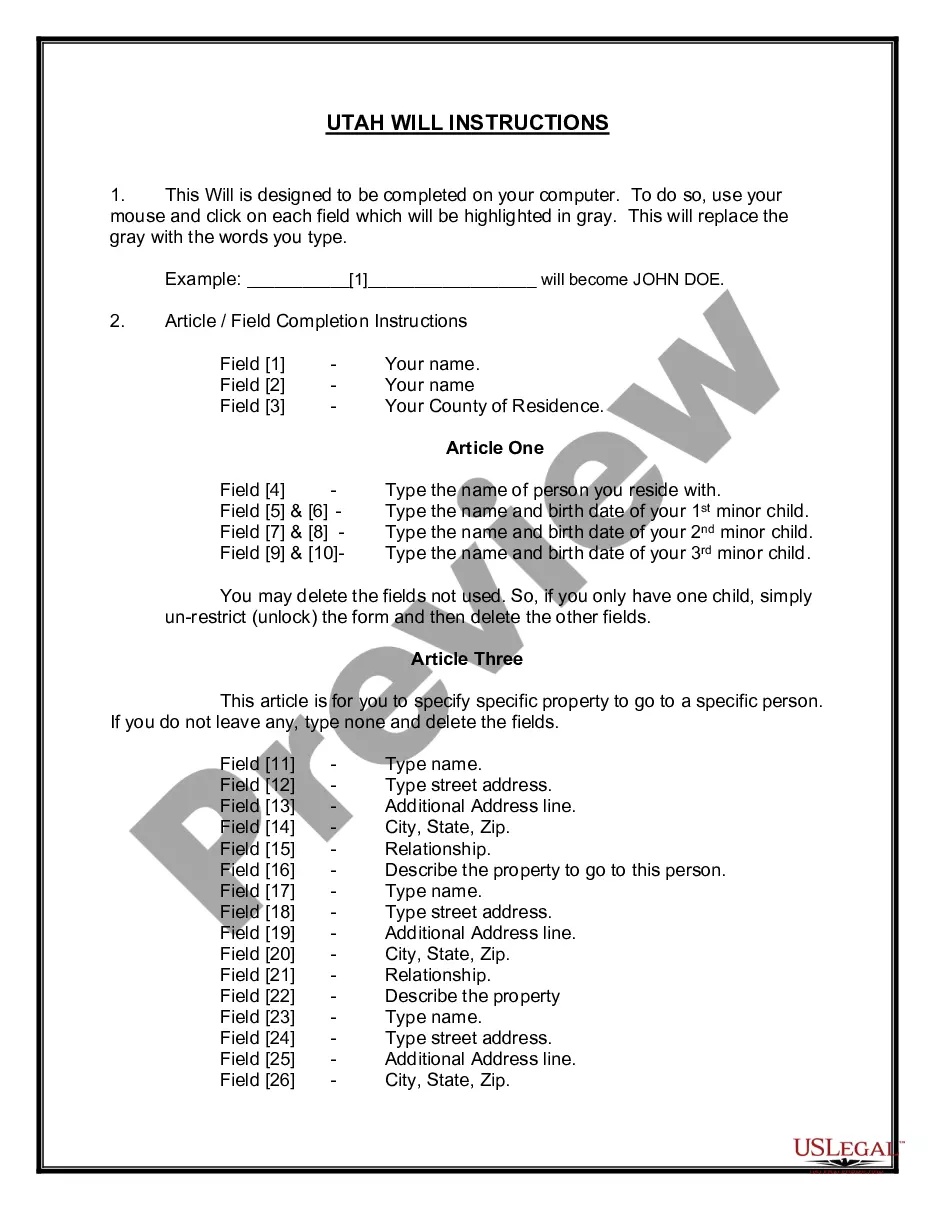
Instructions for completing this form
Steps to complete this form:
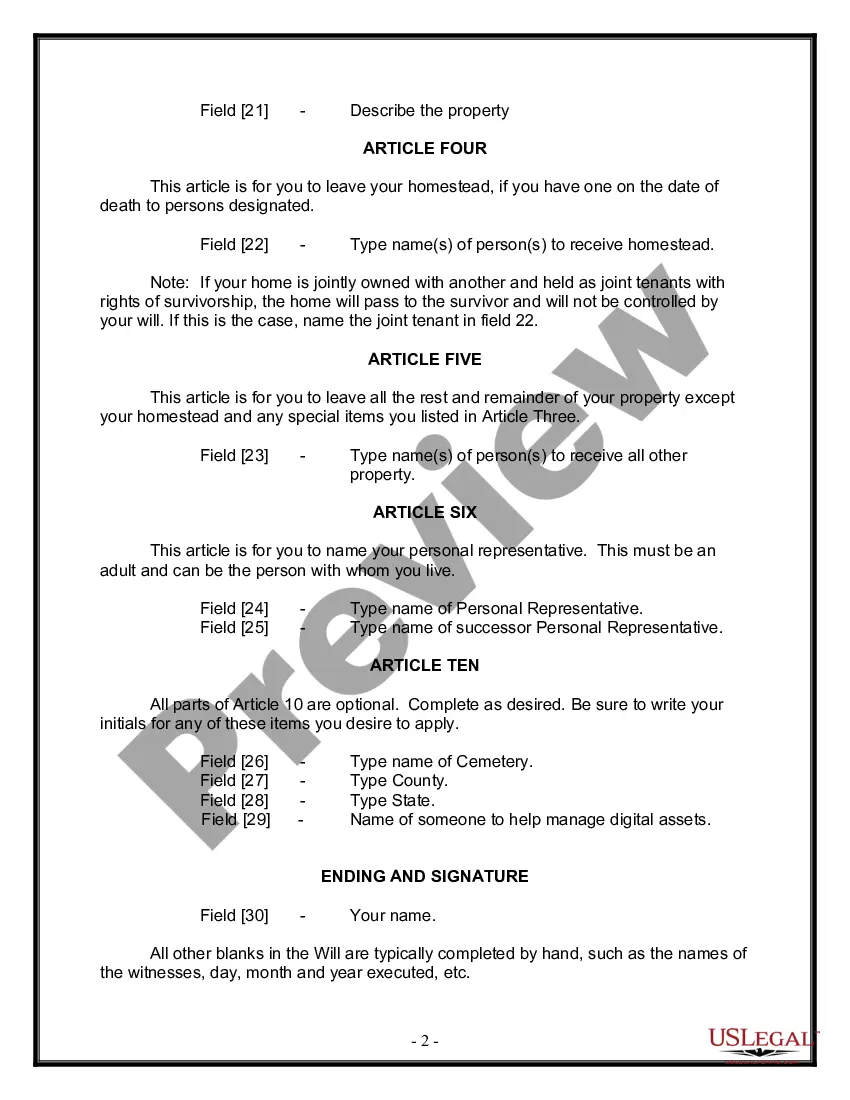
- Begin by entering your full name and residence information at the top of the document.
- Designate a Personal Representative who will be responsible for managing your estate.
- Specify any special property you wish to bequeath to specific individuals.
- Identify your homestead or primary residence and detail who should receive it.
- Include a residuum clause naming the individual who will receive all remaining property.
- Sign the document in the presence of two witnesses and, if applicable, a notary public.
Does this document require notarization?
Yes, this form must be notarized to be legally valid. It is recommended to have a notary public present during the signing of the will to complete the self-proving affidavit, making the process smoother for probate.
Get your form ready online
Our built-in tools help you complete, sign, share, and store your documents in one place.
Make edits, fill in missing information, and update formatting in US Legal Forms—just like you would in MS Word.
Download a copy, print it, send it by email, or mail it via USPS—whatever works best for your next step.
Sign and collect signatures with our SignNow integration. Send to multiple recipients, set reminders, and more. Go Premium to unlock E-Sign.
If this form requires notarization, complete it online through a secure video call—no need to meet a notary in person or wait for an appointment.
We protect your documents and personal data by following strict security and privacy standards.

Make edits, fill in missing information, and update formatting in US Legal Forms—just like you would in MS Word.

Download a copy, print it, send it by email, or mail it via USPS—whatever works best for your next step.

Sign and collect signatures with our SignNow integration. Send to multiple recipients, set reminders, and more. Go Premium to unlock E-Sign.

If this form requires notarization, complete it online through a secure video call—no need to meet a notary in person or wait for an appointment.

We protect your documents and personal data by following strict security and privacy standards.
Common mistakes to avoid
- Forgetting to have the will signed in the presence of witnesses.
- Leaving out the self-proving affidavit when applicable, complicating the probate process.
- Not clearly defining specific bequests, leading to ambiguity in asset distribution.
Why complete this form online
- Convenience of completing the will online and downloading it immediately.
- Editability allows for quick updates to your estate plan as circumstances change.
- Reliability of using forms drafted by licensed attorneys ensures legal compliance.
Main things to remember
- The Last Will and Testament for Divorced Persons without Children allows you to express how your assets should be distributed.
- It includes essential components specific to your situation, such as asset designation and personal representative appointment.
- This form must comply with state laws, particularly in Utah, and requires signatures from witnesses and possibly a notary.
- Completing this form online is convenient, reliable, and allows you to maintain control over your estate planning.
Looking for another form?





Form popularity
FAQ
Under Utah law, a will must be filed with the court with reasonable promptness after the death of the testator. Utah Code § 75-2-902. So, after you pass away, your will should be filed in your local probate court by the person named to be your personal representative (also called an executor or administrator).
You can make your own will in Utah, using Nolo's do-it-yourself will software or online will programs. However, you may want to consult a lawyer in some situations. For example, if you think that your will might be contested or if you want to disinherit your spouse, you should talk with an attorney.
The short answer is yes, online wills are legitimate as long as you ensure they comply with federal and state laws. Online will companies hire licensed attorneys and legal professionals to carefully word their estate planning documents so that each is legally binding.
Witnesses: A Utah will must be signed by at least two witnesses, each of whom have signed within a reasonable time after witnessing the signing of the will or the testator's acknowledgement of the signature or of the will. Writing: A Utah will must be in writing. Beneficiaries: A testator can leave property to anyone.