Utah Last Will and Testament for Single Person with No Children

Understanding this form
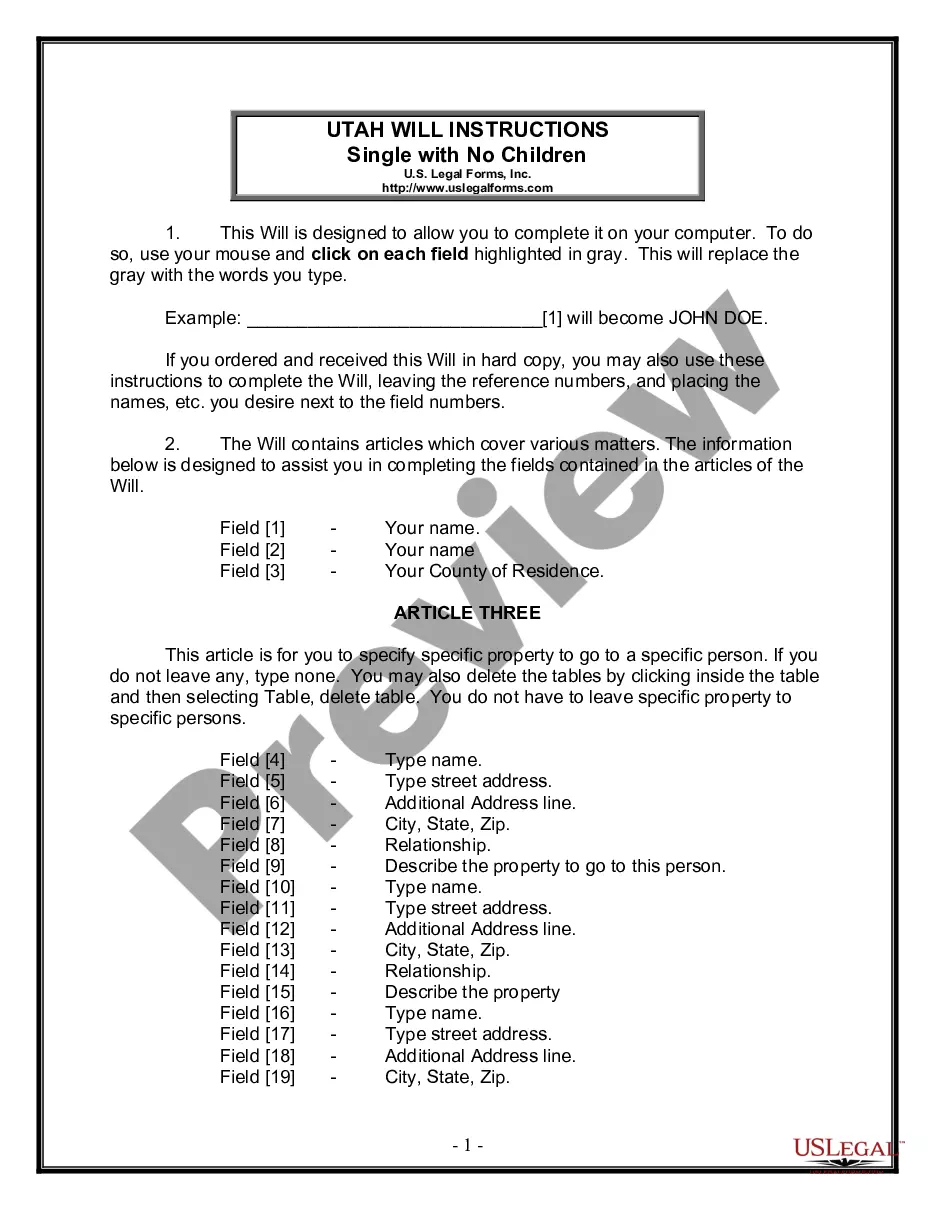
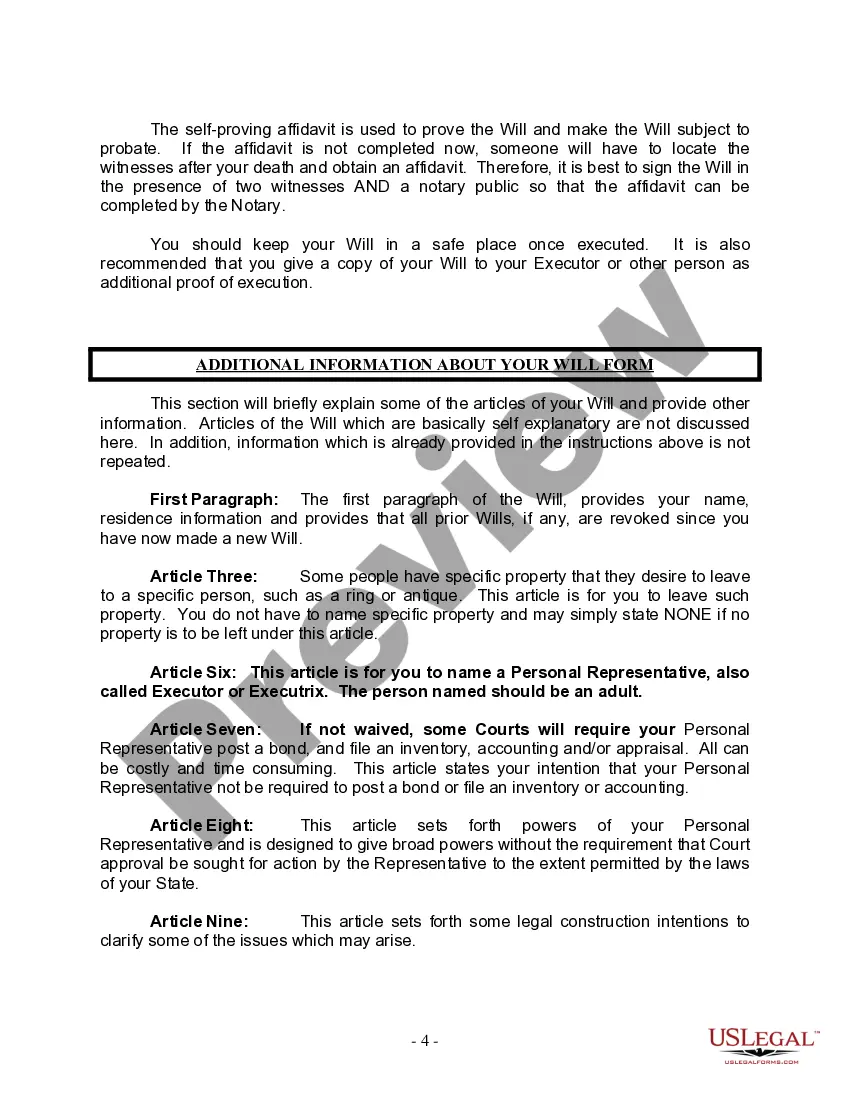
The Last Will and Testament for a single person with no children is a legal document that specifies how your assets will be distributed after your death. It allows you to appoint a personal representative to manage your estate and designate beneficiaries who will receive your property. Unlike a standard will, this form caters specifically to individuals without children, making it simpler for those in similar situations to ensure their wishes are followed concerning their estate.
Key components of this form
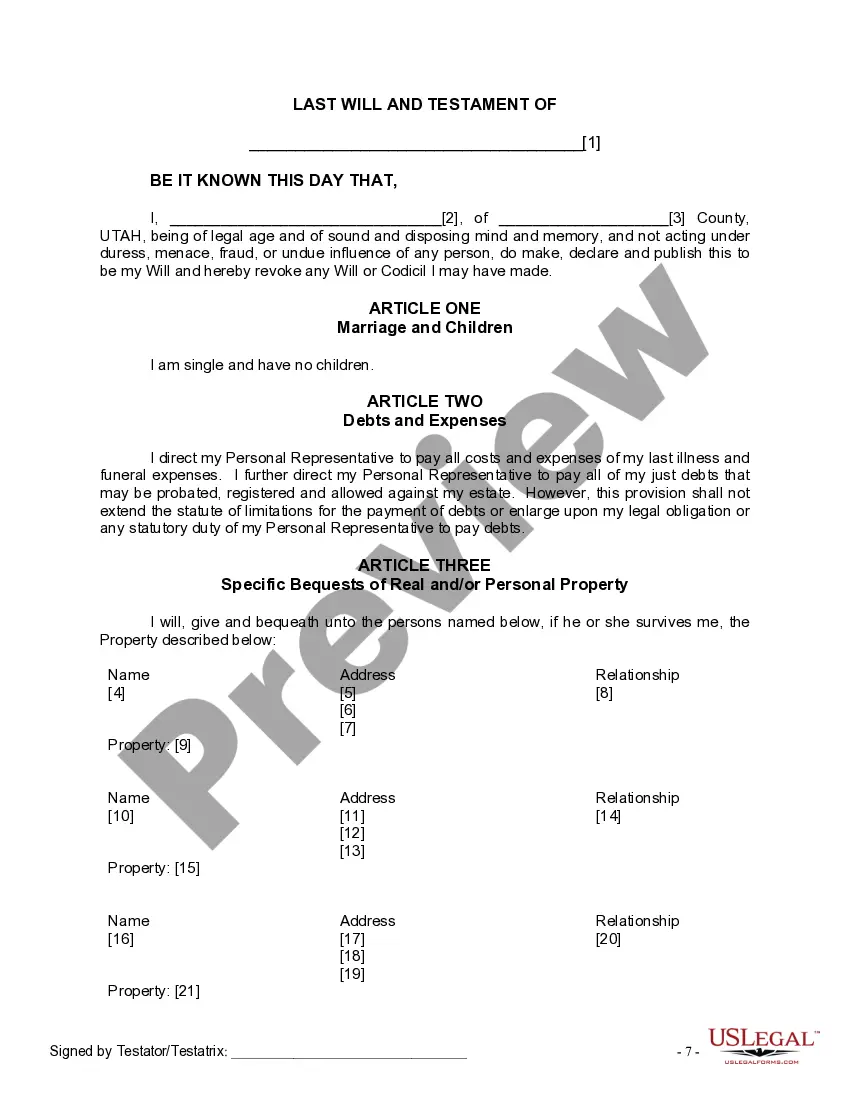
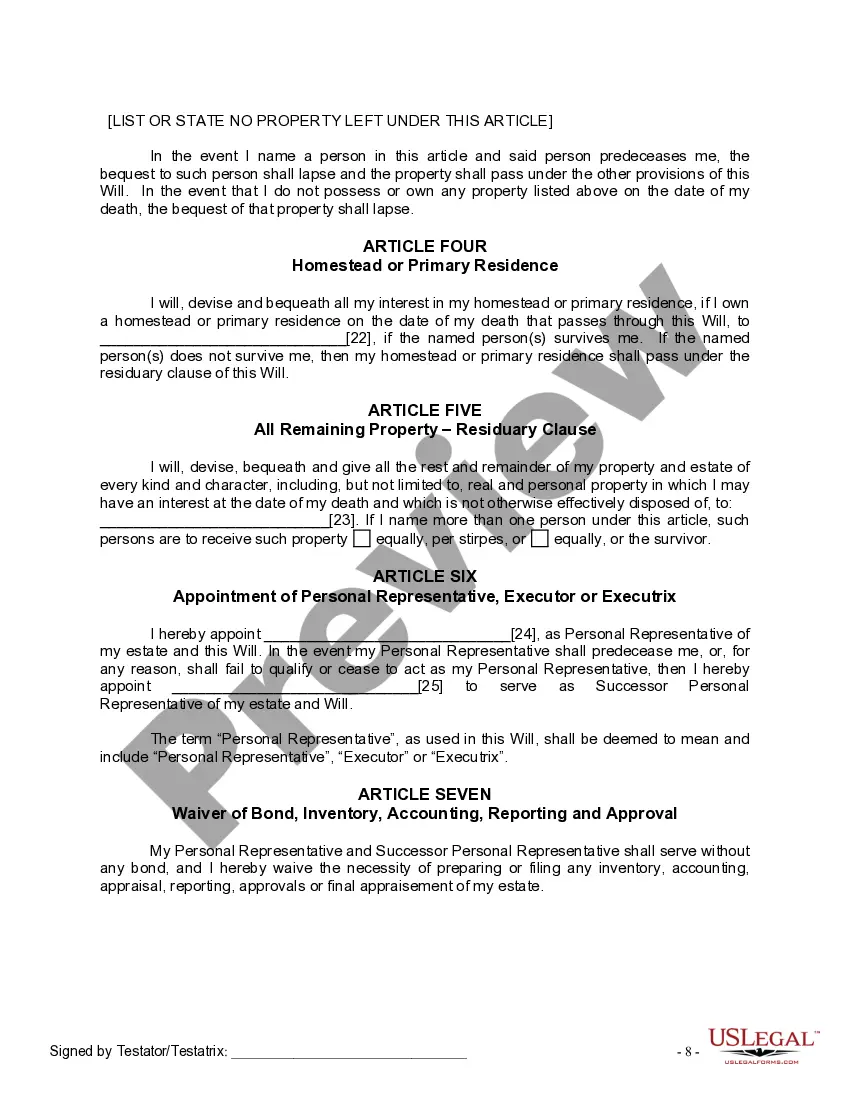
- Personal information: Include your name and county of residence.
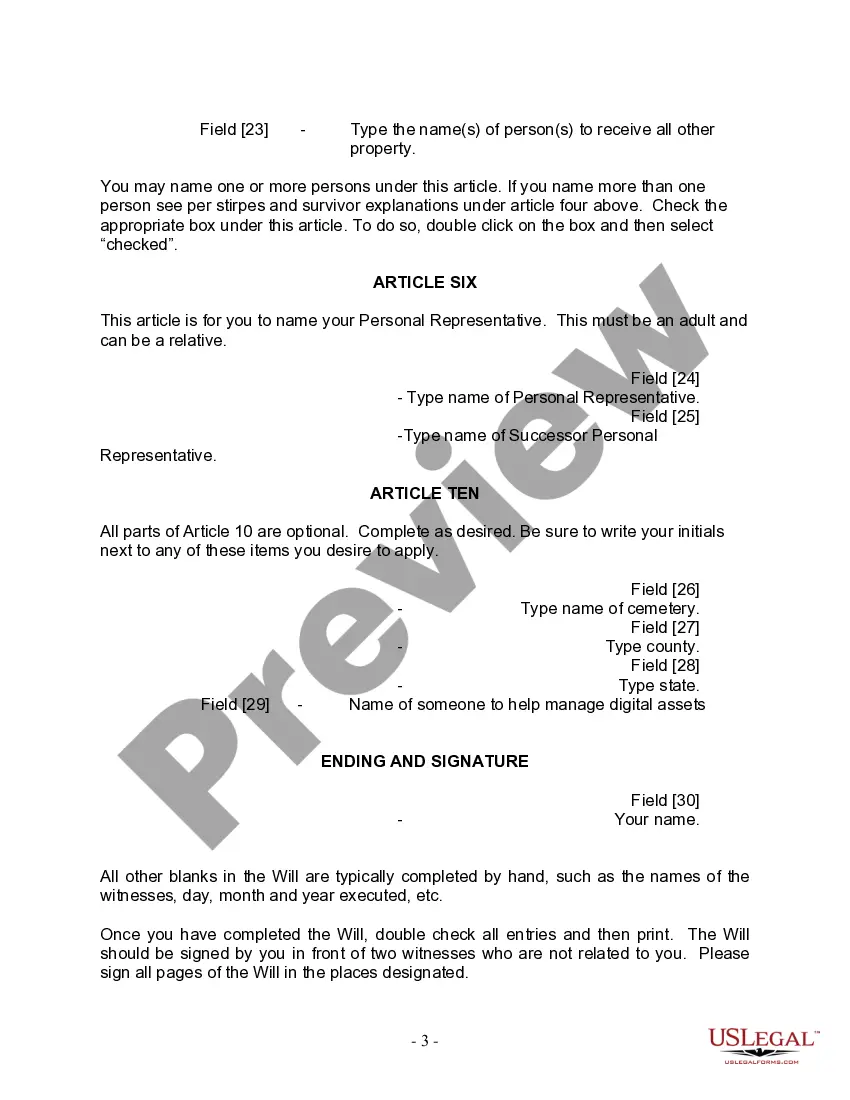
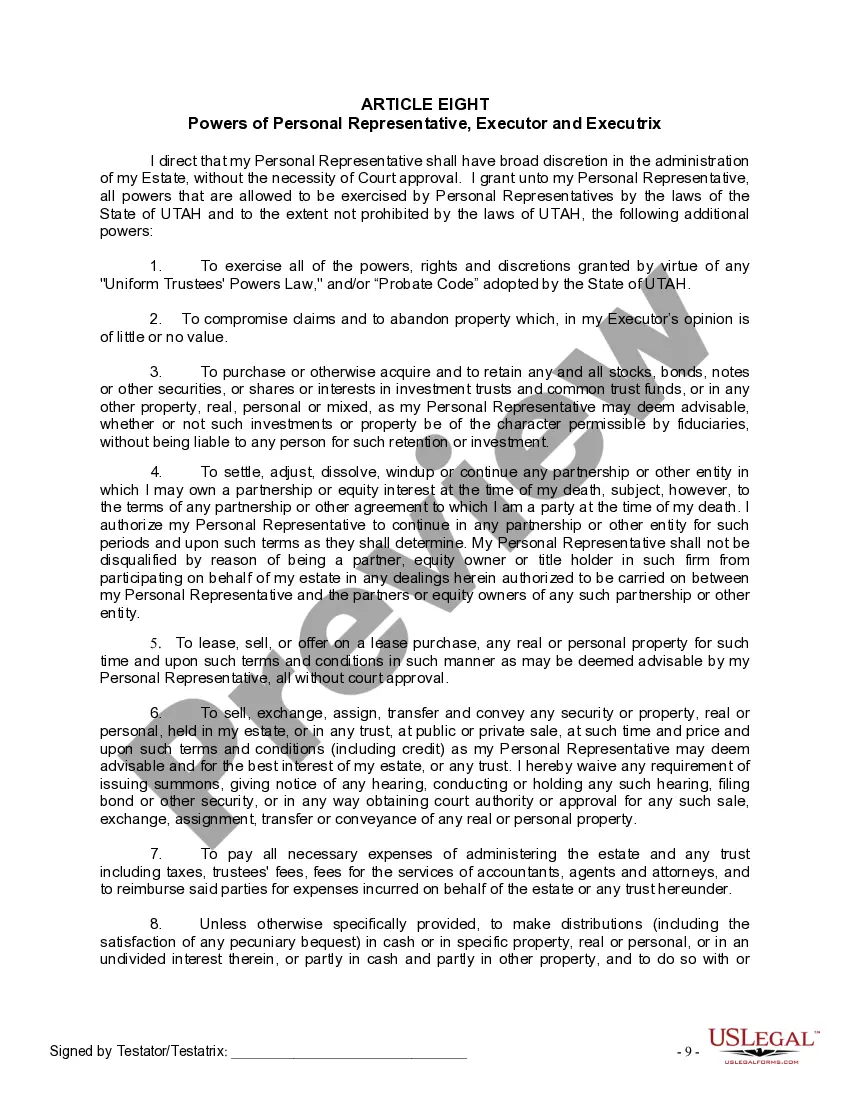
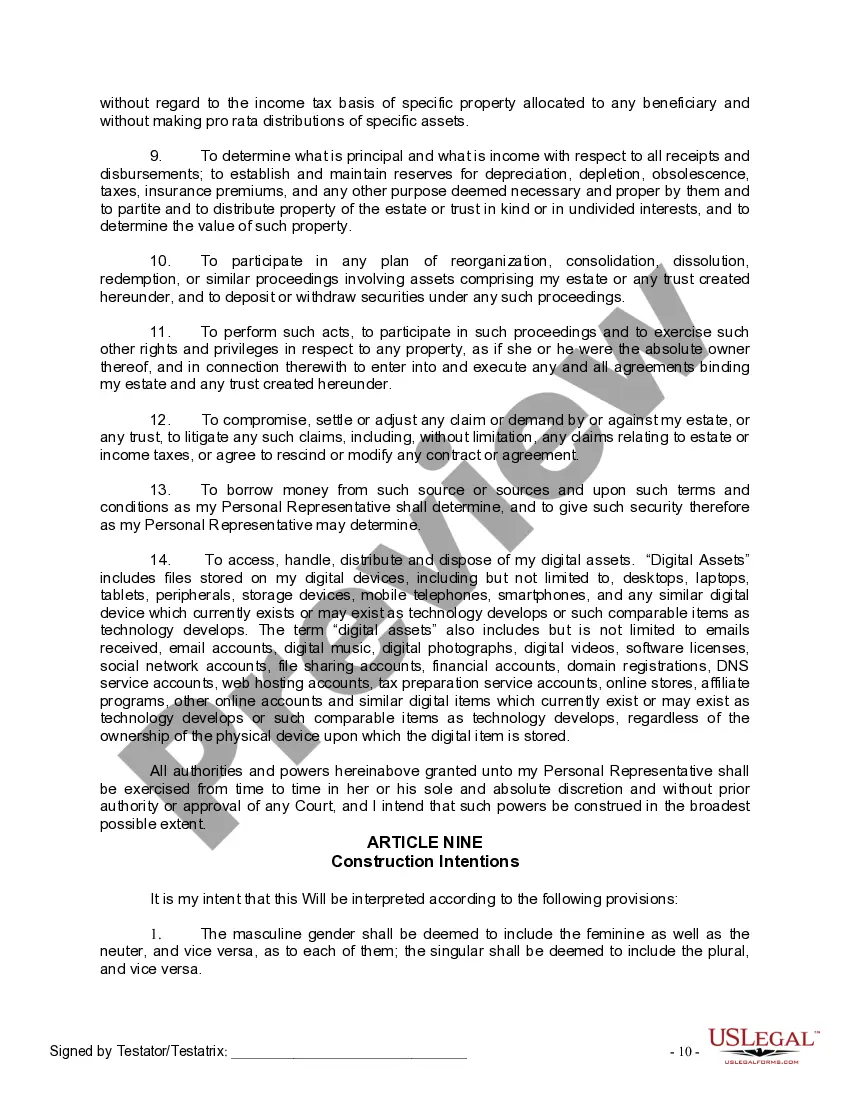
- Executor appointment: Designate a personal representative to manage your estate.
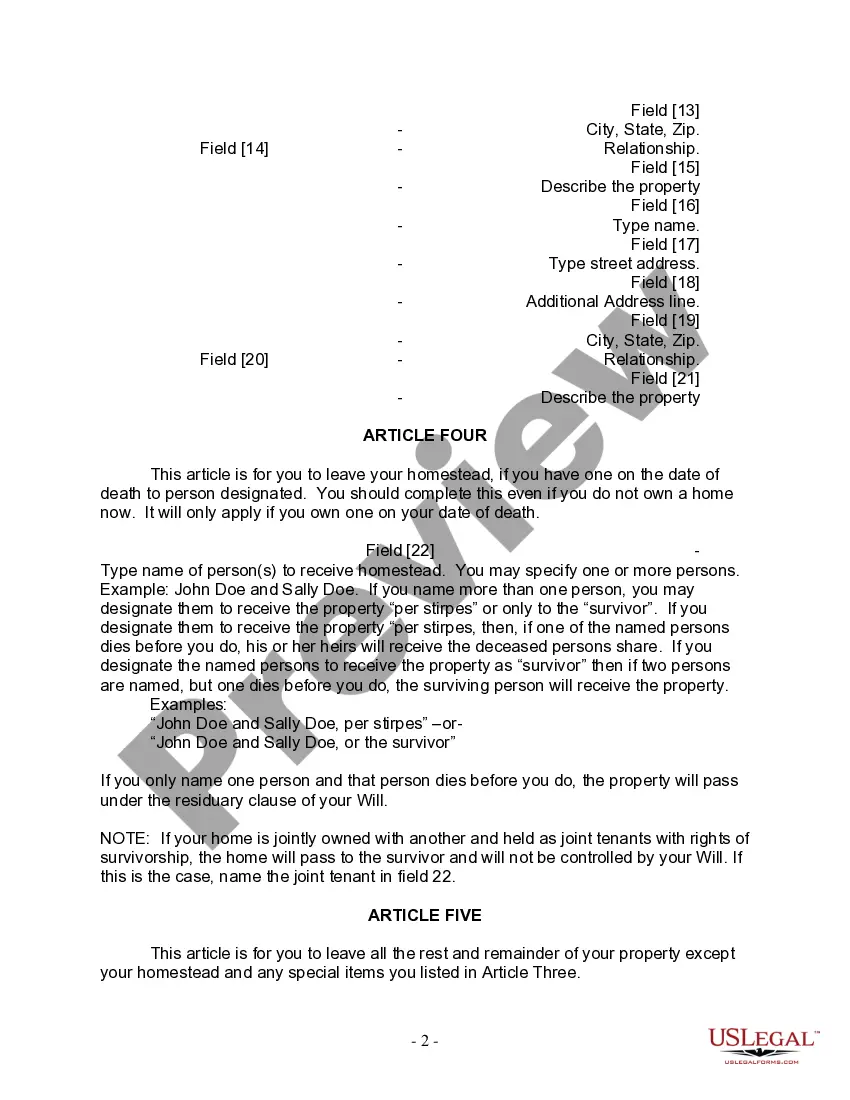
- Property distribution: Specify to whom your personal property, homestead, and the rest of your estate will go.
- Homestead clause: Provide instructions for distributing your residence if applicable.
- Witness requirements: Ensure the will is signed in the presence of two non-related witnesses.
- Self-proving affidavit: Optionally include a section for a notary to reduce probate complications.

Situations where this form applies
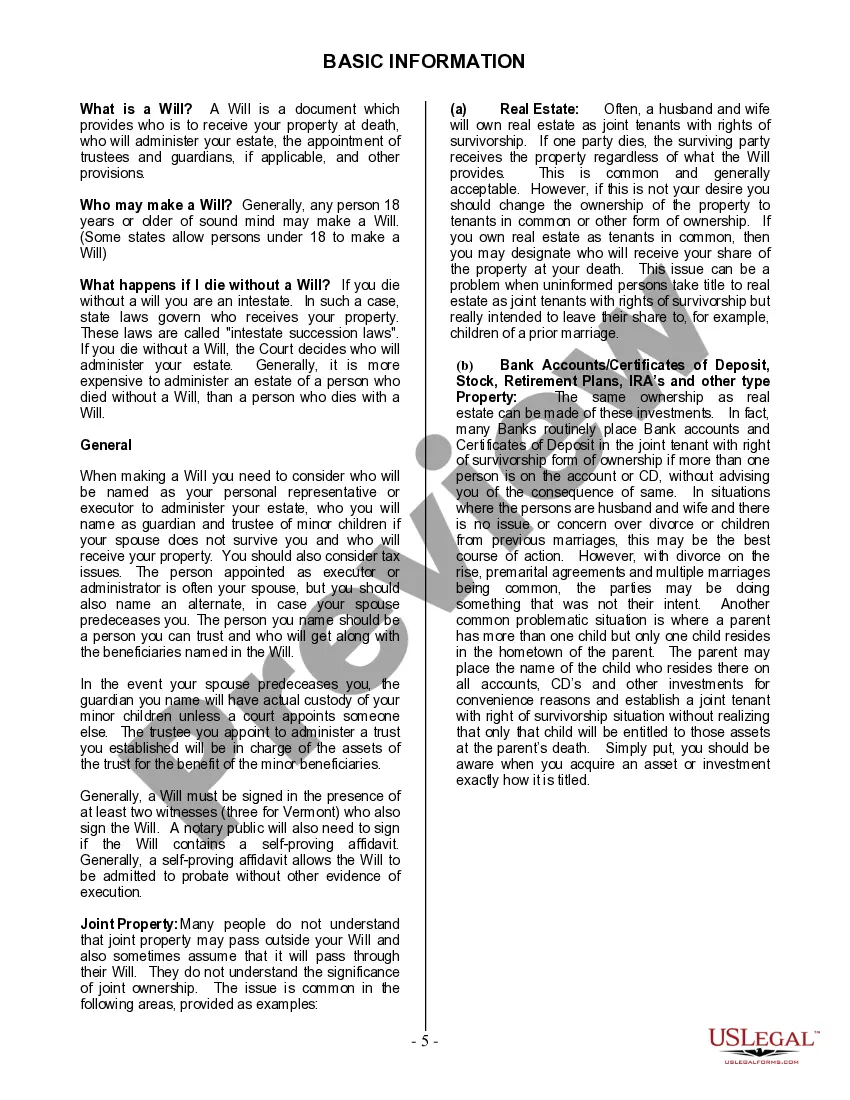
This Last Will and Testament is ideal for individuals who are single and do not have children. You should use this form when you want to ensure your assets are allocated according to your wishes, or when you need to appoint someone to handle your affairs after death. It is particularly important if you wish to avoid intestacy laws, which dictate how your property is distributed if you die without a will.
Who can use this document
- Individuals aged eighteen years or older who are single and have no children.
- Those who want to dictate how their property should be distributed after their death.
- Persons seeking to appoint an executor to manage their estate efficiently.
- Anyone desiring to simplify the probate process for their beneficiaries.
How to complete this form
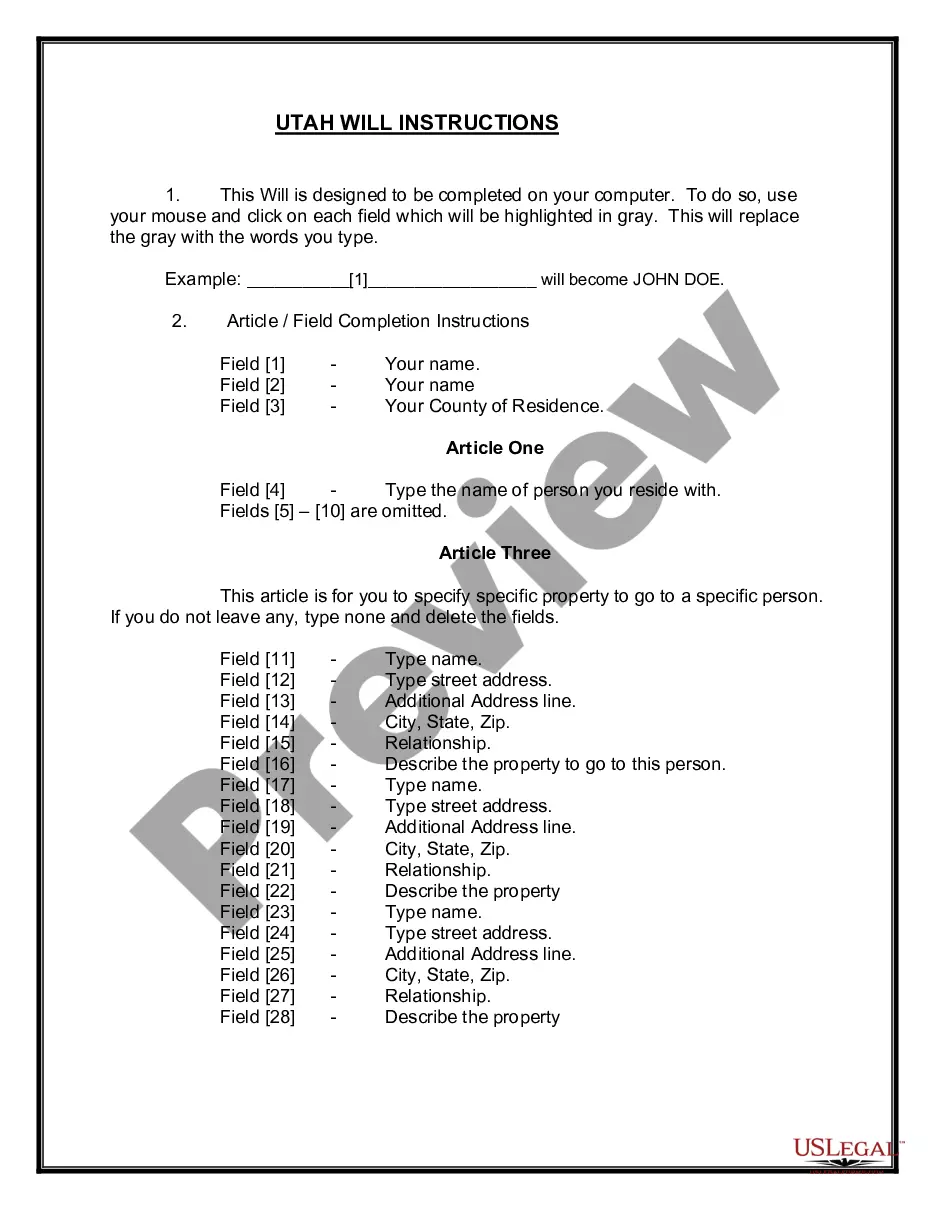
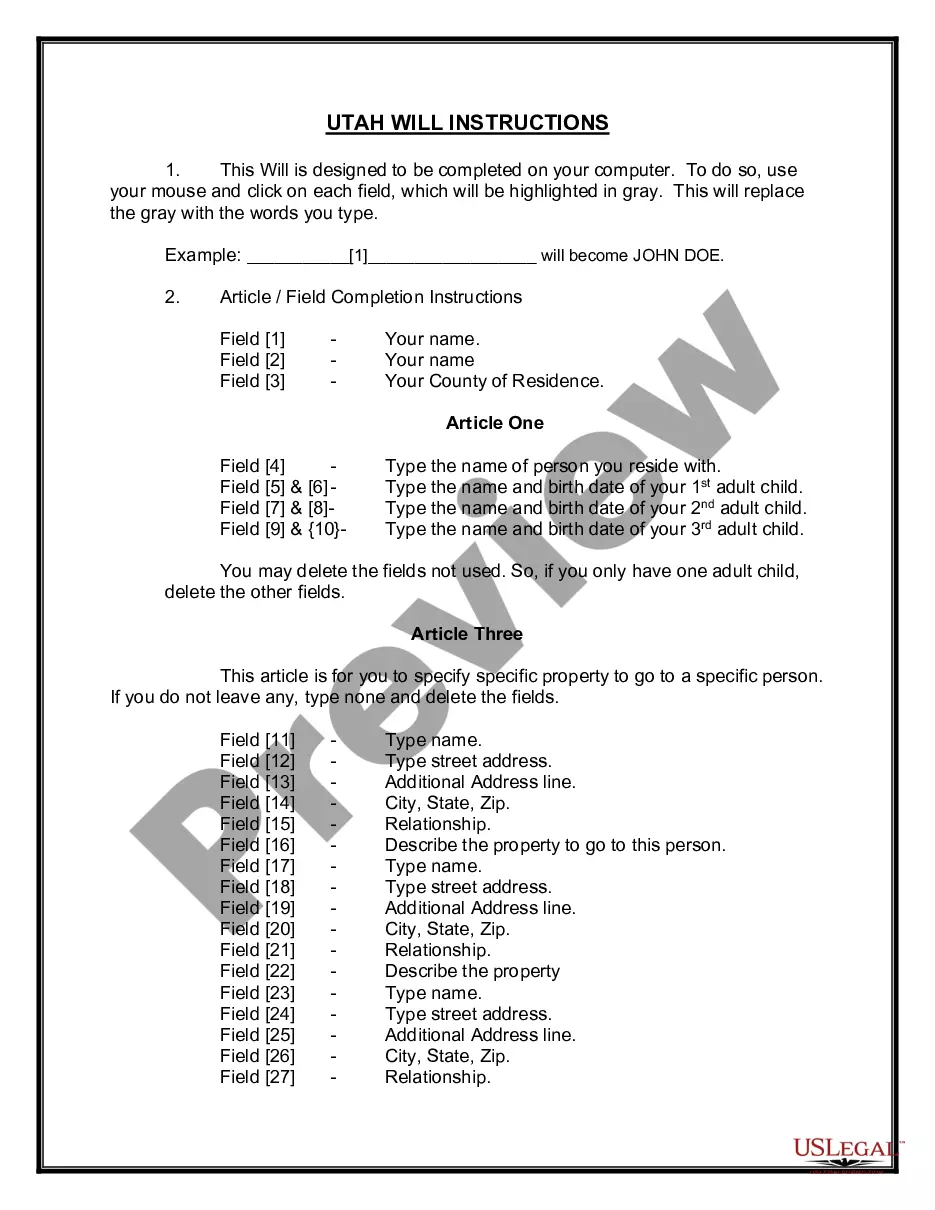
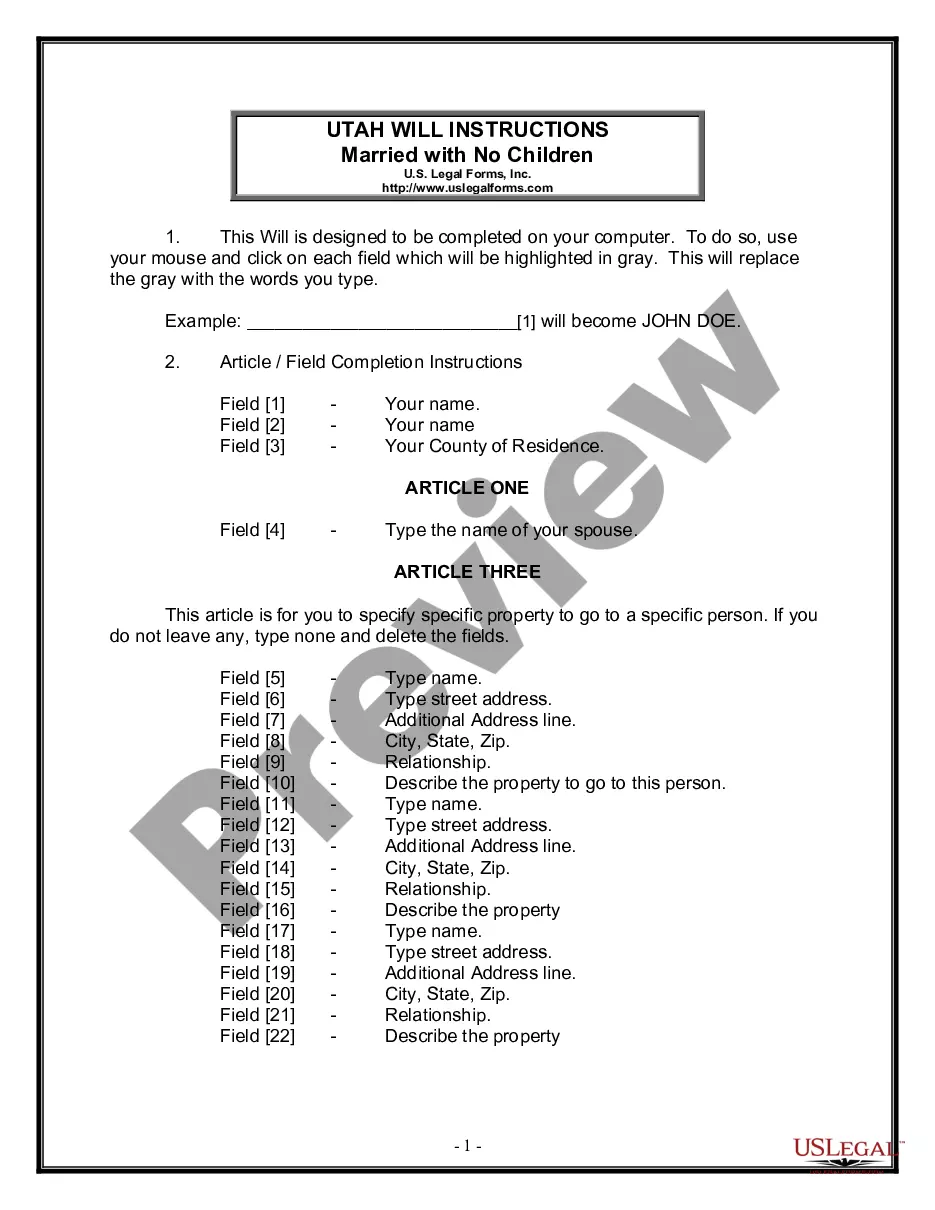
- Identify and enter your full name, county of residence, and any specific property you wish to distribute.
- Designate your personal representative by providing their name and relationship to you.
- Fill in the names and addresses of beneficiaries along with the properties they will receive.
- Sign the document in front of two witnesses who are not beneficiaries or related to you.
- If desired, have the will notarized along with the self-proving affidavit to simplify the probate process.
Does this document require notarization?
Yes, this form must be notarized to be legally valid if you choose to include the self-proving affidavit. Notarization ensures the document can be probated without additional evidence of execution. US Legal Forms offers integrated online notarization, providing 24/7 availability and secure video calls for convenience.
Get your form ready online
Our built-in tools help you complete, sign, share, and store your documents in one place.
Make edits, fill in missing information, and update formatting in US Legal Forms—just like you would in MS Word.
Download a copy, print it, send it by email, or mail it via USPS—whatever works best for your next step.
Sign and collect signatures with our SignNow integration. Send to multiple recipients, set reminders, and more. Go Premium to unlock E-Sign.
If this form requires notarization, complete it online through a secure video call—no need to meet a notary in person or wait for an appointment.
We protect your documents and personal data by following strict security and privacy standards.

Make edits, fill in missing information, and update formatting in US Legal Forms—just like you would in MS Word.

Download a copy, print it, send it by email, or mail it via USPS—whatever works best for your next step.

Sign and collect signatures with our SignNow integration. Send to multiple recipients, set reminders, and more. Go Premium to unlock E-Sign.

If this form requires notarization, complete it online through a secure video call—no need to meet a notary in person or wait for an appointment.

We protect your documents and personal data by following strict security and privacy standards.
Typical mistakes to avoid
- Forgetting to have the will signed in the presence of witnesses.
- Not clearly designating beneficiaries or properties, leading to confusion.
- Failing to update the will after significant life changes.
- Overlooking the self-proving affidavit, which can streamline the probate process.
Advantages of online completion
- Convenience: Complete the form at your own pace and from anywhere.
- Editability: Easily update information as necessary.
- Reliability: Access professionally drafted templates created by licensed attorneys.
- Guidance: Step-by-step instructions reduce confusion during the completion process.
Key takeaways
- The form is specifically designed for individuals who are single and have no children.
- Proper completion and signing in front of witnesses are crucial for enforceability.
- A self-proving affidavit can simplify the probate process if included and notarized.
- Regular updates are essential to reflect any major changes in circumstances or intentions.
Looking for another form?
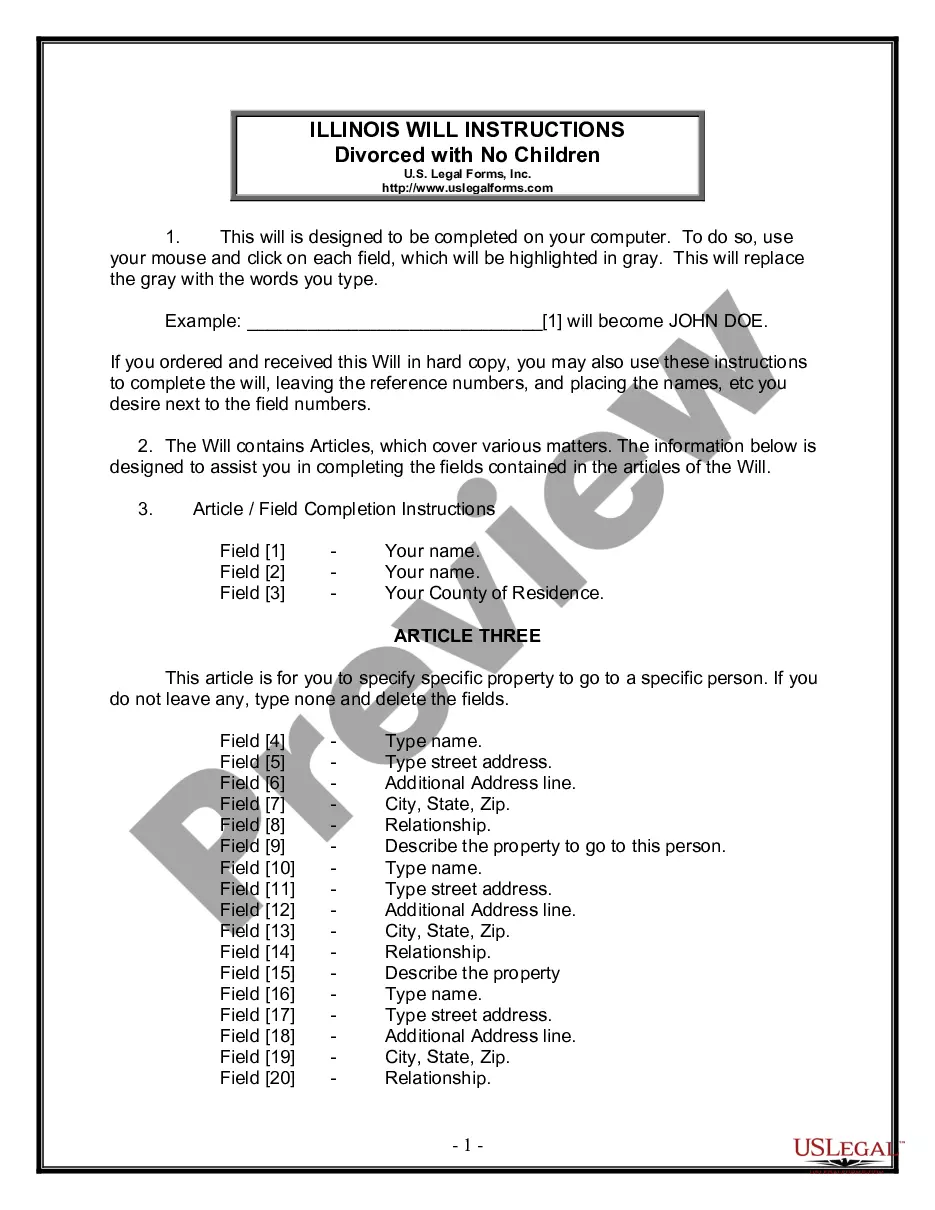
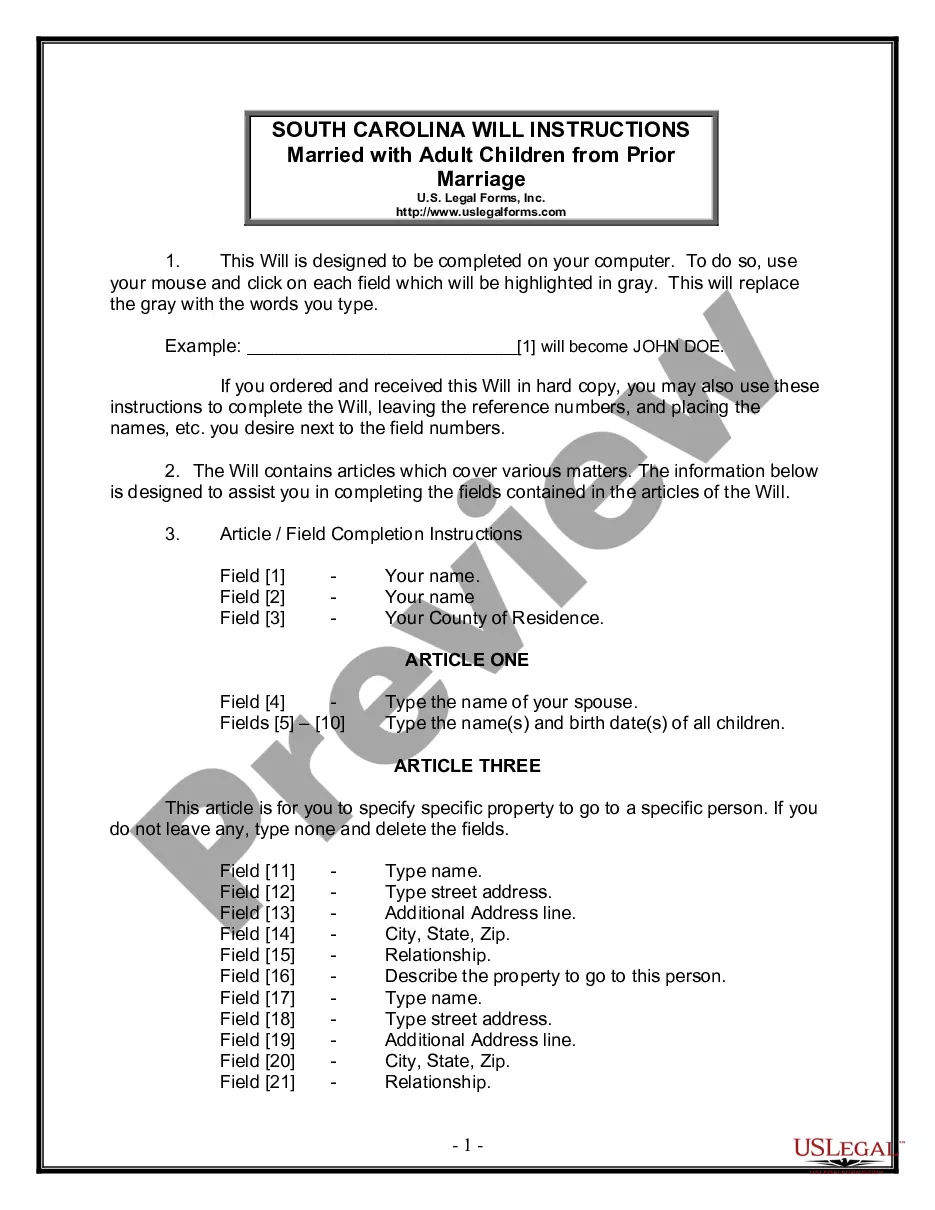
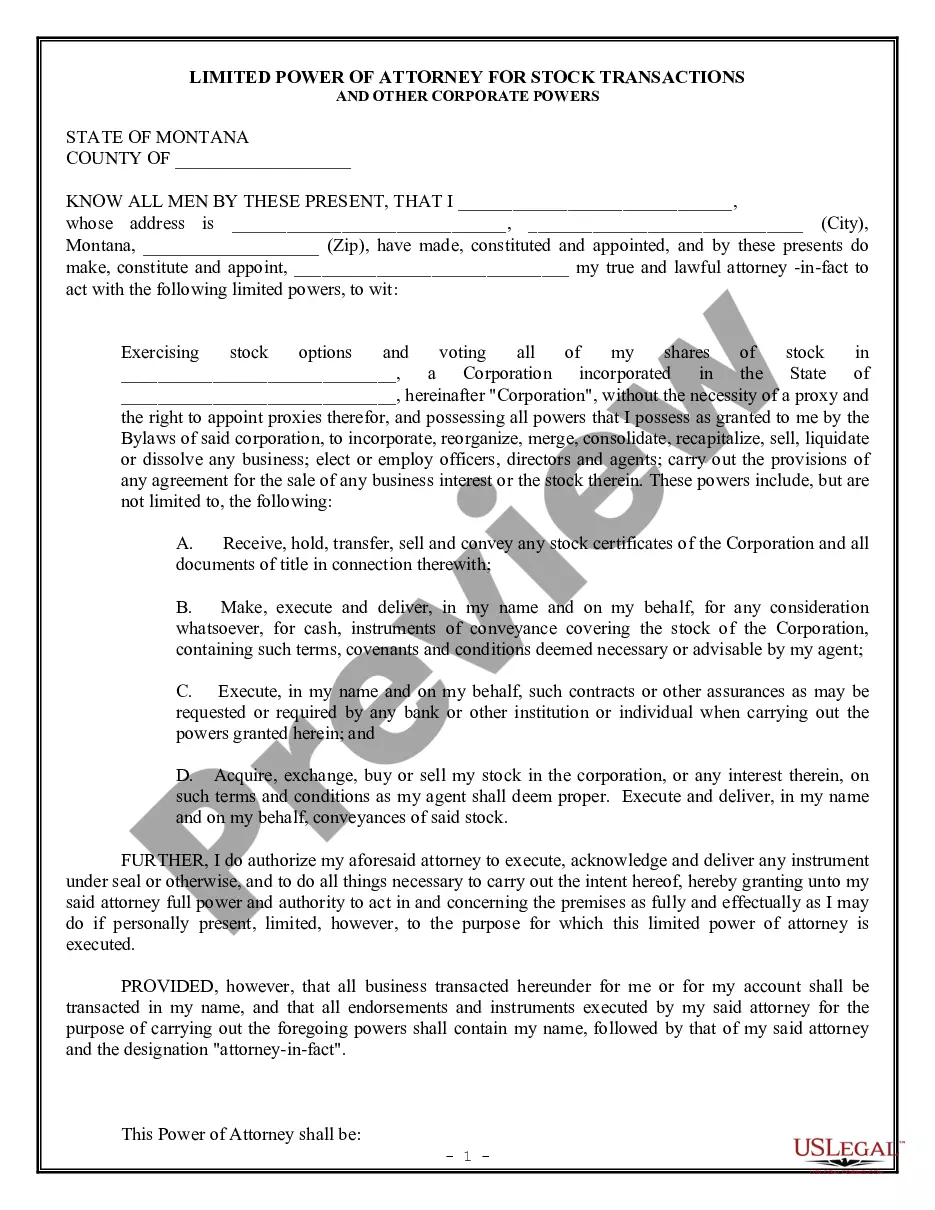
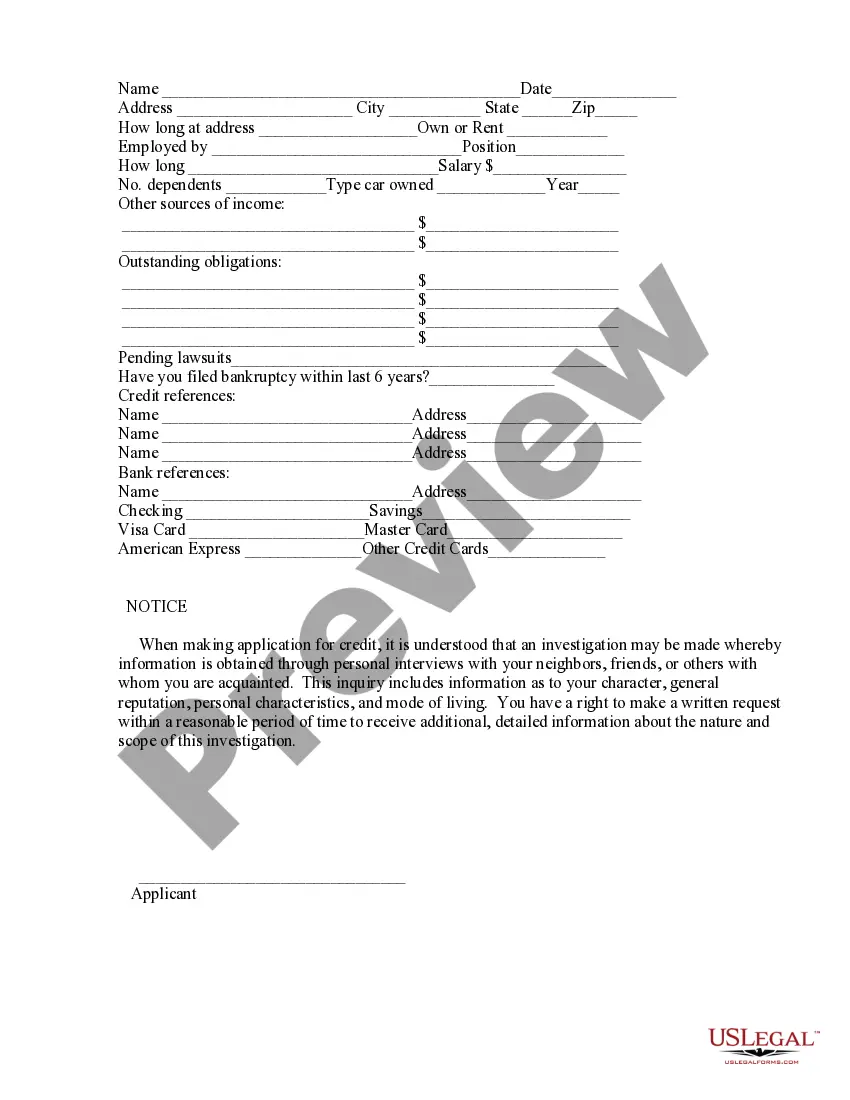
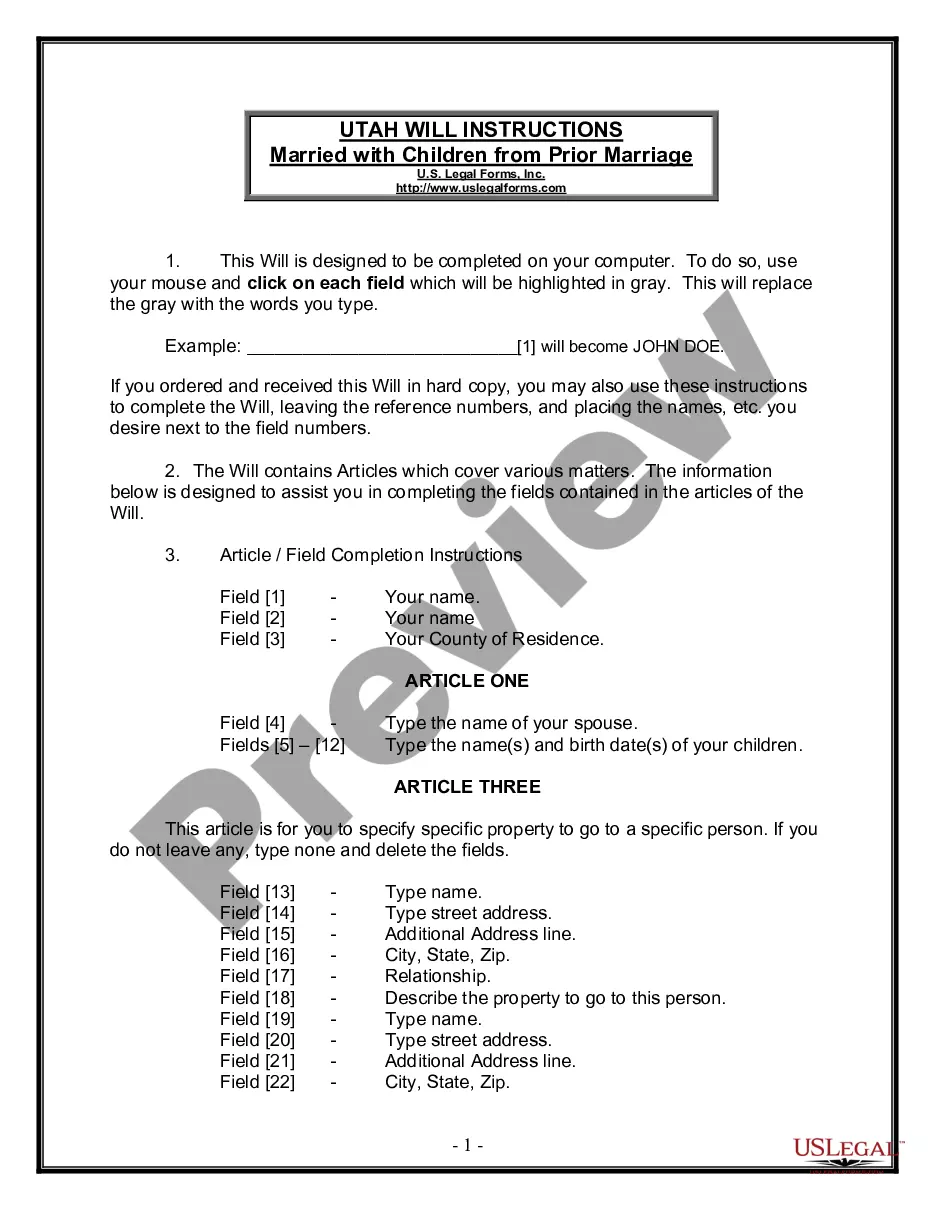
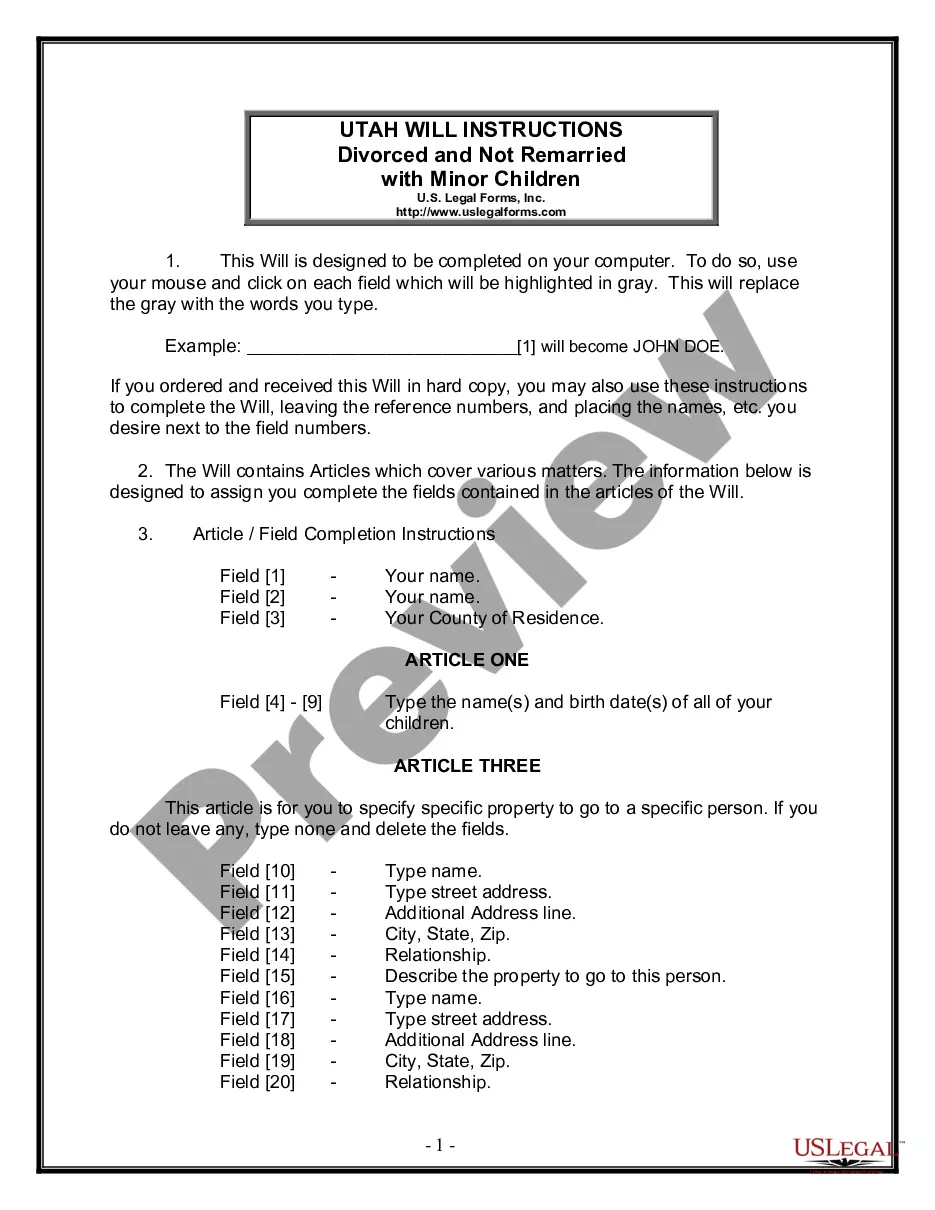
Form popularity
FAQ
This Utah Last Will and Testament for a Single Person With No Children is a legal document that lets you name an executor, decide how your assets are distributed, and specify arrangements for your homestead if applicable. It’s designed for singles without children to ensure their wishes are followed after death.
Yes, you can draft your own will in Utah, and this form provides a complete, fill‑in template for a single person with no children. It guides you to enter personal information, appoint an executor, and specify who receives your property and homestead. The template also shows how to sign and have witnesses, with an optional self‑proving affidavit.
Under this form, a will is positioned to be valid by being signed by the testator in the presence of two non‑related witnesses, with an optional self‑proving affidavit to simplify probate. The document’s structure ensures the executor appointment and property distribution sections are clearly addressed.
Yes. This form is designed specifically for individuals who are single and have no children, helping them control who inherits their property and who administers the estate. Using it can simplify probate for beneficiaries by clearly naming an executor and outlining asset distribution, reducing the likelihood of intestacy rules applying.
A common mistake is failing to execute the will correctly, such as not signing or not meeting the witnessing requirement. This Utah form also advises appointing a personal representative and clearly describing who gets each asset, including the homestead if applicable. Skipping these steps can lead to probate complications or disputes among beneficiaries.
This form is tailored specifically for a single person with no children, focusing on appointing an executor and distributing assets to named beneficiaries while avoiding guardianship provisions for minors. A will for someone with children would typically include guardianship and possibly child-related trusts, which this form does not address.