Utah Inventory and Condition of Leased Premises for Pre Lease and Post Lease
Overview of this form
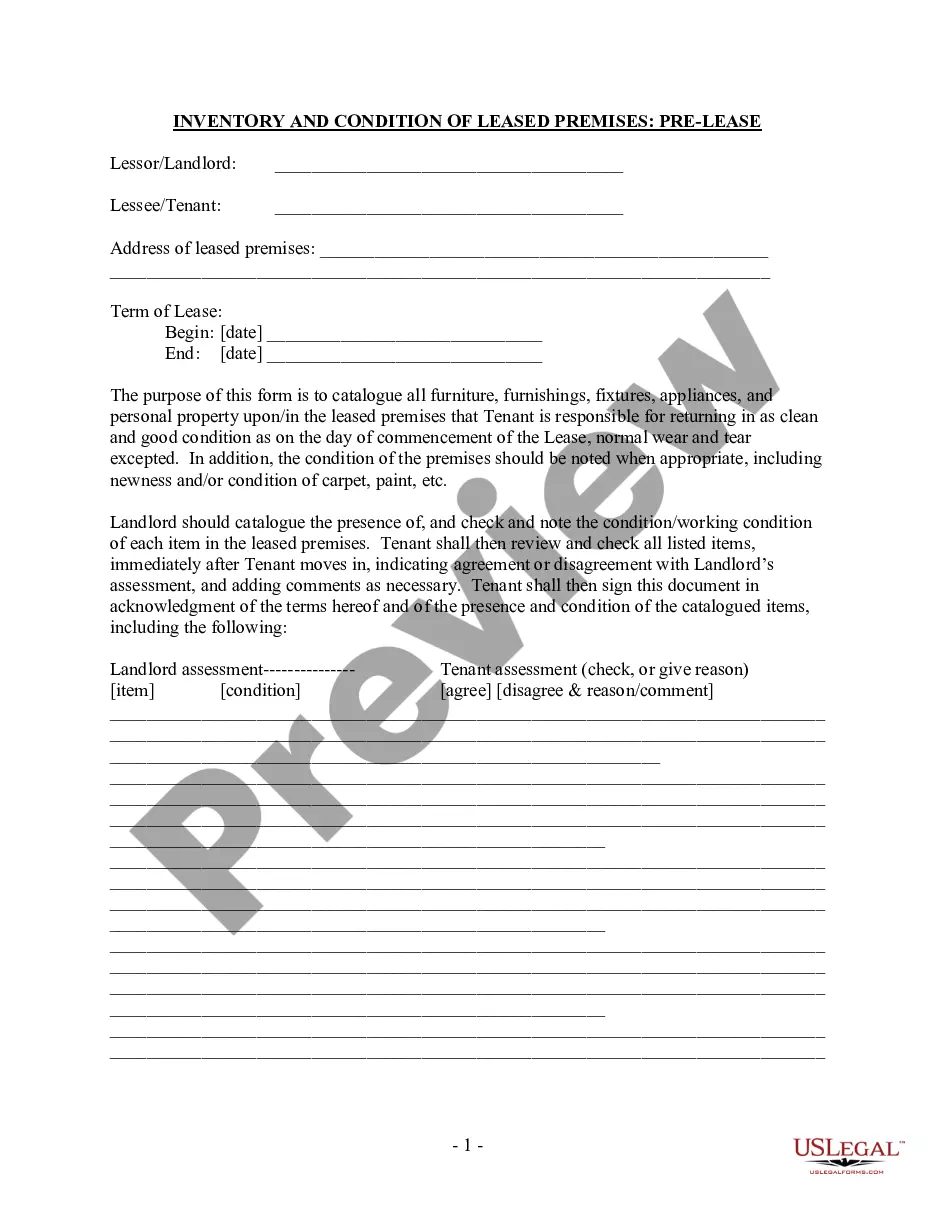
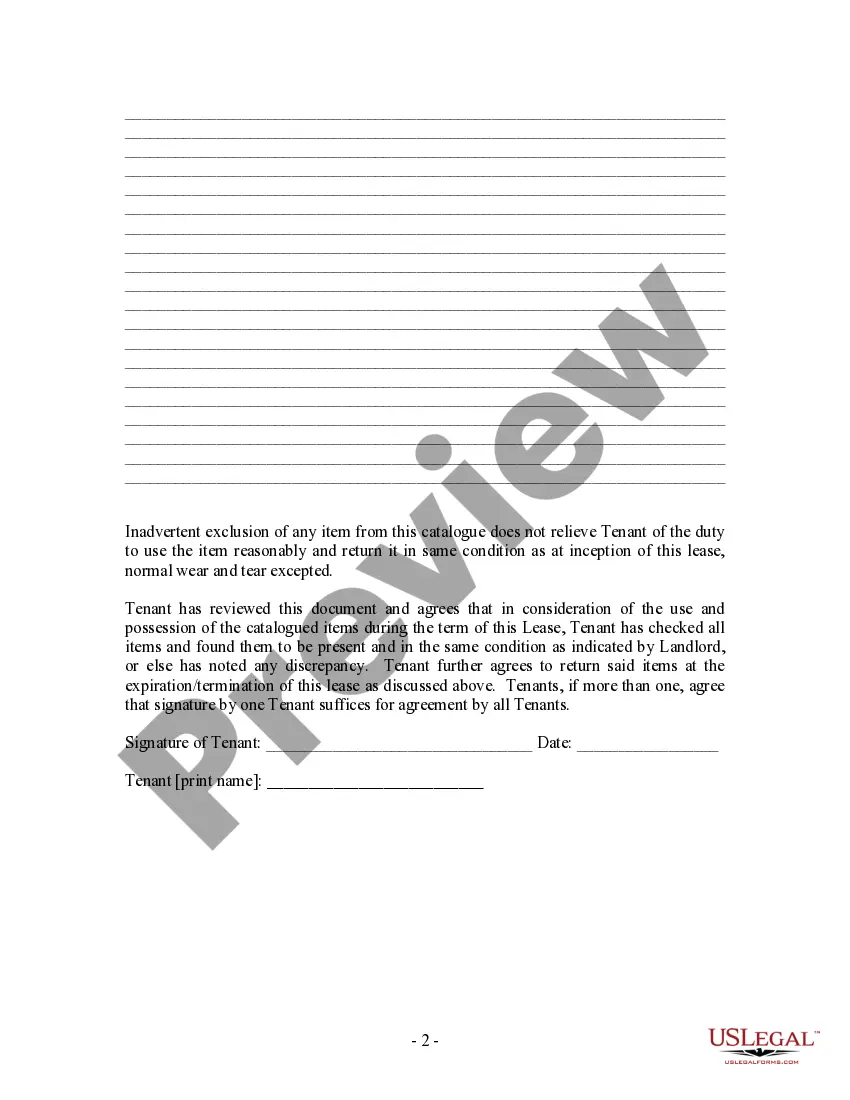
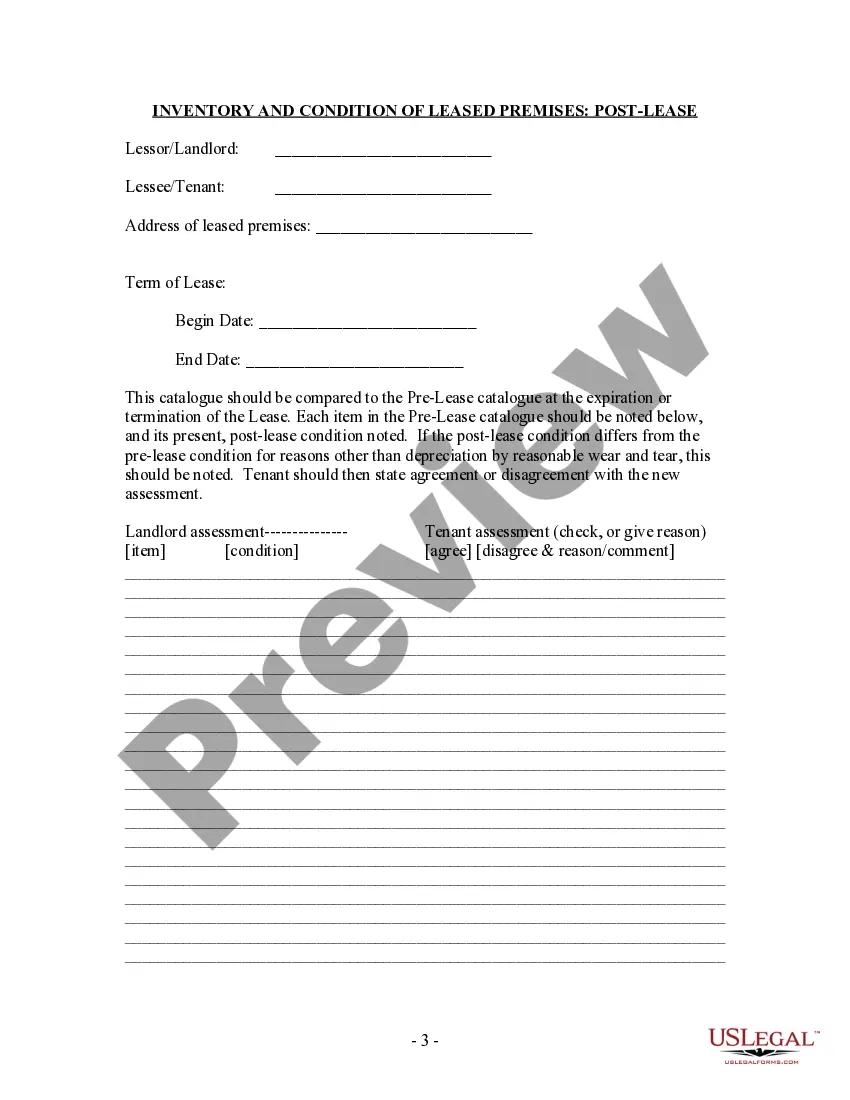
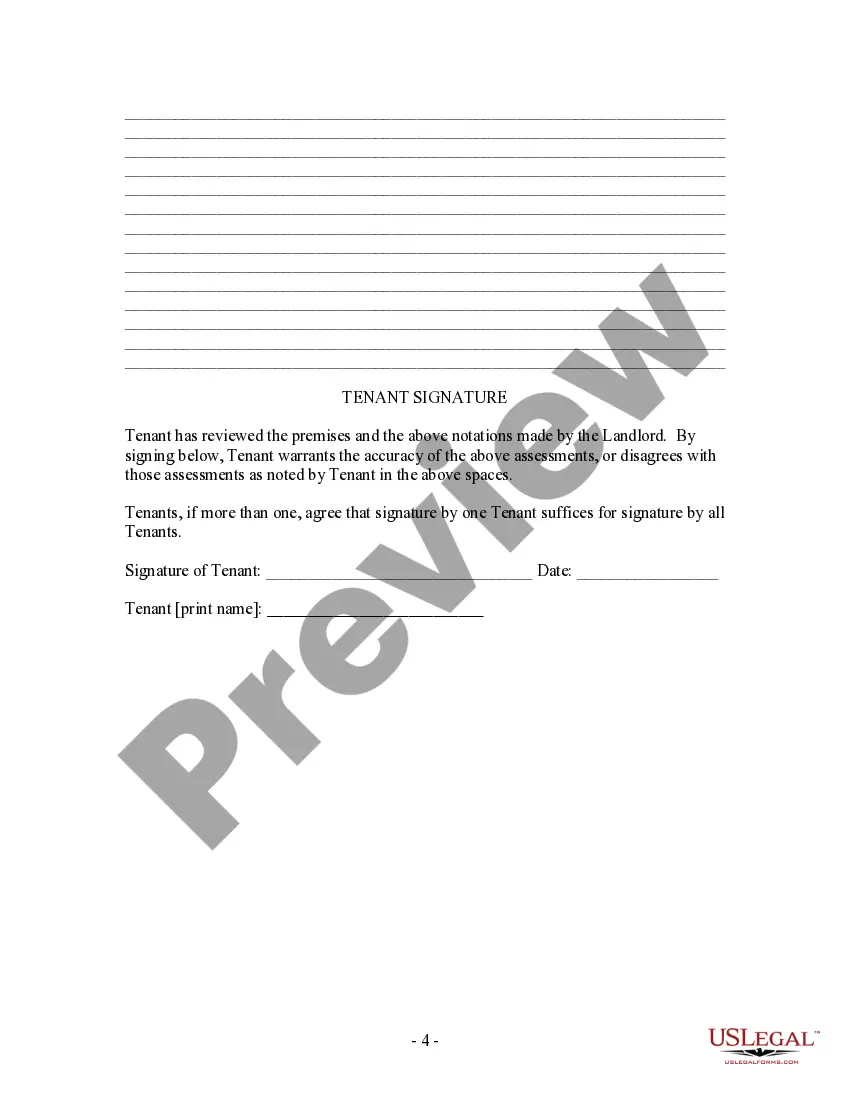
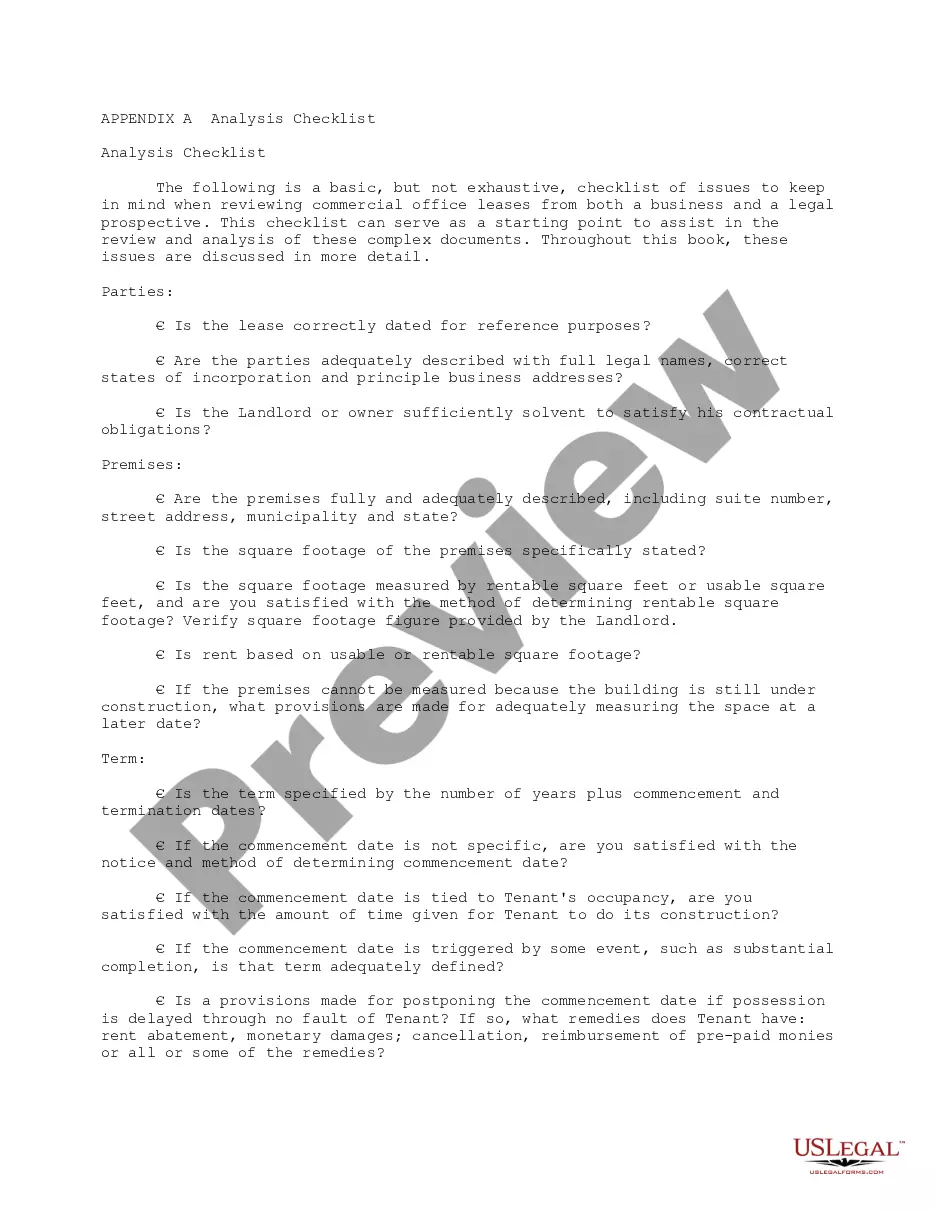
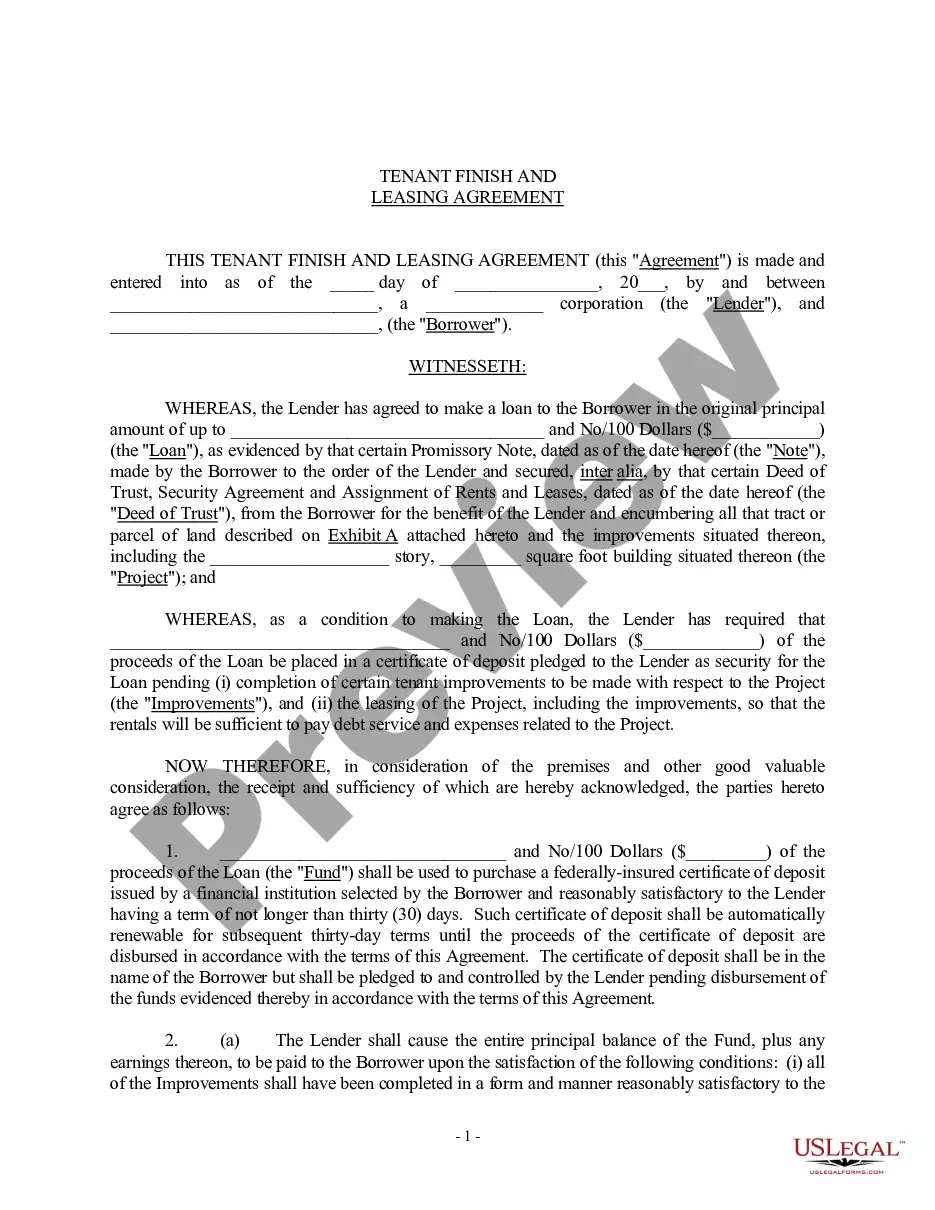
The Inventory and Condition of Leased Premises for Pre Lease and Post Lease is a legal document used by tenants and landlords to document the condition and inventory of a rental property before and after the lease term. This form serves to protect both parties by clearly defining the state of the property and its contents upon moving in and out, differentiating it from other rental agreements. It ensures that tenants return the property in good condition, accounting for normal wear and tear.
Key parts of this document
- Identification of lessor/landlord and lessee/tenant.
- Address of the leased premises and duration of the lease.
- Inventory of all furniture, fixtures, appliances, and their conditions.
- Sections for landlord and tenant to assess and note discrepancies.
- Signatures of both parties to acknowledge agreement on the condition upon move-in and move-out.
Situations where this form applies
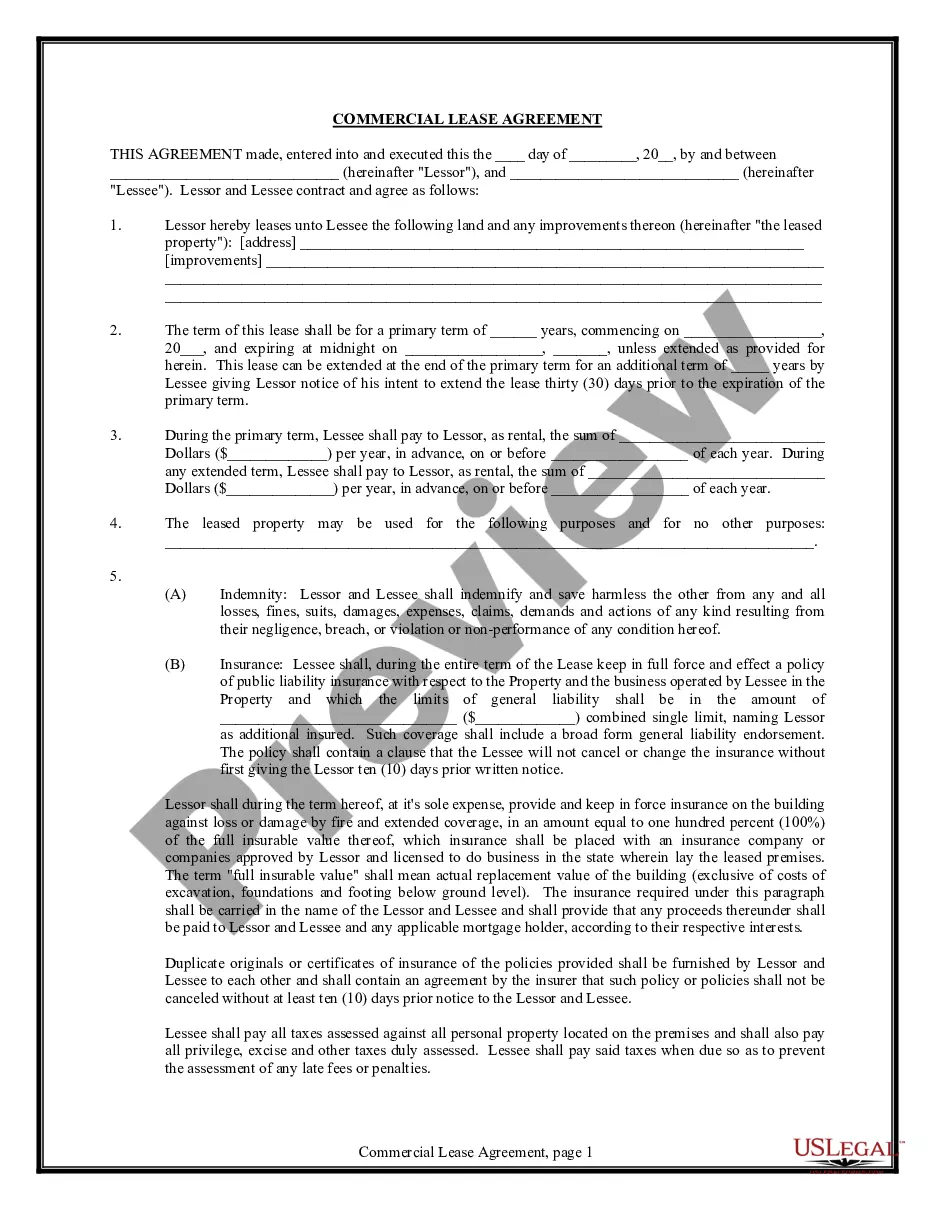
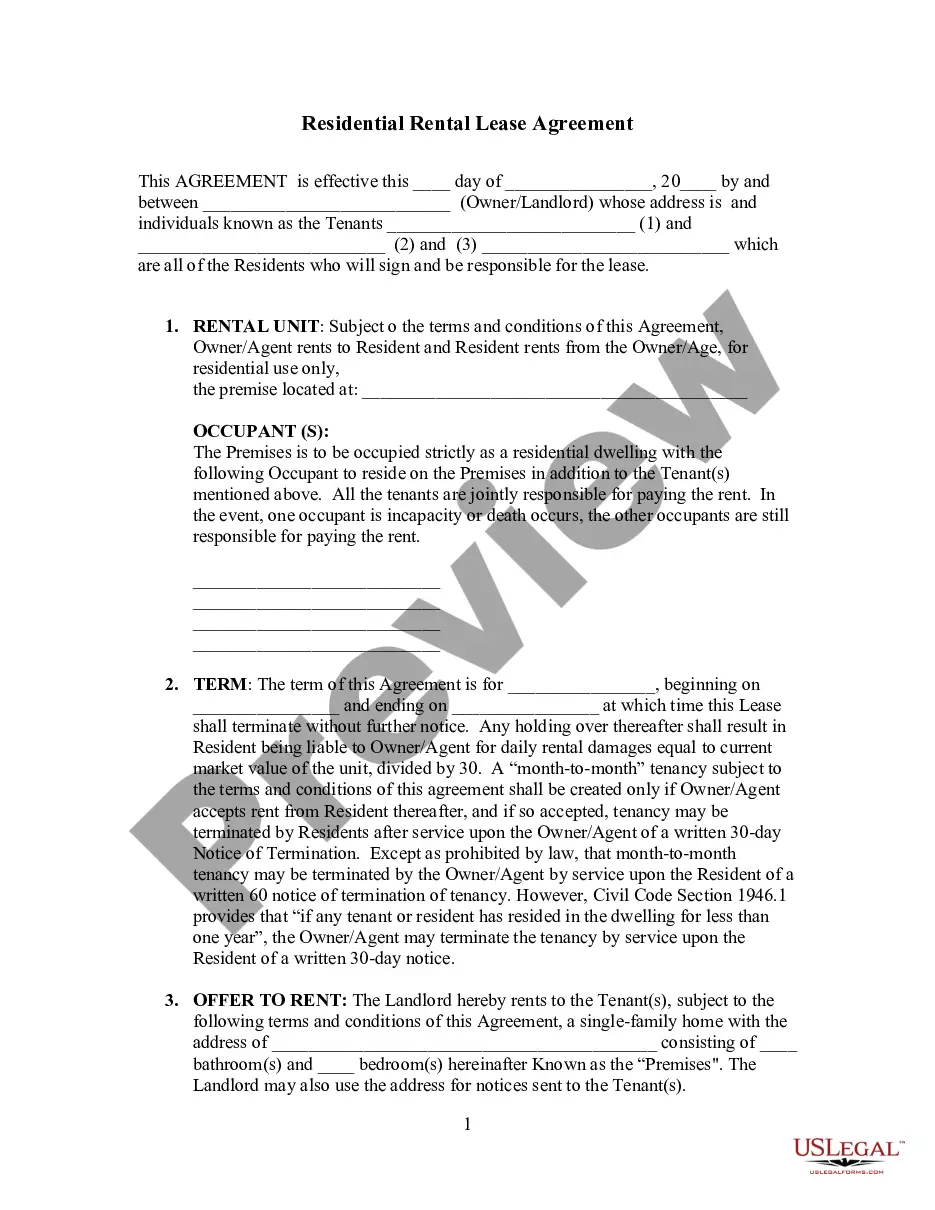
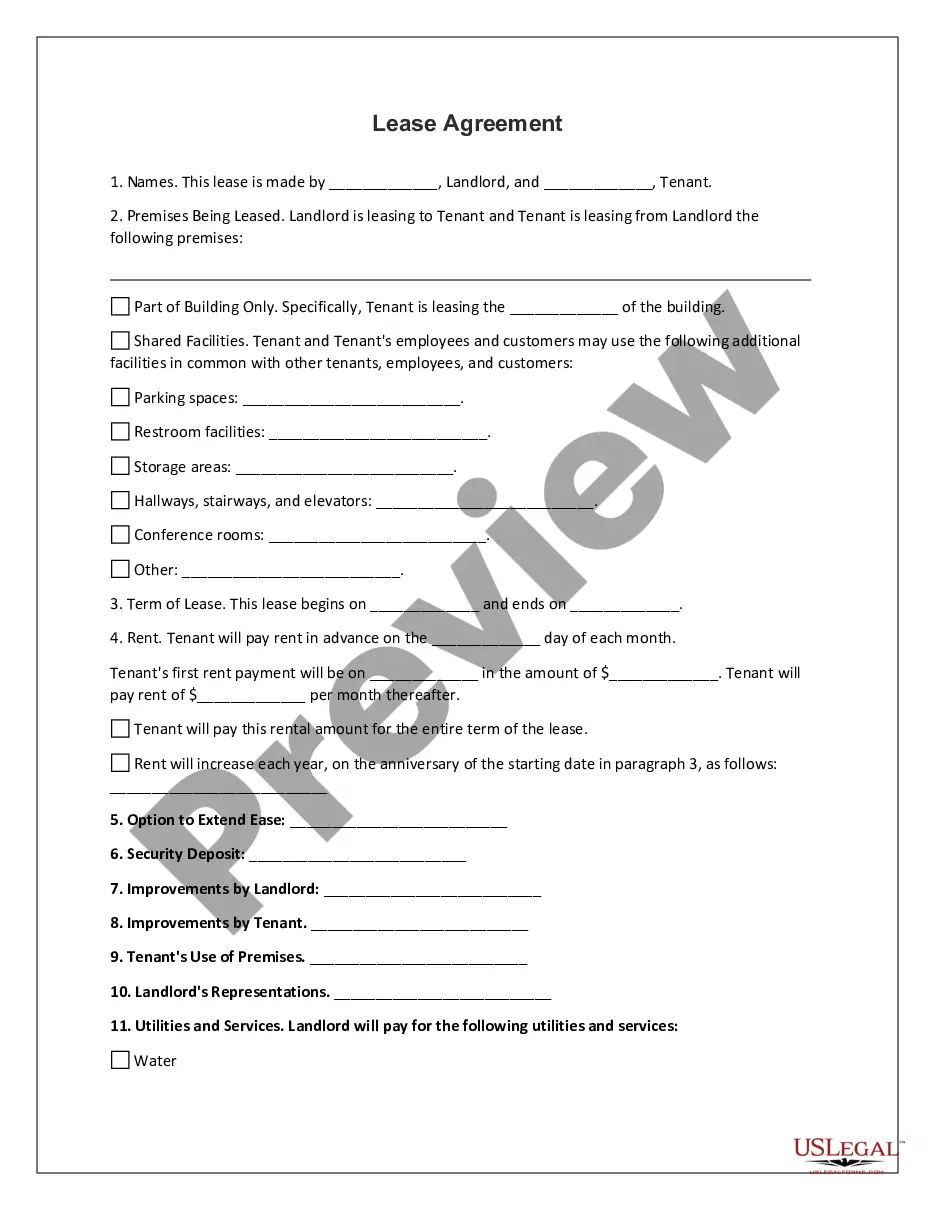
This form is necessary when entering a lease agreement for rental property. It should be completed both at the beginning and end of the lease term. This document is particularly important for protecting the rights of both tenants and landlords, especially when there is significant furniture or personal property in the rental space. It is also useful in preventing disputes regarding the condition of the property and its contents during the lease term.
Who this form is for
This form is intended for:
- Landlords renting out residential or commercial properties.
- Tenants moving into a leased property.
- Property managers overseeing rental agreements.
- Anyone involved in a lease agreement needing to document property conditions.
Steps to complete this form
- Identify the parties involved by entering the landlord's and tenant's names.
- Provide the address of the leased premises and the lease term dates.
- Catalog all items present in the property, noting their initial condition based on the landlordâs assessment.
- Have the tenant review the inventory and indicate agreement or disagreement with any discrepancies.
- Both parties should sign the document to acknowledge their agreement on the inventory and condition.
Notarization requirements for this form
Notarization is generally not required for this form. However, certain states or situations might demand it. You can complete notarization online through US Legal Forms, powered by Notarize, using a verified video call available anytime.
Get your form ready online
Our built-in tools help you complete, sign, share, and store your documents in one place.
Make edits, fill in missing information, and update formatting in US Legal Forms—just like you would in MS Word.
Download a copy, print it, send it by email, or mail it via USPS—whatever works best for your next step.
Sign and collect signatures with our SignNow integration. Send to multiple recipients, set reminders, and more. Go Premium to unlock E-Sign.
If this form requires notarization, complete it online through a secure video call—no need to meet a notary in person or wait for an appointment.
We protect your documents and personal data by following strict security and privacy standards.

Make edits, fill in missing information, and update formatting in US Legal Forms—just like you would in MS Word.

Download a copy, print it, send it by email, or mail it via USPS—whatever works best for your next step.

Sign and collect signatures with our SignNow integration. Send to multiple recipients, set reminders, and more. Go Premium to unlock E-Sign.

If this form requires notarization, complete it online through a secure video call—no need to meet a notary in person or wait for an appointment.

We protect your documents and personal data by following strict security and privacy standards.
Typical mistakes to avoid
- Failing to write down all items present in the premises.
- Not specifying the condition of items clearly, leading to future disputes.
- Overlooking tenant comments on the condition after move-in.
- Not having both parties sign the form, which affects its enforceability.
Advantages of online completion
- Convenience of easy access and download from home.
- Editability allows for customization specific to your lease situation.
- Reliability of using a legally vetted form drafted by licensed attorneys.
- Instant availability without the need for an in-person consultation.
Legal use & context
- This form provides legal documentation of the condition of property for resolution of any disputes regarding damages.
- Enforceable in court if both parties agree to the assessments recorded.
- Helps in establishing accountability for damages beyond normal wear and tear at the end of the lease.
What to keep in mind
- The Inventory and Condition of Leased Premises form ensures both parties have a record of the property's condition.
- It is important for preventing disputes regarding damages and security deposit returns.
- Both landlords and tenants benefit from clearly documented agreements made before and after the lease period.
Looking for another form?
Form popularity
FAQ
A rental inspection checklist is a tool used by landlords or property managers to ensure that rental properties are in good condition before, during, and after the tenant's occupation. Conducting a rental inspection involves a thorough visual check of the property's rooms and exterior.
You can help the situation a lot by providing as much notice as possible and writing a sincere letter to your landlord explaining why you need to leave early. Ideally you can offer your landlord a qualified replacement tenant, someone with good credit and excellent references, to sign a new lease with your landlord.
Negotiate to Break Lease Any lease can be legally terminated before its end date if both parties agree. Also, if rents have risen in the area since you signed your lease, the landlord may be motivated to terminate the lease in order to charge a higher rent.
If you pay all outstanding charges before moving, including any back rent and fees, breaking a lease won't hurt your credit score. However, breaking a lease can damage your credit if it results in unpaid debt.Landlords generally don't report unpaid rent to credit bureaus.
Declare a Constructive Eviction. Point Out Landlord Breaches to Reduce Your Debt. Landlords Have a Duty to Mitigate Their Damages. Consequences for Breaking Your Lease. Look for These Clauses in Your Lease. Your Landlord May Have a Duty to Mitigate. Declare a Constructive Eviction.
Give the landlord/agent a written termination notice and vacate move out and return the keys according to your notice, and/or. apply to the NSW Civil & Administrative Tribunal (NCAT) for a termination order.
By the law, Utah tenants are required to abide in a certain way. They must follow certain procedures as outlined by the law as well. Tenants also have certain rights that they are entitled to, as well as things they are responsible for. The tenant has the right to dwell in a safe and sanitary housing unit.
Tenant's name & address. Move-in date. Date of move-in inspection. Move-out date. Date of move-out inspection. Tenant signature. Landlord name & address. Landlord contact information.
Tenant Rights: Repairs, Security Deposits, and More You're also entitled to live in a unit that's in a habitable condition such that it is safe, sanitary, and fit for human habitation. This means your landlord must maintain heating and air conditioning systems, and provide hot and cold water, among other services.