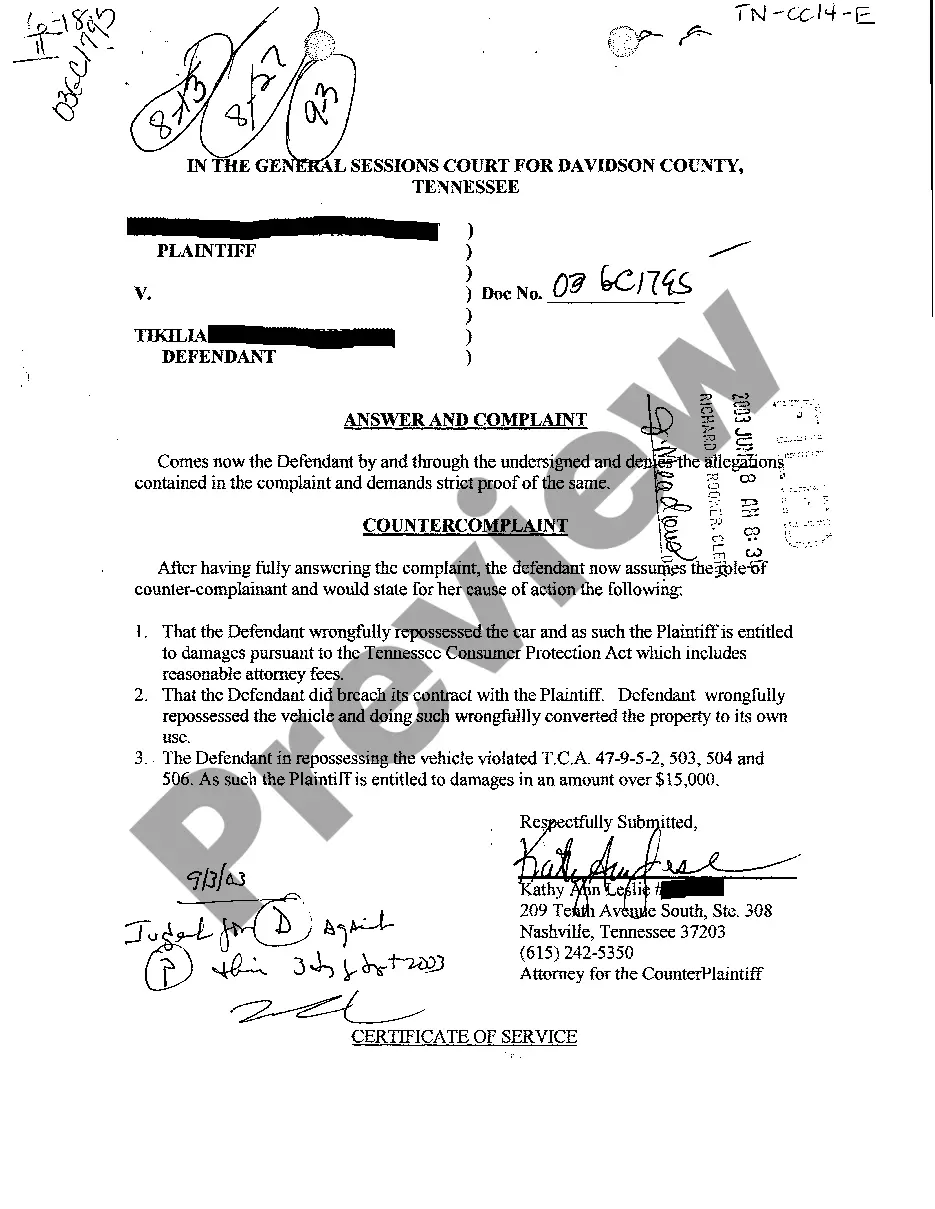
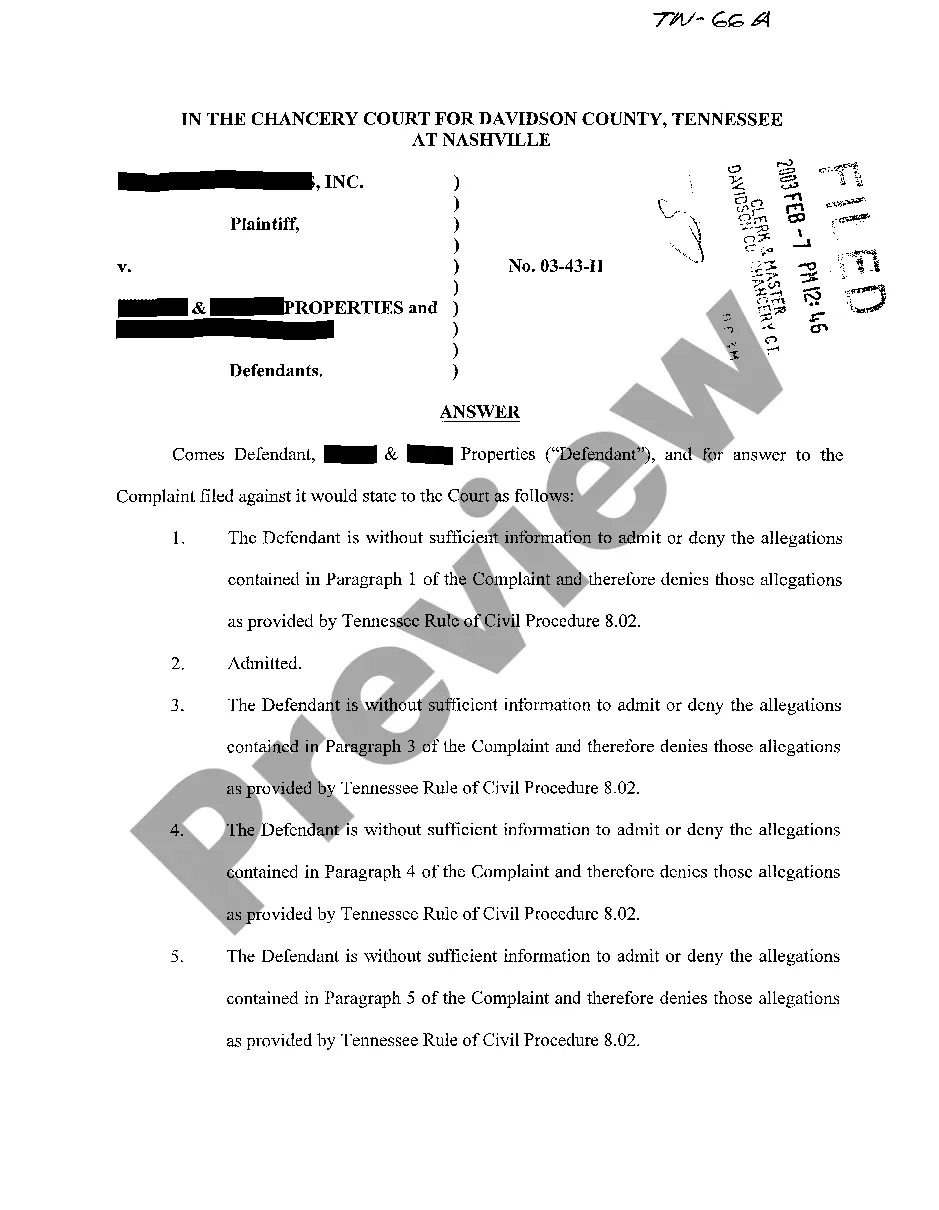
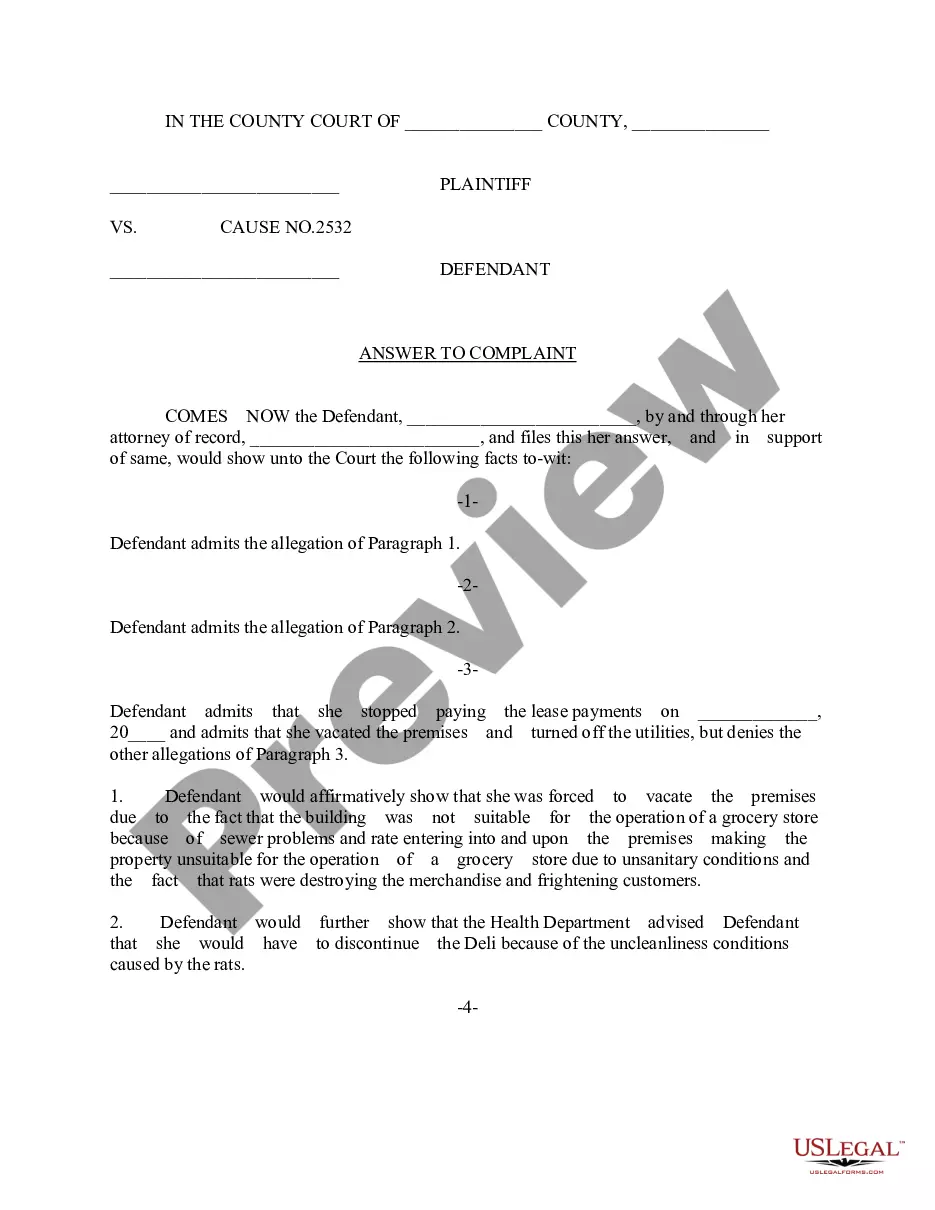
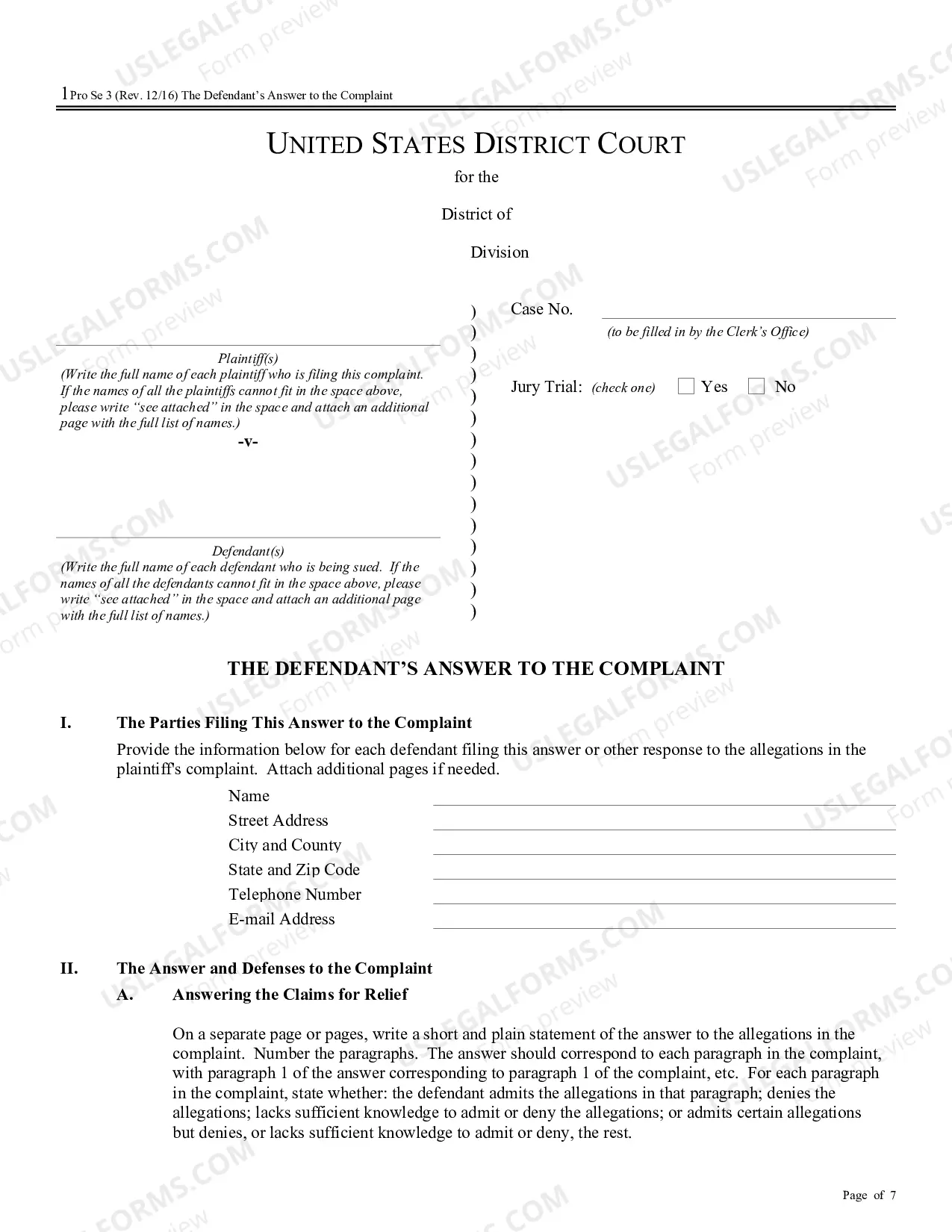
Tennessee Answer To Complaint and Countercomplaint
Does this form need to be notarized?
In most cases, this form does not require notarization. However, some jurisdictions or signing circumstances might. US Legal Forms offers online notarization powered by Notarize, accessible 24/7 for a quick, remote process.
Form popularity
FAQ
The plaintiff must give you responses to your request for admissions within 30 days. You do not need to do anything if you do not get a response. The plaintiff has 30 days to deny or object to the statements.
A General Denial is a simple response to a lawsuit. In one sentence, the defendant denies every allegation in the complaint. The defendant may also state new matters as affirmative defenses to the complaint.
Get a Civil Warrant. Locate the court clerk's office for the General Sessions Court in the county where the defendant lives, or the incident took place. Complete the Warrant. File and Serve the Warrant. Know Your Court Date. Prepare Your Evidence. Going to Court. Presenting Your Case. Judge's Rulings.
(1) The person serving the summons shall promptly make proof of service to the court and shall identify the person served and shall describe the manner of service. If a summons is not served within 90 days after its issuance, it shall be returned stating the reasons for failure to serve.
The compulsory counterclaim arises from the same transaction or occurrence that forms the basis of the plaintiff's suit.By contrast, the permissive counterclaim arises from an event unrelated to the matter on which the plaintiff's suit is based.
This rule shall not be construed as requiring a counterclaim to be filed in any court whose jurisdiction is limited either as to subject matter or as to monetary amount so as to be unable to entertain such counterclaim.
File an answer. The most common way to respond to a complaint is by filing an answer. Negotiate. Being served with a lawsuit does not automatically mean you need to appear in court. Request more information from the plaintiff. Cross-complain. File a motion to dismiss.
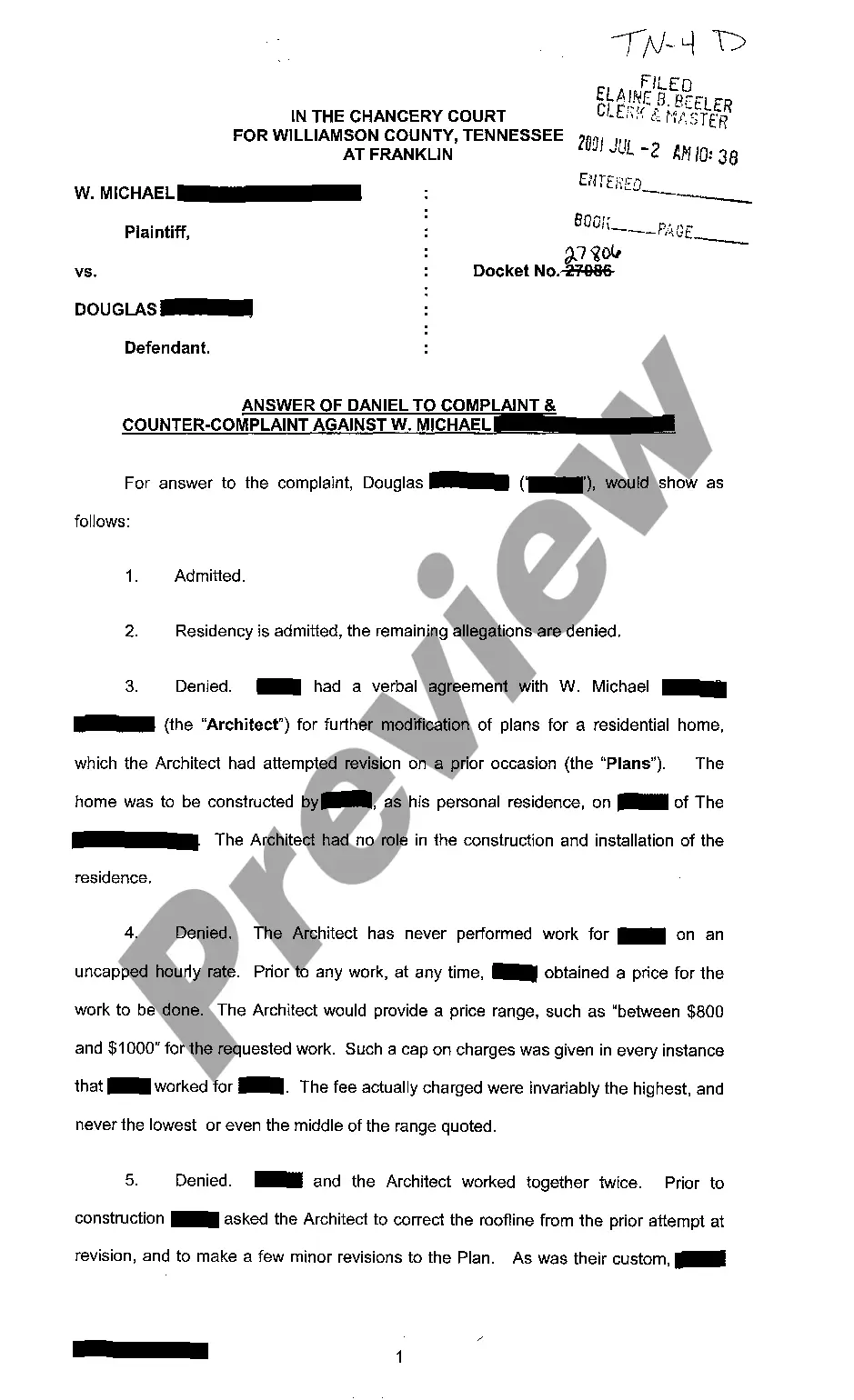
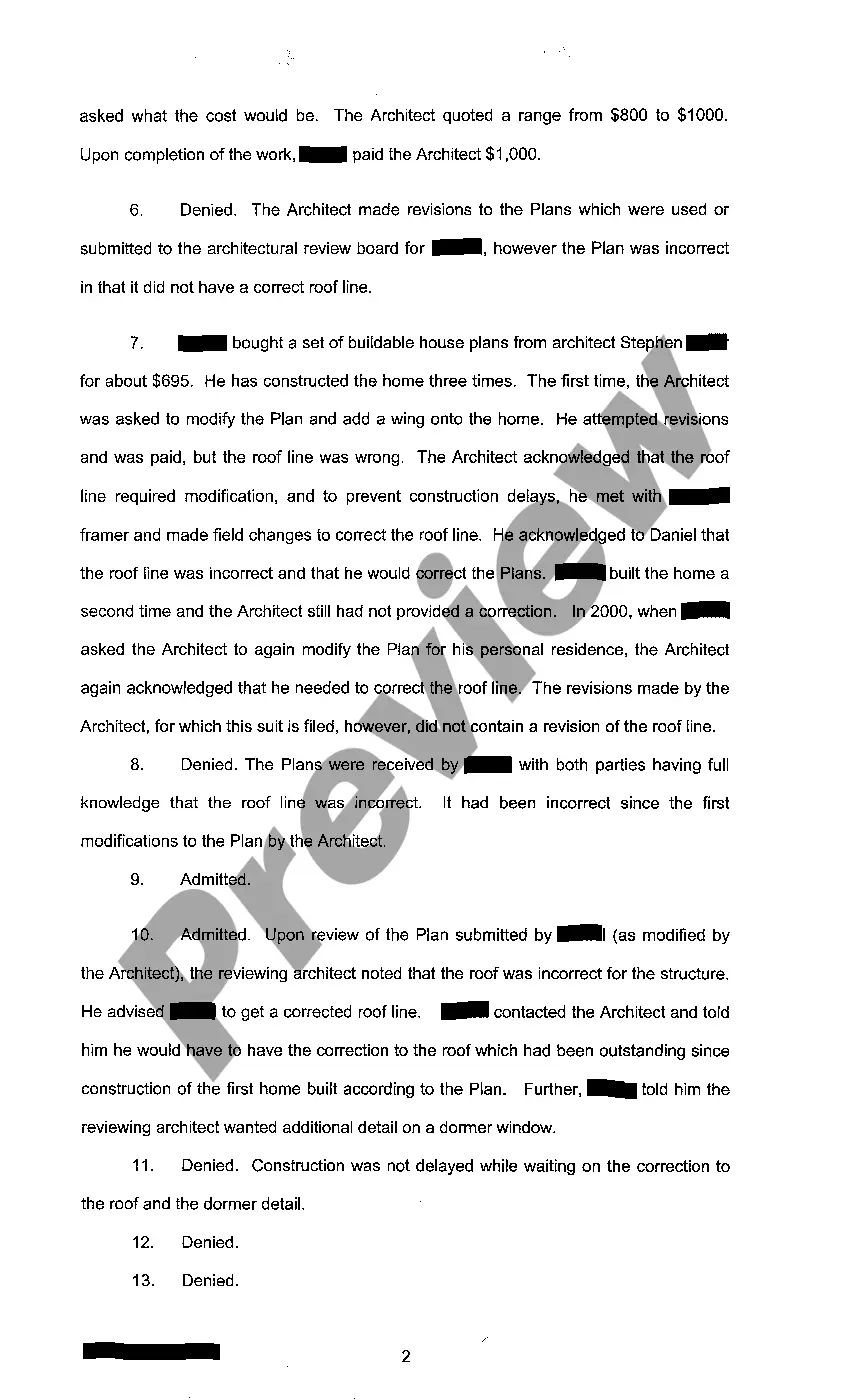
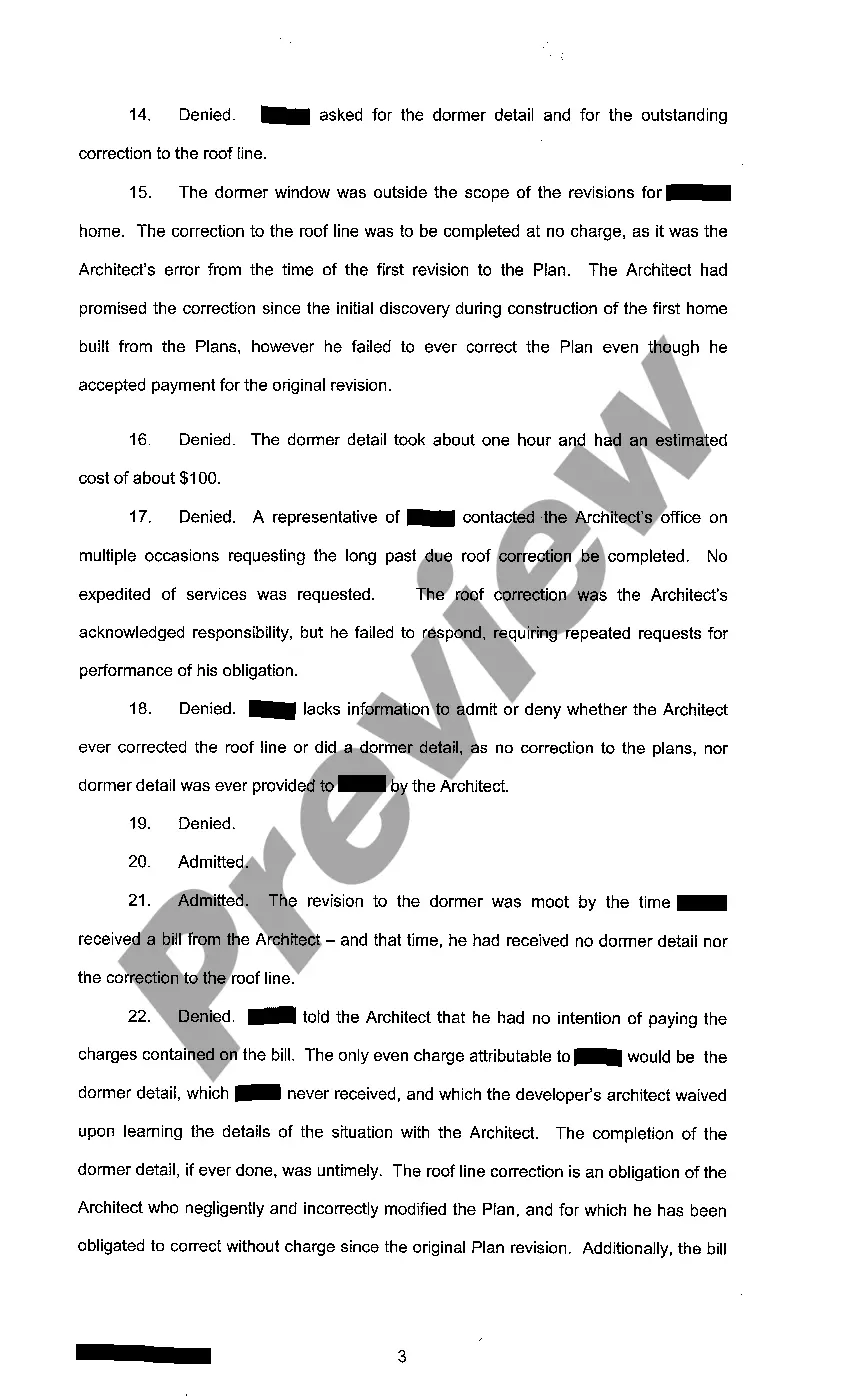
Your response to the complaint is called the answer. You should respond to each paragraph of the complaint matching your response to the exact number used in the complaint. Be very careful with the statement you make in your answer. These statements can become admissions of facts that could be used against you.
A complaint must state all of the plaintiff's claims against the defendant, and must also specify what remedy the plaintiff wants. After receiving the complaint, the defendant must respond with an answer.