Utah Warranty Deed from Individual to a Trust

About this form
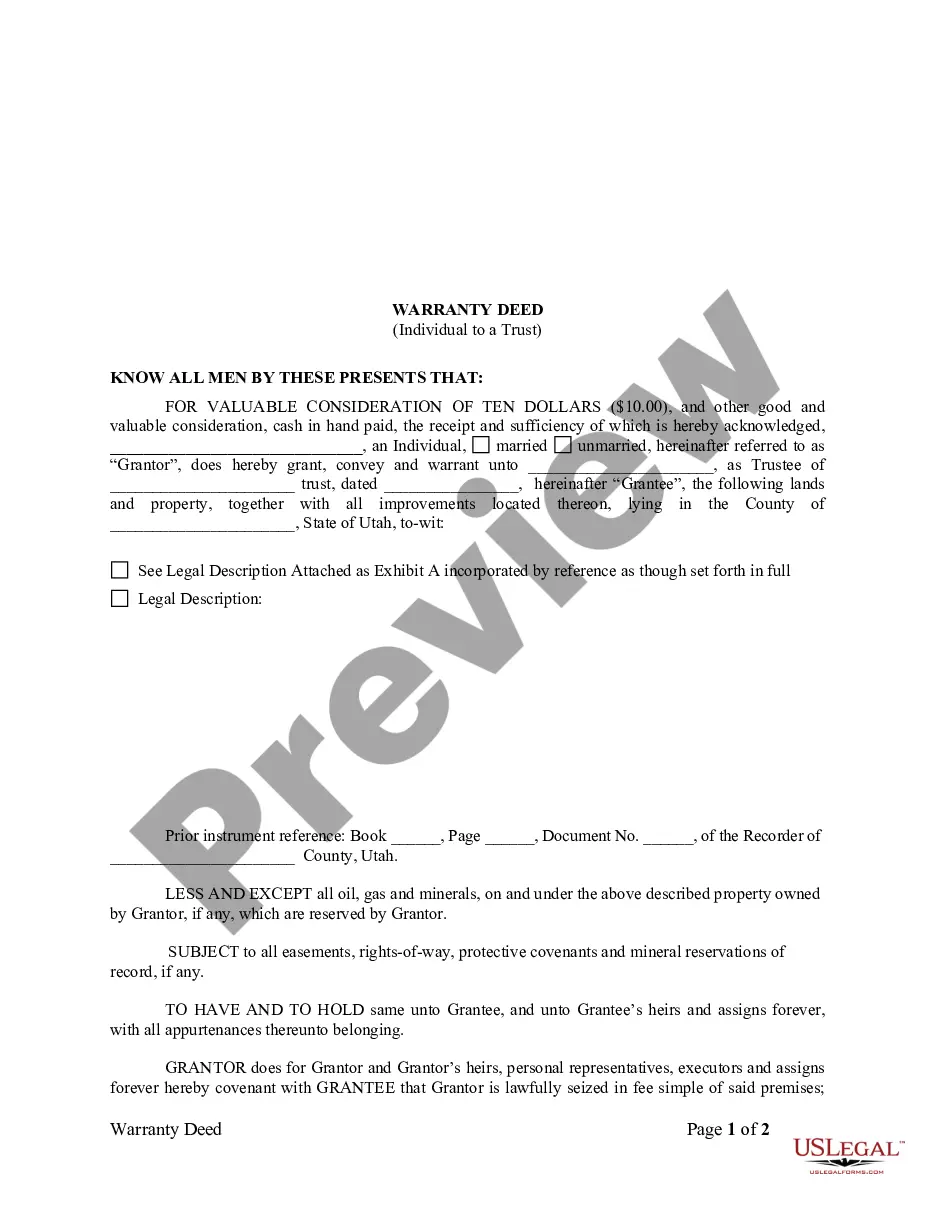
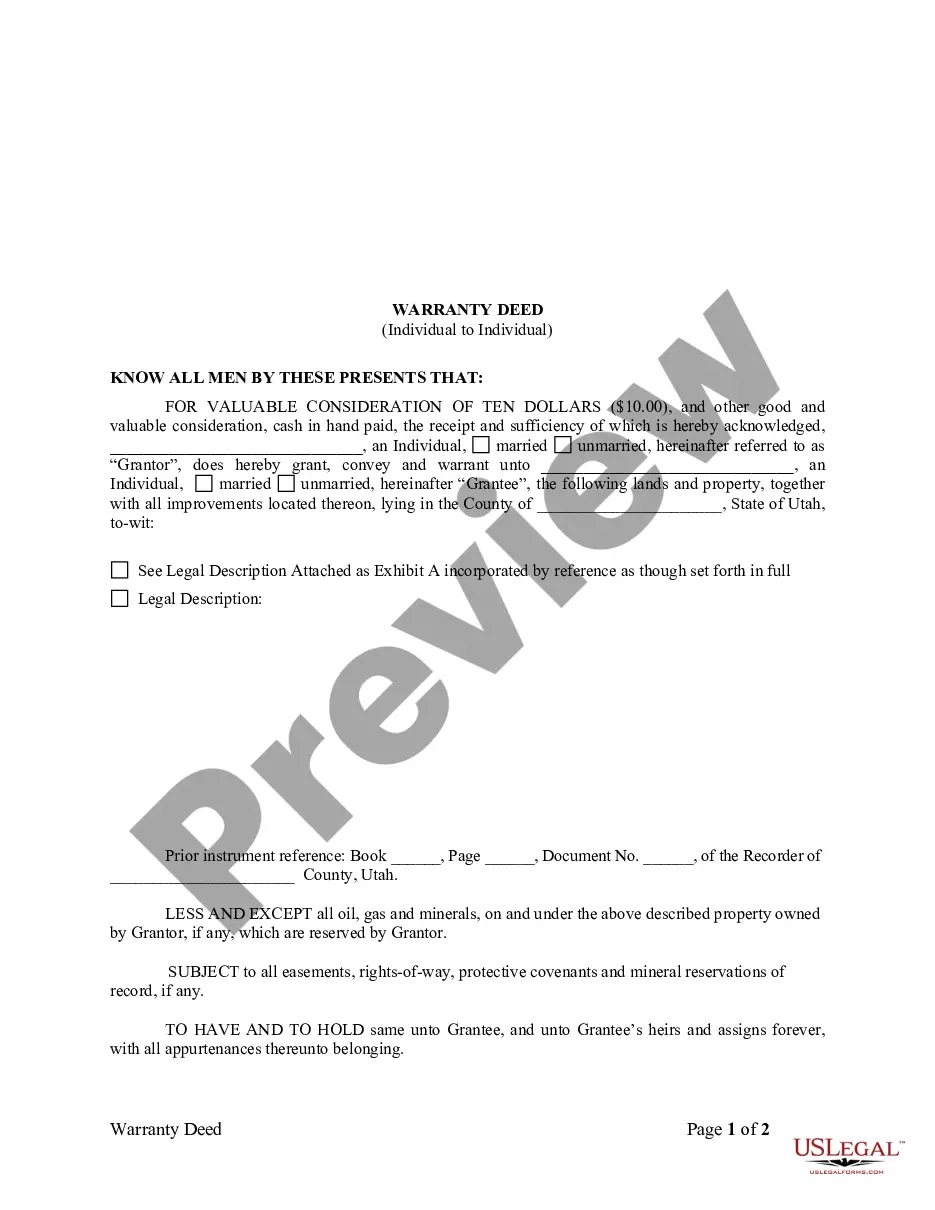
The Warranty Deed from Individual to a Trust is a legal document that allows an individual (the grantor) to transfer property ownership to a trust (the grantee). This form ensures that the grantor conveys and warrants the property, except for any reserved oil, gas, or minerals beneath the land. It is specifically tailored to comply with state laws, making it distinct from general property transfer forms.
Form components explained
- Names and status of the grantor (individual) and grantee (trust and trustee).
- Identification of the property being conveyed, including a legal description.
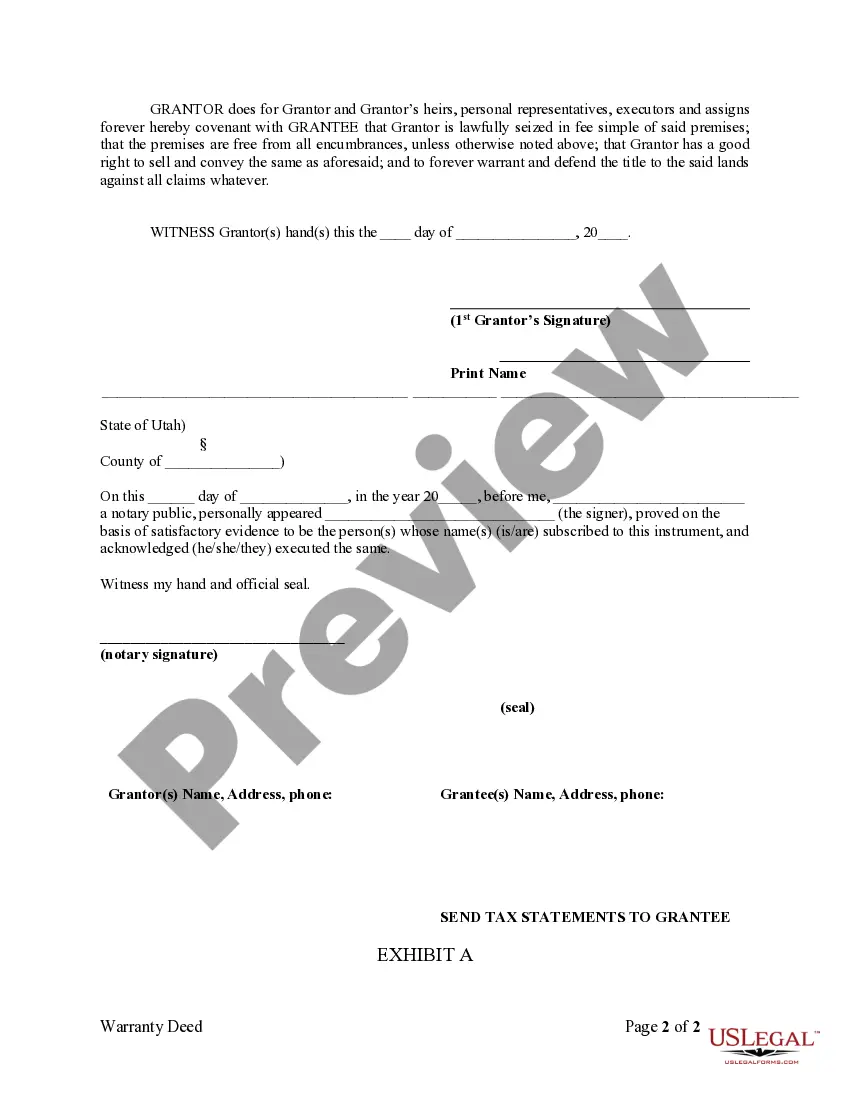
- Covenants regarding the grantorâs legal authority to sell the property and defend the title.
- Details regarding any reservations or exceptions applicable to the deed (e.g., minerals).
- Signature and date lines for the grantor to finalize the deed.



Situations where this form applies
This form is used when an individual wishes to transfer their property into a trust, which may be created for estate planning or asset protection purposes. It may be necessary in scenarios such as setting up a revocable trust for better management of assets or simplifying the transfer of property upon death.
Who can use this document
- Individuals looking to transfer their property to an existing or newly created trust.
- Trustees managing property for the benefit of trust beneficiaries.
- Individuals seeking to organize their estate in a manner that avoids probate.
Completing this form step by step
- Identify the grantor and provide their legal status (married or unmarried).
- Specify the name of the trust and trustee receiving the property.
- Include the legal description of the property being transferred.
- Fill in the date and sign the document to finalize the deed.
- Ensure any reservations or exceptions, such as mineral rights, are clearly noted.
Notarization guidance
This form does not typically require notarization unless specified by local law. Always check local regulations to ensure compliance with your jurisdiction's requirements.
Get your form ready online
Our built-in tools help you complete, sign, share, and store your documents in one place.
Make edits, fill in missing information, and update formatting in US Legal Forms—just like you would in MS Word.
Download a copy, print it, send it by email, or mail it via USPS—whatever works best for your next step.
Sign and collect signatures with our SignNow integration. Send to multiple recipients, set reminders, and more. Go Premium to unlock E-Sign.
If this form requires notarization, complete it online through a secure video call—no need to meet a notary in person or wait for an appointment.
We protect your documents and personal data by following strict security and privacy standards.

Make edits, fill in missing information, and update formatting in US Legal Forms—just like you would in MS Word.

Download a copy, print it, send it by email, or mail it via USPS—whatever works best for your next step.

Sign and collect signatures with our SignNow integration. Send to multiple recipients, set reminders, and more. Go Premium to unlock E-Sign.

If this form requires notarization, complete it online through a secure video call—no need to meet a notary in person or wait for an appointment.

We protect your documents and personal data by following strict security and privacy standards.
Typical mistakes to avoid
- Failing to include the complete legal description of the property.
- Not indicating any reservations, like mineral rights, which can affect ownership.
- Incorrectly listing the trustee or trust name, leading to potential legal issues.
Advantages of online completion
- Convenient access to a professionally drafted warranty deed template.
- Edit the document easily to fit specific property and trust details.
- Downloadable for immediate printing and use, saving time and hassle.
Main things to remember
- The Warranty Deed from Individual to a Trust is essential for transferring property into a trust.
- Clarity in property descriptions and any reservations is crucial for legal integrity.
- Understanding state-specific requirements can prevent legal complications.
- Completing this form accurately is key to a successful property transfer.
Looking for another form?

Form popularity
FAQ
A trustee deed offers no such warranties about the title.
As far as the Internal Revenue Service is concerned, trust property belongs to the grantor. The grantor names a trustee to manage the assets, but during their lifetime, most people name themselves in this position. A successor trustee is named to carry on when the grantor dies or becomes incapacitated.
Take the signed and notarized quitclaim deed to your county recorder's office to complete the transfer of title into your revocable trust. Check in two to four weeks to ensure it has been recorded. Include the address of the property on the asset list addendum attached to your trust.
A deed conveys ownership; a deed of trust secures a loan.
The act of transferring a property that is owned by an individual into a trust, will see the trust liable to pay stamp duty on acquisition of the asset. Additionally, the individual who is transferring ownership to the trust, will be liable to pay capital gains tax on the disposal of the asset.
In the context of a California mortgage transaction, a trust deed also transfer ownership. Only this time, the title is being placed in the hands of a third-party trustee, who holds the property on behalf of the lender and the homeowner-borrower until the mortgage is paid.
The Utah warranty deed is a form of deed that provides an unlimited warranty of title. It makes an absolute guarantee that the current owner has good title to the property.
Locate your current deed. Use the proper deed. Check with your title insurance company and lender. Prepare a new deed. Sign in the presence of a notary. Record the deed in the county clerk's office. Locate the deed that's in trust. Use the proper deed.
To transfer assets such as investments, bank accounts, or stock to your real living trust, you will need to contact the institution and complete a form. You will likely need to provide a certificate of trust as well. You may want to keep your personal checking and savings account out of the trust for ease of use.