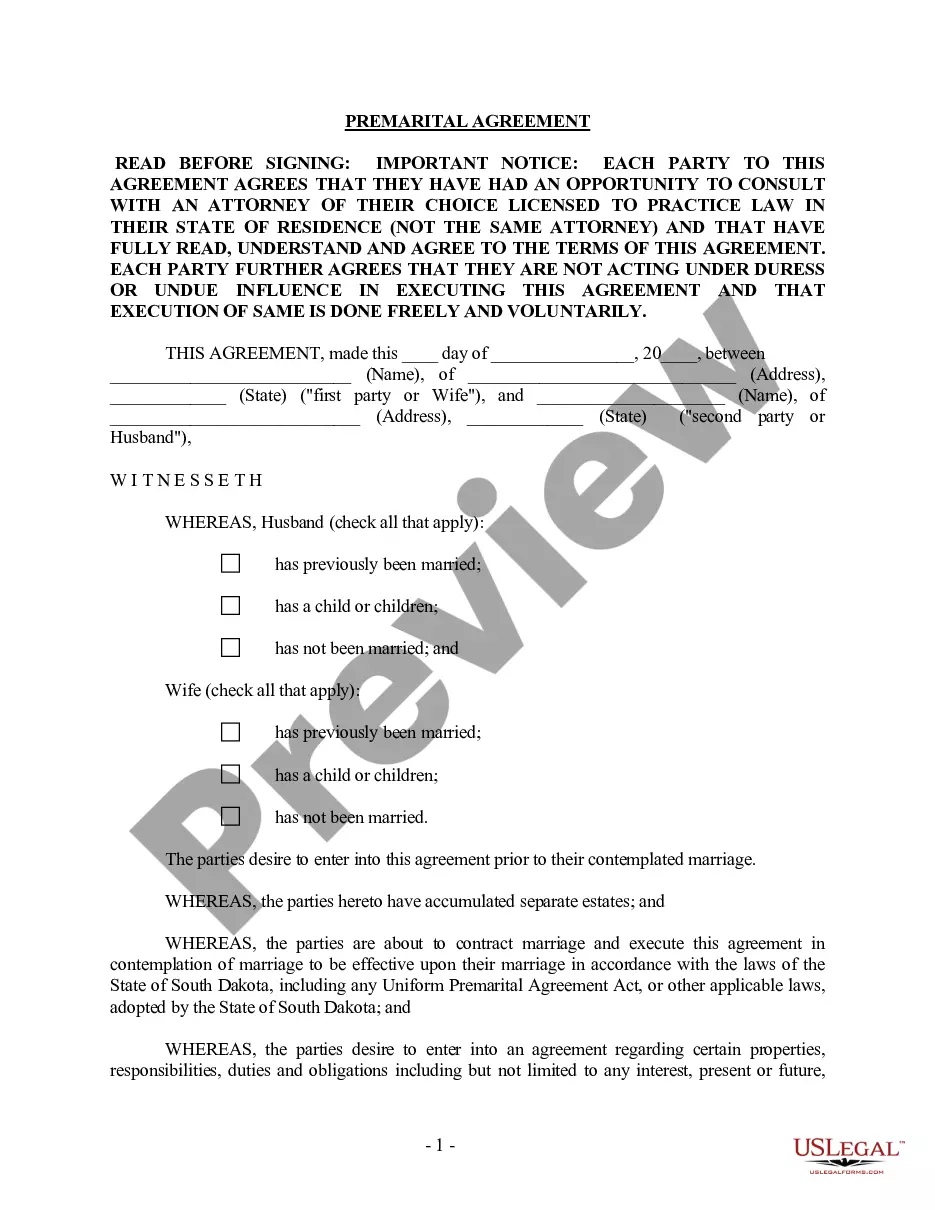
Agreement for Rights under Third Party Deed of Trust
What is this form?
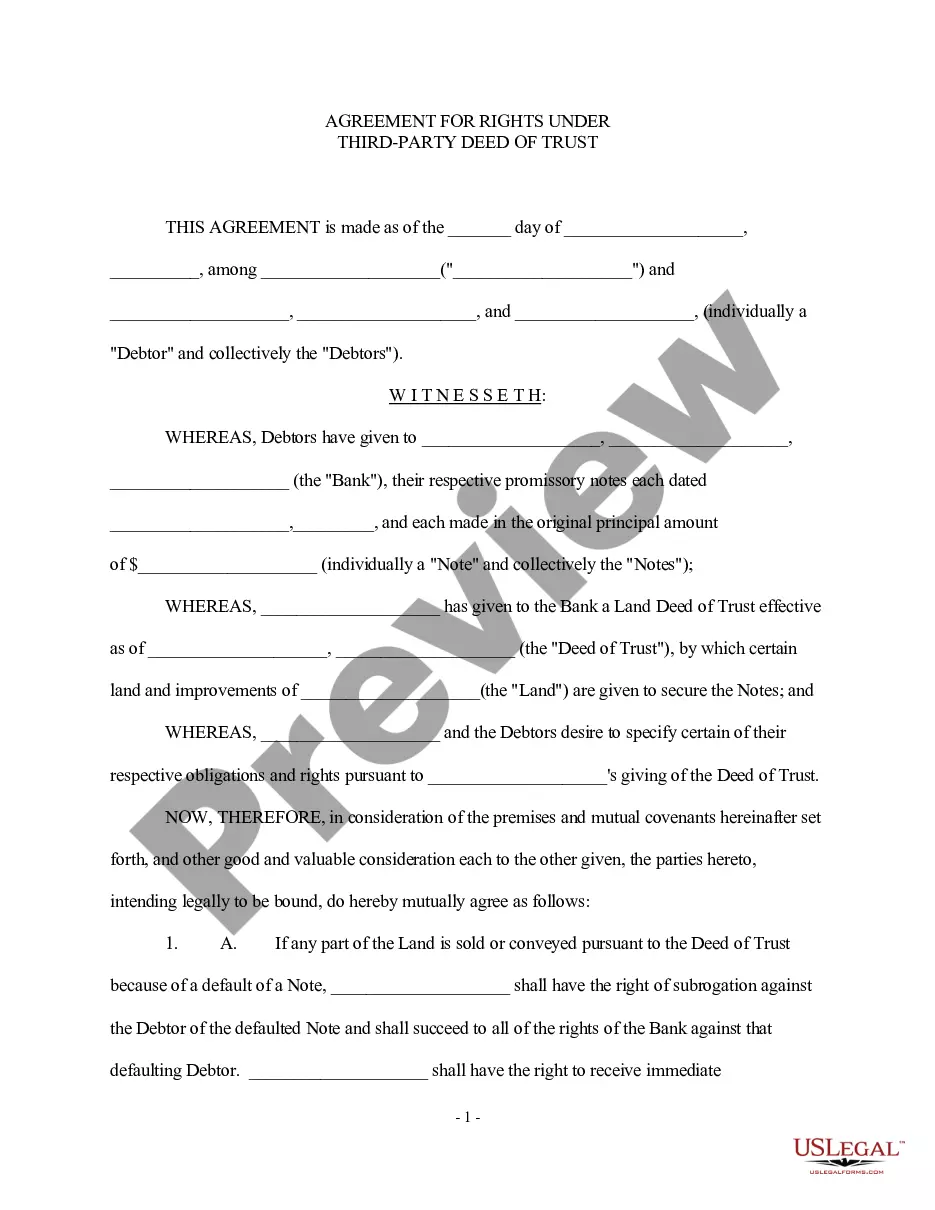
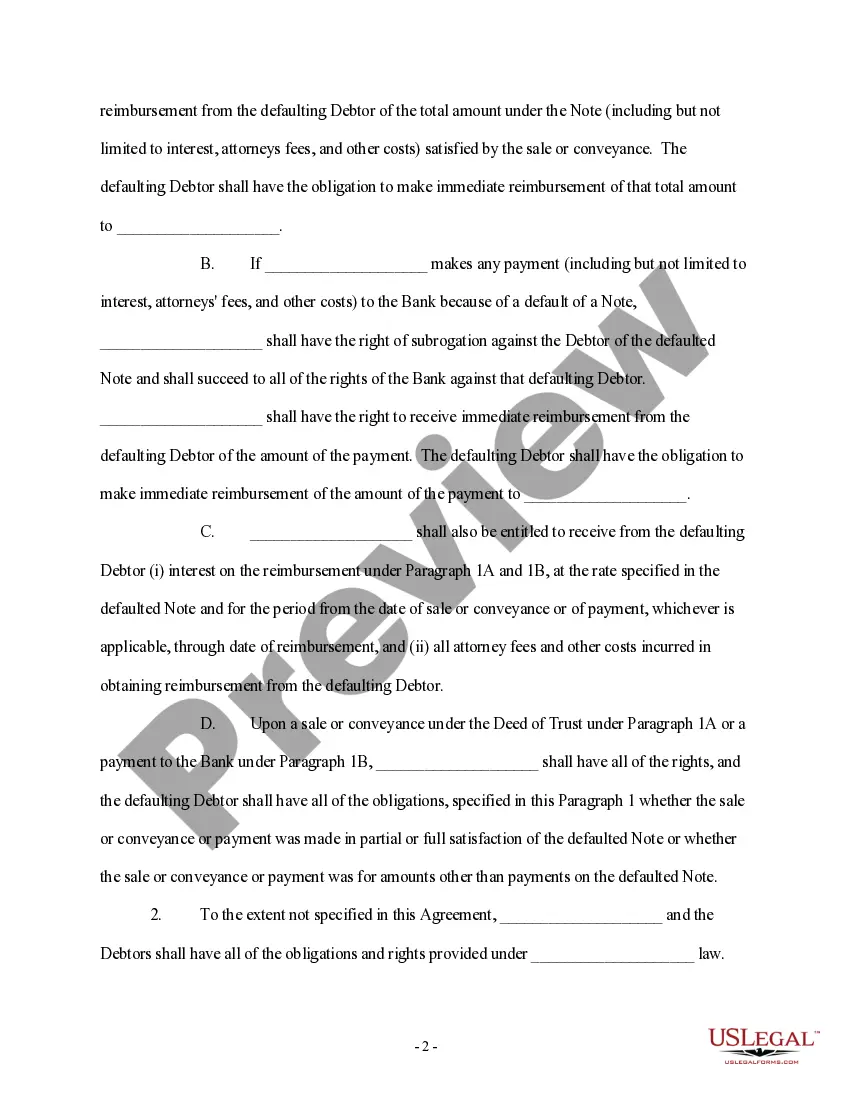
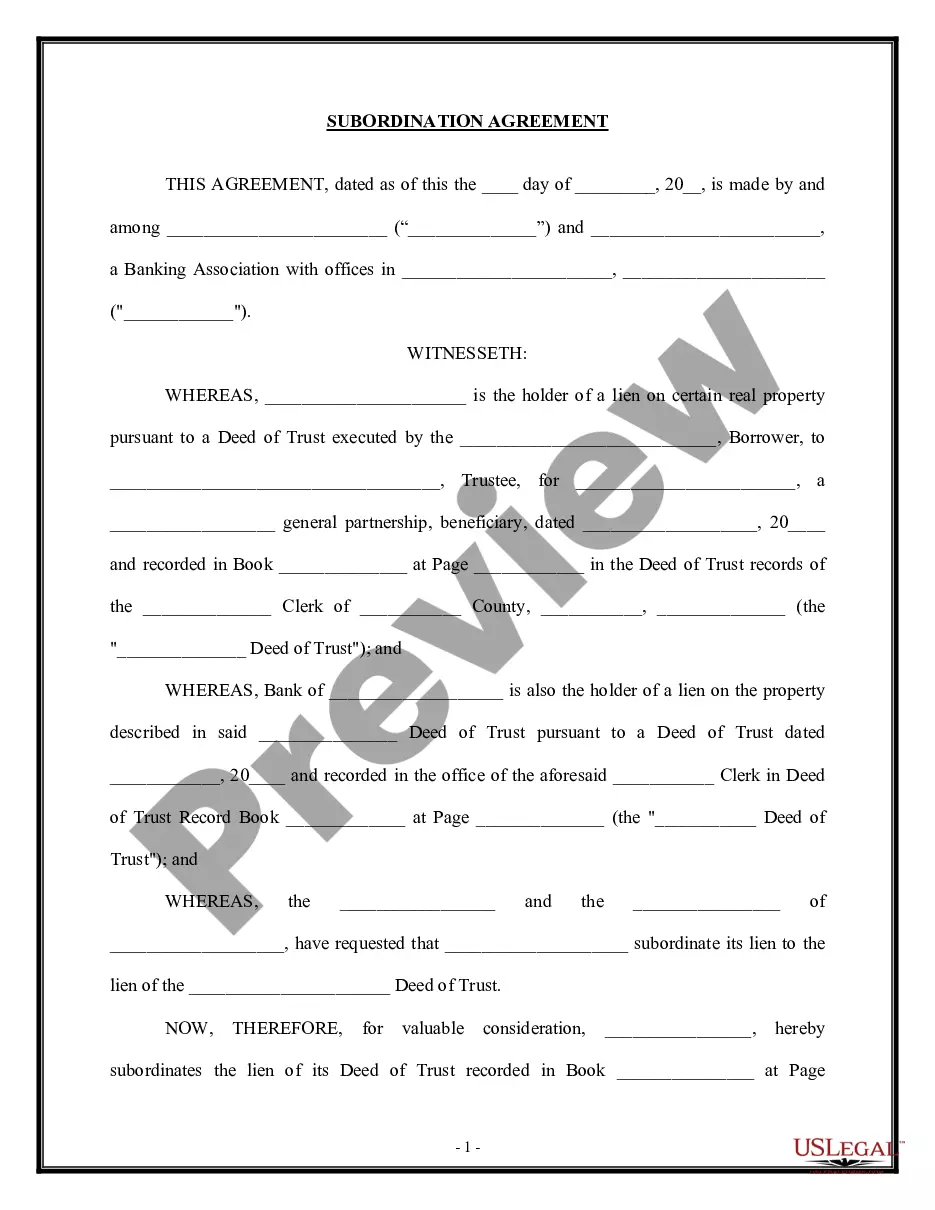
The Agreement for Rights under Third Party Deed of Trust is a legal document that outlines the rights and responsibilities among parties involved with a Deed of Trust. This form detail the obligations of debtors and a third party lender, specifying how rights such as subrogation and reimbursement will be handled in case of a default. It is essential for parties looking to formalize their agreements under a third-party deed, providing clarity and legal enforceability for financial transactions secured by real property.
What’s included in this form
- Identification of the Debtors and the Bank involved in the Agreement.
- Details regarding the promissory notes, including their dates and amounts.
- Provisions for subrogation and reimbursement in case of default.
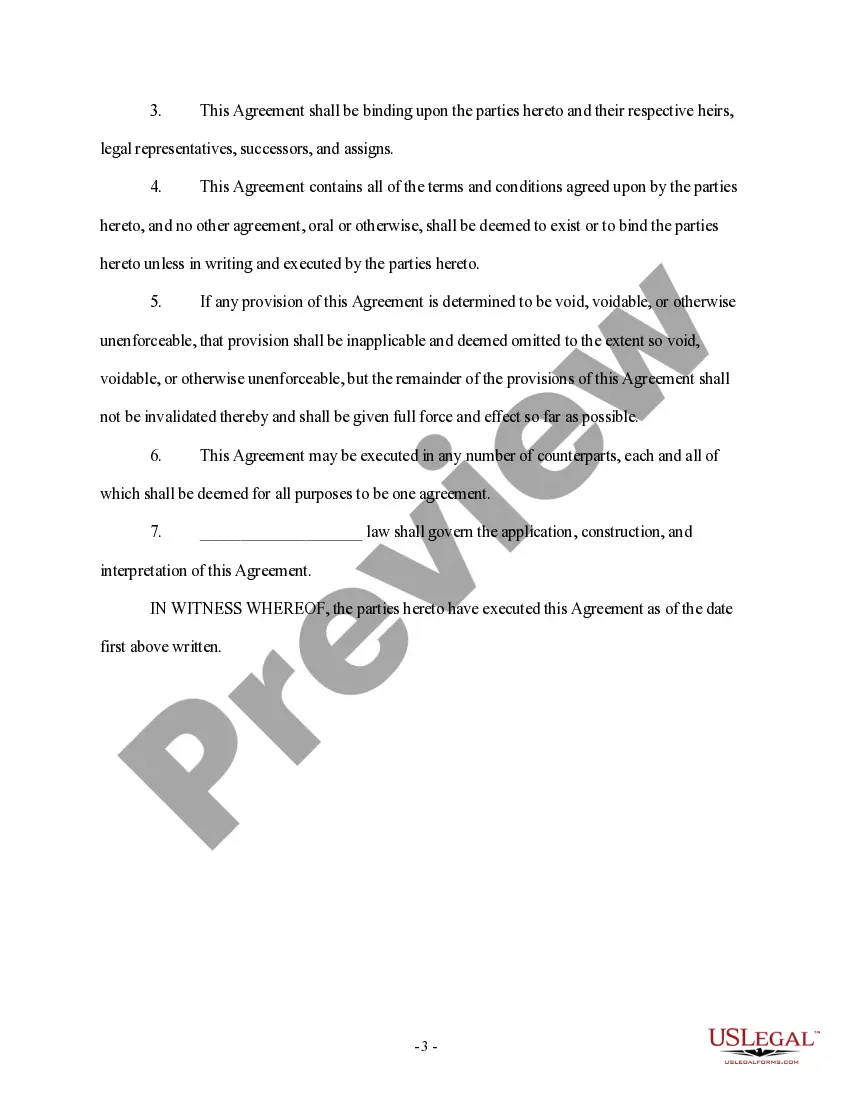
- Legal obligations and rights under applicable state law.
- Clauses regarding the execution of the Agreement and the governing laws.
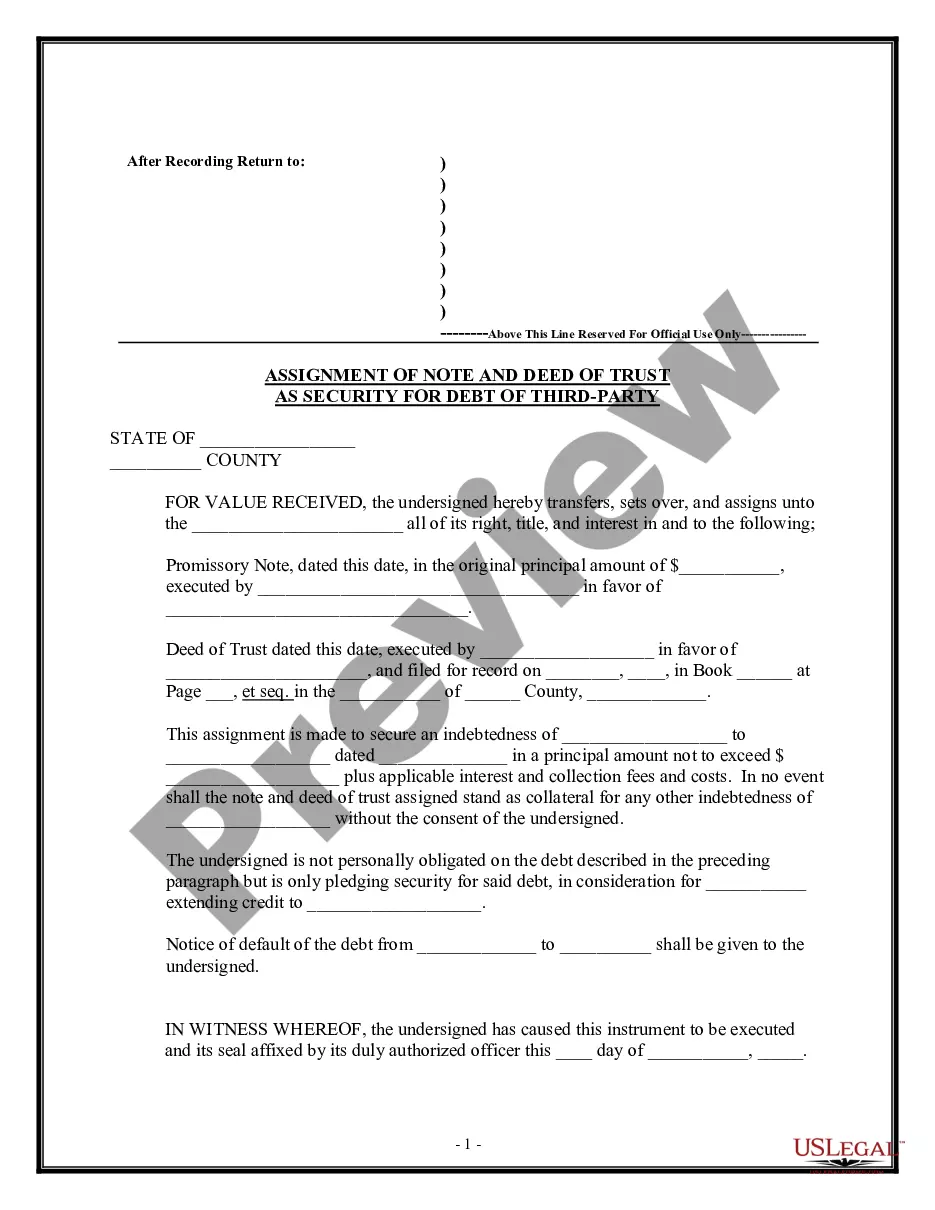
Situations where this form applies
This form should be used in situations where a debtor is securing a loan with real property, and multiple parties are involved. It is particularly important when a third party lender needs assurances about their rights in case the debtor defaults on the loan. Using this Agreement helps protect all parties involved by clearly outlining their responsibilities and the processes to be followed in case of non-compliance with the loan terms.
Who needs this form
- Individuals borrowing money secured by real estate.
- Third-party lenders such as banks or financial institutions.
- Real estate developers involved in property financing.
- Attorneys representing clients in financial agreements.
How to complete this form
- Identify the parties involved, including the debtor(s) and the lender.
- Enter the details of the promissory notes, including dates and amounts.
- Specify the property secured under the Deed of Trust.
- Fill out the clauses regarding rights and obligations in case of default.
- Sign and date the Agreement to make it legally binding.
Notarization requirements for this form
This form needs to be notarized to ensure legal validity. US Legal Forms provides secure online notarization powered by Notarize, allowing you to complete the process through a verified video call, available anytime.
Get your form ready online
Our built-in tools help you complete, sign, share, and store your documents in one place.
Make edits, fill in missing information, and update formatting in US Legal Forms—just like you would in MS Word.
Download a copy, print it, send it by email, or mail it via USPS—whatever works best for your next step.
Sign and collect signatures with our SignNow integration. Send to multiple recipients, set reminders, and more. Go Premium to unlock E-Sign.
If this form requires notarization, complete it online through a secure video call—no need to meet a notary in person or wait for an appointment.
We protect your documents and personal data by following strict security and privacy standards.

Make edits, fill in missing information, and update formatting in US Legal Forms—just like you would in MS Word.

Download a copy, print it, send it by email, or mail it via USPS—whatever works best for your next step.

Sign and collect signatures with our SignNow integration. Send to multiple recipients, set reminders, and more. Go Premium to unlock E-Sign.

If this form requires notarization, complete it online through a secure video call—no need to meet a notary in person or wait for an appointment.

We protect your documents and personal data by following strict security and privacy standards.
Avoid these common issues
- Failing to include all necessary parties in the Agreement.
- Incorrectly listing the amounts or dates of the promissory notes.
- Leaving sections incomplete or not properly executed (signed and dated).
- Neglecting to understand the implications of the subrogation clause.
Why use this form online
- Convenient access to a legally standard form from anywhere.
- Easy to edit and customize according to specific circumstances.
- Reliable templates drafted by licensed attorneys to ensure compliance.
- Quick download, allowing for faster processing of agreements.
Looking for another form?
Form popularity
FAQ
A third-party special needs trust is created and funded by someone other than the special needs person.The trustee is free to invest the funds with any financial advisor; the statute does not make any limitations. At the beneficiary's death, the trust funds pass to whomever the trustee names.
A third-party SNT can be either irrevocable or revocable. Revocable A revocable trust is a trust in which the grantor can revoke or change the trust terms at any time. Only third-party SNTs can be revocable.
If only the parents will contribute and don't expect to do so except as part of their estate plan, then the special needs trust can be revocable, meaning you can change it at any time.
At the beneficiary's death, in most cases the SNT will be terminated. The trustee is responsible for dissolving the trust and fulfilling the instructions laid out in the trust document.In addition, the SNT will owe money to the state if the person with special needs received Medicaid benefits during her lifetime.
In general, trust structures are intended to provide a legal way to title and hold assets to be used to support one or more beneficiaries. Special needs trusts are similar and are used to benefit someone who has physical or mental disabilities.
There are three main types of special needs trusts: the first-party trust, the third-party trust, and the pooled trust. All three name the person with special needs as the beneficiary.
Failure to set up a special needs trust might affect them, even if not as much as another person who receives, say, SSI and Medicaid. Even someone receiving Medicare will have some effect from having a higher income.