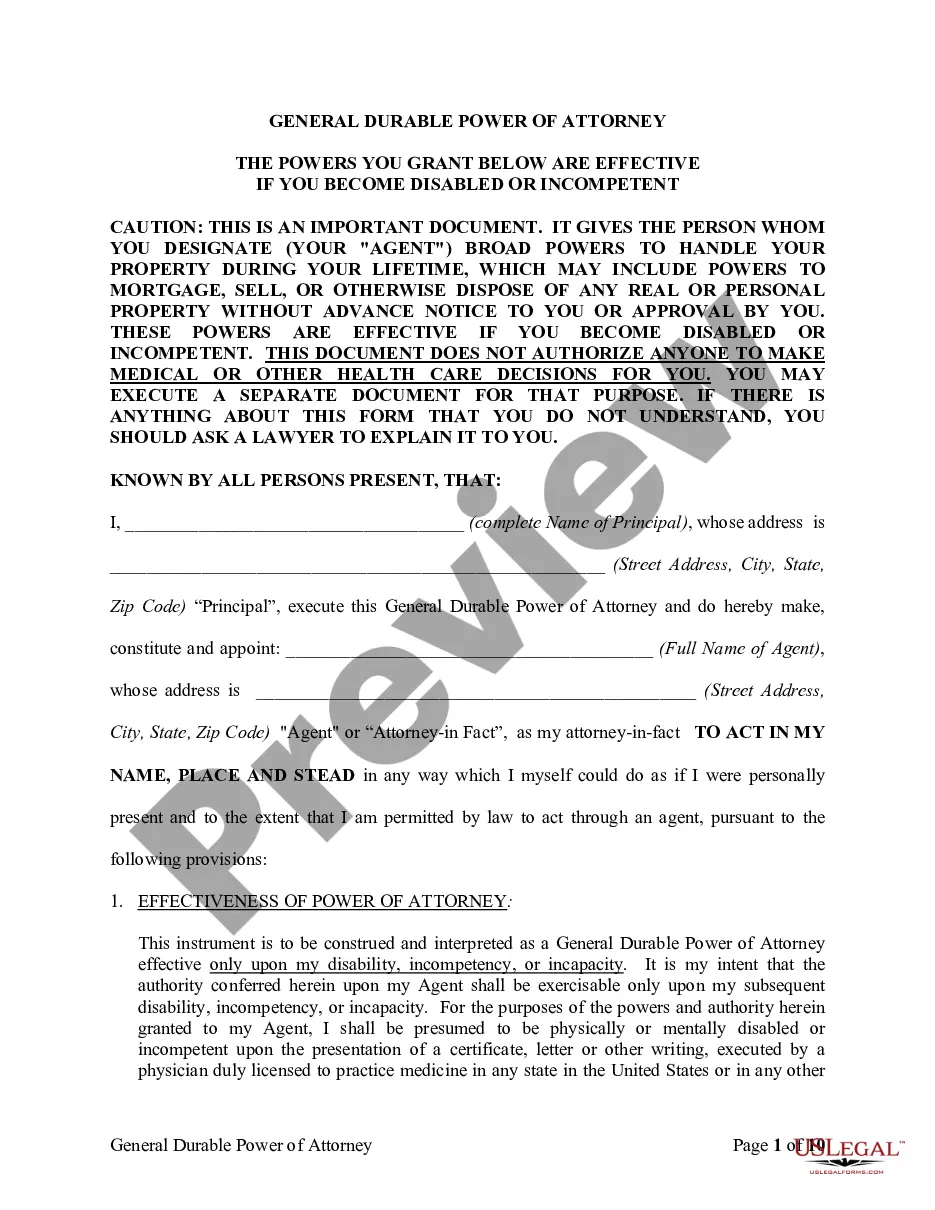
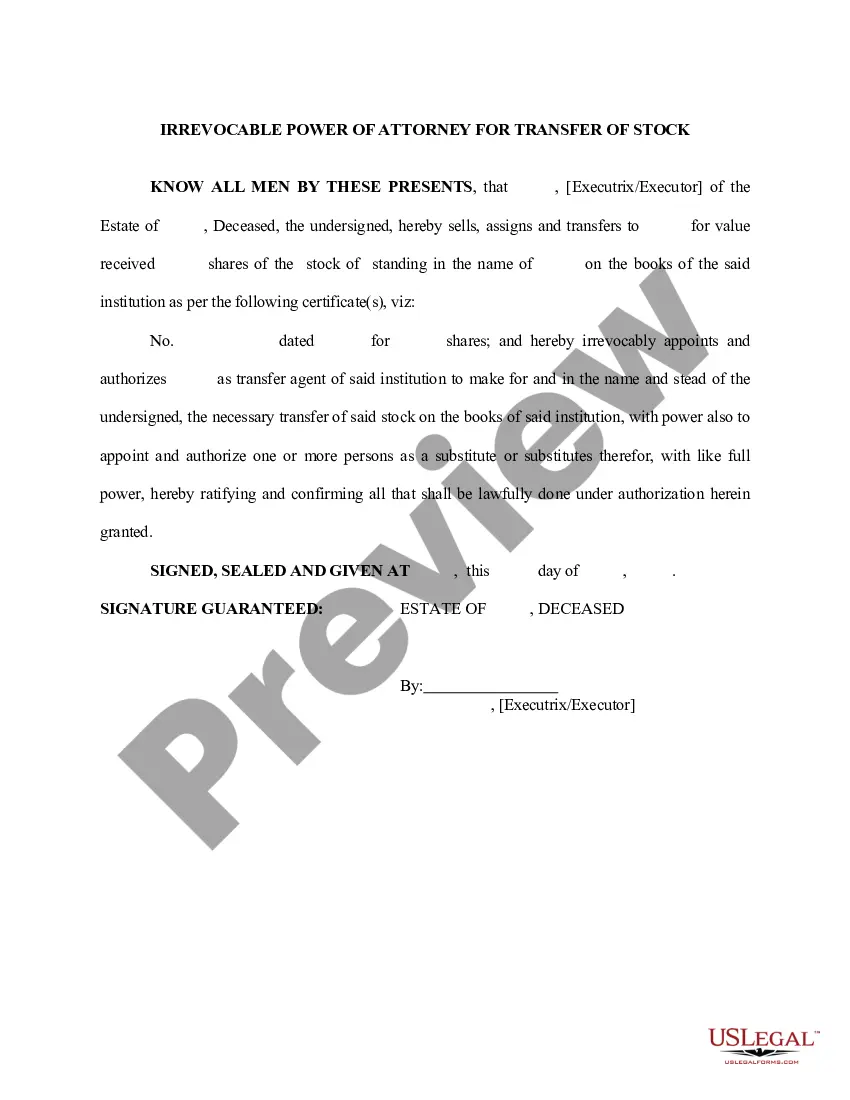
Irrevocable Power of Attorney for Transfer of Stock by Executor
What is this form?
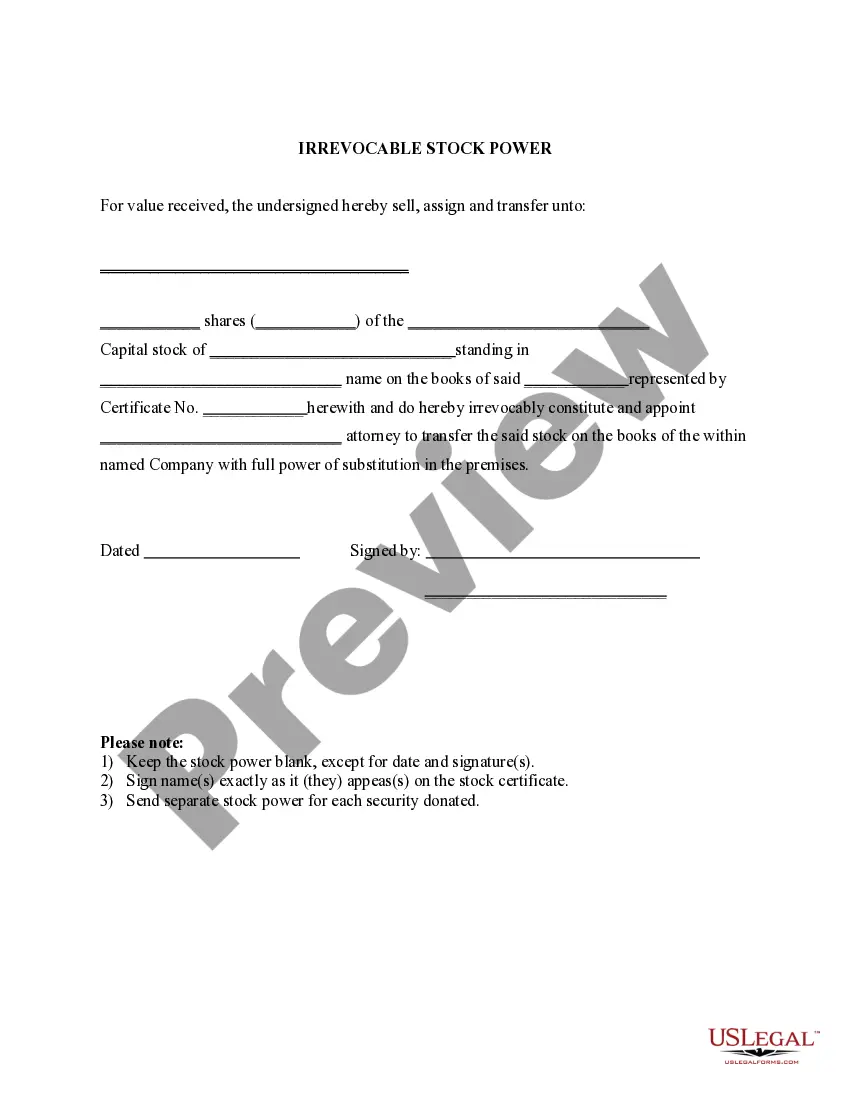
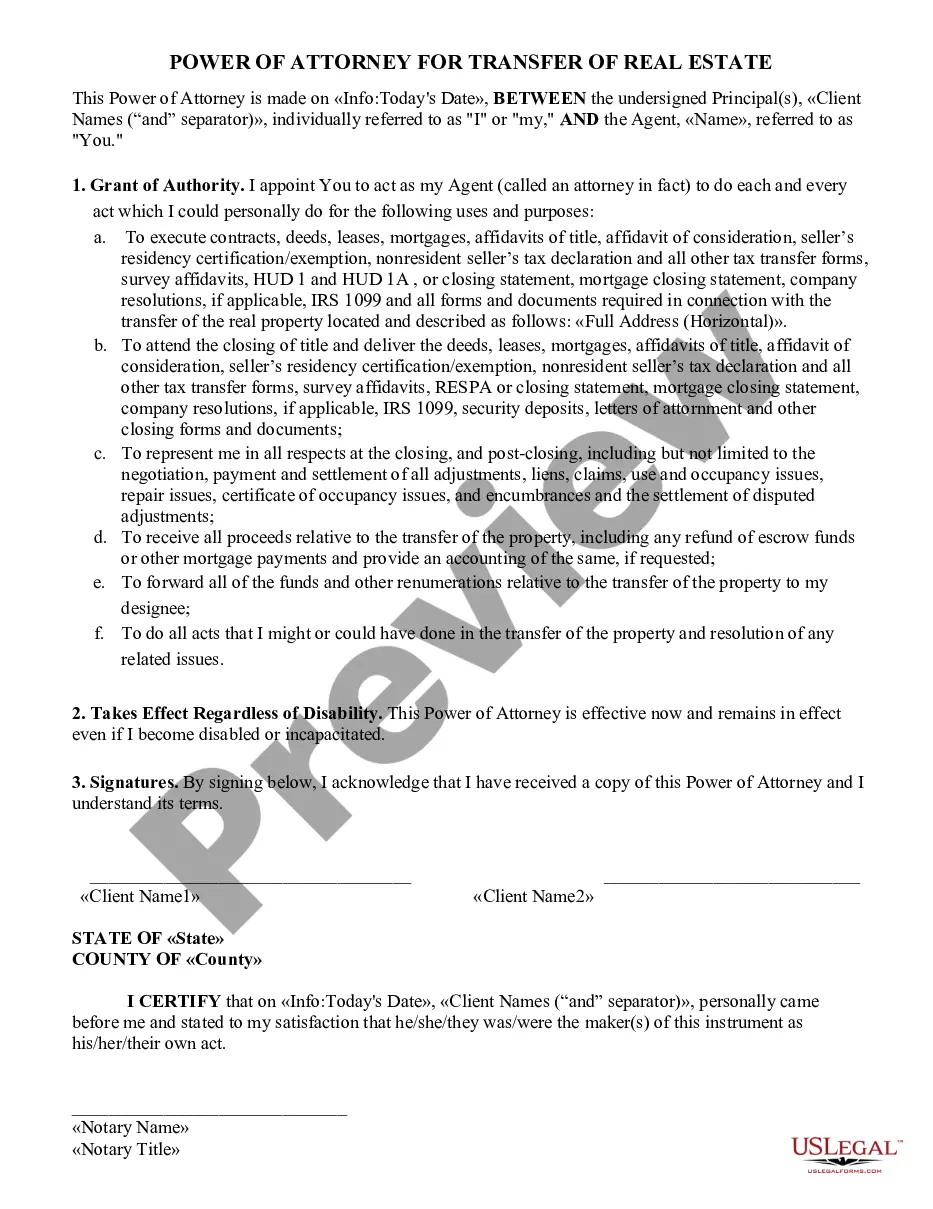
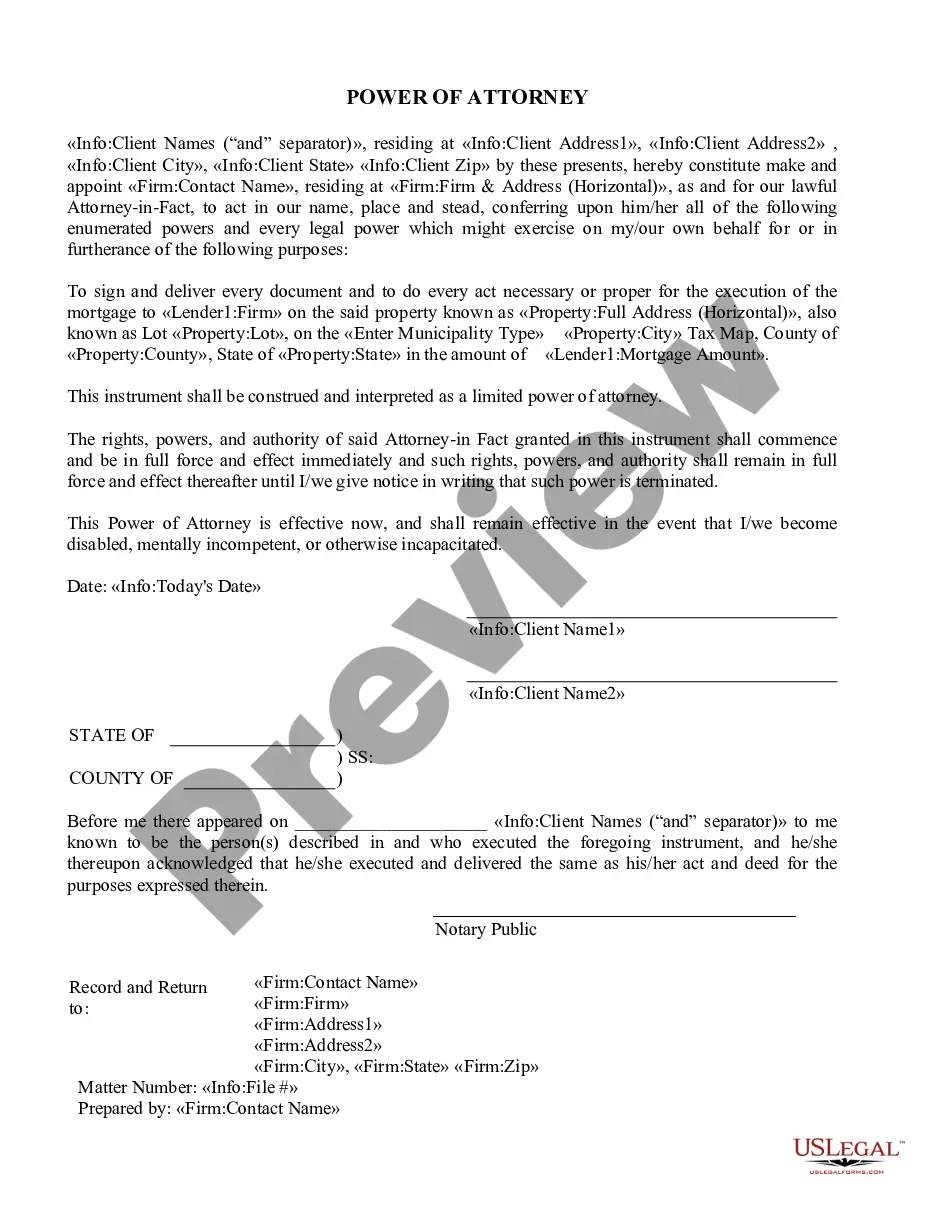
The Irrevocable Power of Attorney for Transfer of Stock by Executor is a legal document that empowers an appointed executor to transfer stock held by a deceased individual's estate. This form is crucial for ensuring the smooth transition of ownership rights after someone's passing. Unlike a regular power of attorney, this form is irrevocable, meaning that once it is executed, it cannot be changed or revoked by the principal, making it specifically designed for posthumous stock transfers.
Form components explained
- Identification of the executor granted the power to act on behalf of the estate.
- Clear specifications of the stock holdings involved in the transfer.
- Legal declarations affirming the authority of the executor to transfer stock.
- Signature blocks for the executor and any witnesses if applicable.
- Date of execution to establish when the document was signed.

Situations where this form applies
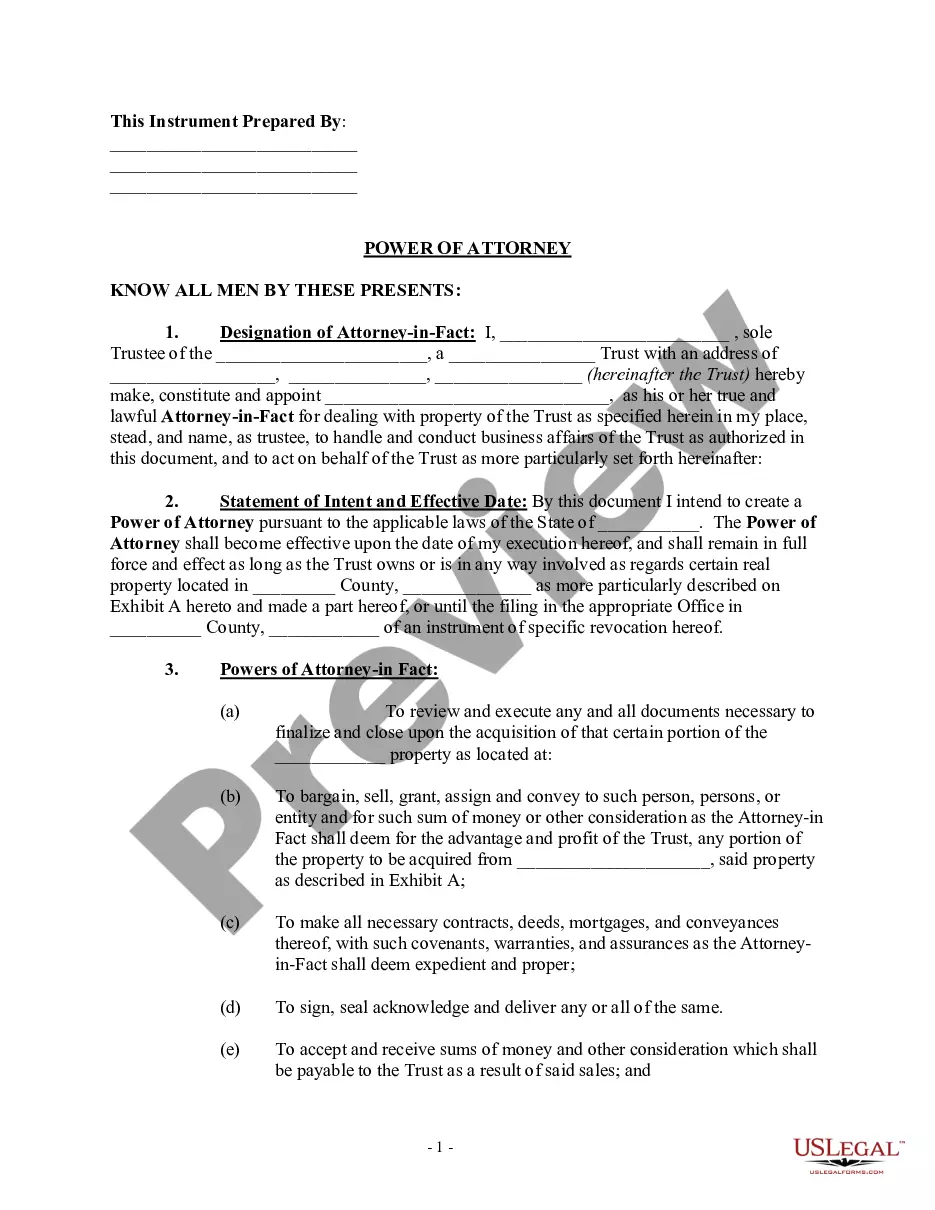
This form is essential in scenarios where an executor needs to manage a deceased person's stock holdings. It is used when the estate is in the process of being settled, particularly for the transfer of stock to beneficiaries or other parties as per the will or state law. If an executor needs to efficiently handle stock distribution without prior need for further consent from the deceased, this form becomes necessary.
Who this form is for
This form is intended for:
- Executors or personal representatives of a deceased individual's estate.
- Beneficiaries who expect to receive stock as part of an inheritance.
- Legal professionals assisting clients in estate settlement.
Completing this form step by step
- Identify the executor by entering their full legal name and address.
- List the specific stock holdings to be transferred, including company names and number of shares.
- Provide the necessary legal declarations affirming the executor's authority to transfer the stock.
- Sign and date the document in the designated areas to finalize the authority.
- If applicable, have the form signed by witnesses to confirm the execution.
Does this document require notarization?
This form needs to be notarized to ensure legal validity. US Legal Forms provides secure online notarization powered by Notarize, allowing you to complete the process through a verified video call, available anytime.
Get your form ready online
Our built-in tools help you complete, sign, share, and store your documents in one place.
Make edits, fill in missing information, and update formatting in US Legal Forms—just like you would in MS Word.
Download a copy, print it, send it by email, or mail it via USPS—whatever works best for your next step.
Sign and collect signatures with our SignNow integration. Send to multiple recipients, set reminders, and more. Go Premium to unlock E-Sign.
If this form requires notarization, complete it online through a secure video call—no need to meet a notary in person or wait for an appointment.
We protect your documents and personal data by following strict security and privacy standards.

Make edits, fill in missing information, and update formatting in US Legal Forms—just like you would in MS Word.

Download a copy, print it, send it by email, or mail it via USPS—whatever works best for your next step.

Sign and collect signatures with our SignNow integration. Send to multiple recipients, set reminders, and more. Go Premium to unlock E-Sign.

If this form requires notarization, complete it online through a secure video call—no need to meet a notary in person or wait for an appointment.

We protect your documents and personal data by following strict security and privacy standards.
Common mistakes
- Failing to accurately specify the stock holdings can lead to ambiguity.
- Not including the date of execution may invalidate the timing of the authority.
- Overlooking the necessity of signatures from witnesses where required.
Advantages of online completion
- Convenient access to legal documents from any location at any time.
- Editable templates allow you to customize the form easily.
- Reliable resources drafted by licensed attorneys ensure compliance with legal standards.
Main things to remember
- The Irrevocable Power of Attorney for Transfer of Stock by Executor is crucial for managing stock transfers after death.
- Correctly completing the form ensures efficient estate management.
- Consider potential state-specific requirements to ensure compliance.
Looking for another form?
Form popularity
FAQ
The court will force the executor to return the property to the estate or pay restitution to the beneficiaries of the estate.The executor cannot transfer estate property to himself because the property belongs to someone else unless he pays the full price for it.
When the executor has paid off the debts, filed the taxes and sold any property needed to pay bills, he can submit a final estate accounting to the probate court. Once the probate court approves the accounting, he can distribute assets to you and other beneficiaries according to the terms of the will.
Your beneficiaries or heirs can also usually take action after your death to transfer the executorship to another individual.This involves filing a petition with the court overseeing probate, asking a judge to remove the executor you named and to transfer the job to another individual.
If you are an executor and you do not wish to act You can appoint someone else to apply for probate on your behalf.
The executor can sell property without getting all of the beneficiaries to approve.Once the executor is named there is a person appointed, called a probate referee, who will appraise the estate assets. Among those assets will be the real estate and the probate referee will appraise the real estate.
Once the COURT appoints you as executor, you will record an affidavit of death of joint tenant to get your mother's name of the property. Then, when you get an order for final distribution, you will record a certified copy to get the property into the names of the beneficiaries under the will.
If you resign as executor after having started probate court proceedings, you can submit your resignation to the probate court and provide a written record of what (if anything) you have done. The court will then appoint someone to take your place.
Step 2: Fill in t200bhe Transmission Application form. Step 3: Get a certifie200bd copy of the grant of Probate or Letters of Administration. Step 4: Lodge with Revenue NSW. Step 5: Create an electronic notice of sale (eNOS) record.
In most states, an executor's deed must be signed by a witness and notarized. An executor's deed should be recorded in the real estate records of the county in which the property being conveyed is located.