Tenant Finish and Leasing Agreement
What is this form?
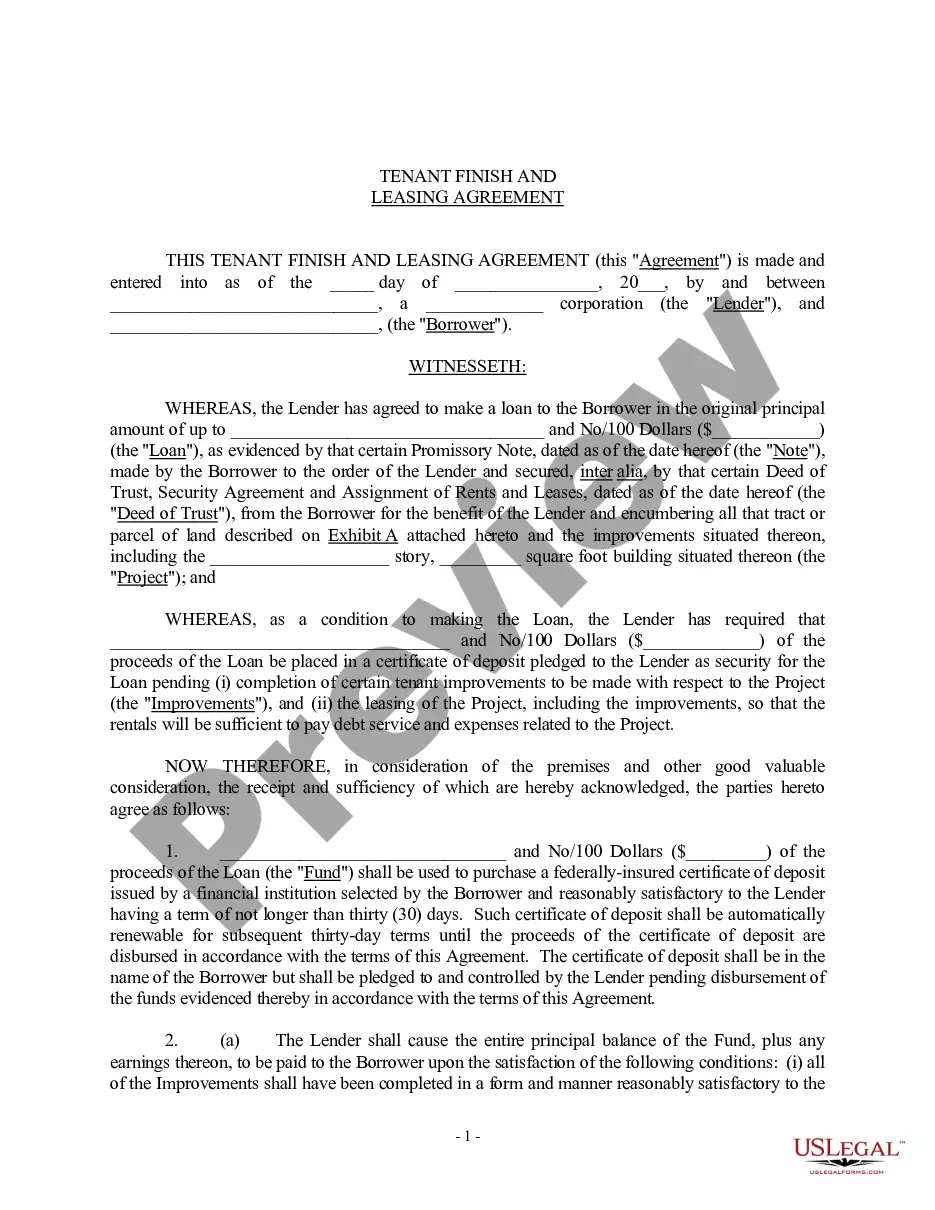
The Tenant Finish and Leasing Agreement is a legal document that outlines the terms between a lender and a borrower regarding construction and leasing in a commercial real estate context. It serves as a secure arrangement for funding tenant improvements while ensuring that the leasing terms meet certain financial criteria. This agreement is especially useful for partnerships where the funding of property enhancements is essential to securing future rental income, explicitly differing from standard leasing agreements that do not include a financing component.
Form components explained
- Definitions and roles of the lender and borrower.
- Details on the loan amount and conditions attached to the funding.
- Requirements for completing tenant improvements and leasing agreements.
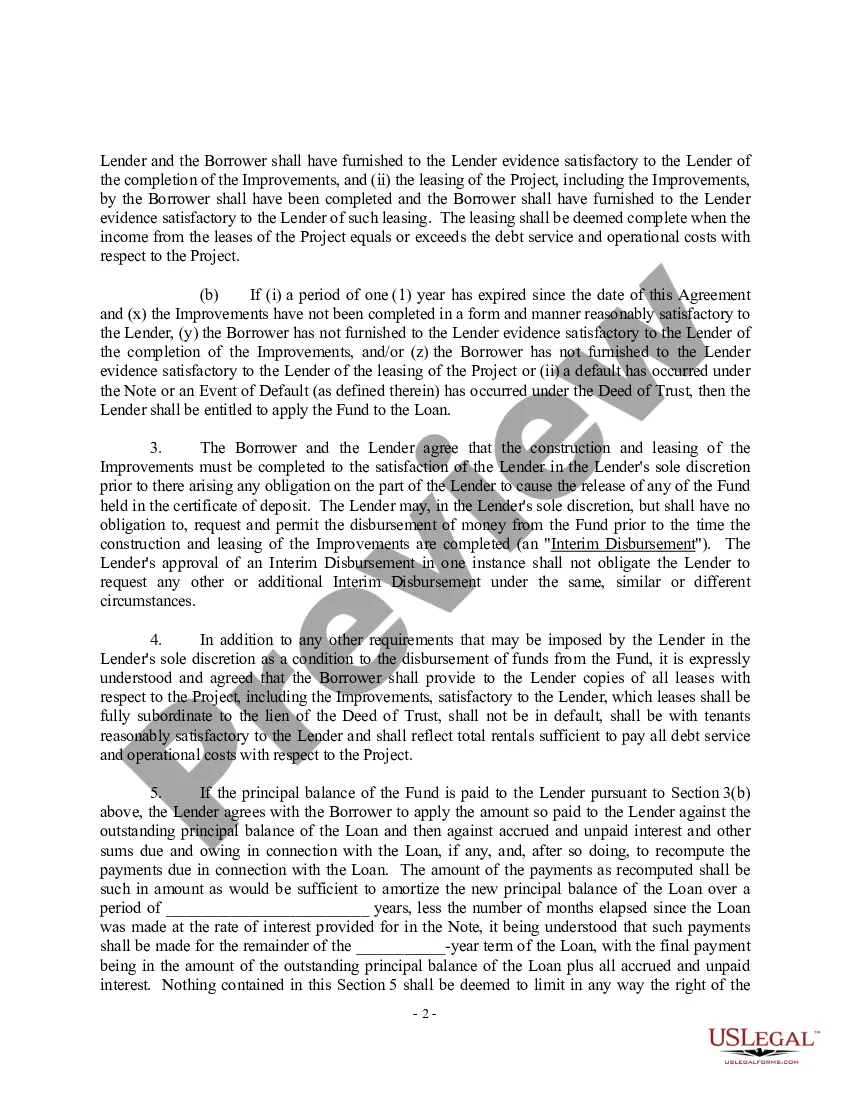
- Conditions for disbursement of funds from the certificate of deposit.
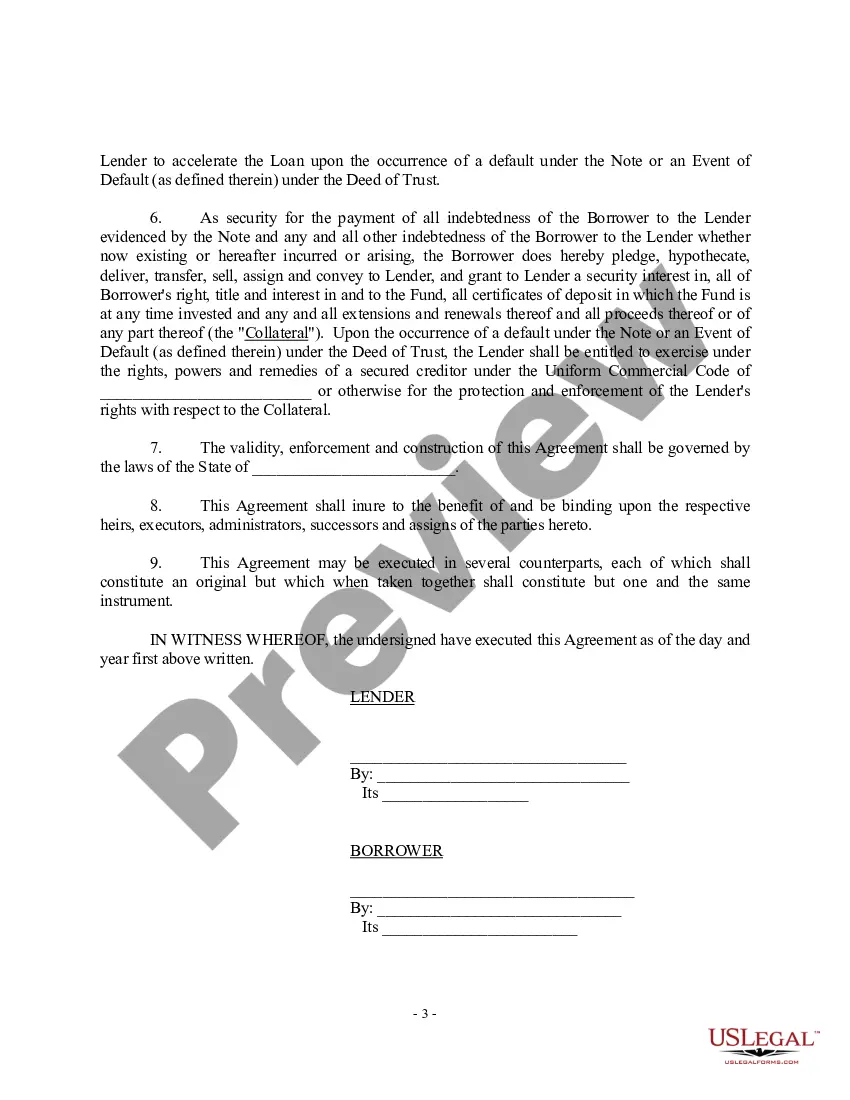
- Provisions for default and consequences regarding loan security.
- Governing law and binding effect on heirs and successors.
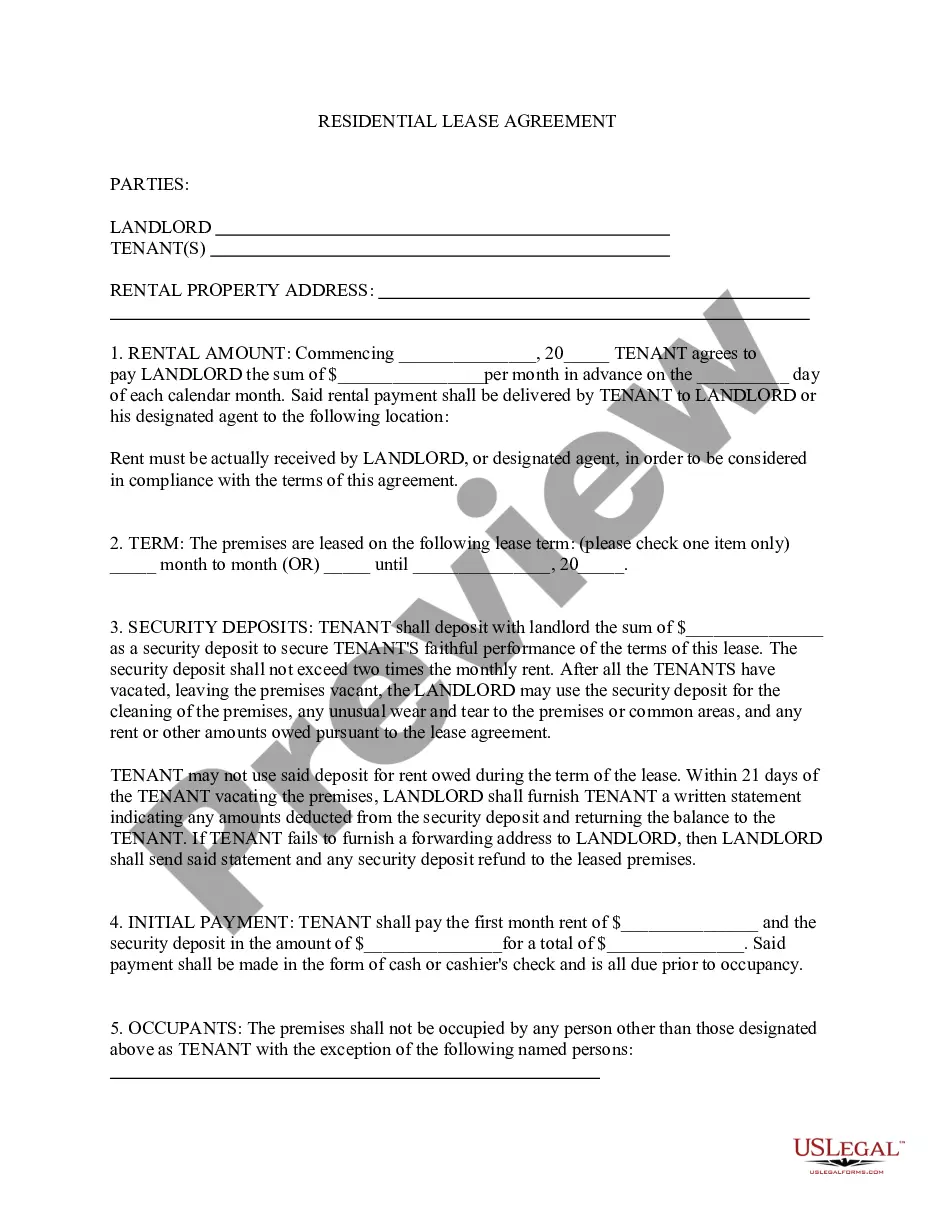
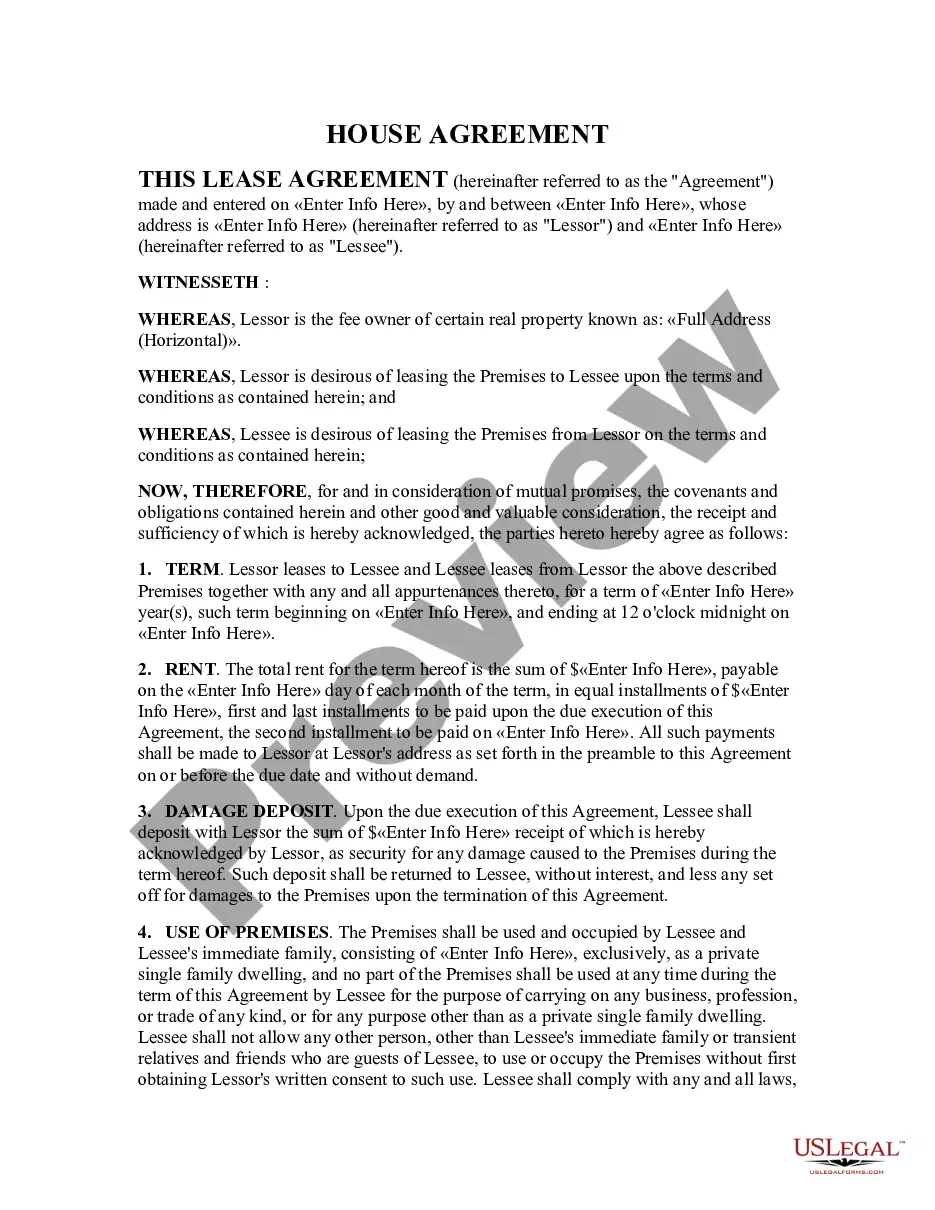
When to use this document
This form is used when a property owner wishes to secure financing for tenant improvements or renovations while entering into a leasing agreement for the property. It is appropriate in situations where the lender requires assurance that the completed improvements will generate sufficient rental income to cover loan obligations and operating costs. Typical scenarios include commercial real estate developments, retail spaces, or any leasing situation where significant renovations are anticipated before tenants move in.
Who should use this form
This form is intended for:
- Commercial property owners seeking financing for tenant finish work.
- Developers entering agreements requiring upfront funding for improvements.
- Lenders who want to ensure that tenant improvements align with leasing agreements and financial viability.
- Borrowers who are responsible for outlining improvements needed for their projects.
How to complete this form
- Identify the parties: Fill in the full names and structure of the lender and borrower.
- Specify the loan amount: Enter the principal amount proposed for tenant improvements.
- Detail the conditions: Outline the requirements for fund disbursement and completion of tenant improvements.
- Include leasing terms: Provide details of the leases and specify income expectations from the project.
- Sign and date: Ensure all parties execute the agreement, indicating their acceptance of the terms.
Does this document require notarization?
This form does not typically require notarization to be legally valid. However, some jurisdictions or document types may still require it. US Legal Forms provides secure online notarization powered by Notarize, available 24/7 for added convenience.
Get your form ready online
Our built-in tools help you complete, sign, share, and store your documents in one place.
Make edits, fill in missing information, and update formatting in US Legal Forms—just like you would in MS Word.
Download a copy, print it, send it by email, or mail it via USPS—whatever works best for your next step.
Sign and collect signatures with our SignNow integration. Send to multiple recipients, set reminders, and more. Go Premium to unlock E-Sign.
If this form requires notarization, complete it online through a secure video call—no need to meet a notary in person or wait for an appointment.
We protect your documents and personal data by following strict security and privacy standards.

Make edits, fill in missing information, and update formatting in US Legal Forms—just like you would in MS Word.

Download a copy, print it, send it by email, or mail it via USPS—whatever works best for your next step.

Sign and collect signatures with our SignNow integration. Send to multiple recipients, set reminders, and more. Go Premium to unlock E-Sign.

If this form requires notarization, complete it online through a secure video call—no need to meet a notary in person or wait for an appointment.

We protect your documents and personal data by following strict security and privacy standards.
Mistakes to watch out for
- Failing to clearly define the roles and obligations of both the lender and borrower.
- Omitting crucial details about improvement specifications or timelines.
- Not double-checking that all signatures are present and correct before finalizing the agreement.
- Ignoring local regulations that may affect the execution of this agreement.
Why complete this form online
- Convenience of having a standard legal form readily available.
- Ability to customize the form to specific needs and terms.
- Access to reliable legal language drafted by licensed attorneys.
Legal use & context
- This Tenant Finish and Leasing Agreement is legally binding once executed properly by both parties.
- The agreement should be in compliance with local real estate and lending laws to enforce its terms effectively.
- Itâs advisable to consult with a legal expert to understand specific implications and requirements based on jurisdiction.
Summary of main points
- The Tenant Finish and Leasing Agreement combines financing for tenant improvements with leasing conditions.
- It is necessary for securing funding that supports the property's financial stability for the lender.
- Due diligence is key; ensure compliance with local laws and regulations.
- Complete all necessary details and signatures to ensure validity.
Looking for another form?
Form popularity
FAQ
Collect each party's information. Include specifics about your property. Consider all of the property's utilities and services. Know the terms of your lease. Set the monthly rent amount and due date. Calculate any additional fees. Determine a payment method. Consider your rights and obligations.
The Lease Must be in Writing It does not matter if the lease is handwritten or typed.
A written agreement can act as a roadmap for the landlord-tenant relationship, especially if a dispute arises. Also, real estate (land) leases for more than one year must be in writing. If a lease for over one year is not in writing, it will generally not be enforceable in court.
The lease becomes legally binding when all parties have signed: the landlord and all tenants living in the unit who are 18 and older. If you're worried about situations where a lease needs to end early, learn about breaking a lease and grounds for eviction.
The Lease Must be in Writing It does not matter if the lease is handwritten or typed. If the lease is for more than one year, it must be in written form and contain the following terms.
A lease is a contract outlining the terms under which one party agrees to rent property owned by another party. It guarantees the lessee, also known as the tenant, use of an asset and guarantees the lessor, the property owner or landlord, regular payments for a specified period in exchange.
Legally, a lease is just one way to rent an accommodation. A rent agreement can either be a lease or a licence and will be treated accordingly, based on the terms and conditions and renting period mentioned in the agreement.
The lease is mutually beneficial. A tenant can't stop paying rent or vacate the property during the lease term this is a violation of the agreement.A rental agreement, by contrast, is a month-to-month agreement. At the end of each 30-day period, the landlord and tenant are both free to change the terms.
A lease agreement is an accord where the tenant is given the right to live in a dwelling for a definite time-frame (often for 12 months). The stretch of the tenure may vary depending on the tenant's preference and owner's will. Typically, a lease binds the tenant and the landlord for a longer span of time.