Waiver and Release From Liability For Adult for Community Center
Overview of this form
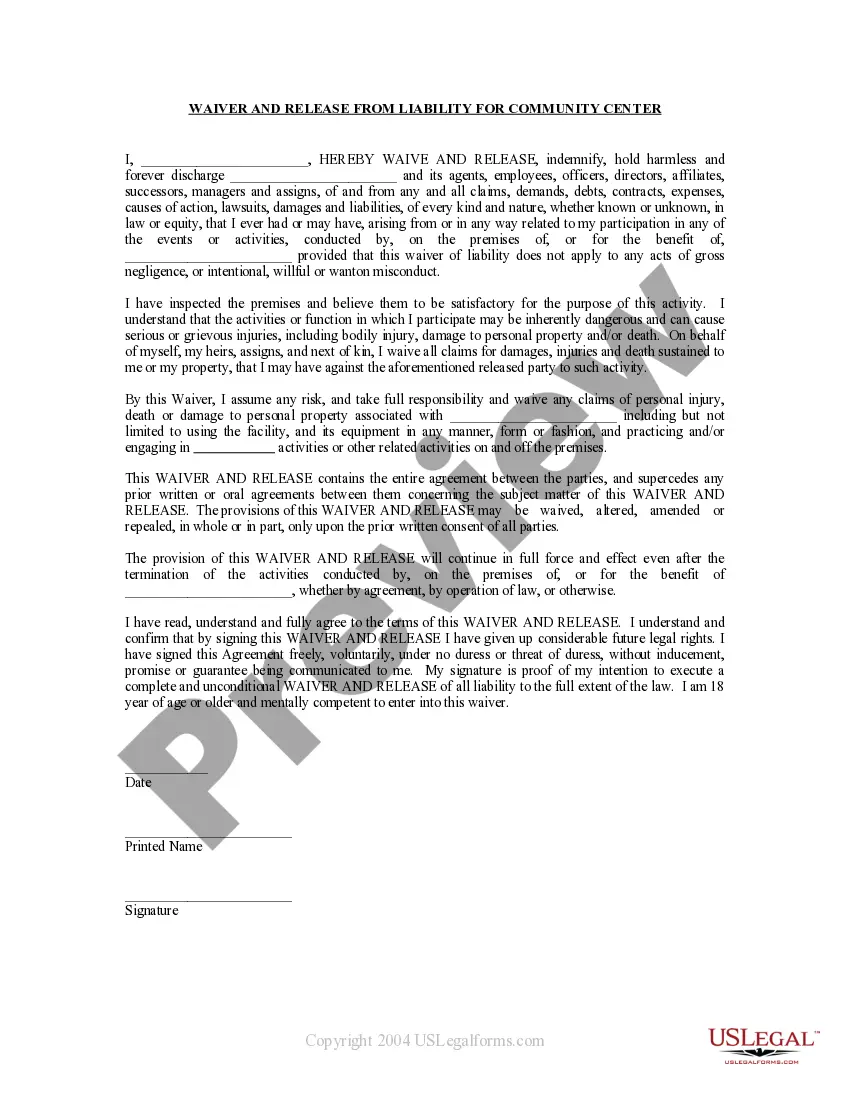
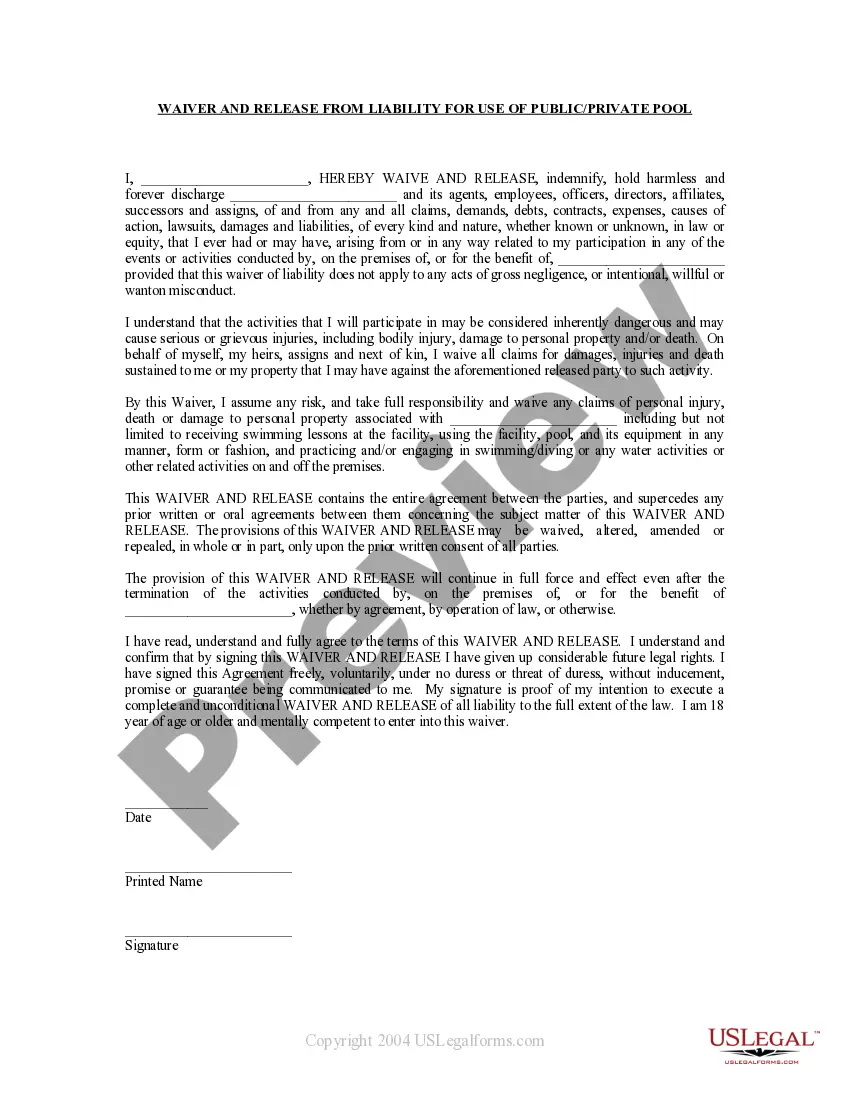
The Waiver and Release From Liability For Adult for Community Center is a legal document that allows adults to release a community center from liability for injuries incurred while participating in activities at the facility. This form clearly outlines the risks involved and the rights waived by signing, distinguishing it from similar forms focused on minors or general liability waivers.
Key components of this form
- Identifying information of the individual waiving their rights.
- Language waiving liability for injury or damage during activities.
- Exclusion of liability for gross negligence or intentional misconduct.
- Confirmation of the individual's understanding of the risks involved.
- Signature and date fields to validate the waiver.
When this form is needed
This Waiver and Release From Liability should be used when an adult is participating in activities at a community center, such as sports events, recreational classes, or other organized gatherings. It helps protect the facility from legal claims arising from injuries that may occur during these activities.
Who should use this form
This form is intended for:
- Adults participating in community center activities.
- Community center administrators or organizers ensuring liability coverage.
- Individuals aged 18 or older who are mentally competent.
How to complete this form
- Identify your name in the designated space at the beginning of the form.
- Complete the name of the community center and its relevant details.
- Read through the waiver carefully to understand what you are agreeing to.
- Sign and date the form, confirming your acceptance of the terms.
- Keep a copy of the signed waiver for your records.
Is notarization required?
Notarization is generally not required for this form. However, certain states or situations might demand it. You can complete notarization online through US Legal Forms, powered by Notarize, using a verified video call available anytime.
Get your form ready online
Our built-in tools help you complete, sign, share, and store your documents in one place.
Make edits, fill in missing information, and update formatting in US Legal Forms—just like you would in MS Word.
Download a copy, print it, send it by email, or mail it via USPS—whatever works best for your next step.
Sign and collect signatures with our SignNow integration. Send to multiple recipients, set reminders, and more. Go Premium to unlock E-Sign.
If this form requires notarization, complete it online through a secure video call—no need to meet a notary in person or wait for an appointment.
We protect your documents and personal data by following strict security and privacy standards.

Make edits, fill in missing information, and update formatting in US Legal Forms—just like you would in MS Word.

Download a copy, print it, send it by email, or mail it via USPS—whatever works best for your next step.

Sign and collect signatures with our SignNow integration. Send to multiple recipients, set reminders, and more. Go Premium to unlock E-Sign.

If this form requires notarization, complete it online through a secure video call—no need to meet a notary in person or wait for an appointment.

We protect your documents and personal data by following strict security and privacy standards.
Common mistakes
- Failing to read the waiver thoroughly before signing.
- Not providing accurate personal information.
- Overlooking the importance of age verification and mental competence.
- Failing to keep a signed copy for personal records.
Advantages of online completion
- Convenient access to the form from any location.
- Easy to download and print for immediate use.
- Time-saving approach compared to traditional legal drafting methods.
- Reliability in terms of legal correctness and formatting.
Legal use & context
- A waiver of liability can be enforceable in many cases, provided it is clear and specific.
- Exclusions for gross negligence or intentional misconduct maintain protection for the participant.
- Signed waivers help clarify expectations and reduce the likelihood of legal disputes.
Key takeaways
- This waiver protects community centers from liability due to injuries.
- It is essential for adults participating in any organized activities.
- Completing the form accurately is critical for legal enforceability.
- Always keep a copy of the signed waiver for future reference.
Looking for another form?
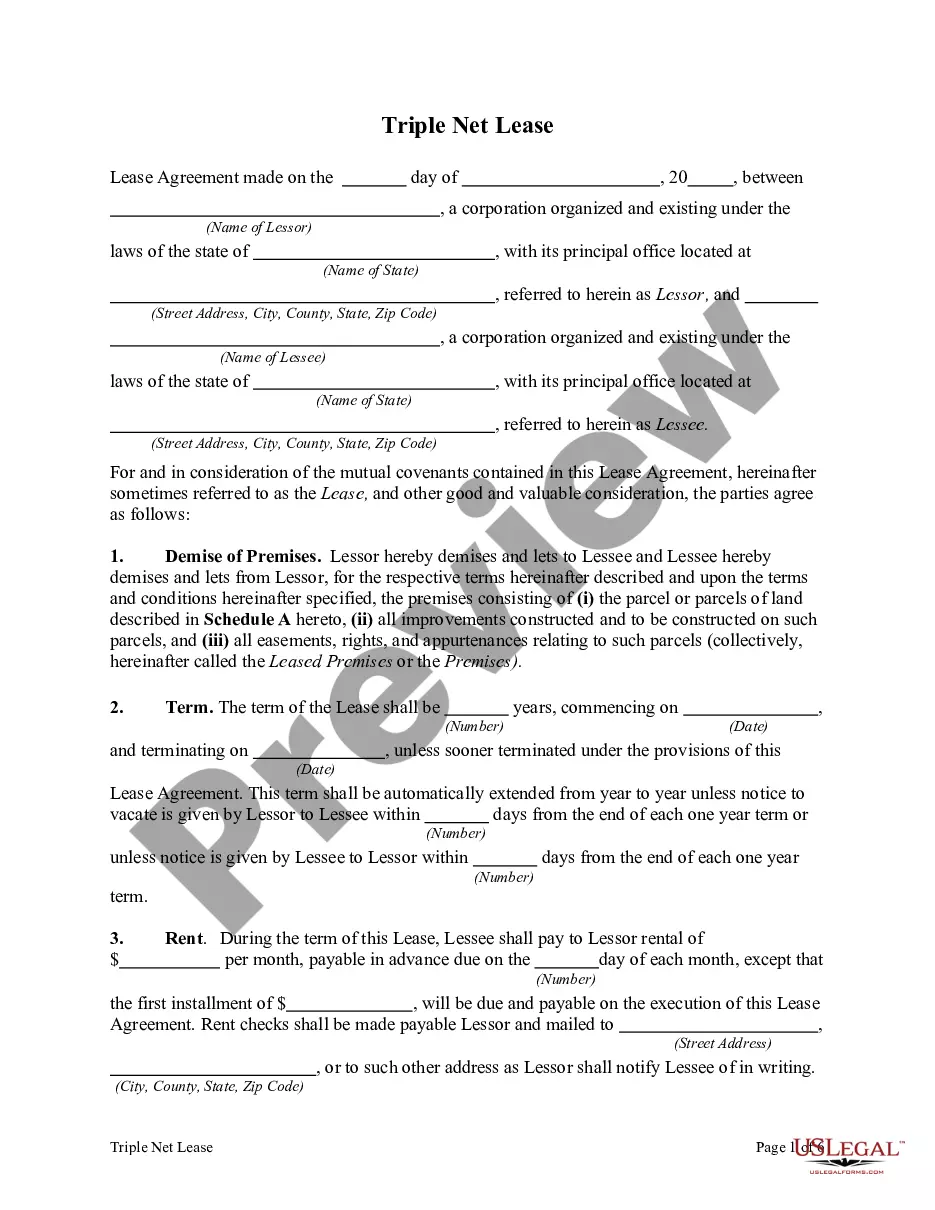

Form popularity
FAQ
The main difference between releases and waivers is the transferring of ownership. When rights are released, they are transferred to another party. When rights are waived, they are gone altogether. If intellectual property rights are waived, the IP can be used by any other party that has access to it.
In California, a liability waiver must be clear, unambiguous, and explicit. In other words, waivers cannot be printed in faded ink, in small font, on the back of a paper, or in an otherwise ambiguous form. If the waiver that you sign is not represented clearly, it may not hold up in the event of a lawsuit.
If you've been injured due to negligent actions, you can sue even if you signed a waiver. Winning a lawsuit concerning negligence is not uncommon. Many celebrities have sued for negligence even though they signed documents stating they understood the risks.
A liability waiver, or release of liability, is a legal document that a company or organization has you sign in order to protect them from being sued in the event that you are injured.
A release and waiver agreement is an enforceable promise not to pursue legal action in exchange for compensation. The releasee gives money or some other form of compensation to the releasor, who then agrees not to press charges, sue, or take any other legal action against the releasee.
A property damage loss waiver (PDLW ) program is a damage liability option that provides multifamily property owners and managers financial protection if a participating resident negligently causes damages or losses to the community or building.
A liability waiver, or release waiver, is a legal document that a company or organization requires members of the public to sign in order to protect their organization from being sued if you sustain an injury.Depending on the facts of your case, you may still be able to file a lawsuit and recover damages.
In many cases, the waiver is not enforceable.If you've been injured due to negligent actions, you can sue even if you signed a waiver. Winning a lawsuit concerning negligence is not uncommon. Many celebrities have sued for negligence even though they signed documents stating they understood the risks.
Release Versus Waiver The main difference between releases and waivers is the transferring of ownership. When rights are released, they are transferred to another party. When rights are waived, they are gone altogether.In the case of the skydiver, they might be asked to sign a release form rather than a waiver.