Waiver and Release From Liability For Adult for Sailing
What this document covers
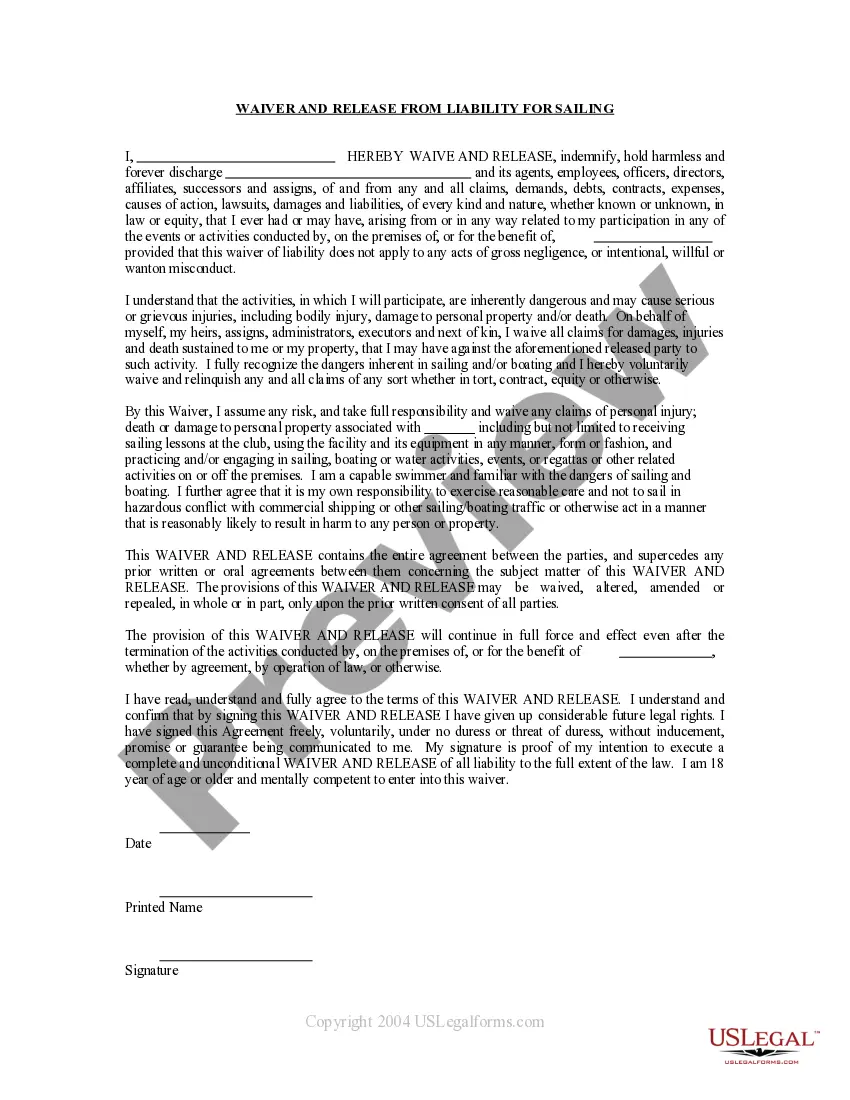
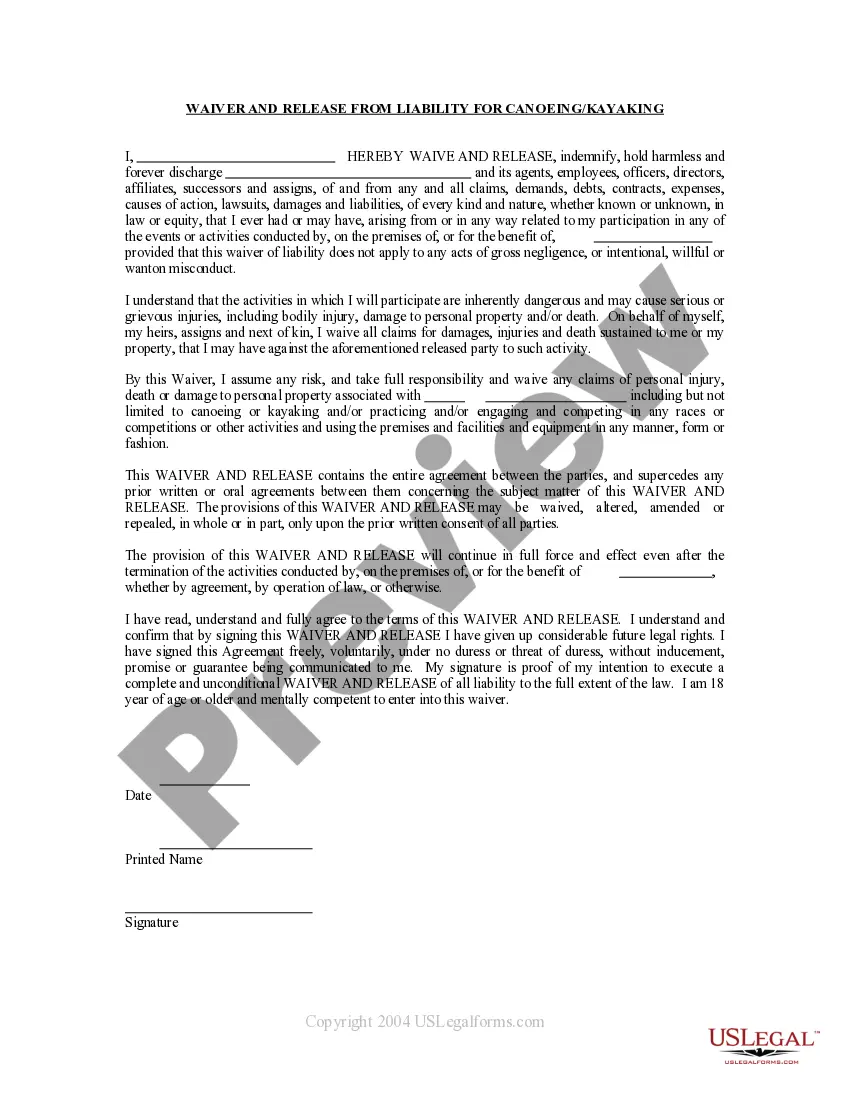
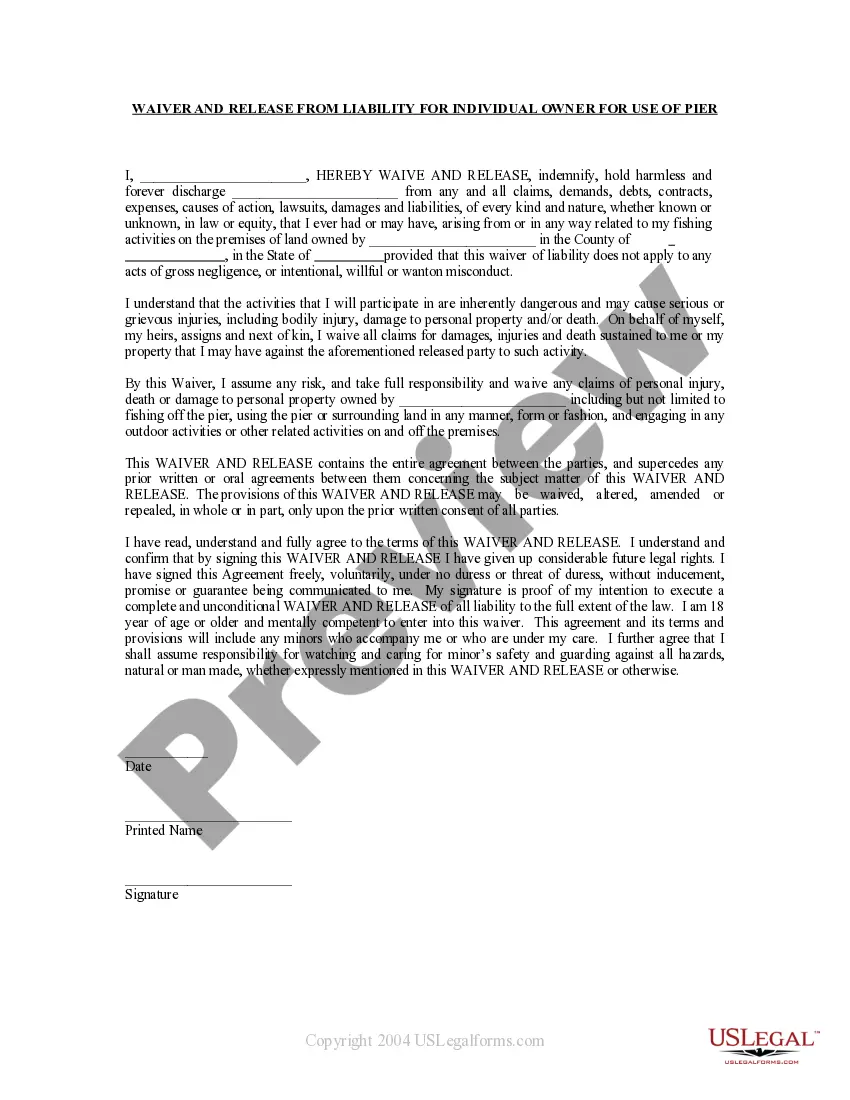
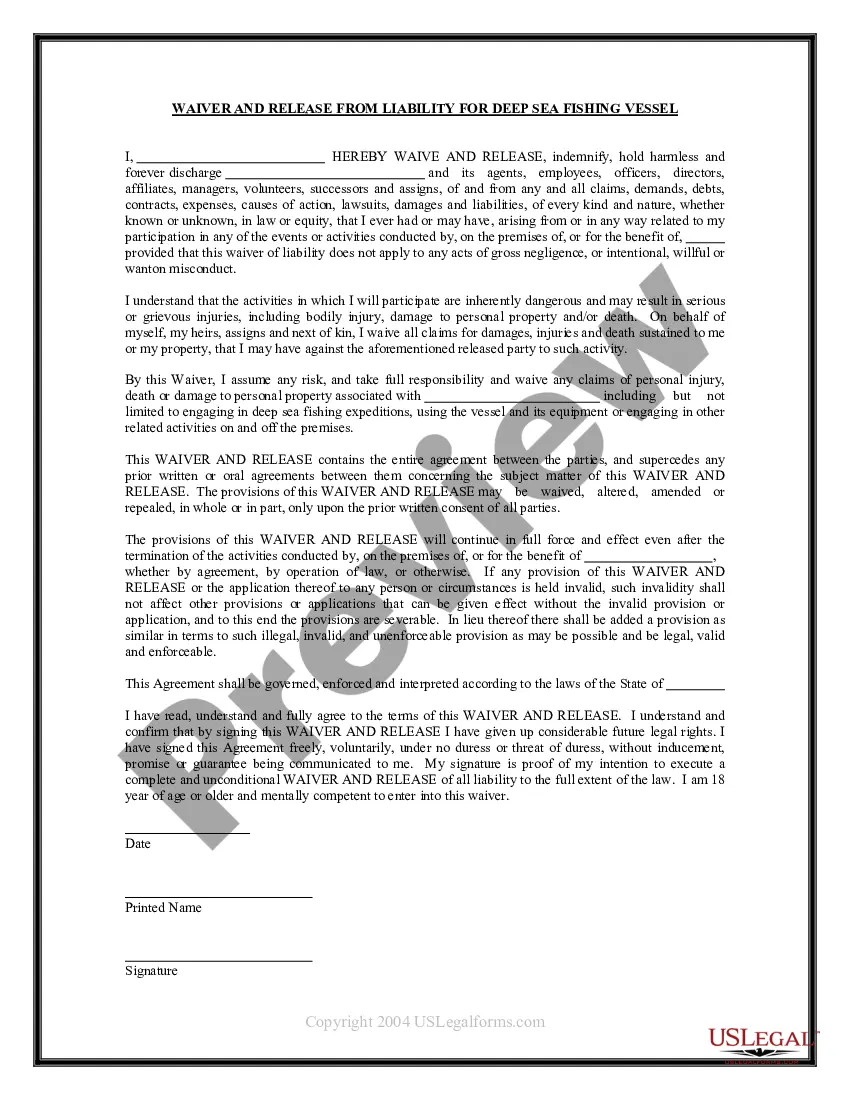
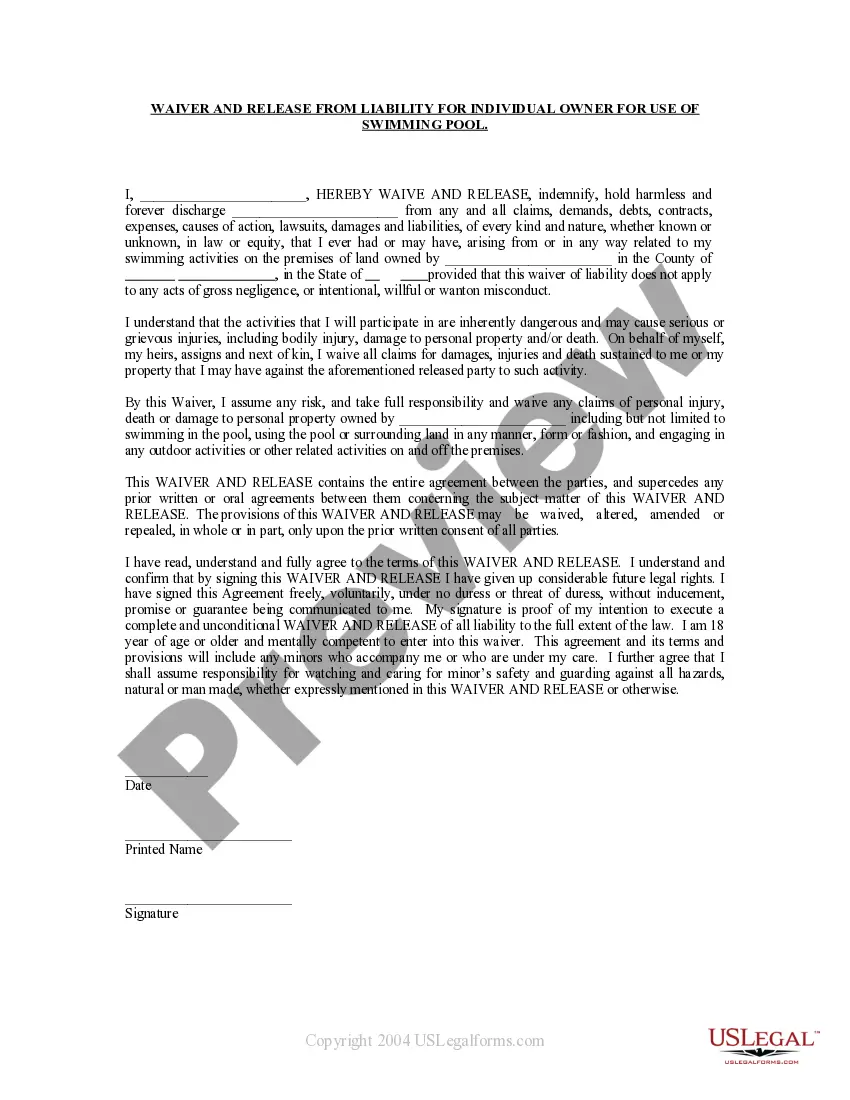
The Waiver and Release From Liability For Adult for Sailing is a legal document that allows adults to waive their right to seek damages for injuries that may occur while participating in sailing-related activities. This form is important for both the sailing facility and participants, as it clarifies liability and ensures that everyone understands the risks involved in sailing. It differs from similar forms by being specifically tailored for adults engaging in sailing activities, ensuring that the liability is clearly communicated and agreed upon.
Main sections of this form
- Identification of the sailing facility and participant.
- Details of the activities covered under the waiver.
- A clear statement releasing the facility from liability for injuries.
- Signatures of both the participant and an authorized representative of the facility.
- Governing law clause that specifies which state's laws apply.
When to use this document
You should use the Waiver and Release From Liability For Adult for Sailing whenever you plan to participate in sailing activities at a facility. This form is essential prior to engaging in any sailing sessions, events, or classes that could involve physical risks. It is particularly important for facility owners and operators to have participants sign this document to protect themselves from liability related to accidents or injuries that may happen during sailing.
Who can use this document
This form is intended for:
- Adults wishing to participate in sailing activities.
- Sailing facility operators and owners seeking to mitigate liability risks.
- Instructors or event coordinators engaged in sailing programs.
How to prepare this document
- Identify the parties involved by clearly stating the names of the sailing facility and the participant.
- List the specific sailing activities covered by the waiver.
- Read and understand the liability release clause before signing.
- Ensure both parties sign the document, including the date of signatures.
- Keep a copy for personal records and provide a copy to the facility.
Is notarization required?
In most cases, this form does not require notarization. However, some jurisdictions or signing circumstances might. US Legal Forms offers online notarization powered by Notarize, accessible 24/7 for a quick, remote process.
Get your form ready online
Our built-in tools help you complete, sign, share, and store your documents in one place.
Make edits, fill in missing information, and update formatting in US Legal Forms—just like you would in MS Word.
Download a copy, print it, send it by email, or mail it via USPS—whatever works best for your next step.
Sign and collect signatures with our SignNow integration. Send to multiple recipients, set reminders, and more. Go Premium to unlock E-Sign.
If this form requires notarization, complete it online through a secure video call—no need to meet a notary in person or wait for an appointment.
We protect your documents and personal data by following strict security and privacy standards.

Make edits, fill in missing information, and update formatting in US Legal Forms—just like you would in MS Word.

Download a copy, print it, send it by email, or mail it via USPS—whatever works best for your next step.

Sign and collect signatures with our SignNow integration. Send to multiple recipients, set reminders, and more. Go Premium to unlock E-Sign.

If this form requires notarization, complete it online through a secure video call—no need to meet a notary in person or wait for an appointment.

We protect your documents and personal data by following strict security and privacy standards.
Avoid these common issues
- Failing to sign the document, which renders it unenforceable.
- Not reading the waiver carefully before signing.
- Omitting to include specific activities that require a waiver.
Benefits of using this form online
- Convenience of immediate download and access to the form.
- Editability to tailor the document to specific needs and activities.
- Reliability of professionally drafted templates by licensed attorneys.
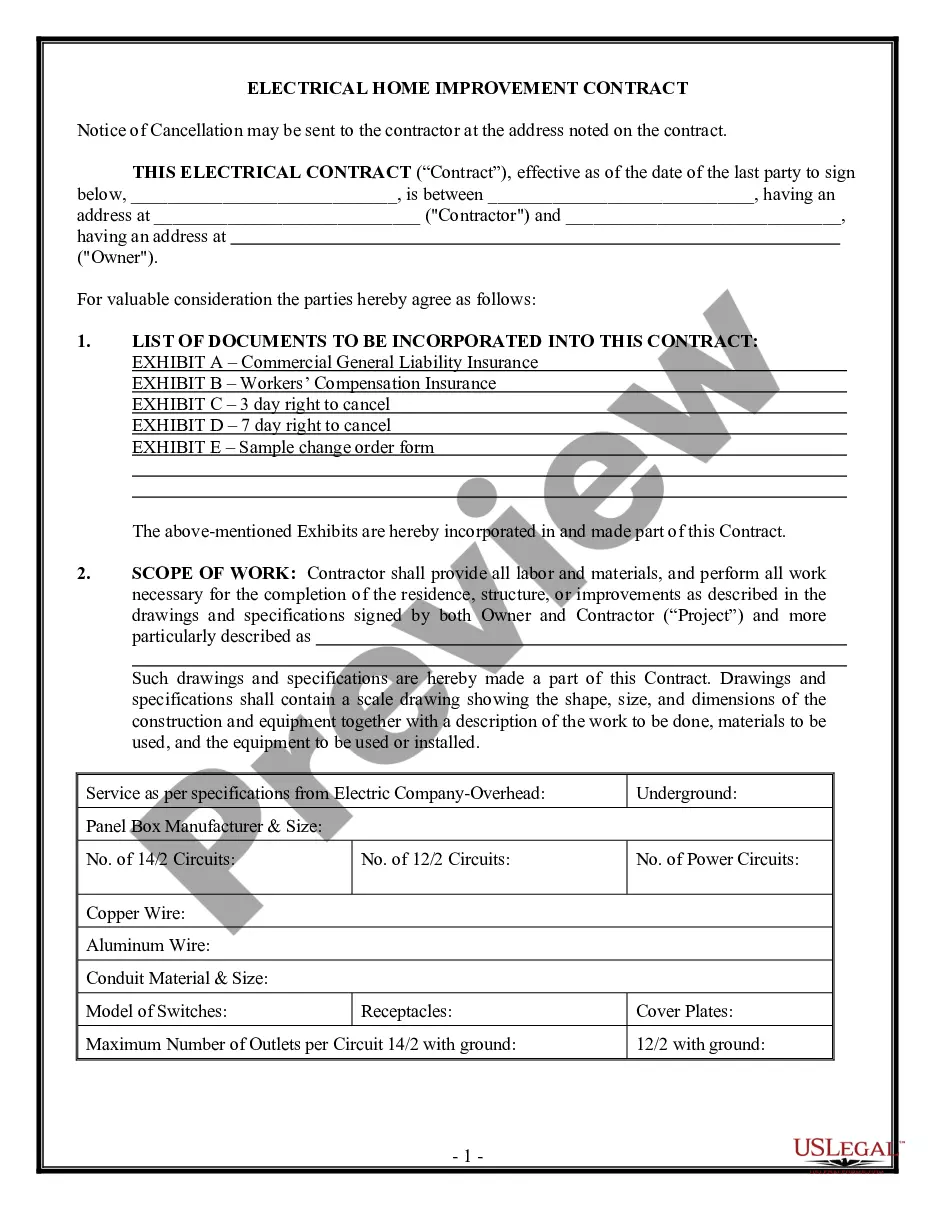
Looking for another form?







Form popularity
FAQ
A release and waiver agreement is an enforceable promise not to pursue legal action in exchange for compensation. The releasee gives money or some other form of compensation to the releasor, who then agrees not to press charges, sue, or take any other legal action against the releasee.
So, if an accident happens and injury occurs, is a Waiver effective in protecting the institution from liability and preventing a lawsuit from the injured party? The answer is that, if properly worded and signed, the Waiver is likely valid and will preclude legal claims for injuries.
Release Versus Waiver The main difference between releases and waivers is the transferring of ownership. When rights are released, they are transferred to another party. When rights are waived, they are gone altogether.
So, if an accident happens and injury occurs, is a Waiver effective in protecting the institution from liability and preventing a lawsuit from the injured party? The answer is that, if properly worded and signed, the Waiver is likely valid and will preclude legal claims for injuries.
Waiver and release refers to the waiving of rights or privileges and the release of a party from their obligations or rights.
Essentially, a waiver removes a real or potential liability for the other party in the agreement. For example, in a settlement between two parties, one party might, by means of a waiver, relinquish its right to pursue any further legal action once the settlement is finalized.
An activity waiver and release is typically used prior to an event or activity in which there is potential for damage, loss, or injury to occur.By signing a waiver, participants acknowledge the risks involved in the activity and release the activity provider from liabilities.
Get help. Writing a waiver should not be complicated. Use the correct structure. Proper formatting. Include a subject line. Include a caution! Talk about the activity risks. Do not forget an assumption of risk. Hold harmless.
By executing a waiver and consent document, the distributee waives his or her right to a citation being issued by the court, and consents to the court's appointment of the administrator or executor.
A release form or a waiver is simply a legal document containing an agreement between two parties.A waiver is an essential document that informs participants of the risks involved in certain activities and also protects you from liability.