Employment Agreement - Pro-Employee
What this document covers
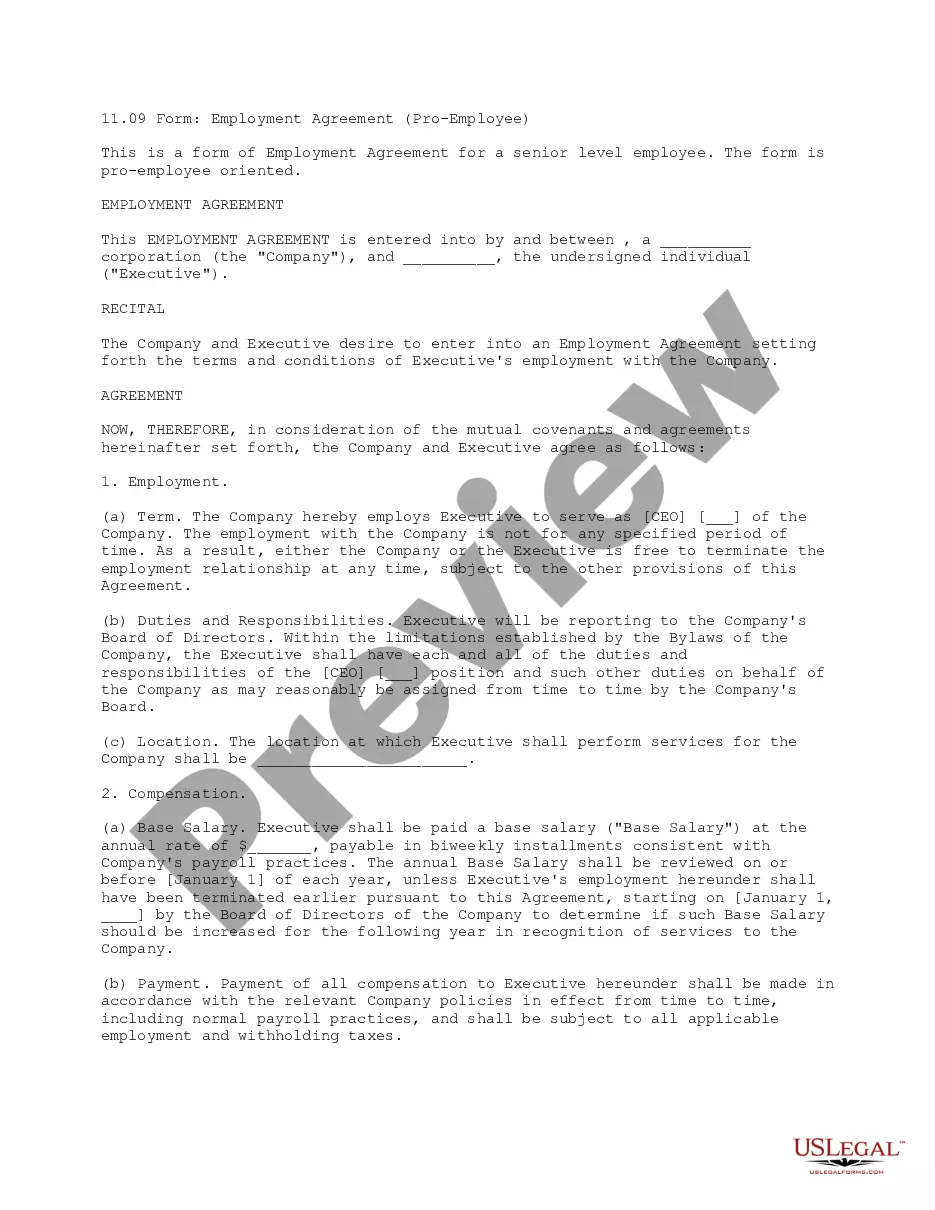
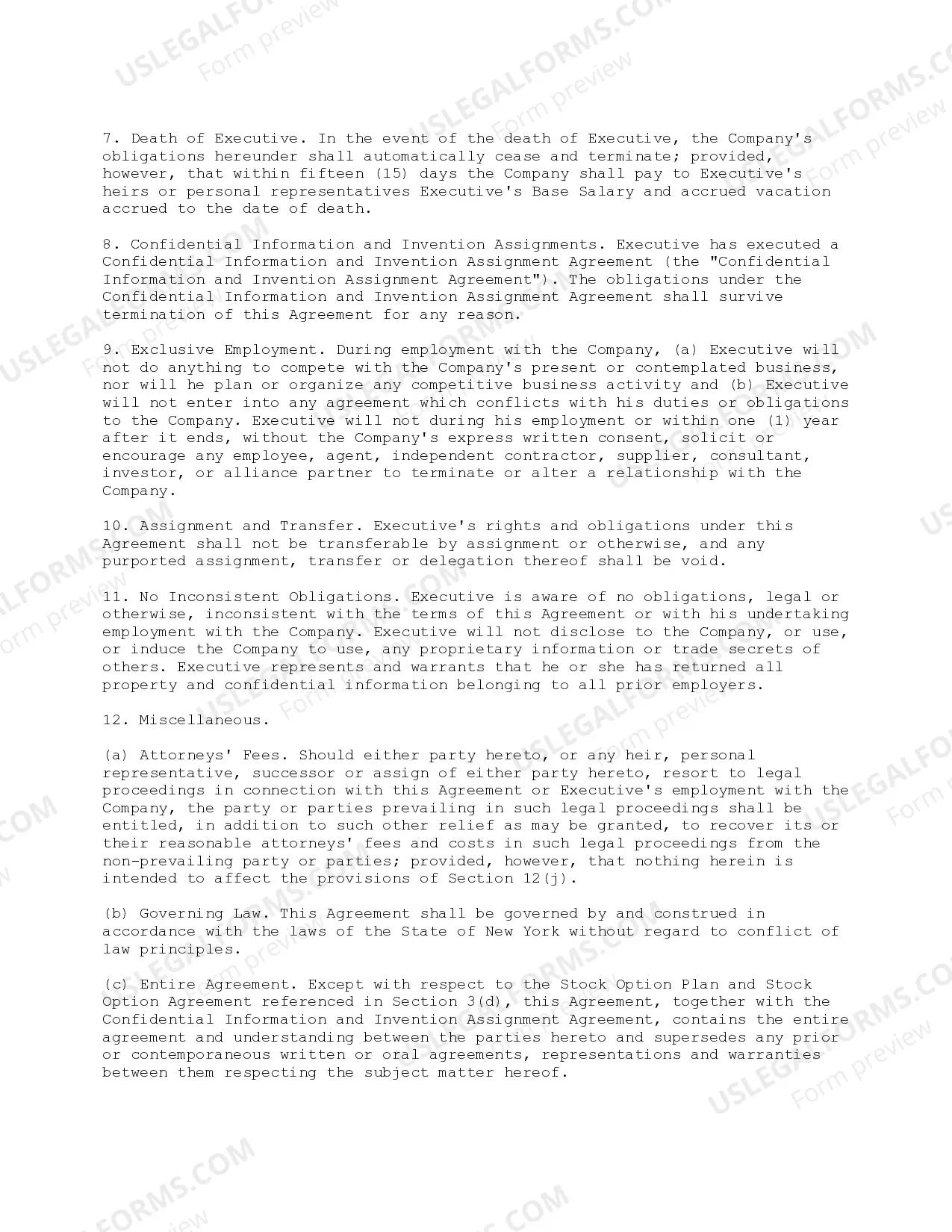
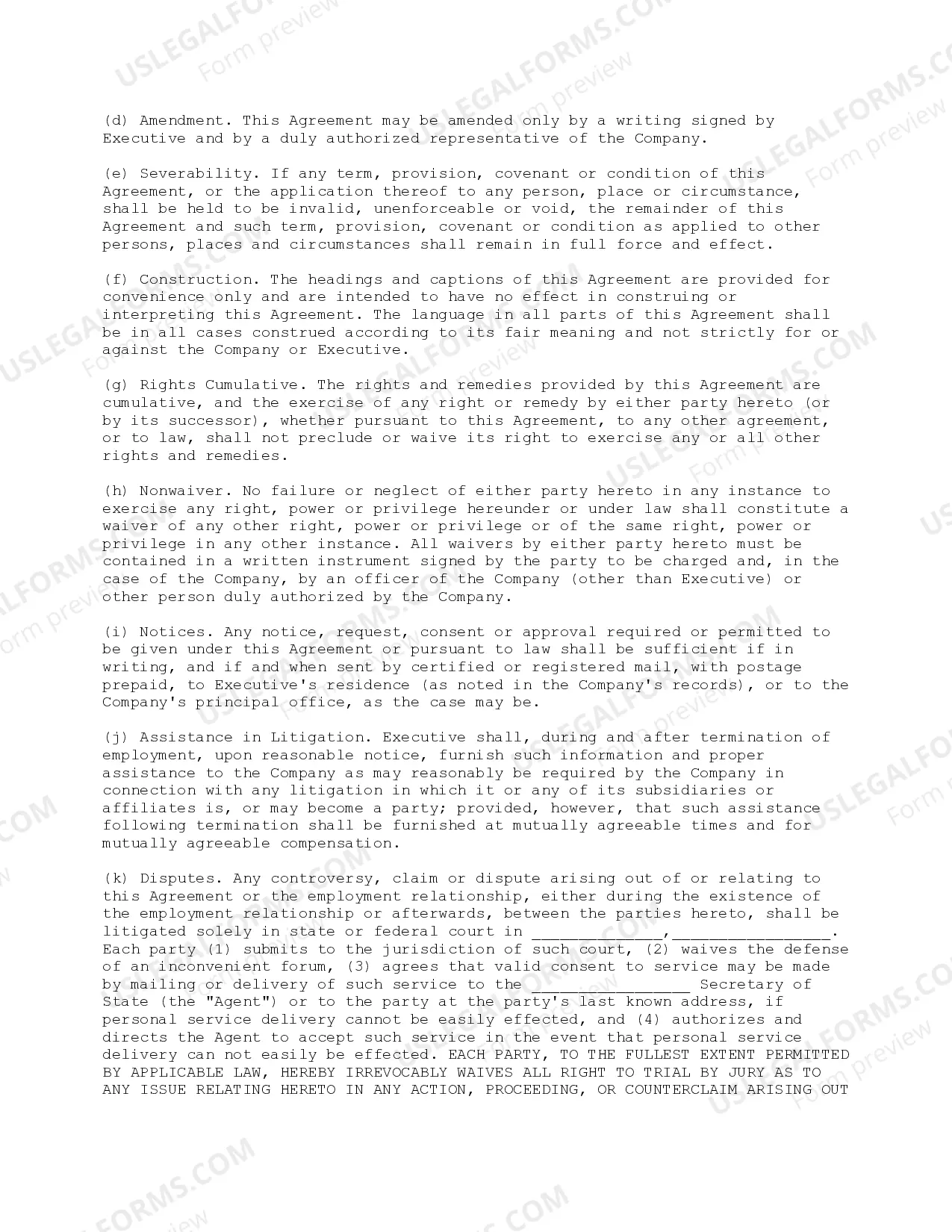
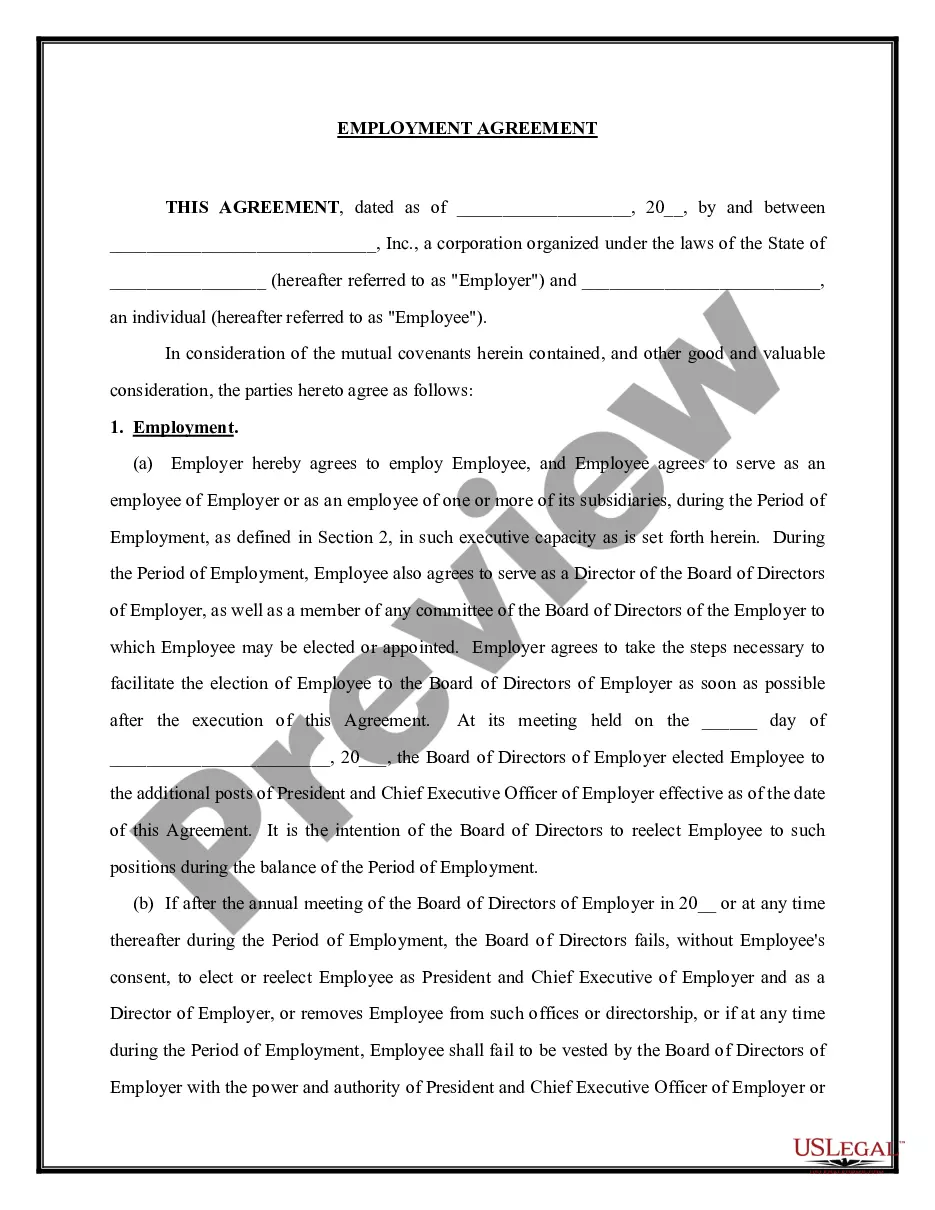
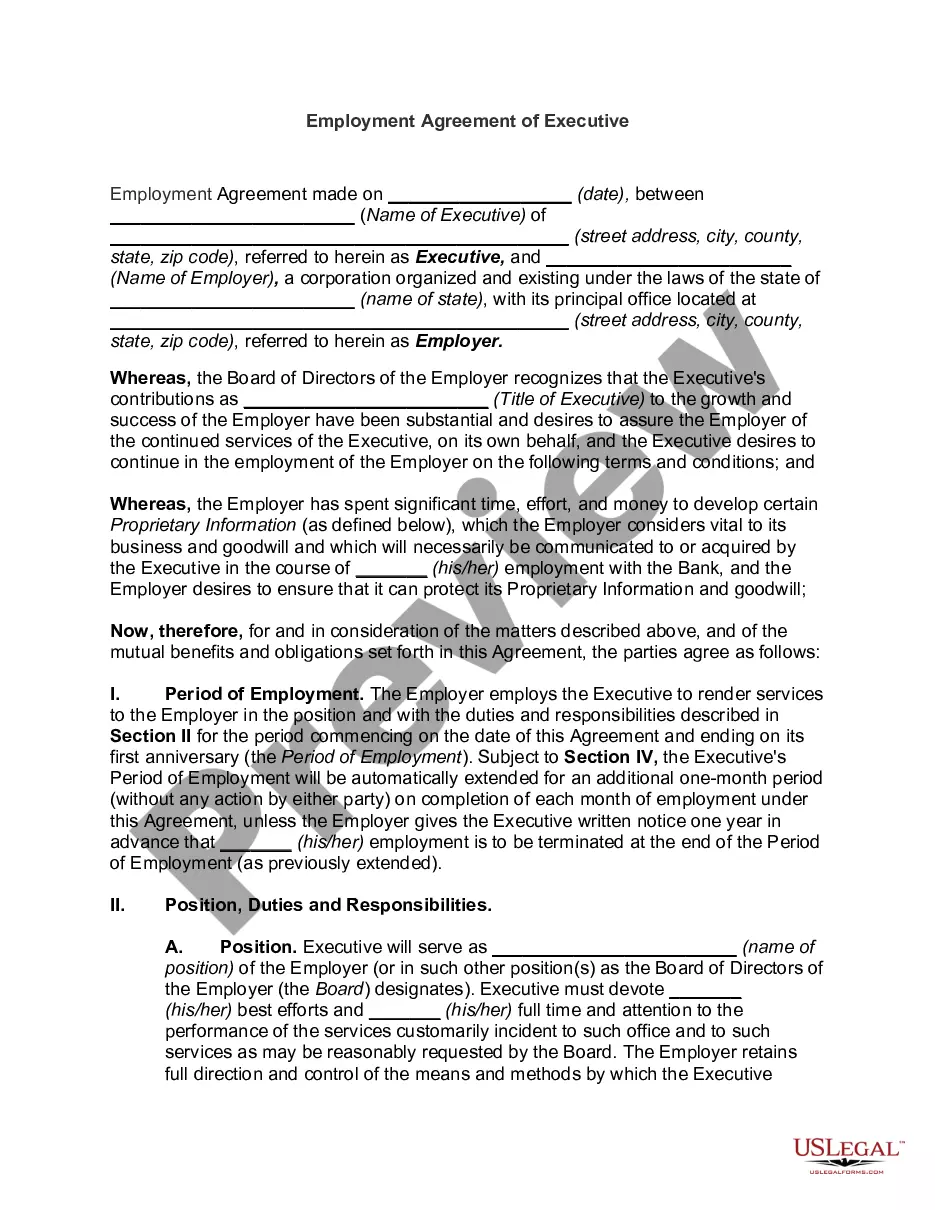
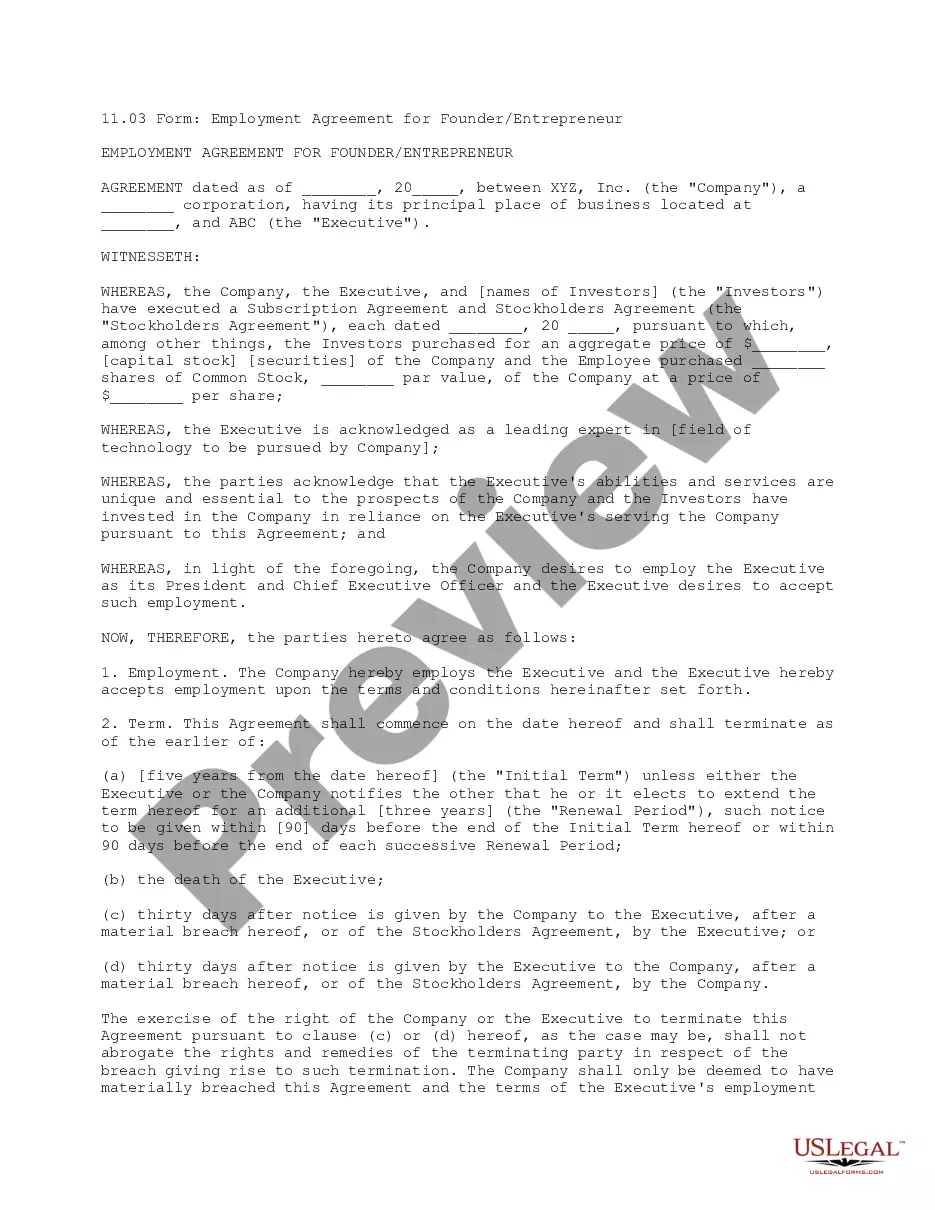
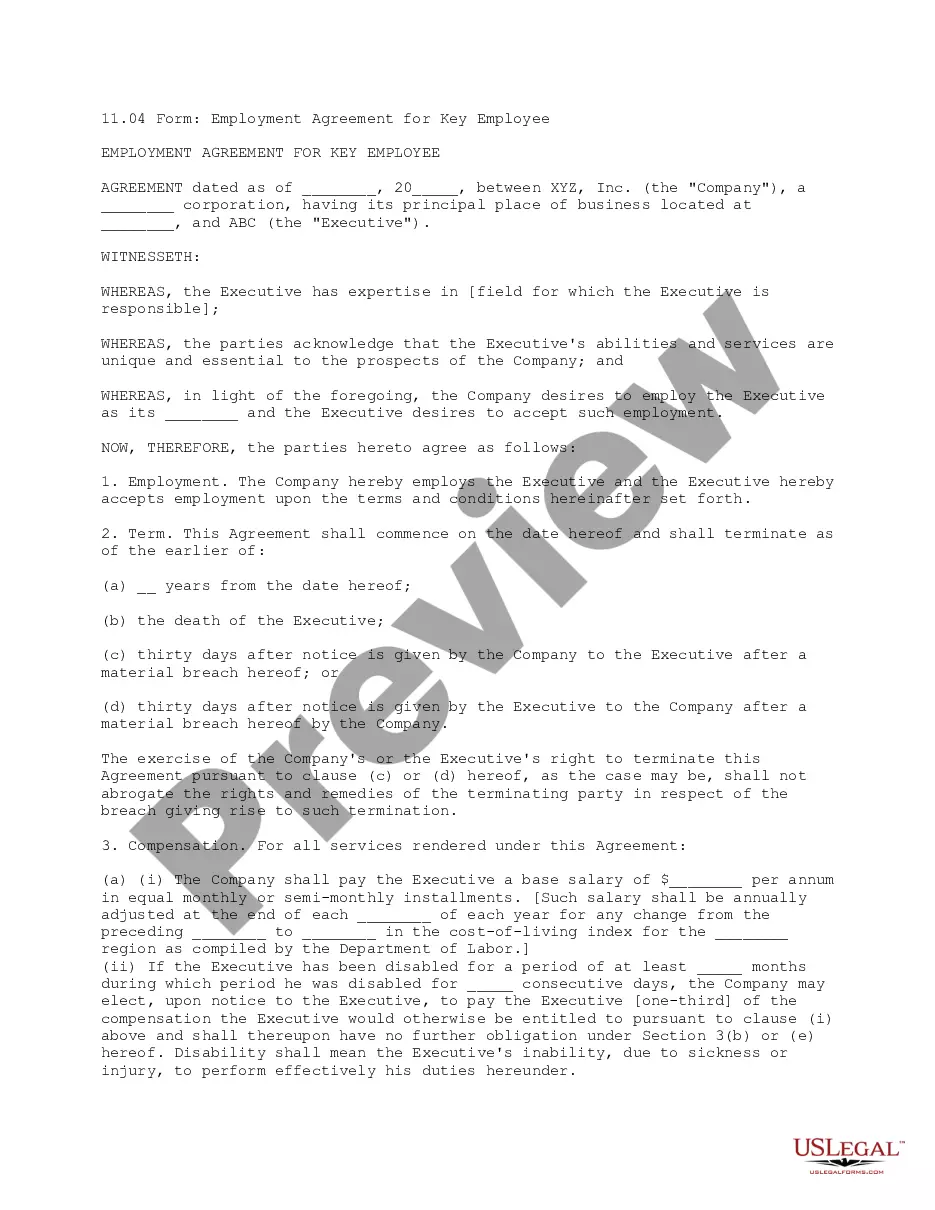
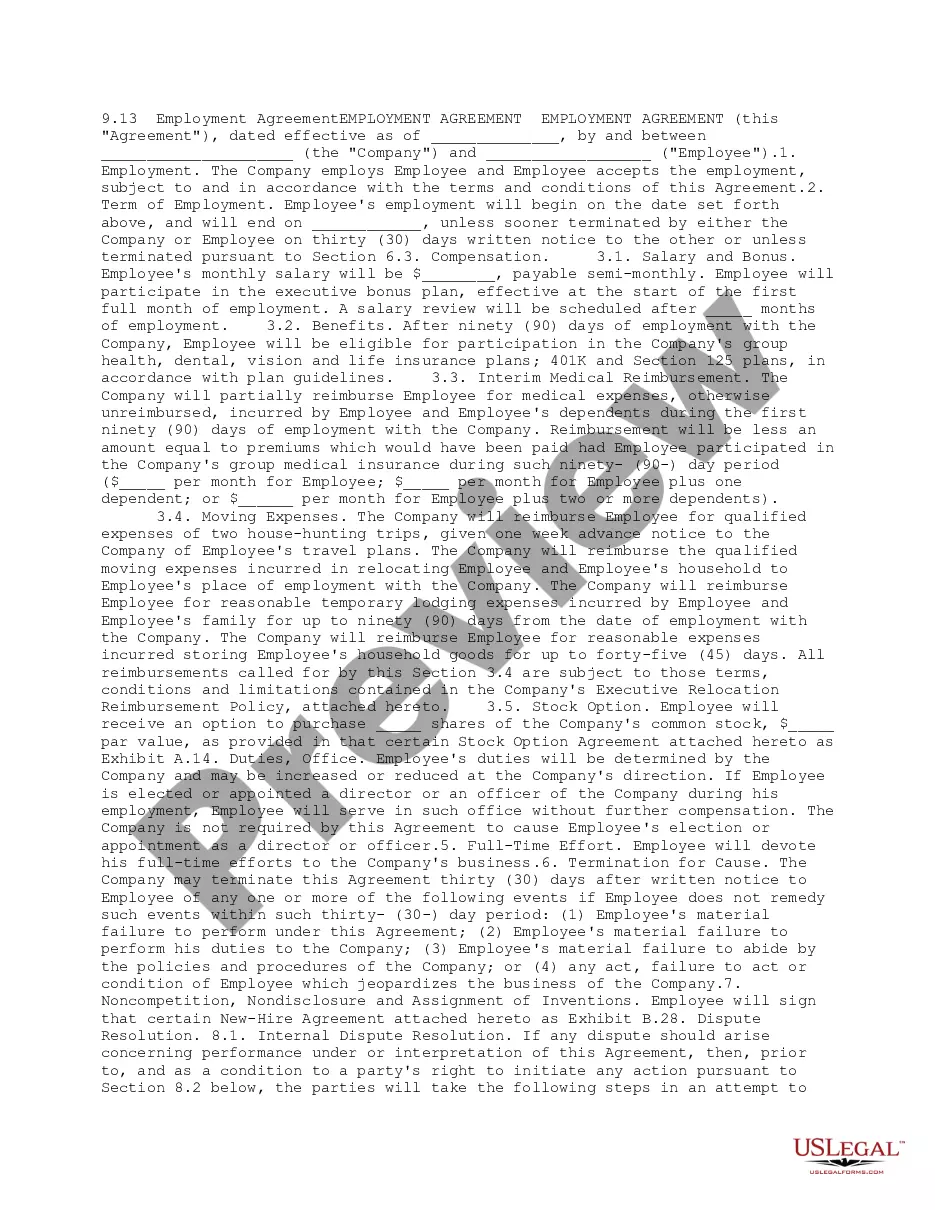
The Employment Agreement - Pro-Employee is a legally binding document specifically designed for employers and senior-level employees. This form outlines the terms and conditions of employment, ensuring clarity and protection for both parties involved. Unlike standard employment agreements, this pro-employee version includes provisions that prioritize the executive's interests, such as benefits and severance terms. It is an essential tool for ensuring compliance with labor laws while fostering a professional work environment.
Key parts of this document
- Employment duration and conditions, allowing for at-will employment.
- Executive's duties and responsibilities, outlining the reporting structure and task expectations.
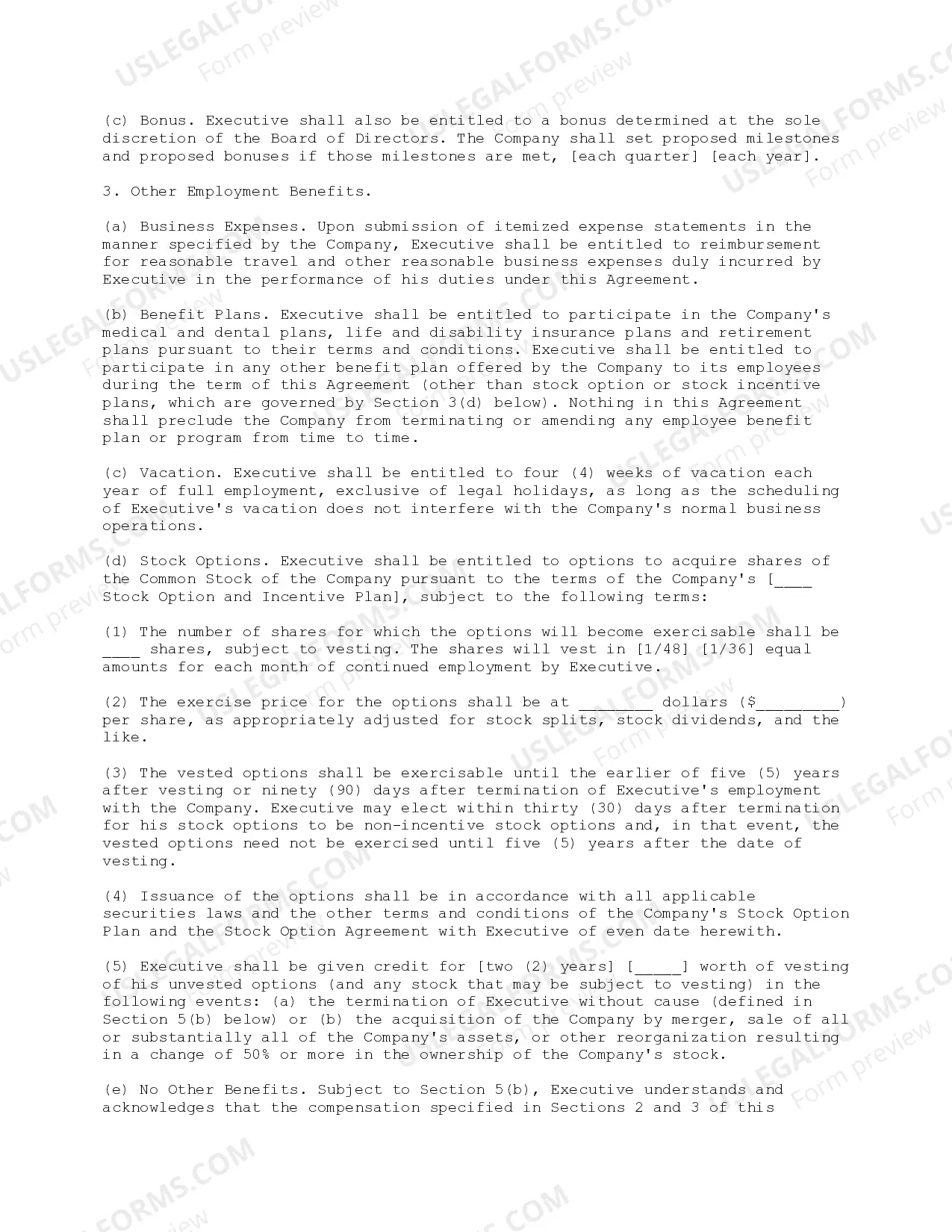
- Compensation details, including base salary, bonuses, and payment frequency.
- Other benefits such as vacation entitlement and participation in company benefit plans.
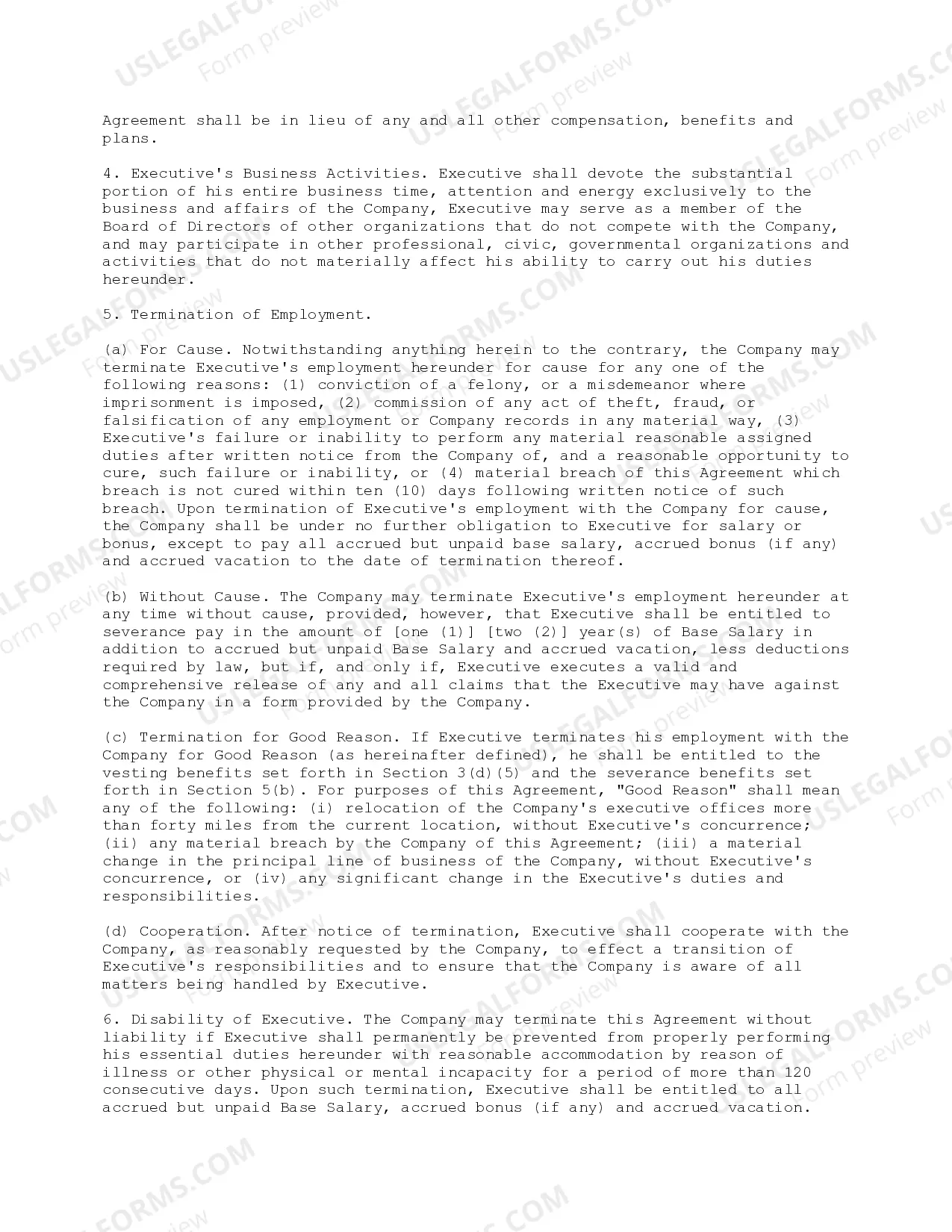
- Termination clauses that specify conditions for ending employment, both with and without cause.
- Confidentiality and non-compete obligations to protect the company's interests.
Situations where this form applies
This Employment Agreement is ideal for companies hiring senior executives or managers who require a detailed contract. It is particularly useful when establishing clear expectations related to job responsibilities, compensation, benefits, and termination processes. Consider using this form when seeking to formalize employment relations with a newly hired executive or during corporate restructuring.
Intended users of this form
This form is suitable for:
- Employers looking to hire senior executives or managers.
- Human resources professionals responsible for drafting employment agreements.
- Executives who wish to have a clear understanding of their rights and obligations under their employment.
Completing this form step by step
- Identify the parties involved: specify the company and the executive's name.
- Define the employment term: clarify that the position is at-will.
- Detail the compensation package: enter the base salary and any potential bonuses.
- Outline employee benefits: list vacation days and other perks offered.
- Specify termination conditions: describe grounds for termination with or without cause.
Does this document require notarization?
This form does not typically require notarization unless specified by local law. It is essential to verify the requirements of the relevant state to ensure full compliance with legal standards.
Get your form ready online
Our built-in tools help you complete, sign, share, and store your documents in one place.
Make edits, fill in missing information, and update formatting in US Legal Forms—just like you would in MS Word.
Download a copy, print it, send it by email, or mail it via USPS—whatever works best for your next step.
Sign and collect signatures with our SignNow integration. Send to multiple recipients, set reminders, and more. Go Premium to unlock E-Sign.
If this form requires notarization, complete it online through a secure video call—no need to meet a notary in person or wait for an appointment.
We protect your documents and personal data by following strict security and privacy standards.

Make edits, fill in missing information, and update formatting in US Legal Forms—just like you would in MS Word.

Download a copy, print it, send it by email, or mail it via USPS—whatever works best for your next step.

Sign and collect signatures with our SignNow integration. Send to multiple recipients, set reminders, and more. Go Premium to unlock E-Sign.

If this form requires notarization, complete it online through a secure video call—no need to meet a notary in person or wait for an appointment.

We protect your documents and personal data by following strict security and privacy standards.
Common mistakes
- Failing to specify the job title and reporting structure clearly.
- Neglecting to define the termination conditions thoroughly.
- Not including details about severance pay and its triggering events.
- Using vague language that could lead to misinterpretation of duties and compensation.
Benefits of using this form online
- Convenience of instant access and immediate download to suit your scheduling needs.
- Editable format allows customization to fit specific company policies and state laws.
- Guidance from licensed attorneys ensures reliability and legal compliance.
Legal use & context
- This Employment Agreement is enforceable and serves as a legal contract between employer and employee.
- Ensure the agreement is tailored to comply with state labor laws to mitigate legal risks.
- Both parties should retain copies for their records to avoid disputes over the terms of employment.
Looking for another form?






Form popularity
FAQ
Drafting a contract. Provide details of the parties. Describe services or results. Set out payment details. Assign intellectual property rights. Explain how to treat confidential information. Identify who is liable indemnity. Provide insurance obligations.
Get it in writing. Keep it simple. Deal with the right person. Identify each party correctly. Spell out all of the details. Specify payment obligations. Agree on circumstances that terminate the contract. Agree on a way to resolve disputes.
Company Name. Nature of Work: Your duty hours will be 40 hours a week. Salary & Benefits: You will be drawing a salary of $8000 per month. Rules & Regulations: The company expects you to stick to all the rules and regulations effective at the time of your employment.
Job information. Compensation and benefits. Time off, sick days, and vacation policy. Employee classification. The schedule and employment period. Confidentiality agreement. A technology privacy policy. Termination terms and conditions.
When you write a contract letter, you should include the following: the position title, company name, starting date, employee's status as full-time or part-time, their status as exempt or non-exempt (relating to overtime pay), salary amount, timing of payment, a summary of company benefits, details about paid time off,
If you didn't use a job description, take an hour to sit down and write out the duties you want your employee to perform. Be as specific as possible. The job description also should have included the target wage. You should consider whether or not you are paying a fair rate.
It's important to know not all contracts have to be in writing.Either way, a contract must include the following: parties capable of contracting, consent of the parties, a lawful object, and consideration. Parties. Anyone can enter into a contract, except minors, certain felons and people of unsound mind.
Add employment details. Agreement to employers policies, rules & regulations. Mention position related responsibilities. Compensation package. Vacation contract. Employee benefits contract. Add probation period details. Performance reviews. Termination.
Contact information for both parties. Location/state whose laws apply to the agreement. Terms and conditions of the business relationship. Terms of payment. Start date of the agreement. End date of the agreement.