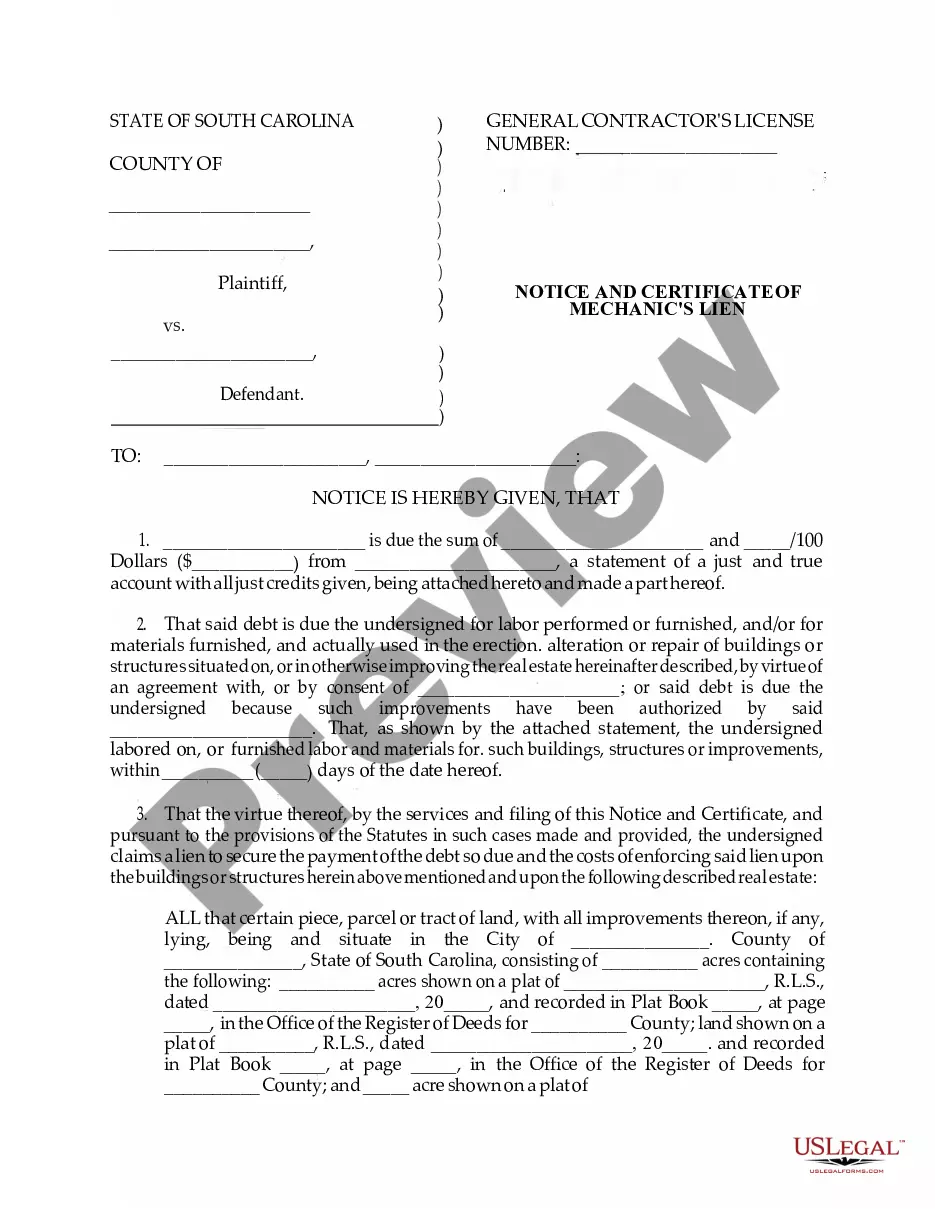
Escrow Instructions for Escrow of Employee Stock
What this document covers
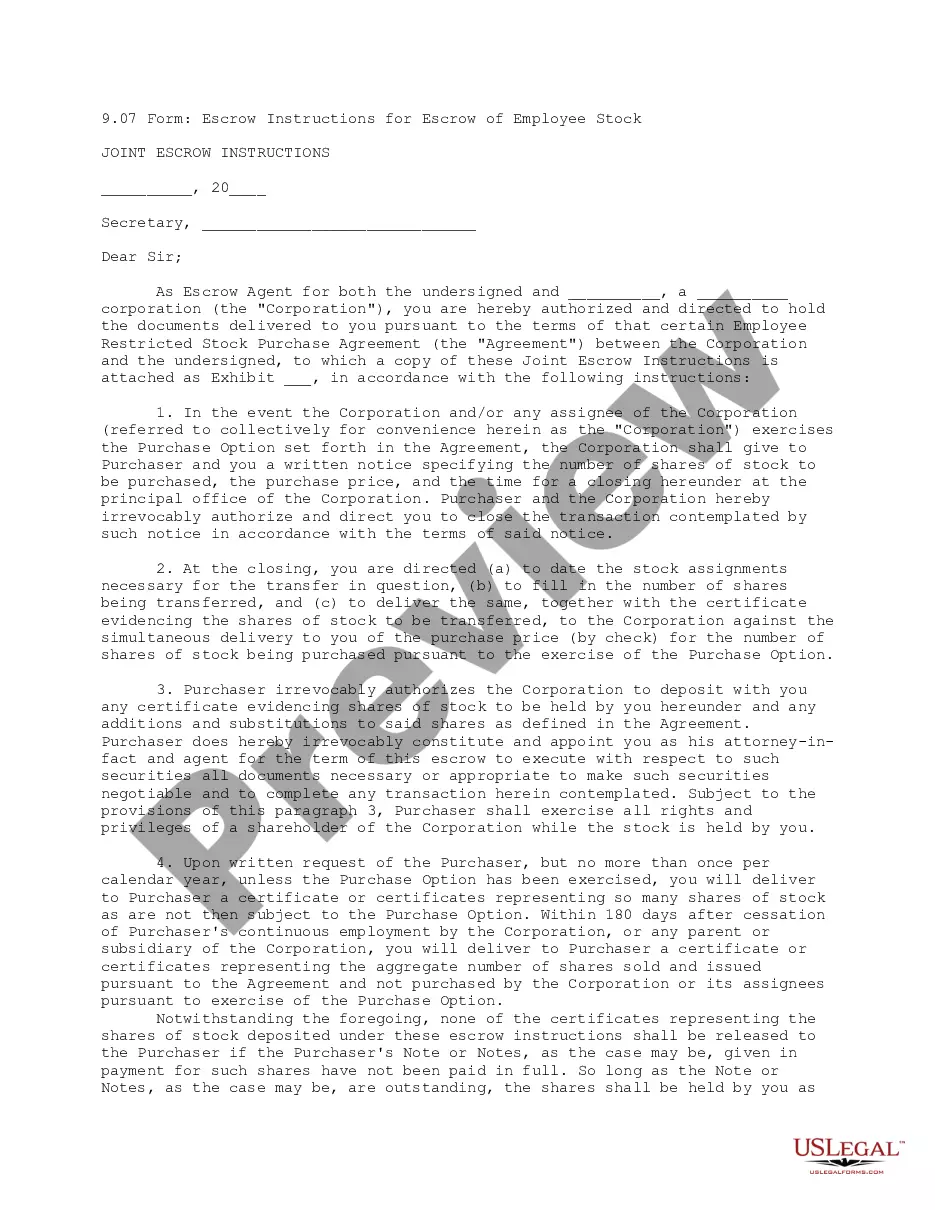
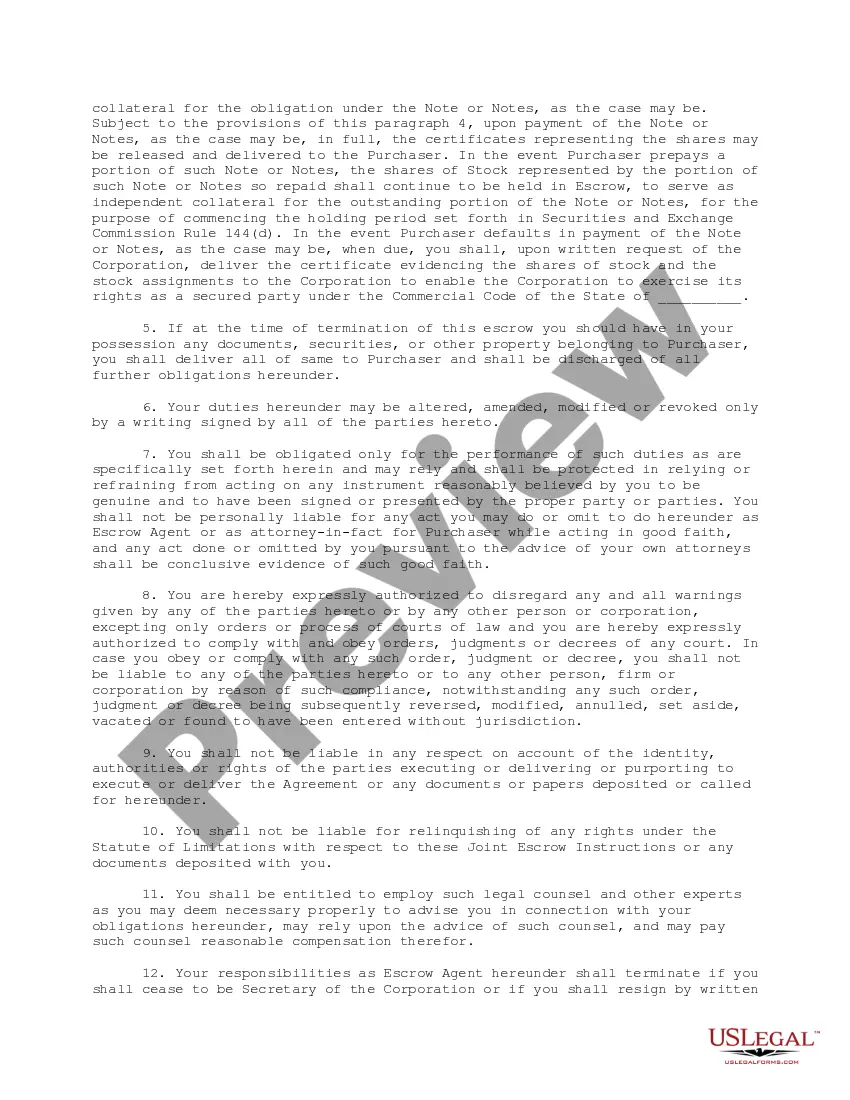
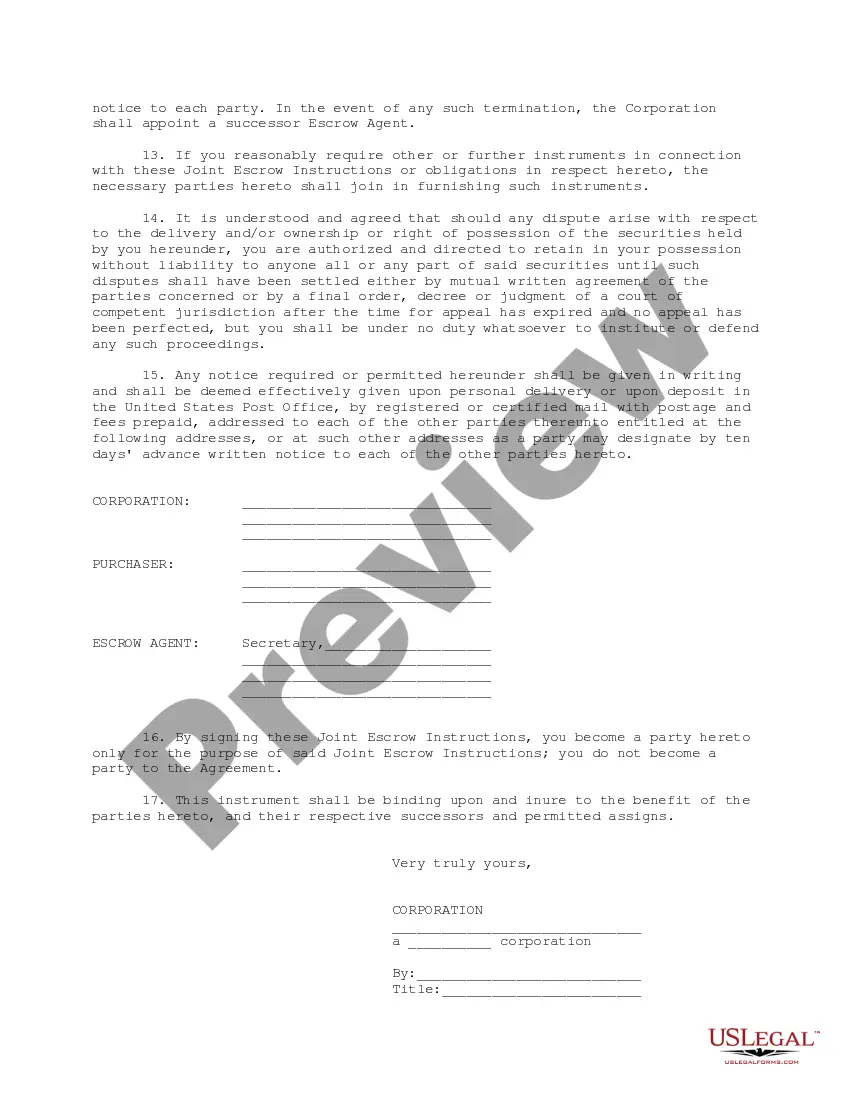
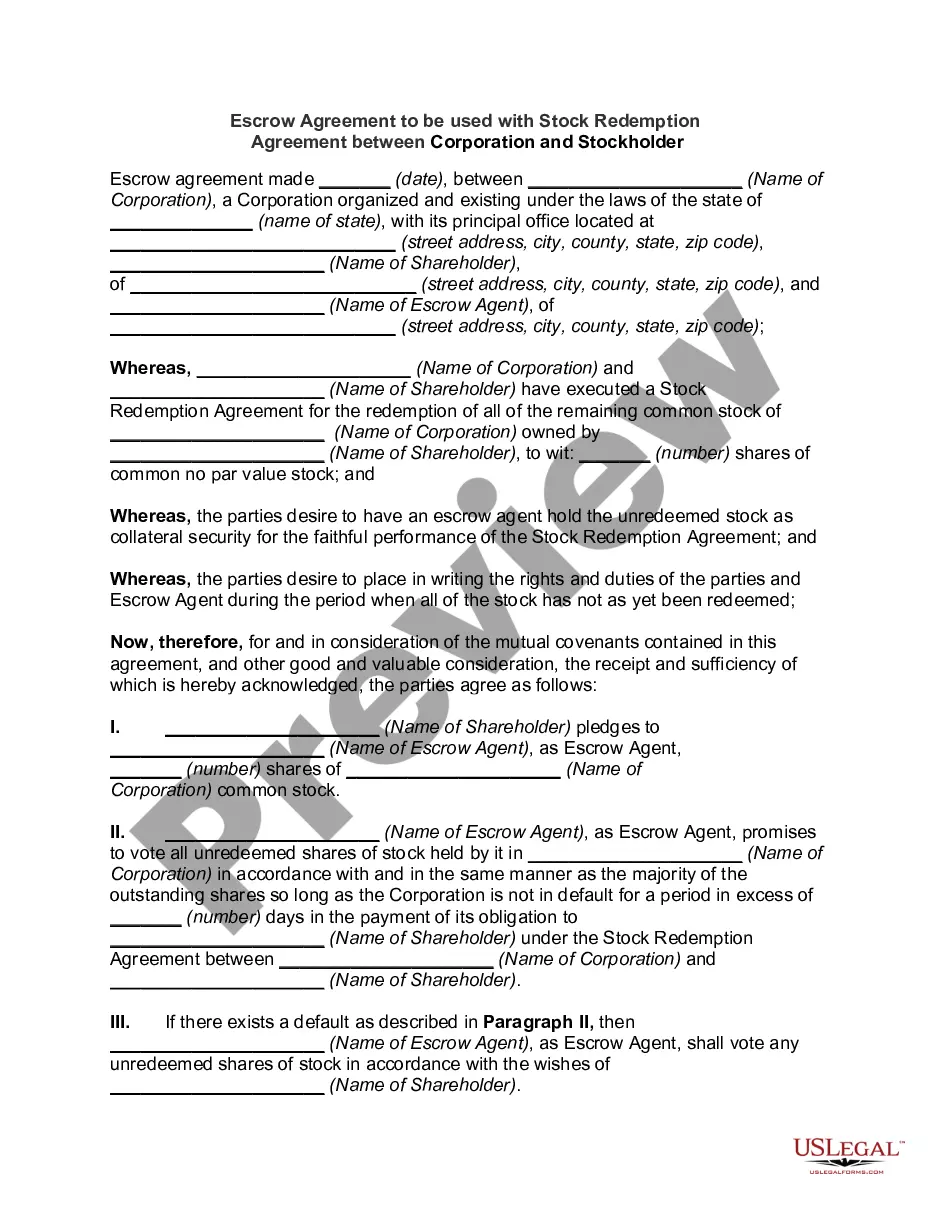
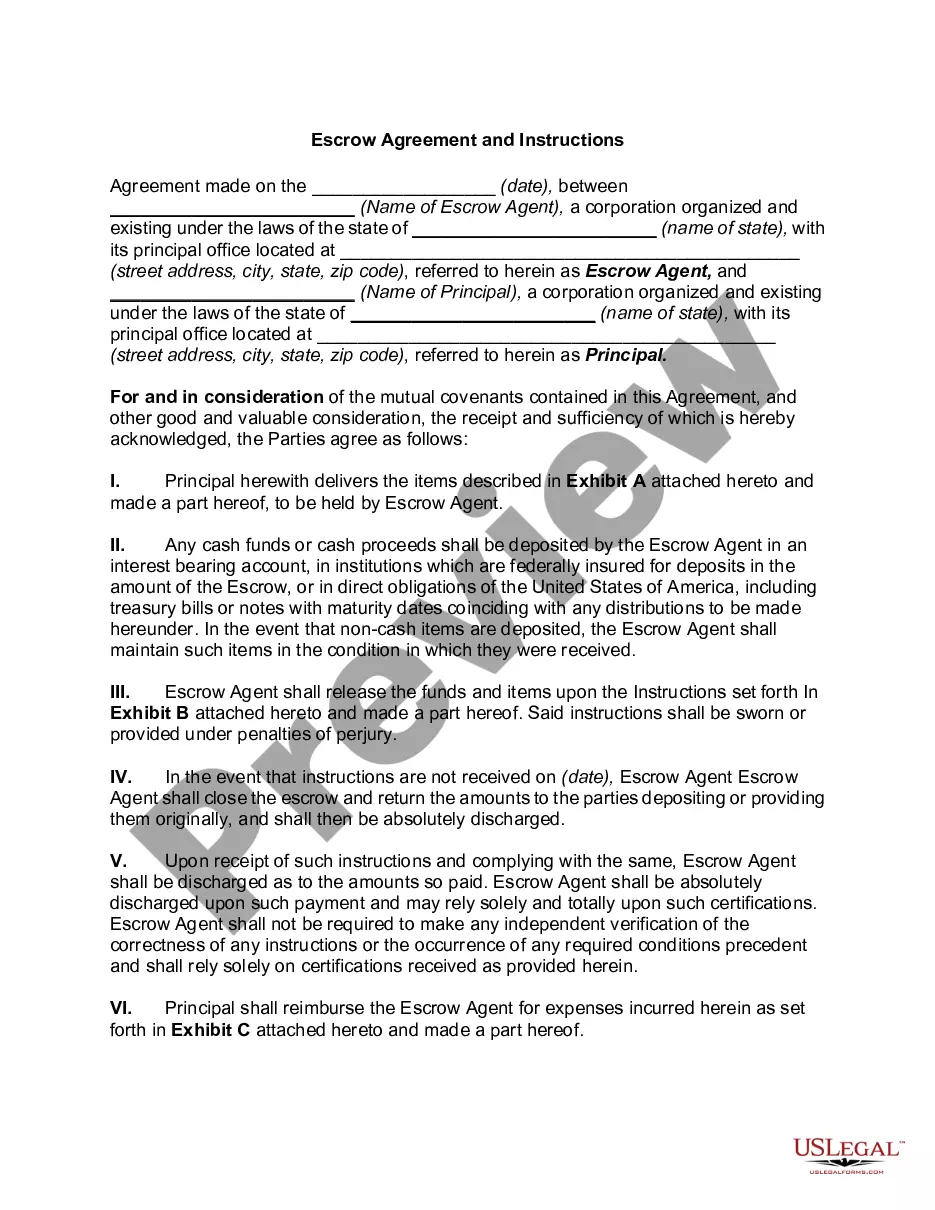
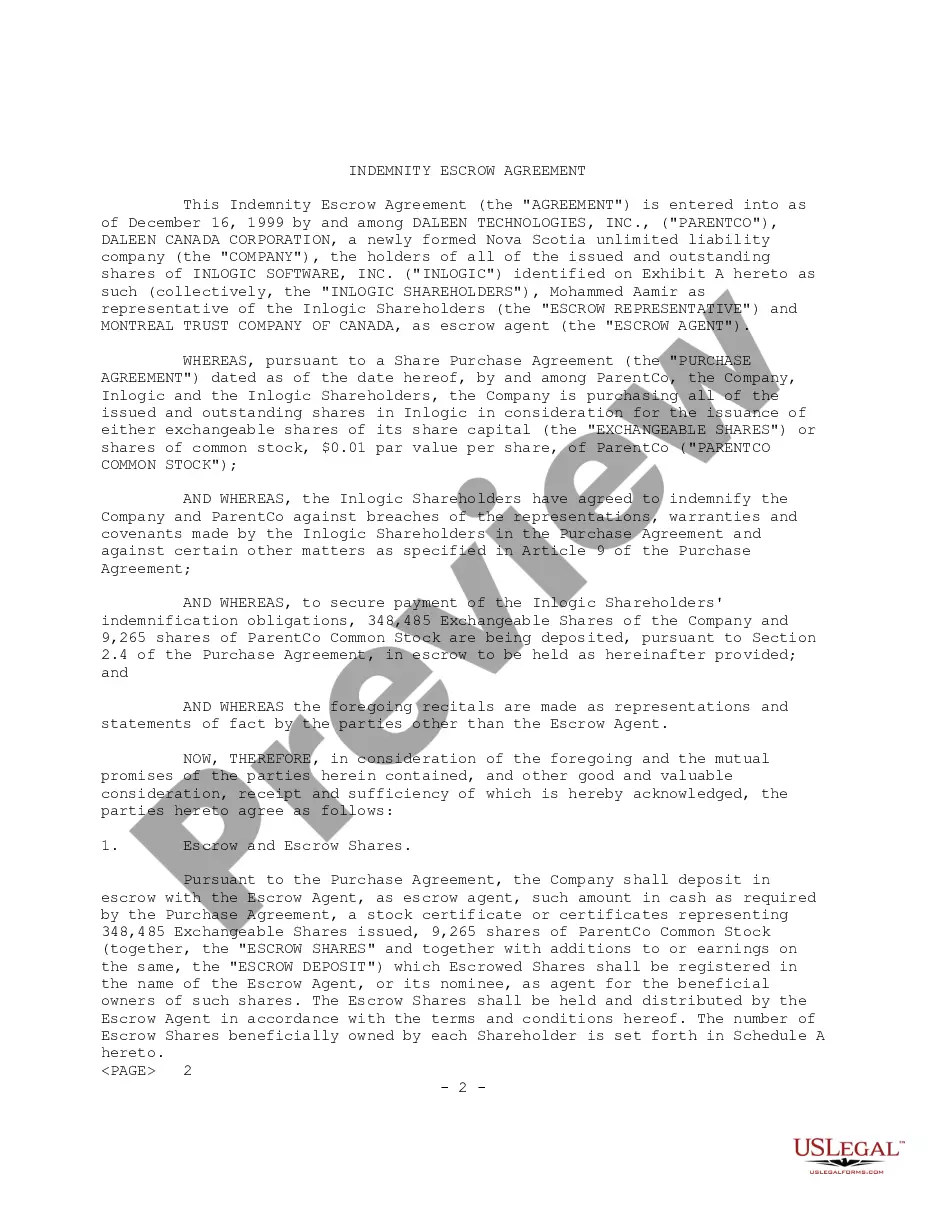
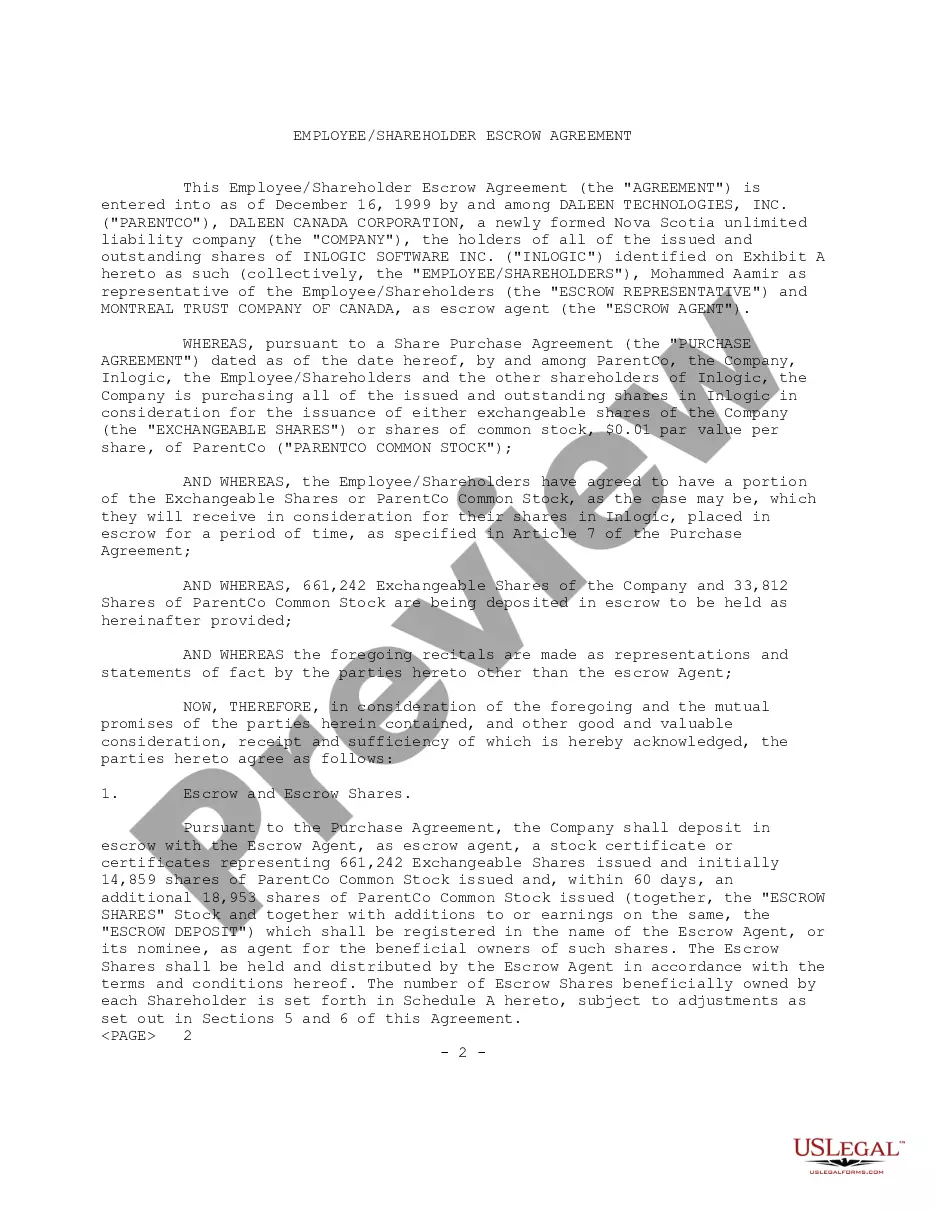
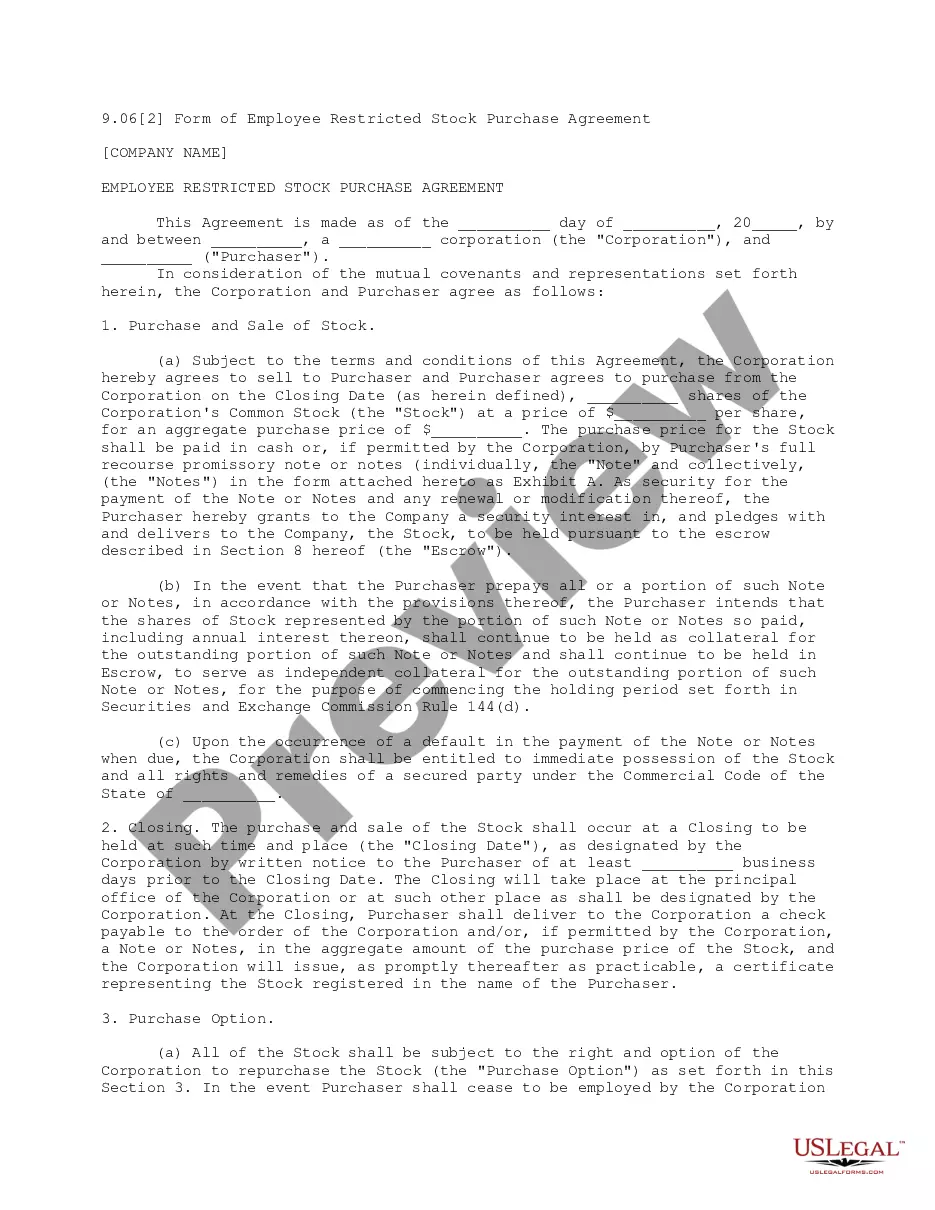
The Escrow Instructions for Escrow of Employee Stock is a legal document that outlines the procedures for holding and transferring employee stock through an escrow agent. This form is specifically designed to facilitate the purchase of restricted stock as per the Employee Restricted Stock Purchase Agreement. It is ideal for corporations and purchasers involved in equity compensation plans, differentiating it from standard purchase agreements or stock transfer forms by its escrow provision and corporate governance compliance.
What’s included in this form
- Identification of the parties involved, including the Corporation, Purchaser, and Escrow Agent.
- Instructions regarding the handling of stock assignments and purchase transactions.
- Authorization provisions allowing the Corporation to deposit stock certificates with the Escrow Agent.
- Details on conditions for releasing stock certificates and payments related to promissory notes.
- Provisions covering liability and duties of the Escrow Agent under various circumstances.
- Notices and communication requirements among the parties involved.

Common use cases
This form should be used when a corporation and an employee agree on a stock purchase, particularly in an employee compensation plan involving restricted stock. It is essential in scenarios where the stock is to be held in escrow until certain conditions, such as payment or employment duration, are met. It helps provide clarity and protection for all parties involved in the transaction.
Who should use this form
- Corporations issuing restricted stock options to employees.
- Employees or purchasers involved in agreements for employee stock purchases.
- Escrow agents responsible for managing stock transitions and ensuring compliance with corporate agreements.
Instructions for completing this form
- Identify and fill in the names and details of the Corporation, Purchaser, and Escrow Agent.
- Attach the Employee Restricted Stock Purchase Agreement as specified.
- Specify the terms of the purchase option, including dates and stock quantities.
- Include authorization for the Escrow Agent's duties and responsibilities.
- Ensure signatures are added from all parties involved, including titles where applicable.
Is notarization required?
This form usually doesn’t need to be notarized. However, local laws or specific transactions may require it. Our online notarization service, powered by Notarize, lets you complete it remotely through a secure video session, available 24/7.
Get your form ready online
Our built-in tools help you complete, sign, share, and store your documents in one place.
Make edits, fill in missing information, and update formatting in US Legal Forms—just like you would in MS Word.
Download a copy, print it, send it by email, or mail it via USPS—whatever works best for your next step.
Sign and collect signatures with our SignNow integration. Send to multiple recipients, set reminders, and more. Go Premium to unlock E-Sign.
If this form requires notarization, complete it online through a secure video call—no need to meet a notary in person or wait for an appointment.
We protect your documents and personal data by following strict security and privacy standards.

Make edits, fill in missing information, and update formatting in US Legal Forms—just like you would in MS Word.

Download a copy, print it, send it by email, or mail it via USPS—whatever works best for your next step.

Sign and collect signatures with our SignNow integration. Send to multiple recipients, set reminders, and more. Go Premium to unlock E-Sign.

If this form requires notarization, complete it online through a secure video call—no need to meet a notary in person or wait for an appointment.

We protect your documents and personal data by following strict security and privacy standards.
Avoid these common issues
- Failing to attach the Employee Restricted Stock Purchase Agreement.
- Not specifying the correct number of shares or purchase price.
- Overlooking the requirement for signatures from all parties.
- Not reviewing state-specific legal requirements before using the form.
Why complete this form online
- Instant access to professionally drafted legal templates, saving time and reducing costs.
- Convenient downloadable format that can be customized to suit specific needs.
- Ensured compliance with current legal standards and practices.
Legal use & context
- This form serves to protect both the corporation and the employee in stock transactions, ensuring clarity on terms and conditions.
- It establishes a formal mechanism for stock ownership transfer during employment-related equity transactions.
- Using this form enhances the enforceability of the agreement and reduces the chance of disputes over stock ownership.
Main things to remember
- The form clearly outlines the responsibilities of all parties involved in the escrow of employee stock.
- It is important to provide detailed information to prevent misunderstandings regarding stock transactions.
- Ensure compliance with state laws and keep a thorough record of all executed documents.
Glossary of terms
- Escrow Agent: A neutral third party who holds documents or funds until certain conditions are met.
- Employee Restricted Stock Purchase Agreement: A contract between the employer and employee regarding the purchase of stock that is subject to restrictions.
- Purchase Option: The right granted to an employee to purchase stock at a specific price within a certain timeframe.
Looking for another form?
Form popularity
FAQ
A thorough escrow agreement will list out the information that should be included in JWI or any instructions, such as the amount to be released, the party to whom the funds should be delivered, payment instructions and tax characterizations, or alternatively attach an instructions template to the escrow agreement.
Generally, an escrow account is a prerequisite if you're not putting at least 20% down on a home. So unless you're bringing a sizable chunk of cash to the closing table, escrow may be unavoidable. FHA loans, for example, always require buyers to set up escrow accounts.
Escrow means that the shares are held by a third-party until certain conditions have been met in order to reduce counterparty risk in a transaction. Companies will also issue stock in escrow, imposing limitations on when the shares can be sold, as part of an employee's compensation plan.
Each month, the lender deposits the escrow portion of your mortgage payment into the account and pays your insurance premiums and real estate taxes when they are due. Your lender may require an escrow cushion, as allowed by state law, to cover unanticipated costs, such as a tax increase.
Similar to other states, the California escrow process requires hiring an escrow agent.Once the escrow agent verifies that all parties completed their obligations under the purchase contract, the buyer's funds pay for the real property. The escrow company notifies the seller's agent of title recording.
While your loan servicer is the one responsible for handling your property tax and insurance payments, mistakes are made, and you are the one who will be held liable for the full, on-time payment.
Your mortgage lender or servicer is allowed to collect the amount of your homeowners insurance and property tax payments, plus a cushion, month in and month out, in escrow. While it's nice to not have to think about making these payments, this pro can be a con for savers who may be able to put the funds to better use.
Escrow is closed. However, you could close on your mortgage and take possession of the title, deed and keys from the escrow agent on a completely separate day. This is your closing date and the seller doesn't have to be present.
Escrow protects all of the relevant parties in a real estate transaction, including the seller, the home buyer, and the lender, by ensuring that no escrow funds from your lender and other property change hands until all of the conditions in the agreement have been met.