District of Columbia Lease Subordination Agreement
What this document covers
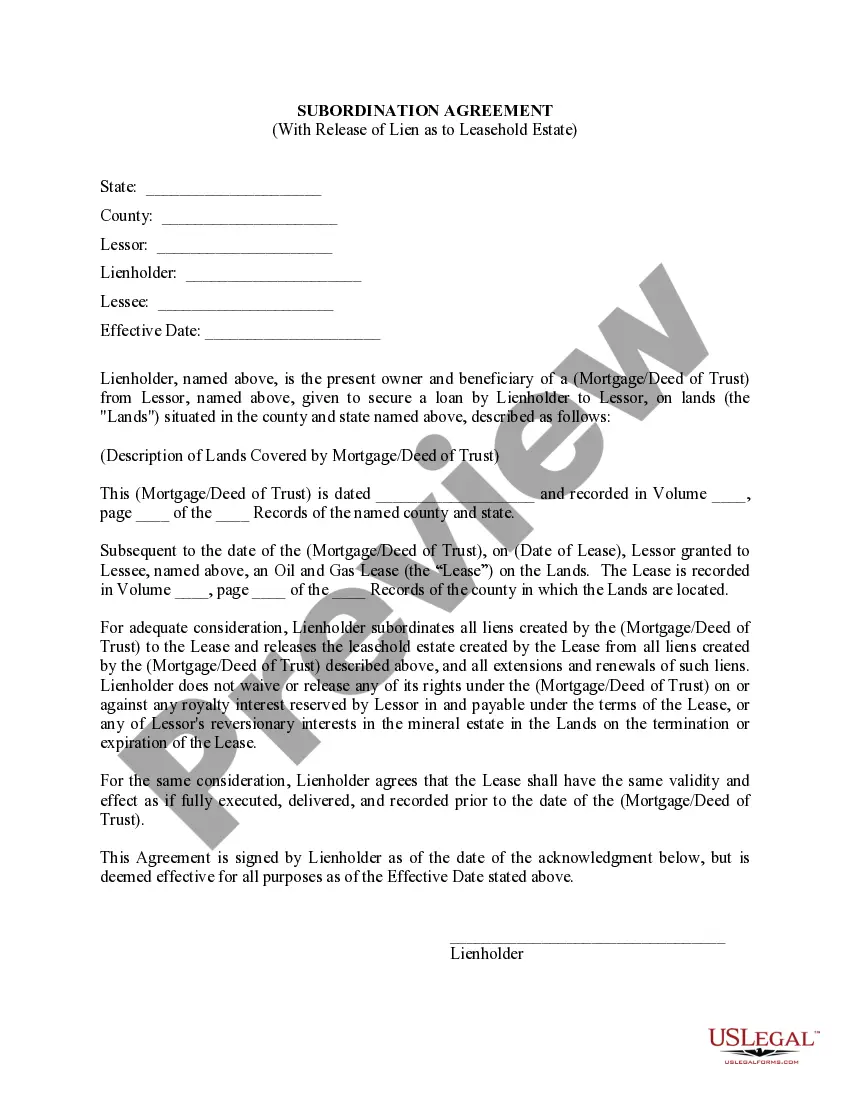
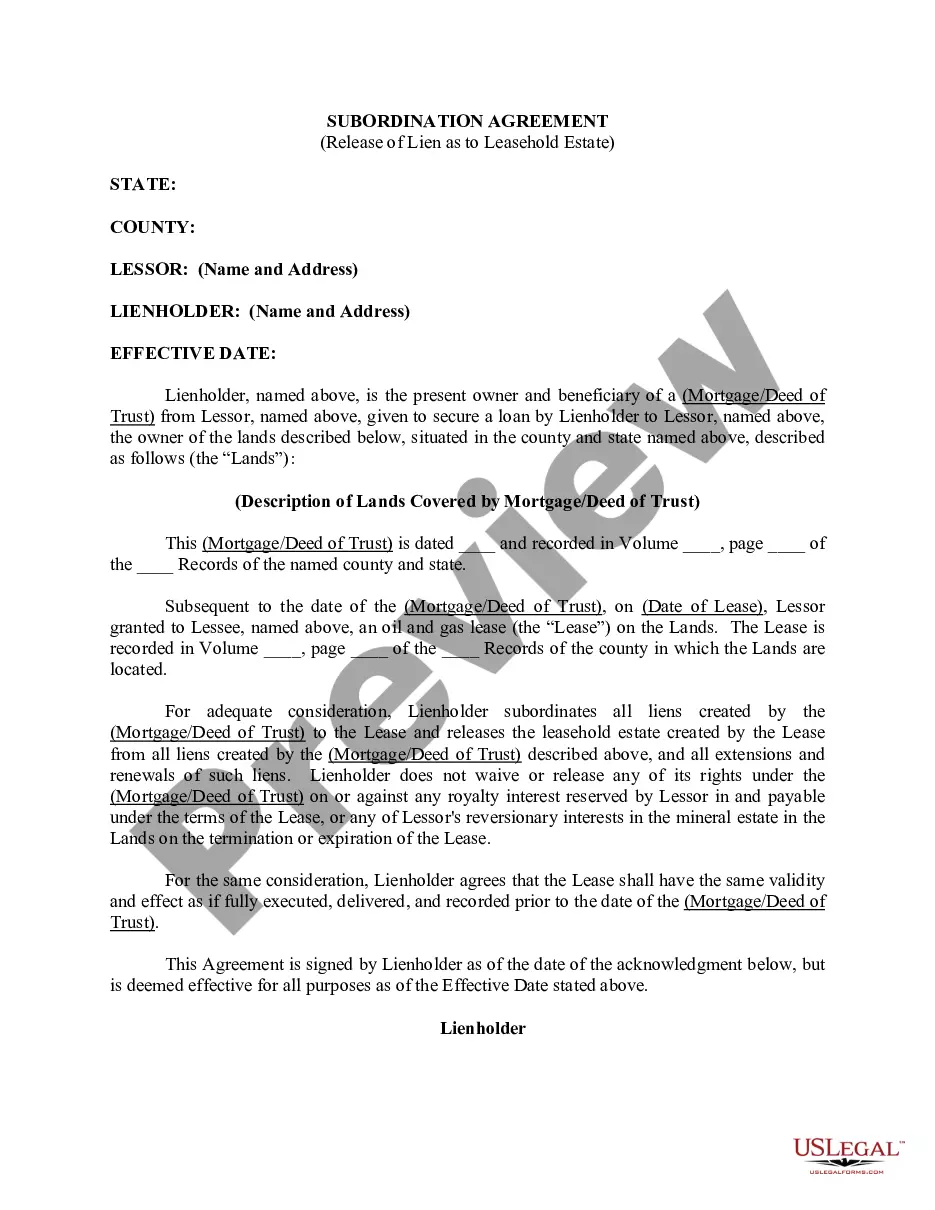
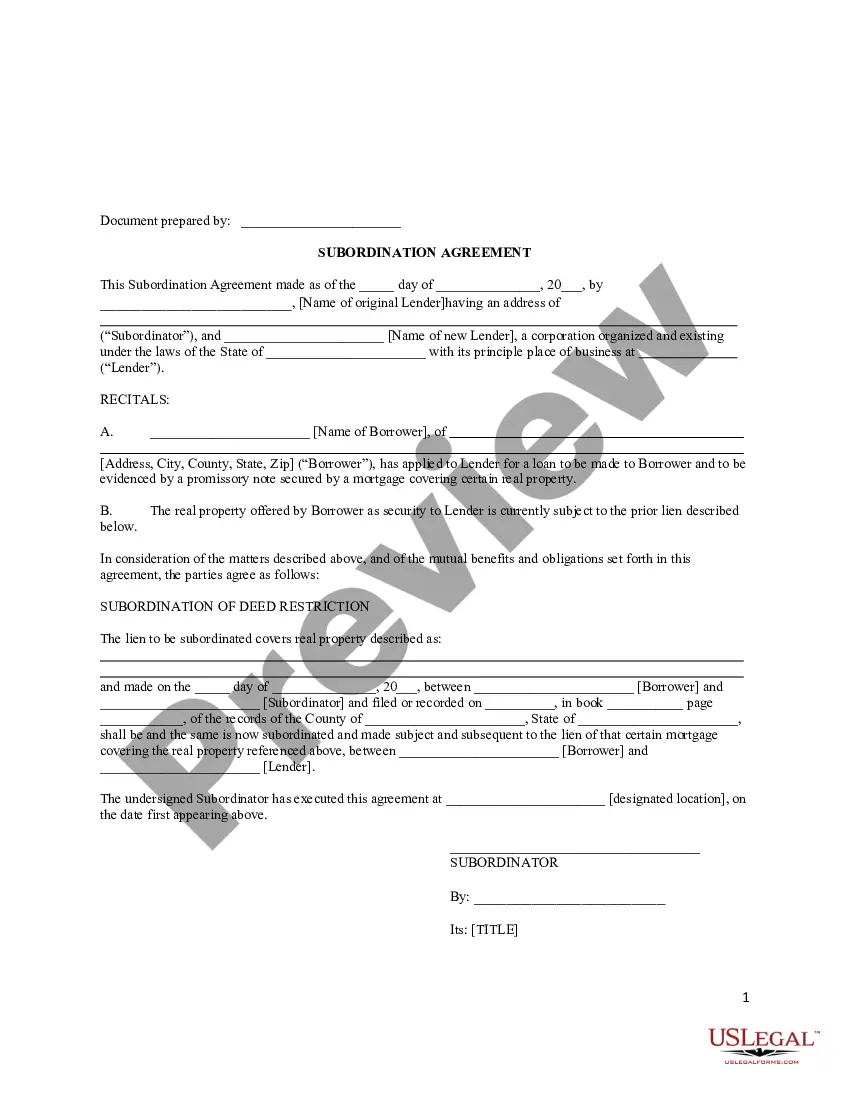
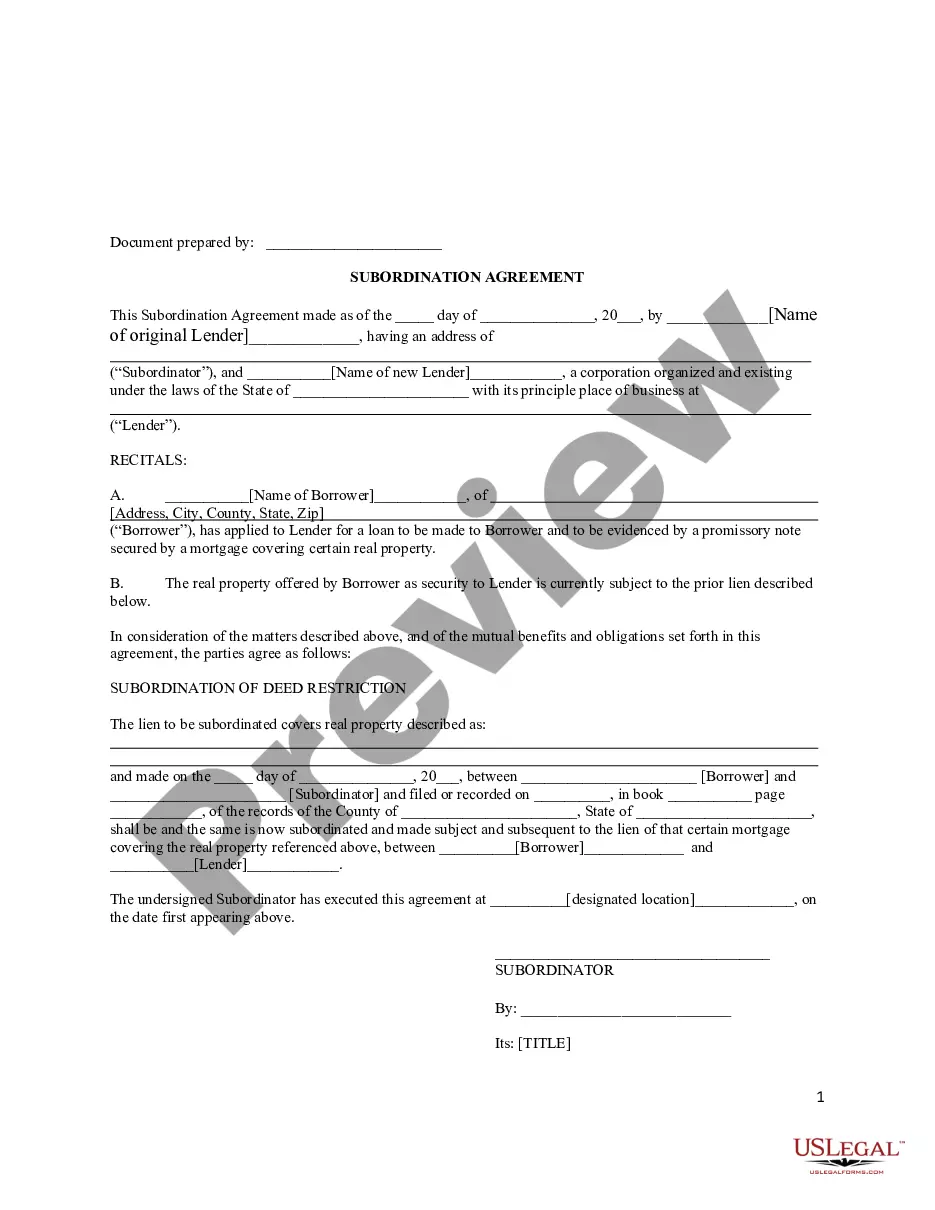
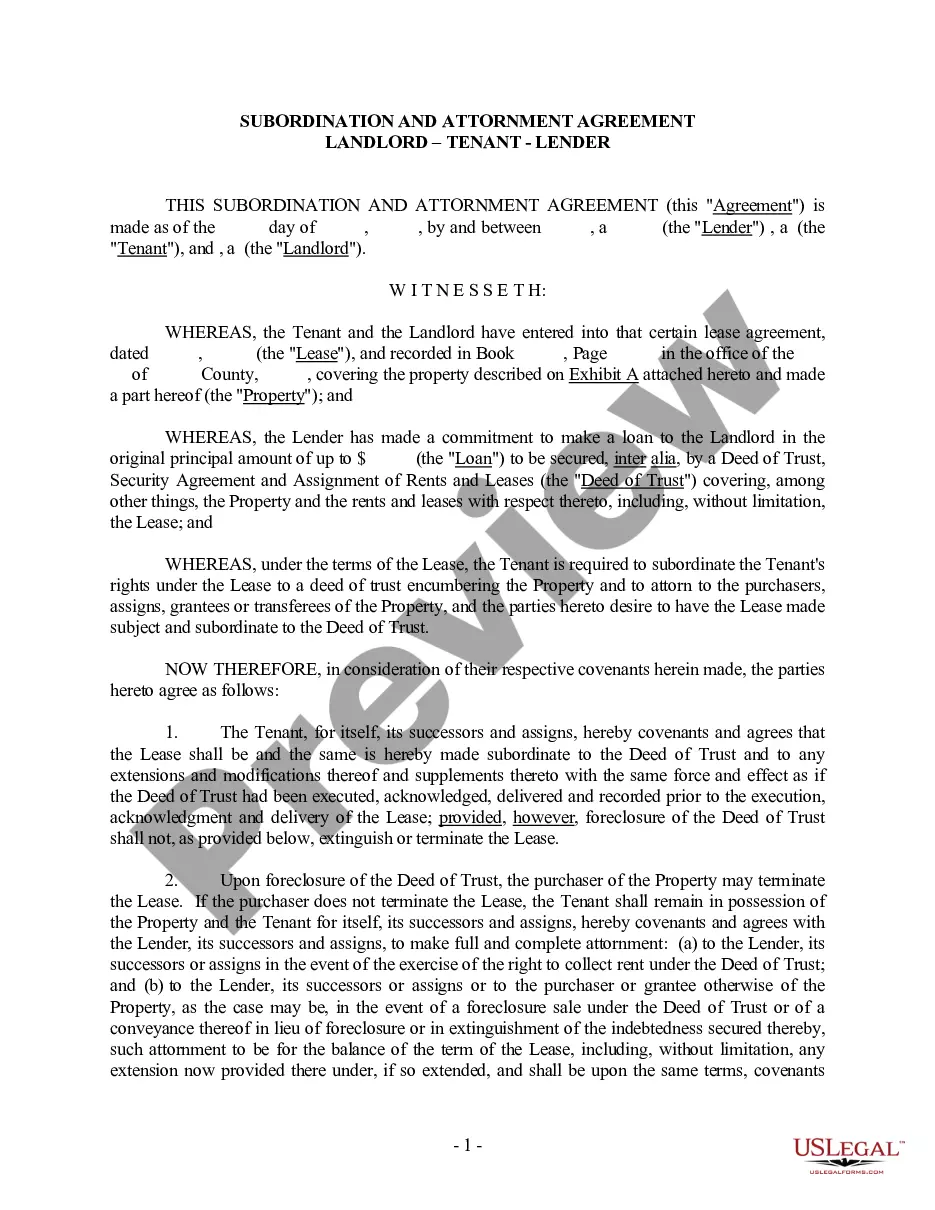
A Lease Subordination Agreement is a legal document that allows a lienholder's rights under a mortgage or deed of trust to be subordinated to an oil, gas, or mineral lease. This means the lienholder agrees that the lease will have priority over the mortgage, protecting the lessee's rights to the leasehold estate from being impacted by the original mortgage. This agreement is crucial for property owners seeking to secure financing while maintaining a lease on their mineral rights.
Form components explained
- Details of the lienholder, lessor, and lessee involved in the agreement.
- Description of the land and lease subject to subordination.
- Effective date of the Lease Subordination Agreement.
- Details regarding the mortgage or deed of trust being subordinated.
- Clauses outlining the rights retained by the lienholder after subordination.
Common use cases
This form is necessary when a property owner with an existing loan wishes to enter into a lease for mineral, oil, or gas rights and needs to ensure that the new lease takes precedence over the current mortgage. It is typically used in situations where additional financing is sought that requires the original mortgage to be subordinated to support the lease.
Intended users of this form
This agreement is appropriate for the following parties:
- Property owners (lessors) looking to lease mineral rights.
- Lessee seeking to secure their interests in an oil, gas, or mineral lease.
- Lienholders who need to document the subordination of their mortgage or deed of trust.
- Attorneys assisting clients in real estate or leasing matters.
Completing this form step by step
- Identify the parties involved: lienholder, lessor, and lessee.
- Specify the property being leased, including a legal description of the land.
- Provide the effective date and relevant dates for the mortgage and lease.
- Fill in necessary details of the mortgage or deed of trust being subordinated.
- Ensure all parties sign and date the agreement for effective execution.
Does this form need to be notarized?
This document requires notarization to meet legal standards. US Legal Forms provides secure online notarization powered by Notarize, allowing you to complete the process through a verified video call, available 24/7.
Get your form ready online
Our built-in tools help you complete, sign, share, and store your documents in one place.
Make edits, fill in missing information, and update formatting in US Legal Forms—just like you would in MS Word.
Download a copy, print it, send it by email, or mail it via USPS—whatever works best for your next step.
Sign and collect signatures with our SignNow integration. Send to multiple recipients, set reminders, and more. Go Premium to unlock E-Sign.
If this form requires notarization, complete it online through a secure video call—no need to meet a notary in person or wait for an appointment.
We protect your documents and personal data by following strict security and privacy standards.

Make edits, fill in missing information, and update formatting in US Legal Forms—just like you would in MS Word.

Download a copy, print it, send it by email, or mail it via USPS—whatever works best for your next step.

Sign and collect signatures with our SignNow integration. Send to multiple recipients, set reminders, and more. Go Premium to unlock E-Sign.

If this form requires notarization, complete it online through a secure video call—no need to meet a notary in person or wait for an appointment.

We protect your documents and personal data by following strict security and privacy standards.
Mistakes to watch out for
- Failing to accurately describe the property involved.
- Not including all necessary parties or their accurate titles.
- Omitting required signatures and dates.
- Neglecting to record the agreement where required by state laws.
Advantages of online completion
- Convenient access to a professionally drafted document anytime.
- Easy to edit and customize the form to suit specific needs.
- Reliable templates ensure compliance with legal standards.
Looking for another form?
Form popularity
FAQ
A subordination clause benefits both landlords and tenants in a lease agreement. For landlords, it allows easier access to financing by clarifying the hierarchy of claims. For tenants, understanding their position through a District of Columbia Lease Subordination Agreement helps to ensure their rights are respected, even when changes in ownership or financing occur. Ultimately, this encourages a cooperative environment where all parties feel secure.
In a lease agreement, subordination means that a lease may take a secondary position concerning other financial interests, such as mortgages. A District of Columbia Lease Subordination Agreement clearly outlines these relationships and ensures that tenants understand their rights. This arrangement can offer benefits by making it easier for property owners to secure financing while still protecting tenant interests. Consequently, clear terms in such agreements are crucial for peace of mind.
A subordinate clause in a lease refers to a specific provision that alters the priority of claims. In a District of Columbia Lease Subordination Agreement, this clause can dictate how different rights and obligations are enforced. Essentially, it indicates that the lease may be subject to the terms of a higher-ranking agreement. Understanding this clause can help tenants and landlords navigate their relationships effectively.
Subordination on a lease refers to the process of ranking the lease in relation to other claims against the property. Specifically, a District of Columbia Lease Subordination Agreement will determine which parties' rights take precedence. For example, if a mortgage is in place, subordination can help align the interests of tenants and lenders. This creates a fair structure for all parties involved in the arrangement.
A subordination agreement serves to prioritize claims against a property, particularly in lease situations. In the context of a District of Columbia Lease Subordination Agreement, it allows a new lender or tenant to secure a position above existing leases or liens. This arrangement helps to facilitate financing, as lenders prefer to hold a primary position on the property. Utilizing this type of agreement can provide clarity and stability in lease agreements.
The purpose of a subordination clause is to define the priority of claims on a property, particularly in the context of leases. Included in a District of Columbia Lease Subordination Agreement, this clause ensures that a lender’s rights take precedence over a tenant’s lease rights. Consequently, it helps facilitate financing opportunities for property owners while maintaining a clear understanding of lease conditions for tenants. Understanding how this clause functions can significantly benefit anyone involved in real estate transactions.
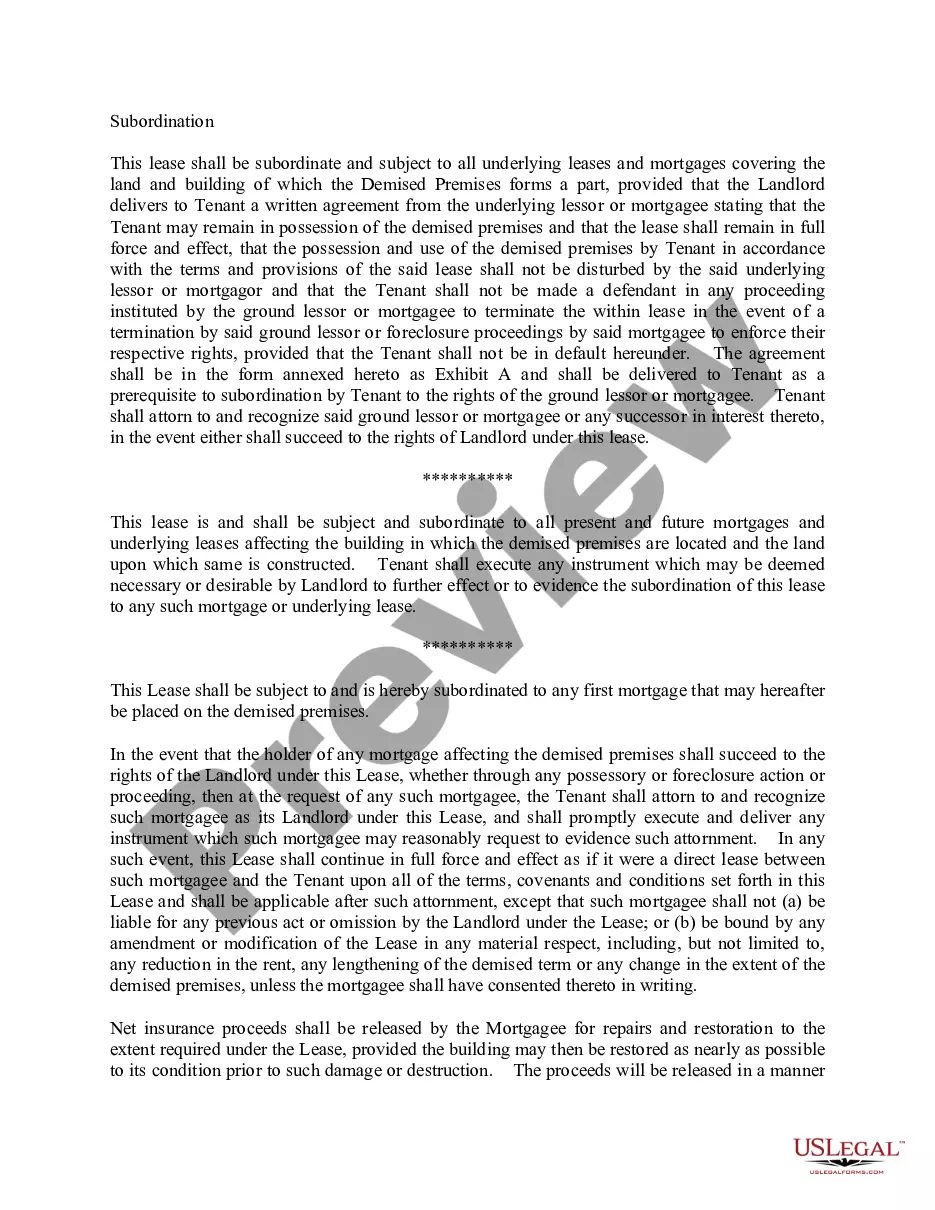
A tenant subordination agreement is a legal document that outlines the relationship between a tenant's lease and the rights of a landlord or a lender. Essentially, it establishes that the tenant's lease will be subordinate to any existing or future mortgages on the property. In the context of a District of Columbia Lease Subordination Agreement, this means that if the property is sold or foreclosed upon, the leaseholder may have their lease terms affected. This arrangement helps protect the interests of all parties involved, making it essential for many real estate transactions.
Yes, a landlord can terminate a month-to-month lease in Washington, D.C., but they must follow specific legal procedures. Typically, they need to provide at least 30 days' notice to the tenant. This applies unless the lease includes different terms regarding termination. Understanding the nuances of lease agreements, such as a District of Columbia Lease Subordination Agreement, can help both landlords and tenants navigate these situations effectively.
For a subordination agreement to be valid, it must be written and signed by all parties involved, including tenants, landlords, and lenders. It should clearly outline the priority of the lease concerning other mortgages. Engaging with uslegalforms can help you create an appropriate and legally sound District of Columbia Lease Subordination Agreement.
Generally, the landlord or their attorney will prepare the subordination agreement. However, tenants can also seek assistance from legal professionals to ensure their interests are protected under the District of Columbia Lease Subordination Agreement. Utilizing services provided by uslegalforms can streamline this process and ensure compliance with local laws.