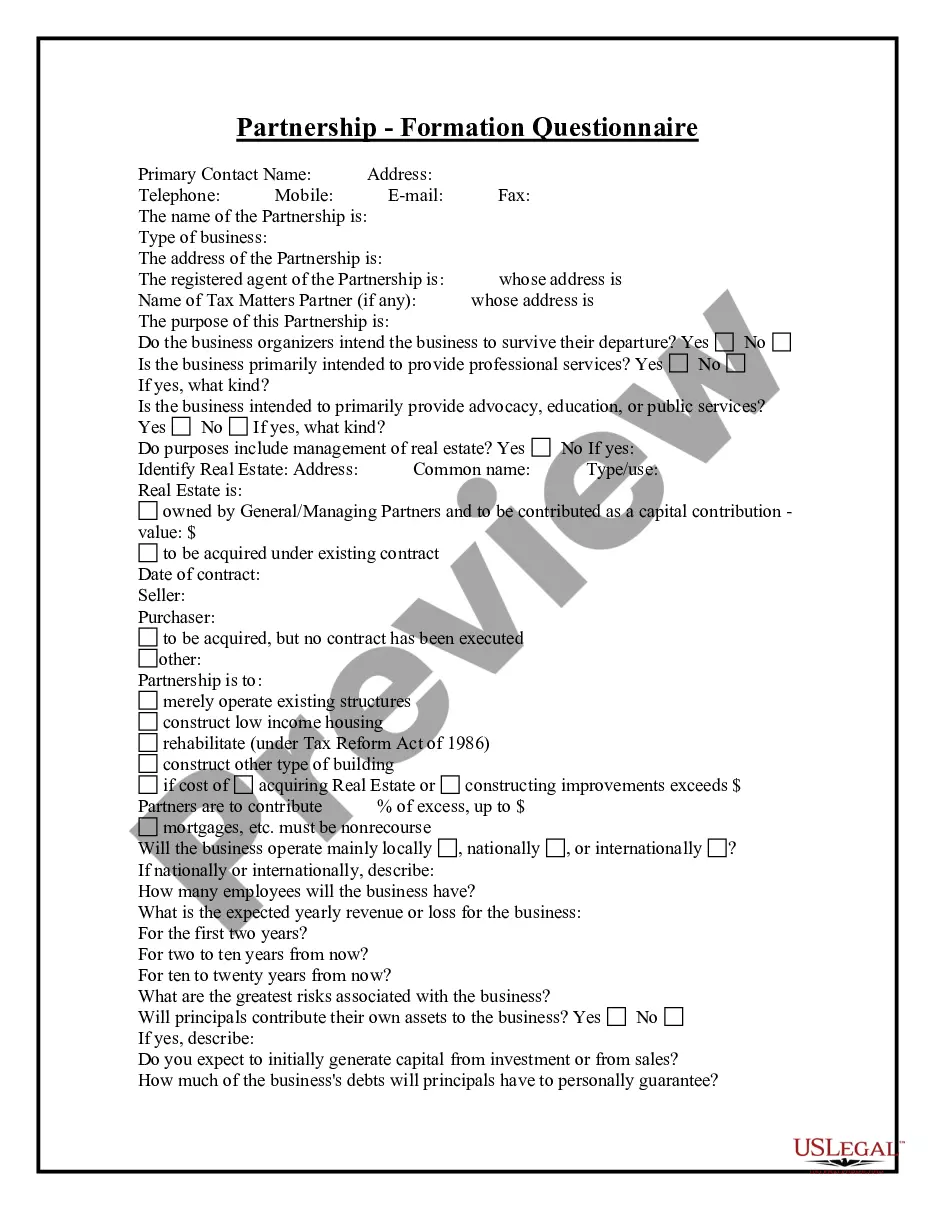
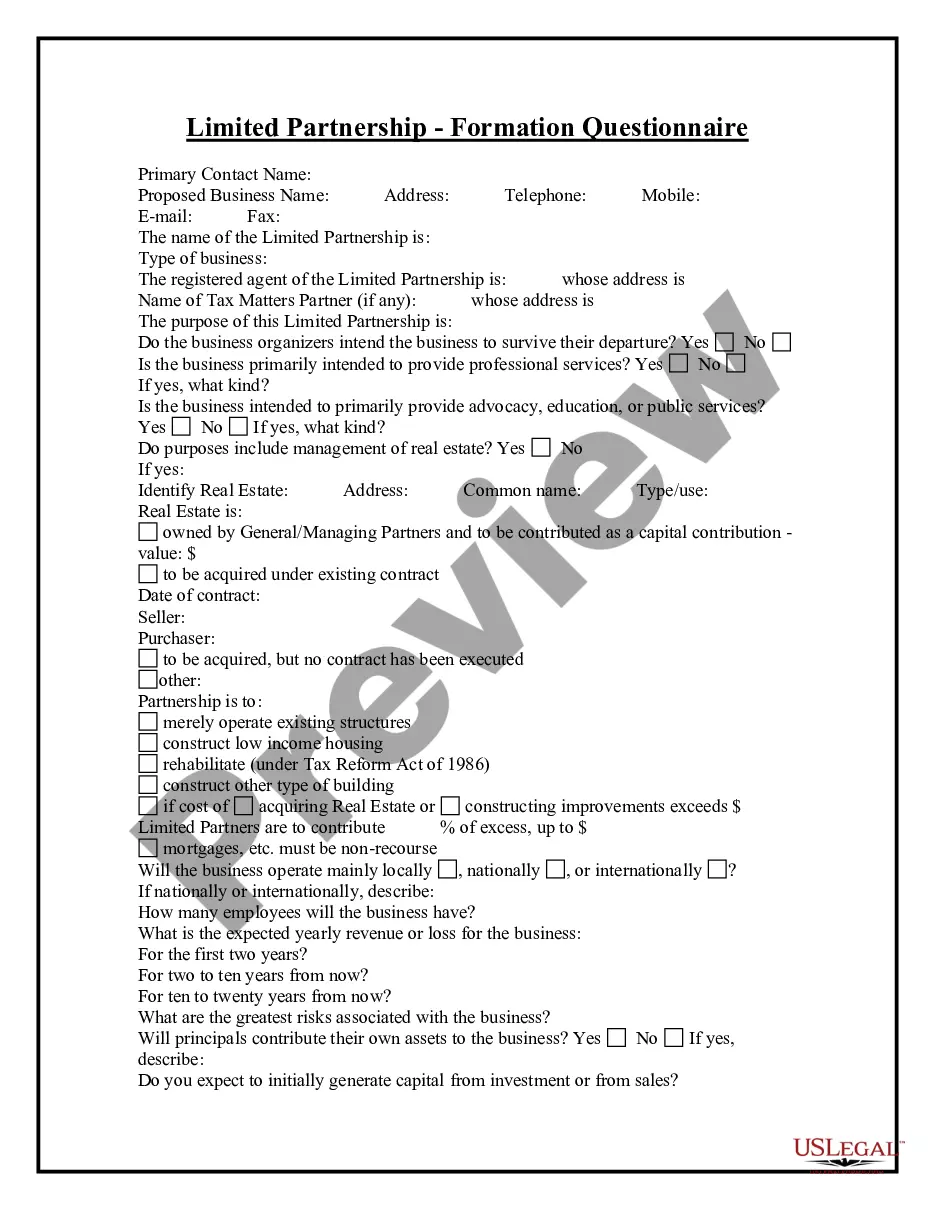
Partnership Formation Questionnaire
Overview of this form
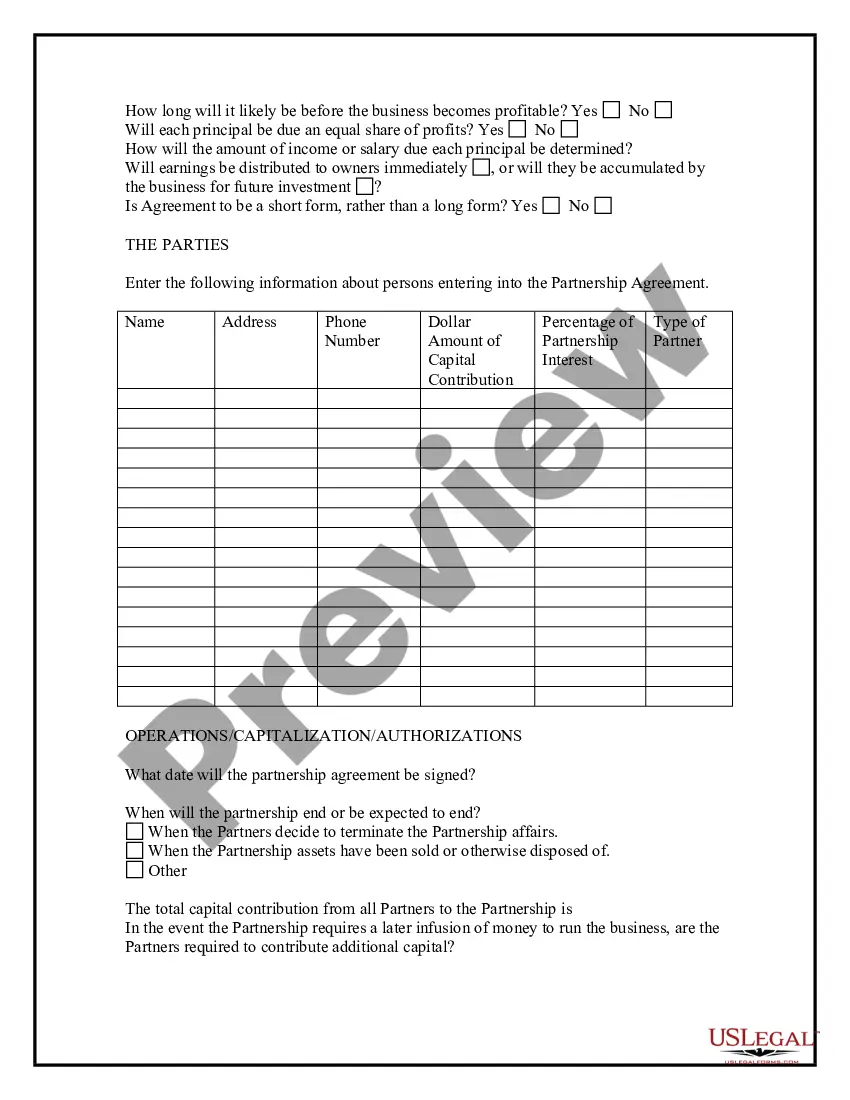
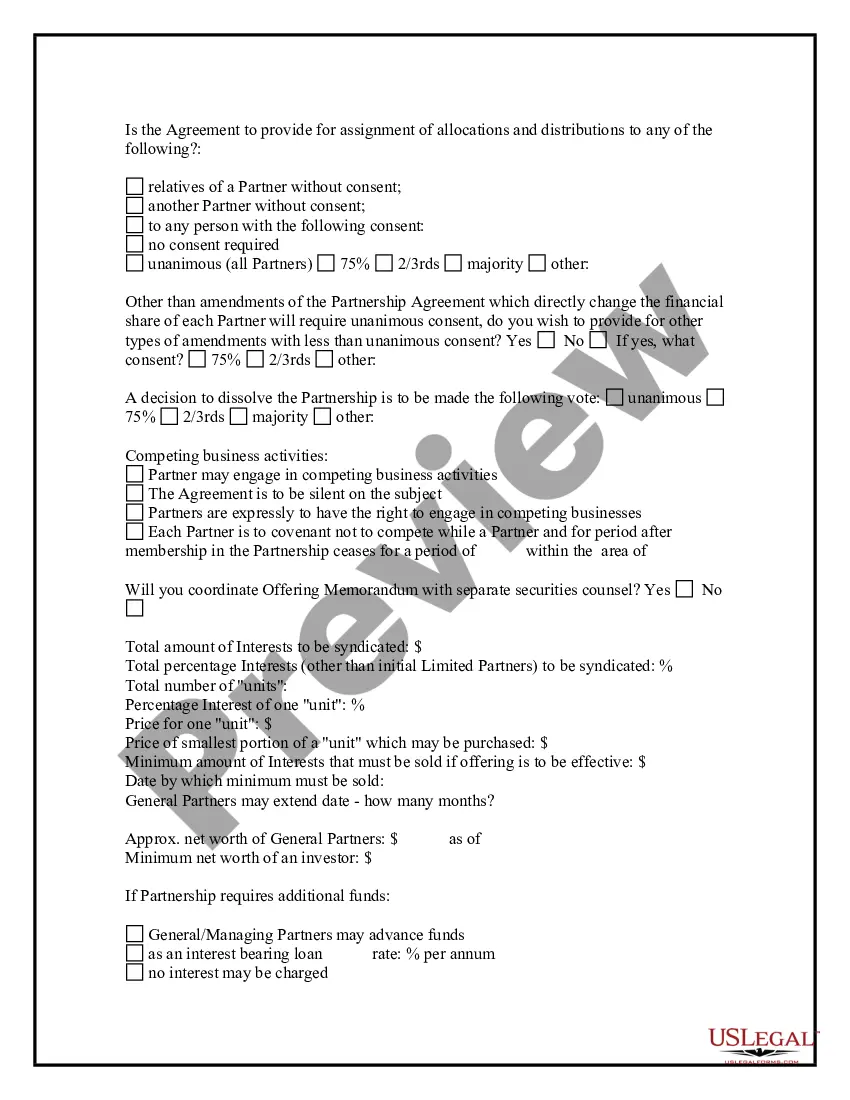
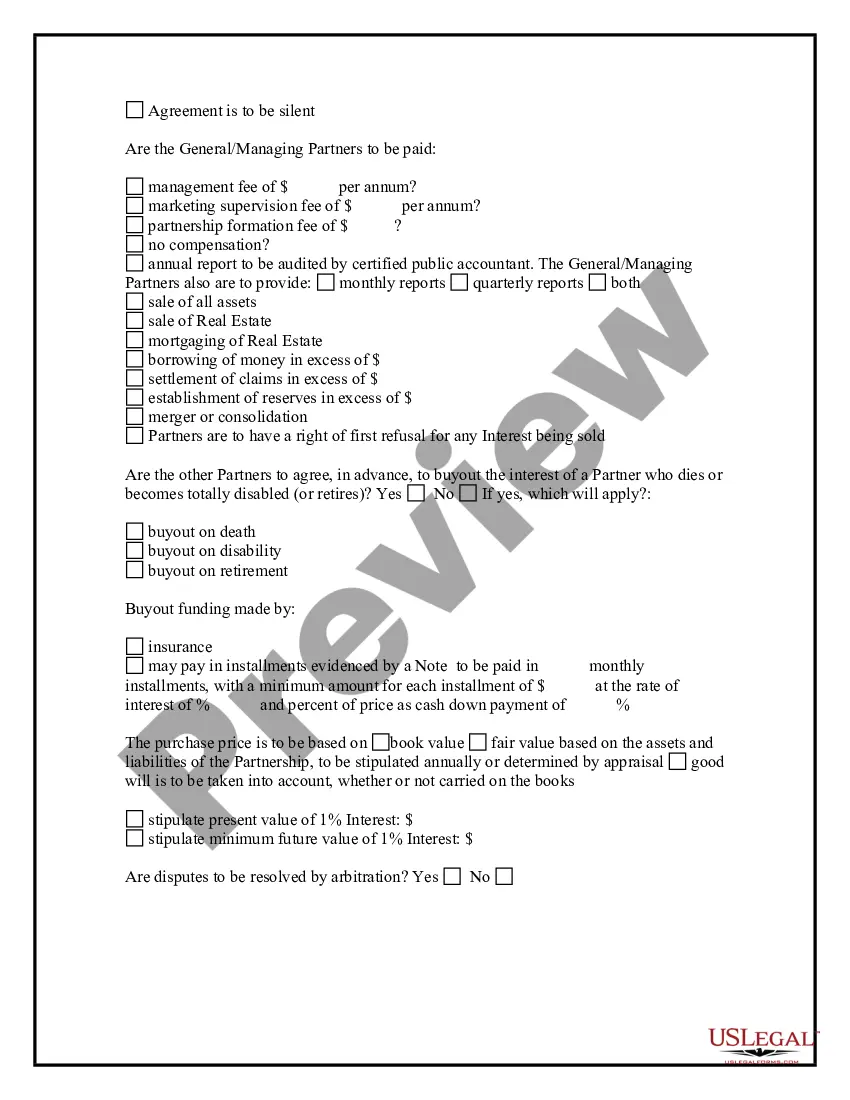
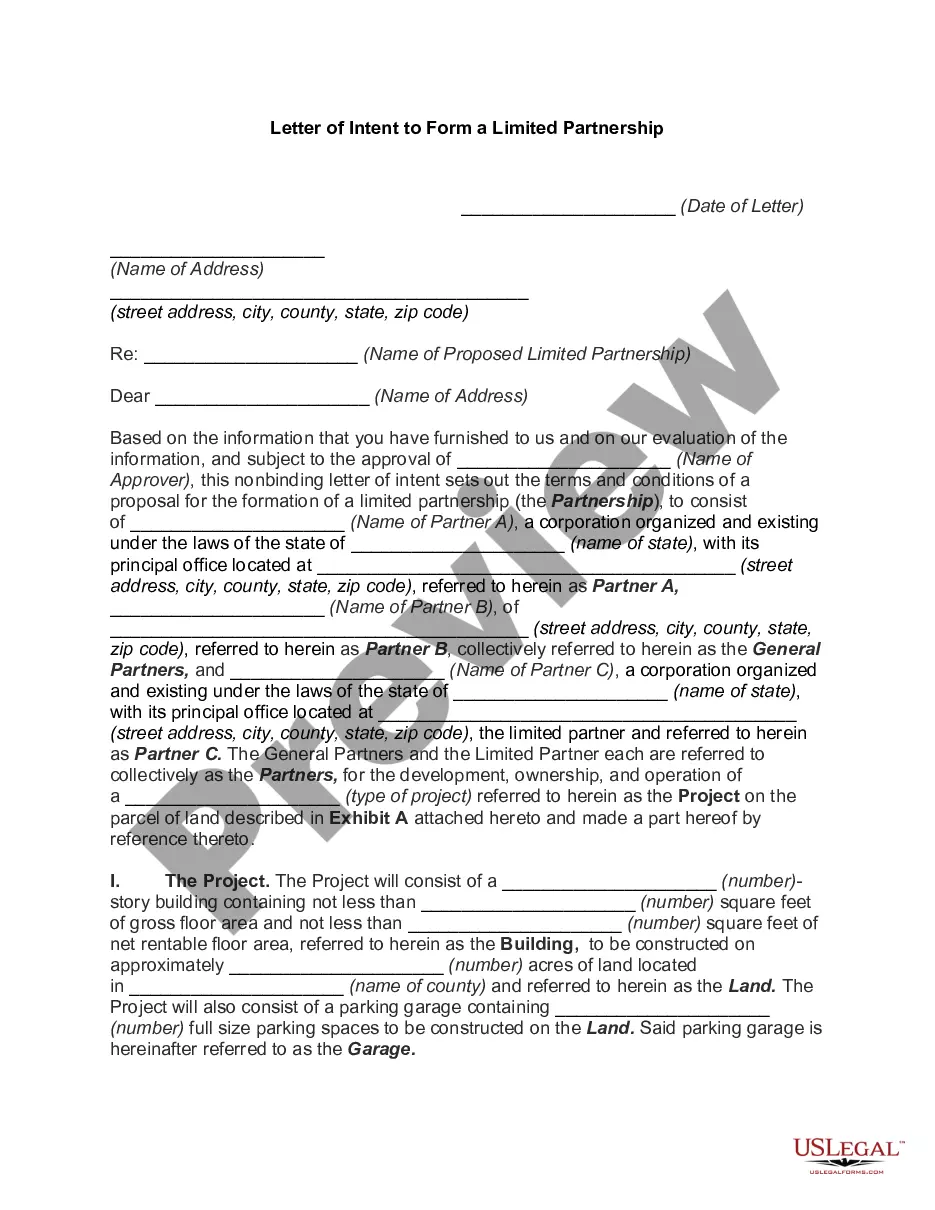
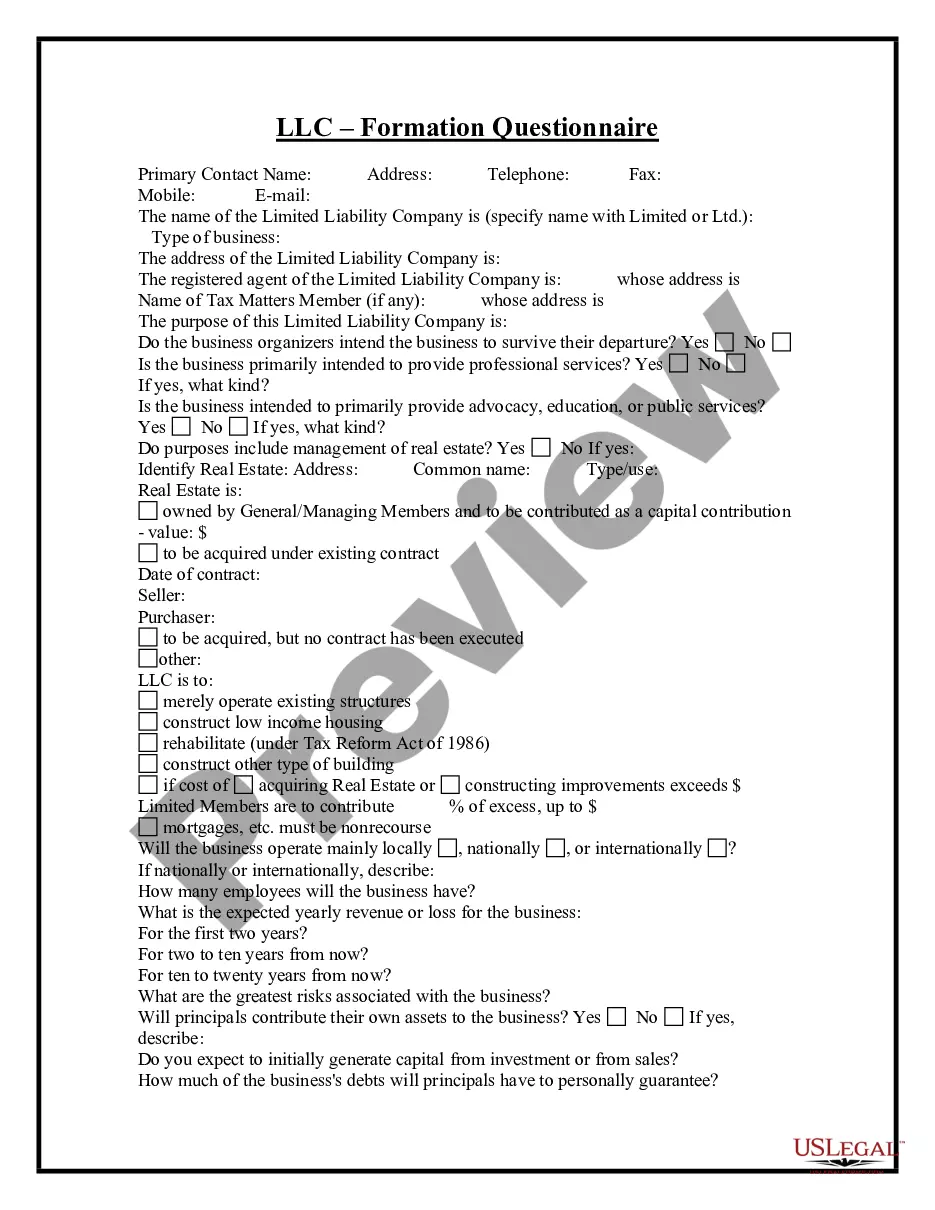
The Partnership Formation Questionnaire is a vital tool for anyone looking to establish a partnership. Designed to address crucial considerations that affect the legal rights and obligations of the parties involved, this form assists users in identifying and preparing issues that may arise during partnership formation. Unlike generic partnership agreements, this questionnaire facilitates thorough advance preparation, helping attorneys evaluate cases effectively and potentially reducing costs associated with legal services. It serves both those seeking to create a partnership and attorneys gathering information from new clients.
Form components explained
- Sections to clarify profit-sharing among partners.
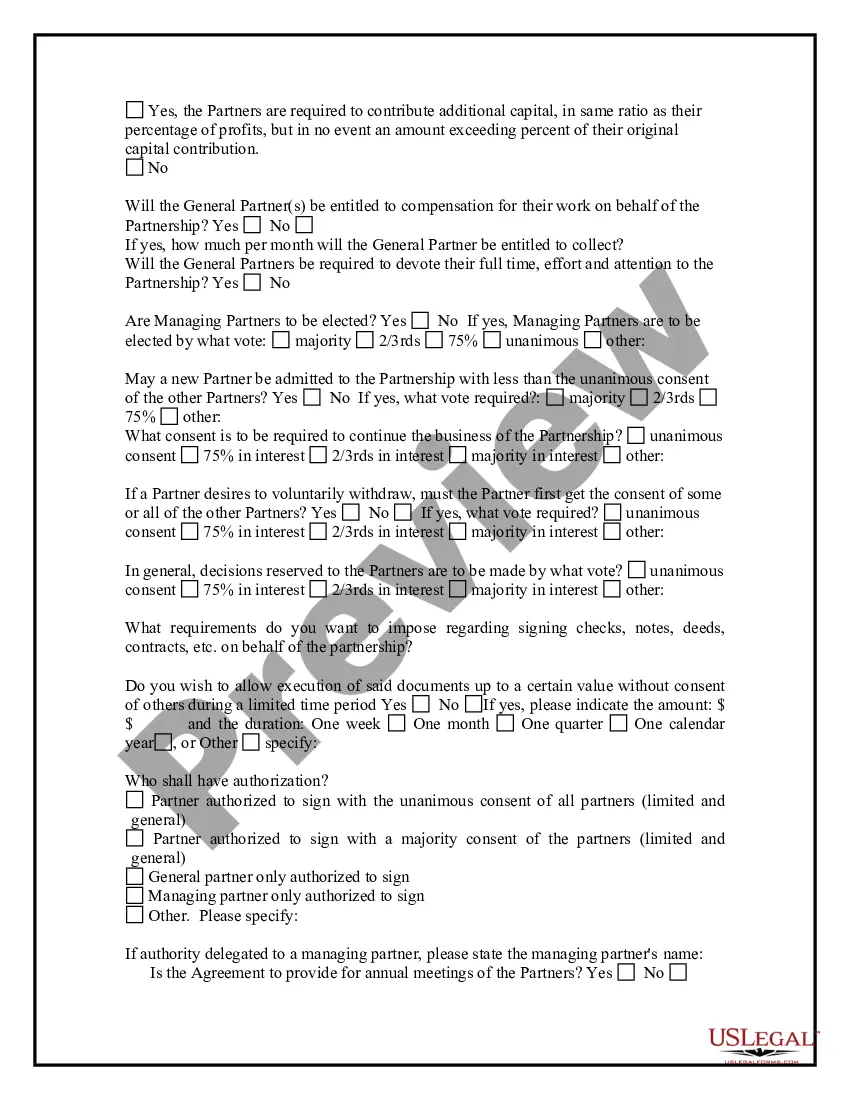
- Fields to determine if general partners receive compensation for their work.
- Areas to specify additional relevant partnership management considerations.
- Questions aimed at identifying legal and practical issues prior to formal partnership formation.
When to use this document
This form is essential when you are planning to enter a partnership arrangement, allowing you to systematically evaluate key aspects that may affect the relationship between partners. Use the questionnaire to clarify roles, responsibilities, and profit-sharing arrangements before finalizing any partnership agreement. It is also useful during initial consultations with attorneys to streamline information gathering and identify critical concerns.
Who should use this form
- Individuals or businesses planning to form a partnership.
- Attorneys representing clients seeking to establish a new partnership.
- Partners looking to clarify their roles, contributions, and profit-sharing arrangements.
- Anyone needing to ensure a comprehensive understanding of partnership dynamics prior to final agreements.
Instructions for completing this form
- Identify all parties involved in the partnership.
- Detail the proposed profit-sharing arrangement (equal or unequal shares).
- Specify if general partners will receive compensation.
- Answer additional questions to clarify partnership management roles.
- Review the completed questionnaire with an attorney for accuracy and completeness.
Does this form need to be notarized?
This form does not typically require notarization to be legally valid. However, some jurisdictions or document types may still require it. US Legal Forms provides secure online notarization powered by Notarize, available 24/7 for added convenience.
Get your form ready online
Our built-in tools help you complete, sign, share, and store your documents in one place.
Make edits, fill in missing information, and update formatting in US Legal Forms—just like you would in MS Word.
Download a copy, print it, send it by email, or mail it via USPS—whatever works best for your next step.
Sign and collect signatures with our SignNow integration. Send to multiple recipients, set reminders, and more. Go Premium to unlock E-Sign.
If this form requires notarization, complete it online through a secure video call—no need to meet a notary in person or wait for an appointment.
We protect your documents and personal data by following strict security and privacy standards.

Make edits, fill in missing information, and update formatting in US Legal Forms—just like you would in MS Word.

Download a copy, print it, send it by email, or mail it via USPS—whatever works best for your next step.

Sign and collect signatures with our SignNow integration. Send to multiple recipients, set reminders, and more. Go Premium to unlock E-Sign.

If this form requires notarization, complete it online through a secure video call—no need to meet a notary in person or wait for an appointment.

We protect your documents and personal data by following strict security and privacy standards.
Avoid these common issues
- Failing to discuss profit-sharing arrangements thoroughly.
- Not consulting an attorney after completing the questionnaire.
- Leaving sections blank that require important clarifications.
- Assuming verbal agreements are sufficient without formal documentation.
Why use this form online
- Convenience of downloading and editing the questionnaire as needed.
- Accessibility to easily share the document with an attorney or partners.
- Structured format ensures all critical components are covered.
- Cost-effective approach to preparing for partnership formation compared to in-person consultations.
Looking for another form?






Form popularity
FAQ
Name of your partnership. Contributions to the partnership and percentage of ownership. Division of profits, losses and draws. Partners' authority. Withdrawal or death of a partner.
Name of your partnership. Contributions to the partnership and percentage of ownership. Division of profits, losses and draws. Partners' authority. Withdrawal or death of a partner.
Persons can form a partnership by written or oral agreement, and a partnership agreement often governs the partners' relations to each other and to the partnership. The term person generally includes individuals, corporations, and other partnerships and business associations.
Share the same values. Choose a partner with complementary skills. Have a track record together. Clearly define each partner's role and responsibilities. Select the right business structure. Put it in writing. Be honest with each other.
A partnership is a business arrangement in which two or more people own an entity, and personally share in its profits, losses, and risks. The exact form of partnership used can give some protection to the partners. A partnership can be formed by a verbal agreement, with no documentation of the arrangement at all.
Accounting for partnership formation When partners introduce cash or any other asset, cash or the other asset account is debited at the value agreed by the partners and the corresponding partner's capital account is credited by the same amount.
Partnerships are businesses owned by two or more people. Doctors, dentists and solicitors are typical examples of professionals who may go into partnership together and can benefit from shared expertise. One advantage of partnership is that there is someone to consult on business decisions.
Name of the partnership. Contributions to the partnership. Allocation of profits, losses, and draws. Partners' authority. Partnership decision-making. Management duties. Admitting new partners. Withdrawal or death of a partner.