Parent Guardian Permission For Child To Participate
Understanding this form
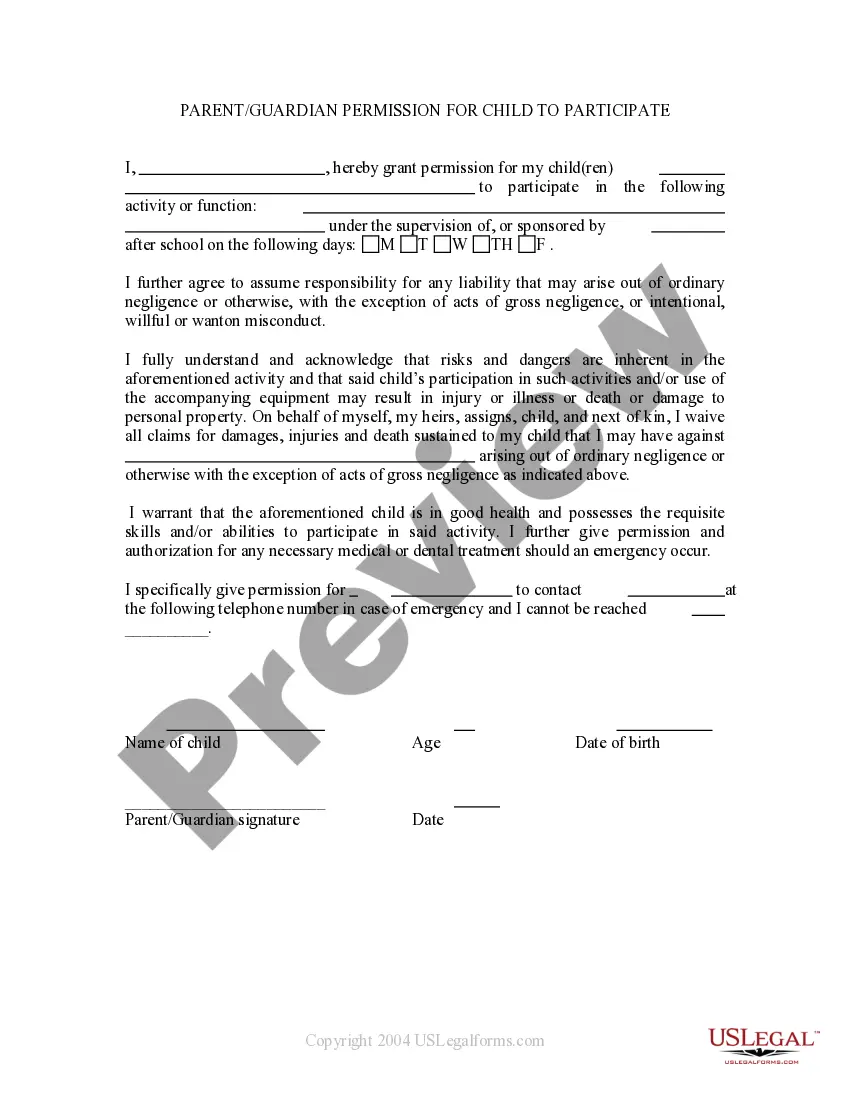
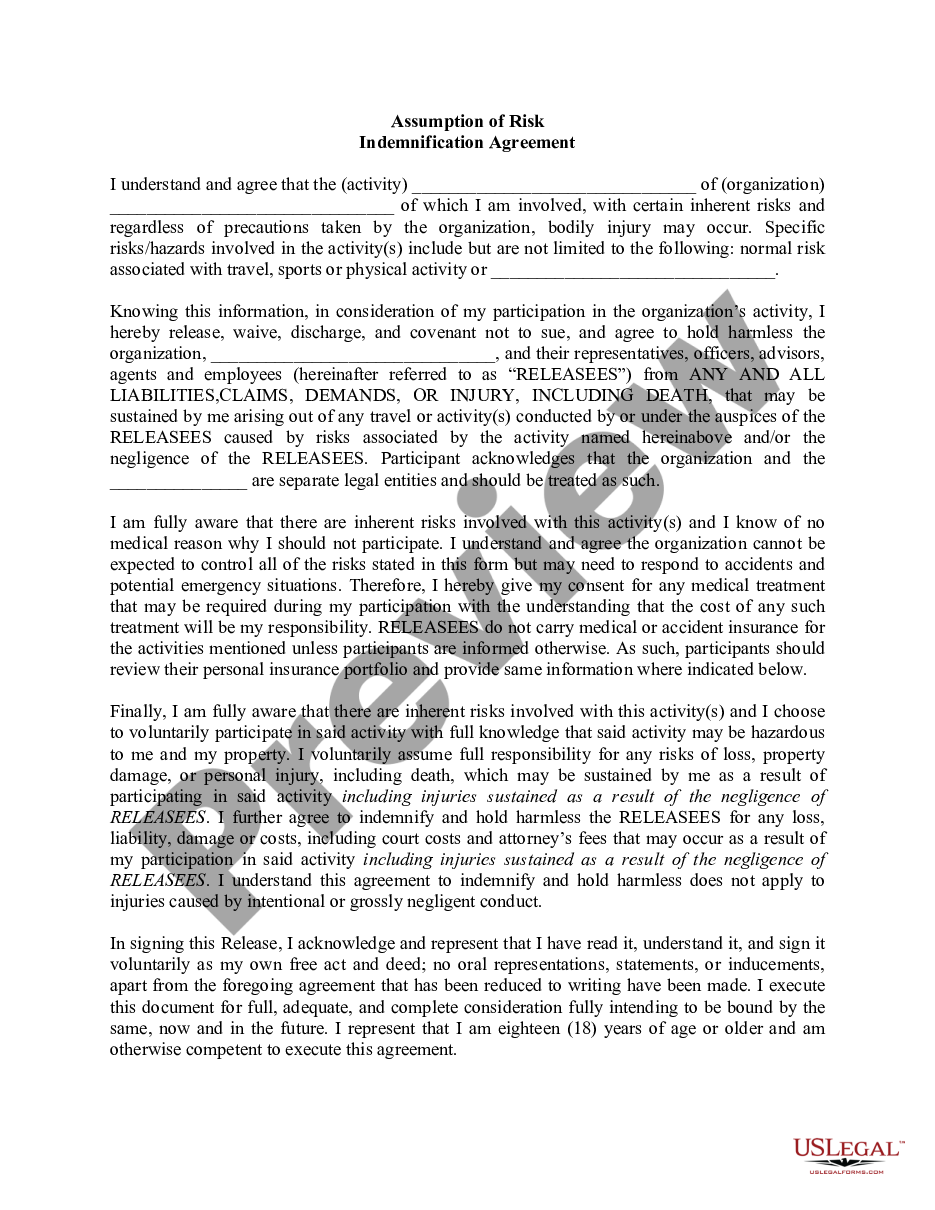
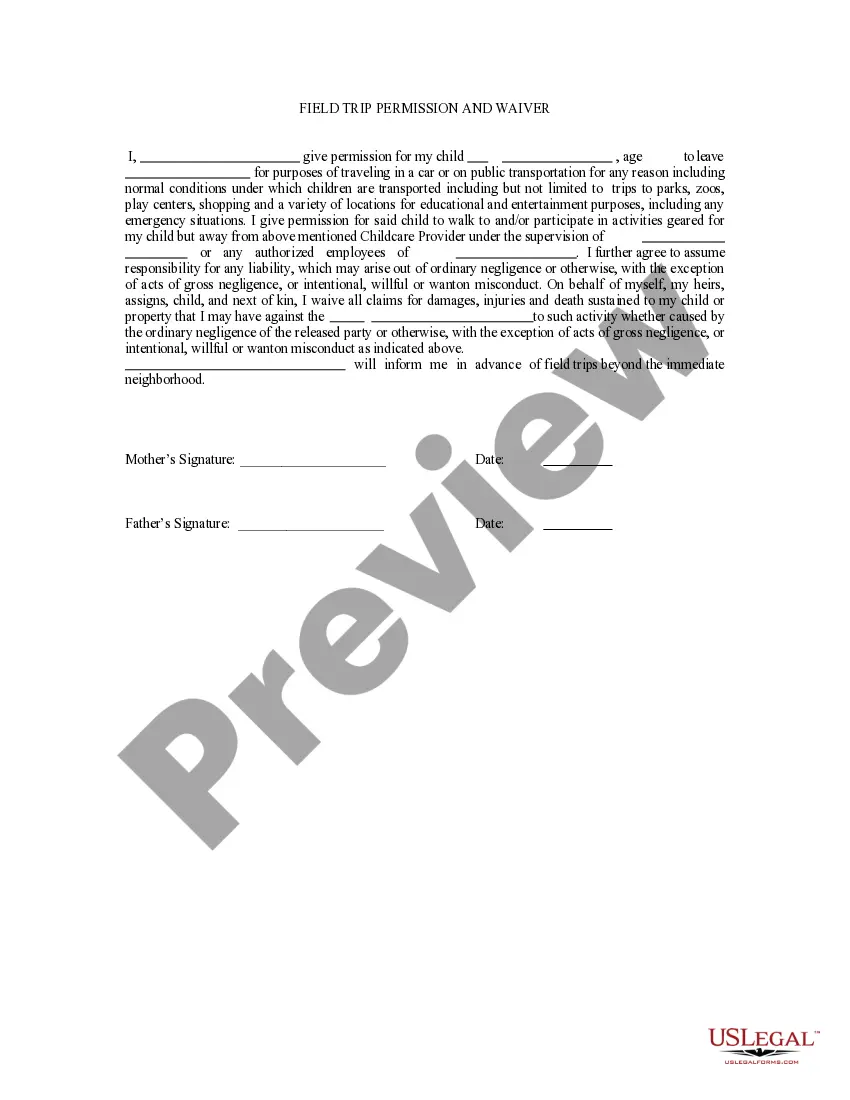
The Parent Guardian Permission for Child to Participate form is a legal document that allows a parent or guardian to grant permission for their child to engage in after-school activities. This form releases the sponsoring organization from ordinary liability, ensuring that parents can feel secure about participation. It differs from other consent forms by specifically addressing liability concerns associated with organized activities for children.
What’s included in this form
- Parent or guardian's name and contact information
- Child's name and relevant details, such as age
- Description of the specific activities the child is participating in
- Statement of liability release for the sponsoring organization
- Signature of the parent or guardian with the date
When this form is needed
This form should be used when a parent or guardian wants to authorize their child to participate in extracurricular activities, such as sports, clubs, or events, organized by schools or community organizations. It is particularly important in settings where there is potential for injury or harm, as it helps clarify the legal responsibilities of all parties involved.
Intended users of this form
This form is intended for:
- Parents or guardians of children participating in organized activities
- Organizations or schools that require a liability waiver for children's participation
- Members of community groups running programs for children
Instructions for completing this form
- Identify the parent or guardian by filling in their name and contact information.
- Enter the child's name and age in the designated fields.
- Clearly describe the activities for which permission is being granted.
- Read and understand the liability release statement.
- Sign and date the form to make it legally valid.
Does this form need to be notarized?
In most cases, this form does not require notarization. However, some jurisdictions or signing circumstances might. US Legal Forms offers online notarization powered by Notarize, accessible 24/7 for a quick, remote process.
Get your form ready online
Our built-in tools help you complete, sign, share, and store your documents in one place.
Make edits, fill in missing information, and update formatting in US Legal Forms—just like you would in MS Word.
Download a copy, print it, send it by email, or mail it via USPS—whatever works best for your next step.
Sign and collect signatures with our SignNow integration. Send to multiple recipients, set reminders, and more. Go Premium to unlock E-Sign.
If this form requires notarization, complete it online through a secure video call—no need to meet a notary in person or wait for an appointment.
We protect your documents and personal data by following strict security and privacy standards.

Make edits, fill in missing information, and update formatting in US Legal Forms—just like you would in MS Word.

Download a copy, print it, send it by email, or mail it via USPS—whatever works best for your next step.

Sign and collect signatures with our SignNow integration. Send to multiple recipients, set reminders, and more. Go Premium to unlock E-Sign.

If this form requires notarization, complete it online through a secure video call—no need to meet a notary in person or wait for an appointment.

We protect your documents and personal data by following strict security and privacy standards.
Common mistakes
- Failing to provide complete contact information for the parent or guardian.
- Not specifying all activities the child will participate in.
- Forgetting to sign and date the form before submission.
- Assuming the form is unnecessary without verifying the organization's requirements.
Why complete this form online
- Convenient access to the form anytime, anywhere.
- Editable fields allow for customization to fit specific needs.
- Reliable legal templates created by licensed attorneys.
- Fast download for immediate use.
Looking for another form?


Form popularity
FAQ
A notarized letter of consent will be required for children who travel without one or both of their parents or legal guardians.There is no standard-issue minor travel consent form, though there are templates online that may be used as examples.
The name of your child. The name of your child's class. The name of your child's teacher. The e-mail address of the parent. The phone number/s of the parent. Any additional contact number/s. Any special instructions pertaining to the child. The parental consent.
The name of your child. The name of your child's class. The name of your child's teacher. The e-mail address of the parent. The phone number/s of the parent. Any additional contact number/s. Any special instructions pertaining to the child. The parental consent.
You can also write permission slips in a letter format. Start the slip with Dear (parent or guardian). Use a friendly tone, include all relevant details in sentence format, and close the letter with a comment that invites further communication.
Ensure that the formal letter/ email has a clear heading regarding the consent. Explain the requirements (if any) from the respondents. Mention the duration of the program or participation.
A parental consent form is used to gather permission from parents and guardians to let their child participate in certain activities.
A statement signed by the minor's parent or guardian consenting to the proposed employment. For the purpose of this section, in the absence of a parent or guardian, a person over eighteen years of age with whom the minor resides may sign such statement.
Briefly re-state the risks or inconveniences associated with the research. 5. If appropriate, include a statement that participants' anonymity and/or confidentiality 6. will be maintained. State that participation is voluntary and potential participants are free to refuse consent 7.