Louisiana Judgment for Custody
What this document covers
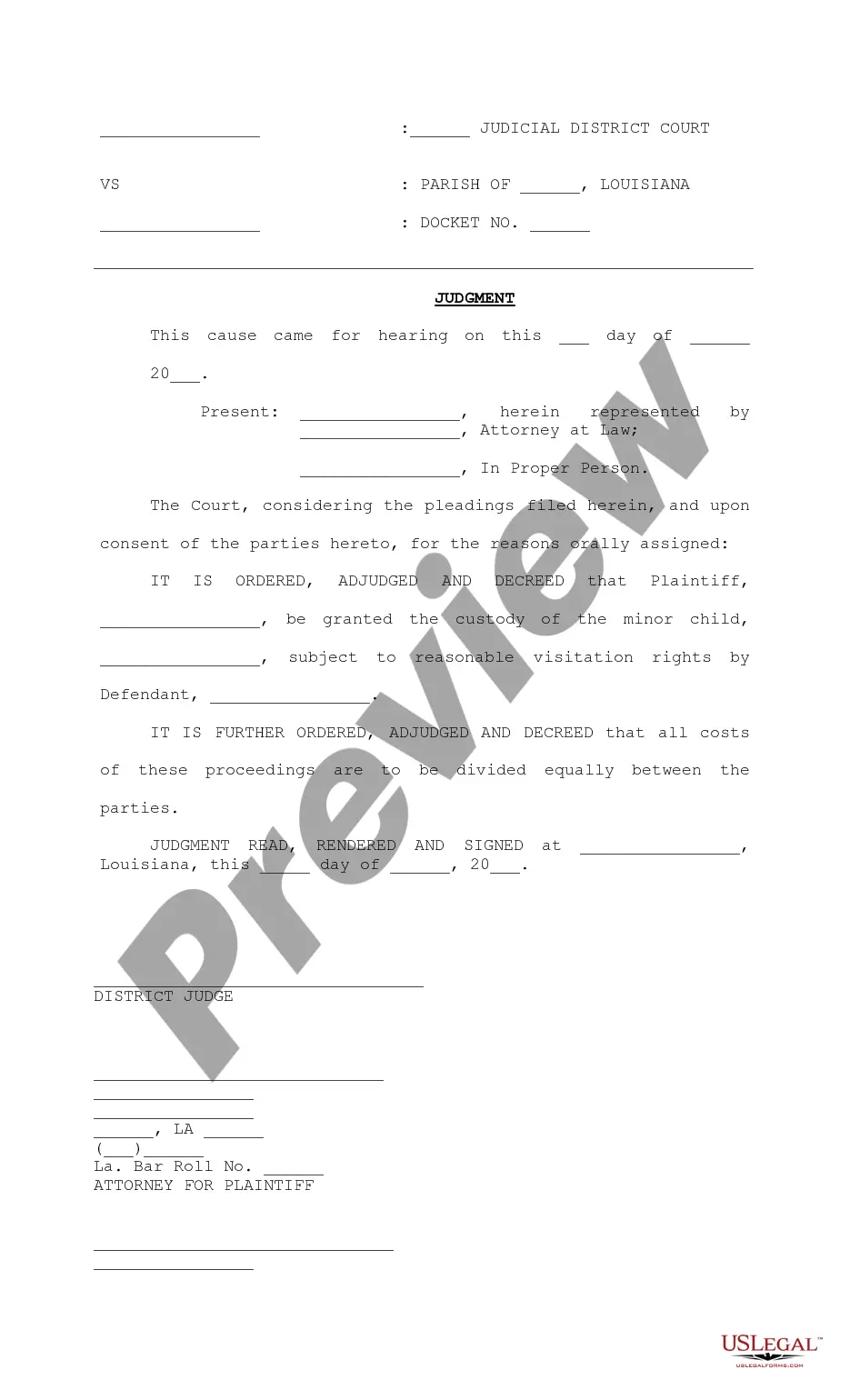
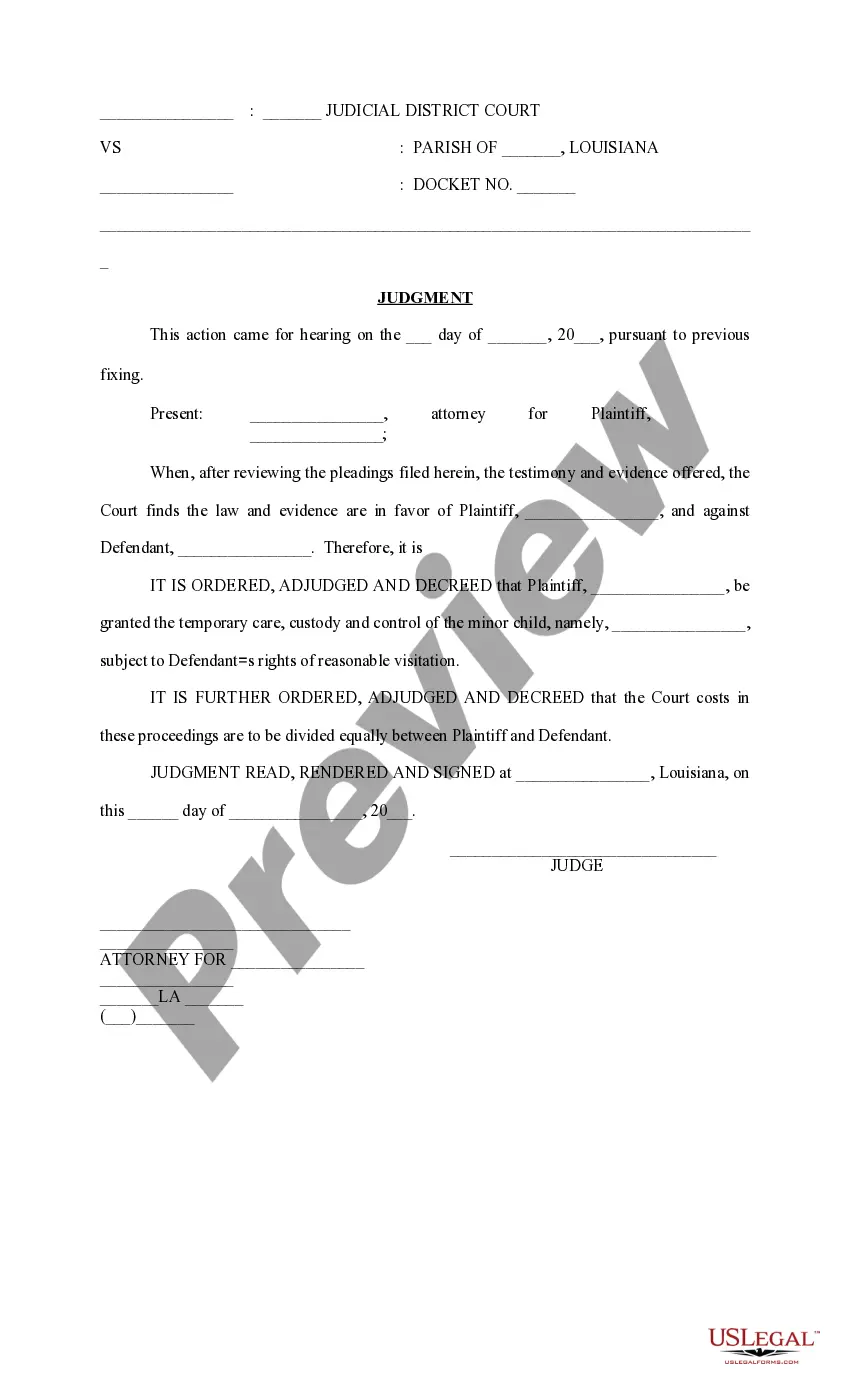
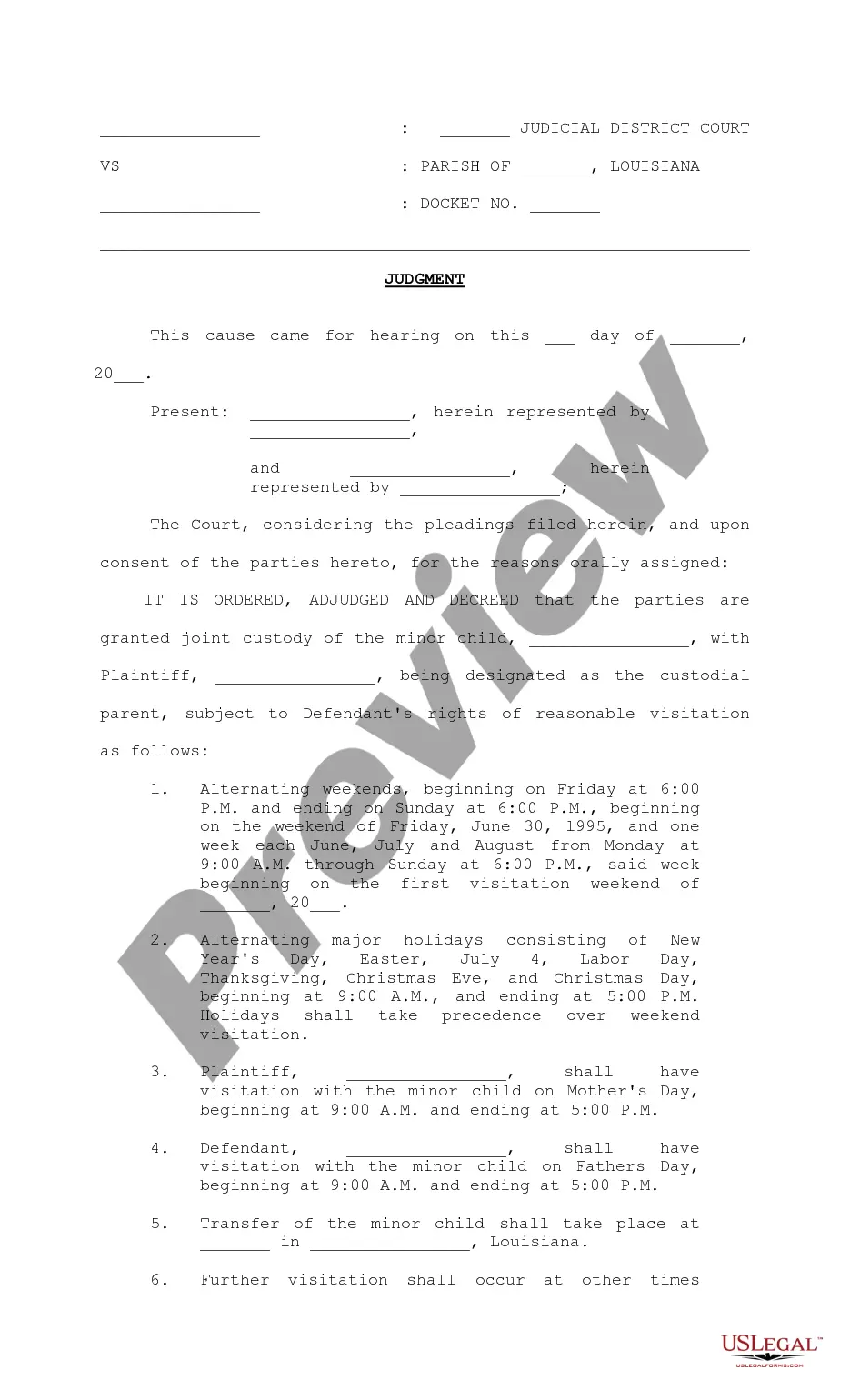
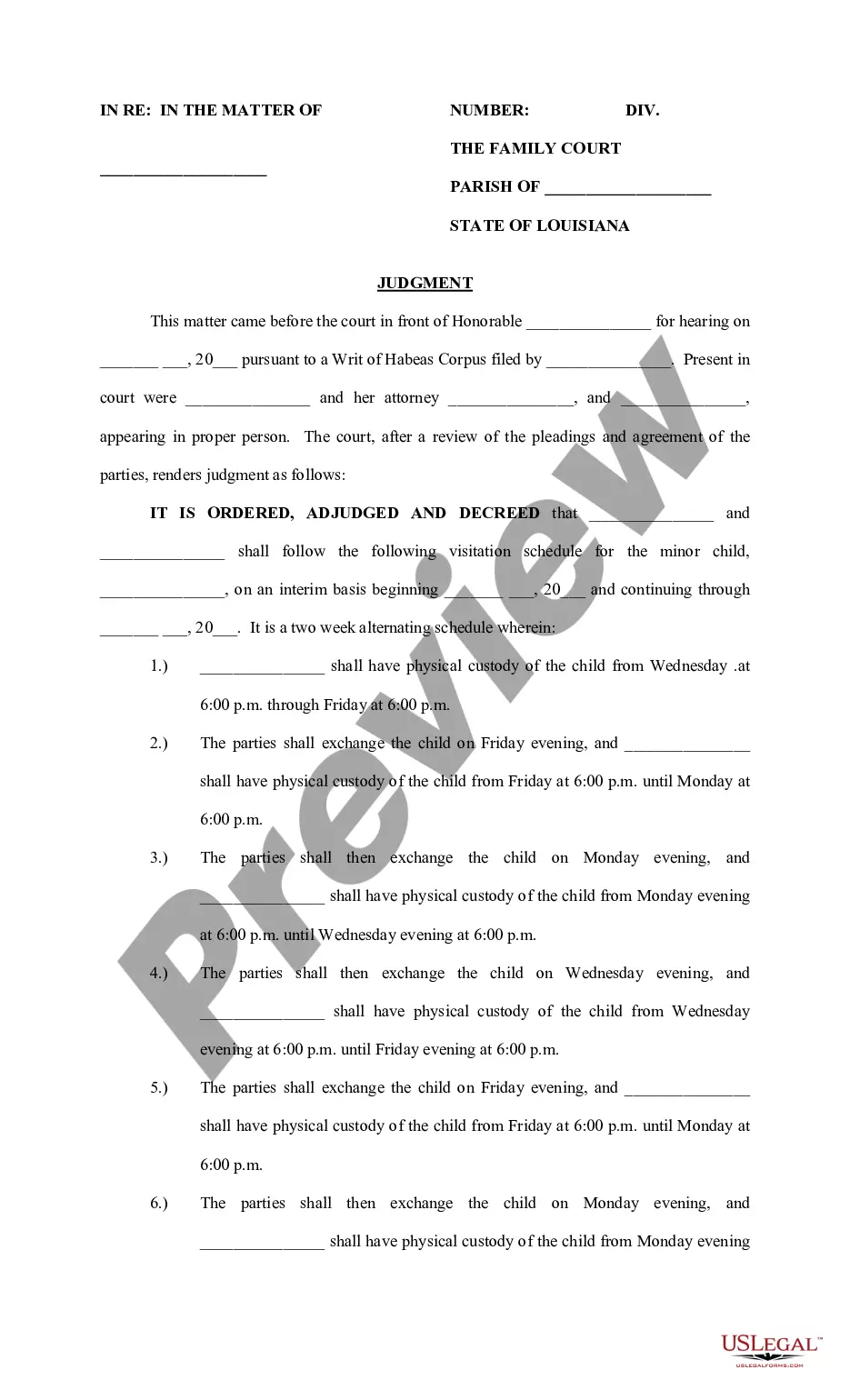
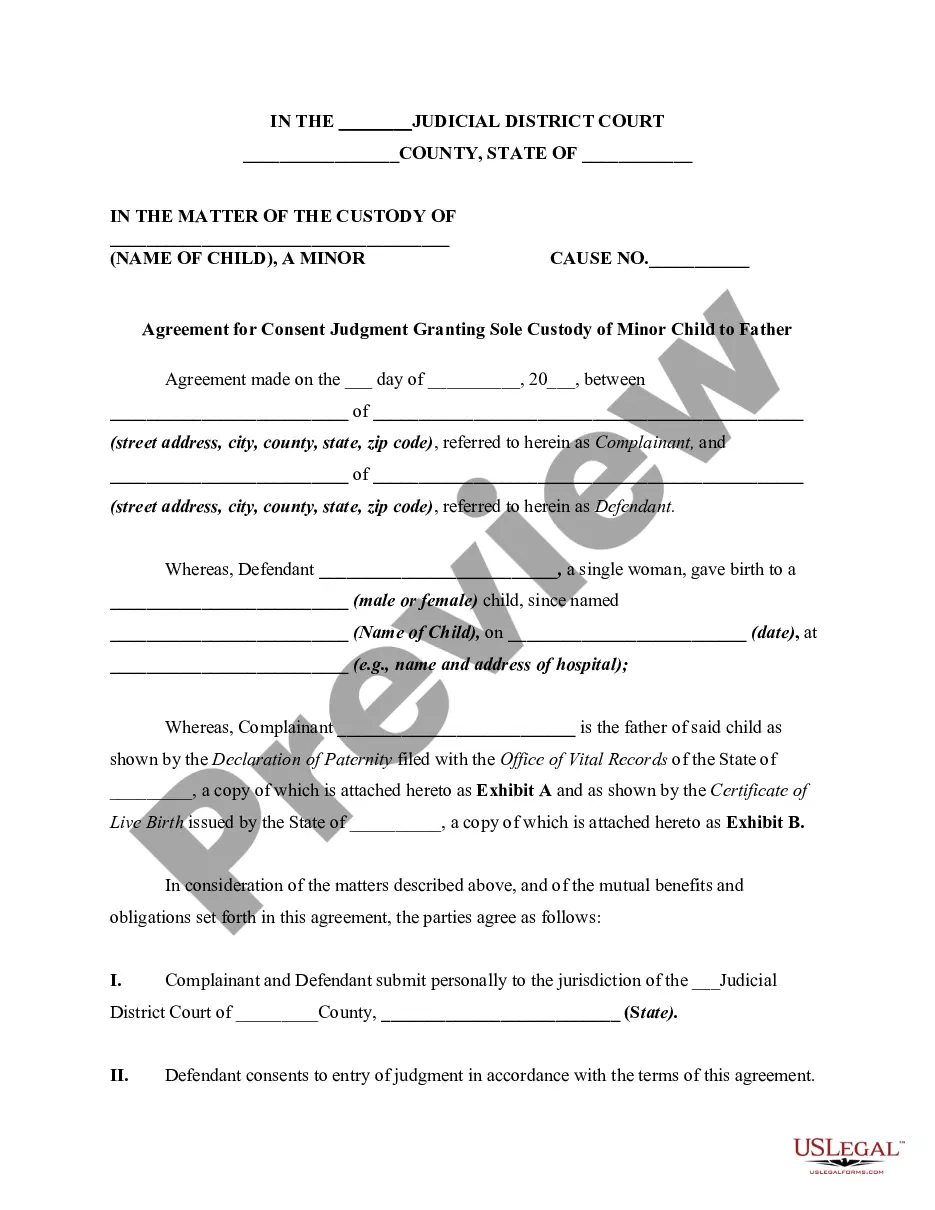
The Judgment for Custody is a legal document that formalizes an agreement between parents regarding the custody of their minor child. Unlike contested custody battles, this form is based on the mutual consent of both parties, making it a straightforward way to establish custody arrangements and visitation rights without prolonged litigation.
Key components of this form
- Names of the parties involved (plaintiff and defendant).
- Identification of the minor child involved in the custody matter.
- Details on custody granted to the plaintiff.
- Provision for reasonable visitation rights for the defendant.
- Order regarding the division of court costs between the parties.
Situations where this form applies
This form should be used in scenarios where parents agree on custody arrangements for their minor child. It is appropriate to use when both parties want to avoid contentious court proceedings and instead reach an amicable agreement that can be legally enforced. Typical situations include divorce proceedings, changes in living situations, or when parents want to clarify their custody agreements.
Who should use this form
This form is intended for:
- Parents who have reached an agreement regarding the custody of their child.
- Individuals seeking to formalize a custody arrangement without litigation.
- Guardians or legal representatives acting on behalf of a parent in custody matters.
Completing this form step by step
- Identify and enter the names of the parties involved in the custody case.
- Fill in the date of the hearing and the docket number provided by the court.
- Specify the name of the minor child for whom custody is being arranged.
- Detail the awarded custody to the plaintiff and outline visitation rights for the defendant.
- Include the court's order regarding the division of court costs between the parties.
Notarization guidance
Notarization is not commonly needed for this form. However, certain documents or local rules may make it necessary. Our notarization service, powered by Notarize, allows you to finalize it securely online anytime, day or night.
Get your form ready online
Our built-in tools help you complete, sign, share, and store your documents in one place.
Make edits, fill in missing information, and update formatting in US Legal Forms—just like you would in MS Word.
Download a copy, print it, send it by email, or mail it via USPS—whatever works best for your next step.
Sign and collect signatures with our SignNow integration. Send to multiple recipients, set reminders, and more. Go Premium to unlock E-Sign.
If this form requires notarization, complete it online through a secure video call—no need to meet a notary in person or wait for an appointment.
We protect your documents and personal data by following strict security and privacy standards.

Make edits, fill in missing information, and update formatting in US Legal Forms—just like you would in MS Word.

Download a copy, print it, send it by email, or mail it via USPS—whatever works best for your next step.

Sign and collect signatures with our SignNow integration. Send to multiple recipients, set reminders, and more. Go Premium to unlock E-Sign.

If this form requires notarization, complete it online through a secure video call—no need to meet a notary in person or wait for an appointment.

We protect your documents and personal data by following strict security and privacy standards.
Common mistakes
- Failing to include the full names of both parties and the child involved.
- Not specifying visitation rights adequately.
- Leaving out the court costs division, which can lead to confusion later.
- Not signing or dating the document correctly.
Benefits of using this form online
- Convenience of accessing and downloading the form from home.
- Easy to complete, allowing for quick edits and modifications as needed.
- Reliability of a legally drafted template that conforms to jurisdictional standards.
Summary of main points
- The Judgment for Custody facilitates an agreed-upon custody arrangement between parents.
- Using this form helps avoid lengthy litigation while providing legal enforcement of custody terms.
- Always double-check for accurate information and signatures to ensure validity.
Looking for another form?
Form popularity
FAQ
To obtain a judgment of possession in Louisiana, you need to file a legal action in the appropriate court. This involves preparing a petition detailing your claim and supporting it with evidence, such as relevant documents and witness testimonies. Once filed, a judge will review your case, and if satisfied, will issue a Louisiana Judgment for Custody that grants you possession.
One significant mistake in a custody battle is failing to prepare adequately for court. It is essential to gather evidence that supports your case and showcase your parenting abilities. Additionally, overlooking the importance of legal advice can lead to a negative outcome in a Louisiana Judgment for Custody. Ensure you have a solid strategy and legal support to navigate this challenging time.
Begin your letter by introducing yourself and explaining your relationship to the parent and how long you've known her. Then, spend two or three paragraphs explaining why you think she should be awarded custody. Use your final paragraph to summarize the points you've made in the body of your letter.
The best way to convince a judge that the parent most fit for custody is to provide real world evidence through behavior and actions. When there are certain situations that may be best for the child, it is important to seek these out and to offer better circumstances if possible.
However, when a person is awaiting trial, writing a letter to the judge will not help. At best, the letter will go unread by the judge, and will be of no help. In a worst-case scenario, the letter will end up being used by the prosecution as evidence against that person.
You cannot write a letter to the family court judge. This would be considered an ex parte communication.
Be willing to work with the child's other parent. See your children whenever possible. Don't involve your children in the court case. Don't put the children in the middle. Perception is everything. Hire an experienced child custody lawyer.
You can write a letter to the Judge but the Judge will not read it. You have to provide testimony through witnesses including yourself. You do not have to agree with what the GAL proposes. You need an attorney to represent you.
Judges must decide custody based on the best interests of the child." The best interests of the child law requires courts to focus on the child's needs and not the parent's needs. The law requires courts to give custody to the parent who can meet the child's needs best .
Can my child write a letter or a Declaration to the Judge? The answer is usually, no. If your child writes a letter or a Declaration to the Judge, the Judge will not read it nor will it be accepted by the court.