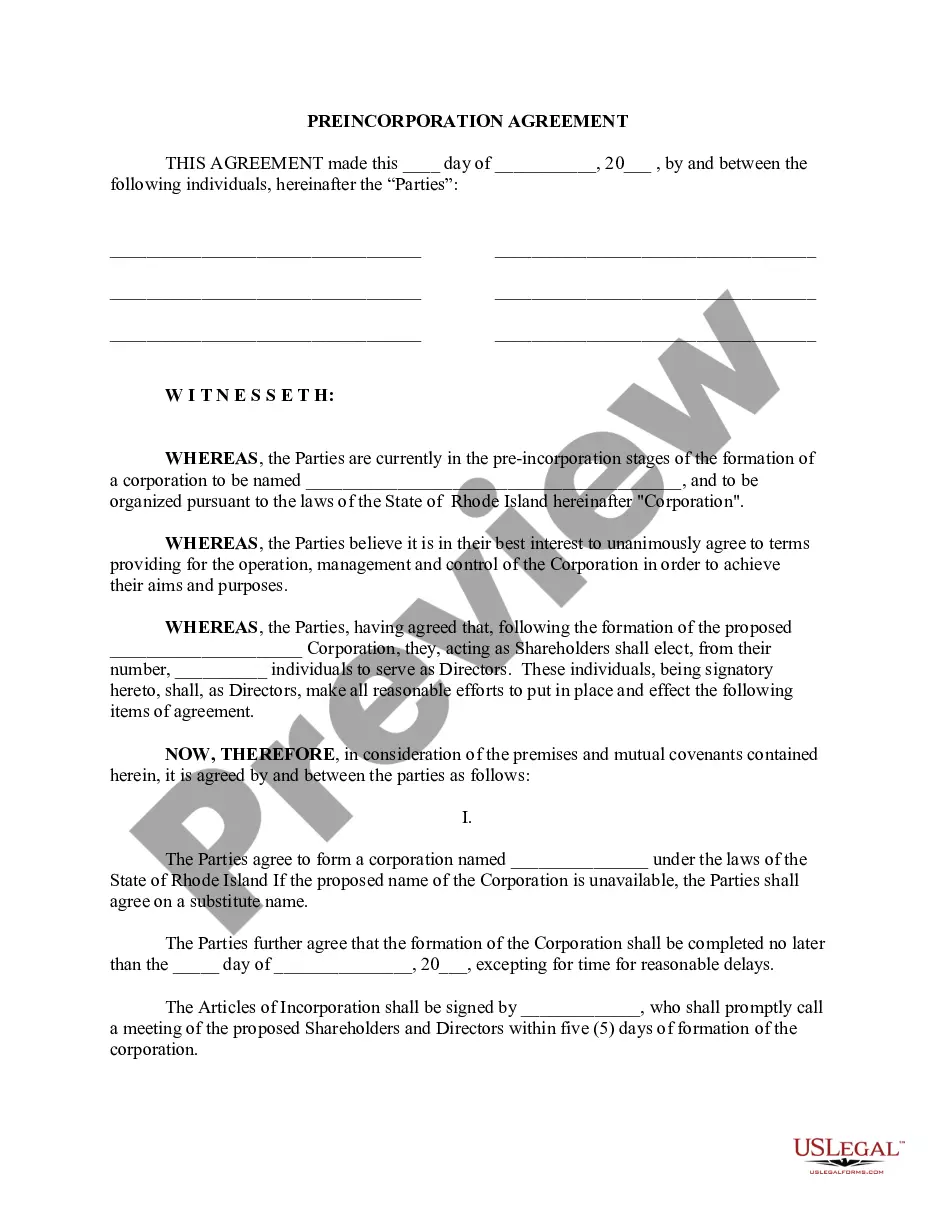
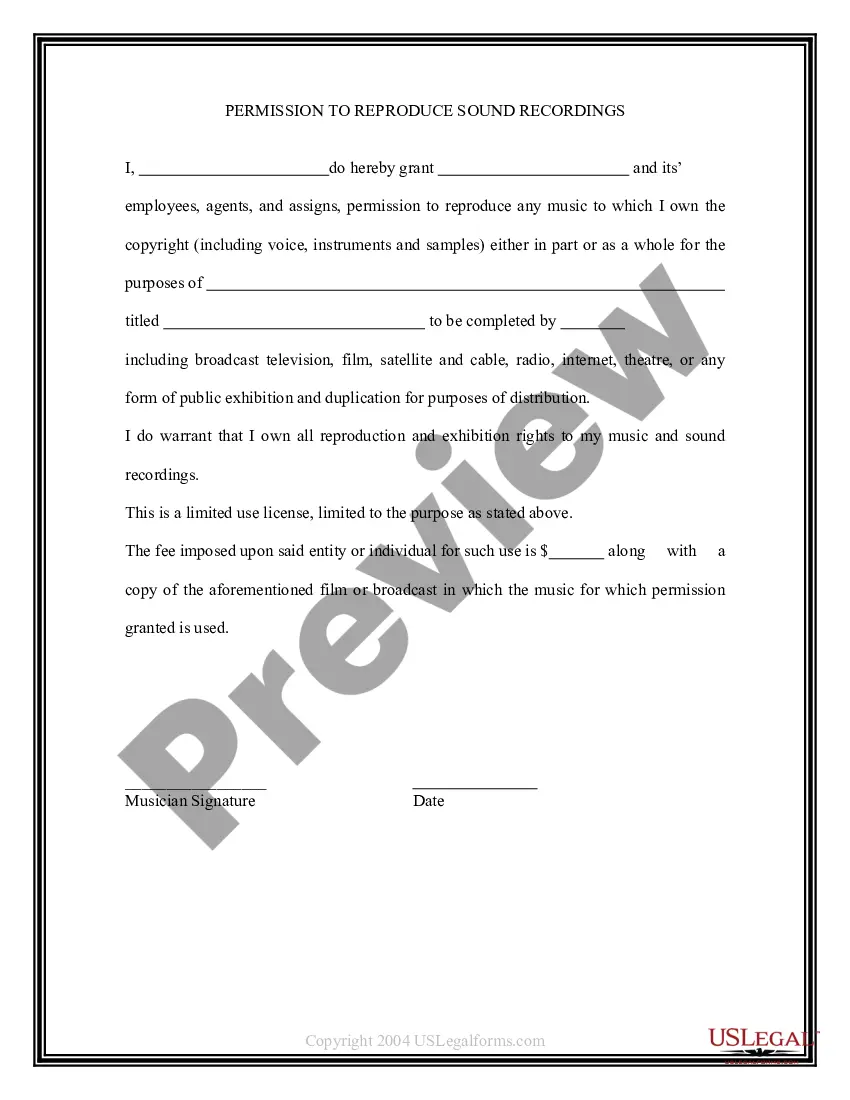
Permission To Reproduce Sound Recordings
Understanding this form
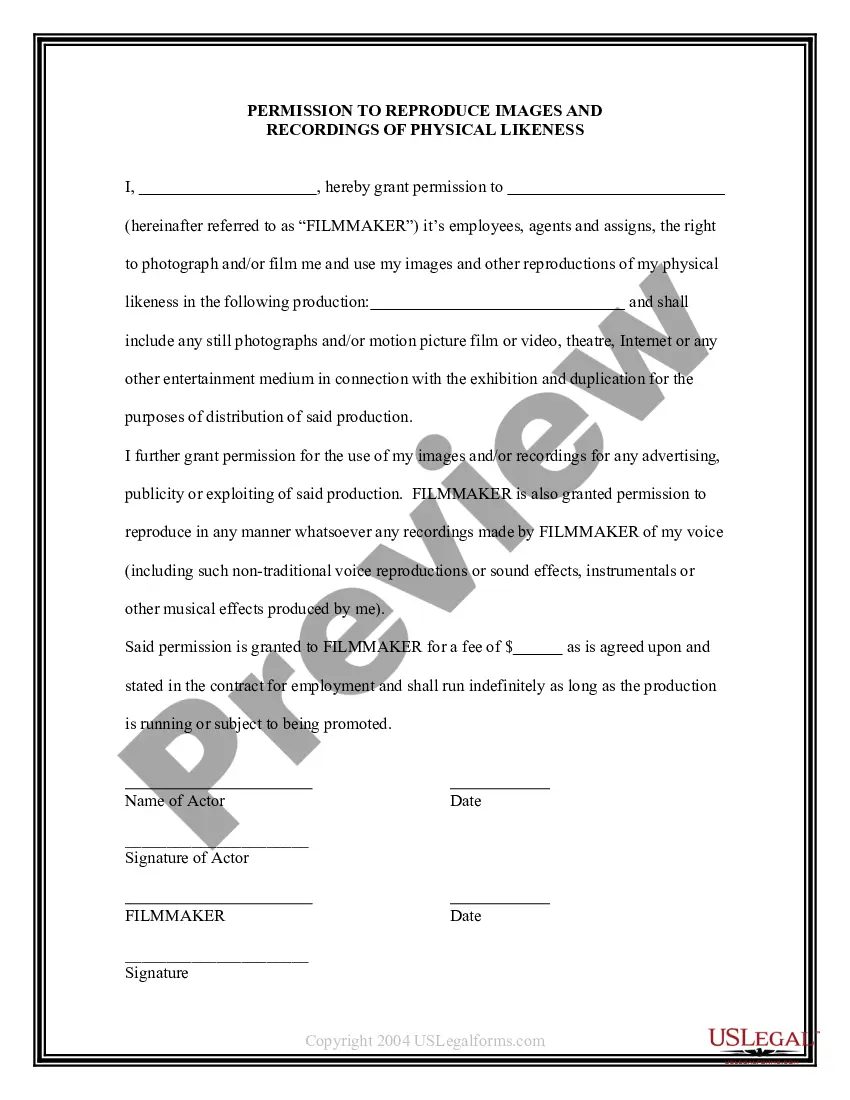
The Permission To Reproduce Sound Recordings form is a legal document that allows a musician or music owner to grant permission for the reproduction of copyrighted music. This includes uses in film, television, the Internet, and radio. Unlike a standard license, this form is a limited use license, restricted to the specific purposes detailed within the document, providing clarity and legal standing in entertainment and media contexts.
Key parts of this document
- Identification of the rights holder: Includes information about the musician or owner of the music.
- Defined scope of the rights granted: Clearly states the limited use license for the specified purposes.
- Warrant of ownership: Declares that the rights holder owns all reproduction and exhibition rights to the music and sound recordings.

When this form is needed
This form is essential when a producer or filmmaker needs to use a musician's work in a project. It is used when producing films, creating a television show, or distributing content online, ensuring that copyright laws are respected while allowing for creative collaboration.
Who this form is for
- Musicians wishing to allow the use of their work in various media.
- Music producers or owners looking to license their sound recordings legally.
- Filmmakers and content creators who need permission to utilize copyrighted music.
How to prepare this document
- Identify the parties involved: Clearly state the name of the musician or rights holder.
- Specify the purpose of reproduction: Clearly outline where and how the music will be used.
- Enter the dates: Provide the relevant dates for the permission granted.
- Sign the agreement: Ensure that the rights holder signs the form to validate the permission.
Notarization requirements for this form
Notarization is not commonly needed for this form. However, certain documents or local rules may make it necessary. Our notarization service, powered by Notarize, allows you to finalize it securely online anytime, day or night.
Get your form ready online
Our built-in tools help you complete, sign, share, and store your documents in one place.
Make edits, fill in missing information, and update formatting in US Legal Forms—just like you would in MS Word.
Download a copy, print it, send it by email, or mail it via USPS—whatever works best for your next step.
Sign and collect signatures with our SignNow integration. Send to multiple recipients, set reminders, and more. Go Premium to unlock E-Sign.
If this form requires notarization, complete it online through a secure video call—no need to meet a notary in person or wait for an appointment.
We protect your documents and personal data by following strict security and privacy standards.

Make edits, fill in missing information, and update formatting in US Legal Forms—just like you would in MS Word.

Download a copy, print it, send it by email, or mail it via USPS—whatever works best for your next step.

Sign and collect signatures with our SignNow integration. Send to multiple recipients, set reminders, and more. Go Premium to unlock E-Sign.

If this form requires notarization, complete it online through a secure video call—no need to meet a notary in person or wait for an appointment.

We protect your documents and personal data by following strict security and privacy standards.
Avoid these common issues
- Failing to clearly define the scope of use, leading to potential misuse.
- Not including all parties' names or information, which can complicate enforcement.
- Leaving out signature and date, making the form invalid.
Advantages of online completion
- Convenience of immediate download and printing after completion.
- Editability allows users to tailor the form to their specific needs.
- Reliability of legally drafted documents by licensed attorneys ensures adherence to copyright laws.
Looking for another form?

Form popularity
FAQ
Music already in Public domain. That covers compositions and recordings with their copyright expired.Often you will be required to give credit, may be restricted from using the music in commercial projects, or will be obligated to share your work under the same terms.
Determine if permission is needed. Identify the owner. Identify the rights needed. Contact the owner and negotiate whether payment is required. Get your permission agreement in writing.
Copyright in sound recordings is generally owned by the 'maker' of the sound recording. The term 'maker' usually refers to the person who owns the equipment the recording was made on, such as the production company, studio, or record label.
If you have written ten songs and record them with a producer, usually you will own all of the publishing rights to the original material; because you are the author of the songs. But the producer will almost always be co-owner of the master recordings.
First, locate the copyright notice either on a recording or on a copy of the sheet music. You can then search for the song title, writer, or publisher on CCLI, ASCAP, BMI, SESAC, SongFile or at our web page, Music Services.
The federal remedies for unauthorized use of pre-1972 sound recordings shall be available for 95 years after first publication of the recording, ending on December 31 of that year, subject to certain additional periods.
Generally, the owner of a sound recording does not have the exclusive right to publicly perform that work under the Copyright Act. However, the owner of a sound recording does have the exclusive right to publicly perform a sound recording by means of a digital audio transmission.
What is a Sound Recording? The Copyright Act defines sound recordings as works that result from the fixation of a series of musical, spoken, or other sounds but not including sounds accompanying a motion picture or other audiovisual work. Generally, a sound recording is a recorded performance, often of another work.