USLegal Pamphlet on Primary Custody
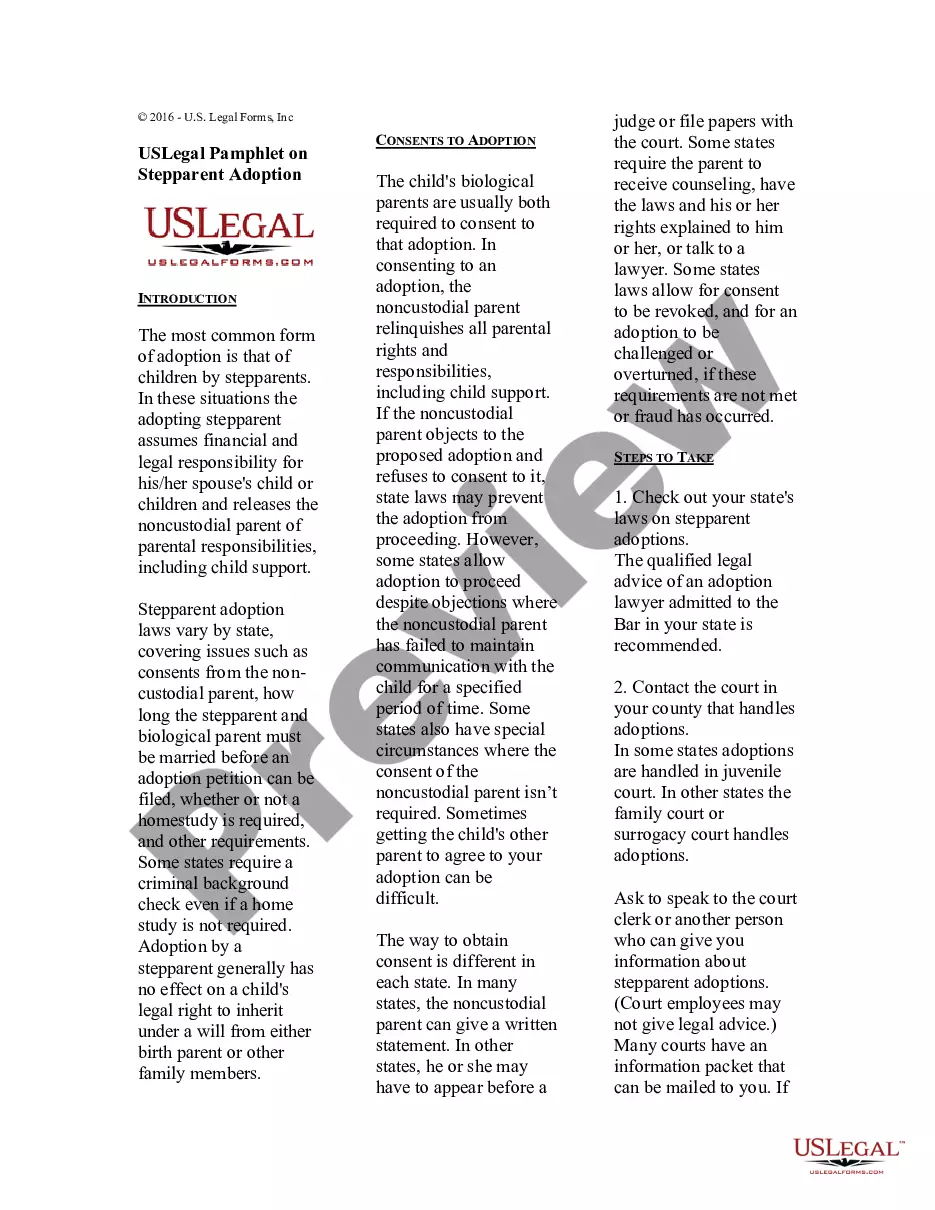
What this document covers
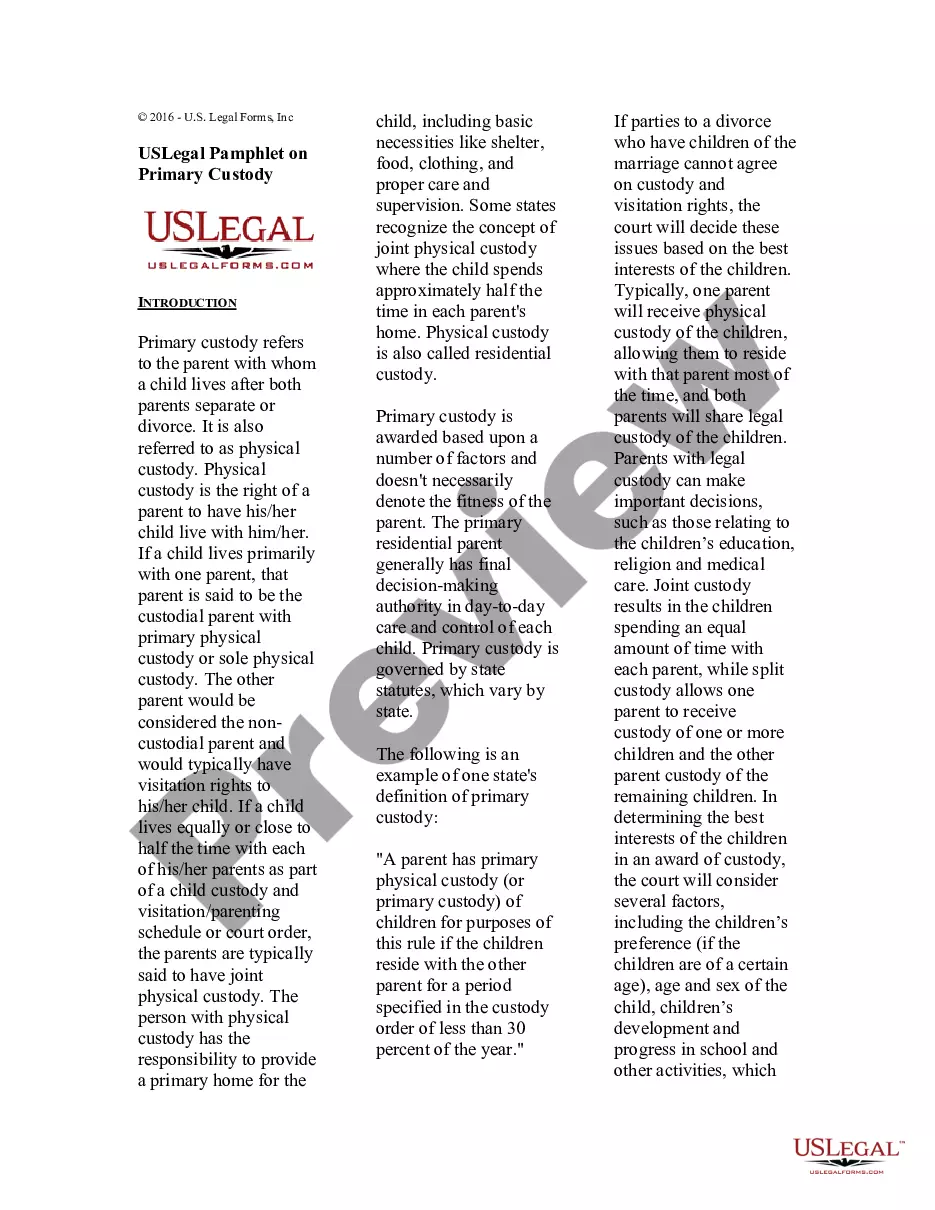
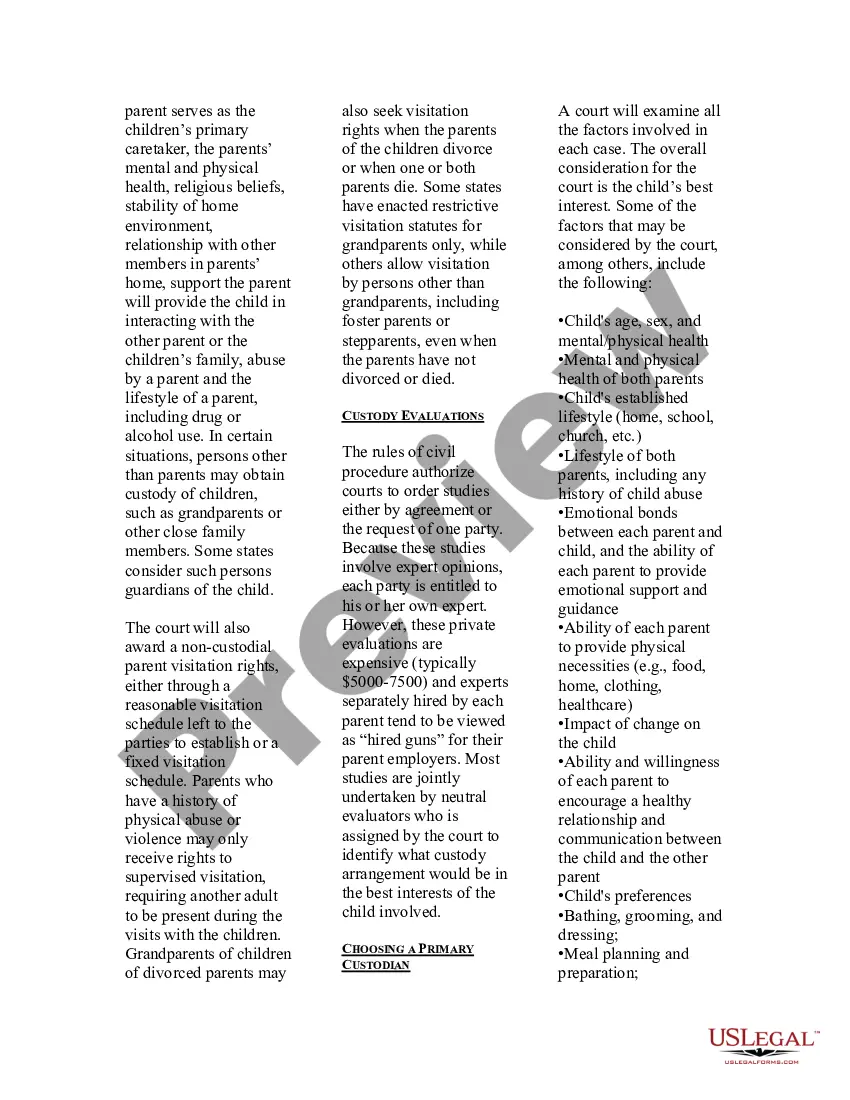
The USLegal Pamphlet on Primary Custody provides a comprehensive overview of primary custody, also known as physical custody. This pamphlet helps individuals understand the responsibilities and rights involved when a child primarily resides with one parent after separation or divorce. Unlike other custody forms, this pamphlet focuses on explaining the concept, court evaluations, and factors influencing custody decisions, making it an invaluable resource for parents navigating custody issues.
Key components of this form
- Definition of primary custody and its distinction from other custody types.
- Roles and rights of the custodial and non-custodial parents.
- Factors considered by courts in making custody decisions.
- Overview of custody evaluations and their purpose.
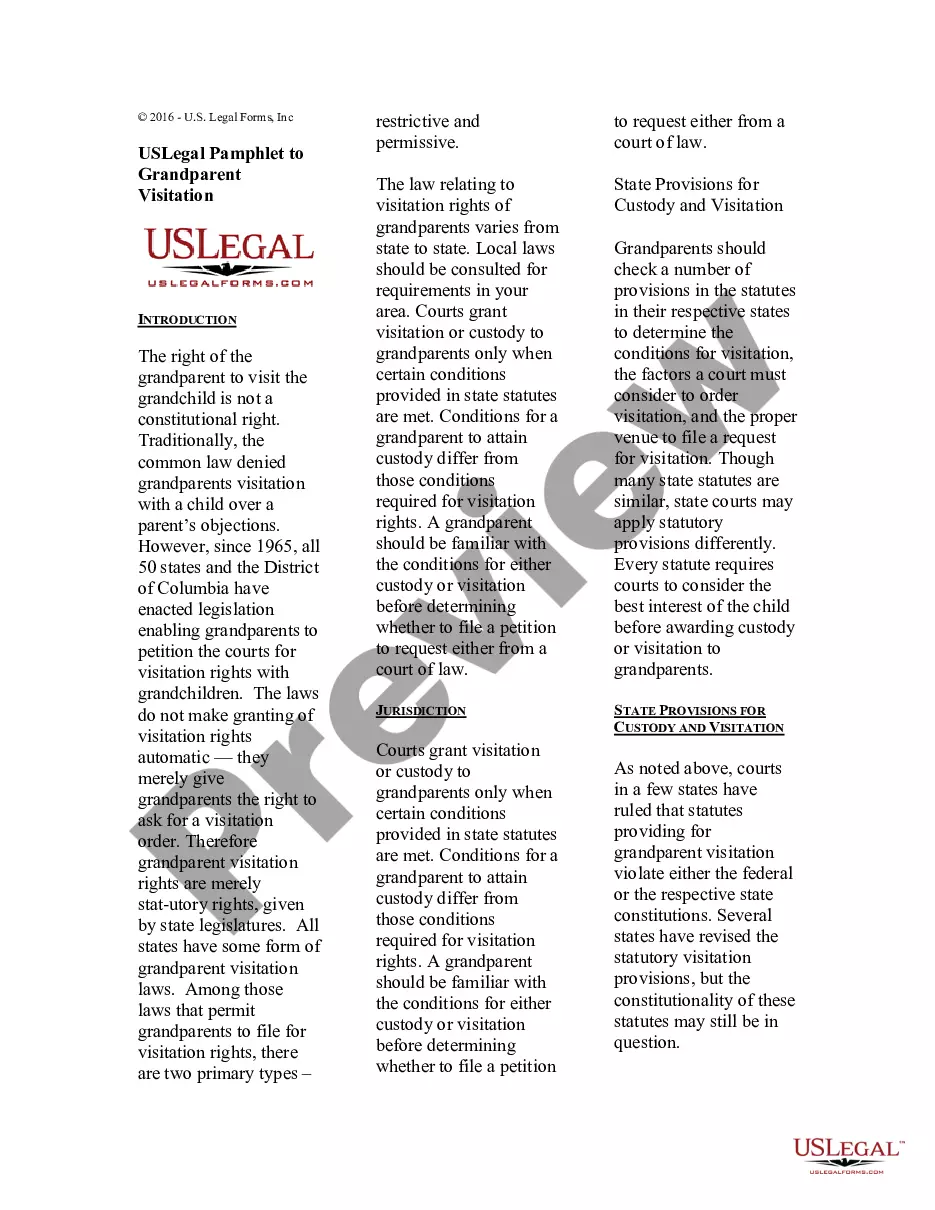
- Explanation of joint and split custody arrangements.

When to use this form
This pamphlet is useful when parents are going through separation or divorce and need to understand primary custody. It can help clarify rights and responsibilities regarding child custody and assist parents in preparing for potential court evaluations when custody arrangements are disputed.
Who needs this form
- Parents undergoing separation or divorce who have children.
- Guardians seeking to understand custody options.
- Individuals looking to gain insight into the custody decision-making process.
Steps to complete this form
- Read through the pamphlet thoroughly to understand primary custody implications.
- Consider the outlined factors that may influence custody decisions.
- Prepare additional documentation or evidence for court evaluations if necessary.
Notarization guidance
This form usually doesn’t need to be notarized. However, local laws or specific transactions may require it. Our online notarization service, powered by Notarize, lets you complete it remotely through a secure video session, available 24/7.
Get your form ready online
Our built-in tools help you complete, sign, share, and store your documents in one place.
Make edits, fill in missing information, and update formatting in US Legal Forms—just like you would in MS Word.
Download a copy, print it, send it by email, or mail it via USPS—whatever works best for your next step.
Sign and collect signatures with our SignNow integration. Send to multiple recipients, set reminders, and more. Go Premium to unlock E-Sign.
If this form requires notarization, complete it online through a secure video call—no need to meet a notary in person or wait for an appointment.
We protect your documents and personal data by following strict security and privacy standards.

Make edits, fill in missing information, and update formatting in US Legal Forms—just like you would in MS Word.

Download a copy, print it, send it by email, or mail it via USPS—whatever works best for your next step.

Sign and collect signatures with our SignNow integration. Send to multiple recipients, set reminders, and more. Go Premium to unlock E-Sign.

If this form requires notarization, complete it online through a secure video call—no need to meet a notary in person or wait for an appointment.

We protect your documents and personal data by following strict security and privacy standards.
Common mistakes
- Failing to understand the difference between physical custody and legal custody.
- Not considering the child's preference when applicable and of age.
- Overlooking the importance of providing a stable environment for the child.
Benefits of completing this form online
- Immediate access to valuable information regarding primary custody.
- Edit and download the pamphlet for personalized use.
- Reliable content drafted by licensed attorneys ensures accuracy and relevance.
Main things to remember
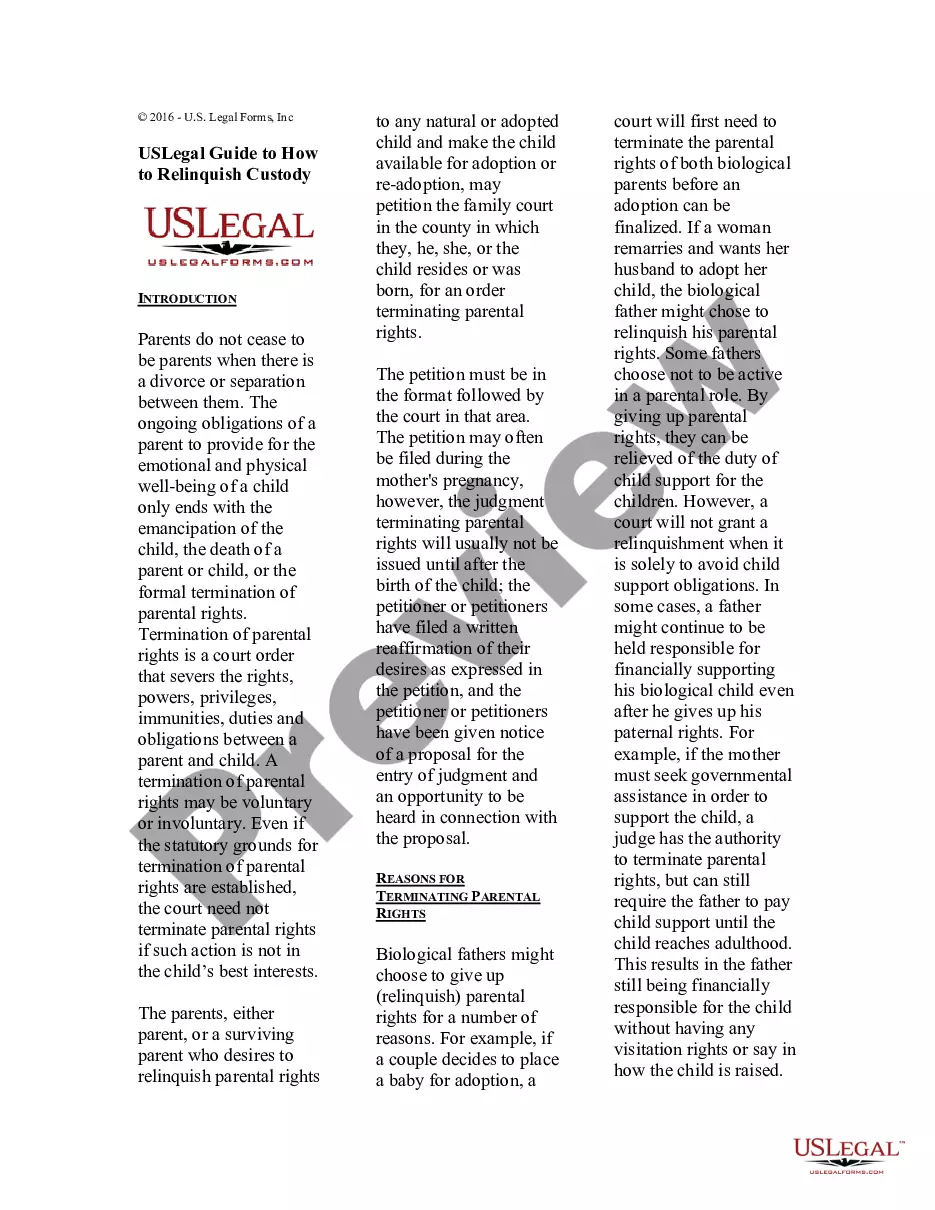
- Primary custody refers to the parent with whom the child primarily resides.
- Custody decisions are centered around the best interests of the child.
- Family courts may require evaluations to assess custody arrangements.
Looking for another form?


Form popularity
FAQ
Common joint physical custody schedules Two weeks each schedule when the child lives with one parent for two weeks and the other parent the next two weeks. 2-2-3 schedule where the child lives with one parent for two days, the other parent for two days and the parents alternate a three day weekend.
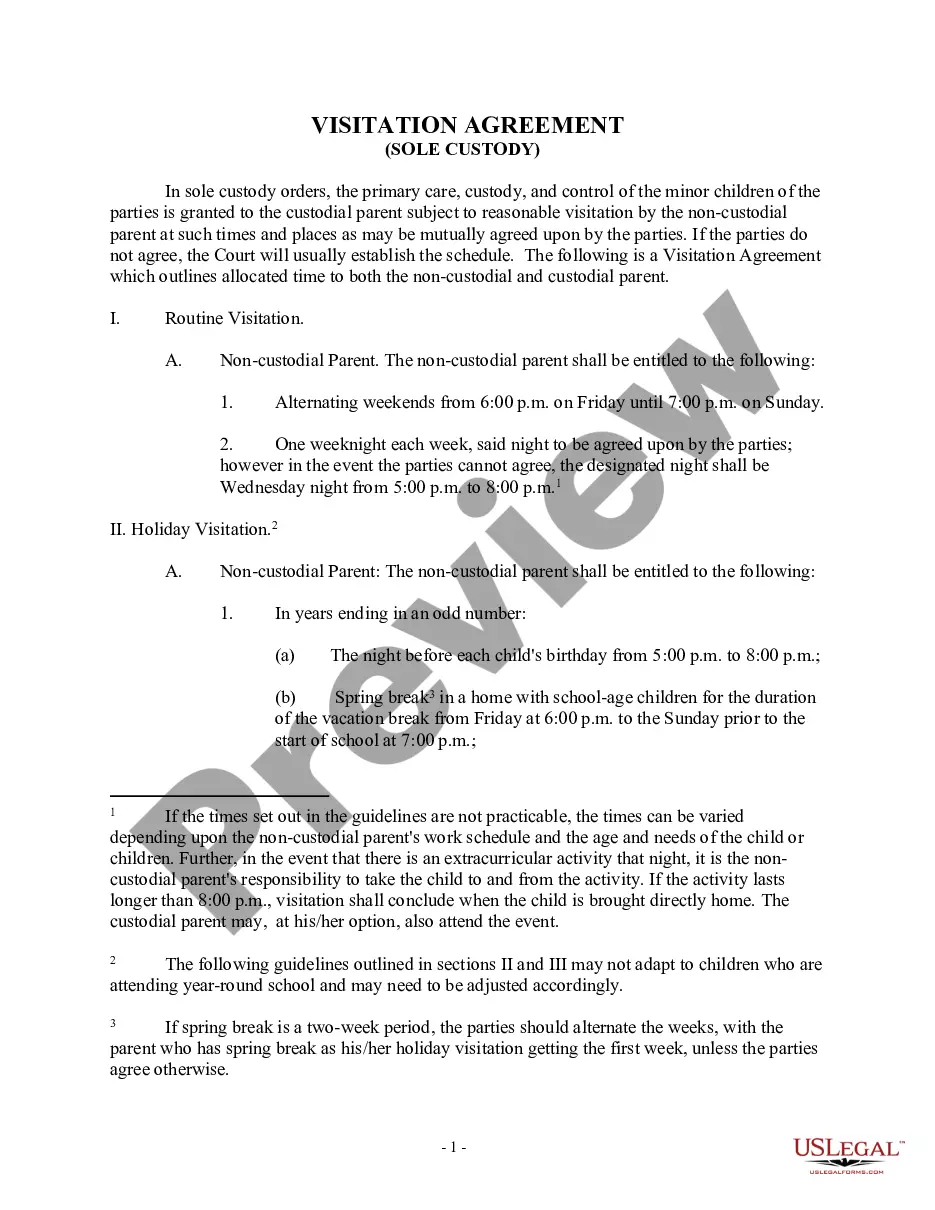
While there's no one-size-fits-all routine, a typical visitation schedule may include: Overnights every other weekend. One weeknight visit or overnight per week. An extended visit during the summer, such as two - six weeks.
Evidence of parenting ability: Courts look for evidence that the parent requesting custody is genuinely able to meet the child's physical and emotional needs, including food, shelter, clothing, medical care, education, emotional support, and parental guidance.
One factor in determining custody is which parent has been the primary caregiver for the child. Some states actually use the term "primary caregiver"; others refer to the parent who is best able to meet the child's needs, who is most willing to accept parental responsibilities, or who has been caring for the child.
A parenting time schedule. Information about how the parents will make decisions for the child. Information about finances and expenses. Parenting provisions (rules about raising the child) Any other information you want to include.
The most common arrangement is one in which one parent has sole physical custody, both parents have legal custody, and the noncustodial parent is granted visitation time.
In writing your own custody and support agreement, you should use language that reflects your willingness to cooperate with the other parent. The tone should be positive and indicate that both parties are willing to comply with the terms of the document. If written this way, a judge is more likely to approve its terms.
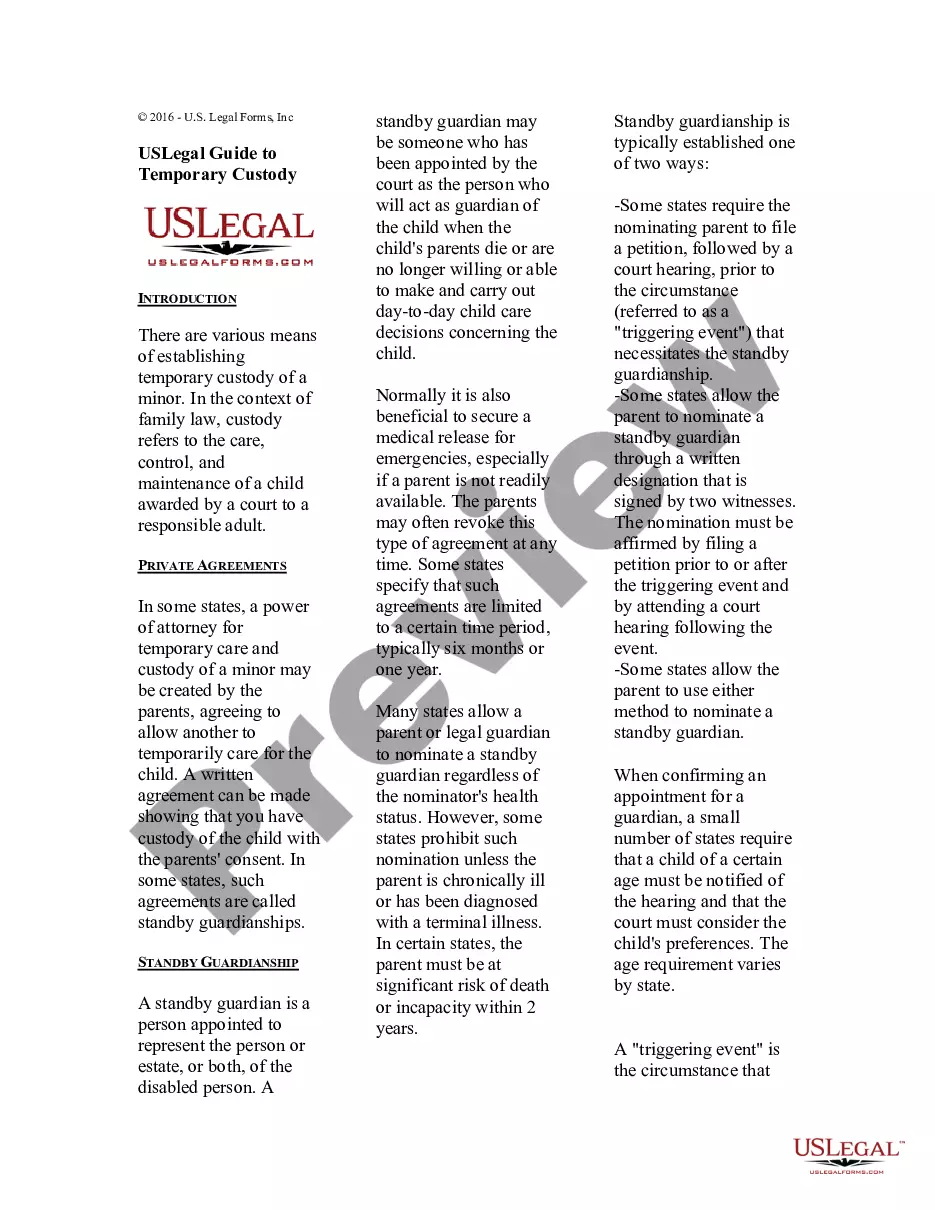
A declaration of custody. The division of parental authority and decision-making abilities. A child visitation schedule. Methods for reviewing and modifying the custody agreement. A method of dispute resolution. Any additional provisions you would like to include.
Even though wills are considered more complicated contracts, they can still be handwritten to be considered legally enforceable.It is important to note that even if a written requirement is required under the Statute of Frauds, a handwritten agreement will still work to make the document legally binding.