Satisfaction of Judgment for Civil Trial
What is this form?
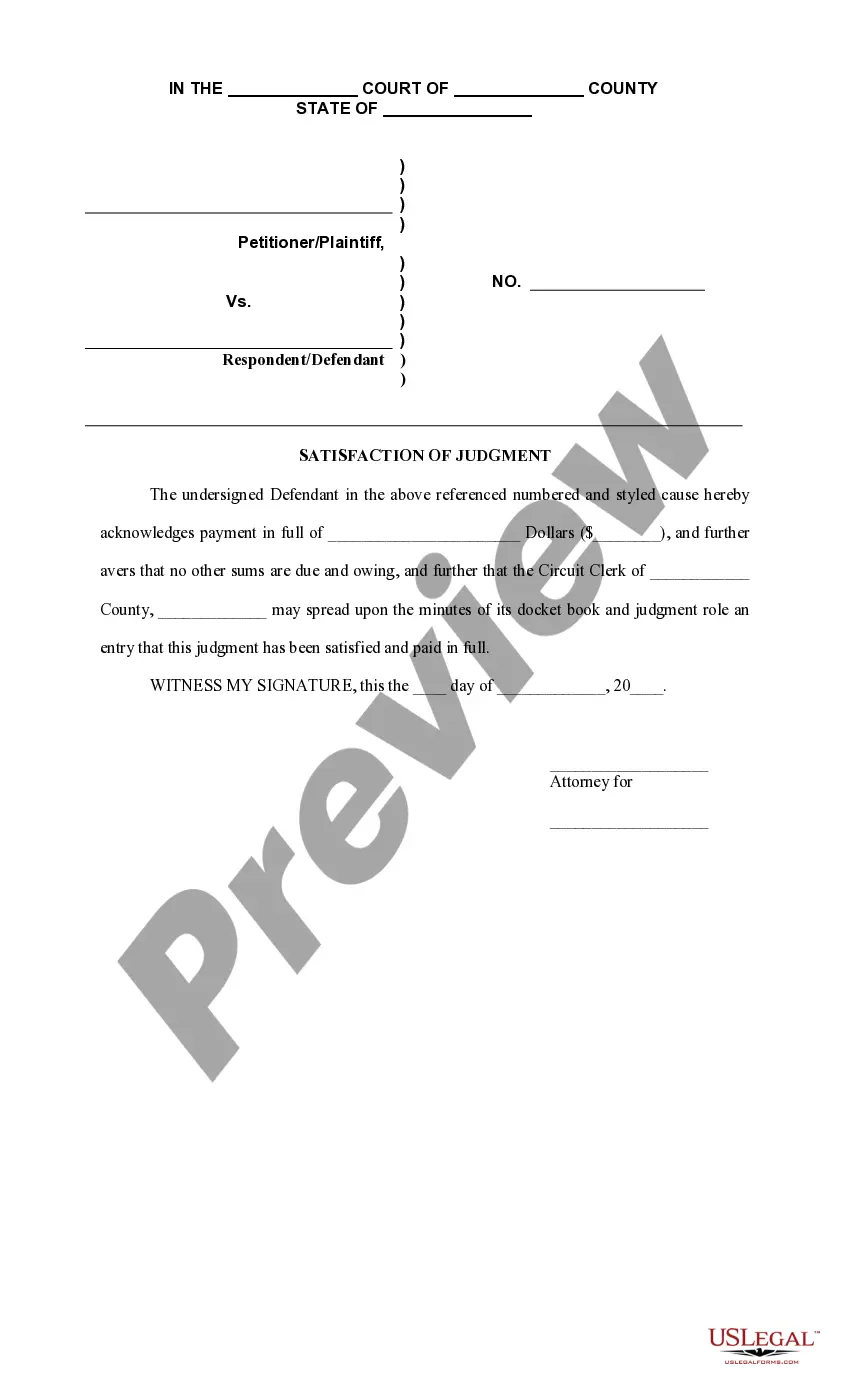
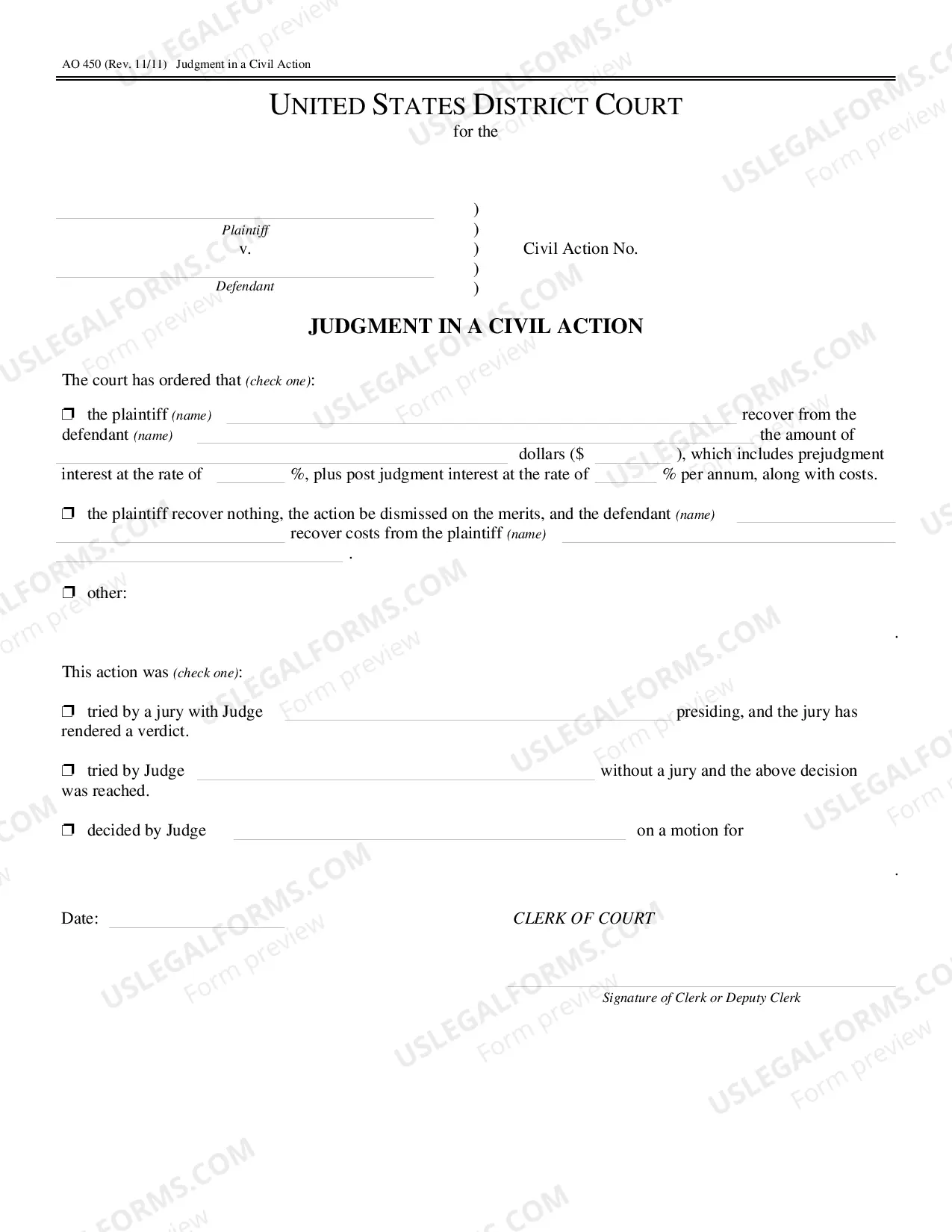
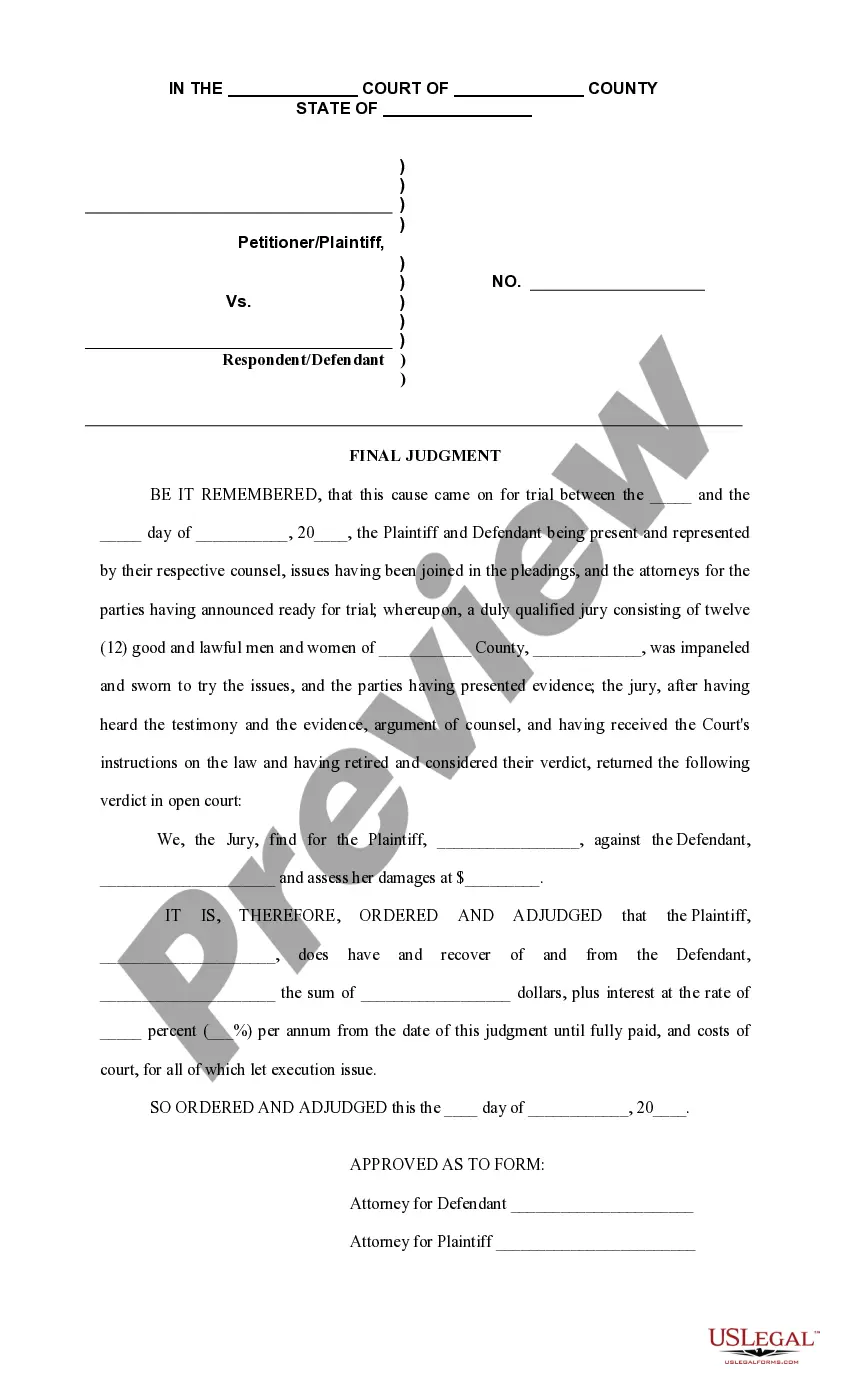
The Satisfaction of Judgment for Civil Trial is a legal document that confirms a plaintiff has completed the necessary steps to satisfy a ruling in a civil trial. It assures the court and involved parties that the judgment has been fulfilled as per the courtâs decision, marking the end of the legal obligation. This form is essential to officially document the resolution of a civil case, differentiating it from other legal formsâsuch as a judgment debtorâs confessionâwhich may also exist in similar contexts.
What’s included in this form
- Signature line for the attorney representing the defendant.
- Date for acknowledgment of the satisfaction of judgment.
- Space to identify the parties involved in the case.
When to use this document
This form should be used after a judgment has been ruled in favor of the defendant and the plaintiff has satisfied the judgment. It is necessary when the plaintiff has fulfilled all obligations imposed by the court, such as paying owed damages, and needs to notify the court and the defendant that the matter can be closed. Using this form is crucial to formalize the completion of the court's order.
Who this form is for
- Defendants who have won a civil trial ruling.
- Plaintiffs who have fulfilled the court's judgment in their favor.
- Attorneys representing either party in the civil case.
Steps to complete this form
- Identify the attorney representing the defendant.
- Enter the date of acknowledgment in the provided space.
- Specify the names of the parties involved in the civil trial.
- Have the attorney sign the document to validate it.
Notarization requirements for this form
This form does not typically require notarization unless specified by local law. It is essential to verify any additional requirements in your jurisdiction before submission.
Get your form ready online
Our built-in tools help you complete, sign, share, and store your documents in one place.
Make edits, fill in missing information, and update formatting in US Legal Forms—just like you would in MS Word.
Download a copy, print it, send it by email, or mail it via USPS—whatever works best for your next step.
Sign and collect signatures with our SignNow integration. Send to multiple recipients, set reminders, and more. Go Premium to unlock E-Sign.
If this form requires notarization, complete it online through a secure video call—no need to meet a notary in person or wait for an appointment.
We protect your documents and personal data by following strict security and privacy standards.

Make edits, fill in missing information, and update formatting in US Legal Forms—just like you would in MS Word.

Download a copy, print it, send it by email, or mail it via USPS—whatever works best for your next step.

Sign and collect signatures with our SignNow integration. Send to multiple recipients, set reminders, and more. Go Premium to unlock E-Sign.

If this form requires notarization, complete it online through a secure video call—no need to meet a notary in person or wait for an appointment.

We protect your documents and personal data by following strict security and privacy standards.
Mistakes to watch out for
- Failure to include all required signatures.
- Not entering the correct date of acknowledgment.
- Leaving the partiesâ names ambiguous or incomplete.
Benefits of using this form online
- Immediate access to downloadable and editable templates.
- Convenience of filling out the form at your own pace.
- Forms drafted by licensed attorneys for reliability.
Main things to remember
- The Satisfaction of Judgment formally acknowledges that a court ruling has been fulfilled.
- It's crucial for closing out cases and eliminating the obligation to satisfy a judgment.
- Ensure that the form is completed accurately and conforms to state-specific guidelines.
Looking for another form?






Form popularity
FAQ
Once a judgment is paid, whether in installments or a lump sum, a judgment creditor (the person who won the case) must acknowledge that the judgment has been paid by filing a Satisfaction of Judgment form with the court clerk.
In most cases, judgments can stay on your credit reports for up to seven years. This means that the judgment will continue to have a negative effect on your credit score for a period of seven years. In some states, judgments can stay on as long as ten years, or indefinitely if they remain unpaid.
Satisfied Judgments It means that your debt is either paid or settled. While you may not have completely paid off your debt in full, you can satisfy a judgment by making a new payment plan and paying what you and the lender agreed on.
What does 'satisfied' mean? If you see 'satisfied' against any items on your credit report, it indicates that your creditor has marked a default.If the creditor accepted an offer of final payment, i.e. less than the full amount owed, again this will be marked as 'partially satisfied.
Satisfaction of judgment. n. a document signed by a judgment creditor (the party owed the money judgment) stating that the full amount due on the judgment has been paid.
The Satisfaction of Judgment form should be signed by the judgment creditor when the judgment is paid, and then filed with the court clerk. Don't forget to do this; otherwise, you may have to track down the other party later. It's easy to get a copy of a Satisfaction of Judgment form.
A document signed by the party who is owed money under a court judgment (called the judgment creditor) stating that the full amount due on the judgment has been paid.
You may dispute a judgment on your credit report based on the following arguments: The Debt Was Paid. The credit agencies will remove the judgment from your credit report if you can show that you did, in fact, pay your debt on time.
In most cases, judgments can stay on your credit reports for up to seven years. This means that the judgment will continue to have a negative effect on your credit score for a period of seven years.
The Satisfaction of Judgment form should be signed by the judgment creditor when the judgment is paid, and then filed with the court clerk. Don't forget to do this; otherwise, you may have to track down the other party later.