Checklist - Long of Sequential Activities to Organize Automobile Action
What this document covers
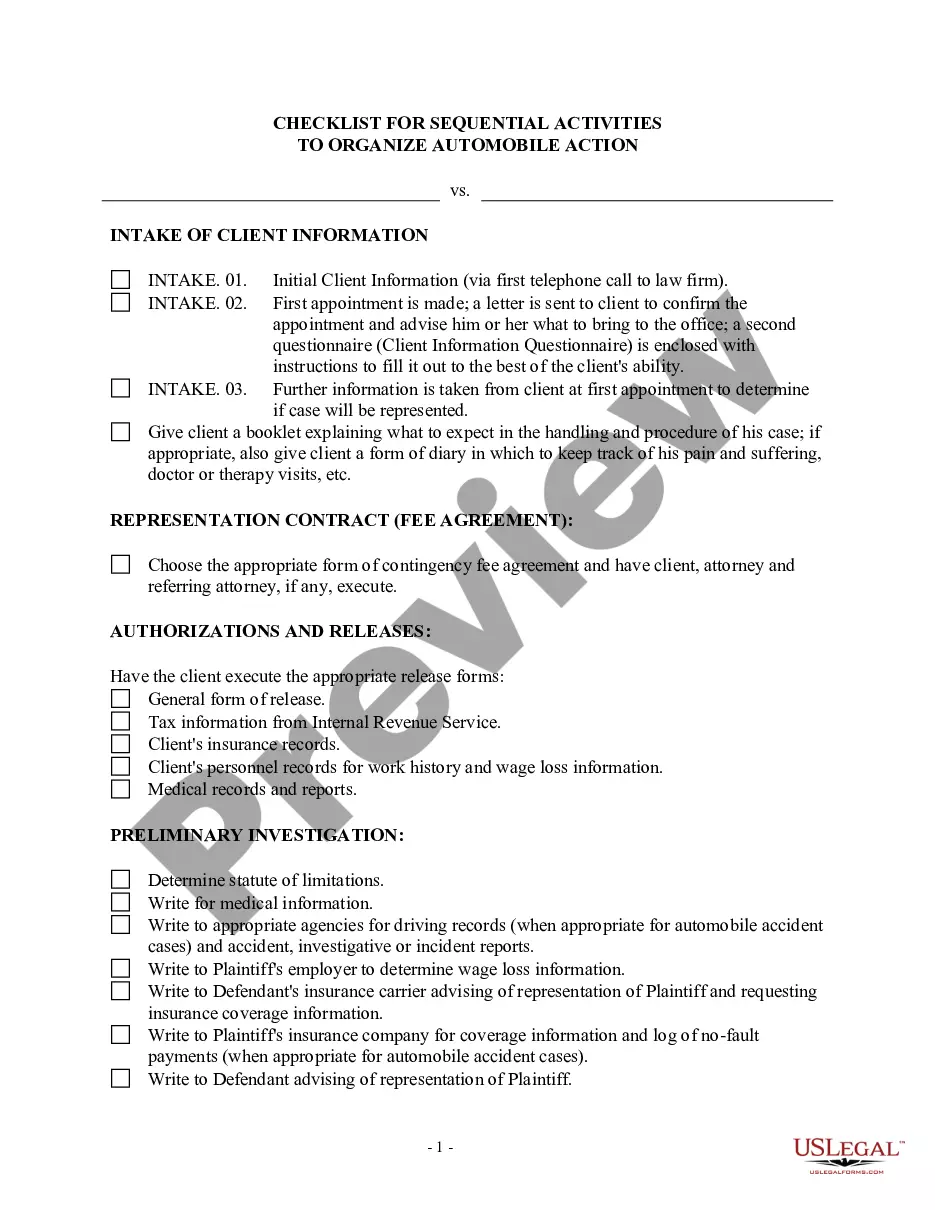
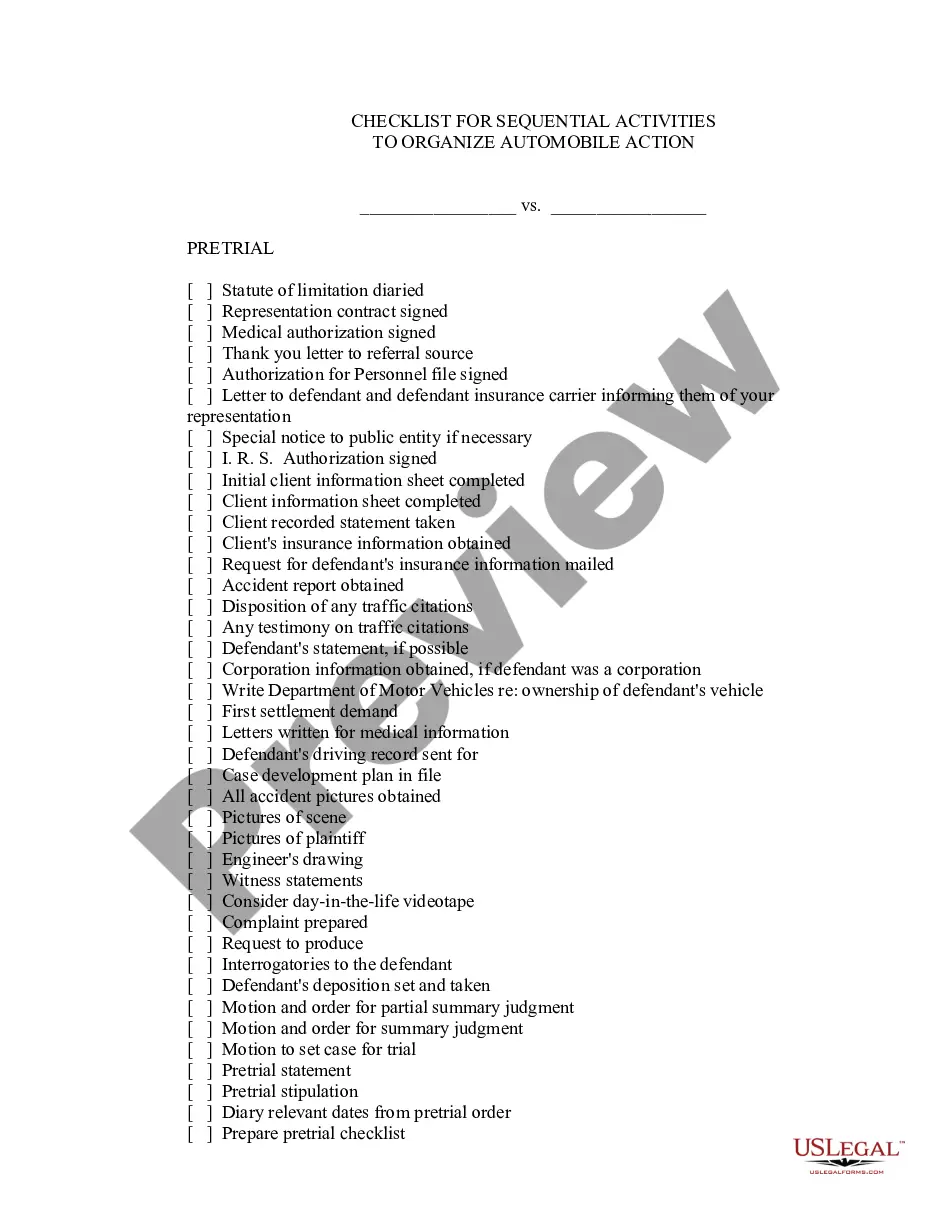
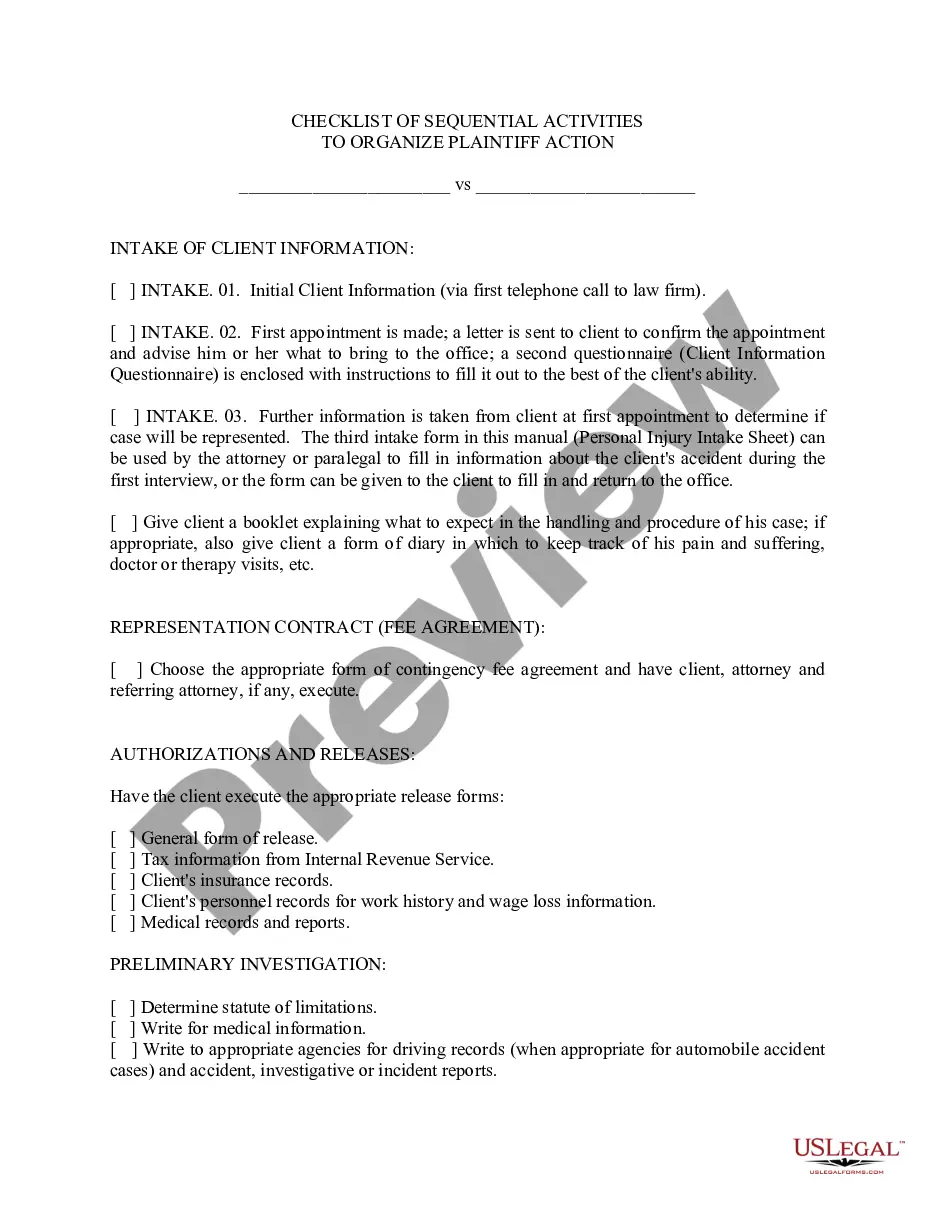
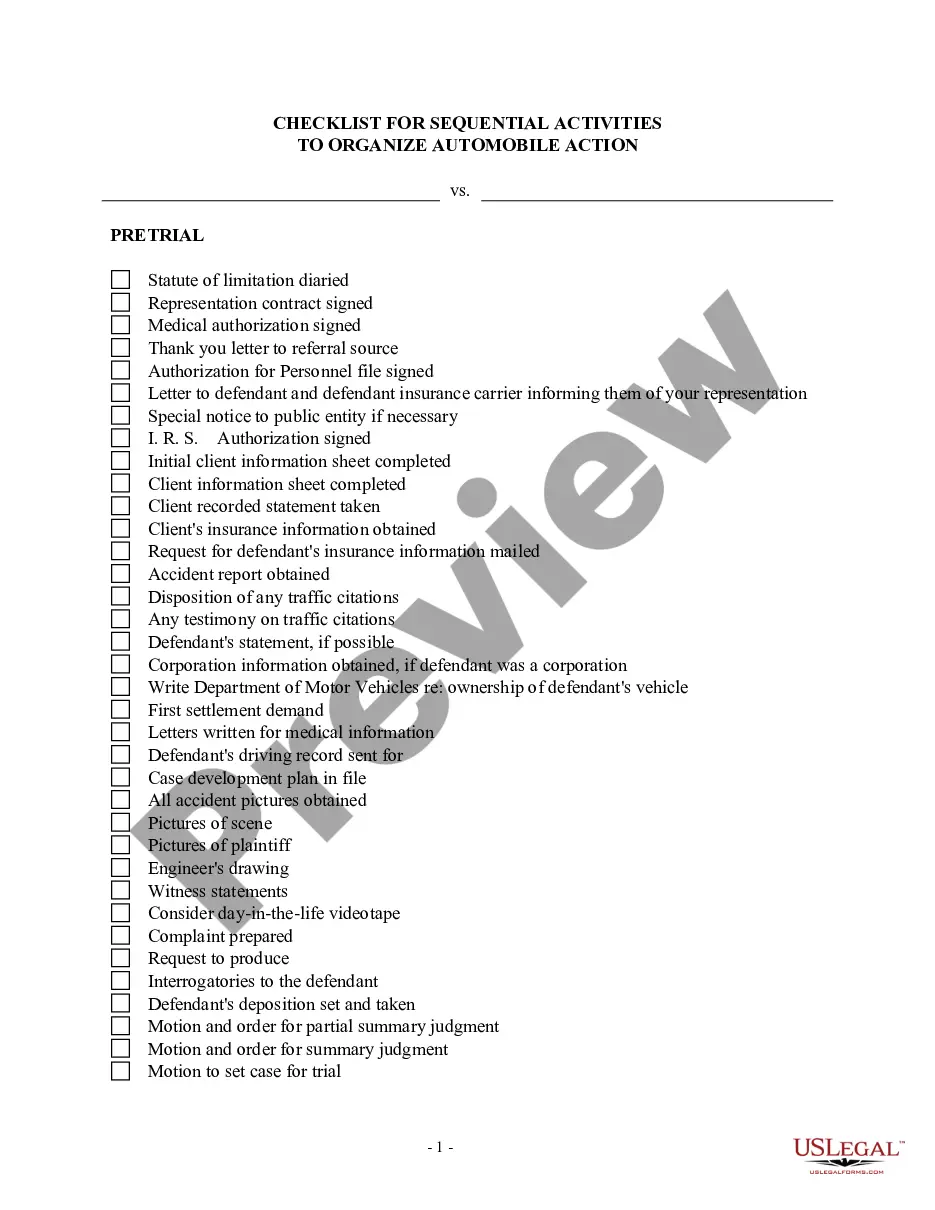
This form, known as the Checklist - Long of Sequential Activities to Organize Automobile Action, is designed to assist attorneys in preparing, organizing, and managing a Plaintiff's automobile action. It provides a structured sequence of activities to be performed throughout the pre-trial to post-trial phases, ensuring that no critical steps are overlooked during the legal process. This form is essential for maintaining order and efficiency in litigation management, setting it apart from simpler checklists or drafting guides that may not cover all procedural aspects.
Main sections of this form
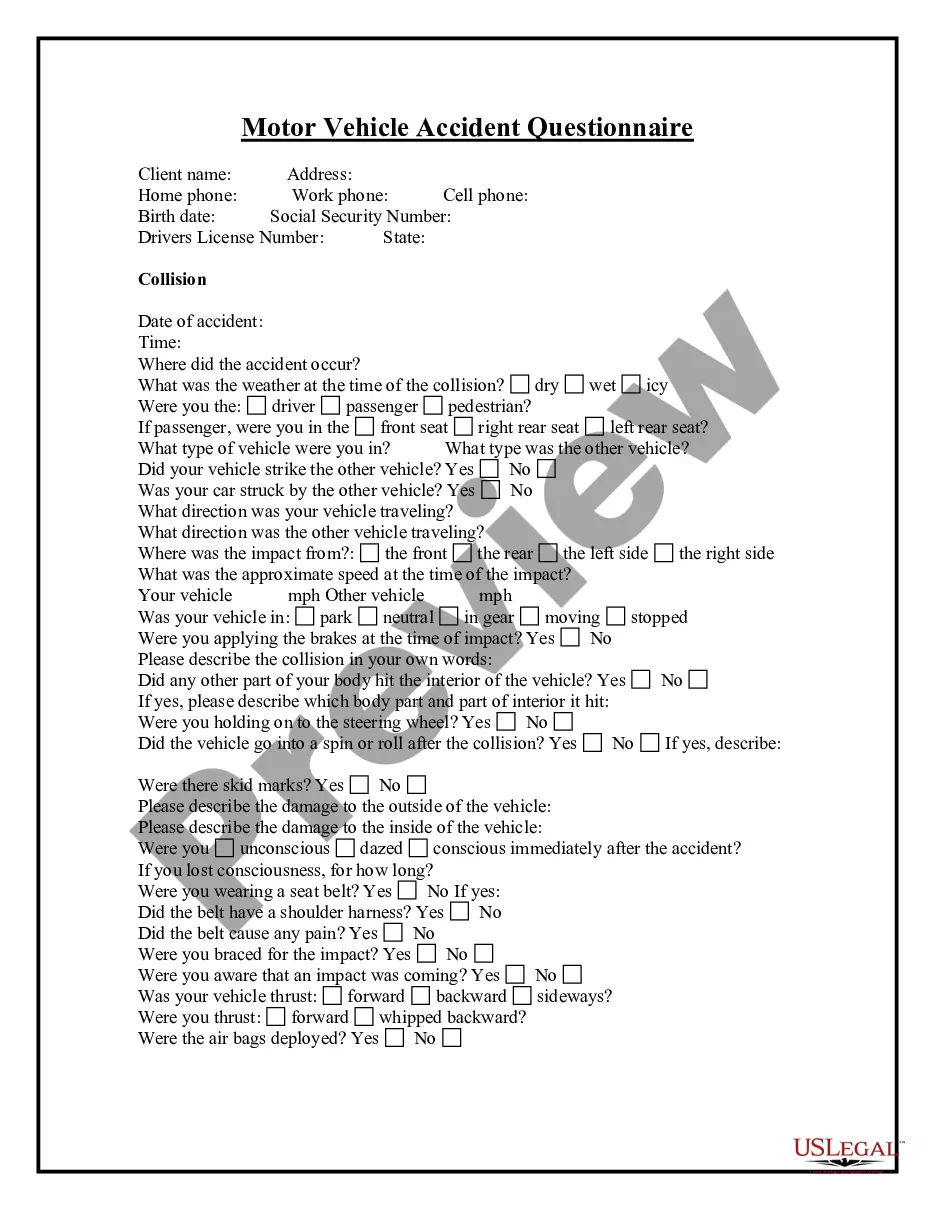
- Initial client information intake process
- Representation contract and fee agreement details
- Authorizations and releases for various records
- Preliminary investigation and communication steps
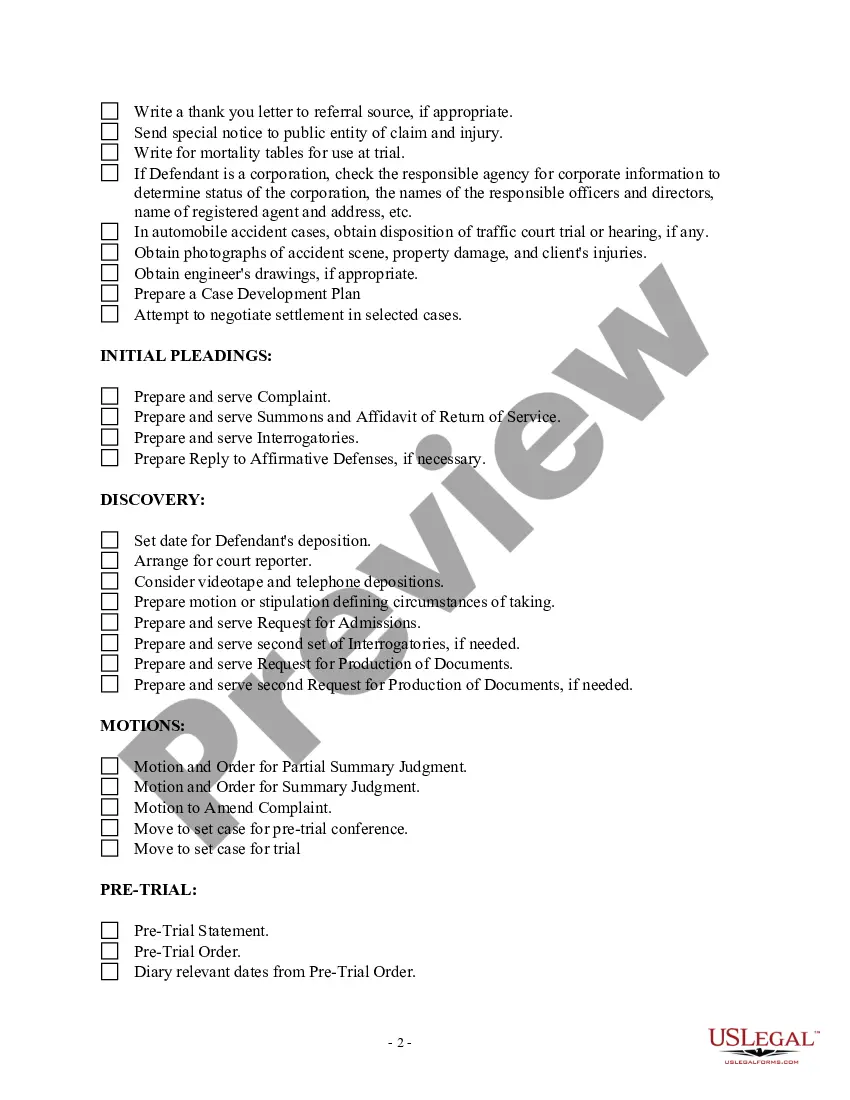
- Initial pleadings preparation, including complaints and interrogatories
- Discovery process management, covering depositions and document requests
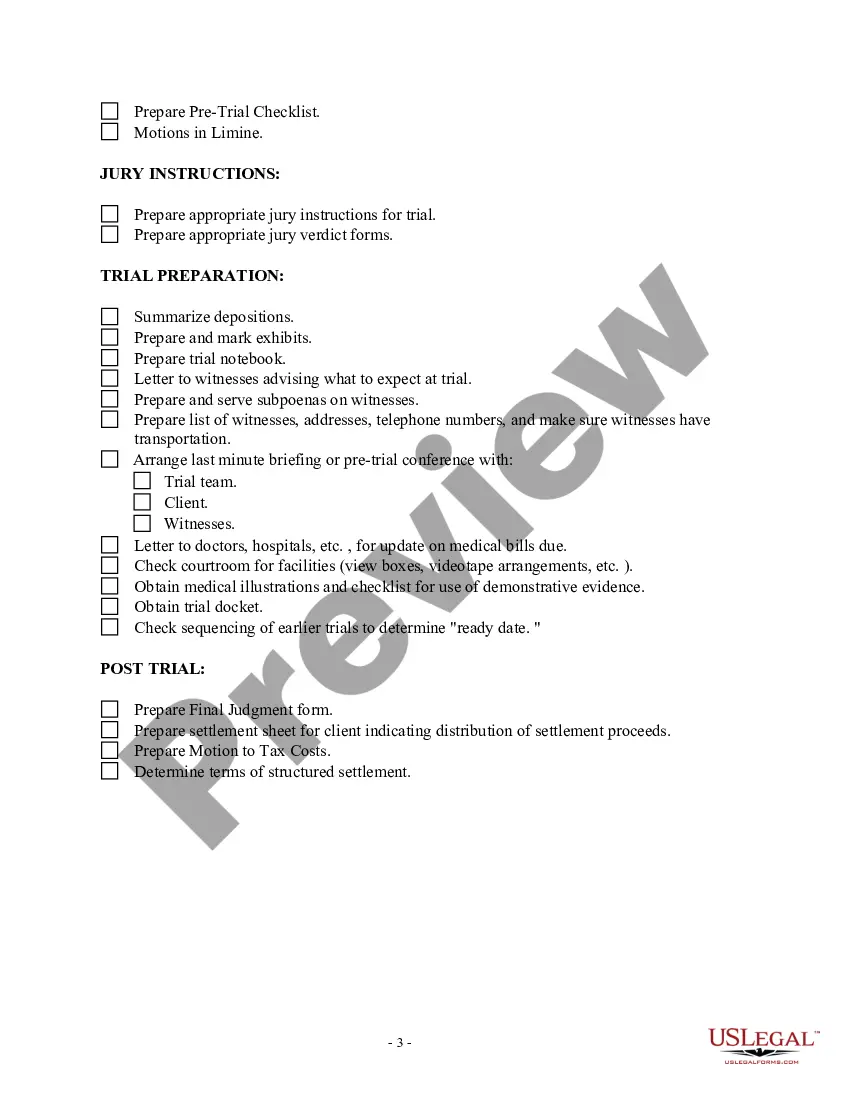
- Pre-trial preparations, including statements and jury instructions
- Post-trial tasks, such as judgment forms and settlement sheets

Common use cases
This form is particularly useful when an attorney needs to manage an automobile action lawsuit from inception through to its conclusion. It is ideal for cases involving accidental injuries or property damage stemming from vehicle incidents, where a methodical approach to legal processes is vital. This checklist can help attorneys ensure that all necessary steps are followed to maximize the chances of a favorable outcome for their clients.
Who this form is for
- Attorneys preparing to represent clients in automobile accident cases
- Legal assistants or paralegals involved in case management
- Law firms looking to streamline case preparation processes
- Law students learning about the organization of litigation
How to complete this form
- Gather initial client information through interviews or questionnaires.
- Prepare and execute the representation contract with all necessary signatures.
- Obtain required authorizations and releases from the client for records.
- Conduct preliminary investigations to gather evidence and information.
- Follow the sequential checklist to prepare legal documents and pleadings.
- Complete post-trial activities to ensure the proper conclusion of the case.
Is notarization required?
In most cases, this form does not require notarization. However, some jurisdictions or signing circumstances might. US Legal Forms offers online notarization powered by Notarize, accessible 24/7 for a quick, remote process.
Get your form ready online
Our built-in tools help you complete, sign, share, and store your documents in one place.
Make edits, fill in missing information, and update formatting in US Legal Forms—just like you would in MS Word.
Download a copy, print it, send it by email, or mail it via USPS—whatever works best for your next step.
Sign and collect signatures with our SignNow integration. Send to multiple recipients, set reminders, and more. Go Premium to unlock E-Sign.
If this form requires notarization, complete it online through a secure video call—no need to meet a notary in person or wait for an appointment.
We protect your documents and personal data by following strict security and privacy standards.

Make edits, fill in missing information, and update formatting in US Legal Forms—just like you would in MS Word.

Download a copy, print it, send it by email, or mail it via USPS—whatever works best for your next step.

Sign and collect signatures with our SignNow integration. Send to multiple recipients, set reminders, and more. Go Premium to unlock E-Sign.

If this form requires notarization, complete it online through a secure video call—no need to meet a notary in person or wait for an appointment.

We protect your documents and personal data by following strict security and privacy standards.
Mistakes to watch out for
- Neglecting to obtain all necessary authorizations and releases.
- Missing deadlines for filings or responses.
- Failing to communicate effectively with clients about the process.
- Overlooking important evidence during preliminary investigations.
- Not updating the checklist as the case progresses to reflect new developments.
Why complete this form online
- Easy access to a comprehensive checklist tailored to automobile actions.
- Printable and downloadable formats for quick reference during case work.
- Legal templates provided by licensed attorneys ensure reliability and relevance.
- Ability to personalize and adapt the checklist for specific cases or jurisdictions.
Quick recap
- This form is essential for organizing and managing automobile action cases effectively.
- It provides a detailed checklist covering all legal phases from pre-trial to post-trial.
- Using this form can help avoid common pitfalls in legal case management.
- It is adaptable for various jurisdictions, emphasizing the importance of local regulations.
Looking for another form?
Form popularity
FAQ
SEDAN. A sedan has four doors and a traditional trunk. COUPE. Mercedes-Benz. SPORTS CAR. These are the sportiest, hottest, coolest-looking coupes and convertibleslow to the ground, sleek, and often expensive. STATION WAGON. Volvo. HATCHBACK. CONVERTIBLE. SPORT-UTILITY VEHICLE (SUV) MINIVAN.
Automobile (or car) wheeled passenger vehicle that carries its own motor. Most definitions of the term specify that automobiles are designed to run primarily on roads, to have seating for one to six people, typically have four wheels, and be constructed principally for the transport of people rather than goods.
I'd say there is no difference in meaning. The two term came into use meaning "a motor vehicle with four wheels; usually propelled by an internal combustion engine; " about the same year (1895/1896). I agree with you that automobile may sound less colloquial, car is the more used expression.
Auto, bus, car, horseless carriage, machine, motor, motor vehicle, motorcar,