Employee Benefits Covenant
What this document covers
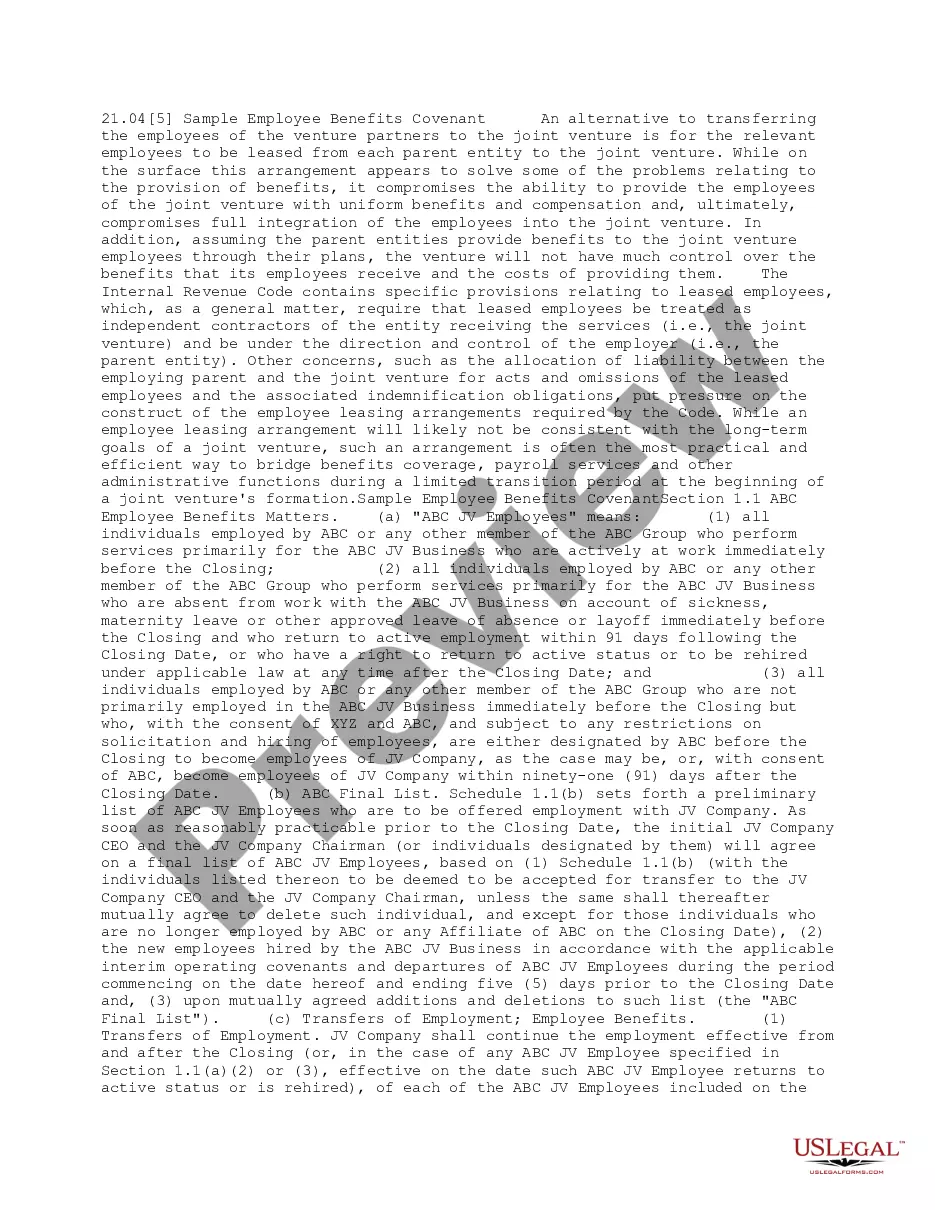
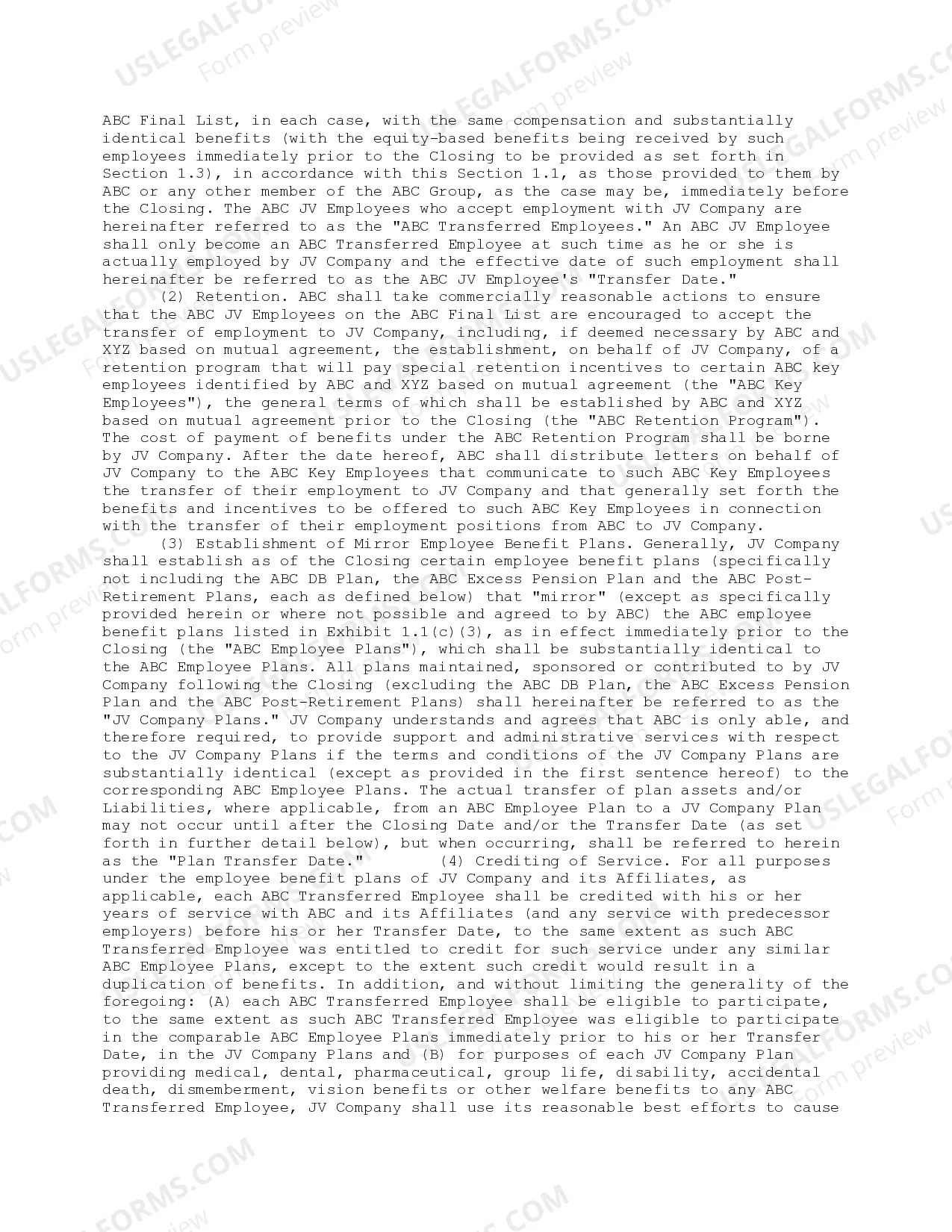
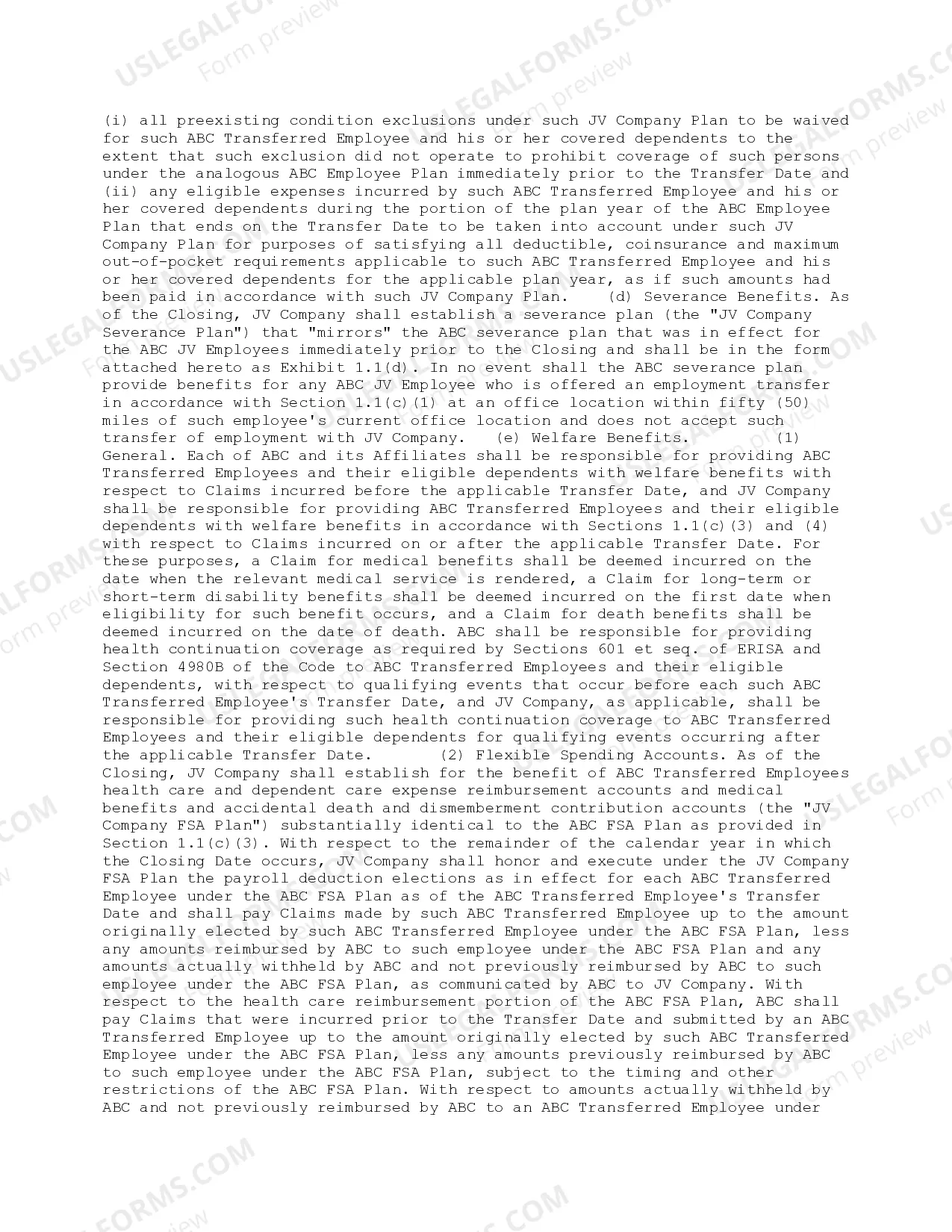
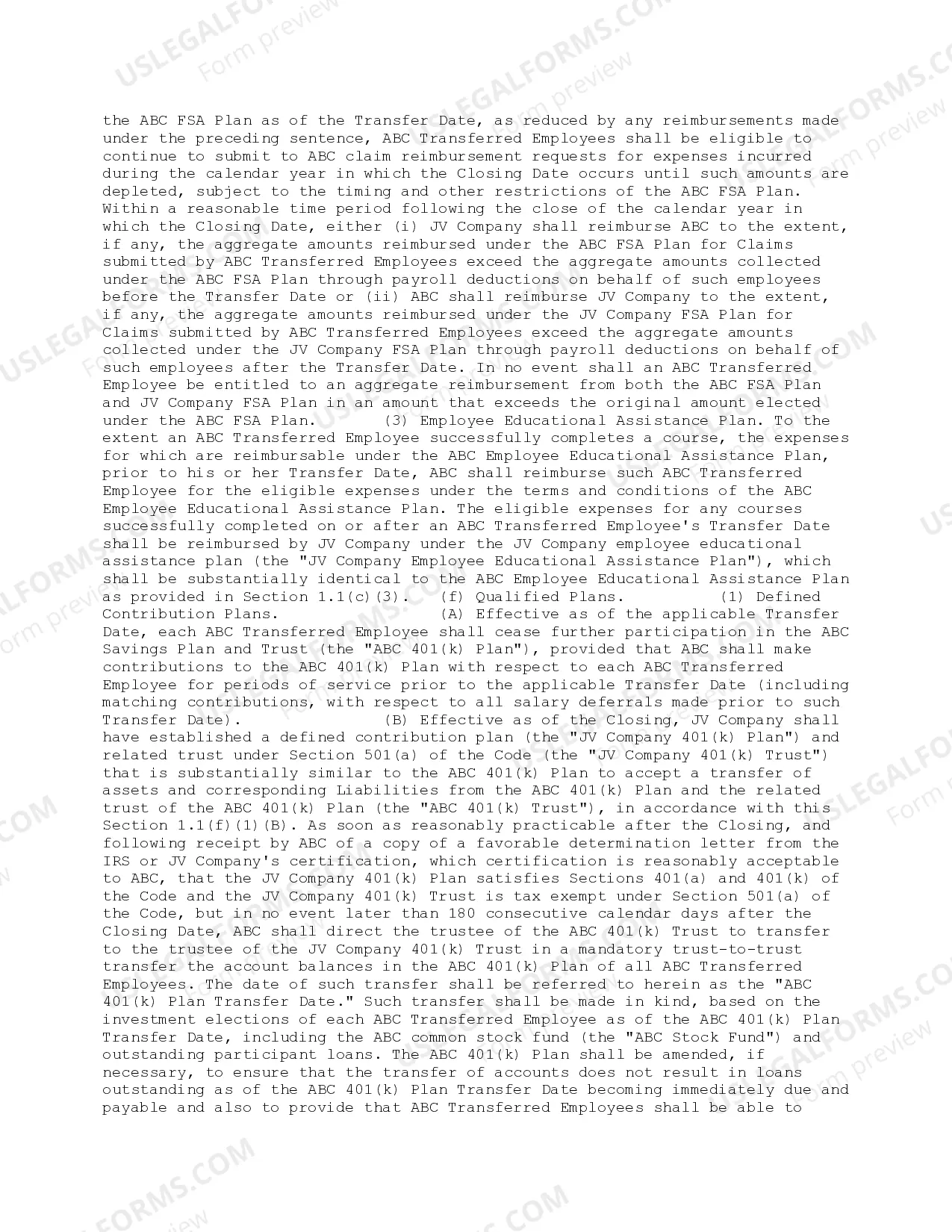
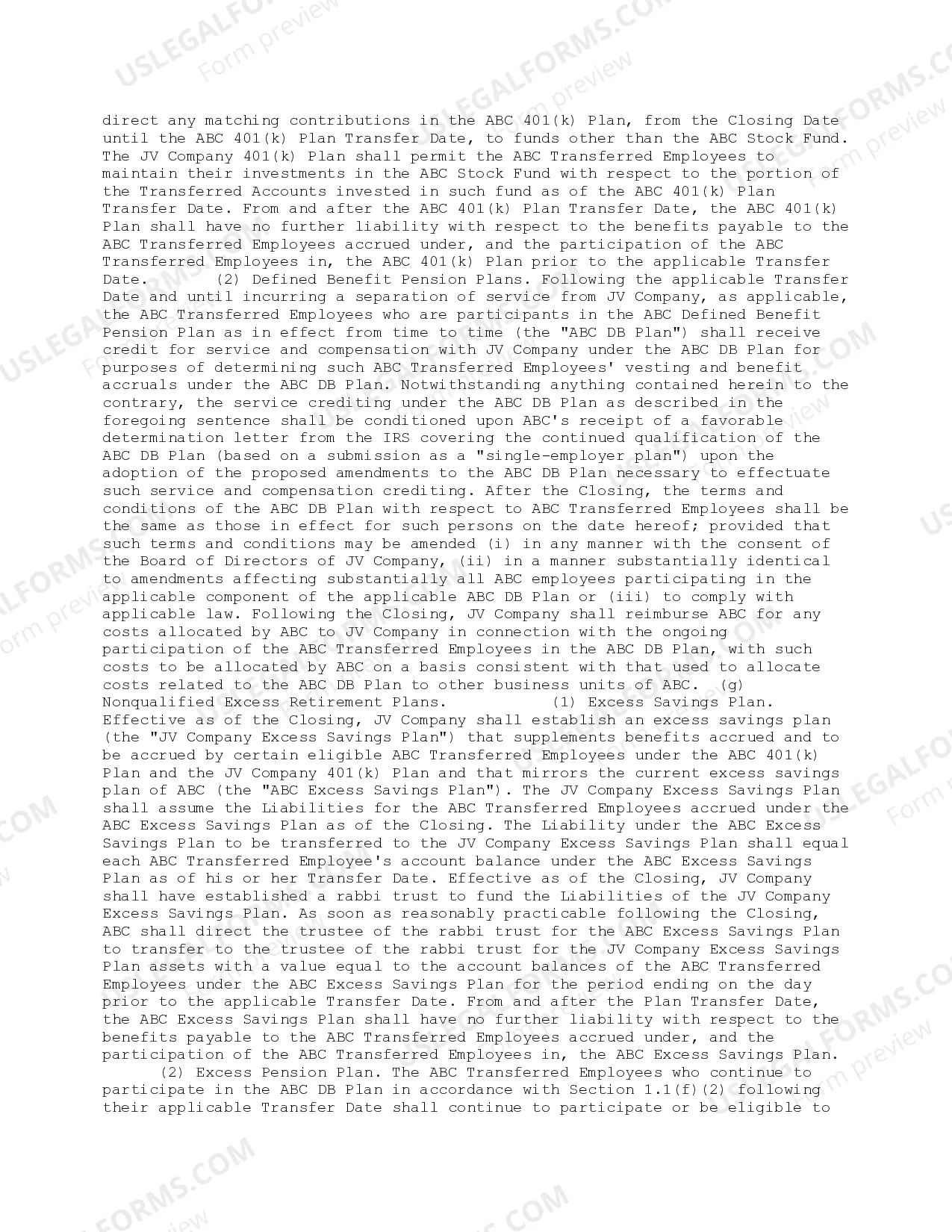
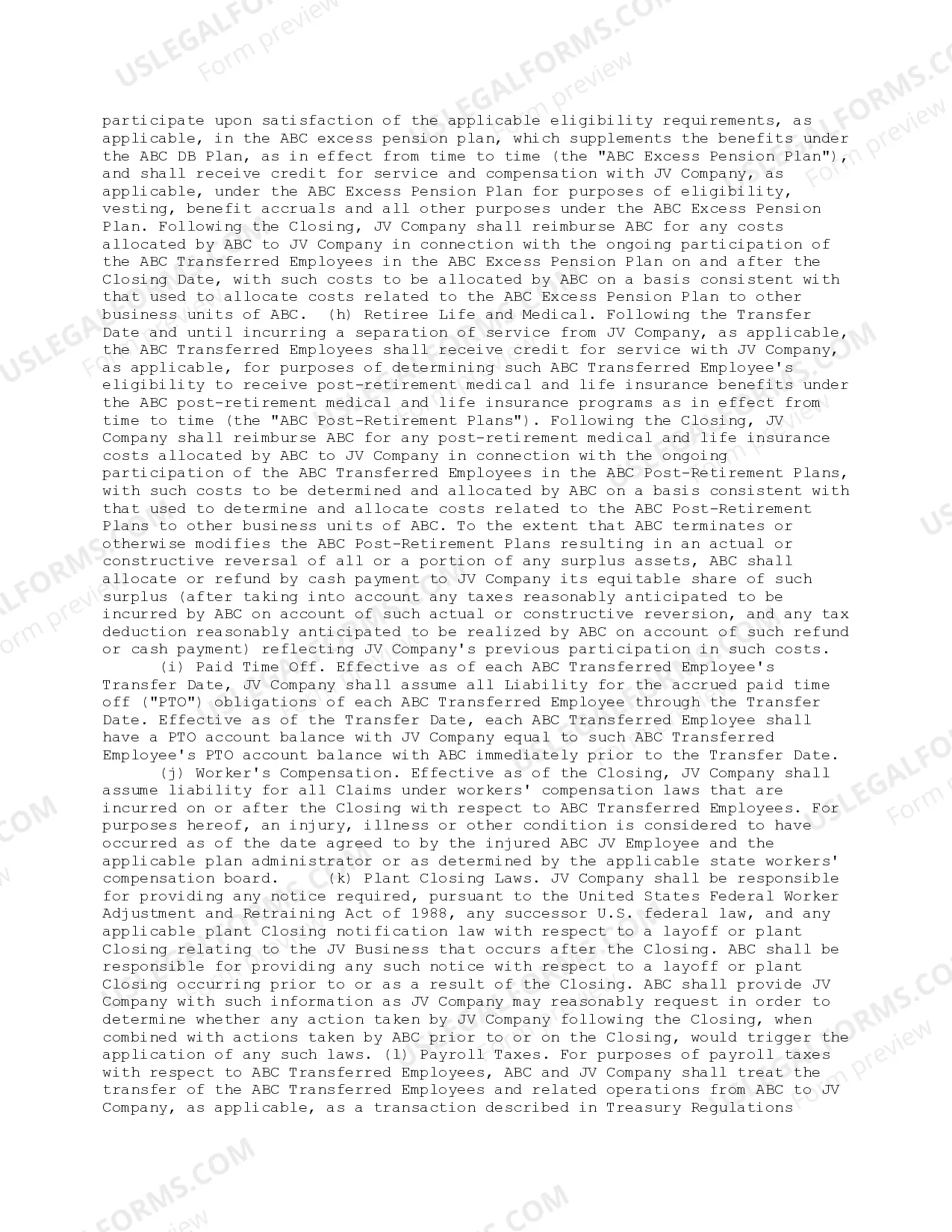
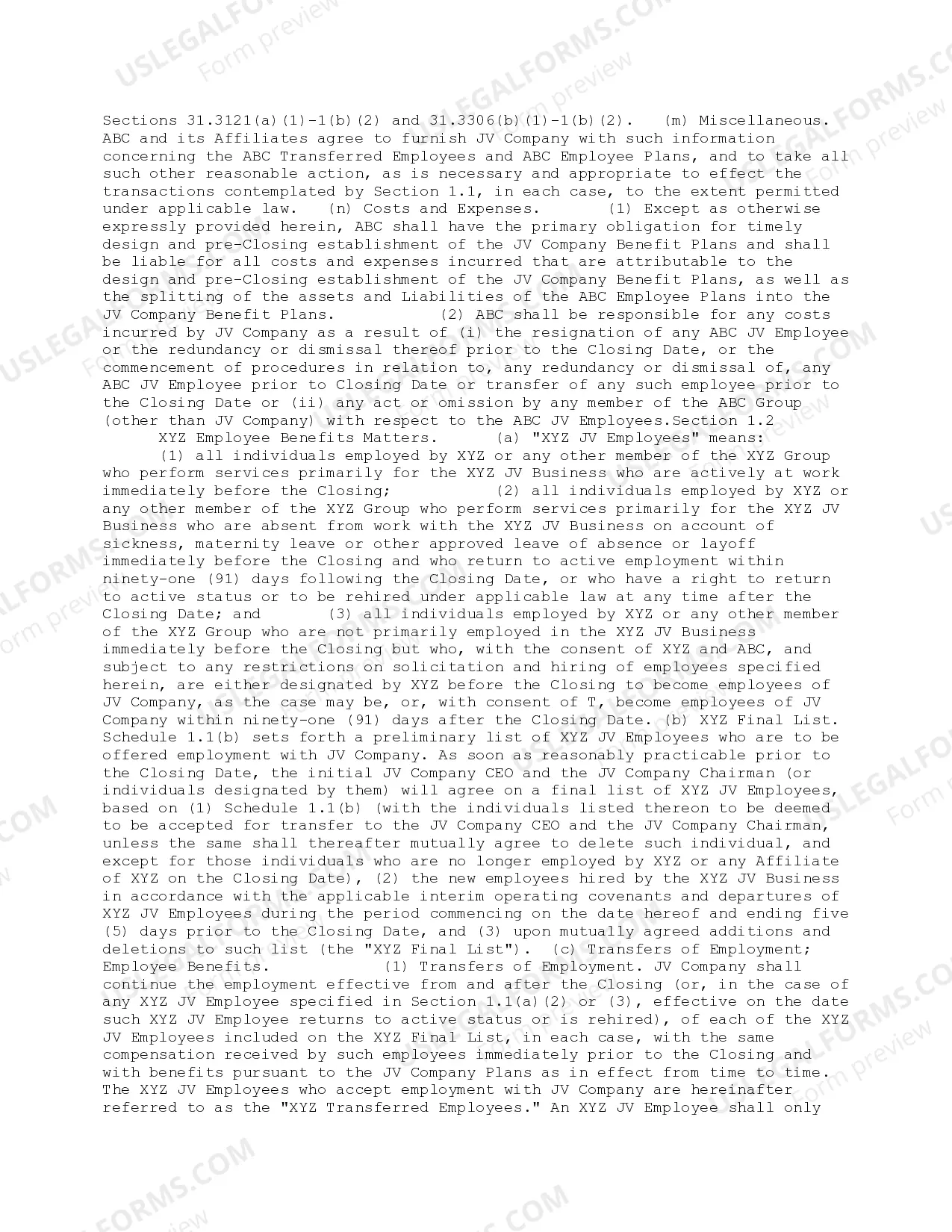
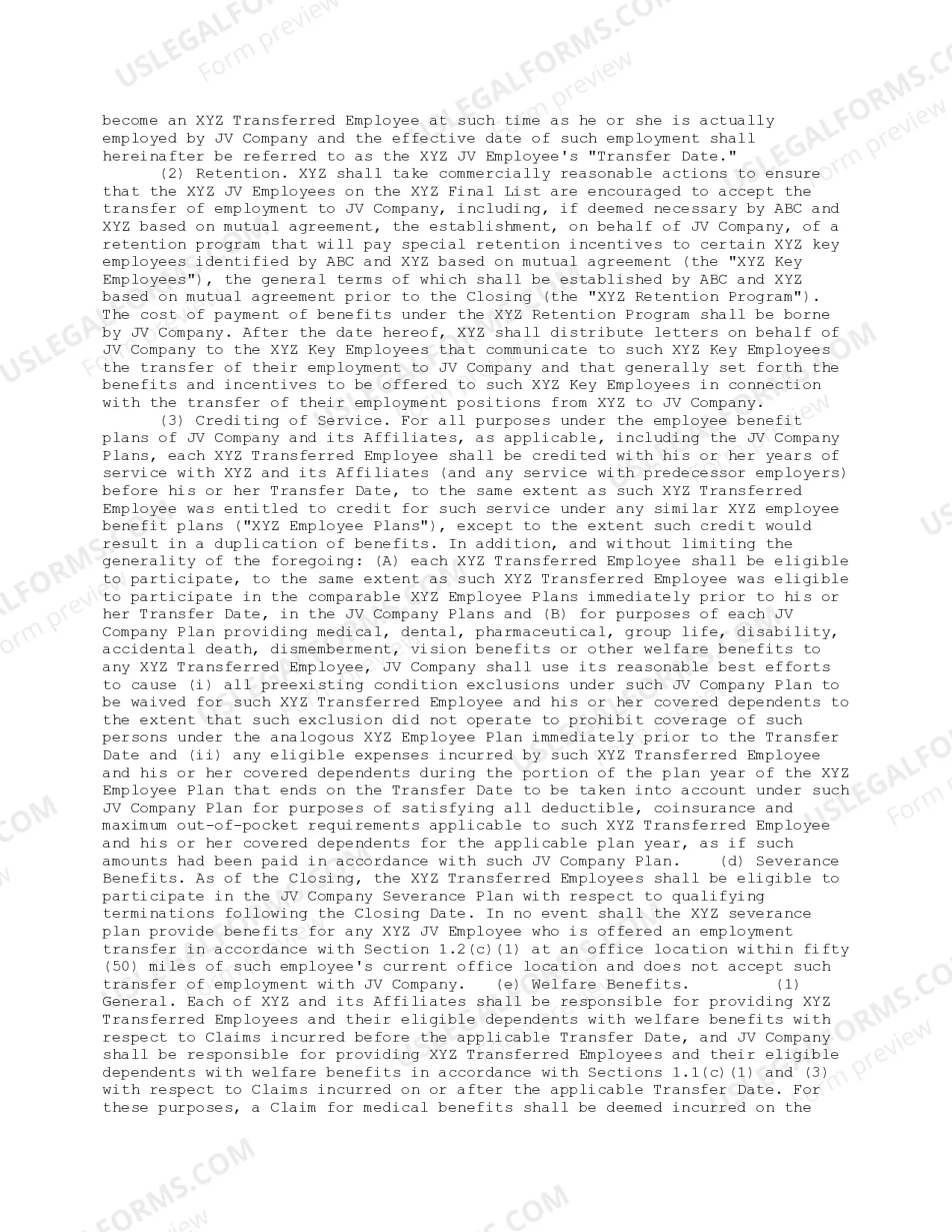
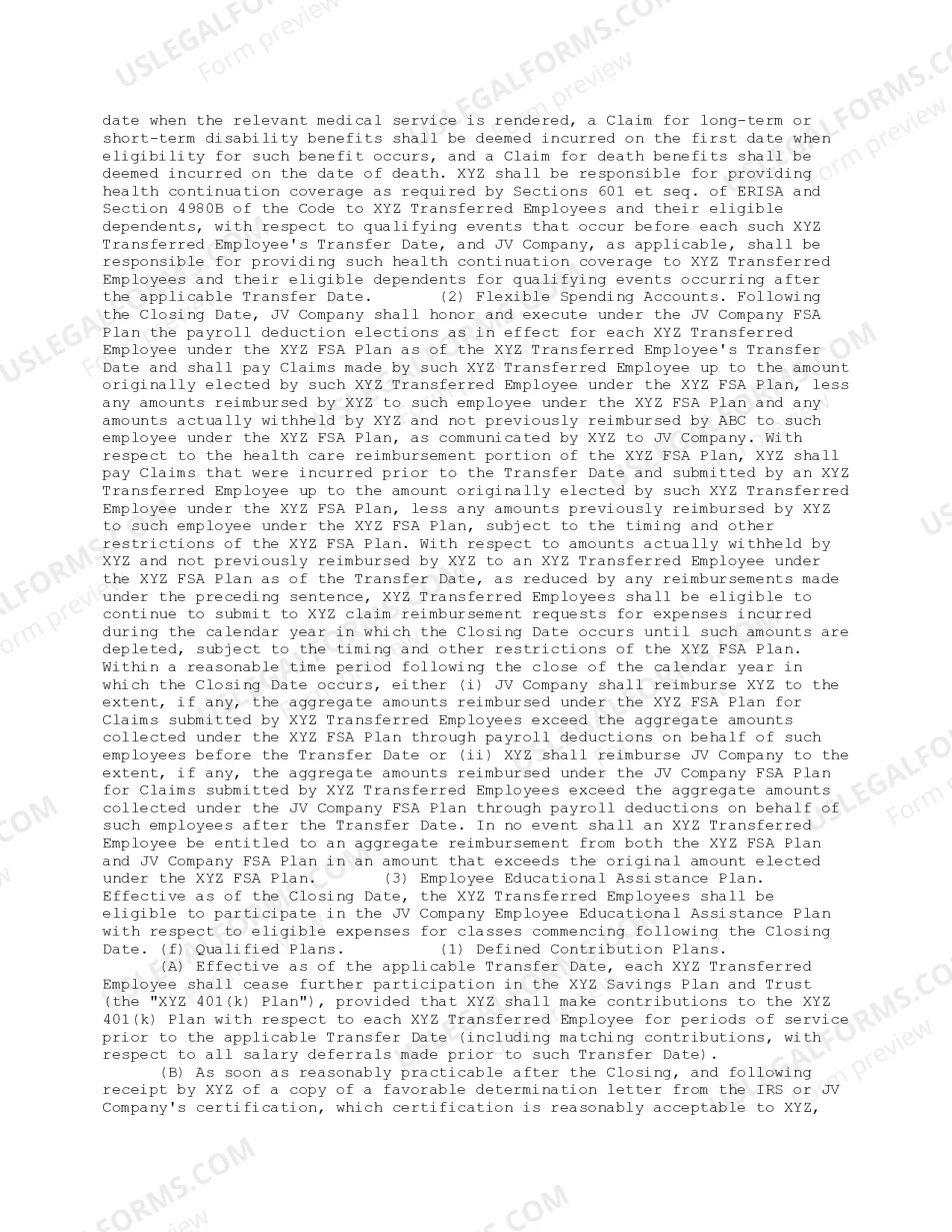
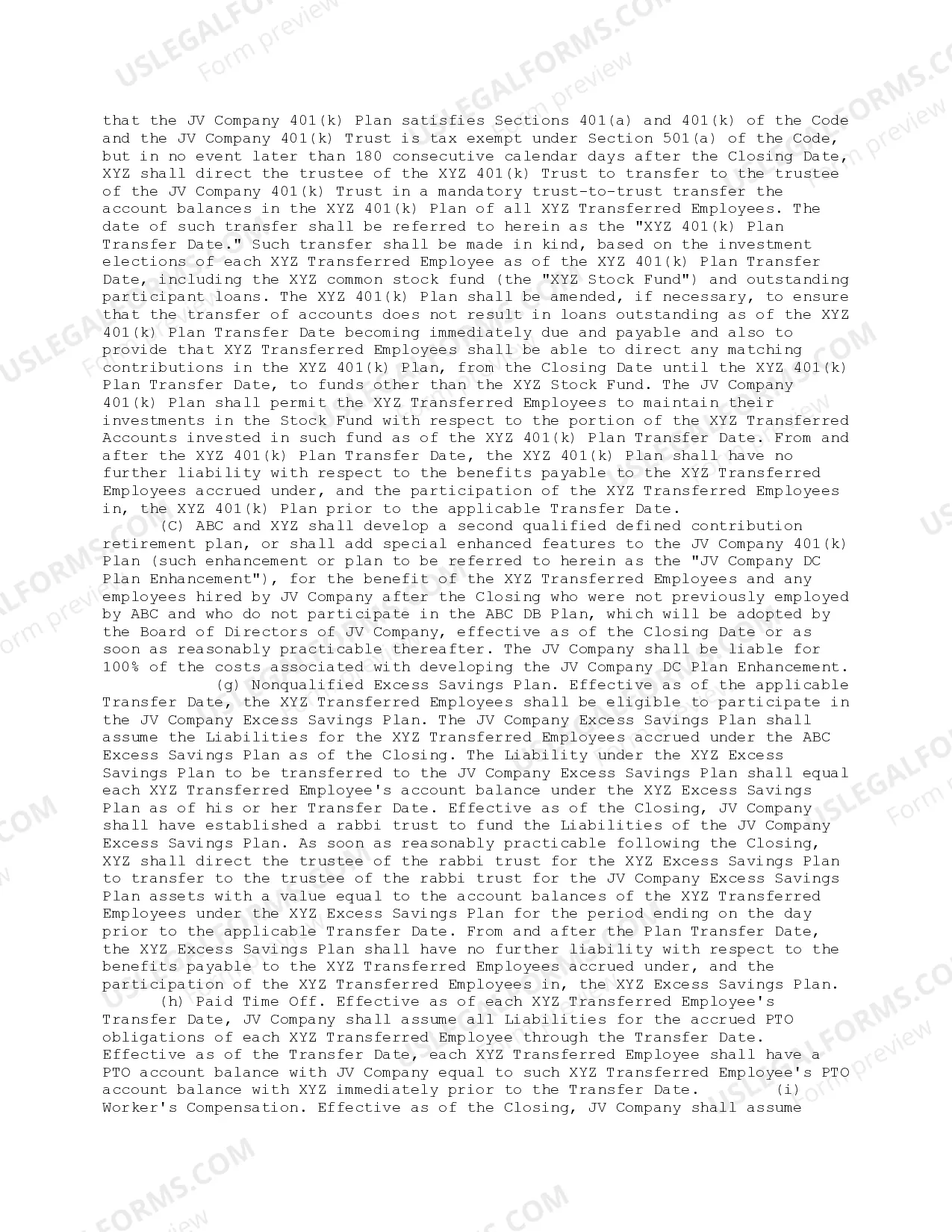
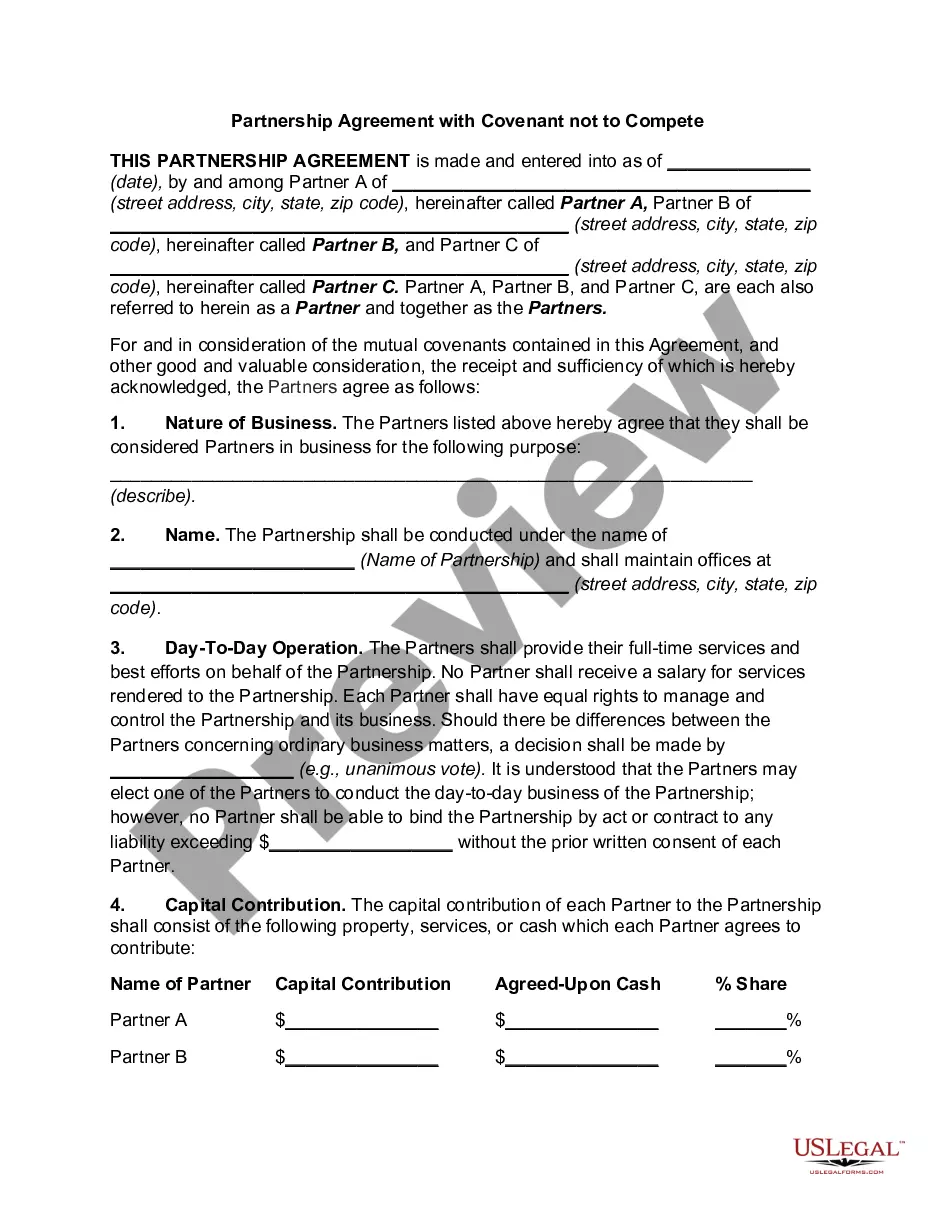
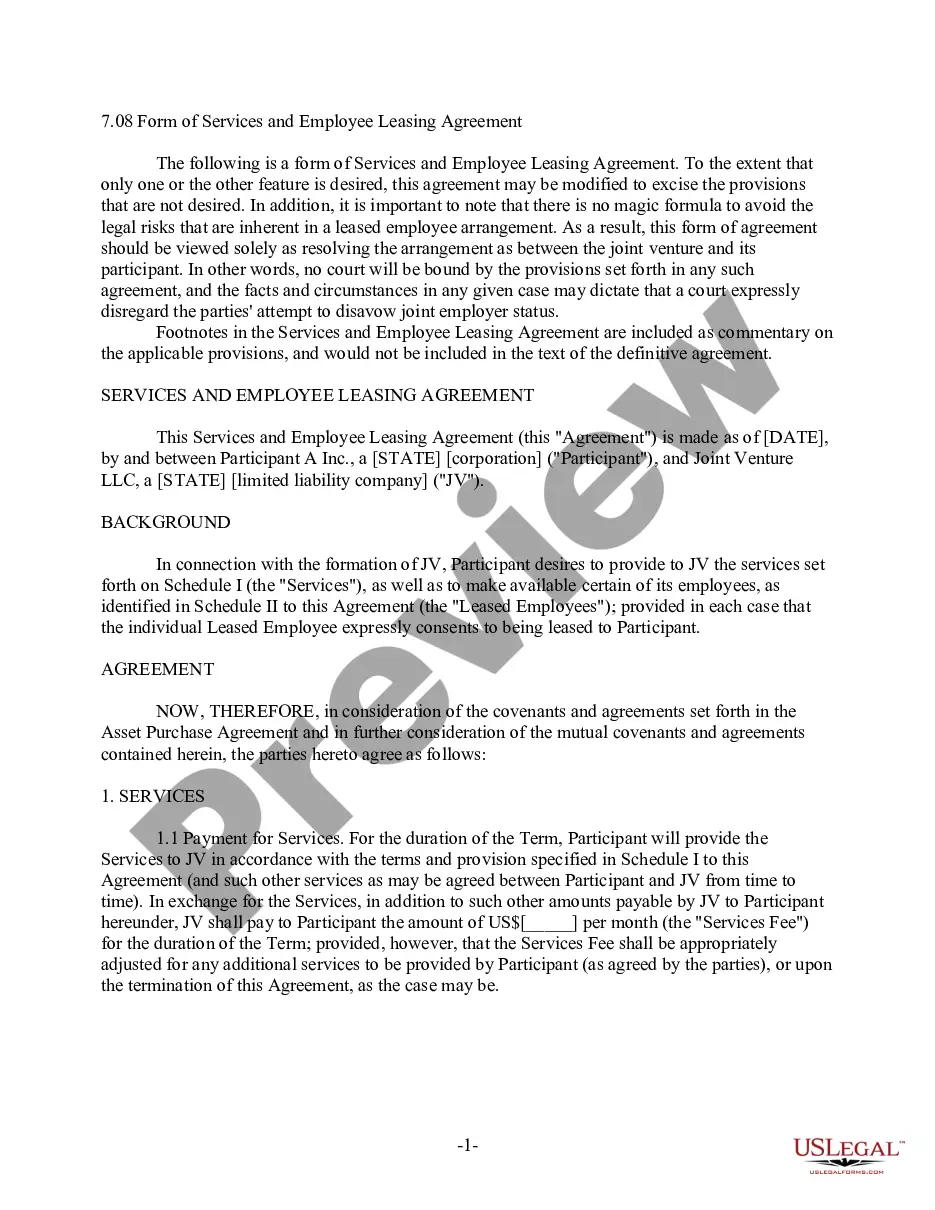
The Employee Benefits Covenant outlines the agreement regarding employee benefits for a joint venture that leases employees from parent entities. This form establishes how employee benefits will be managed, ensuring clarity and compliance with legal regulations while addressing potential issues related to uniformity and control over employee benefits. Unlike simple employment agreements, this covenant specifically focuses on the intricacies of managing benefits in a joint venture context.
Form components explained
- Definitions for employees participating in the joint venture, including conditions for employment transfer.
- Processes for establishing a final list of employees who will transition to the joint venture.
- Provisions for the continuation of employee benefits upon transfer of employment.
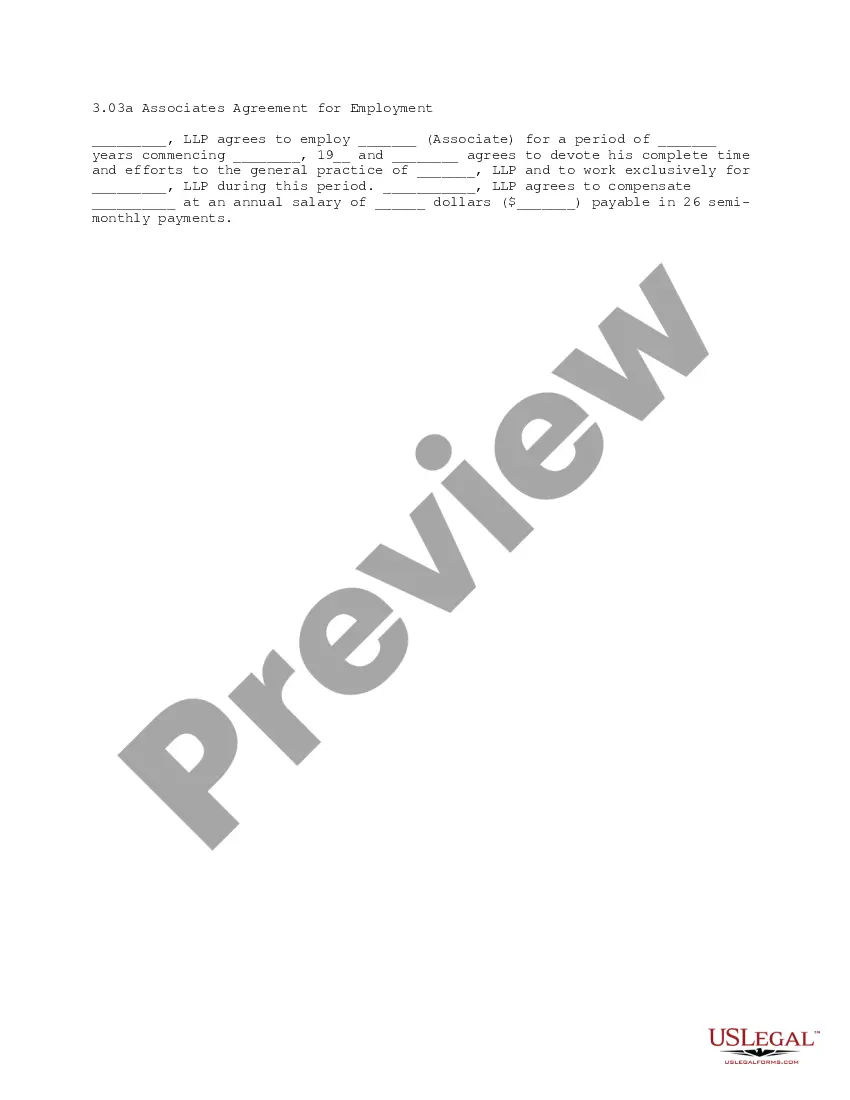
- Guidelines for severance and welfare benefits for transferred employees.
- Responsibilities surrounding workers' compensation and plant closing notifications.

When to use this document
This form should be used when forming a joint venture that involves leasing employees from the parent companies. It is essential for situations where there is a need to outline how employee benefits will be managed during and after the transition to ensure compliance with legal requirements and to maintain employee morale and integration into the new organization.
Who should use this form
- Businesses forming a joint venture with shared workforce arrangements.
- Human resources professionals handling employee transitions.
- Legal teams needing to establish clear agreements about employee benefits during joint ventures.
- Companies that plan to lease employees to ensure compliance with labor laws.
Instructions for completing this form
- Identify the parent entities involved in the joint venture and the employees affected.
- Outline the specific employee benefits that will be continued or modified upon transfer.
- Establish a final list of employees transferring to the joint venture, including criteria for inclusion.
- Detail the severance and welfare benefits applicable to the transferred employees.
- Ensure all parties understand their roles in maintaining compliance with labor regulations during the transfer.
Is notarization required?
Notarization is generally not required for this form. However, certain states or situations might demand it. You can complete notarization online through US Legal Forms, powered by Notarize, using a verified video call available anytime.
Get your form ready online
Our built-in tools help you complete, sign, share, and store your documents in one place.
Make edits, fill in missing information, and update formatting in US Legal Forms—just like you would in MS Word.
Download a copy, print it, send it by email, or mail it via USPS—whatever works best for your next step.
Sign and collect signatures with our SignNow integration. Send to multiple recipients, set reminders, and more. Go Premium to unlock E-Sign.
If this form requires notarization, complete it online through a secure video call—no need to meet a notary in person or wait for an appointment.
We protect your documents and personal data by following strict security and privacy standards.

Make edits, fill in missing information, and update formatting in US Legal Forms—just like you would in MS Word.

Download a copy, print it, send it by email, or mail it via USPS—whatever works best for your next step.

Sign and collect signatures with our SignNow integration. Send to multiple recipients, set reminders, and more. Go Premium to unlock E-Sign.

If this form requires notarization, complete it online through a secure video call—no need to meet a notary in person or wait for an appointment.

We protect your documents and personal data by following strict security and privacy standards.
Common mistakes to avoid
- Failing to include all required employee information, leading to confusion over benefits.
- Not clearly defining the roles and responsibilities of each parent entity regarding benefits administration.
- Neglecting to comply with local labor laws, which may vary by state.
Why use this form online
- Immediate access to a professionally drafted document tailored for joint ventures.
- Convenient editing options to customize the form as per your organization's needs.
- Reliable guidance on legal requirements to ensure compliance and avoid legal issues.
Looking for another form?
Form popularity
FAQ
What are the four major types of employee benefits? Traditionally, most benefits used to fall under one of the four major types of employee benefits, namely: medical insurance, life insurance, retirement plans, and disability insurance.
In addition to health care and retirement benefits, there are other benefits that can help you retain and attract the best talent. Paid time off, parental leave, and equity help ensure employees are rested, have high morale, and are invested in your company's mission.
#1 Financial Wellness Programs. #2 Flexible Work Arrangements. #3 Health Insurance Benefits. #4 Paid Time Off. #5 Mental Health Benefits. #6 Family-Friendly Employee Benefits. #7 Professional Development Benefits. #8 Student Loan Employee Benefits.
There are three components of discretionary benefits: protection programs, paid time off and services.
There are no federal laws requiring plans to provide the same benefit coverage to all employees.The Patient Protection and Affordable Care Act (PPACA) requires employers with 50 or more employees to either offer employees health care coverage or pay a fee, but the law does not apply to part-time workers.
Offering a range of discretionary benefits allows employees to make a personalized package that meets their specific needs. Allowing employees to opt in or out of benefits cuts down on unnecessary costs. It also makes your company look attractive to a wide range of potential employees.
Income and Health Protections (sick leave) Paid Time-Off (vacation, holidays) Accommodation and Enhancement (wellness programs or educational assistance are examples)
Employee benefit examples Dental insurance. Vision insurance. Retirement benefits or accounts. Healthcare spending or reimbursement accounts, such as HSAs, FSAs, and HRAs.
Health, Dental, and Vision Insurance Are the Most Desirable Employee Benefits. Better health, dental, and vision insurance topped the list with 88 percent of respondents saying that they would give this benefit some consideration (34 percent) or heavy consideration (54 percent).