Clauses Requiring Referrals of Dispute to Senior Management of Venture Partners
Overview of this form
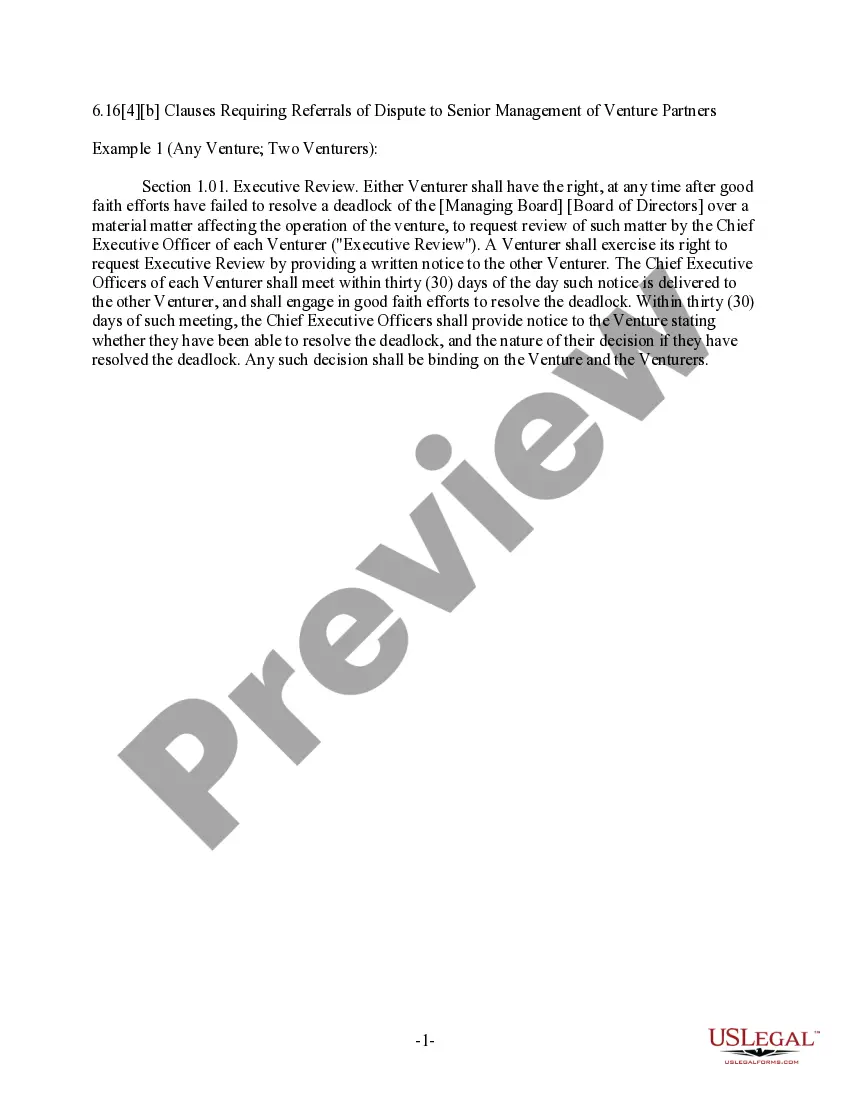
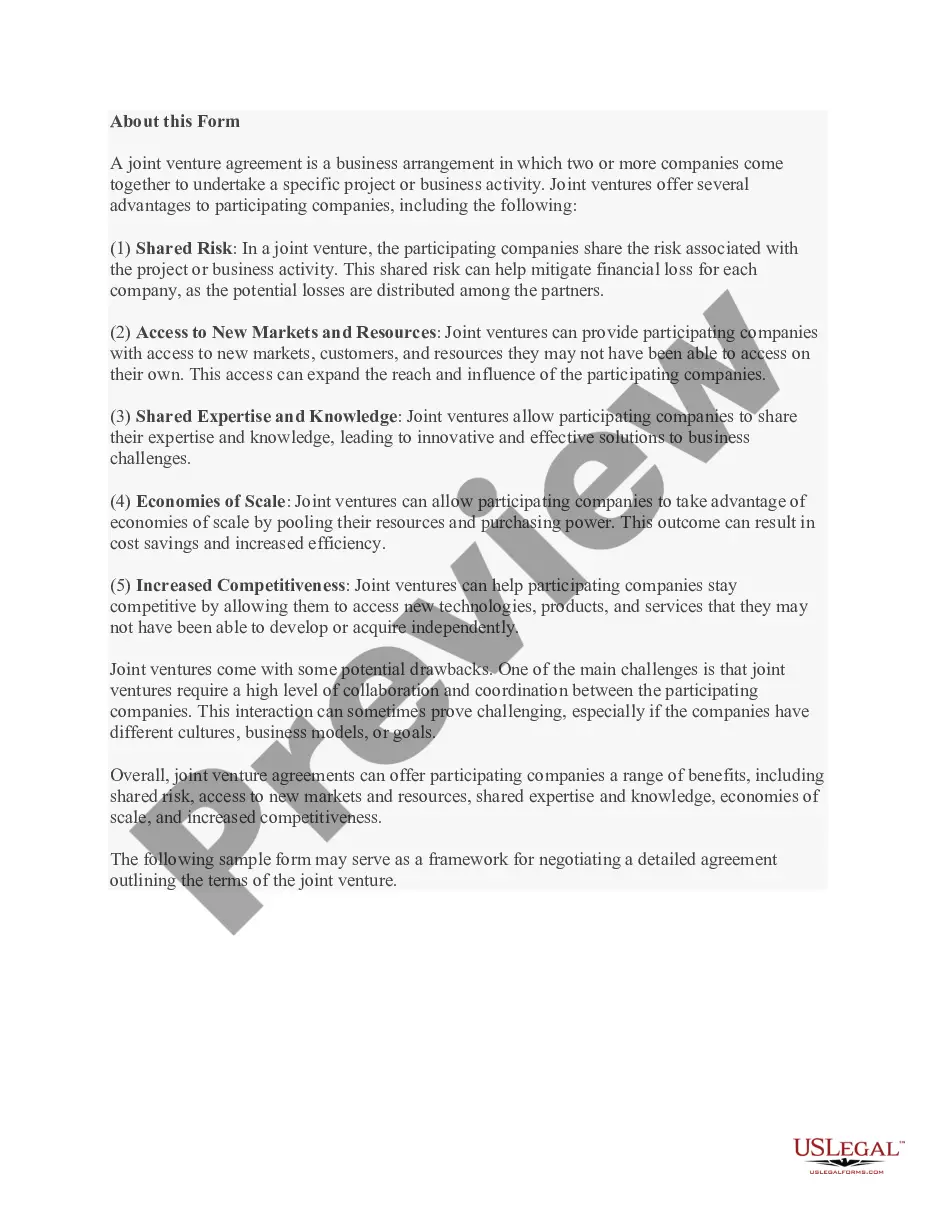
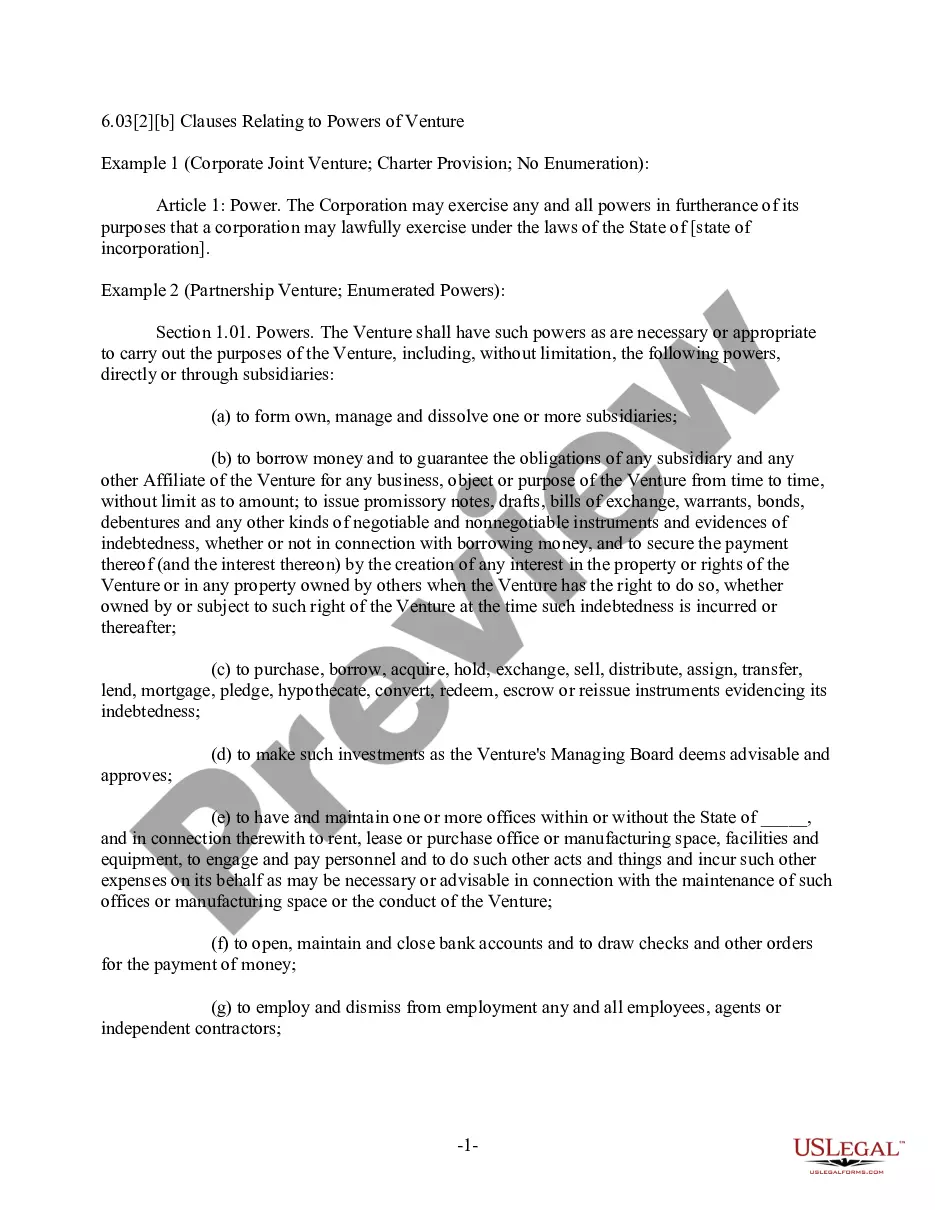
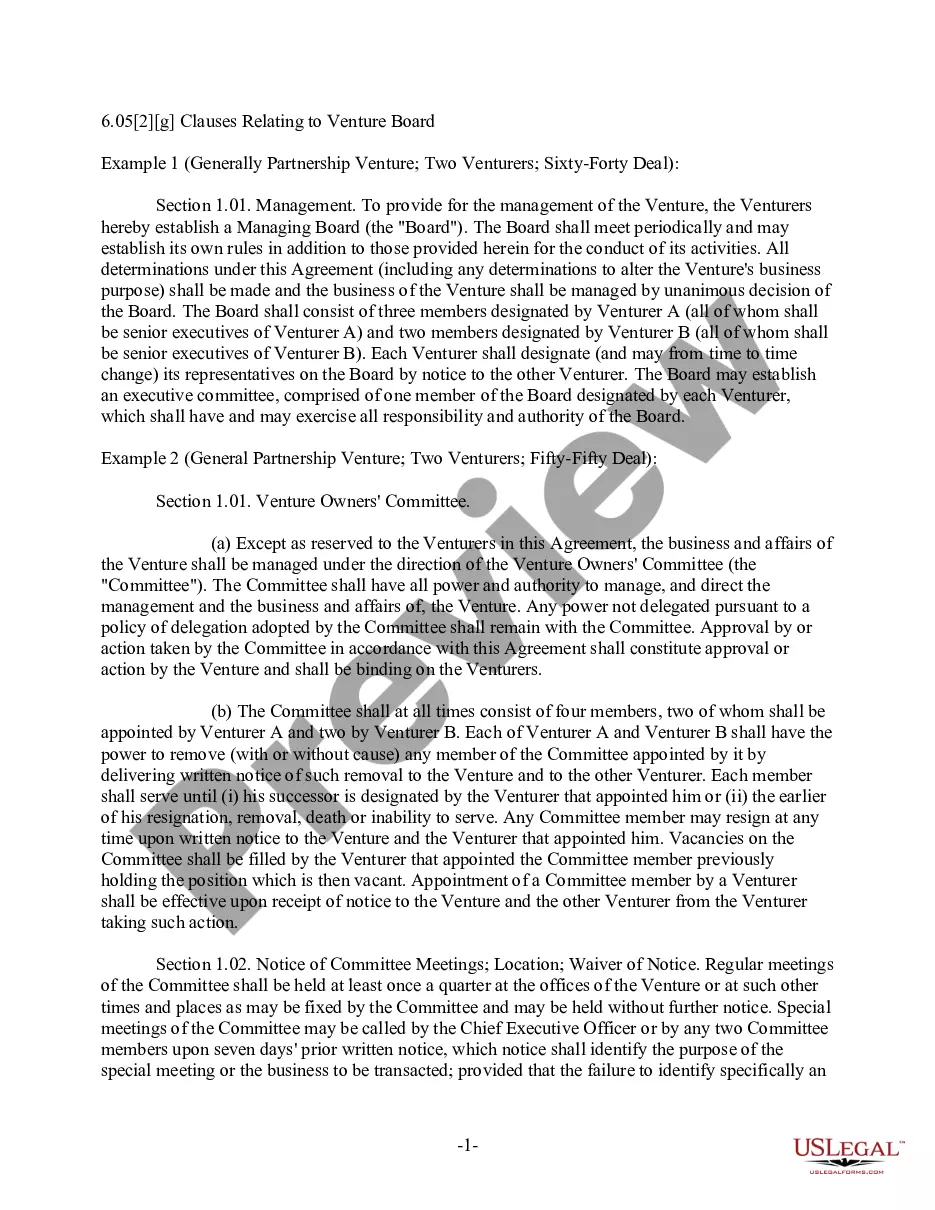
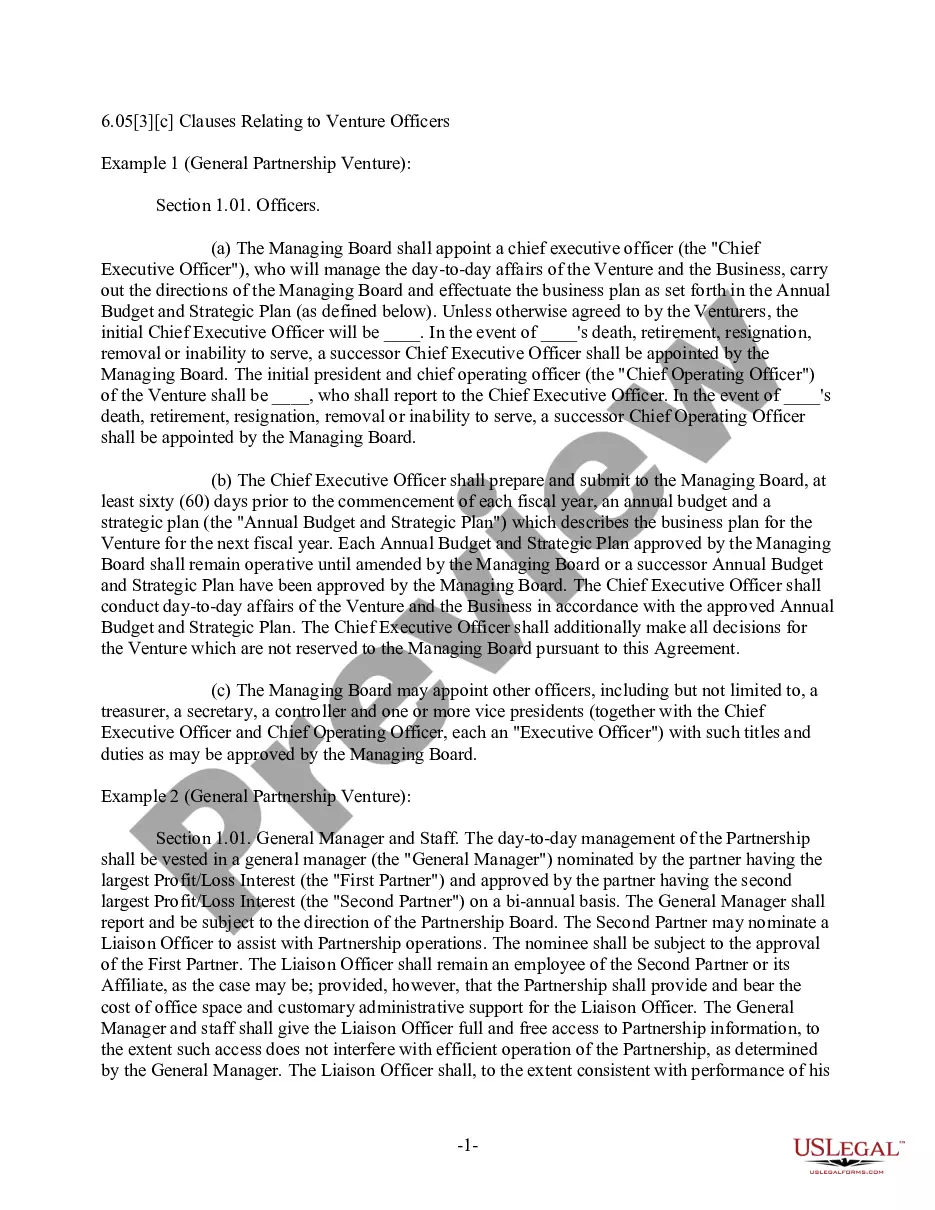
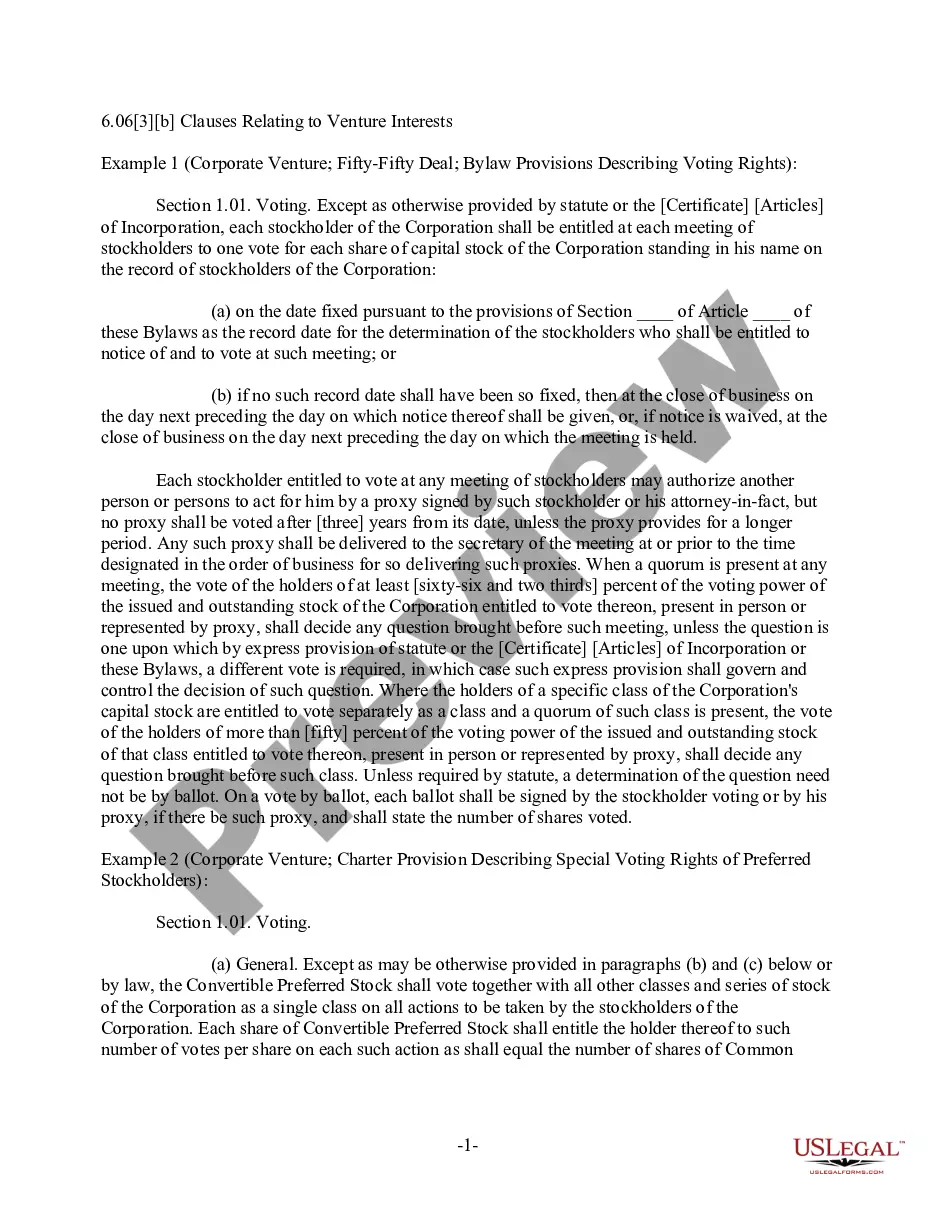
This form, titled Clauses Requiring Referrals of Dispute to Senior Management of Venture Partners, is a structured template designed for resolving deadlocks within a partnership or venture. It outlines the process for escalating unresolved issues to senior management, specifically the Chief Executive Officers of the involved parties. This form is unique because it ensures a formal review process, differing from other forms that may overlook such escalation options in venture disputes.
Form components explained
- Section 1.01: Executive Review clause detailing the procedure for requesting a review by senior management.
- Timeline for meetings: Specifies that executives must meet within thirty days of a deadlock notice.
- Binding decisions: Any decision made post-review is binding on all venture partners.
- Good faith efforts: Emphasizes the obligation for parties to attempt resolution before escalation.
When this form is needed
This form is essential in scenarios where a significant disagreement arises between parties in a venture or partnership. It should be employed when initial attempts to resolve a dispute through informal discussions have failed, especially on matters that may affect the overall operation of the venture.
Who this form is for
- Venture partners looking to formalize conflict resolution processes.
- Businesses involved in partnerships where governance structures can lead to deadlocks.
- Legal professionals drafting or advising on partnership agreements.
- Executives and senior management teams engaged in venture management.
Instructions for completing this form
- Identify the parties involved in the venture, referred to as Venturers.
- Specify the statement of the issue that led to the deadlock, including any relevant details.
- Complete the written notice requesting an Executive Review and share it with all parties.
- Schedule a meeting with the Chief Executive Officers within the specified thirty days.
- Document the outcomes of the meeting, including whether or not the deadlock was resolved.
Does this form need to be notarized?
This form does not typically require notarization to be legally valid. However, some jurisdictions or document types may still require it. US Legal Forms provides secure online notarization powered by Notarize, available 24/7 for added convenience.
Get your form ready online
Our built-in tools help you complete, sign, share, and store your documents in one place.
Make edits, fill in missing information, and update formatting in US Legal Forms—just like you would in MS Word.
Download a copy, print it, send it by email, or mail it via USPS—whatever works best for your next step.
Sign and collect signatures with our SignNow integration. Send to multiple recipients, set reminders, and more. Go Premium to unlock E-Sign.
If this form requires notarization, complete it online through a secure video call—no need to meet a notary in person or wait for an appointment.
We protect your documents and personal data by following strict security and privacy standards.

Make edits, fill in missing information, and update formatting in US Legal Forms—just like you would in MS Word.

Download a copy, print it, send it by email, or mail it via USPS—whatever works best for your next step.

Sign and collect signatures with our SignNow integration. Send to multiple recipients, set reminders, and more. Go Premium to unlock E-Sign.

If this form requires notarization, complete it online through a secure video call—no need to meet a notary in person or wait for an appointment.

We protect your documents and personal data by following strict security and privacy standards.
Common mistakes
- Failing to provide a written notice, which is essential to initiate the review process.
- Not adhering to the timeline for meetings, which can invalidate the resolution process.
- Neglecting to take detailed notes during meetings, which are critical for documenting decisions.
Why use this form online
- Immediate access to a legally vetted template tailored for your needs.
- Time-saving as you can download and complete the form at your convenience.
- Editable format allows customization to specific partnership requirements.
- Reliable guidance on formal processes helps ensure compliance and enforceability.
Looking for another form?
Form popularity
FAQ
The most common forms of ADR are arbitration, mediation, the rent-a-judge program, summary jury trial, and minitrial, although techniques can be combined to form hybrids suited to a particular dispute or legal jurisdiction.
Dispute resolution clauses in a contract are the steps that parties agree in advance, that they will follow if a dispute occurs during the contract.The result is often a clause which does not fit the contract, the parties or the likely forms of dispute that arise from the contract.
Dispute resolution clauses allow the unknown or the oversight to be managed. Dispute resolution clauses in a contract can give the parties alternatives to the costs and delays of litigation and preserve the efficacy of a good commercial or other contractual arrangement.
If they are not followed, then a party cannot refer the dispute to arbitration or litigation on the basis that its pre-conditions, as prescribed by the contract, have not been met. An arbitrator or judge will generally require that all pre-conditions should first be met.
Financial issues - such as bankruptcy or banking disputes. housing. defamation. family law. employment law.
Family Disputes. Commercial Disputes. Industrial Disputes. Property Disputes.
This Standard Clause mandates an exclusive dispute resolution sequence so the parties cannot commence a lawsuit or arbitration until they have attempted to resolve the dispute by negotiations and mediation.
Mediation. The goal of mediation is for a neutral third party to help disputants come to a consensus on their own. Arbitration. In arbitration, a neutral third party serves as a judge who is responsible for resolving the dispute. Litigation.
Facilitation. Mediation. Arbitration. Neutral Evaluation. Settlement Conferences. Community Dispute Resolution Program.