Provision Dealing with Concurrent Work By Landlord and Tenant in the Premises
What this document covers
This provision addressing concurrent work by landlord and tenant in the premises is an essential part of an office lease agreement. It outlines the specific conditions under which both parties can perform work simultaneously, ensuring clarity and cooperation. This legal form helps avoid potential disputes and delays associated with overlapping construction activities, differing from other lease provisions that may not specifically address these scenarios.
Form components explained
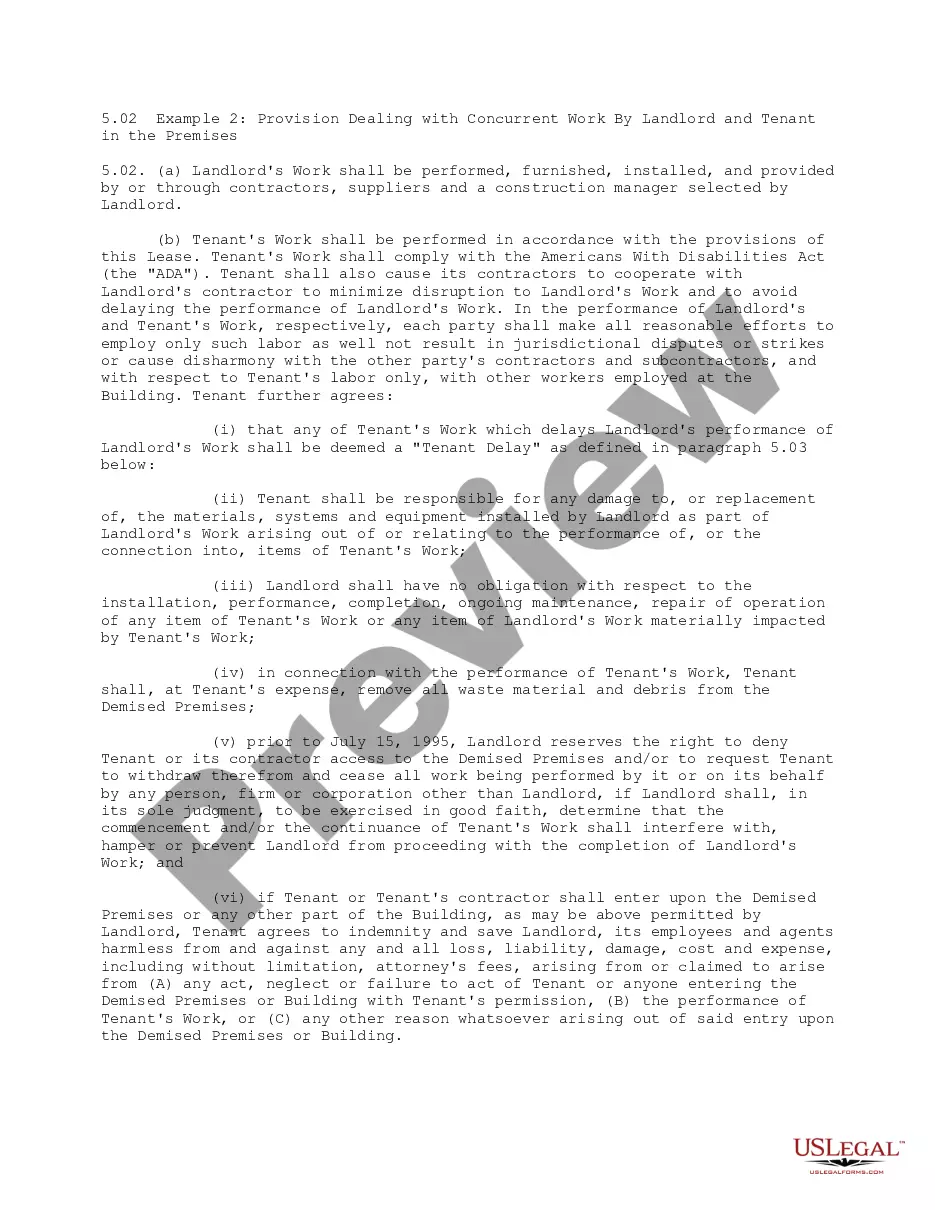
- Definition of Landlord's Work and Tenant's Work responsibilities.
- Cooperation clauses to minimize disruption to ongoing work by either party.
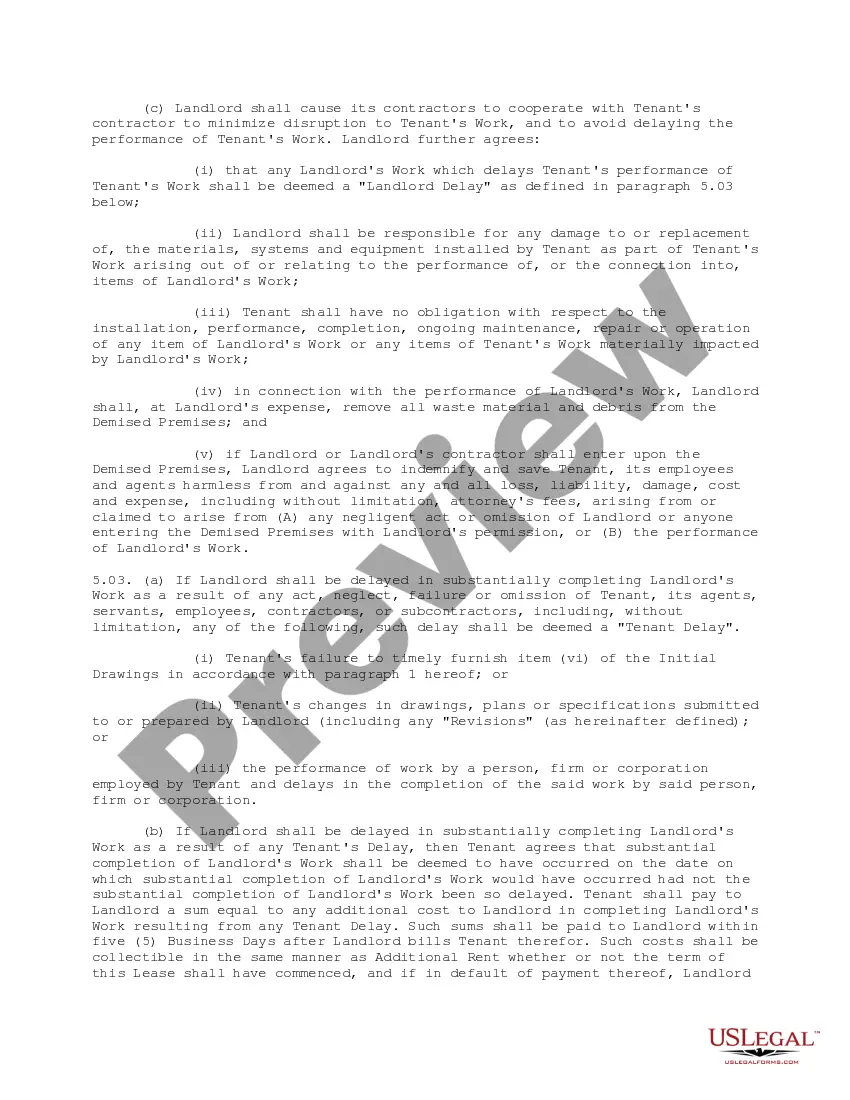
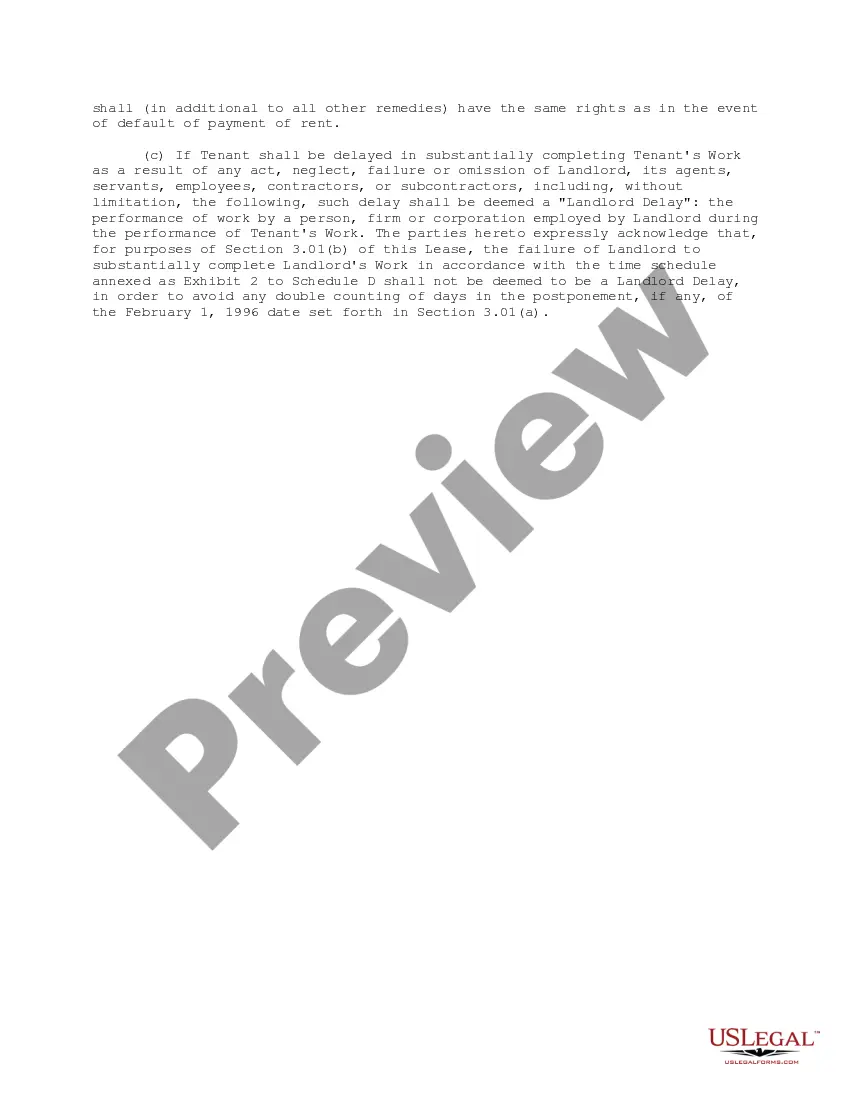
- Provisions for handling delays caused by Tenant's actions or Landlord's actions.
- Indemnification clauses to protect both parties from liability related to work performed.
- Removal of debris and waste materials as part of work obligations.
Common use cases
This form is typically used when both a landlord and a tenant plan to undertake construction or renovation work in the same premises at the same time. It is essential in scenarios where coordination is vital to avoid conflicts, disruptions, or delays that may arise from simultaneous operations. This provision is critical during lease negotiations to ensure that both parties understand their rights and responsibilities concerning construction activities.
Intended users of this form
- Landlords managing commercial properties who plan to perform work while a tenant is present.
- Tenants who expect to undertake renovations or improvements in their leased space.
- Real estate professionals involved in drafting or reviewing lease agreements.
- Legal advisors assisting clients with lease negotiations and drafting.
How to complete this form
- Identify the parties involved in the lease agreement.
- Specify the scope of work to be performed by both landlord and tenant.
- Include any provisions for cooperation and minimizing disruption.
- Define circumstances that might lead to delays and identify responsibility.
- Ensure all parties sign and date the completed document.
Does this form need to be notarized?
This form does not typically require notarization to be legally valid. However, some jurisdictions or document types may still require it. US Legal Forms provides secure online notarization powered by Notarize, available 24/7 for added convenience.
Get your form ready online
Our built-in tools help you complete, sign, share, and store your documents in one place.
Make edits, fill in missing information, and update formatting in US Legal Forms—just like you would in MS Word.
Download a copy, print it, send it by email, or mail it via USPS—whatever works best for your next step.
Sign and collect signatures with our SignNow integration. Send to multiple recipients, set reminders, and more. Go Premium to unlock E-Sign.
If this form requires notarization, complete it online through a secure video call—no need to meet a notary in person or wait for an appointment.
We protect your documents and personal data by following strict security and privacy standards.

Make edits, fill in missing information, and update formatting in US Legal Forms—just like you would in MS Word.

Download a copy, print it, send it by email, or mail it via USPS—whatever works best for your next step.

Sign and collect signatures with our SignNow integration. Send to multiple recipients, set reminders, and more. Go Premium to unlock E-Sign.

If this form requires notarization, complete it online through a secure video call—no need to meet a notary in person or wait for an appointment.

We protect your documents and personal data by following strict security and privacy standards.
Mistakes to watch out for
- Not defining the scope of work clearly, leading to misunderstandings.
- Failing to specify how delays will be handled or who will be responsible.
- Neglecting to include cooperation requirements to minimize disruption.
- Allowing vague language that can result in legal disputes later on.
Advantages of online completion
- Convenient downloading and printing of the form for immediate use.
- Editability allows users to tailor the document to specific needs.
- Access to legally drafted templates ensures reliability and compliance.
- Quick and easy retrieval for future reference or updates.
Legal use & context
- The provision is enforceable as part of a legally binding lease agreement.
- Parties must comply with local construction and zoning regulations.
- Indemnification clauses protect both parties but should be carefully reviewed for compliance.
- Maintaining clear records of communication and agreements is crucial for resolving disputes.
Quick recap
- Understanding rights and obligations is critical when performing concurrent work.
- Clear provisions help prevent disputes and delays in construction projects.
- Proper completion of the form ensures legal protection for both landlord and tenant.
Looking for another form?





Form popularity
FAQ
Maintaining a positive relationship with your tenant can help to ensure that they remain cooperative throughout their lease agreement, Ms Parrella said. Listening and carefully considering requests for changes to lease conditions and responding quickly to queries or concerns helps build rapport.
Why it's so important to build a good relationship with your tenants.Happy tenants are: More likely to stay longer so it saves you time and money. Take better care of the home.
The type of property you reside in is an important factor to consider when conducting your business from home. Generally speaking, it can be legal to run a business from your apartment.
Following building and housing codes. Keeping the unit safe and sanitary. Disposing of garbage. Maintaining plumbing fixtures. Properly operating all plumbing and electric fixtures. Maintaining appliances supplied by the landlord. Not damaging the unit.
Landlord usually refers the owner of real property, such as a house, building, or land, that is leased or rented to another person or entity, called the tenant. In a lease contract, the landlord or landlady transfers part of his or her interest to the tenant.
Most rental agreements are short-term agreements, such as month-to-month tenancies, while lease agreements are usually for longer rental periods, such as six months, a year, or more.
The short answer to this is yes, but there are some stipulations. The property must remain residential first and foremost, which often means no more than 40% of it should be used for commercial purposes.If a tenant wants to run a business from a rented property, they have to have the landlord's permission in writing.
The person who leases the property is called the landlord, and the person to whom the lease is made is called the tenant.
The basis of the legal relationship between a landlord and tenant is grounded in both contract and property law. The tenant has a property interest in the land (historically, a non-freehold estate) for a given period of time before the property interest transfers back to the landlord.