Waivers of Subrogation
What is this form?
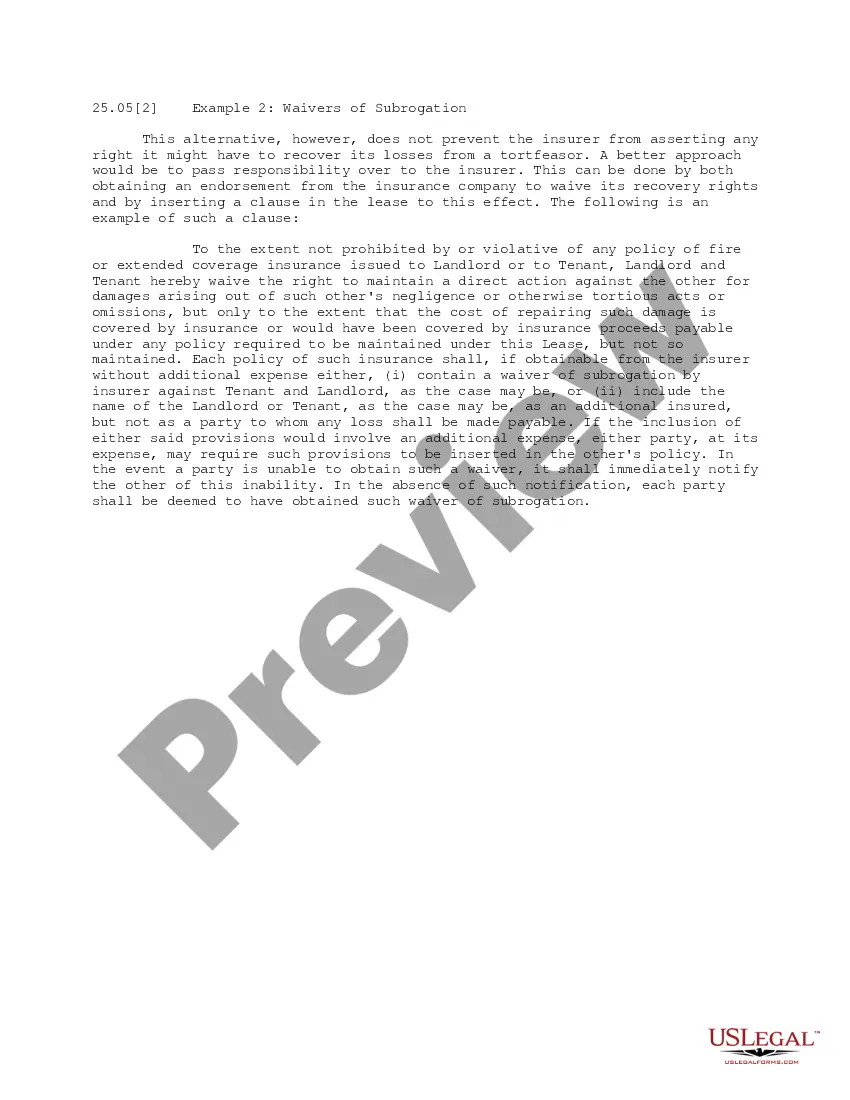
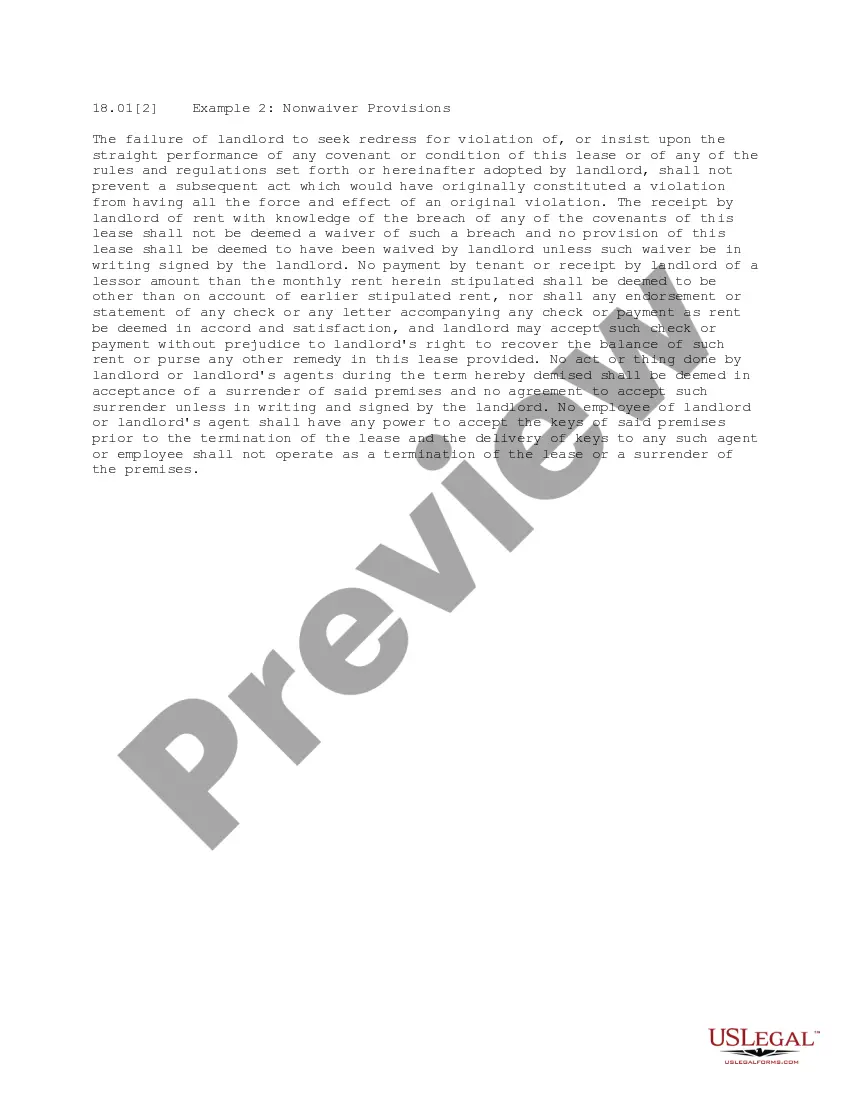
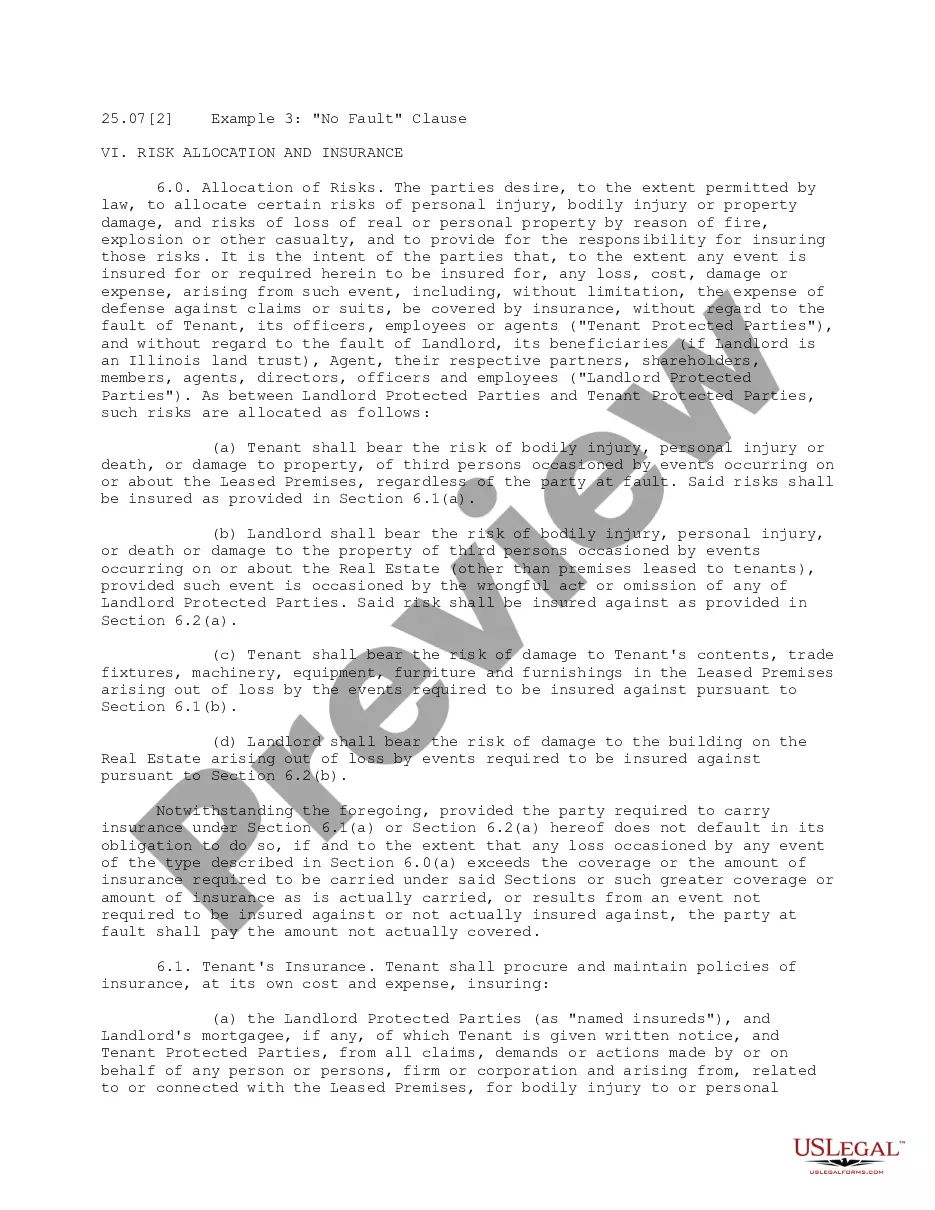
The Waiver of Subrogation form is a legal document that allows landlords and tenants to waive their right to pursue each other for damages covered by insurance. This form is particularly useful in commercial leases, where it helps prevent disputes over liability and encourages cooperative relationships. Unlike standard lease agreements that may include provisions for claims against each other, a waiver of subrogation directs parties to use their respective insurance to cover damages, simplifying the claims process.
Key components of this form
- Clause waiving the right to maintain direct actions against each other for negligence or tortious acts.
- Provisions regarding the necessity of insurance coverage for damages.
- Requirement for policies to include a waiver of subrogation from the insurance company.
- Notification procedures if a party cannot obtain the required waiver from their insurer.
- Details about additional insureds and expenses related to the insurance policy adjustments.
When to use this document
This form should be used when entering into a lease agreement where both parties wish to limit liability for damages caused by negligent behavior. It is especially relevant in commercial property leases, where the parties aim to protect each other from lawsuits related to damages already covered by insurance. Additionally, it can be beneficial in mitigating potential disputes about damage liability during and after the lease term.
Intended users of this form
- Landlords seeking to protect themselves from lawsuits from tenants for property damage.
- Tenants looking to shield themselves from claims by landlords for damages caused by negligence.
- Real estate professionals involved in drafting or negotiating lease agreements.
- Insurance agents or brokers assisting clients with lease-related claims.
Completing this form step by step
- Identify the parties involved: Include the names and addresses of the landlord and tenant.
- Specify the property: Clearly describe the property that is being leased.
- Insert the waiver clause: Include the clause that waives the right to recover damages.
- Confirm insurance policies: Ensure both parties have the required insurance in place with the necessary waivers.
- Obtain signatures: Have both parties sign and date the document to ensure legal validity.
Does this document require notarization?
In most cases, this form does not require notarization. However, some jurisdictions or signing circumstances might. US Legal Forms offers online notarization powered by Notarize, accessible 24/7 for a quick, remote process.
Get your form ready online
Our built-in tools help you complete, sign, share, and store your documents in one place.
Make edits, fill in missing information, and update formatting in US Legal Forms—just like you would in MS Word.
Download a copy, print it, send it by email, or mail it via USPS—whatever works best for your next step.
Sign and collect signatures with our SignNow integration. Send to multiple recipients, set reminders, and more. Go Premium to unlock E-Sign.
If this form requires notarization, complete it online through a secure video call—no need to meet a notary in person or wait for an appointment.
We protect your documents and personal data by following strict security and privacy standards.

Make edits, fill in missing information, and update formatting in US Legal Forms—just like you would in MS Word.

Download a copy, print it, send it by email, or mail it via USPS—whatever works best for your next step.

Sign and collect signatures with our SignNow integration. Send to multiple recipients, set reminders, and more. Go Premium to unlock E-Sign.

If this form requires notarization, complete it online through a secure video call—no need to meet a notary in person or wait for an appointment.

We protect your documents and personal data by following strict security and privacy standards.
Avoid these common issues
- Failing to include specific details about insurance coverage.
- Not securing necessary waivers from insurance providers.
- Leaving out signatures or dates from the finalized form.
- Assuming that the form is valid across all jurisdictions without verification.
Benefits of completing this form online
- Convenient access to legally vetted templates that save time and effort.
- Editability allows users to customize the form as per their specific lease requirements.
- Reliable form versions created by licensed attorneys ensure compliance with local laws.
- Easy download for immediate use, which is beneficial for urgent lease agreements.
Legal use & context
- The waiver of subrogation is enforceable as long as it complies with applicable state laws.
- Ensure that the insurance policies involved contain the necessary endorsements to reflect the waiver.
- Understand any limitations and specific local jurisdictional requirements that may affect the enforceability of this waiver.
Summary of main points
- The Waiver of Subrogation form is essential for protecting landlords and tenants from liability claims for damages covered by insurance.
- This form encourages cooperative risk management between parties in a lease agreement.
- Completing the form accurately is crucial for its enforceability.
- Always verify local laws to ensure compliance before use.
Looking for another form?
Form popularity
FAQ
Clients ask a business to waive their rights of subrogation because they do not want to be held partially responsible for a loss. When included in a contract, it prevents your business and your insurer from seeking a share of the damages paid to prevent potential conflicts.
A waiver of subrogation provision prevents the insurance company (who steps into the shoes of the insured after it pays a loss) from suing the other party to the contract which likely caused the loss. Moreover, waiver of subrogation provisions found in contracts are generally upheld by Courts.
A waiver of subrogation is a contractual provision whereby an insured waives the right of their insurance carrier to seek redress or seek compensation for losses from a negligent third party. Typically, insurers charge an additional fee for a waiver of subrogation endorsement.
Clients may want your business to waive your right of subrogation so they will not be held liable for damages if they are partially responsible for a loss. When you waive your right of subrogation, your business (and your insurance company) are prevented from seeking a share of any damages paid.
A waiver of subrogation provision prevents the insurance company (who steps into the shoes of the insured after it pays a loss) from suing the other party to the contract which likely caused the loss. Moreover, waiver of subrogation provisions found in contracts are generally upheld by Courts.
A Waiver of Subrogation is an endorsement that prohibits an insurance carrier from recovering the money they paid on a claim from a negligent third party. An Owner Client may require this endorsement from their vendors to avoid being held liable for claims that occur on their jobsite.
A waiver of subrogation is a contractual provision whereby an insured waives the right of their insurance carrier to seek redress or seek compensation for losses from a negligent third party.Many construction contracts and leases include a waiver of subrogation clause.
Clients ask a business to waive their rights of subrogation because they do not want to be held partially responsible for a loss. When included in a contract, it prevents your business and your insurer from seeking a share of the damages paid to prevent potential conflicts.
Carriers will typically charge a fee of $25 to $100 to allow a waiver of subrogation. On Errors and Omissions policies, a waiver of subrogation may be available if the party requesting the waiver is not directly involved in work on the project.