Fair Expression of the Covenant of Quiet Enjoyment
Understanding this form
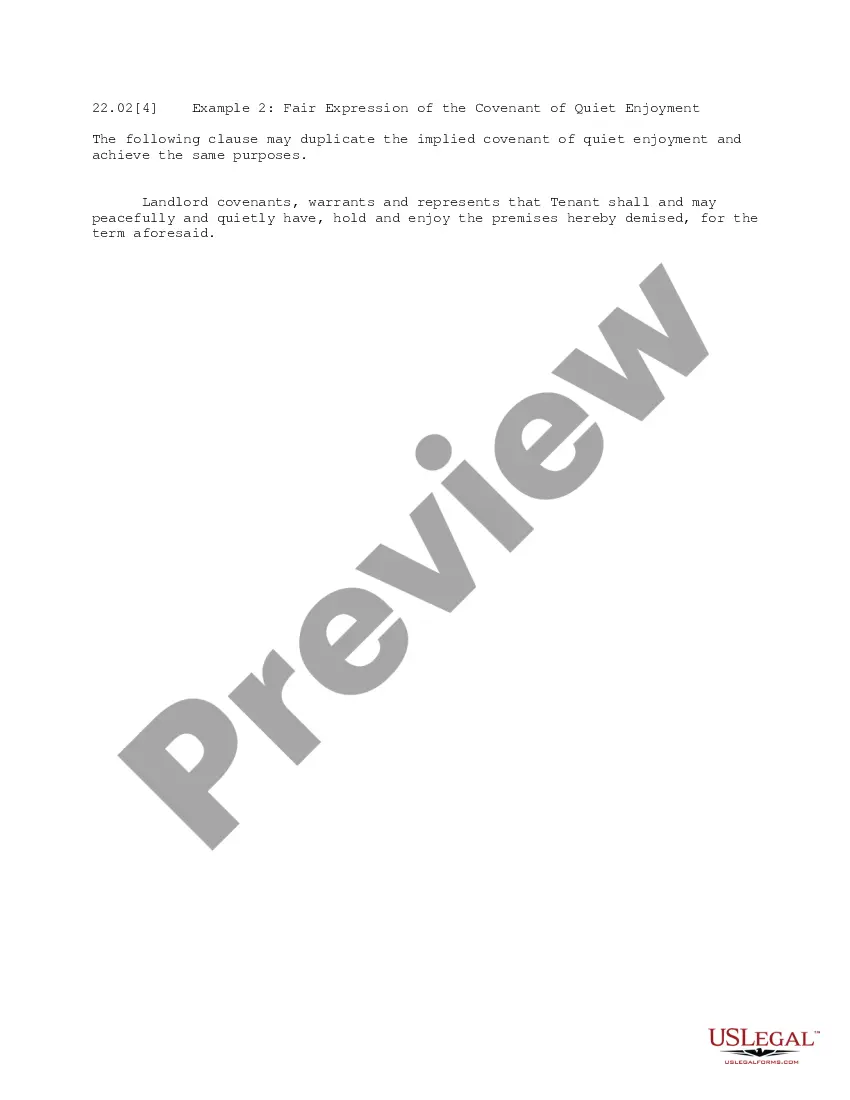
The Fair Expression of the Covenant of Quiet Enjoyment is a legal lease clause that ensures tenants can use and enjoy the property without disturbance. This form expressly outlines the landlord's commitment to this implied right, making it easier for tenants to understand their rights compared to less specific agreements.
What’s included in this form
- Landlord's covenant to allow peaceful enjoyment of the premises.
- Specification of the term the lease covers.
- Affirmations guaranteeing tenant rights regarding the use of the property.
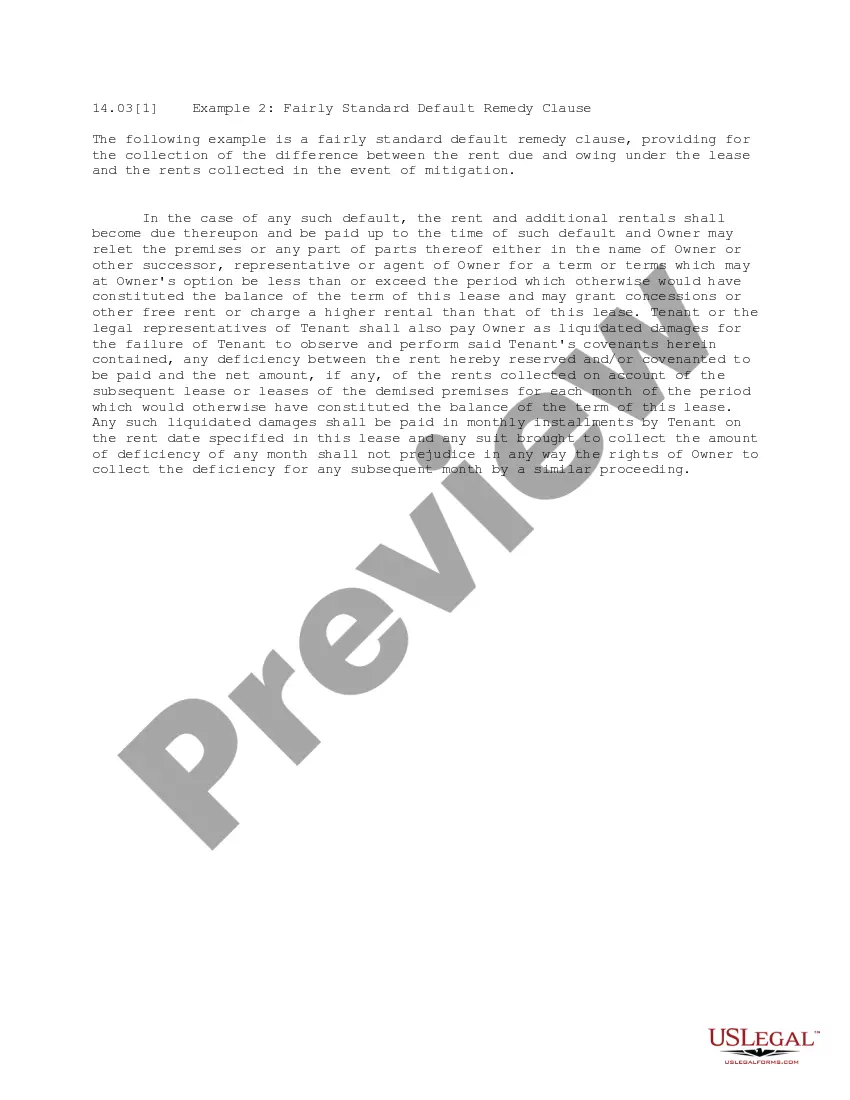
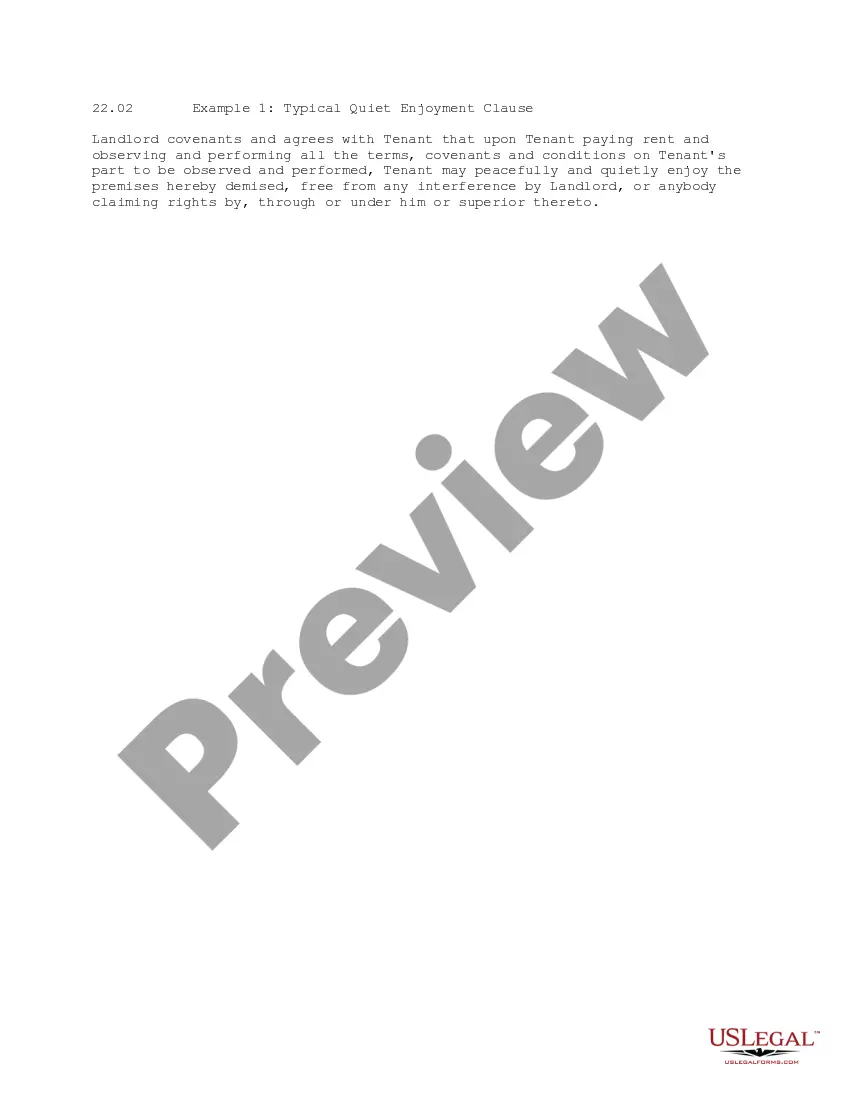
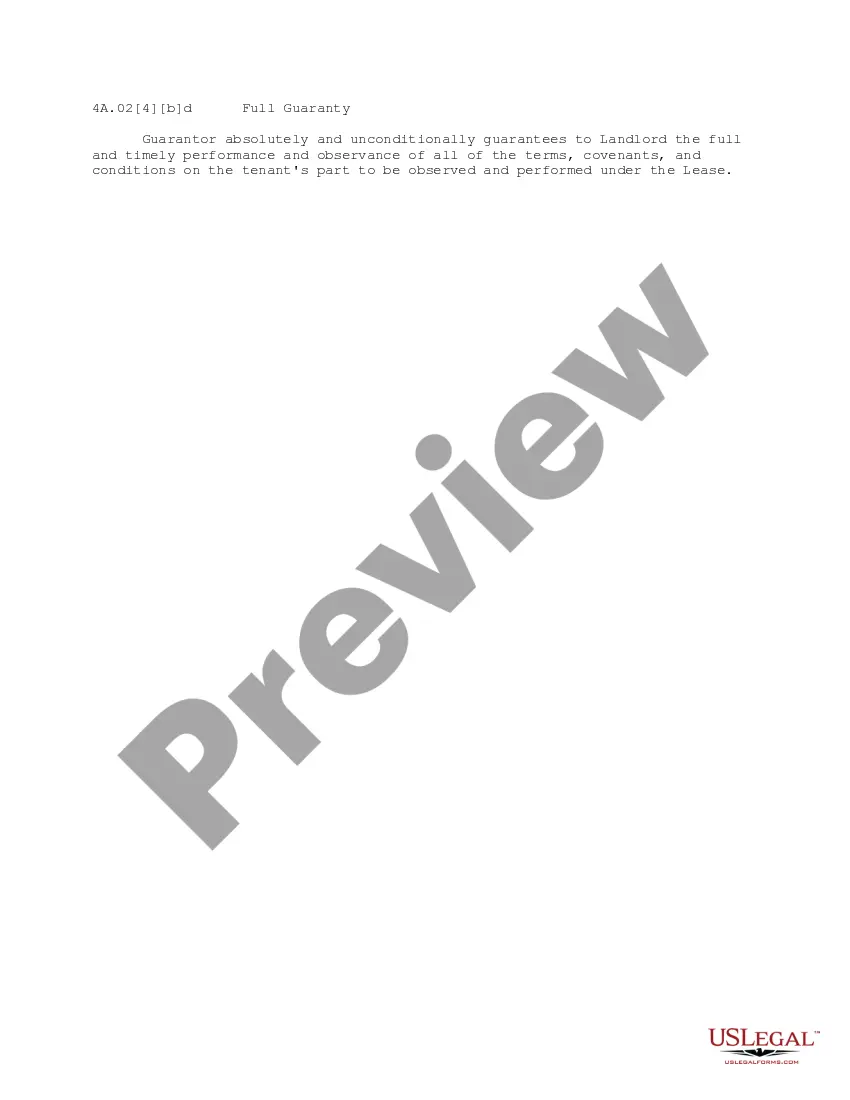
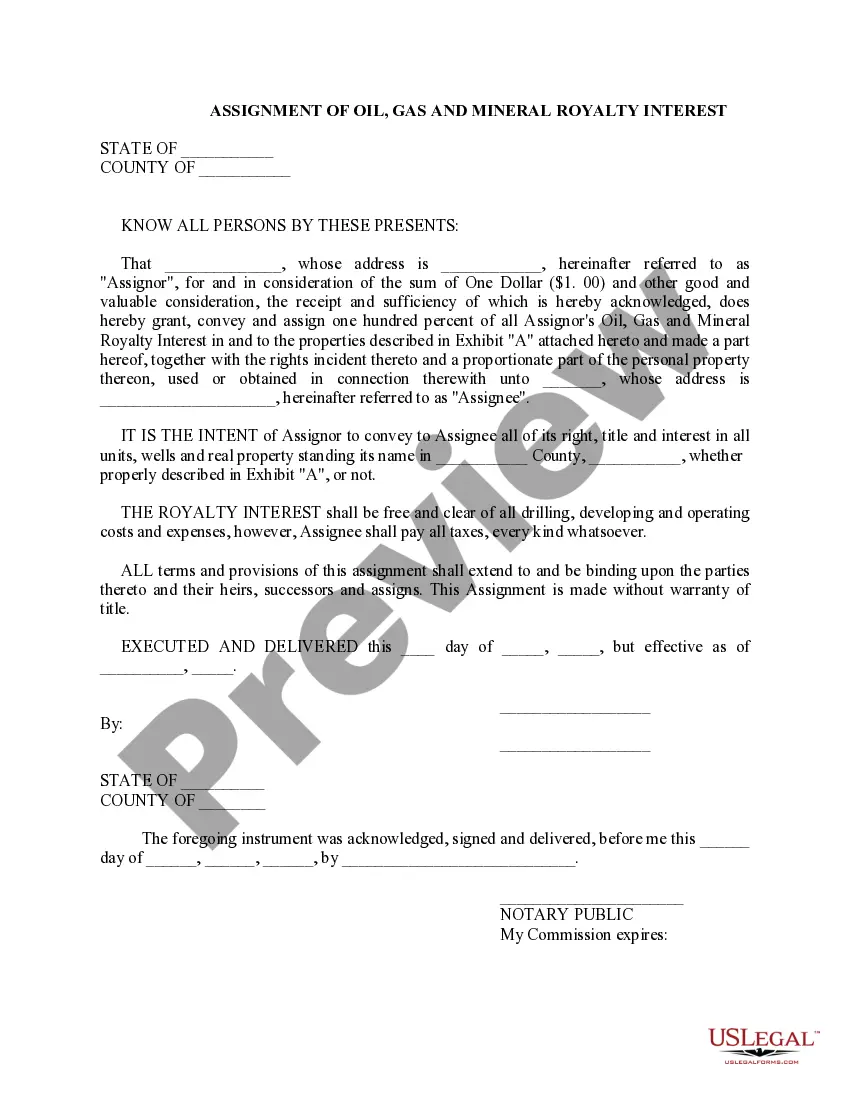
Common use cases
This form is beneficial when entering a lease agreement where tenants seek assurance their right to enjoy the property will be protected from interference. It is especially important in commercial leases or longer-term residential rentals, where clarity on tenant rights is crucial.
Who should use this form
- Commercial landlords and tenants entering into lease agreements.
- Residential landlords renting out properties for extended periods.
- Real estate professionals managing lease agreements for clients.
How to prepare this document
- Identify the landlord and tenant by providing their full names.
- Clearly specify the address of the premises being leased.
- Indicate the duration of the lease agreement.
- Ensure both parties sign and date the document.
Does this document require notarization?
This form does not typically require notarization unless specified by local law. Always check local regulations to ensure compliance.
Get your form ready online
Our built-in tools help you complete, sign, share, and store your documents in one place.
Make edits, fill in missing information, and update formatting in US Legal Forms—just like you would in MS Word.
Download a copy, print it, send it by email, or mail it via USPS—whatever works best for your next step.
Sign and collect signatures with our SignNow integration. Send to multiple recipients, set reminders, and more. Go Premium to unlock E-Sign.
If this form requires notarization, complete it online through a secure video call—no need to meet a notary in person or wait for an appointment.
We protect your documents and personal data by following strict security and privacy standards.

Make edits, fill in missing information, and update formatting in US Legal Forms—just like you would in MS Word.

Download a copy, print it, send it by email, or mail it via USPS—whatever works best for your next step.

Sign and collect signatures with our SignNow integration. Send to multiple recipients, set reminders, and more. Go Premium to unlock E-Sign.

If this form requires notarization, complete it online through a secure video call—no need to meet a notary in person or wait for an appointment.

We protect your documents and personal data by following strict security and privacy standards.
Mistakes to watch out for
- Failing to include the specific term of the lease.
- Not having both parties sign the document.
- Leaving the property address incomplete or incorrect.
Why complete this form online
- Access to templates drafted by licensed attorneys.
- Convenience of immediate download and completion.
- Ability to edit the document as needed for specific situations.
Looking for another form?

Form popularity
FAQ
Describe your relationship Include any relevant information such as how long your tenants have rented from you and any personal connection you may have to them. Other landlords want to be assured that you've known your tenants for a sufficiently long period of time.
A. A courteous introduction (e.g. Dear ______ or To whom it may concern) b. A statement of intent (e.g. I am writing this letter to recommend _____ as a tenant) c. A closing sentiment (e.g. Kind Regards or Sincerely)
What is the address of their property? Who were the occupants listed on the lease? How long was the tenancy? What was the tenant's monthly rental amount? Did the tenant consistently pay rent on time? Did the tenant maintain the rental property well?
Every California lease (both residential and commercial) includes an implied covenant of quiet enjoyment. California Code §1927.The right of quiet enjoyment can be waived by commercial tenants.
According to Nolo, quiet enjoyment is The right of a property owner or tenant to enjoy his or her property without interference. Disruption of quiet enjoyment may constitute a legal nuisance.
A covenant of quiet enjoyment insures an owner or tenant against a disturbance of his or her right to possess or use property. For example, a covenant of quiet enjoyment could prevent a tenant from being evicted by a person with superior title.
Freedom from disturbance in the enjoyment of property. In contracts for the sale of goods, unless the seller makes it clear that he is contracting to transfer only the title that he or a third person has, there is an implied warranty that the buyer will enjoy quiet possession of the goods.
Be upfront. Get your paperwork together. Inform referees. Answer all correspondence as soon as you can. Work out who will pay what. Secure a guarantor before starting the tenant referencing process. Lastly, have your finances in order.
A Covenant that promises that the grantee or tenant of an estate in real property will be able to possess the premises in peace, without disturbance by hostile claimants. Quiet enjoyment is a right to the undisturbed use and enjoyment of real property by a tenant or landowner.