Gross up Clause that Should be Used in an Expense Stop Stipulated Base or Office Net Lease
Overview of this form
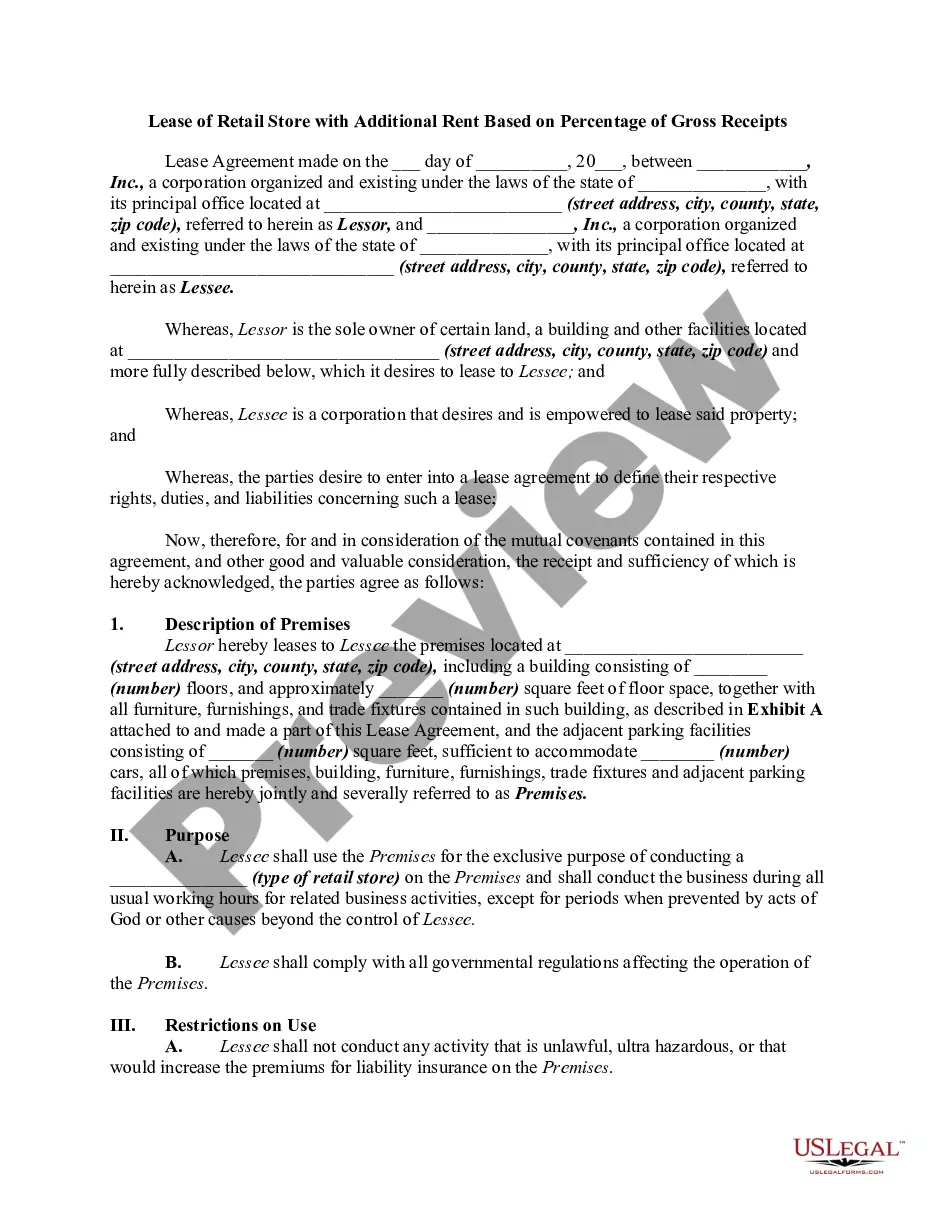
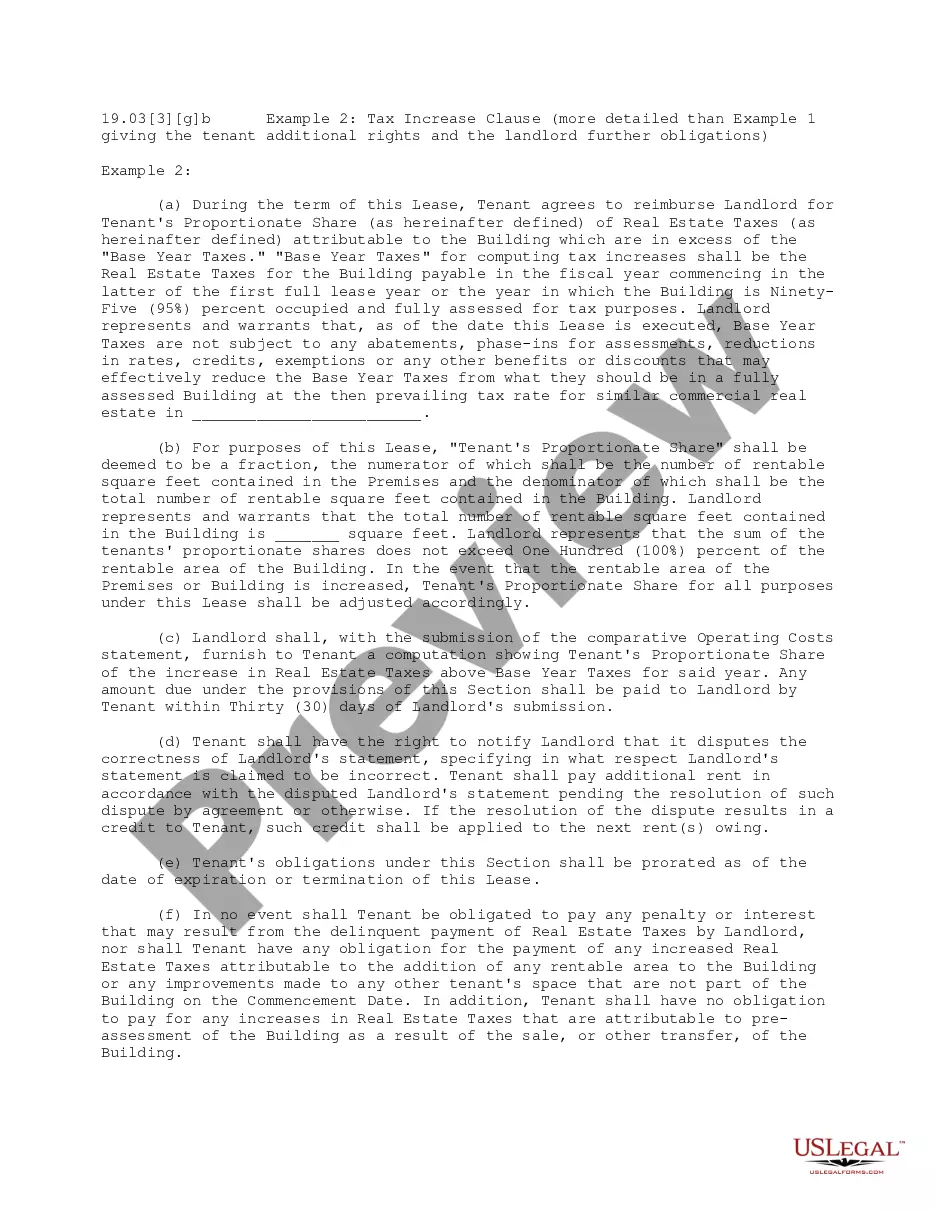
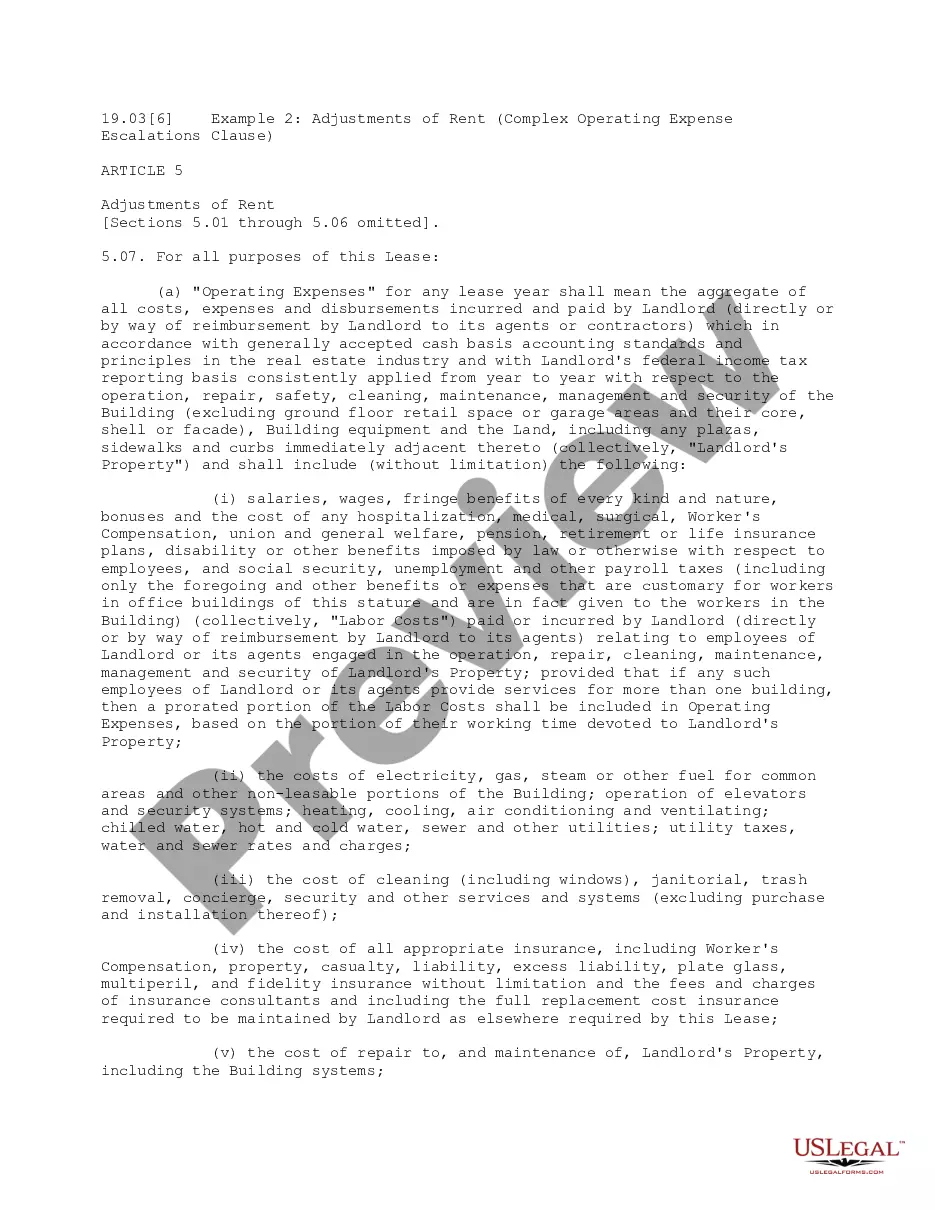
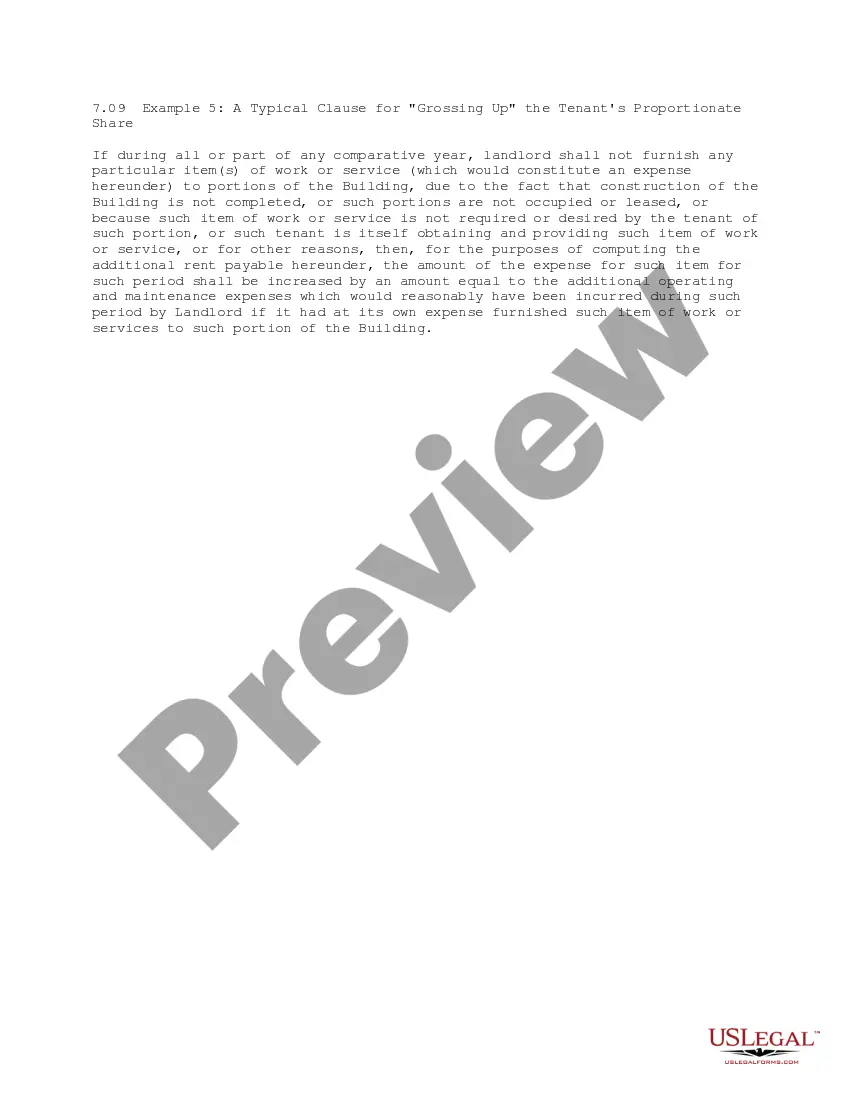
The gross up clause is an essential component used in expense stop, stipulated base, or office net leases. This clause adjusts the building operating costs to reflect what they would be if the building were at least 95 percent occupied. By incorporating this clause, landlords and tenants can have clearer expectations regarding variable operating costs based on occupancy levels, ensuring fairness in cost distribution.
Main sections of this form
- Condition for adjustment: The lease specifies that an adjustment is required only if the building is less than 95 percent occupied.
- Calculation method: Details how landlords must calculate the adjusted building operating costs.
- Variable costs outlined: Lists operational expenses that may fluctuate based on occupancy, such as janitorial, electricity, and management fees.

When this form is needed
This form is beneficial for landlords and tenants engaged in office leases where operating costs can vary based on occupancy. It should be used when there is a risk that the property may not achieve full occupancy, allowing parties to clarify how operating costs will be assessed and adjusted accordingly.
Who can use this document
- Landlords seeking to manage operating costs fairly in office leases.
- Tenants who want to ensure clarity related to potential cost adjustments due to occupancy rates.
- Real estate professionals negotiating lease agreements involving variable operating costs.
Completing this form step by step
- Identify the parties involved in the lease agreement.
- Specify the property address and details.
- Indicate the term of the lease and any specific agreements regarding occupancy.
- Detail the variable cost components affected by occupancy levels.
- Sign and date the document to finalize the agreement.
Does this form need to be notarized?
This form does not typically require notarization to be legally valid. However, some jurisdictions or document types may still require it. US Legal Forms provides secure online notarization powered by Notarize, available 24/7 for added convenience.
Get your form ready online
Our built-in tools help you complete, sign, share, and store your documents in one place.
Make edits, fill in missing information, and update formatting in US Legal Forms—just like you would in MS Word.
Download a copy, print it, send it by email, or mail it via USPS—whatever works best for your next step.
Sign and collect signatures with our SignNow integration. Send to multiple recipients, set reminders, and more. Go Premium to unlock E-Sign.
If this form requires notarization, complete it online through a secure video call—no need to meet a notary in person or wait for an appointment.
We protect your documents and personal data by following strict security and privacy standards.

Make edits, fill in missing information, and update formatting in US Legal Forms—just like you would in MS Word.

Download a copy, print it, send it by email, or mail it via USPS—whatever works best for your next step.

Sign and collect signatures with our SignNow integration. Send to multiple recipients, set reminders, and more. Go Premium to unlock E-Sign.

If this form requires notarization, complete it online through a secure video call—no need to meet a notary in person or wait for an appointment.

We protect your documents and personal data by following strict security and privacy standards.
Mistakes to watch out for
- Failing to specify the percentage of occupancy required for adjustments.
- Not detailing the variable costs affected by occupancy levels.
- Omitting signatures or dates which can render the form invalid.
Why use this form online
- Convenience: Downloadable anytime, allowing for immediate access to necessary forms.
- Editability: Easily customize the form to meet specific lease requirements without delays.
- Reliability: Forms are prepared by licensed attorneys, ensuring they meet legal standards.
Looking for another form?



Form popularity
FAQ
A gross-up is an additional amount of money added to a payment to cover the income taxes the recipient will owe on the payment.For example, a company may agree to pay an executive's relocation expenses plus a gross-up to offset the expected income taxes that will be owed on the salary payment.
Add up all federal, state, and local tax rates. Subtract the total tax rates from the number 1. 1 tax = net percent. Divide the net payment by the net percent. net payment / net percent = gross payment. Check your answer by calculating gross payment to net payment.
This is the normal tax liability, but now as the company has to pay tax as a perquisite to the expatriate this amount will be grossed-up and that amount will be paid as salary tax perquisite. The amount of salary tax perquisite is 1743275 144.71/100 = 25,22,693.
A gross up is when you increase the gross amount of a payment to account for the taxes you must withhold from the payment.After you withhold taxes from the payment, the net amount should equal the amount you promised. The gross up basically reimburses the worker for the withheld taxes.
Correctly drafted, a gross up provision relates only to Operating Expenses that vary with occupancyso called variable expenses. Variable expenses are those expenses that will go up or down depending on the number of tenants in the Building, such as utilities, trash removal, management fees and janitorial services.
Correctly drafted, a gross up provision relates only to Operating Expenses that vary with occupancyso called variable expenses. Variable expenses are those expenses that will go up or down depending on the number of tenants in the Building, such as utilities, trash removal, management fees and janitorial services.
Simply stated, the concept of gross up provision stipulates that if a building has significant vacancy, the landlord can estimate what the variable operating expense would have been had the building been fully occupied, and charge the tenants their pro-rata share of that cost.
Add up all federal, state, and local tax rates. Subtract the total tax rates from the number 1. 1 tax = net percent. Divide the net payment by the net percent. net payment / net percent = gross payment. Check your answer by calculating gross payment to net payment.