Nonexclusive Easement and Right of Way to Use Grantor's Private Road
What is this form?
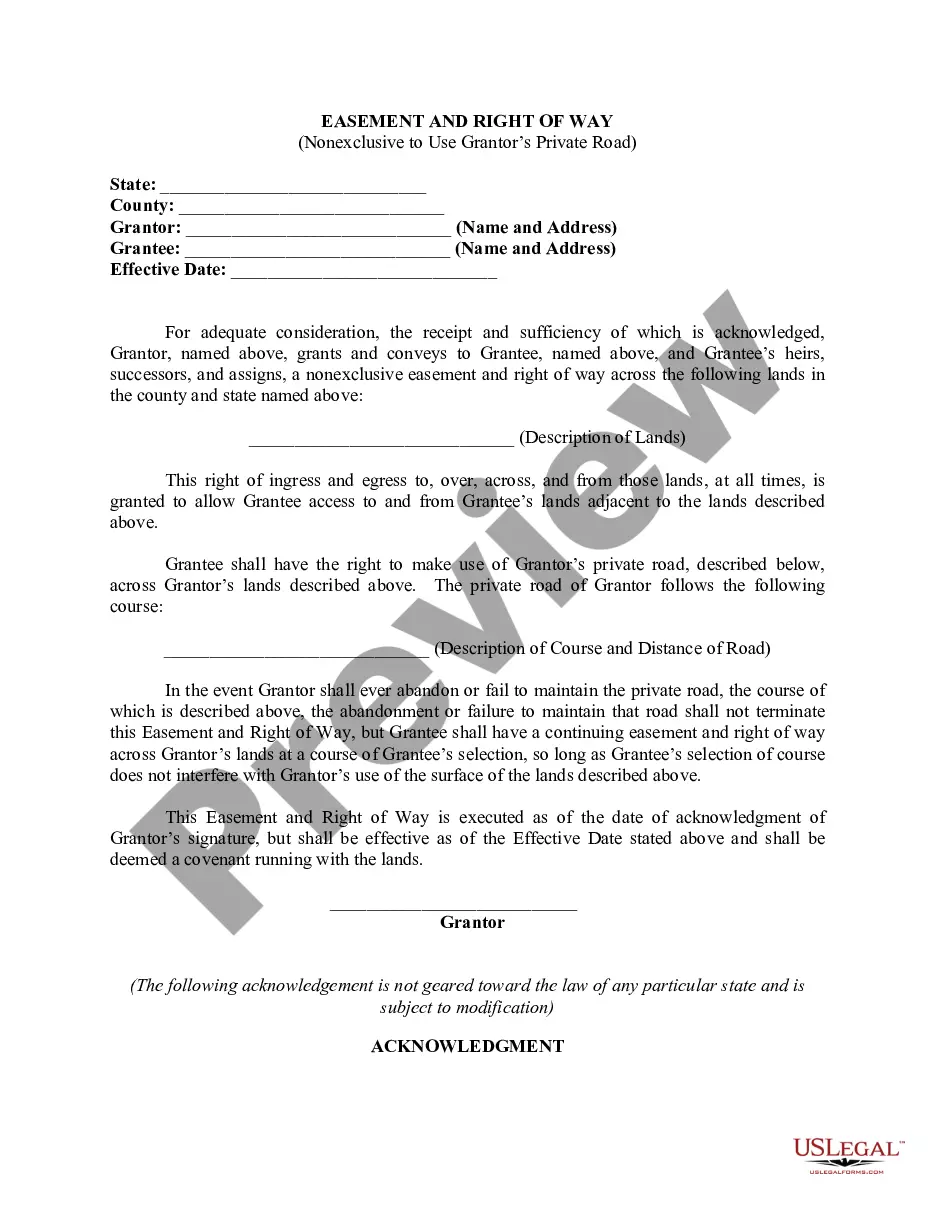
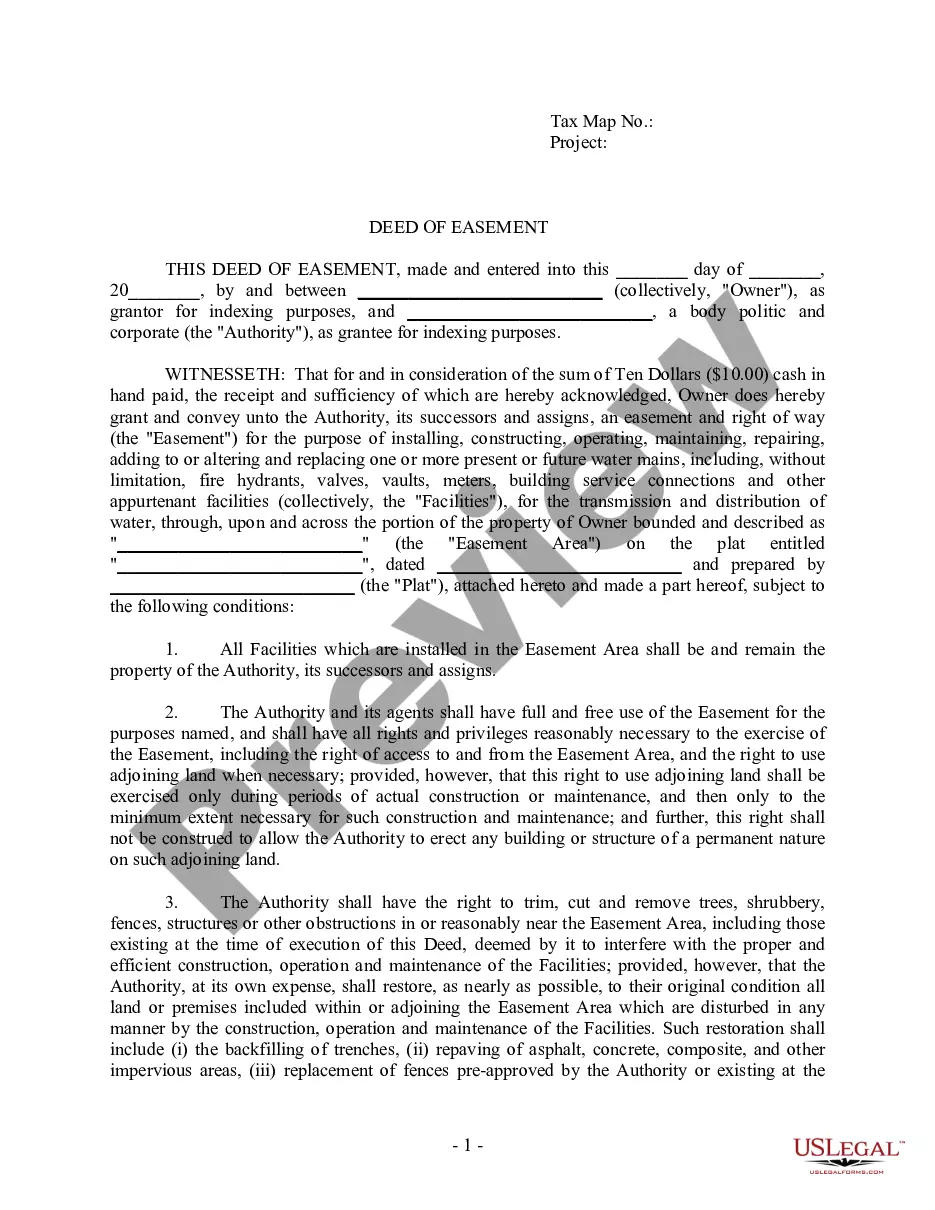
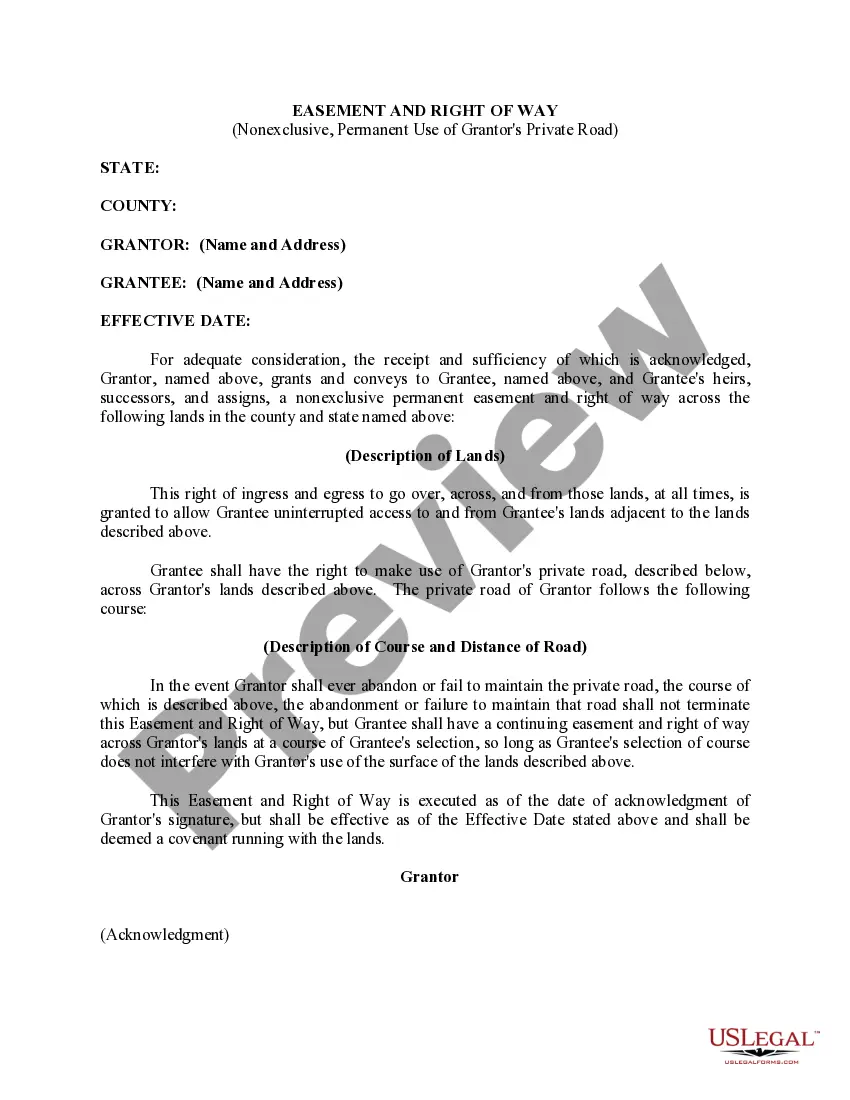
The Nonexclusive Easement and Right of Way to Use Grantor's Private Road is a legal document that allows one party (the Grantee) to use another party's (the Grantor's) private road for access. This easement is nonexclusive, meaning that the Grantor can also use the road, and it remains valid even if the Grantor abandons or fails to maintain the road. This form is essential for establishing clear usage rights between landowners, ensuring both parties have defined responsibilities and access. It differs from more formal road use agreements by being less restrictive and allowing multiple users.
Key parts of this document
- Grantor and Grantee information: Names and addresses of both parties.
- Effective date: The date the easement becomes valid.
- Description of lands: Specific land areas where the easement applies.
- Details about the private road: Course, distance, and access description.
- Provisions for abandonment: Clarification on the Grantee's rights if the road is not maintained.
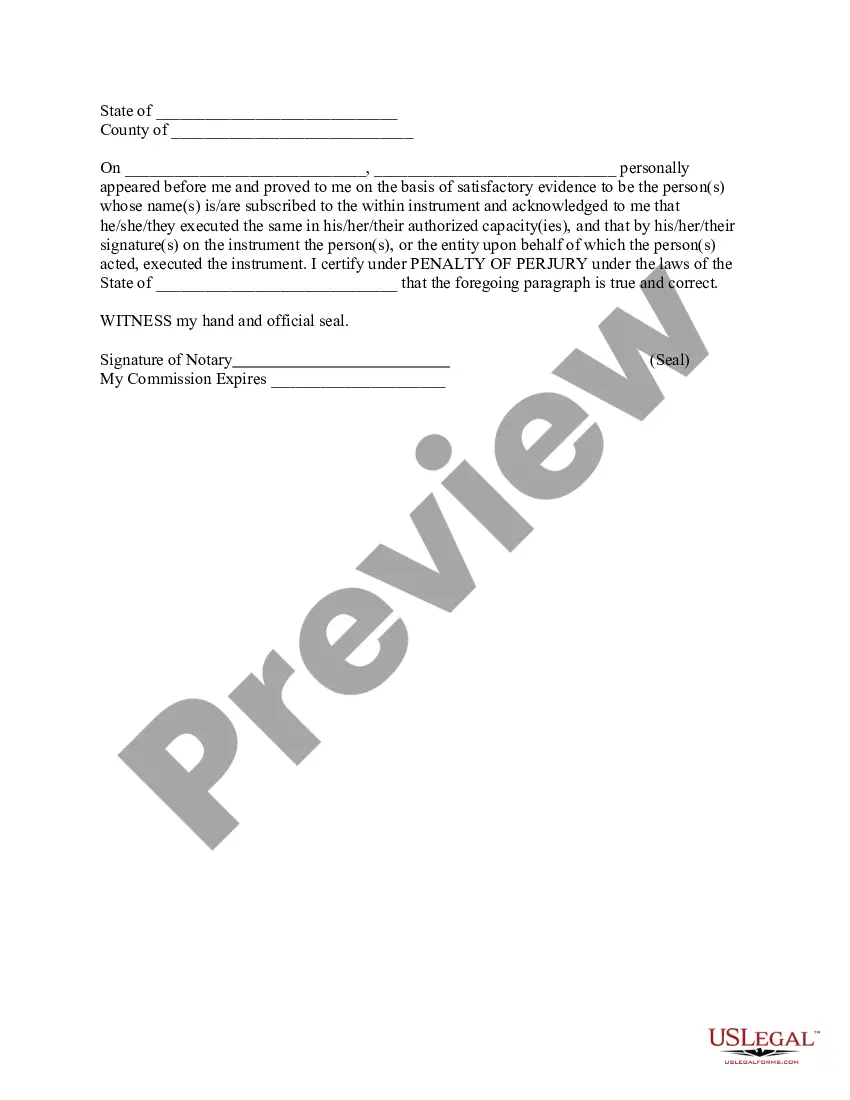
- Acknowledgment section: Required for legal recognition and notary approval.
When to use this document
This form is used when a landowner (Grantor) wants to allow another party (Grantee) to have access to their private road without relinquishing exclusive ownership. Typical scenarios include situations where a property owner sells or leases a nearby parcel of land but needs to grant right of way for access to that parcel. Additionally, it is useful in rural areas where access may not be publicly available and private road usage must be clearly outlined.
Who this form is for
This form is intended for:
- Property owners who wish to grant access to their private road.
- Individuals or businesses needing to access landlocked properties.
- Real estate agents involved in property sales involving easement agreements.
- Developers looking to establish access rights for residential or commercial projects.
Instructions for completing this form
- Identify the parties involved: Enter the names and addresses of the Grantor and Grantee.
- Specify the effective date: Provide the date when the easement will take effect.
- Describe the land: Clearly outline the lands affected by this easement, including any specific boundaries or landmarks.
- Detail the private road: Include a description of the private road and its course across the Grantor's land.
- Review and acknowledge: Both parties must read and acknowledge the terms before signing.
- Consider notarization: Arrange for a notary public to witness and sign the document as required for validity.
Is notarization required?
Notarization is required for this form to take effect. Our online notarization service, powered by Notarize, lets you verify and sign documents remotely through an encrypted video session, available 24/7.
Get your form ready online
Our built-in tools help you complete, sign, share, and store your documents in one place.
Make edits, fill in missing information, and update formatting in US Legal Forms—just like you would in MS Word.
Download a copy, print it, send it by email, or mail it via USPS—whatever works best for your next step.
Sign and collect signatures with our SignNow integration. Send to multiple recipients, set reminders, and more. Go Premium to unlock E-Sign.
If this form requires notarization, complete it online through a secure video call—no need to meet a notary in person or wait for an appointment.
We protect your documents and personal data by following strict security and privacy standards.

Make edits, fill in missing information, and update formatting in US Legal Forms—just like you would in MS Word.

Download a copy, print it, send it by email, or mail it via USPS—whatever works best for your next step.

Sign and collect signatures with our SignNow integration. Send to multiple recipients, set reminders, and more. Go Premium to unlock E-Sign.

If this form requires notarization, complete it online through a secure video call—no need to meet a notary in person or wait for an appointment.

We protect your documents and personal data by following strict security and privacy standards.
Mistakes to watch out for
- Failing to accurately describe the private road and lands involved.
- Not specifying the rights of the Grantee regarding maintenance and usage.
- Leaving out necessary signatures or acknowledgment from a notary.
- Using vague or ambiguous language that can lead to disputes.
Advantages of online completion
- Convenience of obtaining the document immediately as a download.
- Editability: Users can fill in their information directly in the form.
- Reliability through standardized legal templates drafted by licensed attorneys.
- Accessibility to create necessary agreements without requiring an attorney for basic forms.
Looking for another form?
Form popularity
FAQ
Quiet the Title. Allow the Purpose for the Easement to Expire. Abandon the Easement. Stop Using a Prescriptive Easement. Destroy the Reason for the Easement. Merge the Dominant and Servient Properties. Execute a Release Agreement.
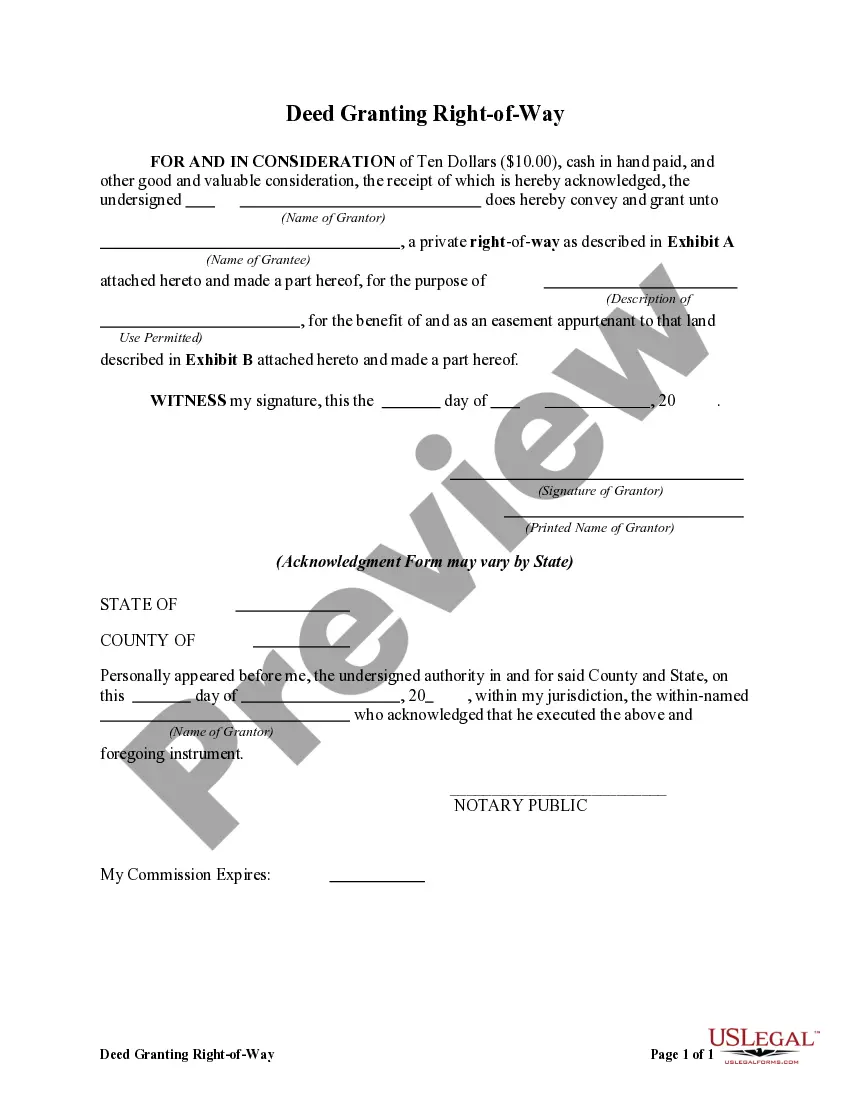
Give the document a simple title: Grant of Easement is sufficient. Identify the parties. You need to explain who the parties are to the agreement. The person granting the easement to his property is the Grantor and the person gaining access to the property is the Grantee.
Generally speaking, an easement is a more serious property right; it is the legal right to use someone else's land for a particular purpose. Easements are often recorded at the county clerk's office and encumber your property's title.Here, however, you probably do not need to take the step of granting an easement.
Express Grant by Instrument. An express grant by written instrument is the most common source of an easement. Implied. The owner of a large tract of land splits up the land with one or more parcels that do not abut a public highway or road. Necessity. Dedication.
An easement is a nonpossessory right to use and/or enter onto the real property of another without possessing it. It is "best typified in the right of way which one landowner, A, may enjoy over the land of another, B".
Easements are specified in a property deed, which is typically recorded at the county courthouse. However, deeds may be kept in other locations, such as a county tax assessor's office or county clerk's office.
An easement is a limited right to use another person's land for a stated purpose. Examples of easements include the use of private roads and paths, or the use of a landowner's property to lay railroad tracks or electrical wires.
What are Easements and Rights-of-Way? Easements are nonpossessory interests in real property. More simply, an easement is the right to use another's property for a specific purpose. Rights-of-way are easements that specifically grant the holder the right to travel over another's property.
An easement deed allows a party that is not the owner to use a portion of the land. It is a written agreement between two parties that spells out what part of the property is available for access and how it may be used. Since you are granting an easement to your land, you can set any terms and conditions you like.