Affidavit As to Principal's Competence At Time of Granting Power of Attorney
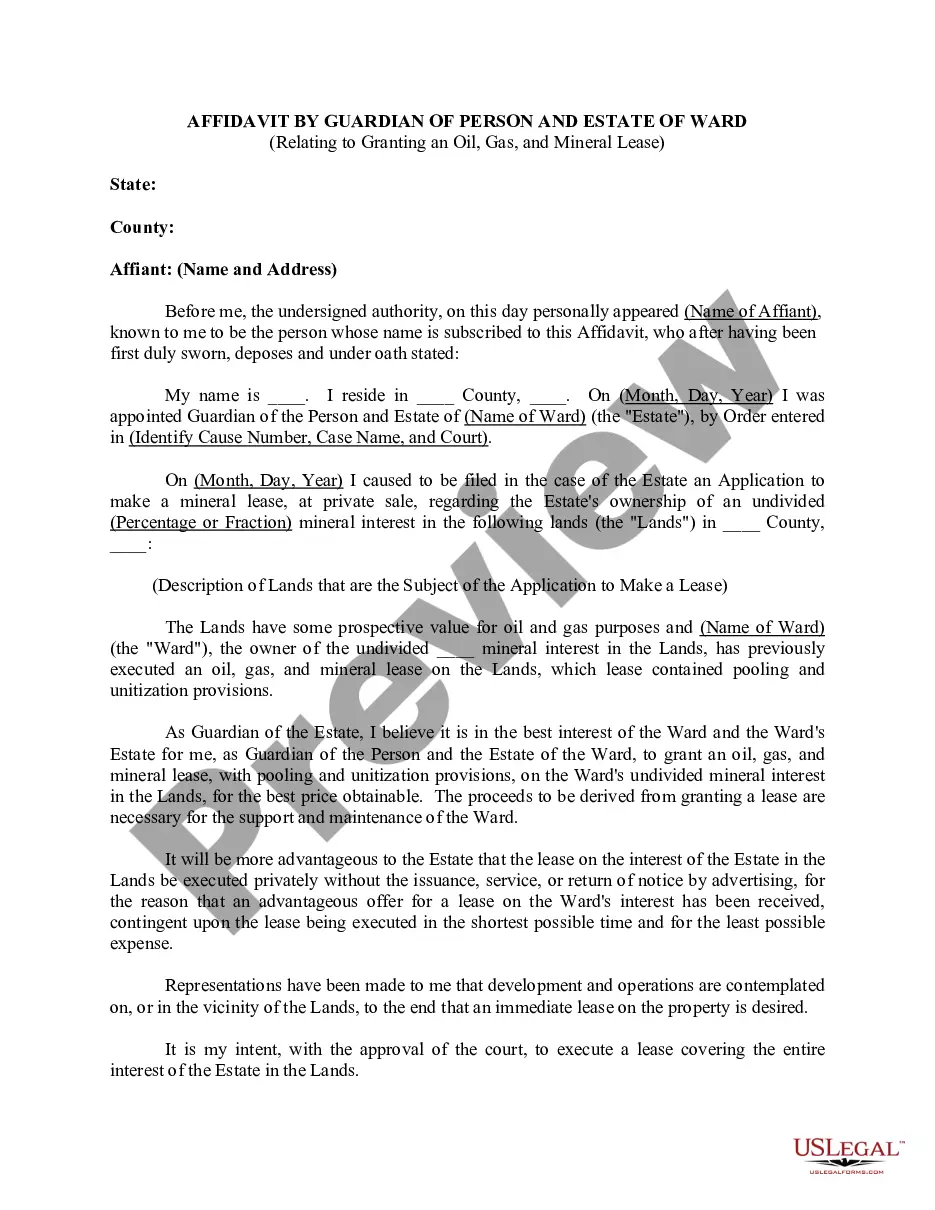
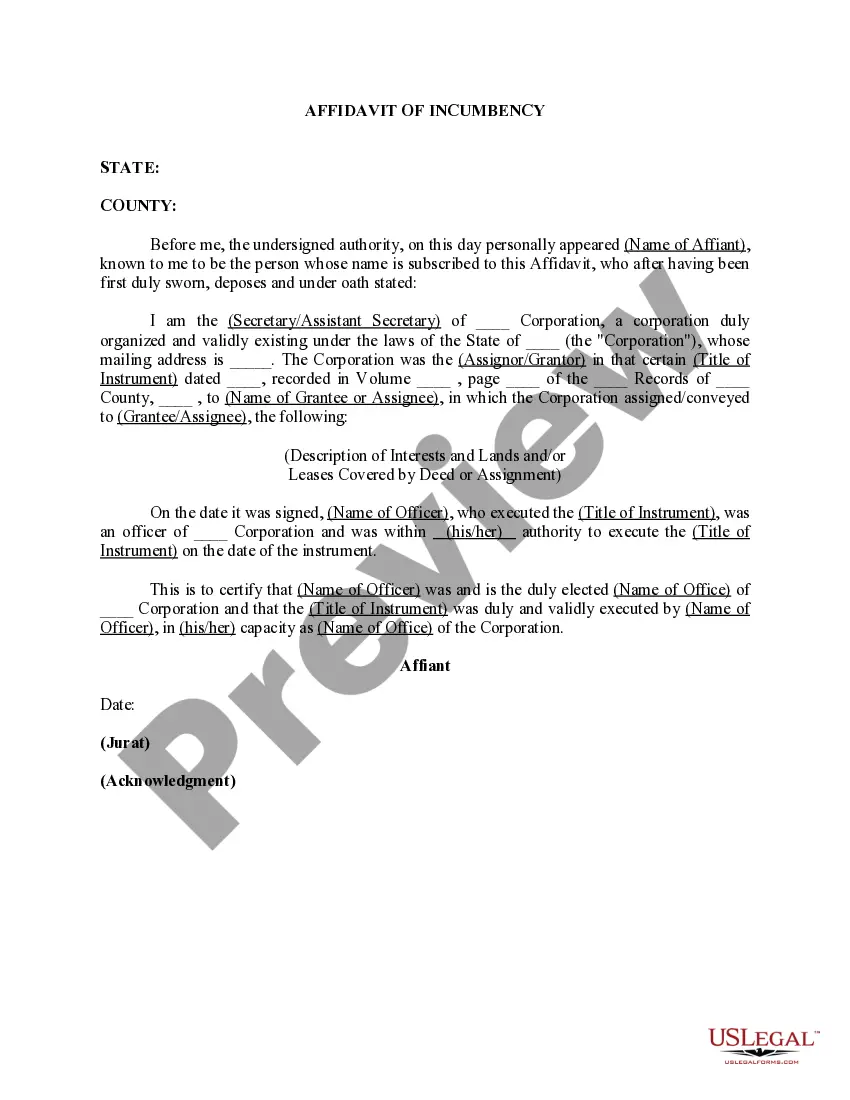
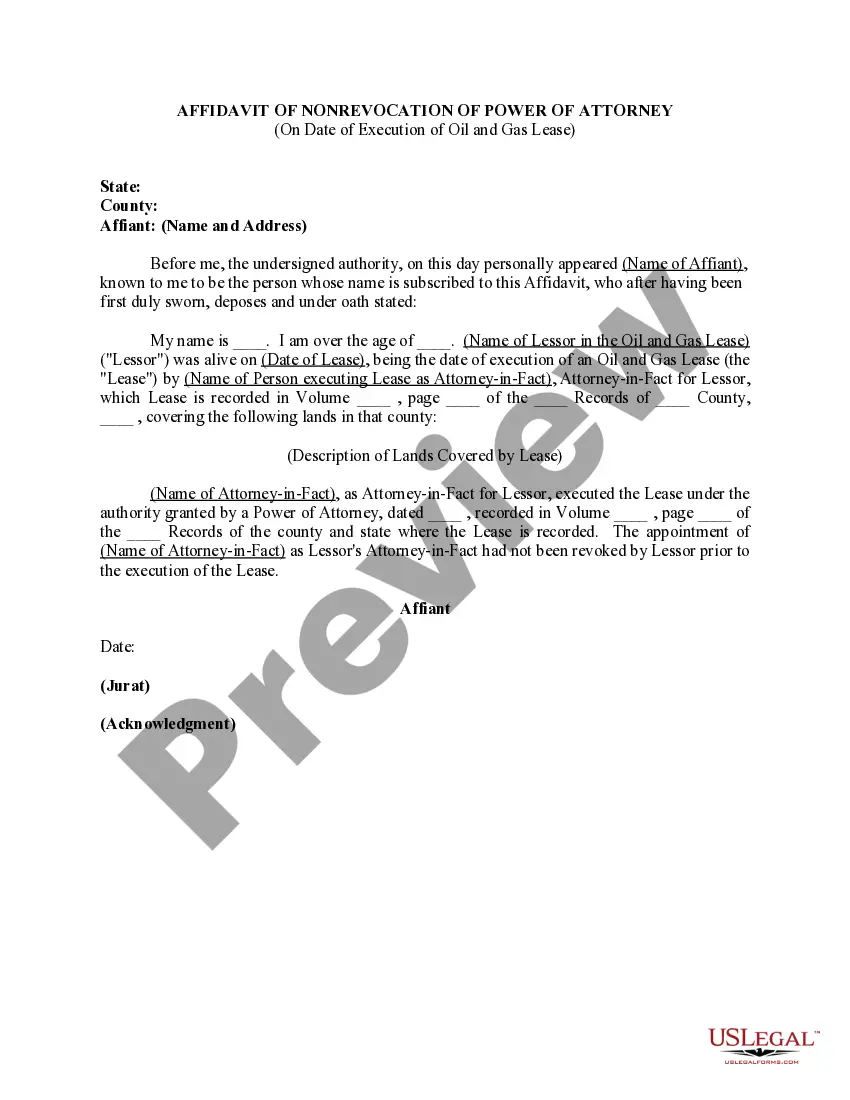
What is this form?
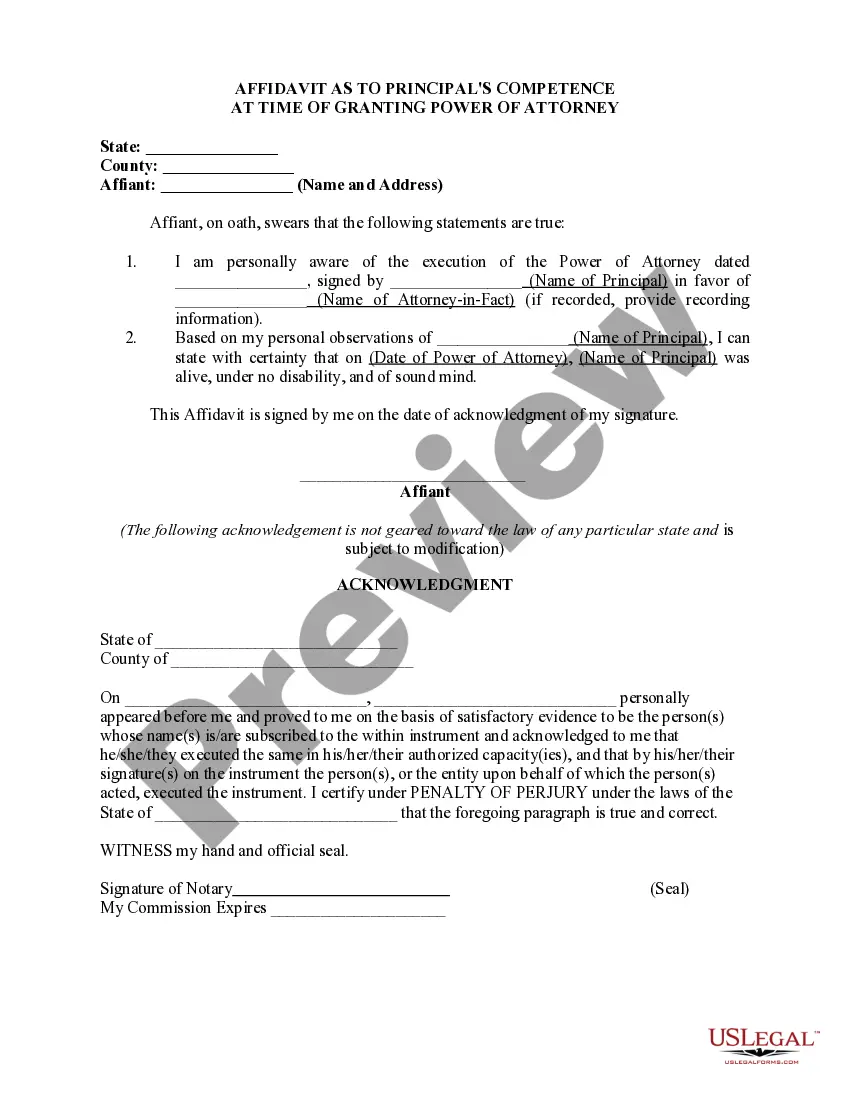
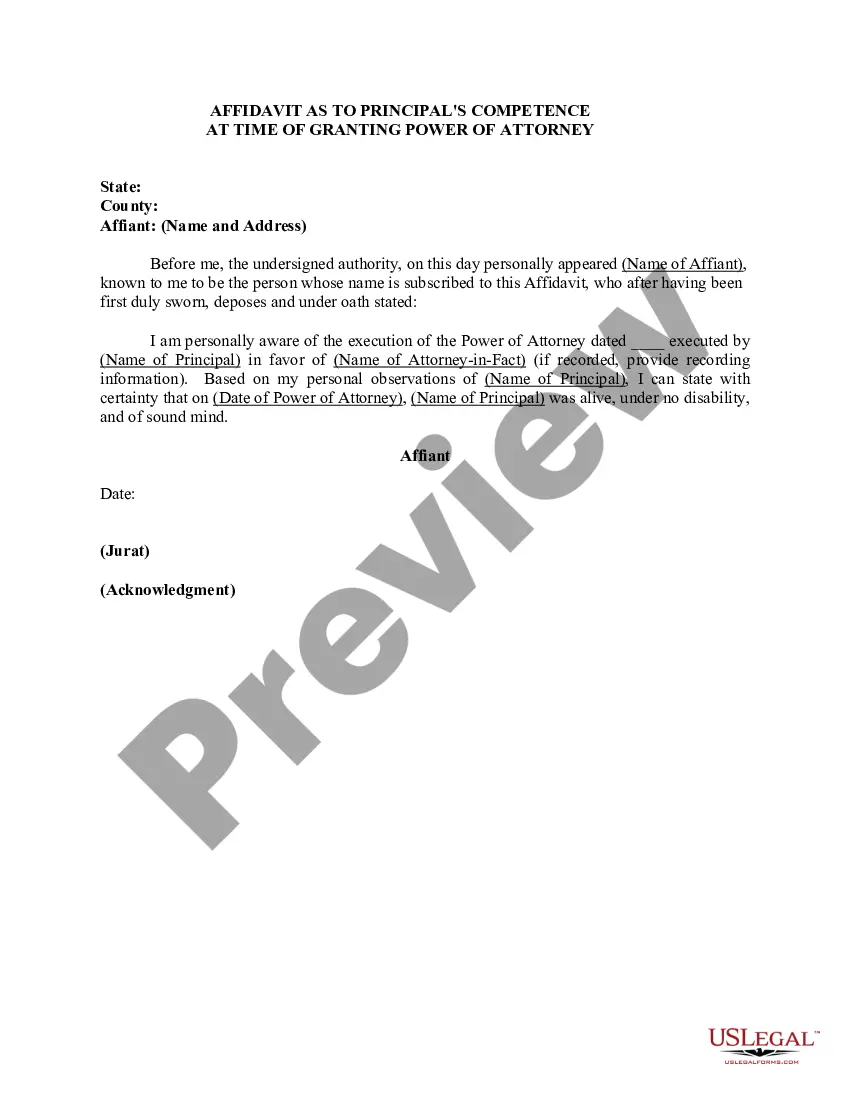
The Affidavit as to Principal's Competence at Time of Granting Power of Attorney is a legal document that verifies the mental capacity and presence of the principal when they signed a power of attorney. This form serves to affirm that the principal was alive and competent at the time the document was executed, providing necessary assurance for the validity of the power of attorney. Unlike general affidavits, this specific form addresses concerns related to the principal's mental state and is essential when disputes arise regarding the legitimacy of the power of attorney.
Form components explained
- Affiant information including name and address.
- Details of the Power of Attorney, including dates and names of parties involved.
- Affiant's declaration of the principal's competency and mental state at the time of signing.
- Notary acknowledgment section for legal validation.
- Signature of the affiant and the notary public, with space for the notaryâs official seal.
Common use cases
This affidavit is typically used in situations where the validity of a power of attorney is challenged, particularly concerning the mental competency of the principal at the time the document was signed. Common scenarios include disputes among family members about the principal's ability to make informed decisions, or when a financial institution requires proof of the principal's state of mind for transactions.
Who this form is for
- Individuals acting as an affiant to affirm the competency of a principal.
- Attorneys or legal representatives involved in disputes regarding powers of attorney.
- Family members who need to confirm the mental clarity of an elderly relative during legal proceedings.
How to prepare this document
- Identify the affiant by providing their name and address at the top of the form.
- Clearly state the details of the Power of Attorney, including the date and names of the principal and attorney-in-fact.
- Affirm the principal's competency by indicating that they were alive and of sound mind on the given date.
- Complete the acknowledgment section for the notary by providing all necessary details.
- Sign and date the affidavit as the affiant and have it notarized to confirm its validity.
Notarization guidance
Yes, this form must be notarized to be legally valid. Proper notarization ensures that the statements made by the affiant are truthful and legally binding. US Legal Forms offers integrated online notarization services available 24/7, providing a secure video call to finalize the documentation without needing to travel.
Get your form ready online
Our built-in tools help you complete, sign, share, and store your documents in one place.
Make edits, fill in missing information, and update formatting in US Legal Forms—just like you would in MS Word.
Download a copy, print it, send it by email, or mail it via USPS—whatever works best for your next step.
Sign and collect signatures with our SignNow integration. Send to multiple recipients, set reminders, and more. Go Premium to unlock E-Sign.
If this form requires notarization, complete it online through a secure video call—no need to meet a notary in person or wait for an appointment.
We protect your documents and personal data by following strict security and privacy standards.

Make edits, fill in missing information, and update formatting in US Legal Forms—just like you would in MS Word.

Download a copy, print it, send it by email, or mail it via USPS—whatever works best for your next step.

Sign and collect signatures with our SignNow integration. Send to multiple recipients, set reminders, and more. Go Premium to unlock E-Sign.

If this form requires notarization, complete it online through a secure video call—no need to meet a notary in person or wait for an appointment.

We protect your documents and personal data by following strict security and privacy standards.
Common mistakes
- Failing to provide complete identification information for the affiant.
- Not accurately reflecting the date of the Power of Attorney in the affidavit.
- Neglecting to sign the affidavit in the presence of a notary public.
- Omitting specific details about the principal's mental state which can lead to disputes.
Why use this form online
- Convenient access to a ready-made legal document that can be downloaded immediately.
- Editable templates that allow users to customize fields as needed.
- Reliability and accuracy ensured by templates drafted by licensed attorneys.
- This affidavit can be a vital document in legal proceedings related to the validity of a power of attorney.
- Providing clear and documented evidence of the principal's competency can help prevent disputes.
- It is important to ensure that the affidavit complies with local legal standards for notarization and form completion.
Quick recap
- The affidavit confirms the principal's competency at the time of signing the power of attorney.
- It is essential to have this document notarized for it to be valid.
- Understanding the key components will help in accurately filling out the form.
- This affidavit is useful in mitigating disputes related to the mental capacity of the principal.
Looking for another form?
Form popularity
FAQ
Witnesses are generally at least 18 years of age and cannot be the agent, the notary, any relative by blood, adoption, or marriage, or a third party who intends to interact with the agent (e.g., medical doctor, banking professional, etc.)
Affidavit of power of attorney. A power of attorney (POA) is a legal document signed by one person, known as the principal, that gives another person, the agent, the authority to act on the principal's behalf.This type of affidavit verifies certain financial information relating to the affiant.
An authorised person includes a Justice of the Peace (JP), a solicitor or barrister. After witnessing your signature, the witness must also sign your affidavit.
After the principal's name, write by and then sign your own name. Under or after the signature line, indicate your status as POA by including any of the following identifiers: as POA, as Agent, as Attorney in Fact or as Power of Attorney.
The ordinary process for other documents such as letters, forms or general legal documents is that you write 'p. p' before your signature, to demonstrate that you are signing for someone else. This will show the reader that you've signed with the authority of the intended signee.
Name, signature, and address of the principal. Name, signature, and address of the agent. Properties and activities under the authority of the agent. Date of effect and termination of authority. Compensation to services of the agent.
If your parent has not established durable POA or has become incompetent after establishing a nondurable POA, you will need to petition a local family or probate court to declare your parent incompetent and grant you legal guardianship. Legal guardianship is called conservatorship in some states.
A third party may require you, as the Attorney-in-Fact, to sign an affidavit stating that you are validly exercising your duties under the Power of Attorney. If you want to use the Power of Attorney, you do need to sign the affidavit if so requested by the third party.
You can use a Power of Attorney for almost any financial purpose including: signing legally binding documents. operating bank accounts. paying bills.