Affidavit as to Principal's Competence at Time of Granting Power of Attorney
Overview of this form
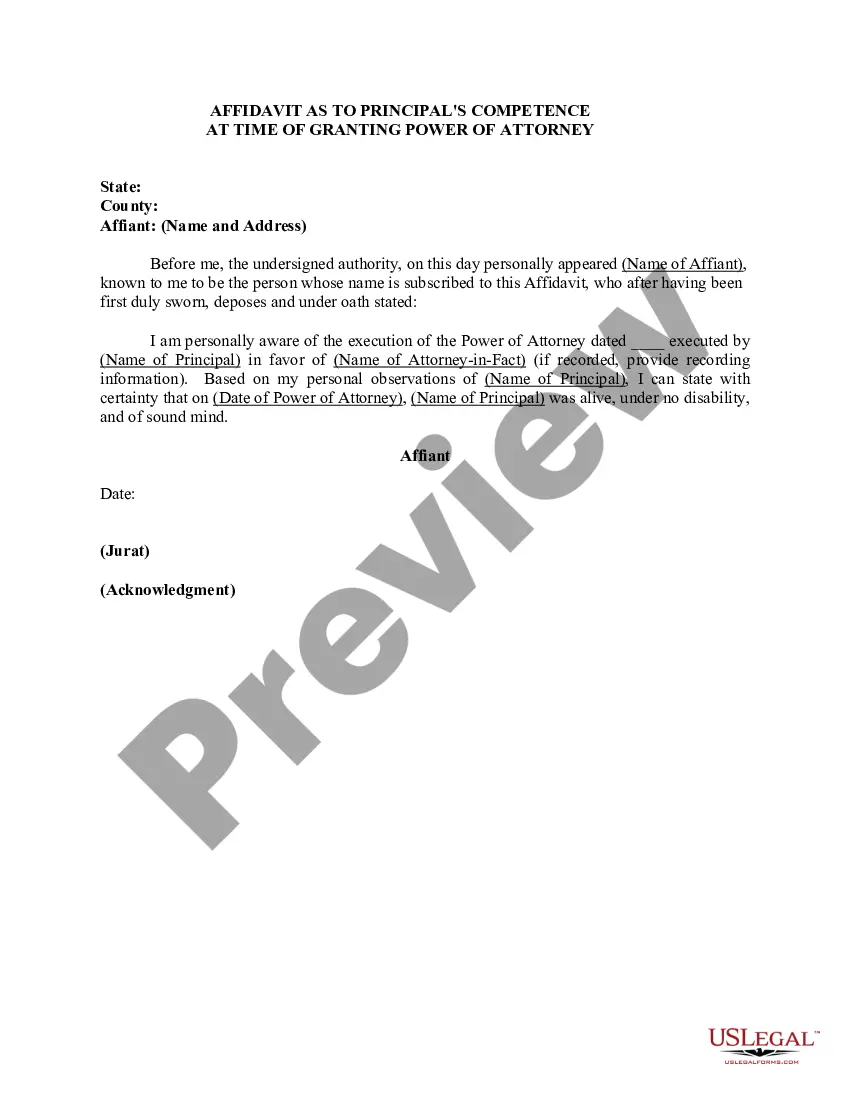
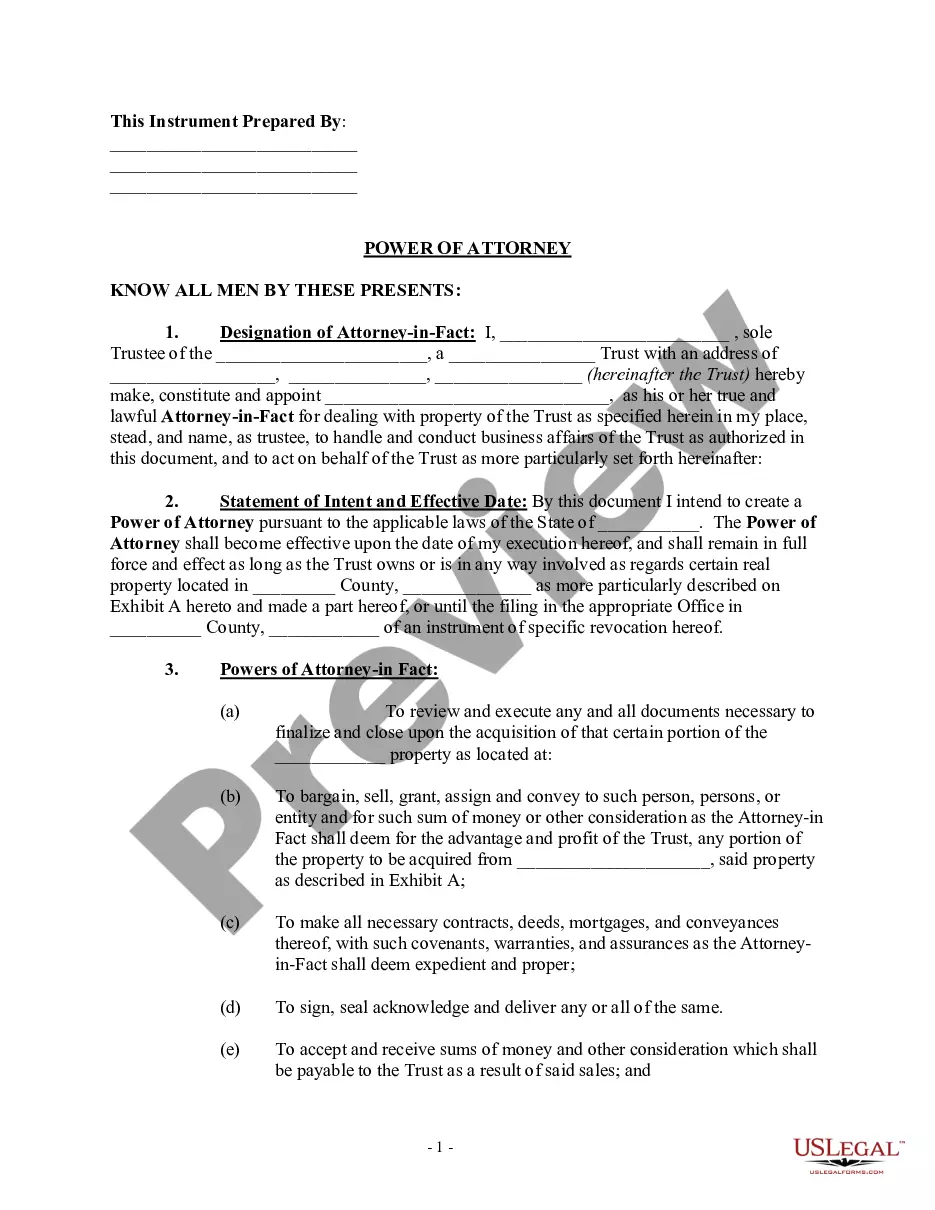
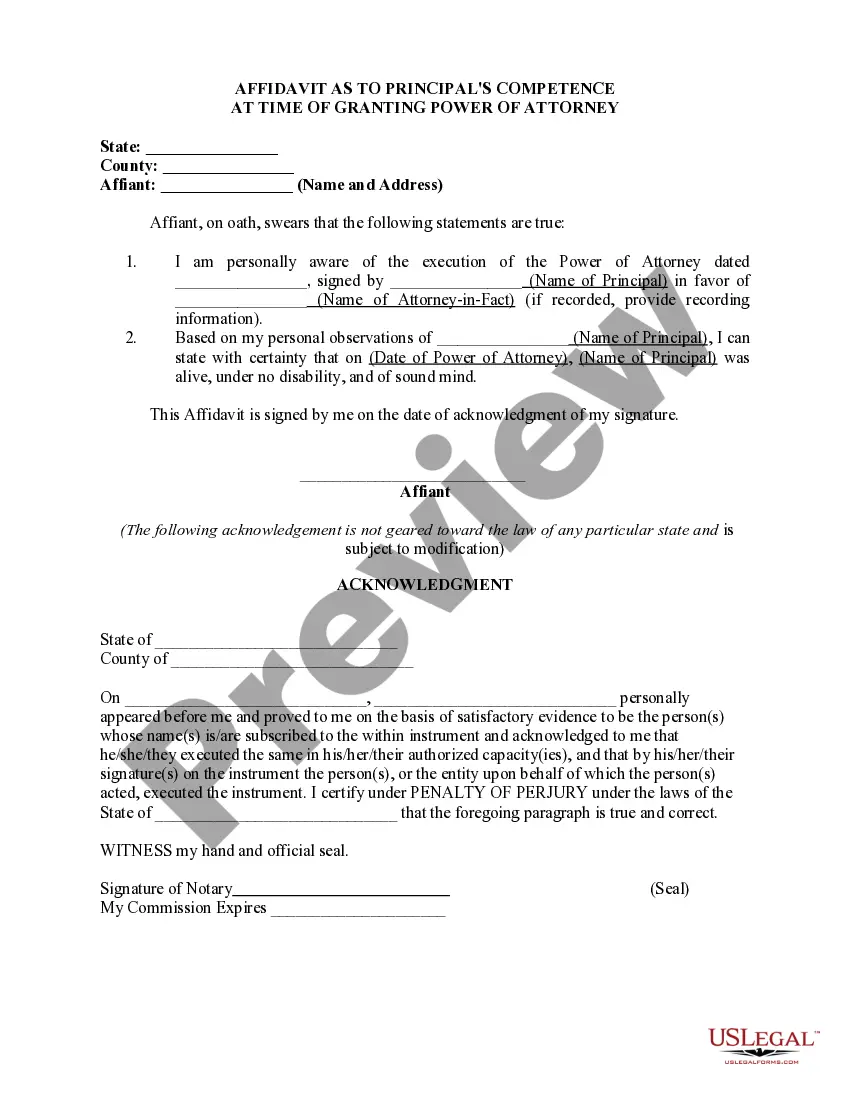
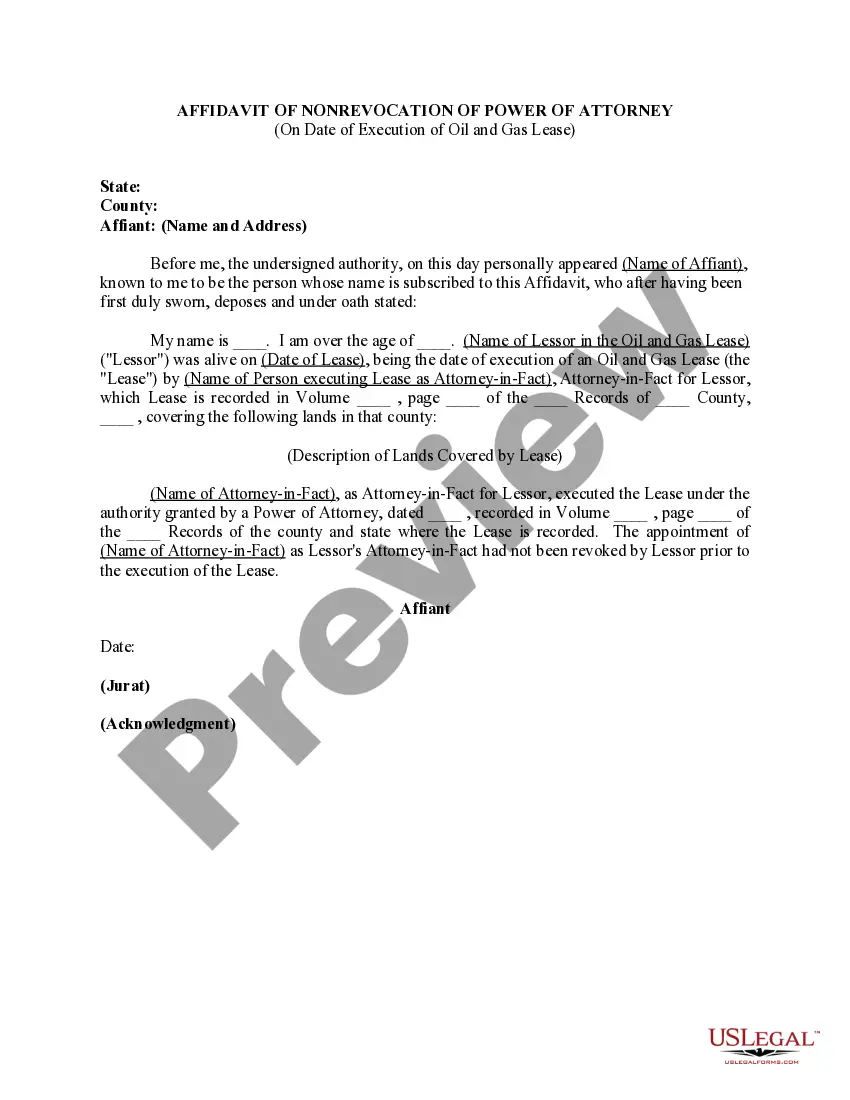
The Affidavit as to Principal's Competence at Time of Granting Power of Attorney is a legal document that verifies the principal's mental competence when they granted power of attorney. This affidavit serves as evidence, affirming that the principal was of sound mind, not under any disability, and legally capable of making their own decisions at the time the power of attorney was executed. It is distinct from other power of attorney documents as it specifically addresses the principal's competence, which can be crucial in legal contexts.
Main sections of this form
- Name and address of the affiant.
- Name of the principal and attorney-in-fact.
- Date the power of attorney was executed.
- Personal observations about the principal's mental state and capacity.
- Affiant's signature and date, along with jurat and acknowledgment notations.
When this form is needed
This form is used when there is a need to confirm the mental competence of the principal at the time they granted power of attorney. It is applicable in situations where the validity of the power of attorney may be questioned, such as in cases involving disputes among family members or challenges to the principal's decisions. This affidavit can protect the attorney-in-fact and ensure that the principal's intentions are upheld legally.
Who can use this document
- Individuals acting as an attorney-in-fact who need to establish the principal's competence.
- Family members or caregivers responsible for managing the affairs of a principal.
- Attorneys and legal representatives involved in estate planning or elder law.
- Anyone requiring documentation to dispute the powers granted through a power of attorney.
Instructions for completing this form
- Identify the affiant by providing their name and address.
- Fill in the name of the principal and the attorney-in-fact.
- Provide the date when the power of attorney was executed.
- Document personal observations regarding the principal's mental capacity at that time.
- Complete the jurat section by including the affiant's signature and the date.
Does this form need to be notarized?
This form does not typically require notarization unless specified by local law. However, it is crucial to consult with a legal professional or local regulations to ensure compliance and authenticity.
Get your form ready online
Our built-in tools help you complete, sign, share, and store your documents in one place.
Make edits, fill in missing information, and update formatting in US Legal Forms—just like you would in MS Word.
Download a copy, print it, send it by email, or mail it via USPS—whatever works best for your next step.
Sign and collect signatures with our SignNow integration. Send to multiple recipients, set reminders, and more. Go Premium to unlock E-Sign.
If this form requires notarization, complete it online through a secure video call—no need to meet a notary in person or wait for an appointment.
We protect your documents and personal data by following strict security and privacy standards.

Make edits, fill in missing information, and update formatting in US Legal Forms—just like you would in MS Word.

Download a copy, print it, send it by email, or mail it via USPS—whatever works best for your next step.

Sign and collect signatures with our SignNow integration. Send to multiple recipients, set reminders, and more. Go Premium to unlock E-Sign.

If this form requires notarization, complete it online through a secure video call—no need to meet a notary in person or wait for an appointment.

We protect your documents and personal data by following strict security and privacy standards.
Common mistakes
- Forgetting to include the date the power of attorney was executed.
- Not providing sufficient details about the affiant's observations.
- Leaving out the affiant's signature or failing to date the affidavit.
- Assuming that notarization is not needed without checking state laws.
Benefits of completing this form online
- Convenience of filling out and downloading from anywhere at any time.
- Editability allows for customization to fit specific needs.
- Reliability of forms drafted by licensed attorneys ensures legal validity.
Legal use & context
- Acts as a safeguard against claims of incapacity after the principal has created a power of attorney.
- Confirms the legal soundness of the principal's decisions at the time of the power granting.
- Facilitates smoother transactions for the attorney-in-fact when dealing with third parties who might be skeptical about the authority granted.
What to keep in mind
- The affidavit verifies that the principal was competent at the time of granting power of attorney.
- It is crucial for protecting the interests of all parties involved in the power of attorney agreement.
- Complete the affidavit accurately and ensure it is notarized for legal validity.
Looking for another form?
Form popularity
FAQ
If your parent has not established durable POA or has become incompetent after establishing a nondurable POA, you will need to petition a local family or probate court to declare your parent incompetent and grant you legal guardianship. Legal guardianship is called conservatorship in some states.
Name, signature, and address of the principal. Name, signature, and address of the agent. Properties and activities under the authority of the agent. Date of effect and termination of authority. Compensation to services of the agent.
Affidavit of power of attorney. A power of attorney (POA) is a legal document signed by one person, known as the principal, that gives another person, the agent, the authority to act on the principal's behalf.This type of affidavit verifies certain financial information relating to the affiant.
You can use a Power of Attorney for almost any financial purpose including: signing legally binding documents. operating bank accounts. paying bills.
An authorised person includes a Justice of the Peace (JP), a solicitor or barrister. After witnessing your signature, the witness must also sign your affidavit.
Draft a list of special powers. Decide what powers are springing. Pick an agent and a successor agent. Note the expiration date. Compile the information into one document. Execute the power of attorney letter.
Your name, address, and signature as the principal. The name, address, and signature of your Agent. The activities and properties under the Agent's authority. The start and termination dates of the Agent's powers. Any compensation you will give to the Agent.
Witnesses are generally at least 18 years of age and cannot be the agent, the notary, any relative by blood, adoption, or marriage, or a third party who intends to interact with the agent (e.g., medical doctor, banking professional, etc.)
A third party may require you, as the Attorney-in-Fact, to sign an affidavit stating that you are validly exercising your duties under the Power of Attorney. If you want to use the Power of Attorney, you do need to sign the affidavit if so requested by the third party.