Oklahoma Marital Domestic Separation and Property Settlement Agreement Adult Children Parties May have Joint Property or Debts where Divorce Action Filed
Overview of this form
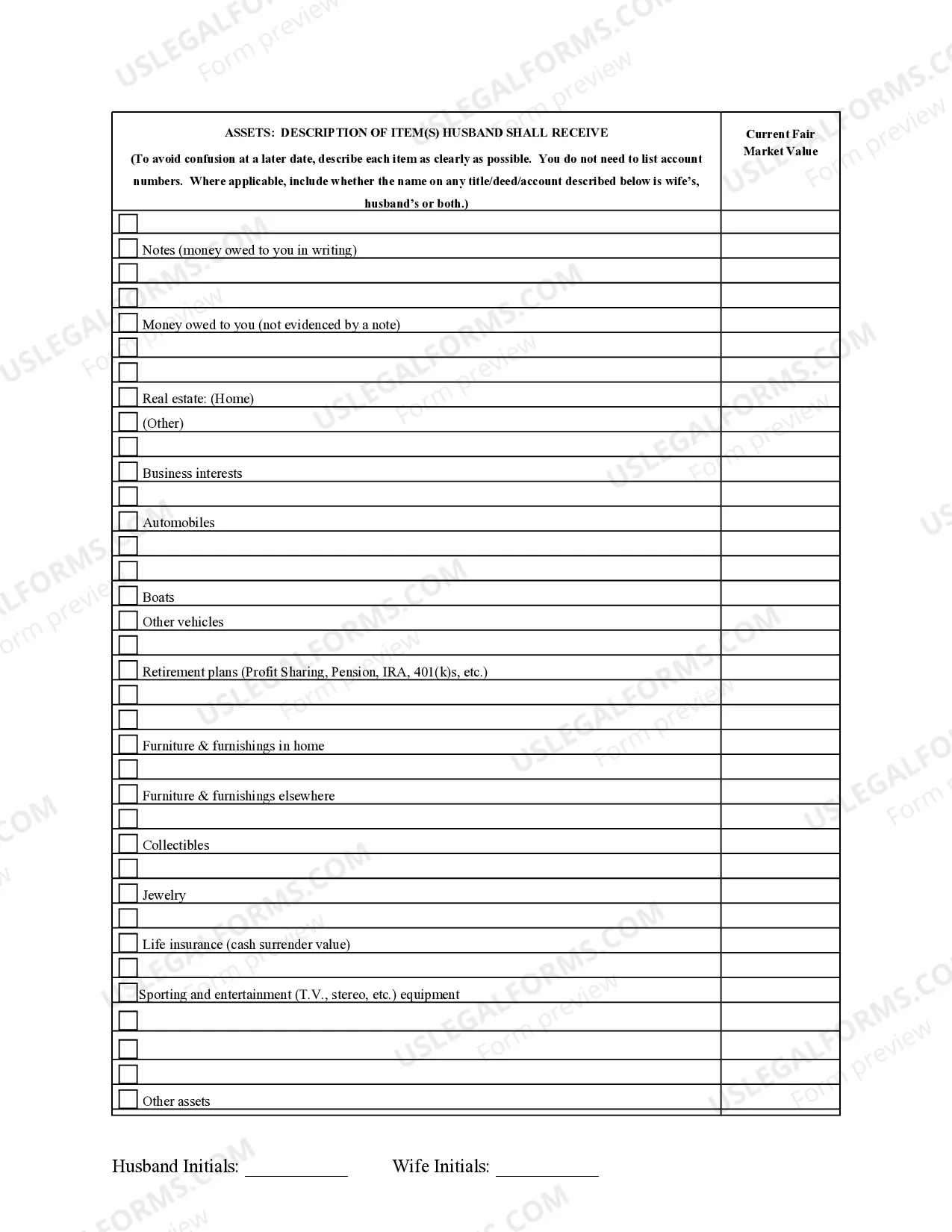
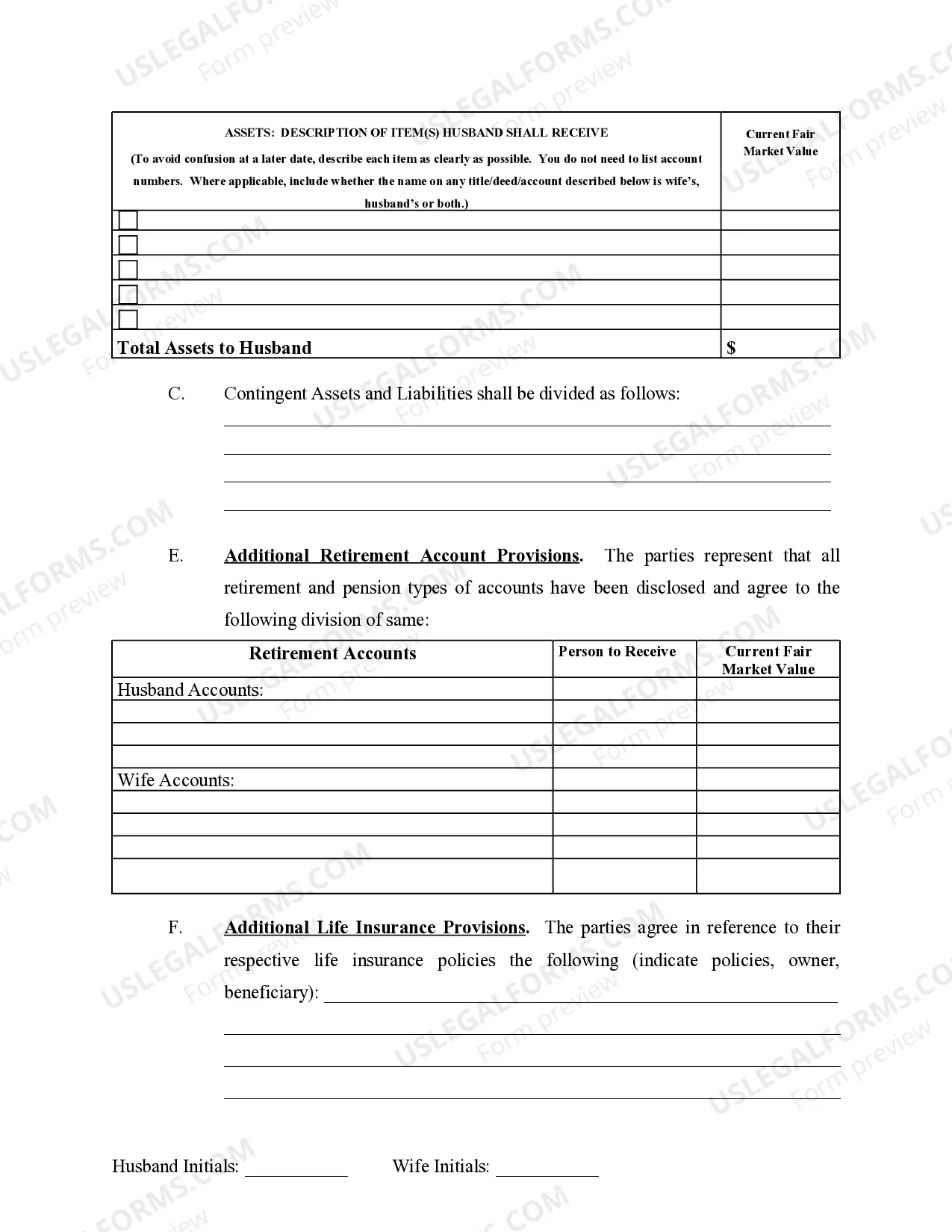
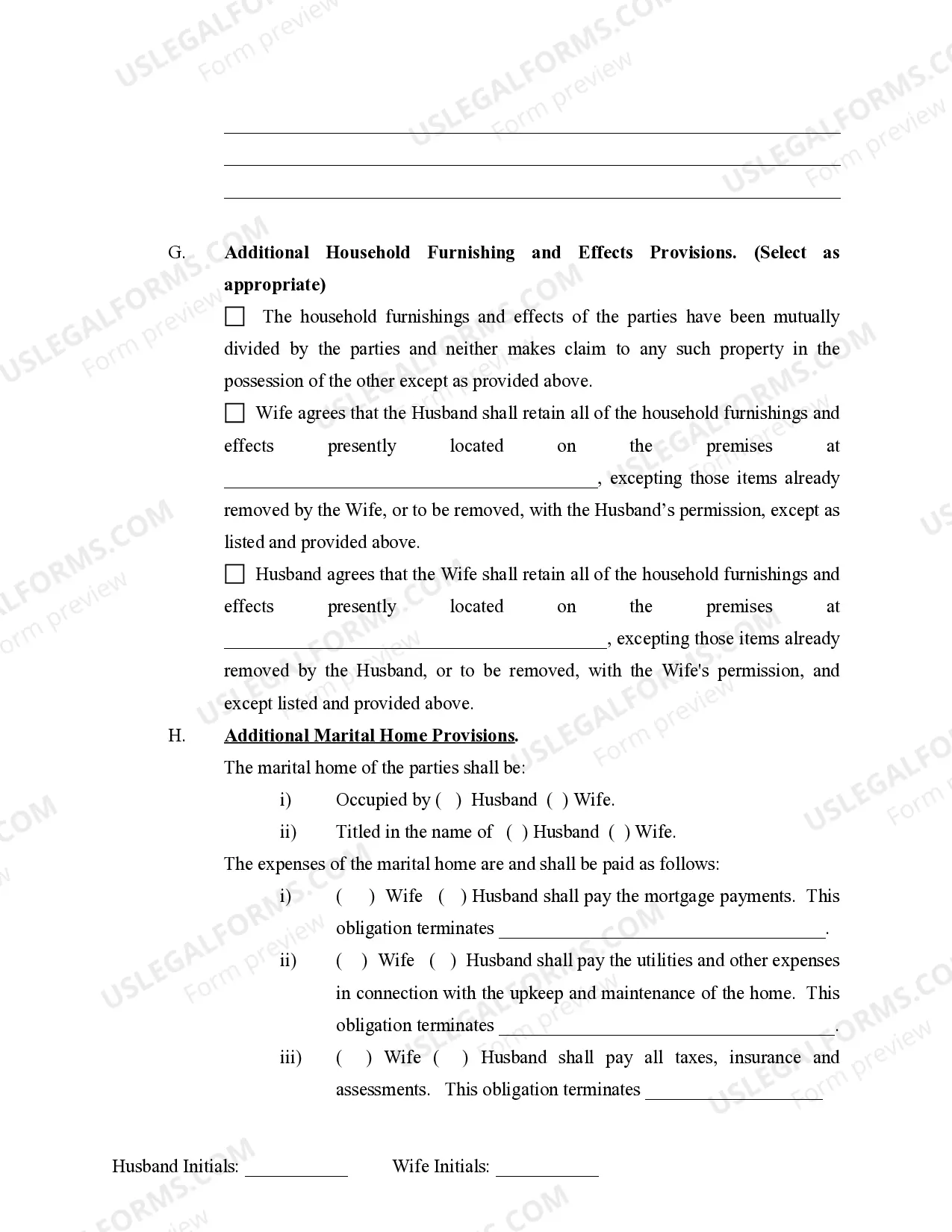
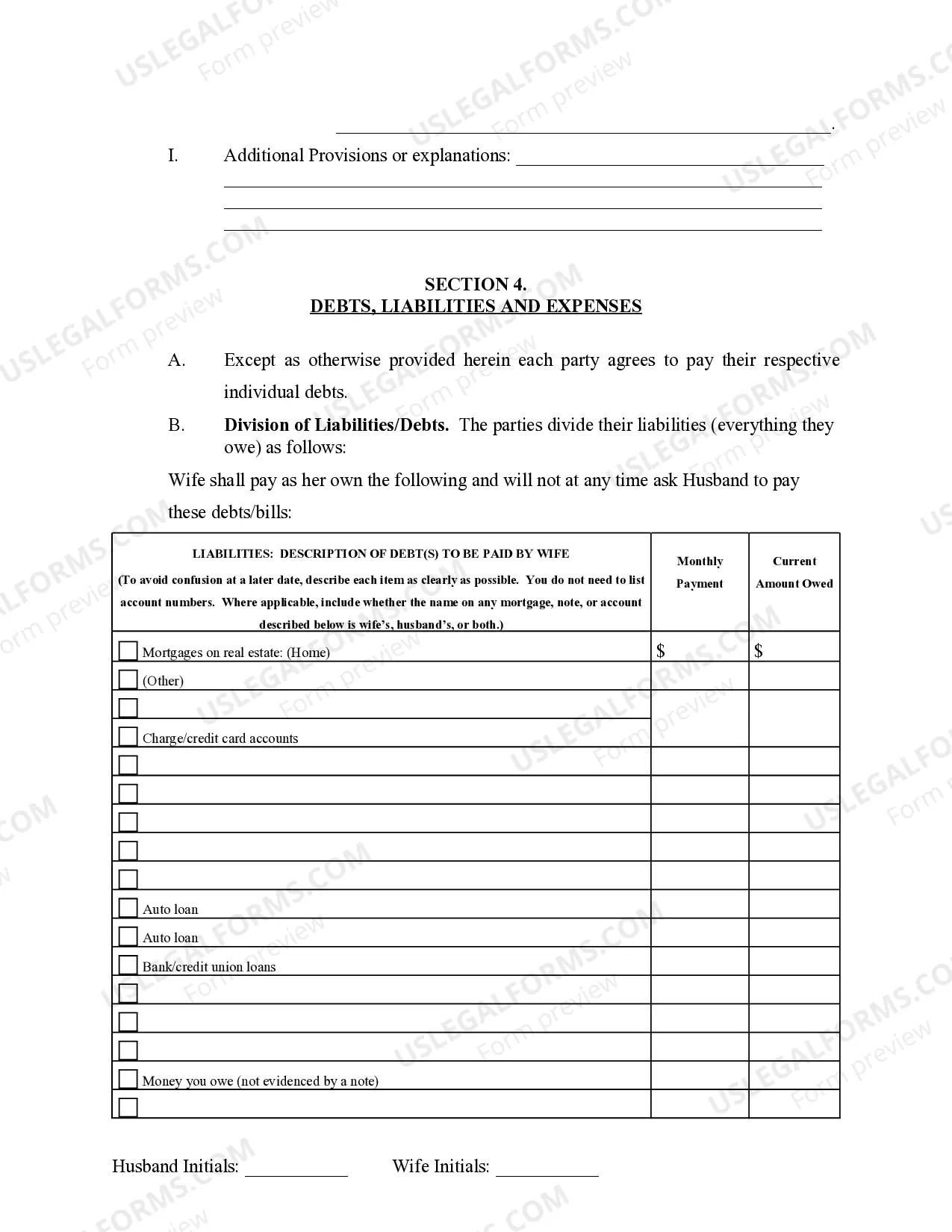
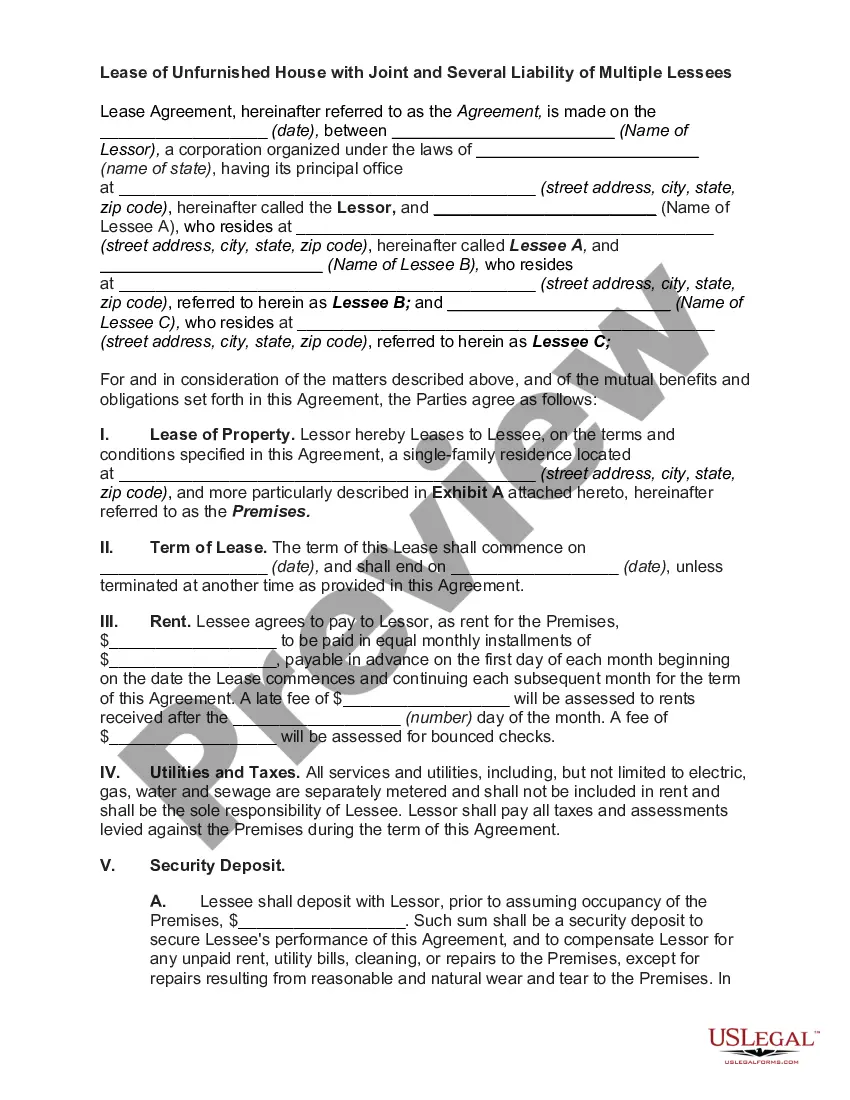
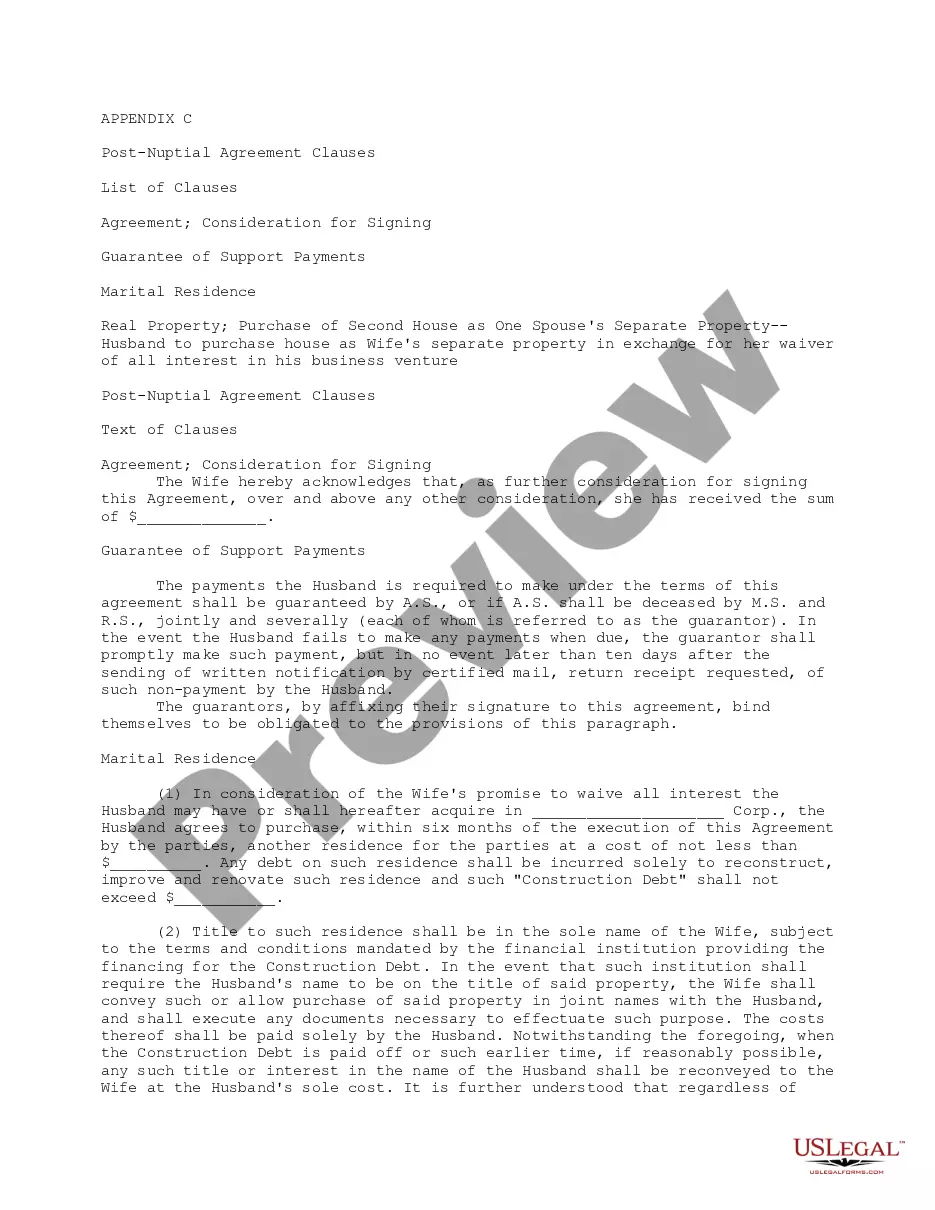
The Marital Domestic Separation and Property Settlement Agreement is a legal document designed for married couples with adult children who are in the process of divorce. This agreement outlines the terms for the division of shared property and debts, as well as the rights and obligations of each spouse. Unlike other separation agreements, this form specifically addresses circumstances where both parties have adult children and includes detailed provisions for financial disclosures and asset distribution. It is tailored for use in the State of Oklahoma.
Key components of this form
- Separation relinquishment of marital rights
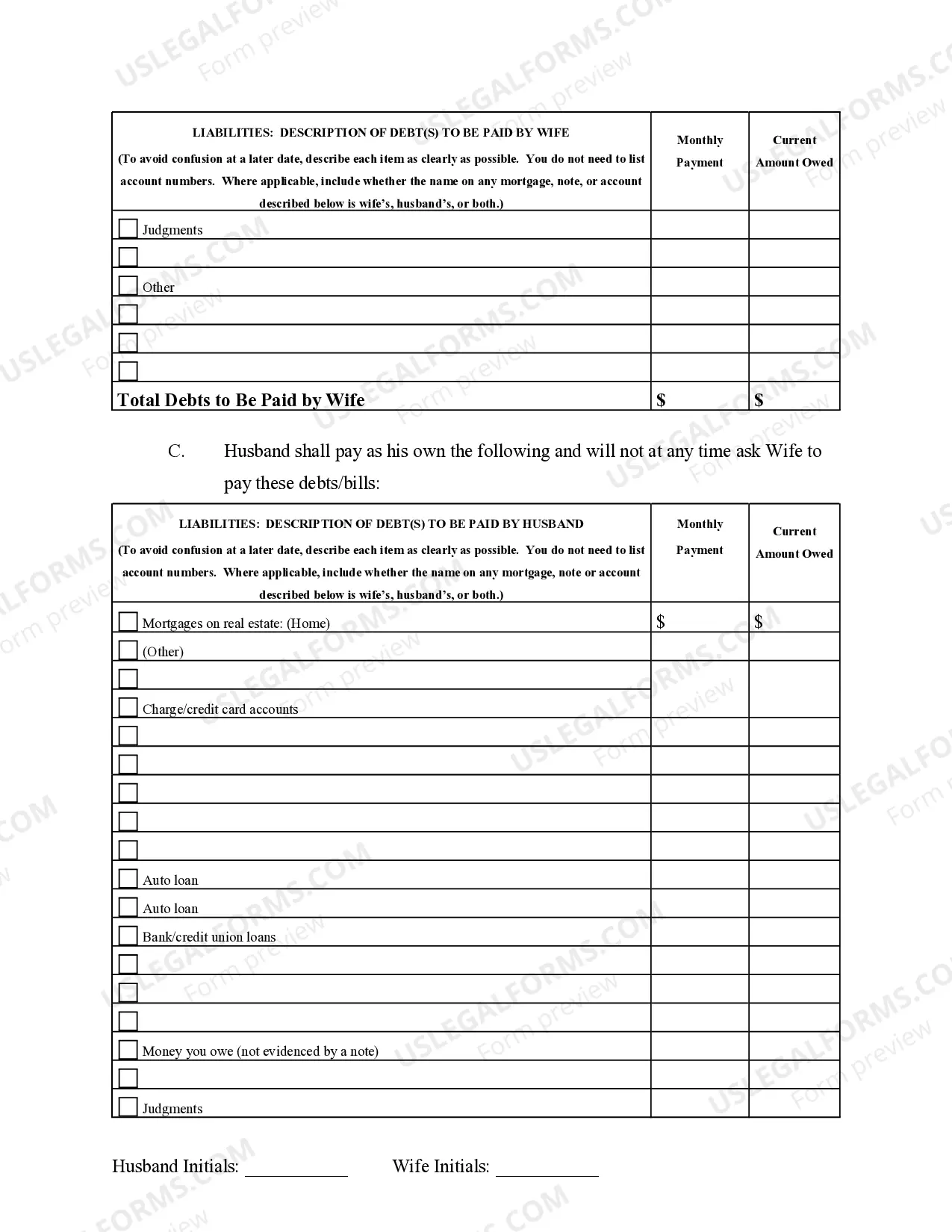
- Financial disclosures regarding assets and liabilities
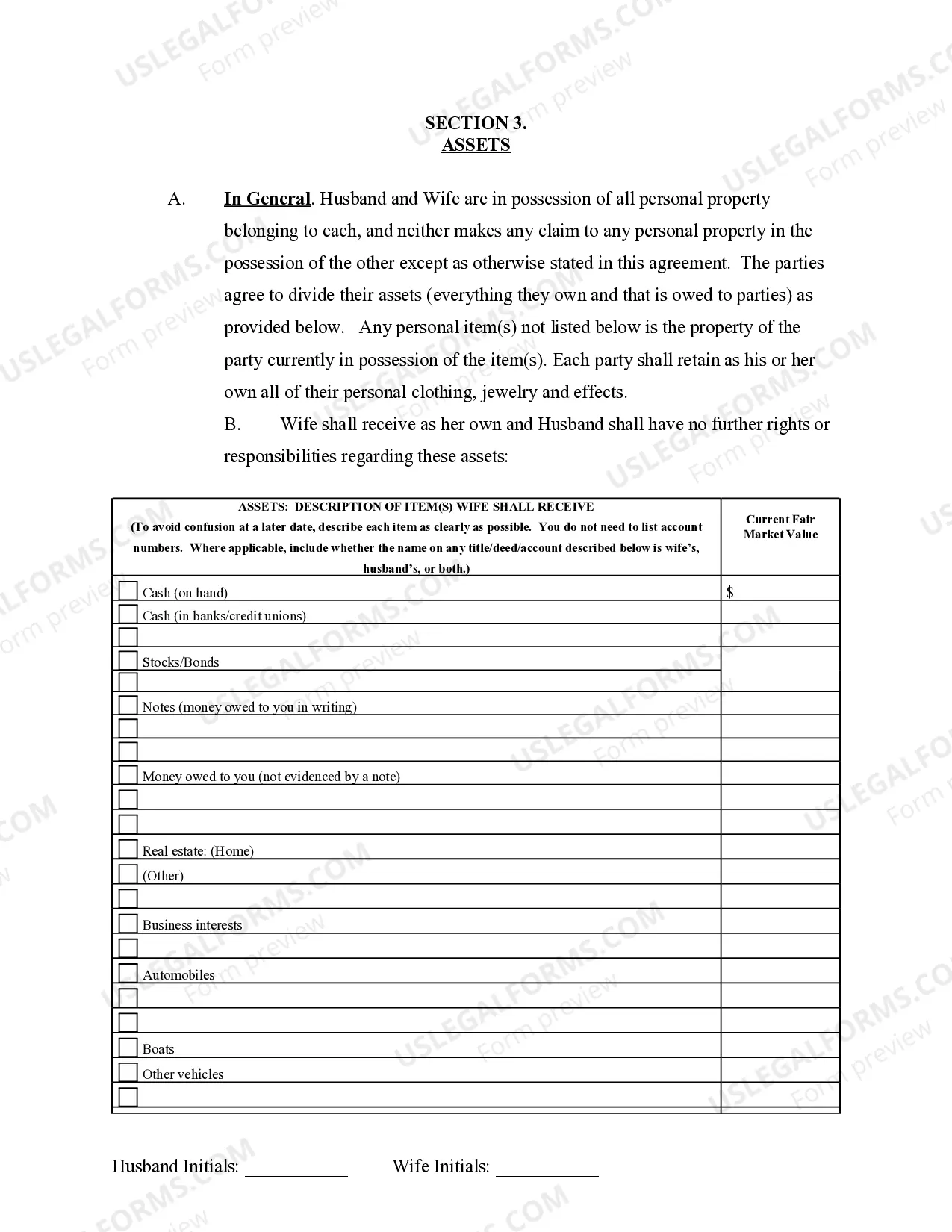
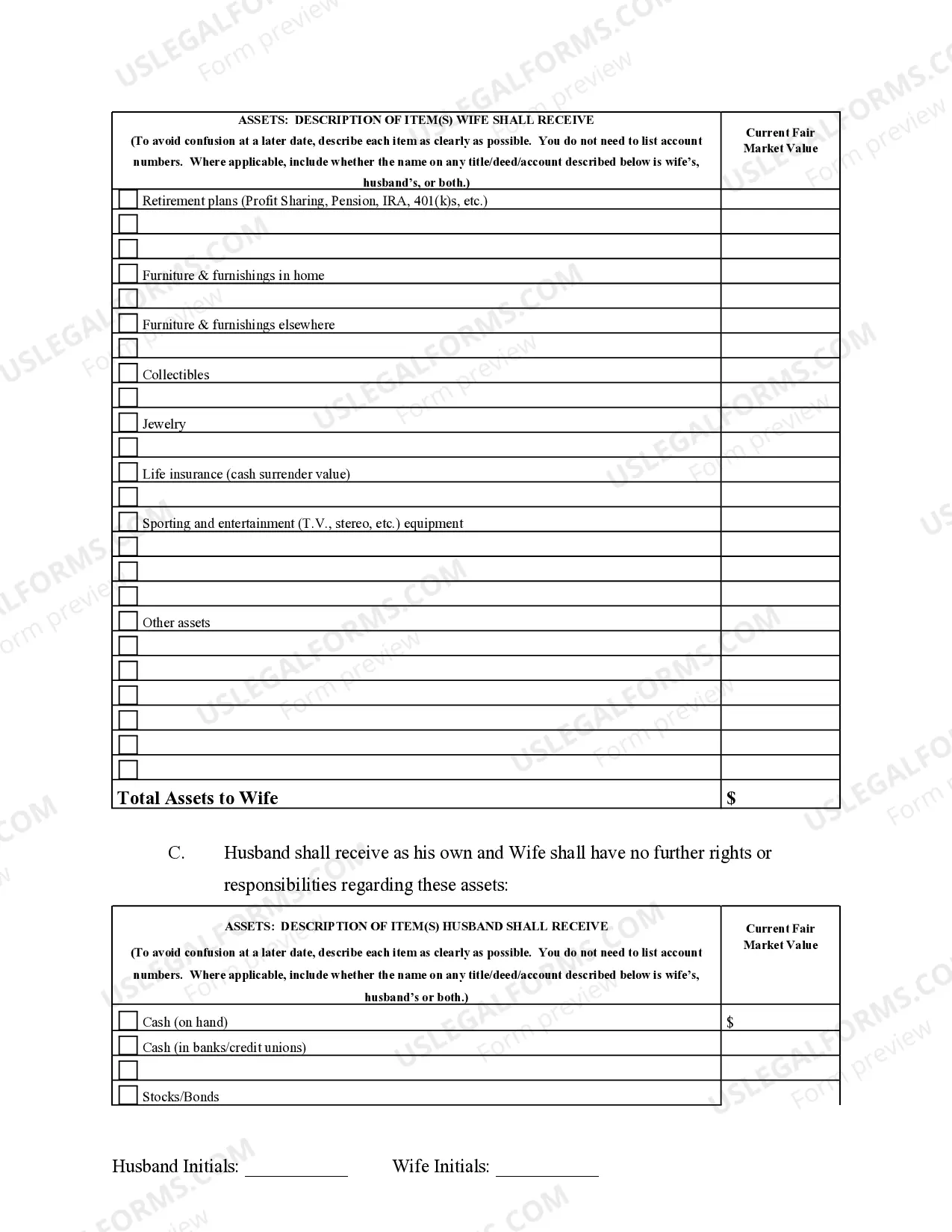
- Detailed division of assets and debts
- Provisions for spousal support (alimony)
- Mutual indemnity and tax responsibilities
- Approval by the District Court



When to use this document
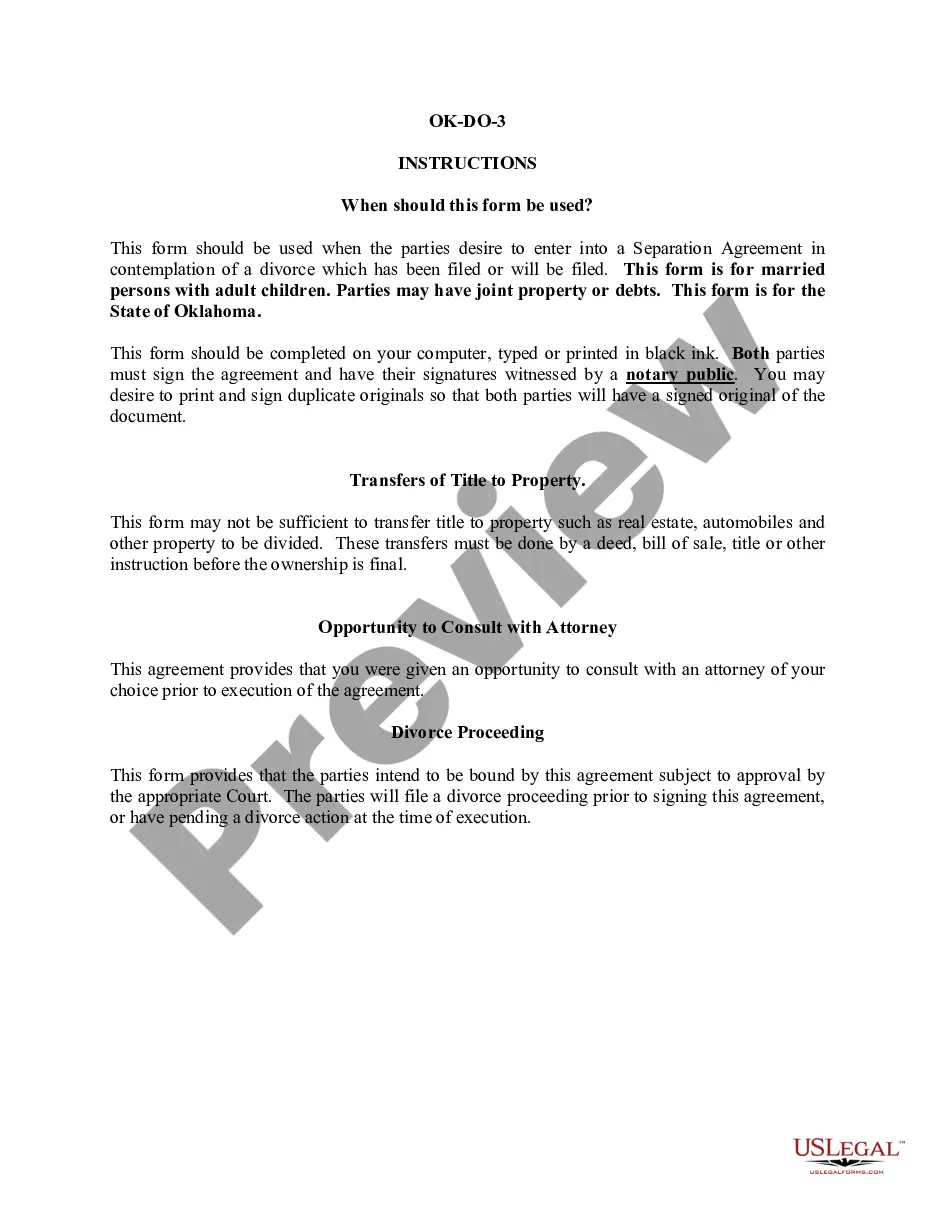
This form should be used when couples are in the process of or contemplating divorce, particularly when they have adult children and need to settle financial matters. It is appropriate in scenarios where the parties have joint property or debts and seek to clarify their financial rights and responsibilities before finalizing the divorce. Additionally, it serves as a formal record of the parties' agreements regarding asset division and support obligations.
Who needs this form
- Married individuals with adult children who are preparing for divorce
- Parties with joint property or shared debts
- Individuals who wish to clearly delineate their financial responsibilities post-divorce
- Couples who have filed or intend to file for divorce in Oklahoma
Instructions for completing this form
- Identify and enter the full legal names of both parties involved.
- Fill out the dates and locations relevant to the marriage and separation.
- Disclose financial information, detailing each party's assets and debts.
- Specify the terms for asset division and any spousal support agreements.
- Both parties must sign the document in the presence of a notary public.
Is notarization required?
Yes, this form must be notarized to be legally valid. Both parties are required to sign the agreement in the presence of a notary public, which ensures that the signatures are authentic and that the parties understand the agreement's terms. US Legal Forms offers integrated online notarization services that are secure and available 24/7.
Get your form ready online
Our built-in tools help you complete, sign, share, and store your documents in one place.
Make edits, fill in missing information, and update formatting in US Legal Forms—just like you would in MS Word.
Download a copy, print it, send it by email, or mail it via USPS—whatever works best for your next step.
Sign and collect signatures with our SignNow integration. Send to multiple recipients, set reminders, and more. Go Premium to unlock E-Sign.
If this form requires notarization, complete it online through a secure video call—no need to meet a notary in person or wait for an appointment.
We protect your documents and personal data by following strict security and privacy standards.

Make edits, fill in missing information, and update formatting in US Legal Forms—just like you would in MS Word.

Download a copy, print it, send it by email, or mail it via USPS—whatever works best for your next step.

Sign and collect signatures with our SignNow integration. Send to multiple recipients, set reminders, and more. Go Premium to unlock E-Sign.

If this form requires notarization, complete it online through a secure video call—no need to meet a notary in person or wait for an appointment.

We protect your documents and personal data by following strict security and privacy standards.
Common mistakes to avoid
- Failing to fully disclose all assets and debts can lead to disputes later.
- Not having the agreement notarized or signed in the correct format.
- Overlooking state-specific requirements, which may invalidate the agreement.
- Failing to include provisions for future financial changes or needs.
Benefits of completing this form online
- Convenience of creating and filing the form from home.
- Editability allows for adjustments before finalizing the agreement.
- Reliability of attorney-drafted documents that meet legal standards.
- Immediate access to support and guidance when completing the form.
Summary of main points
- This form is critical for couples with adult children looking to settle asset division during separation.
- It is designed specifically for use in Oklahoma, meeting the state's legal requirements.
- Notarization helps to ensure the legality and enforceability of the agreement.
Looking for another form?

Form popularity
FAQ
So, who gets the house in Divorce is closely linked to child custody, with the Court typically awarding the right to the primary care-giver. It is hoped that by allowing a child to remain in their home, the disruption caused by the divorce will be minimised.
Rights to Property after Separation: When You're Married and Getting a Divorce. The benefit of getting married is that, in the event of a divorce or separation, you are entitled to a share of the property.The right to stay in your home unless a court order excludes it.
Whether or not you contributed equally to the purchase of your house or not, or one or both of your names are on the deeds, you are both entitled to stay in your home until you make an agreement between yourselves or the court comes to a decision.
Make an informal agreement. make a financial agreement. (link is external) get a consent order from the court.
You must wait 12 months from the date of separation before you can apply for a divorce. You can formalise your property settlement without applying for a divorce.
If you're in the process of filing for divorce, you may be entitled to, or obligated to pay, temporary alimony while legally separated. In many instances, one spouse may be entitled to temporary support during the legal separation to pay for essential monthly expenses such as housing, food and other necessities.
1make an informal agreement.2make a financial agreement. (link is external)3get a consent order from the court.
If the house is separate property, the owner-spouse will get the house. If the house is community property, there are several ways it can be divided, either by agreement or court order, in the divorce judgment.
Mistake #1: using your divorce proceedings to get back at your spouse. mistake #2: confusing material needs with emotional needs. mistake #3: letting other people define and prioritize your needs. mistake #4: embarking on an adversarial process without. mistake #5: not thinking about the family's finances as a whole.