Negotiating and Drafting the Severability Provision
What is this form?
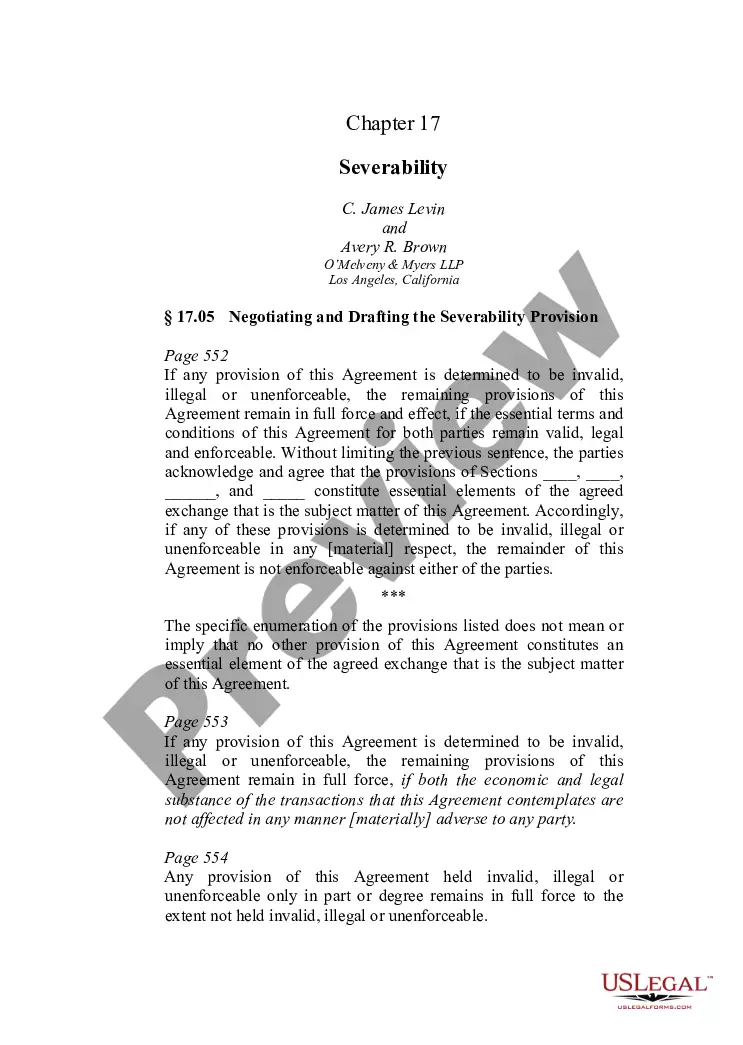
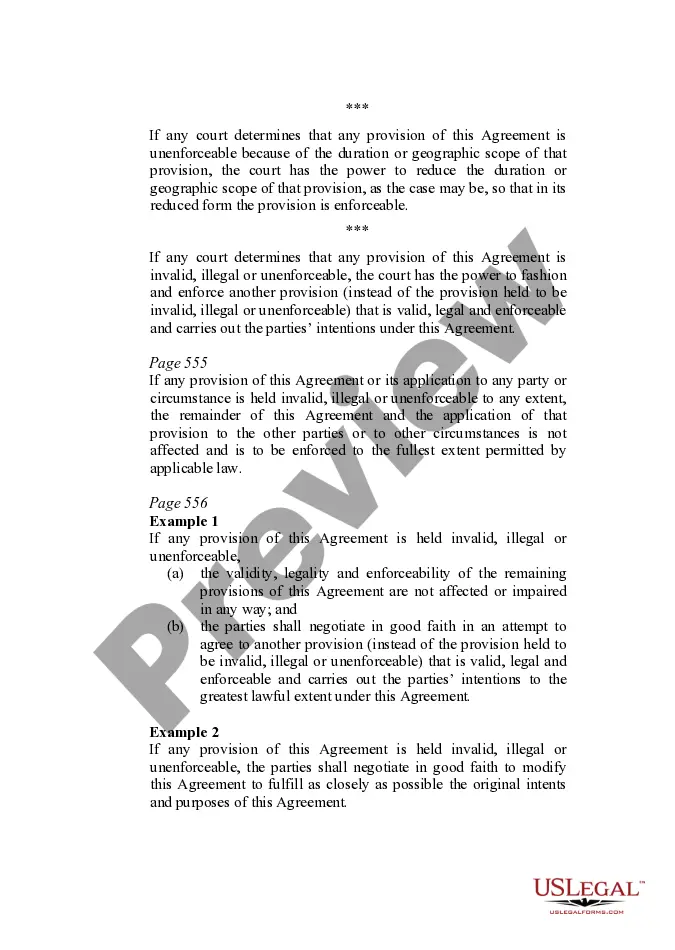
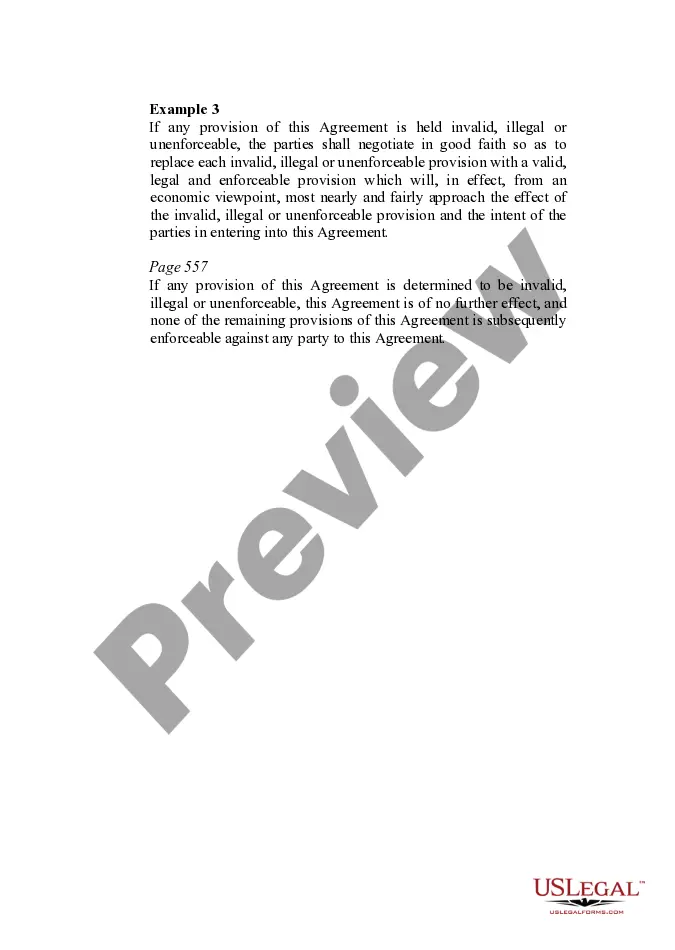
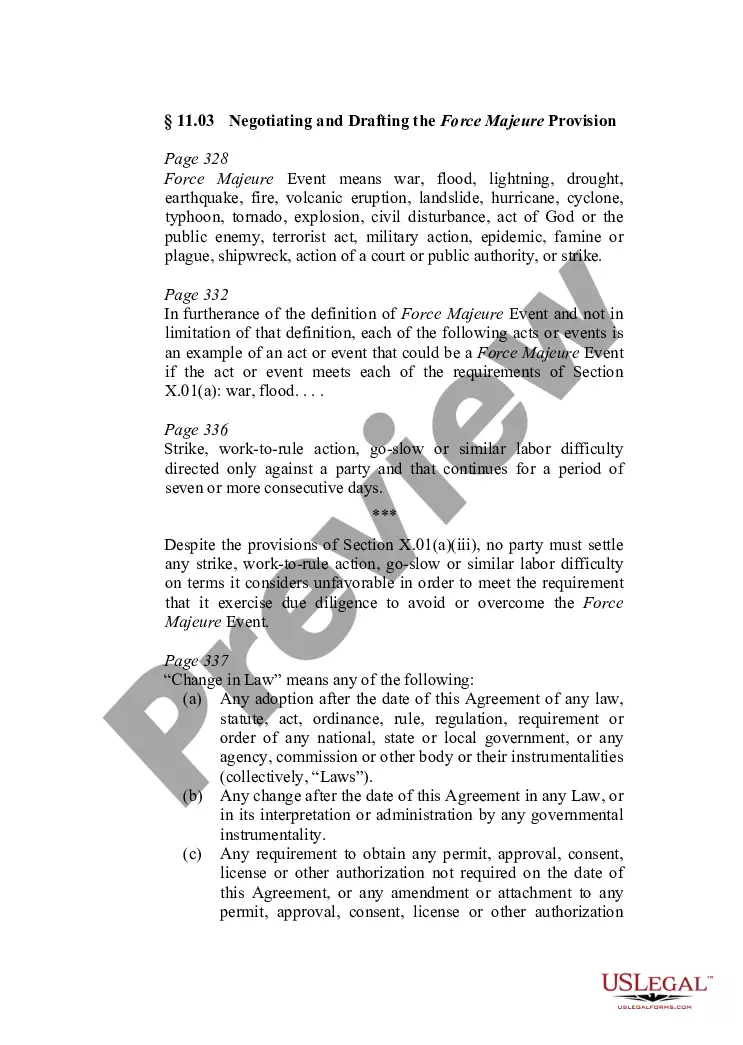
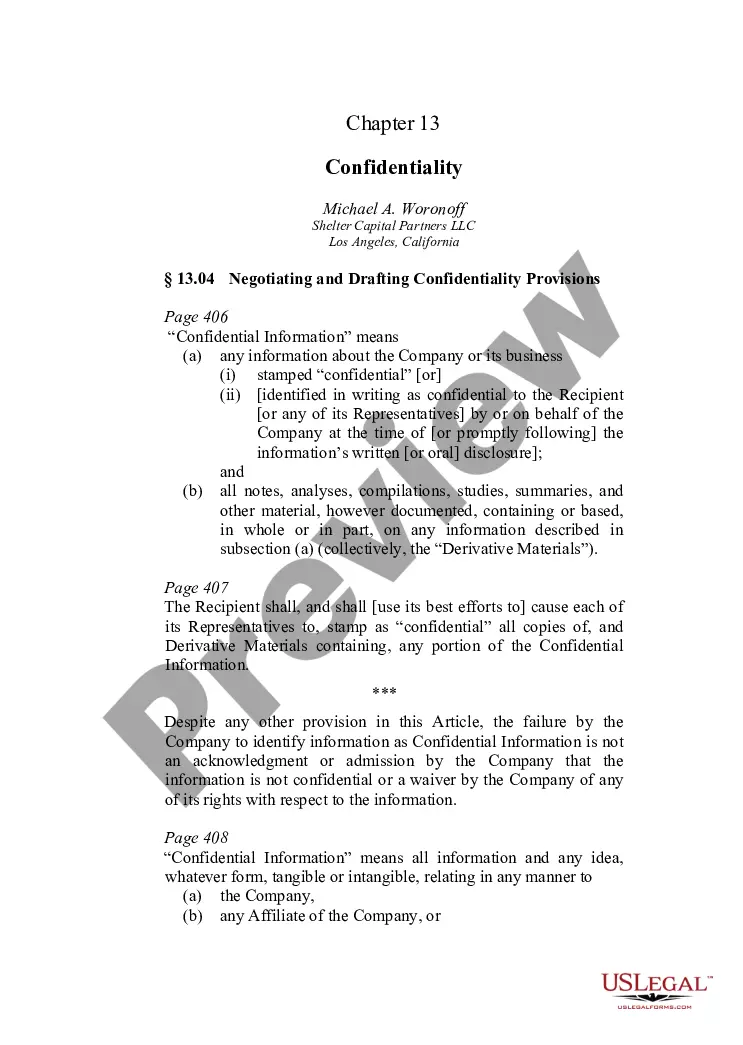
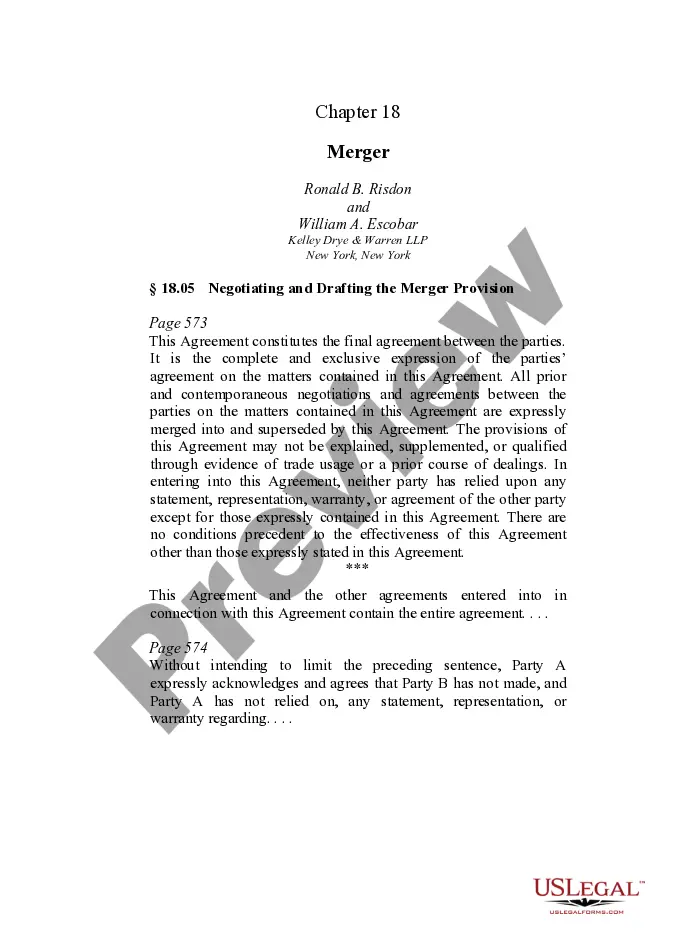
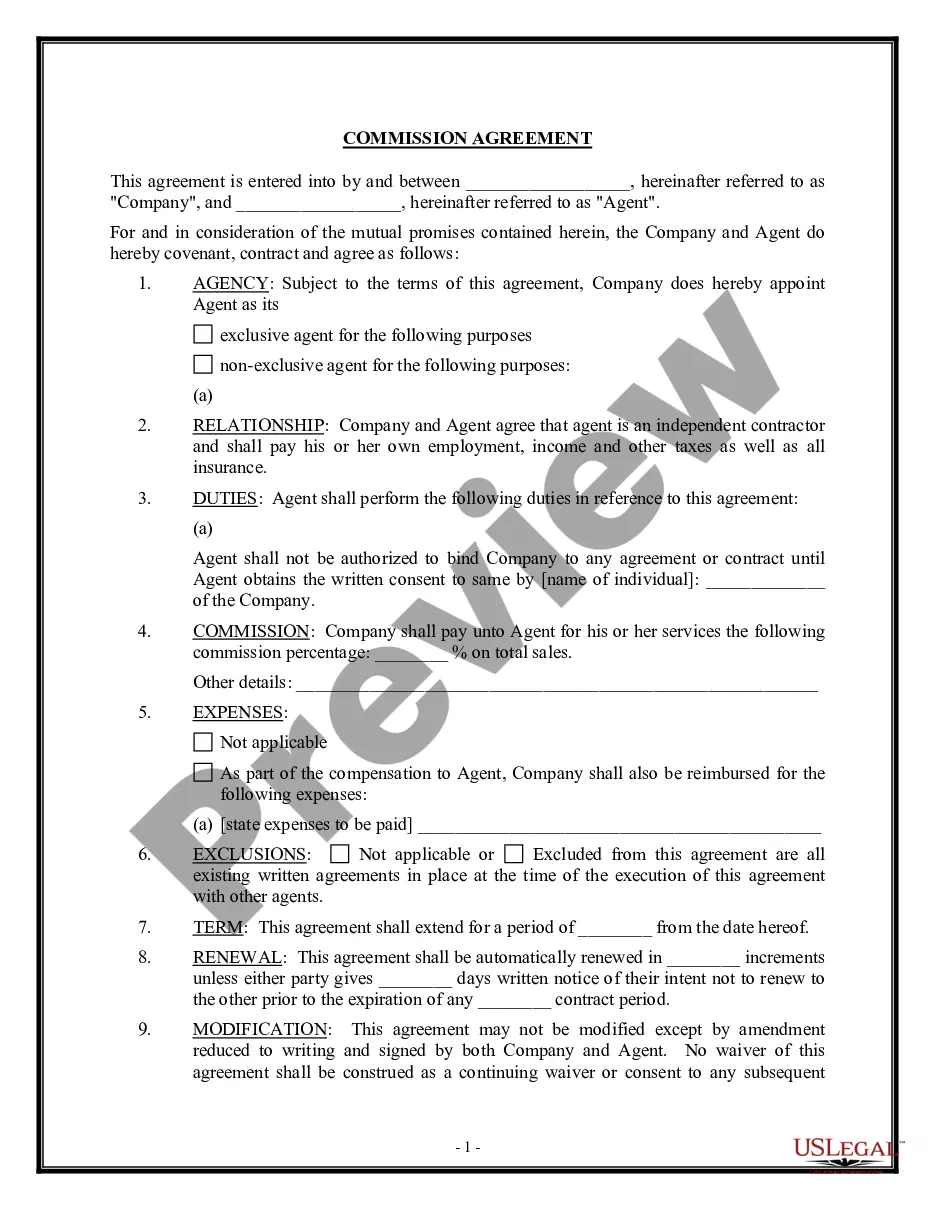
This form, titled "Negotiating and Drafting the Severability Provision," provides essential boilerplate clauses related to the severability of contract terms. It outlines the degree of severability that applies should any part of a contract be deemed unenforceable by a court. This form includes multiple language options that cater to varying needs and provides procedures to follow in case specific terms of the agreement are invalid, making it a crucial tool for effective contract management.
Main sections of this form
- Overview of severability clauses and their importance in contracts.
- Multiple language options to customize the level of severability.
- Procedures for negotiating alternatives if provisions are found unenforceable.
- Sections that outline essential elements of the agreement.
- Guidelines for judicial modifications of unenforceable provisions.
When to use this form
This form should be used when drafting contracts, particularly when you want to address the possibility that certain provisions may be struck down in court. It is particularly relevant for contracts involving significant financial exchanges, complex agreements, or contracts where parties seek to ensure that the remaining terms will remain enforceable even if one part is invalid. Using this form helps prevent invalidation of the whole contract due to one unenforceable clause.
Who this form is for
- Business owners entering into contracts with clients or suppliers.
- Individuals drafting personal agreements that involve significant obligations.
- Attorneys requiring standard clauses for their clients' contracts.
- Estate planners seeking to ensure enforceability in legal documents.
- Any party involved in negotiating contracts who wants to protect their interests.
Completing this form step by step
- Identify the contract parties and clearly state their roles.
- Choose the appropriate severability clause that fits your situation.
- Specify which provisions constitute essential elements of the agreement.
- Include any necessary modifications or additional language suited to your contract.
- Attach signatures from all parties to validate the agreement.
Does this document require notarization?
Notarization is generally not required for this form. However, certain states or situations might demand it. You can complete notarization online through US Legal Forms, powered by Notarize, using a verified video call available anytime.
Get your form ready online
Our built-in tools help you complete, sign, share, and store your documents in one place.
Make edits, fill in missing information, and update formatting in US Legal Forms—just like you would in MS Word.
Download a copy, print it, send it by email, or mail it via USPS—whatever works best for your next step.
Sign and collect signatures with our SignNow integration. Send to multiple recipients, set reminders, and more. Go Premium to unlock E-Sign.
If this form requires notarization, complete it online through a secure video call—no need to meet a notary in person or wait for an appointment.
We protect your documents and personal data by following strict security and privacy standards.

Make edits, fill in missing information, and update formatting in US Legal Forms—just like you would in MS Word.

Download a copy, print it, send it by email, or mail it via USPS—whatever works best for your next step.

Sign and collect signatures with our SignNow integration. Send to multiple recipients, set reminders, and more. Go Premium to unlock E-Sign.

If this form requires notarization, complete it online through a secure video call—no need to meet a notary in person or wait for an appointment.

We protect your documents and personal data by following strict security and privacy standards.
Common mistakes
- Failing to select an appropriate severability clause that aligns with the contract's intent.
- Not clearly identifying essential terms, leading to uncertainty about what remains enforceable.
- Omitting negotiation procedures, which can complicate future amendments if needed.
- Assuming that all provisions are inherently severable without explicitly stating such.
Why use this form online
- Convenient access to a customizable severability provision template.
- Editability allows for quick adjustments based on specific contract needs.
- Reliable legal information backed by licensed attorneys.
- Immediate downloads save time compared to traditional methods.
- Enhanced peace of mind knowing that legal standards are met.
Legal use & context
- Severability provisions help ensure that if any part of a contract fails, the rest remains intact, providing legal remedies and clarity.
- The enforceability of a contract can significantly depend on clearly written severability clauses, which are crucial in litigation.
- Understanding the limitations and requirements of severability can prevent future legal disputes regarding contract interpretation.
Looking for another form?






Form popularity
FAQ
A severability clause provides that if any part of an act is held unconstitutional, the remainder shall not be affected. It is a type of saving clause in that it "saves" parts of an act if any other parts of the act are declared unconstitutional by court action.
In law, severability (sometimes known as salvatorius, from Latin) refers to a provision in a contract or piece of legislation which states that if some of the terms are held to be illegal or otherwise unenforceable, the remainder should still apply.
The severability clause helps parties determine and then address the needs of all parties in different likely scenarios. For example, the non-compete clause of a contract of sale of a business may be invalidated by a court.The non-compete clause may also be essential to the nature of the transaction.
In law, severability (sometimes known as salvatorius, from Latin) refers to a provision in a contract or piece of legislation which states that if some of the terms are held to be illegal or otherwise unenforceable, the remainder should still apply.
In law, severability (sometimes known as salvatorius, from Latin) refers to a provision in a contract or piece of legislation which states that if some of the terms are held to be illegal or otherwise unenforceable, the remainder should still apply.
A boilerplate severability clause could take the following form: "If any provision of this Agreement is held illegal or unenforceable in a judicial proceeding, such provision shall be severed and shall be inoperative, and the remainder of this Agreement shall remain operative and binding on the Parties." As so drafted,
If a severability clause appears in a piece of legislation or agreement, it essentially states that the remainder of the document or agreement's terms will remain effective even if one or more clauses or terms are found to be unenforceable by the court, or even illegal or contrary to state or federal laws.
A severability clause in a contract allows certain parts to remain in effect even if others are illegal or unenforceable. Severability might refer to certain vital provisions that must be left intact. Severability clauses often contain savings language and reformation language.
What Is Severability?A severability clause in a contract states that its terms are independent of one another so that the rest of the contract will remain in force should a court declare one or more of its provisions void or unenforceable.