Indemnity Provisions - Dollar Exposure of the Indemnity regarding Baskets, Caps, and Ceilings
What this document covers
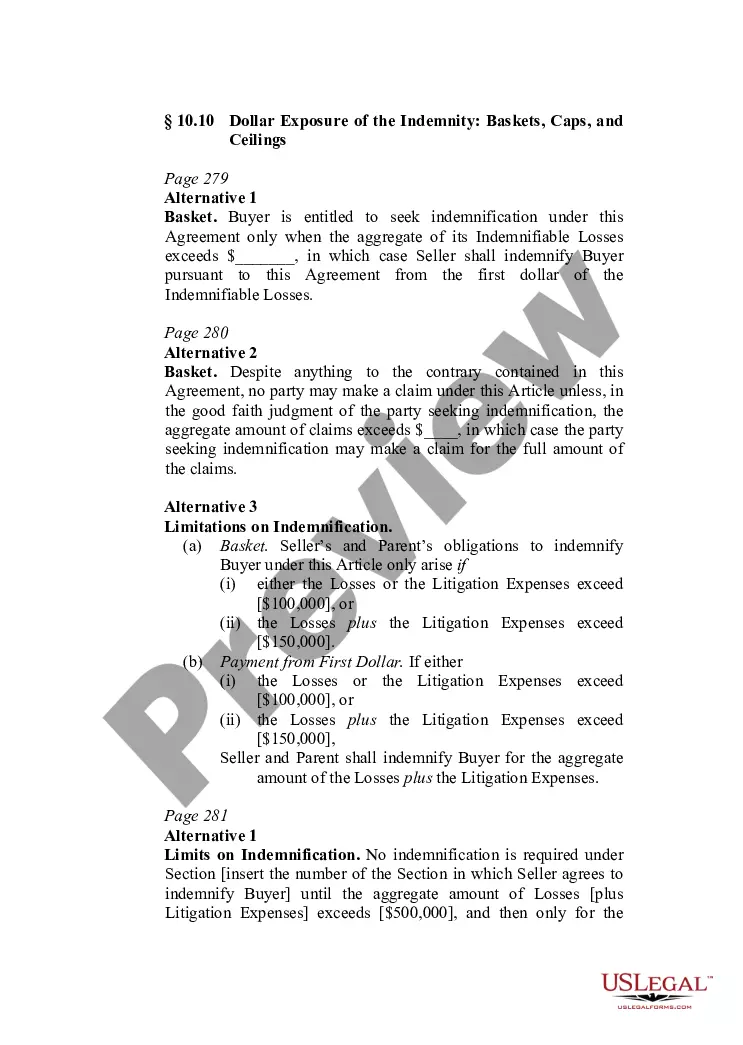
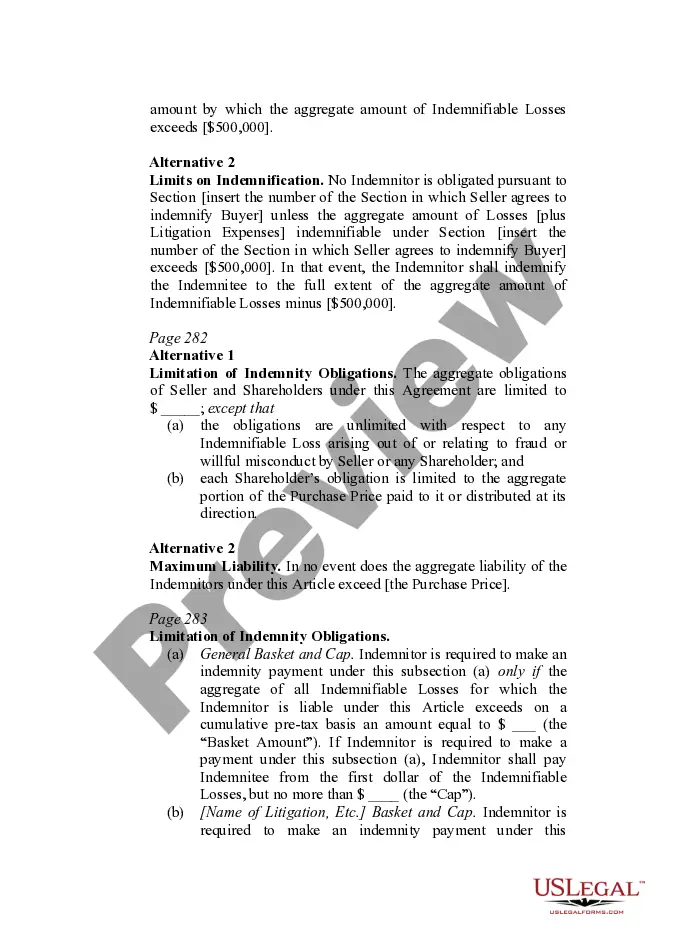
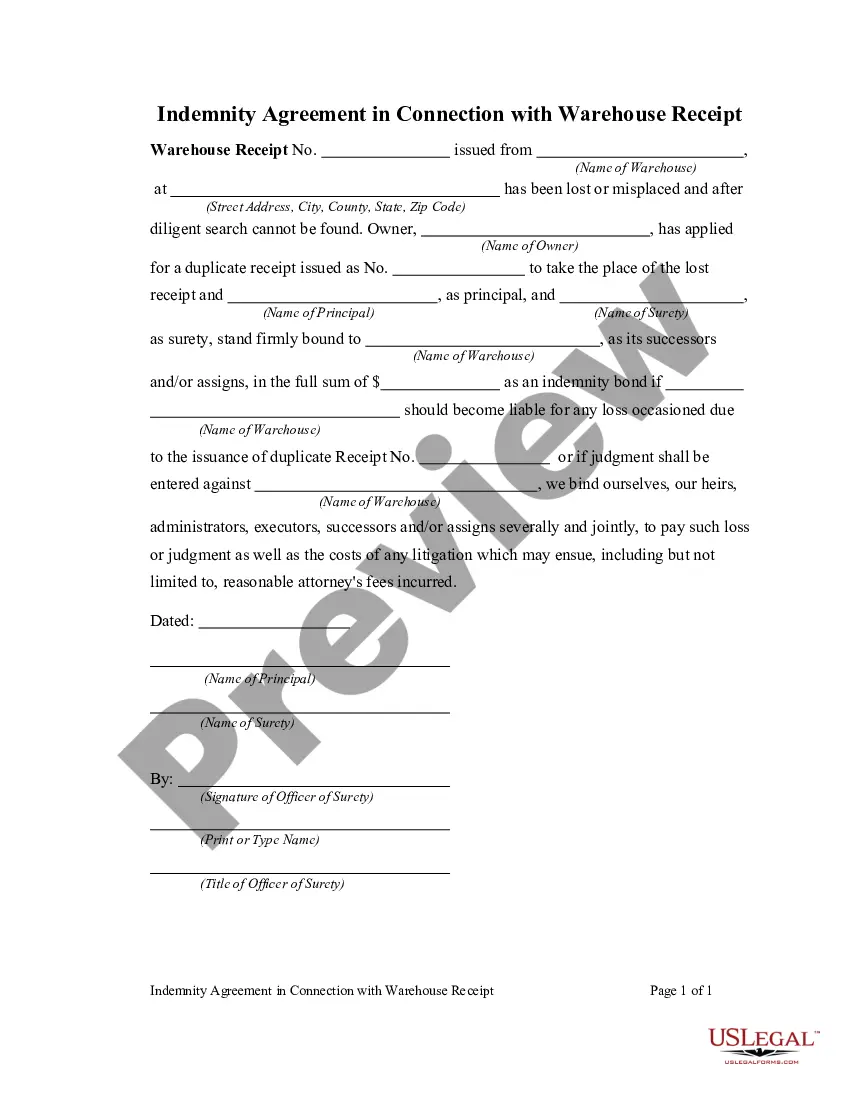
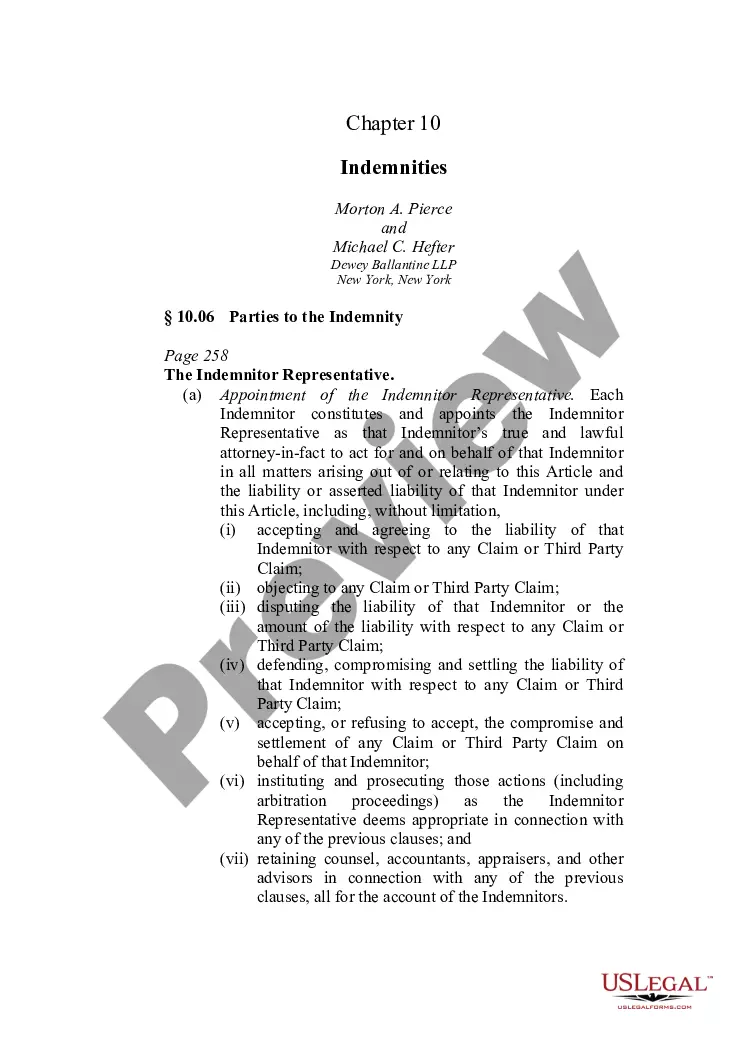
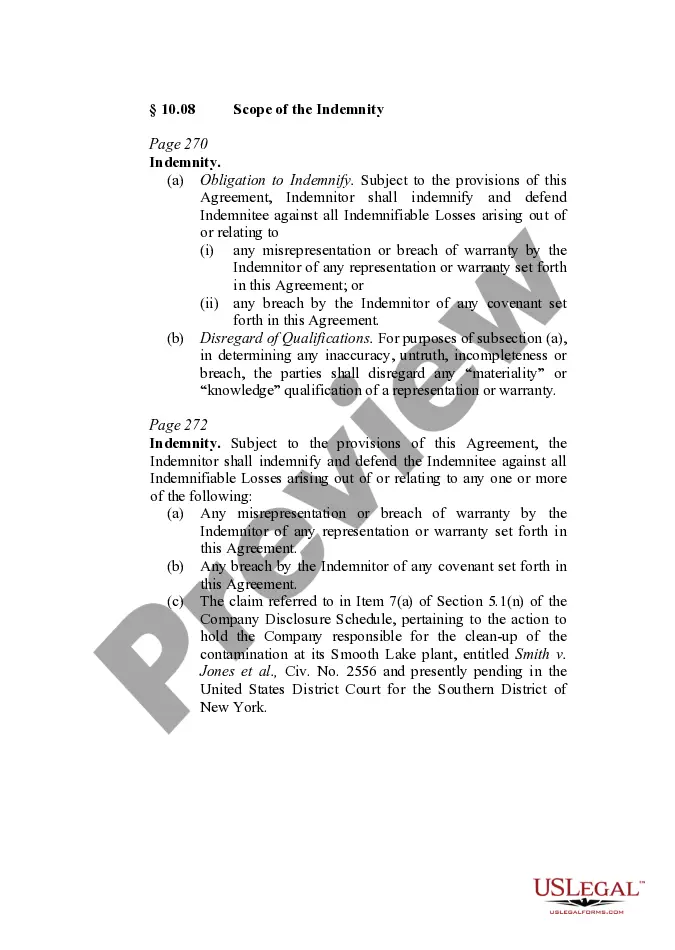
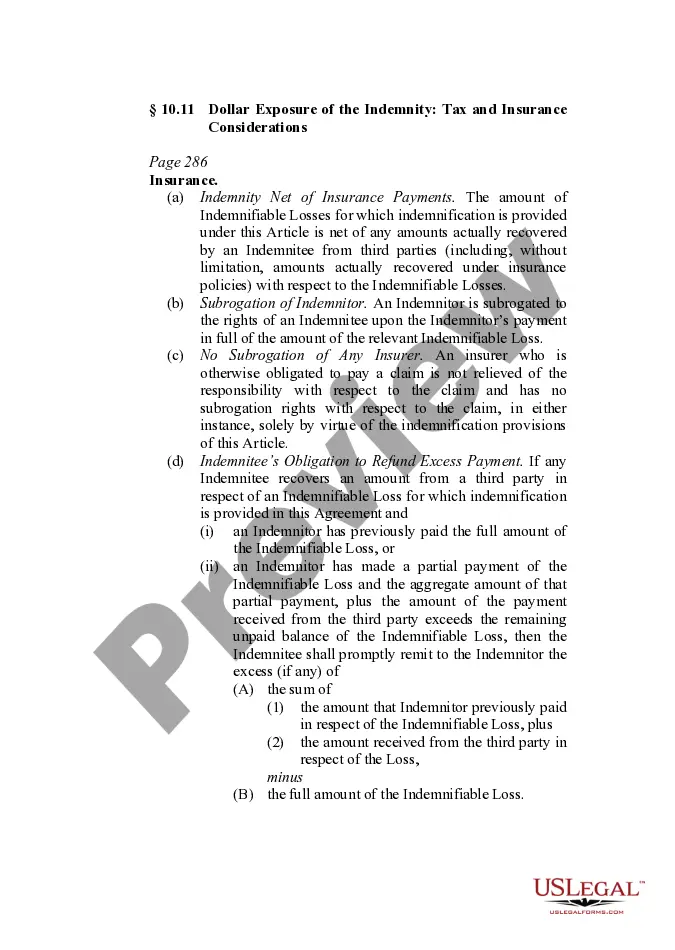
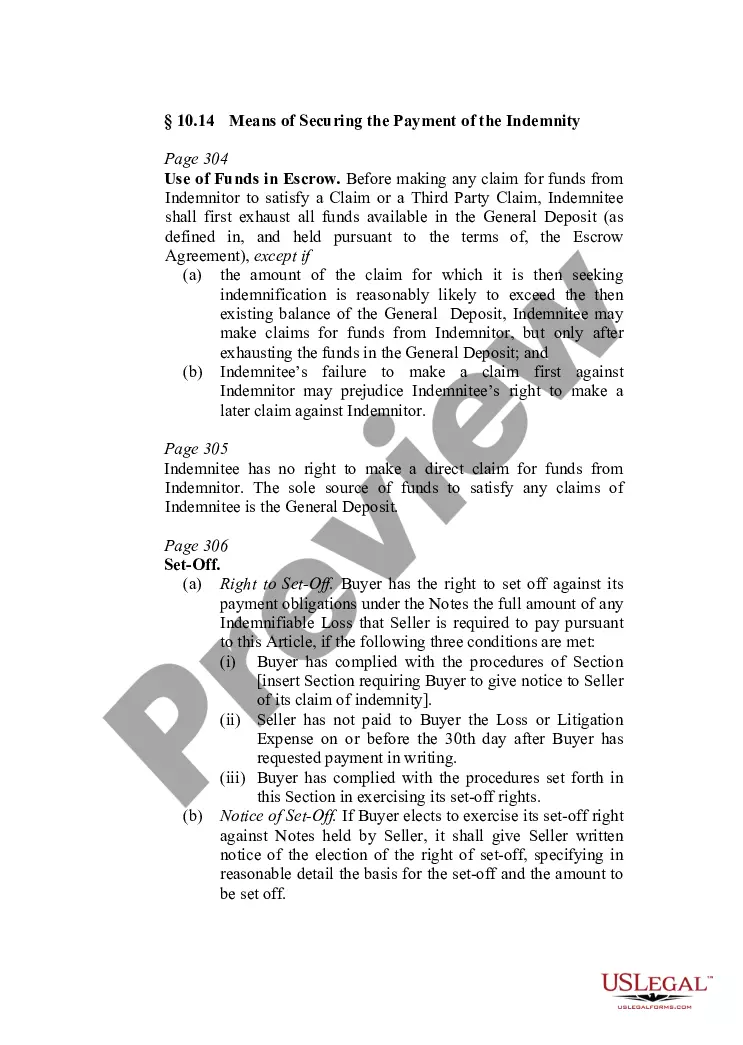
The Indemnity Provisions form addresses the financial limits associated with indemnification in contract agreements. It provides critical clauses that outline the dollar exposure relating to indemnity, including baskets (minimum thresholds), caps (maximum limits), and ceilings. Unlike general indemnity forms, this form specifically focuses on defining the parameters for when indemnification claims can be made, which is essential for managing risk in contractual relationships.
Form components explained
- Basket provisions defining the minimum amount of losses before a claim can be submitted.
- Cap clauses that place a maximum limit on indemnity obligations.
- Alternative provisions for various scenarios concerning financial limits of liability.
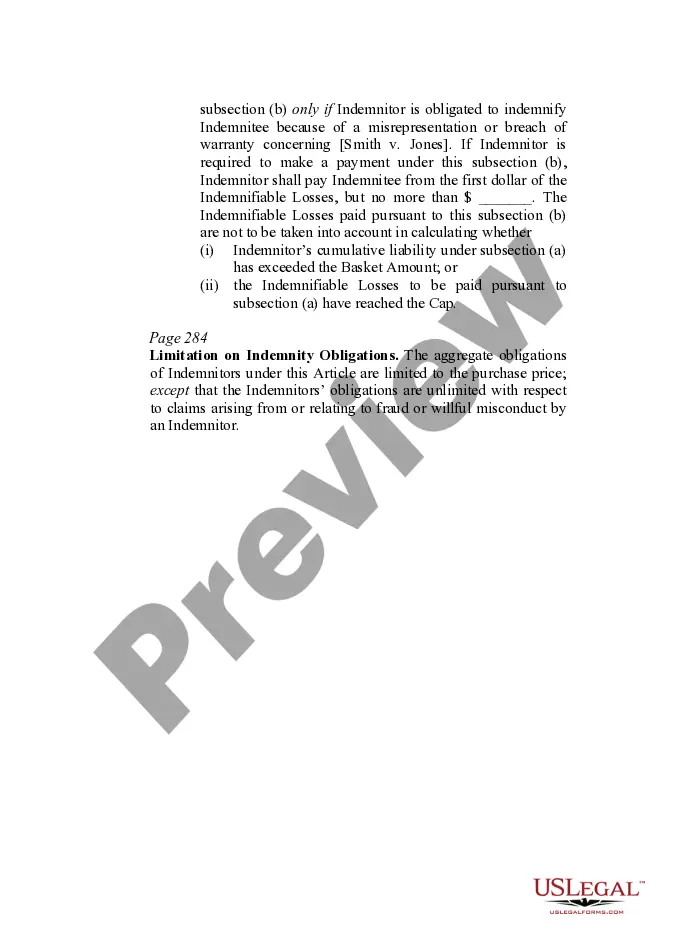
- Clauses specifying exemptions for claims due to fraud or willful misconduct.
- Detailed guidelines for calculating cumulative indemnifiable losses.
When this form is needed
This form is beneficial in various scenarios, such as when negotiating contracts in business sales, mergers, or joint ventures. It is especially useful when parties seek to limit financial exposure related to indemnification claims. By clearly defining financial limits, this form helps parties manage potential liabilities and makes the contract terms clear and enforceable.
Who this form is for
- Businesses entering contract agreements where indemnification is applicable.
- Merchants involved in sales or acquisitions of assets.
- Contractors and service providers in need of limiting indemnity risks.
- Legal professionals advising clients on contract terms and negotiations.
How to complete this form
- Identify the parties involved in the contract and their respective obligations.
- Clearly state the minimum dollar amount for the basket provision.
- Specify the maximum amount for each cap provision, if applicable.
- Include any exclusions for claims involving fraud or willful misconduct.
- Review and ensure all clauses align with the overall contract before finalizing.
Does this document require notarization?
Notarization is not commonly needed for this form. However, certain documents or local rules may make it necessary. Our notarization service, powered by Notarize, allows you to finalize it securely online anytime, day or night.
Get your form ready online
Our built-in tools help you complete, sign, share, and store your documents in one place.
Make edits, fill in missing information, and update formatting in US Legal Forms—just like you would in MS Word.
Download a copy, print it, send it by email, or mail it via USPS—whatever works best for your next step.
Sign and collect signatures with our SignNow integration. Send to multiple recipients, set reminders, and more. Go Premium to unlock E-Sign.
If this form requires notarization, complete it online through a secure video call—no need to meet a notary in person or wait for an appointment.
We protect your documents and personal data by following strict security and privacy standards.

Make edits, fill in missing information, and update formatting in US Legal Forms—just like you would in MS Word.

Download a copy, print it, send it by email, or mail it via USPS—whatever works best for your next step.

Sign and collect signatures with our SignNow integration. Send to multiple recipients, set reminders, and more. Go Premium to unlock E-Sign.

If this form requires notarization, complete it online through a secure video call—no need to meet a notary in person or wait for an appointment.

We protect your documents and personal data by following strict security and privacy standards.
Common mistakes to avoid
- Failing to clearly define the basket or cap amounts may lead to disputes later.
- Not including exceptions for fraud or willful misconduct can expose parties to unlimited risk.
- Neglecting to review the entire contract context may result in inconsistencies in indemnification clauses.
Advantages of online completion
- Convenience of downloading and customizing the form to fit specific needs.
- Easy access to templates created by licensed attorneys, ensuring legal compliance.
- Time-saving as the form can be completed and filed without extensive legal consultation.
Quick recap
- The Indemnity Provisions form helps limit financial exposure in contracts.
- It defines critical financial limits, such as baskets and caps, to manage risks effectively.
- This form is suitable for various parties, including businesses and legal professionals.
- Specific provisions can be tailored to fit the contractual relationship's unique circumstances.
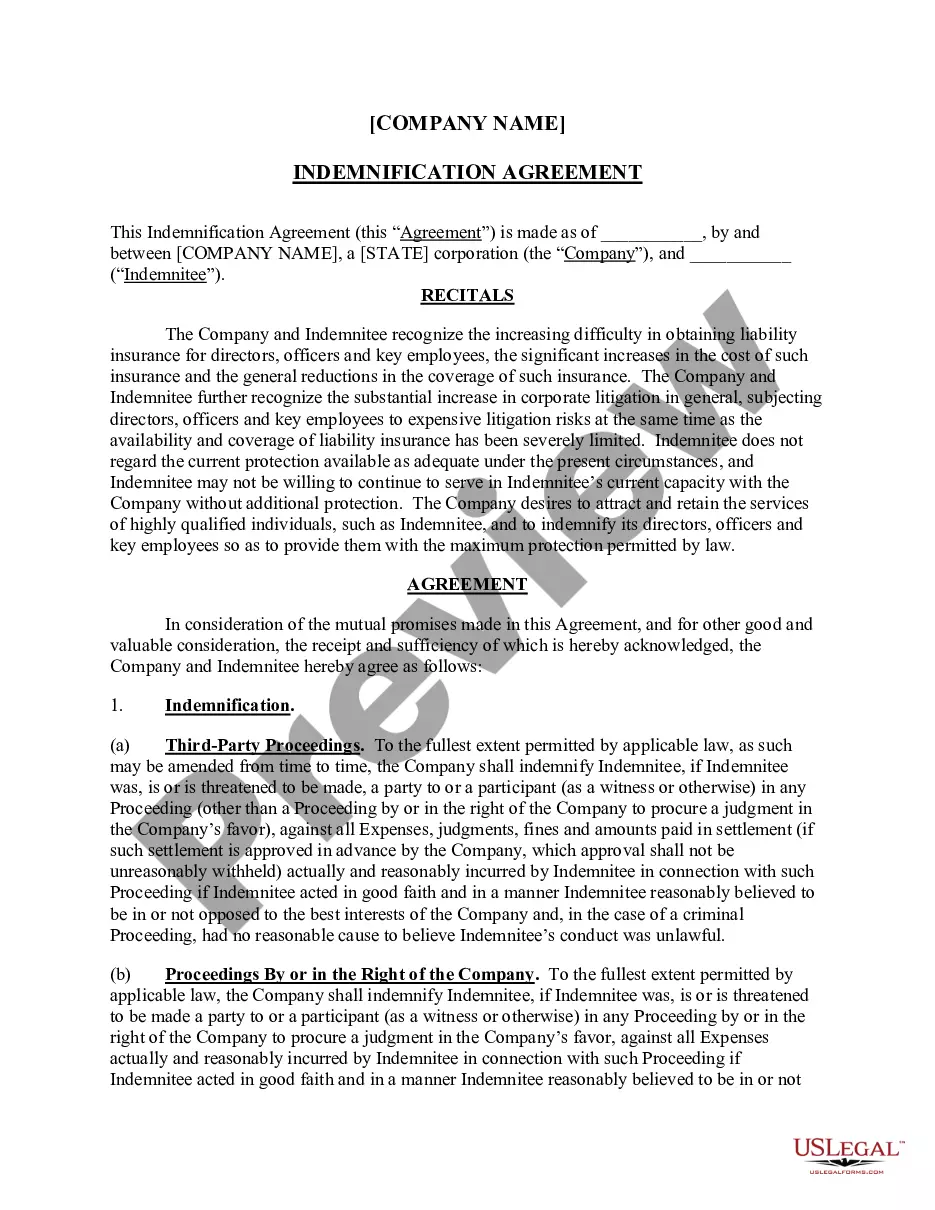
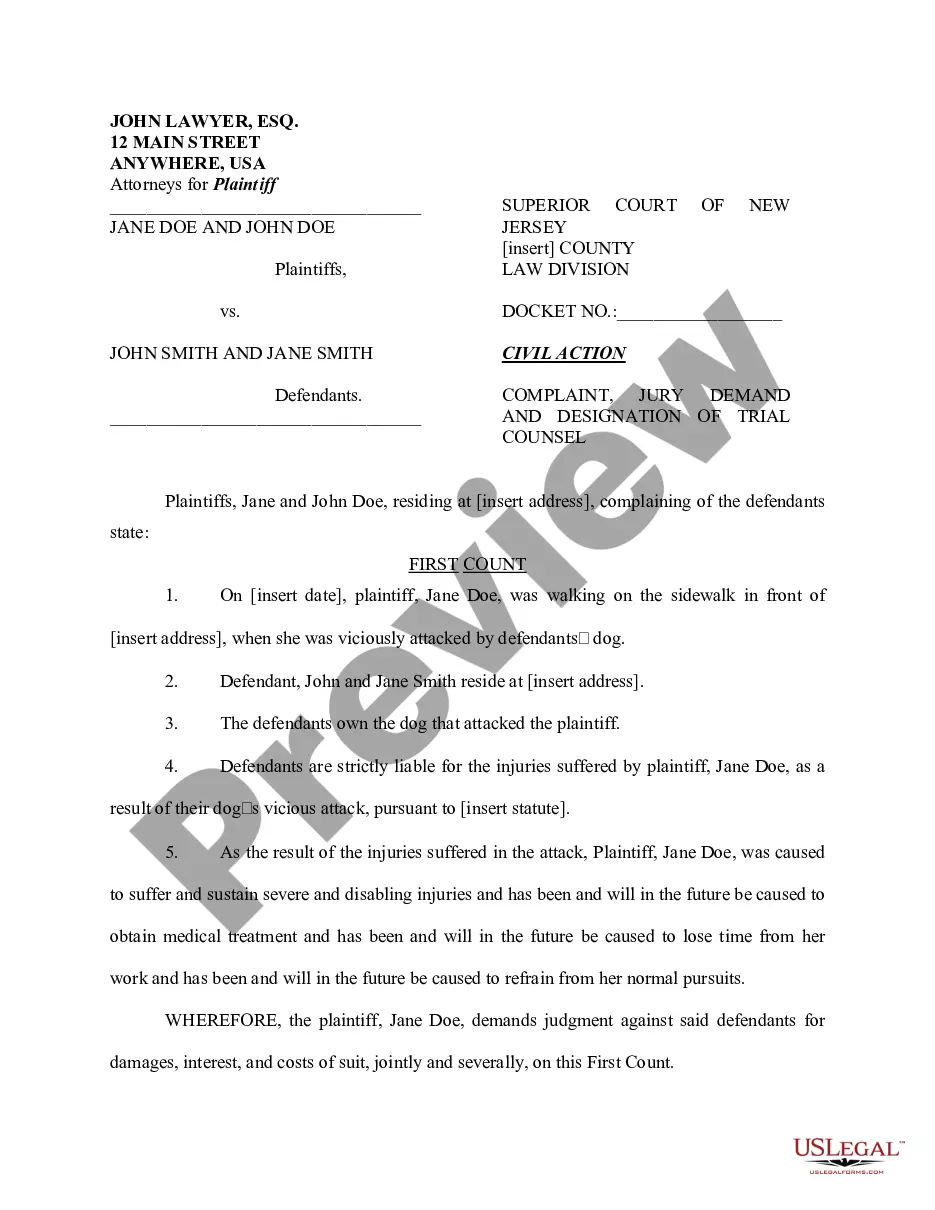
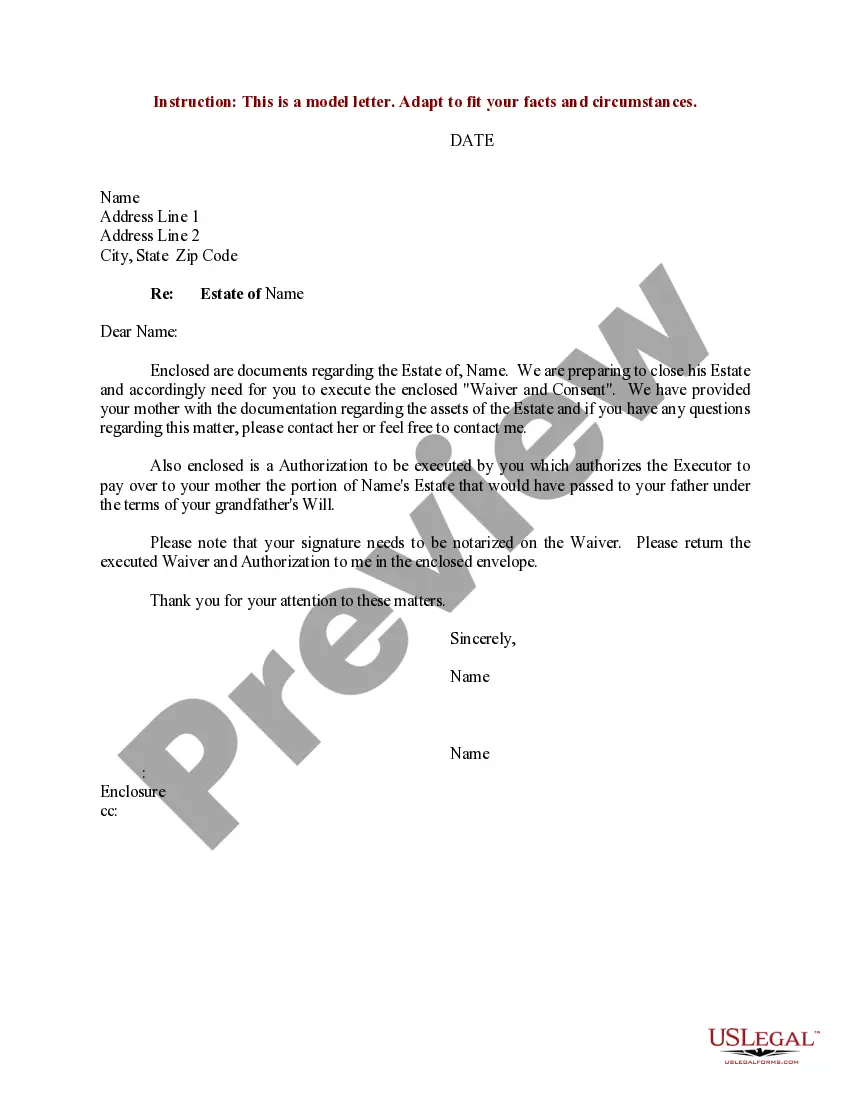
Looking for another form?
Form popularity
FAQ
What is a Cap on an Indemnity Clause and Why Should I Care?This is essentially an I'll protect your back clause, making the party giving the indemnity responsible to pay back the other party for things they might do wrong, bringing harm to the first party.
You should look to limit indemnification clauses by narrowing their scope, putting in caps on damages, and clearly defining the indemnifiable acts (i.e. the representations and warranties in the example above). Also consider purchasing insurance as a means to limit your financial risk.
A typical example is an insurance company wherein the insurer or indemnitor agrees to compensate the insured or indemnitee for any damages or losses he/she may incur during a period of time.
Drafting of the indemnity clause An indemnifier must limit the amount of indemnities that is given while entering into a contract. An express obligation must be imposed so as to minimize the loss, and the duration of time in which the claim can be brought must be limited.
Indemnification basket refers to the amount that damages or losses must exceed before a seller is liable for any indemnification payments. An indemnity basket requires the buyer to incur a certain amount of loss before it can seek indemnification from the seller.
A letter of indemnity must mention the details of both the parties involved in the transaction. These details are, generally, full legal name and complete official or residential address with pin code.
Company/Business/Individual Name shall fully indemnify, hold harmless and defend _______ and its directors, officers, employees, agents, stockholders and Affiliates from and against all claims, demands, actions, suits, damages, liabilities, losses, settlements, judgments, costs and expenses (including but not
Indemnity is compensation paid by one party to another to cover damages, injury or losses.An example of an indemnity would be an insurance contract, where the insurer agrees to compensate for any damages that the entity protected by the insurer experiences.
Building Blocks of an Indemnification Clause. Typical indemnification provisions will be long sentences with many clauses, legal-sounding words, and long lists of specific details. Insurance Implications and Other Contractual Matters. Other Technical Elements of an Indemnification Provision. Takeaway.