Motion for Transport
About this form
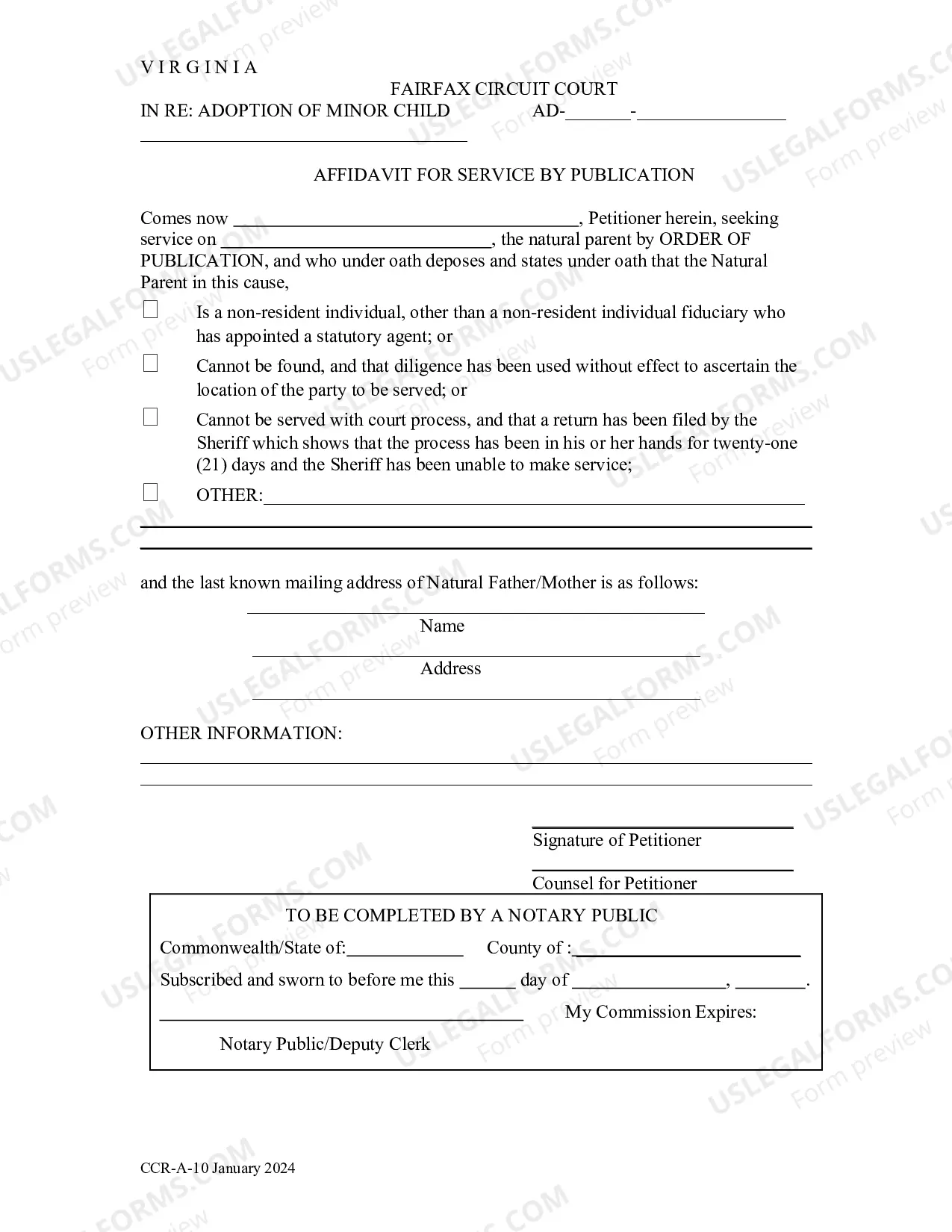
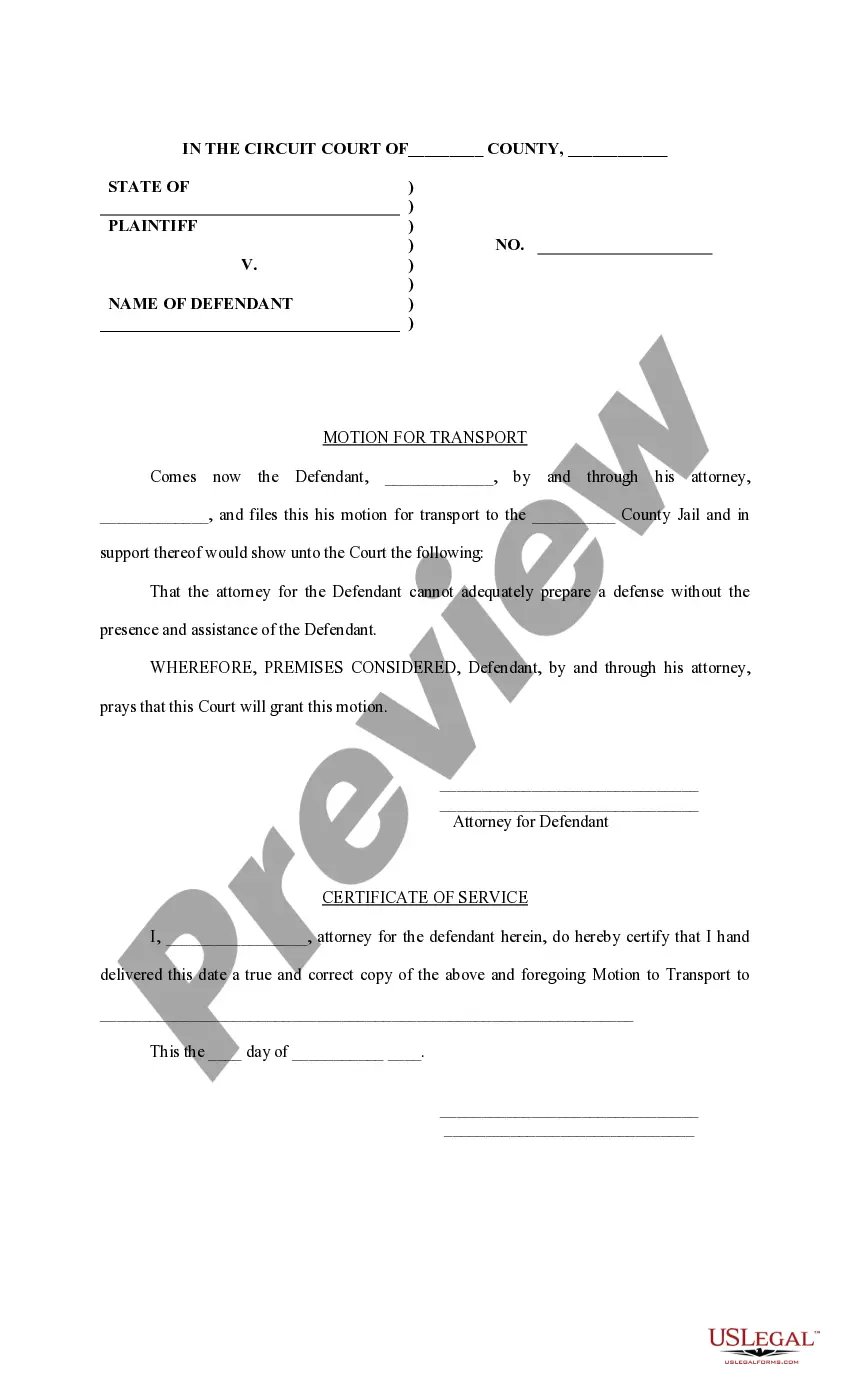
The Motion for Transport is a legal document filed by a defendant through their attorney, requesting a change in the defendant's location, typically to a jail closer to their legal representation. This form highlights the necessity of the defendant's physical presence for effective legal defense, ensuring that the attorney can adequately prepare for court proceedings. Unlike other motions, this specific request focuses on transportation to facilitate better communication and defense preparation.
Form components explained
- Name of the defendant and attorney
- Requested destination for transport (specific jail name)
- Statement regarding the need for proximity to the attorney
- Signature lines for both the defendant's attorney
- Certificate of service confirming delivery of the motion
When this form is needed
This form should be used when a defendant is located in a correctional facility that is not convenient for their attorney to meet and prepare a defense. Common scenarios for using the Motion for Transport include ongoing criminal cases, pre-trial preparations, or other legal proceedings requiring close attorney-client collaboration.
Who needs this form
- Defendants in a criminal case who are currently incarcerated
- Attorneys representing defendants who need to file for transportation
- Family members or guardians of a defendant seeking legal action to ensure adequate defense
How to prepare this document
- Identify the names of the defendant and attorney at the beginning of the document.
- Specify the name of the jail to which the defendant is being transported.
- Clearly state the reasons for the transport request, focusing on the attorney's ability to prepare a defense.
- Have both the defendant's attorney sign the motion.
- Complete the certificate of service by noting who received a copy of the motion and when.
Does this document require notarization?
Notarization is not commonly needed for this form. However, certain documents or local rules may make it necessary. Our notarization service, powered by Notarize, allows you to finalize it securely online anytime, day or night.
Get your form ready online
Our built-in tools help you complete, sign, share, and store your documents in one place.
Make edits, fill in missing information, and update formatting in US Legal Forms—just like you would in MS Word.
Download a copy, print it, send it by email, or mail it via USPS—whatever works best for your next step.
Sign and collect signatures with our SignNow integration. Send to multiple recipients, set reminders, and more. Go Premium to unlock E-Sign.
If this form requires notarization, complete it online through a secure video call—no need to meet a notary in person or wait for an appointment.
We protect your documents and personal data by following strict security and privacy standards.

Make edits, fill in missing information, and update formatting in US Legal Forms—just like you would in MS Word.

Download a copy, print it, send it by email, or mail it via USPS—whatever works best for your next step.

Sign and collect signatures with our SignNow integration. Send to multiple recipients, set reminders, and more. Go Premium to unlock E-Sign.

If this form requires notarization, complete it online through a secure video call—no need to meet a notary in person or wait for an appointment.

We protect your documents and personal data by following strict security and privacy standards.
Mistakes to watch out for
- Failing to specify the correct jail for transport.
- Not including all required signatures.
- Neglecting to file the motion within the appropriate timeline for the case.
- Omitting the certificate of service or failing to deliver it properly.
Why use this form online
- Easy to download and complete at your convenience.
- Editable templates allow for personalized details.
- Access to forms drafted by licensed attorneys, ensuring legal accuracy.
Legal use & context
The Motion for Transport can be crucial in ensuring a defendant's right to effective legal representation. It is enforceable in court, provided it follows the appropriate legal procedures and meets the specific needs of the case. Defendants should ensure all necessary legal standards are met for the motion to be granted.
What to keep in mind
- The Motion for Transport is aimed at facilitating better attorney access.
- Completing this form accurately is essential for its acceptance by the court.
- Eligibility extends to all defendants in custody requiring legal assistance.
Looking for another form?
Form popularity
FAQ
It just means that the Court has granted someone's request.
A hearing for the purpose of asking a judge to issue a ruling or order. The motion is typically filed by one side and a notice is sent to the opposing attorney who responds in writing.
Motions are not pleadings but are requests for the judge to make a legal ruling. Some of the most common pre-trial motions include: Motion to Discover. A motion by which one party seeks to gain information from the adverse party.
A "motion" is simply a formal request to a court that it do something or decide an issue in favor of the party that asks for it. "Granted" means the court agreed with the request, and did or decided in favor of the requester.
After you complete your motion, you must file it with the court.You must then serve (mail) a copy of your filed motion (including all exhibits and the date, time, and place of hearing) to all other parties in the case. If a party is represented by an attorney, mail the motion directly to the attorney's office.
You should always attend any scheduled hearing. If you do not attend the hearing, the judge is likely to grant the other side's motion and enter an order against you.
In effect, in both kinds of cases, the lawyer asks the judge to direct a verdict for the defendant. The judge will either grant or deny the motion. If it is granted, the case is over and the defendant wins. If the motion is denied, as it usually is, the defense is given the opportunity to present its evidence.
A motion is an application to the court made by the prosecutor or defense attorney, requesting that the court make a decision on a certain issue before the trial begins. The motion can affect the trial, courtroom, defendants, evidence, or testimony. Only judges decide the outcome of motions.