Limitation of Remedies, Election of Remedies, and the Cumulative Remedies Provision
What this document covers
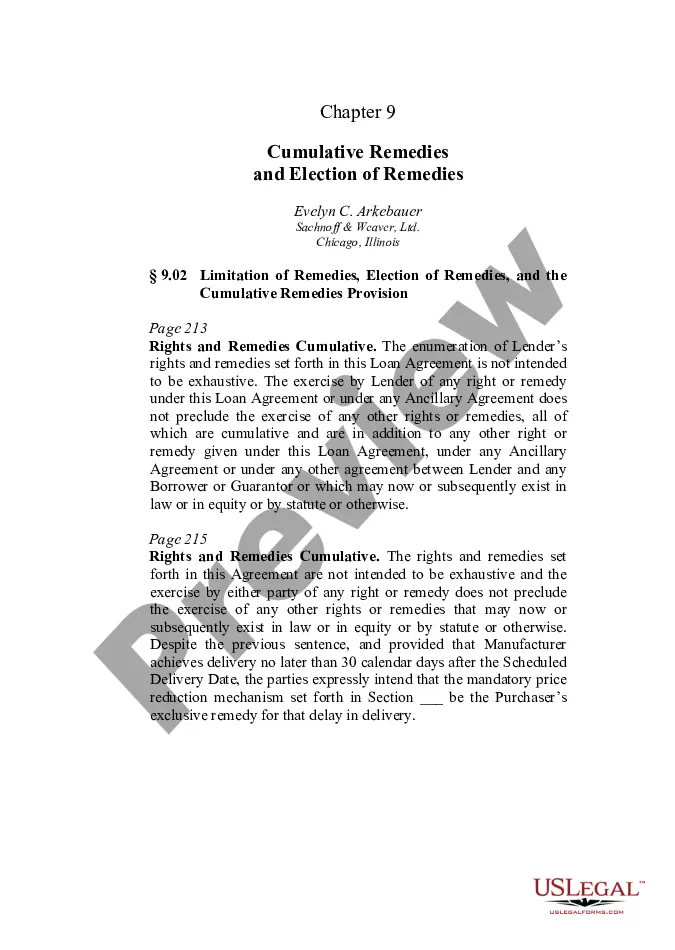
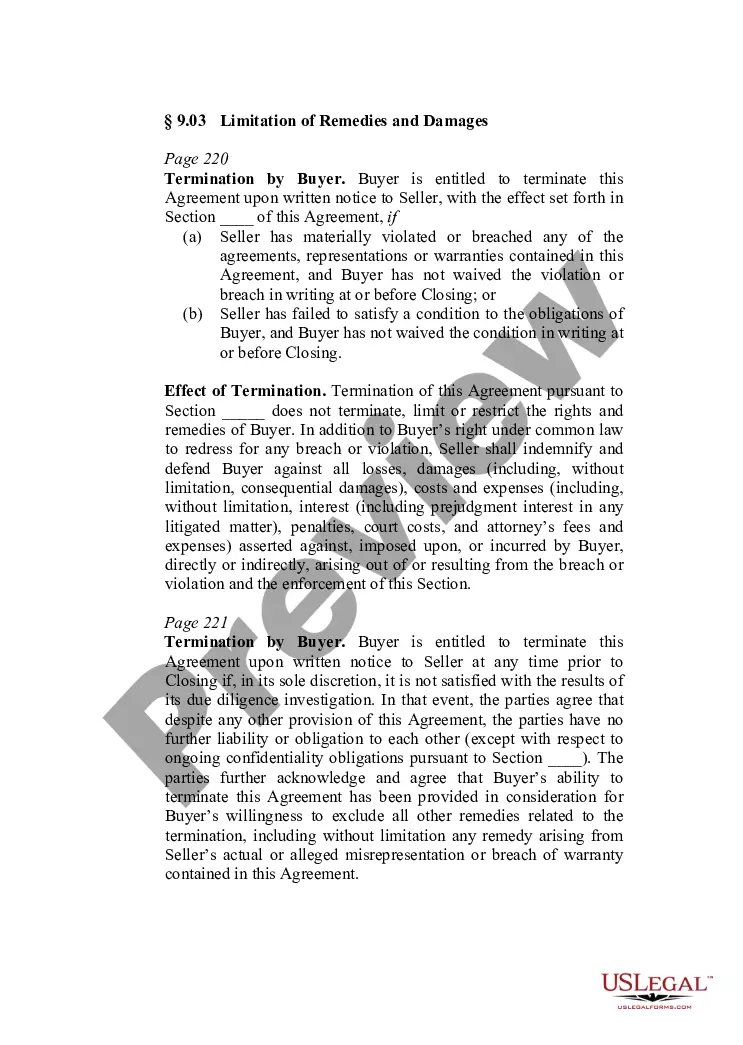
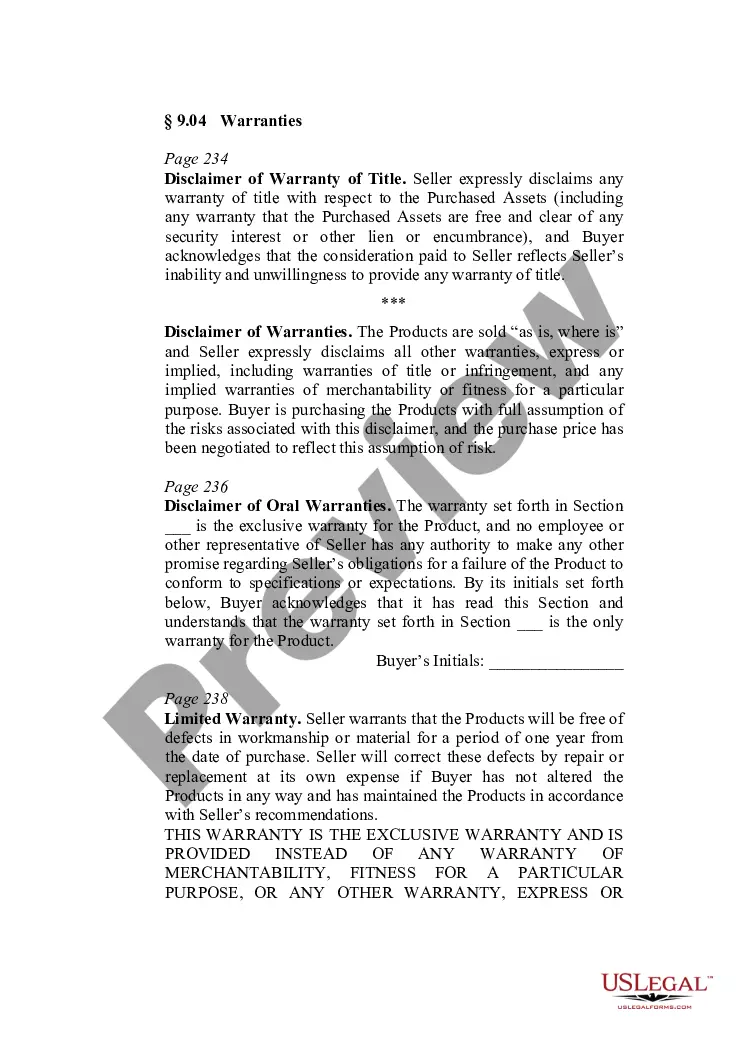
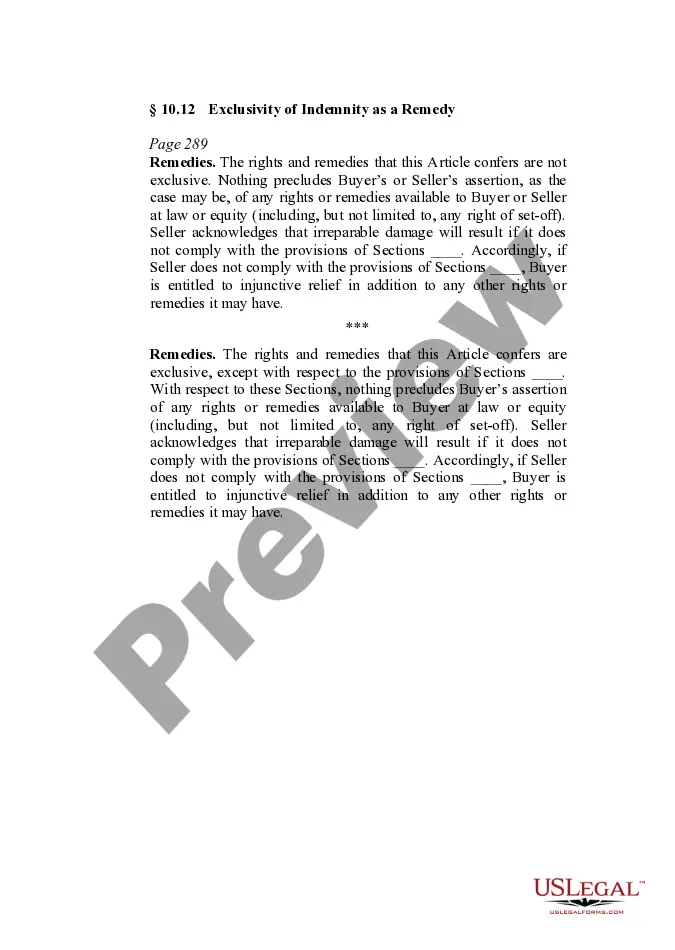
This form, known as the Limitation of Remedies, Election of Remedies, and Cumulative Remedies Provision, provides well-structured clauses for contracts. It clearly defines remedies available to parties involved in a contract, both under and outside the contract's terms. This form stands out by ensuring that the rights and remedies remain cumulative, allowing parties greater flexibility in enforcing their rights compared to standard contracts that may limit available options.
What’s included in this form
- Cumulative remedies clause ensuring all rights are available.
- Election of remedies provision to specify which remedies can be pursued.
- Limitation of remedies to define specific exclusions or limitations on available remedies.
- Express terms outlining conditions under which specific remedies may be exclusive.
Common use cases
This form should be utilized when entering into contractual agreements where multiple remedies may be applicable. It is especially relevant when parties wish to clarify their rights and set limitations on available remedies, such as in loan agreements, service contracts, or any other situation where enforcing rights could be complex or contested.
Who this form is for
- Business owners and managers involved in contracts.
- Lawyers drafting or reviewing legal agreements.
- Parties engaged in negotiations requiring clear definitions of rights and remedies.
Instructions for completing this form
- Identify the parties involved in the agreement.
- Define the specific rights and remedies that will apply.
- Clearly state any limitations or exclusions regarding remedies.
- Make choices regarding which remedies may be exclusive.
- Sign and date the form where indicated to ensure its validity.
Notarization requirements for this form
Notarization is generally not required for this form. However, certain states or situations might demand it. You can complete notarization online through US Legal Forms, powered by Notarize, using a verified video call available anytime.
Get your form ready online
Our built-in tools help you complete, sign, share, and store your documents in one place.
Make edits, fill in missing information, and update formatting in US Legal Forms—just like you would in MS Word.
Download a copy, print it, send it by email, or mail it via USPS—whatever works best for your next step.
Sign and collect signatures with our SignNow integration. Send to multiple recipients, set reminders, and more. Go Premium to unlock E-Sign.
If this form requires notarization, complete it online through a secure video call—no need to meet a notary in person or wait for an appointment.
We protect your documents and personal data by following strict security and privacy standards.

Make edits, fill in missing information, and update formatting in US Legal Forms—just like you would in MS Word.

Download a copy, print it, send it by email, or mail it via USPS—whatever works best for your next step.

Sign and collect signatures with our SignNow integration. Send to multiple recipients, set reminders, and more. Go Premium to unlock E-Sign.

If this form requires notarization, complete it online through a secure video call—no need to meet a notary in person or wait for an appointment.

We protect your documents and personal data by following strict security and privacy standards.
Common mistakes to avoid
- Failing to specify which remedies are exclusive can lead to disputes.
- Not understanding the implications of cumulative remedies may affect enforceability.
- Ignoring state-specific requirements may invalidate the agreement.
Why complete this form online
- Convenience of instant download and accessibility from anywhere.
- Editability allows customization to meet specific needs.
- Reliability from professionally drafted content by licensed attorneys.
Legal use & context
- This form is effective in contracts to clarify the available remedies for breaches.
- It ensures that all parties understand their rights and obligations clearly.
- Proper use can prevent future legal disputes stemming from ambiguous language.
What to keep in mind
- The form defines critical legal terms regarding remedies in contracts.
- It is essential for protecting rights in case of contract disputes.
- Completing the form accurately ensures its enforceability.
Looking for another form?
Form popularity
FAQ
In the event of a breach of contract, the nonbreaching party is allowed to pursue any and all remedies that may be available under the facts of the particular case during litigation, even though some of those remedies may be inconsistent with each other.
Monetary awards (called damages), specific performance, and restitution are the three principle remedies.
Repudiation. If the other party breaches a condition of the contract, you may be able to 'repudiate' the contract to terminate it and claim damages for your loss - or to 'affirm' the contract and claim damages. Damages. Specific Performance.
Fourth Rule: Section 73 It should be noted that when no loss arises from the breach of contract, only nominal damages are awarded. Damages are given by way of restitution and compensation only, and not by way of punishment. The aggrieved party can therefore recover the actual loss caused to him as compensation.
The party who is injured by the breach of contract may bring an action of breach of contract either by remedy of specific performance or the damages available such as general or liquidated damages, nominal damage (no loss situation), compensatory, punitive and specific.
Contract remedies serve to protect three different interests: an expectation interest, a reliance interest, and a restitution interest. A promisee will have one of these and may have two or all three.
Know how these concepts serve to limit contract remedies: foreseeability, mitigation of damages, certainty of damages, loss of power of avoidance, election of remedies, and agreement of the parties.