Negotiating and Drafting an Enforceable Jury Waiver Provision
About this form
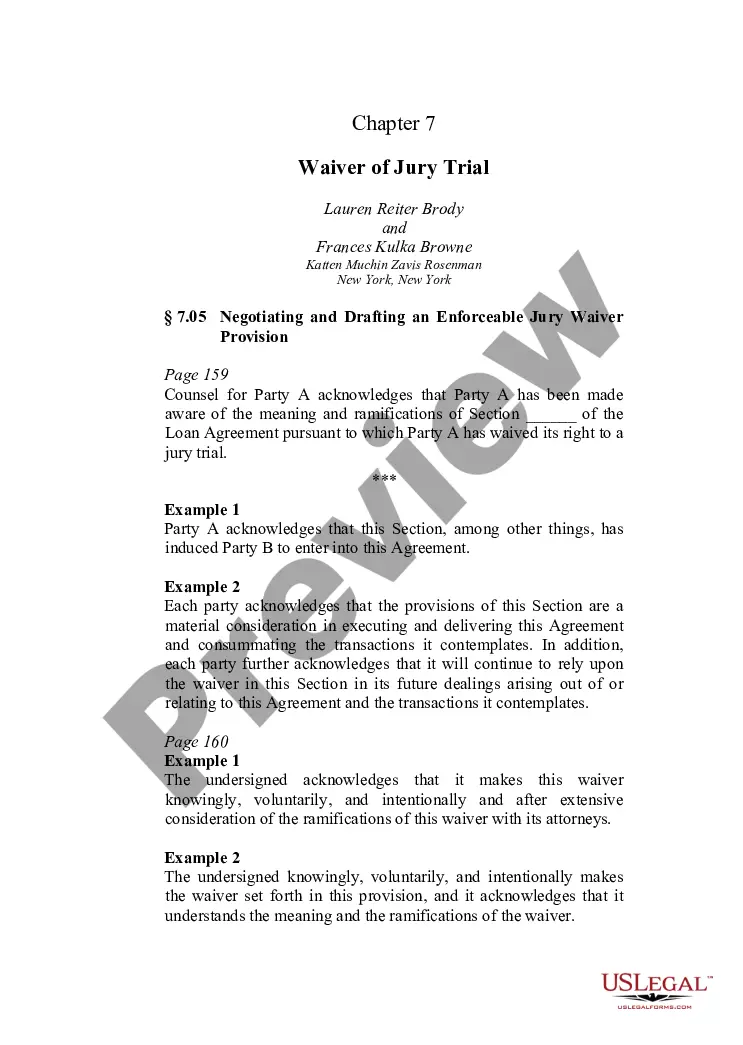
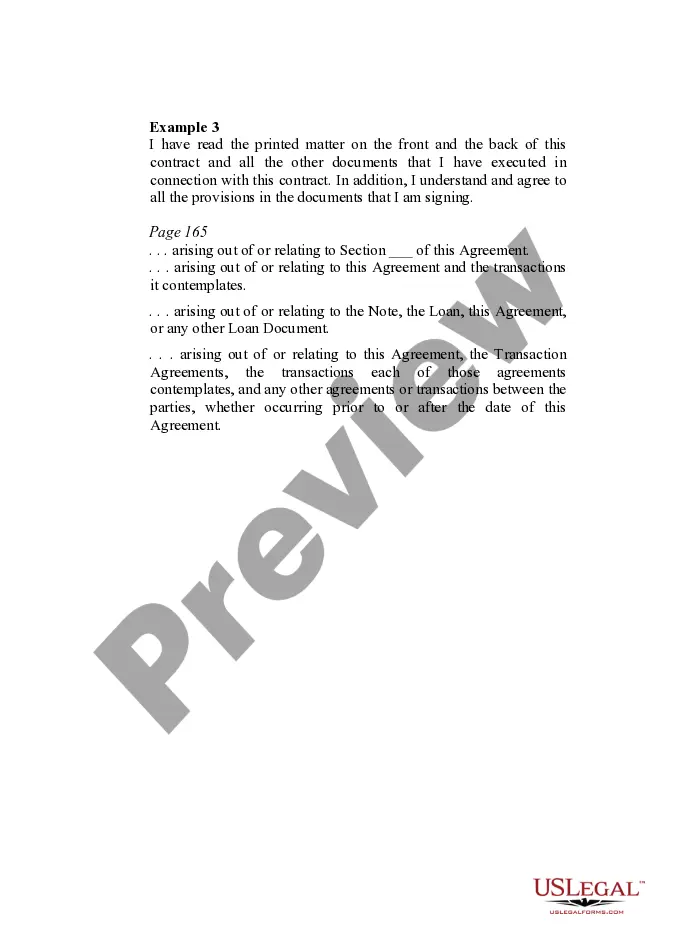
This form is a legal document that outlines an enforceable waiver of the right to a trial by jury for any claims arising under a contract agreement. Known as a jury waiver provision, it clearly establishes that the parties involved agree to resolve disputes through alternative means, such as arbitration or bench trial, rather than in front of a jury. This is particularly useful for parties who wish to streamline the dispute resolution process and minimize the unpredictability associated with jury trials.
Key components of this form
- Waiver declaration: Clearly states the parties' intention to waive their right to a jury trial.
- Inducement clause: Acknowledges that the waiver is a material consideration for entering into the agreement.
- Legal acknowledgment: Confirms that each party understands the ramifications of waiving their jury trial rights.
- Scope of waiver: Specifies the types of claims covered under the waiver provision.
When to use this document
This form should be used when parties are entering a contract and want to avoid the formalities and uncertainties of a jury trial. It is particularly relevant in contracts involving significant financial stakes, commercial agreements, or where the parties seek a more expeditious resolution process. The jury waiver may also be beneficial in cases where one party might perceive a jury trial as detrimental to their cause.
Who can use this document
- Businesses: Companies looking to limit liability and streamline dispute resolution in agreements.
- Individuals: Parties entering contracts who prefer to avoid the unpredictability of jury trials.
- Attorneys: Legal professionals drafting contracts for clients that wish to waive their jury rights.
Instructions for completing this form
- Identify the parties involved in the contract.
- Include a clear waiver of jury trial statement in the document.
- Specify the scope of the waiver to clarify which claims are covered.
- Ensure all parties acknowledge their understanding of the waiver and its implications.
- Sign and date the document to make it a binding contract.
Does this form need to be notarized?
This form does not typically require notarization unless specified by local law. However, having the document notarized can provide additional legal validity and enhance its enforceability.
Get your form ready online
Our built-in tools help you complete, sign, share, and store your documents in one place.
Make edits, fill in missing information, and update formatting in US Legal Forms—just like you would in MS Word.
Download a copy, print it, send it by email, or mail it via USPS—whatever works best for your next step.
Sign and collect signatures with our SignNow integration. Send to multiple recipients, set reminders, and more. Go Premium to unlock E-Sign.
If this form requires notarization, complete it online through a secure video call—no need to meet a notary in person or wait for an appointment.
We protect your documents and personal data by following strict security and privacy standards.

Make edits, fill in missing information, and update formatting in US Legal Forms—just like you would in MS Word.

Download a copy, print it, send it by email, or mail it via USPS—whatever works best for your next step.

Sign and collect signatures with our SignNow integration. Send to multiple recipients, set reminders, and more. Go Premium to unlock E-Sign.

If this form requires notarization, complete it online through a secure video call—no need to meet a notary in person or wait for an appointment.

We protect your documents and personal data by following strict security and privacy standards.
Avoid these common issues
- Failing to clearly explain the implications of the jury waiver to all parties involved.
- Not having all parties sign the document, which can invalidate the waiver.
- Neglecting to specify the types of claims covered under the waiver.
Benefits of using this form online
- Convenience: Easily download and complete the form from anywhere.
- Editability: Forms can be customized to fit specific contractual needs.
- Reliability: Documents are drafted with legal standards in mind, ensuring enforceability.
Legal use & context
- Understanding enforceability: Courts generally enforce jury waivers if they are clear and voluntarily agreed upon.
- Limitations: Certain legal claims may not be subject to a waiver depending on jurisdictional rules or specific statutes.
Looking for another form?








Form popularity
FAQ
A jury instruction is a guideline given by the judge to the jury about the law they will have to apply to the facts they have found to be true. The purpose of the instructions is to help the jury arrive at a verdict that follows the law of that jurisdiction.
Jury instructions are given to the jury by the judge, who usually reads them aloud to the jury. The judge issues a judge's charge to inform the jury how to act in deciding a case.
Instructions to the Jury (In some jurisdictions, the court may instruct the jury at any time after the close of evidence. This sometimes occurs before closing arguments.) The judge reads the instructions to the jury. This is commonly referred to as the judge's charge to the jury.
The judge gives the direction to the jury on the relevant law, which the jury has to apply to the facts of the case in order to reach a verdict. If it is a criminal case and the jury has given a verdict of guilty, then the judge will decide on appropriate sentence.
A jury must begin with at least 6 and no more than 12 members, and each juror must participate in the verdict unless excused under Rule 47(c). (b) Verdict. Unless the parties stipulate otherwise, the verdict must be unanimous and must be returned by a jury of at least 6 members. (c) Polling.
Jury Instructions. instructions that are given by the trial judge that specifically state what the defendant can be found guilty of and what the prosecution or plaintiff has to prove in order for a guilty verdict.
The jurors are charged with the responsibility of deciding whether, on the facts of the case, a person is guilty or not guilty of the offence for which he or she has been charged. The jury must reach its verdict by considering only the evidence introduced in court and the directions of the judge.
In federal court, the jury decides the verdict. It's the judge's job to act as referee, ruling on issues of law before and during the trial. Federal judges keep up to date on many laws and rules such as: Federal Laws.
Step 7 (Execution of judgment) Step 6 (Judgment) Step 6 (Verdict) Step 5 (Instructions to the Jury) Step 4 (Closing Arguments) Step 3 (Introduction Of Evidence) Step 2 (Opening statemant. Step 1 ( Selecting Jury)