Motion to Transfer for Amount in Excess of Court's Jurisdiction
Understanding this form
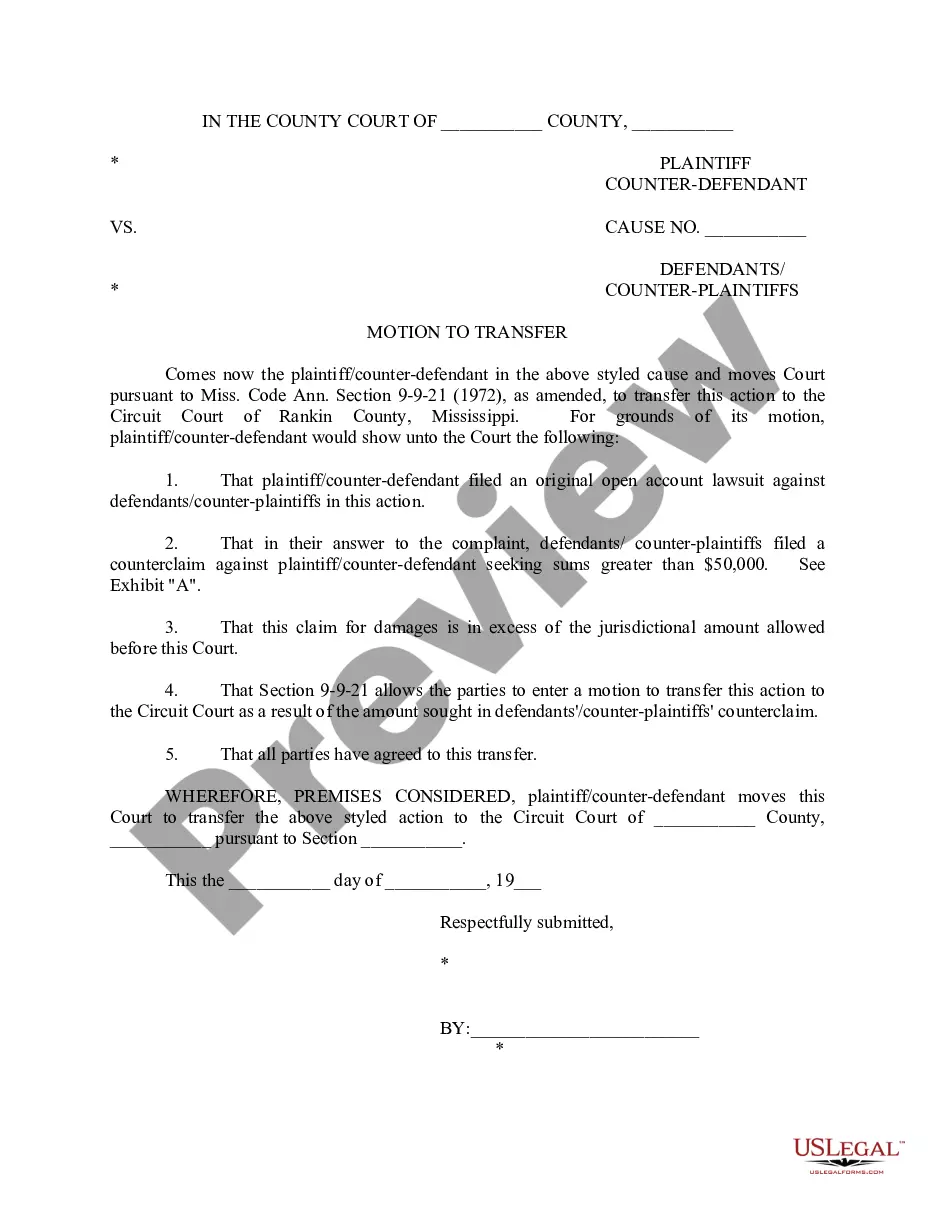
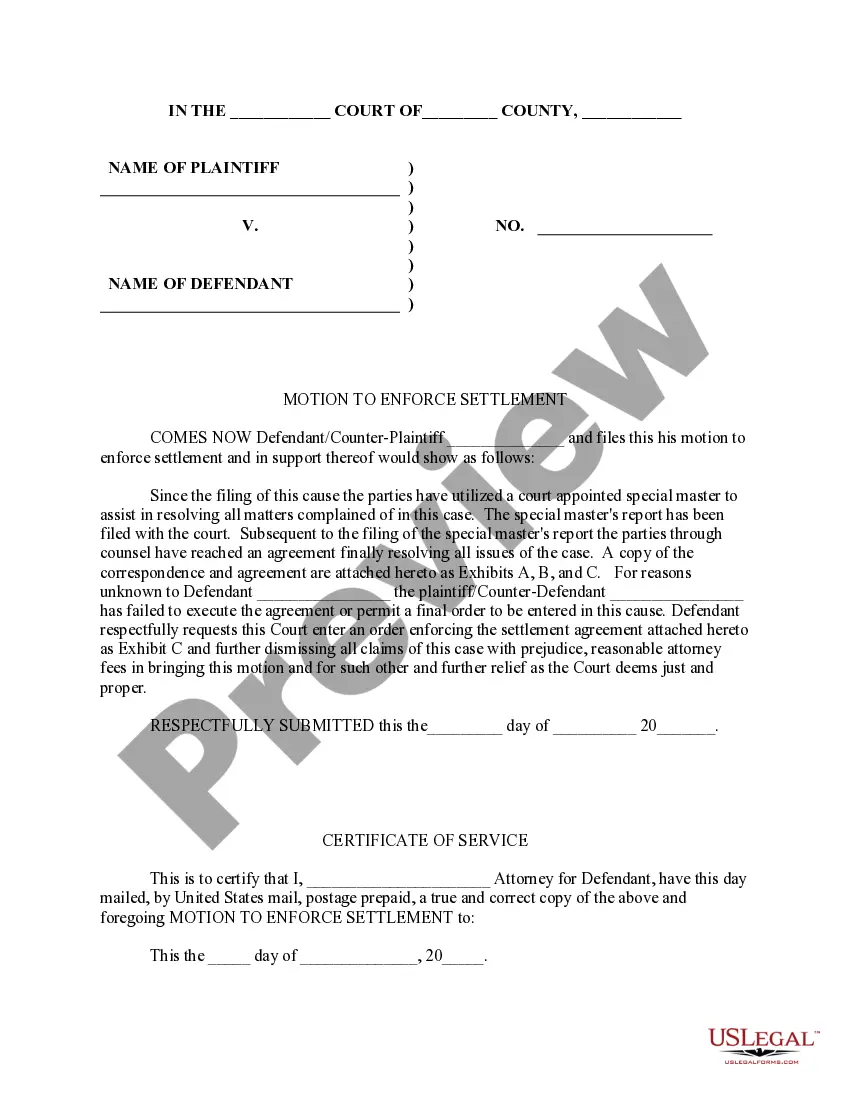
The Motion to Transfer for Amount in Excess of Court's Jurisdiction is a legal document used to request the transfer of a case to a higher court due to the amount in controversy exceeding the current court's jurisdictional limits. This form is essential for plaintiffs or counter-defendants seeking to move their case from a lower court when the claims involve significant sums. Unlike other motions, this specific form addresses jurisdictional concerns tied to financial limits established by law.
Key parts of this document
- Title of the motion: Clearly identifies the purpose of the document.
- Parties involved: Names of the plaintiff/counter-defendant and defendants/counter-plaintiffs.
- Cause number: Space to input the designated case number.
- Grounds for the motion: Lists reasons for transferring the case, including jurisdictional limits.
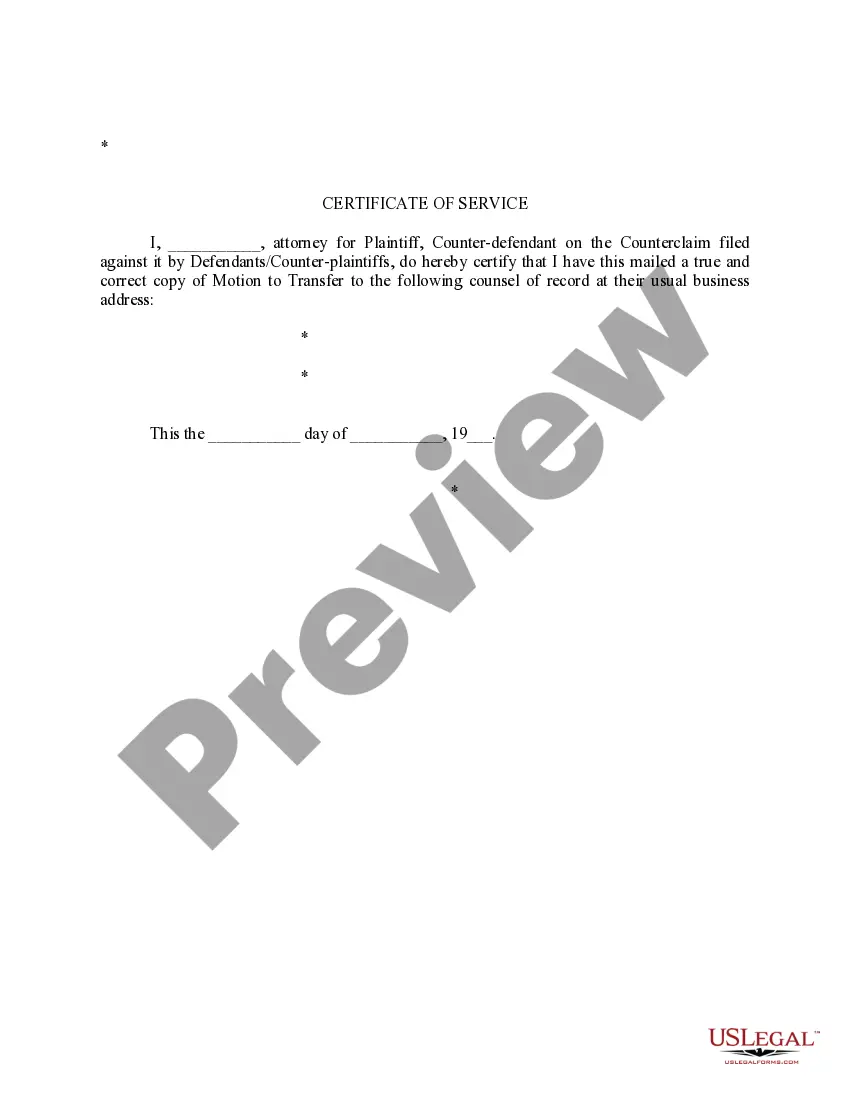
- Certificate of service: Confirms that all parties have been notified of the motion.

When this form is needed
This form should be used in situations where a counterclaim has been filed against the plaintiff that seeks damages exceeding the court's jurisdictional threshold. For instance, if the initial lawsuit involves an open account claim and the defendants seek more than $50,000 in their counterclaim, this motion allows for the case to be moved to the appropriate circuit court capable of handling the higher amount.
Who should use this form
- Plaintiffs involved in a lawsuit exceeding the jurisdictional limit of the current court.
- Counter-defendants facing counterclaims with financial demands above the courtâs limits.
- Attorneys representing clients in cases where jurisdictional transfer is necessary.
Instructions for completing this form
- Identify the parties: Fill in the names of the plaintiff/counter-defendant and defendants/counter-plaintiffs.
- Specify the cause number: Input the case number provided by the court.
- Detail the grounds for the motion: Clearly explain why the transfer is requested, including references to the claims in excess of jurisdictional limits.
- Enter the date and signature: Include the date of submission and the signature of the attorney representing the plaintiff/counter-defendant.
- Complete the certificate of service: Provide details of when and to whom the motion was mailed.
Is notarization required?
This form does not typically require notarization unless specified by local law. However, it's always best to verify any additional state requirements before filing to ensure compliance.
Get your form ready online
Our built-in tools help you complete, sign, share, and store your documents in one place.
Make edits, fill in missing information, and update formatting in US Legal Forms—just like you would in MS Word.
Download a copy, print it, send it by email, or mail it via USPS—whatever works best for your next step.
Sign and collect signatures with our SignNow integration. Send to multiple recipients, set reminders, and more. Go Premium to unlock E-Sign.
If this form requires notarization, complete it online through a secure video call—no need to meet a notary in person or wait for an appointment.
We protect your documents and personal data by following strict security and privacy standards.

Make edits, fill in missing information, and update formatting in US Legal Forms—just like you would in MS Word.

Download a copy, print it, send it by email, or mail it via USPS—whatever works best for your next step.

Sign and collect signatures with our SignNow integration. Send to multiple recipients, set reminders, and more. Go Premium to unlock E-Sign.

If this form requires notarization, complete it online through a secure video call—no need to meet a notary in person or wait for an appointment.

We protect your documents and personal data by following strict security and privacy standards.
Mistakes to watch out for
- Failing to properly state the jurisdictional limit being exceeded.
- Not including the cause number or case details.
- Neglecting to sign the motion or the certificate of service.
- Using vague language in the grounds for the motion.
Why complete this form online
- Convenience of downloading the form directly to customize as needed.
- Access to attorney-drafted templates ensuring legal reliability.
- Editable format allows for quick adjustments to fit specific cases.
- Secure and accessible from anywhere, facilitating faster case management.
Looking for another form?

Form popularity
FAQ
The Motion to Transfer for Amount in Excess of Court's Jurisdiction is a legal document used to move a case to a higher court when the amount in controversy exceeds the current court's limits. It directs the transfer of the case and includes sections for the title, the parties, the cause number, the grounds for transfer, and a certificate of service.
A motion to transfer is a request to move a case to a higher court based on jurisdictional limits. For this form, it specifies the transfer request due to the amount in controversy and includes the title, the parties, the cause number, the grounds for transfer, and a certificate of service to show notice was given.
Concurrent jurisdiction occurs when more than one court could hear the same claim. This form addresses excess jurisdiction by seeking transfer because the current court's monetary limits are exceeded. If concurrent jurisdiction exists, a different approach may be needed; consult a licensed attorney for guidance on the proper forum.
The excess of jurisdiction means the claimed amount surpasses the current court's authority to rule on the case. This form is designed to address that issue by moving the case to a court with higher jurisdiction and by detailing the grounds for transfer, including jurisdictional limits.
An example is a counterclaim seeking damages that exceed the lower court's limit, triggering transfer to a higher court. The form documents this excess in the Grounds for the transfer and includes a Certificate of Service to confirm that all parties were notified.
This form specifically targets excess jurisdiction due to the amount in controversy, requiring the Grounds for the transfer to address jurisdictional limits and a Certificate of Service. A standard transfer motion may address other reasons for moving a case; this one is specialized to monetary threshold issues.