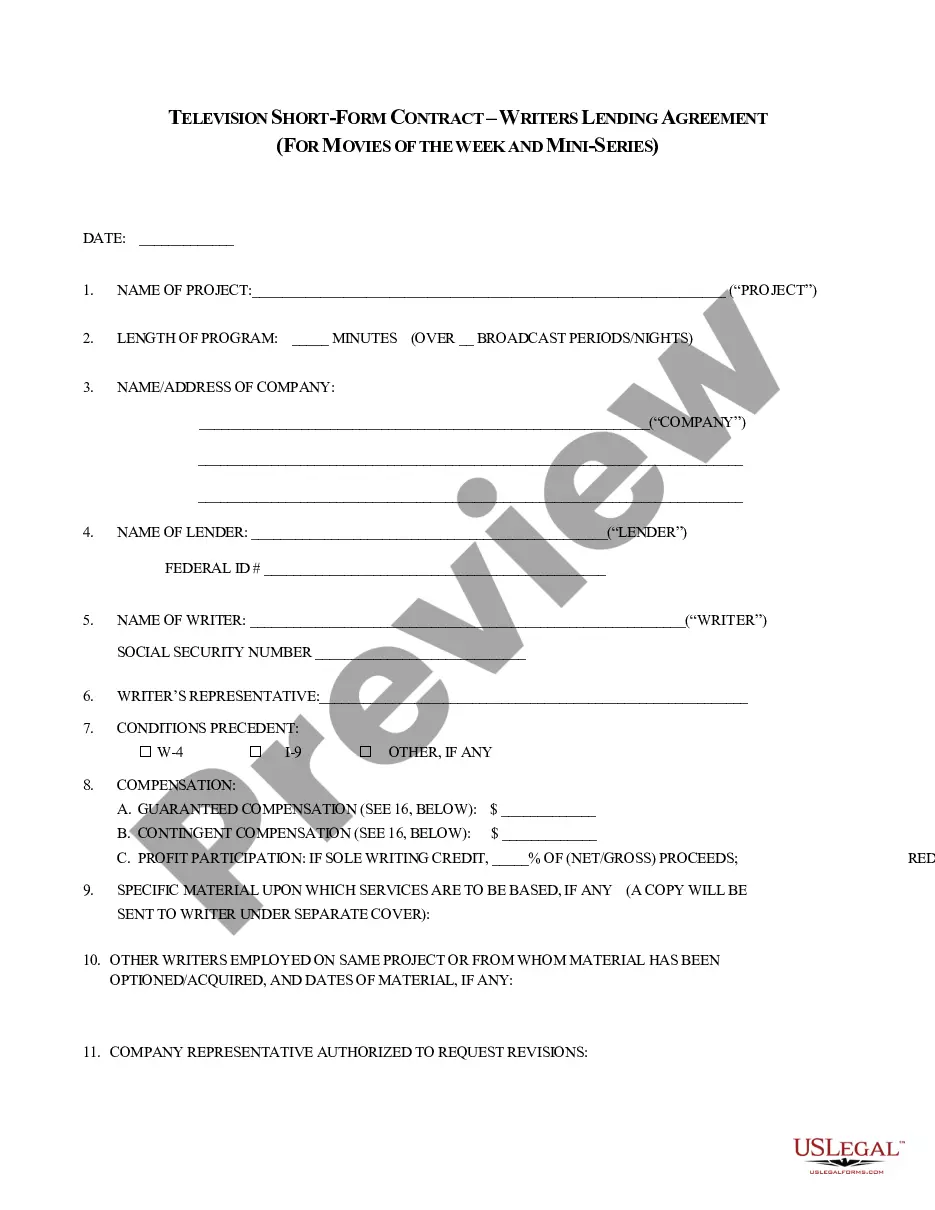
Writers Guild Of America - Theatrical Short Form Contract Writers Lending Agreement
About this form
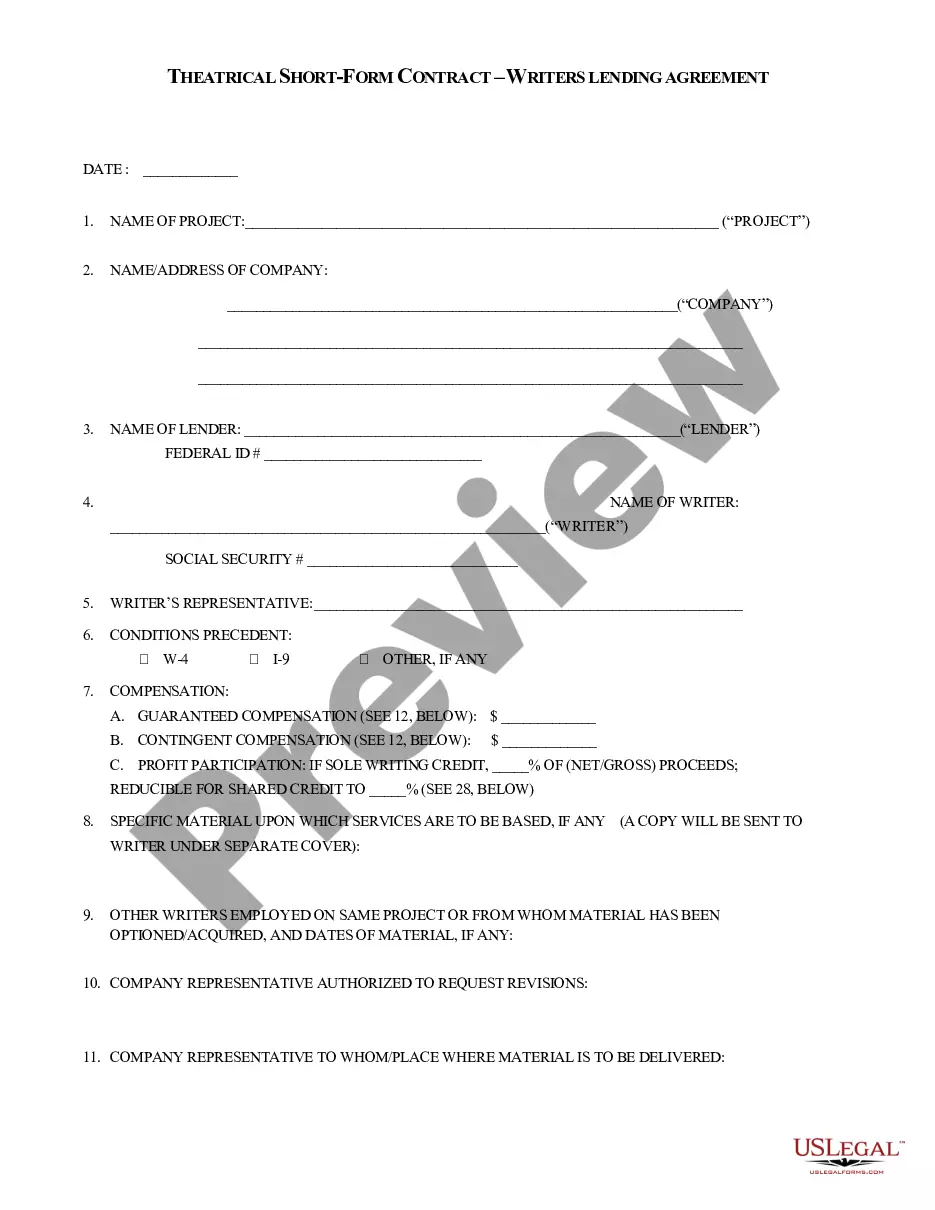
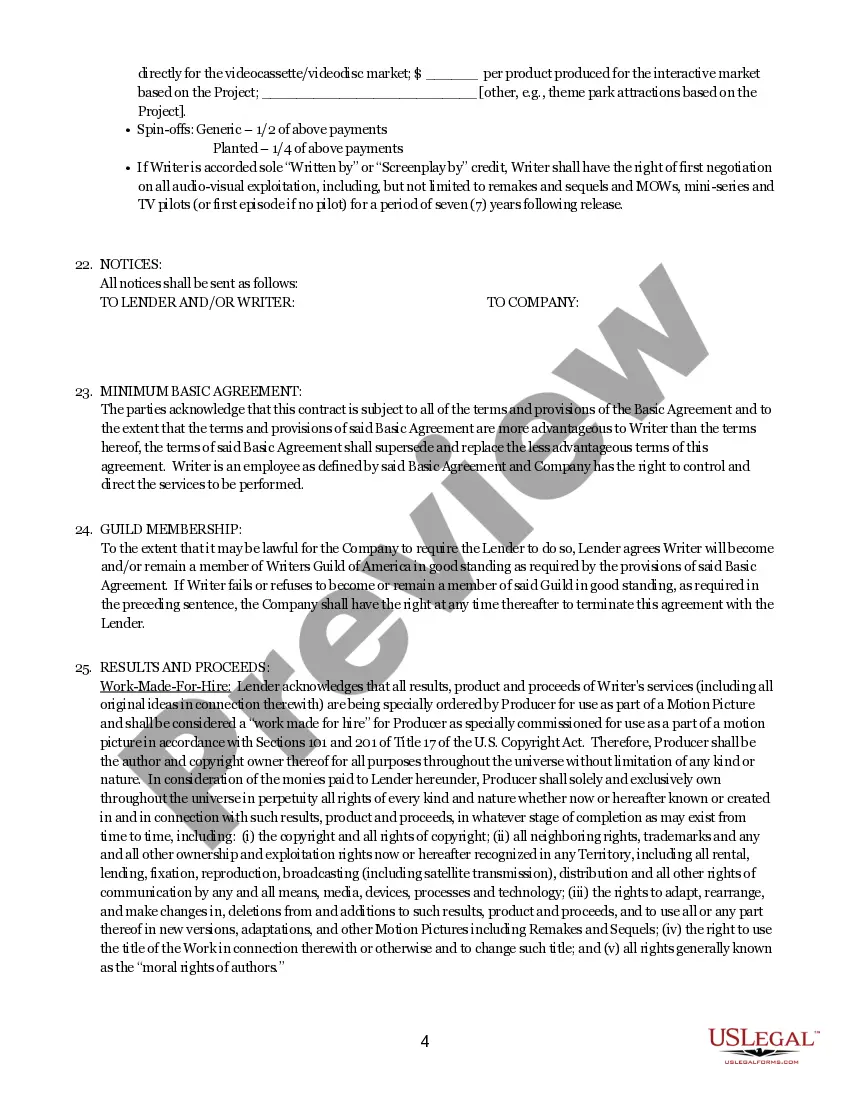
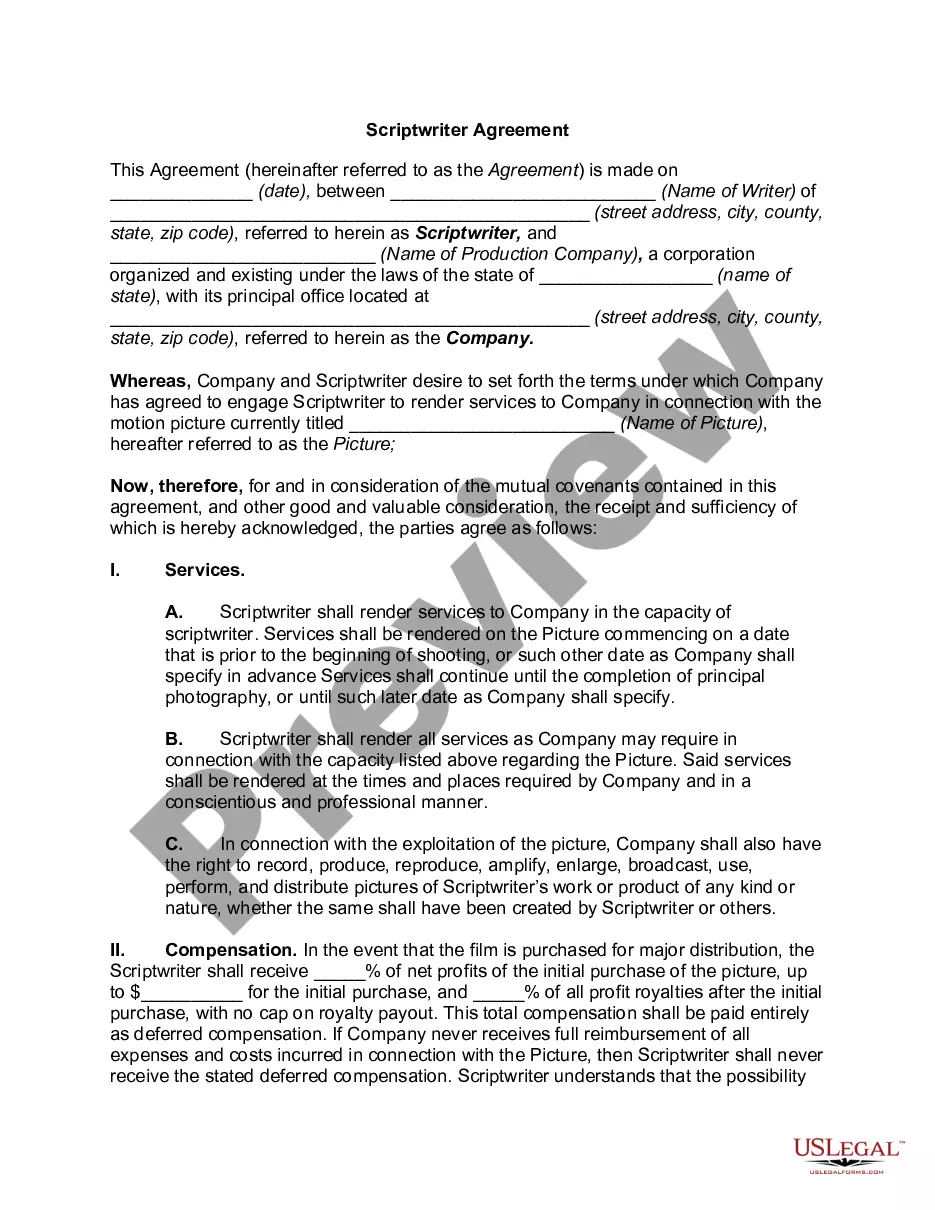
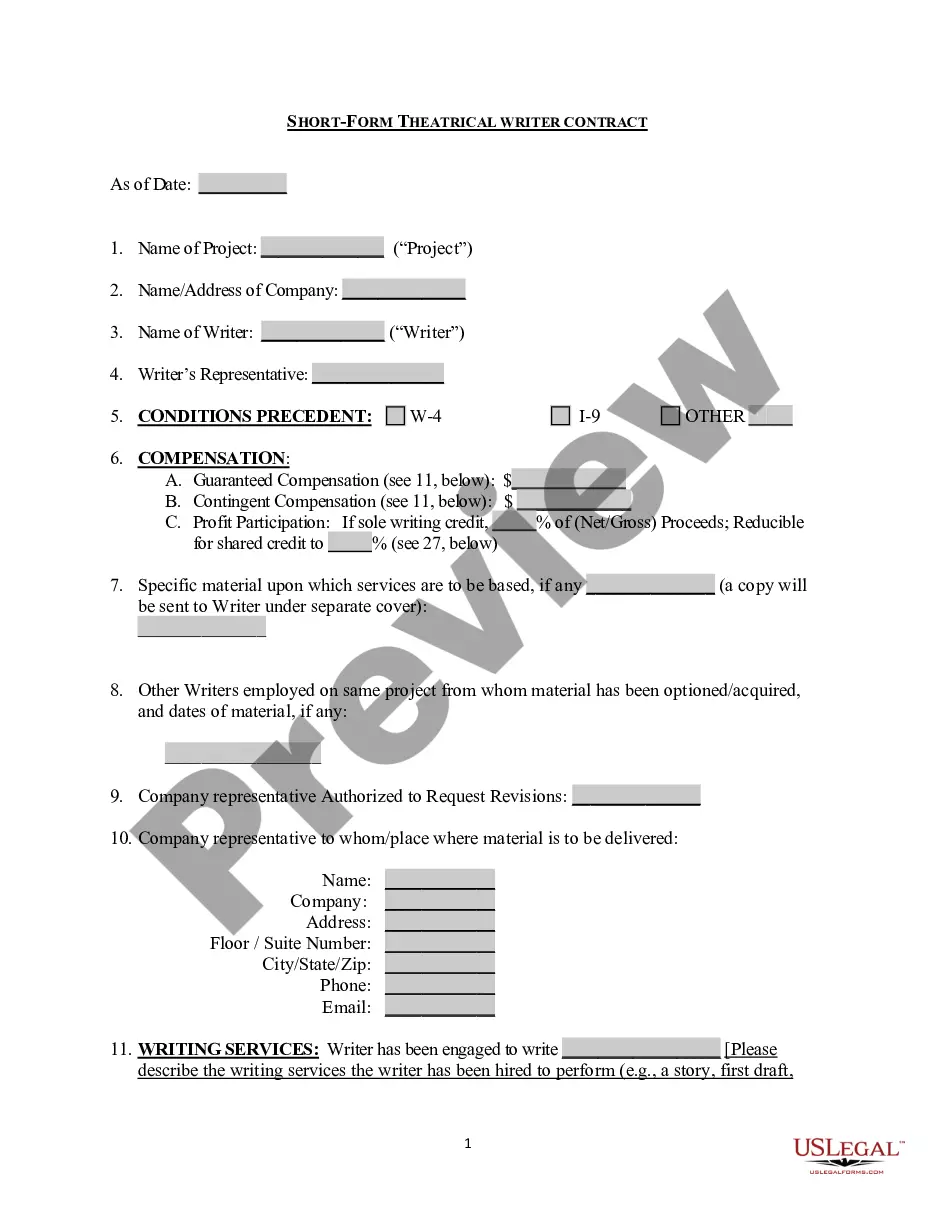
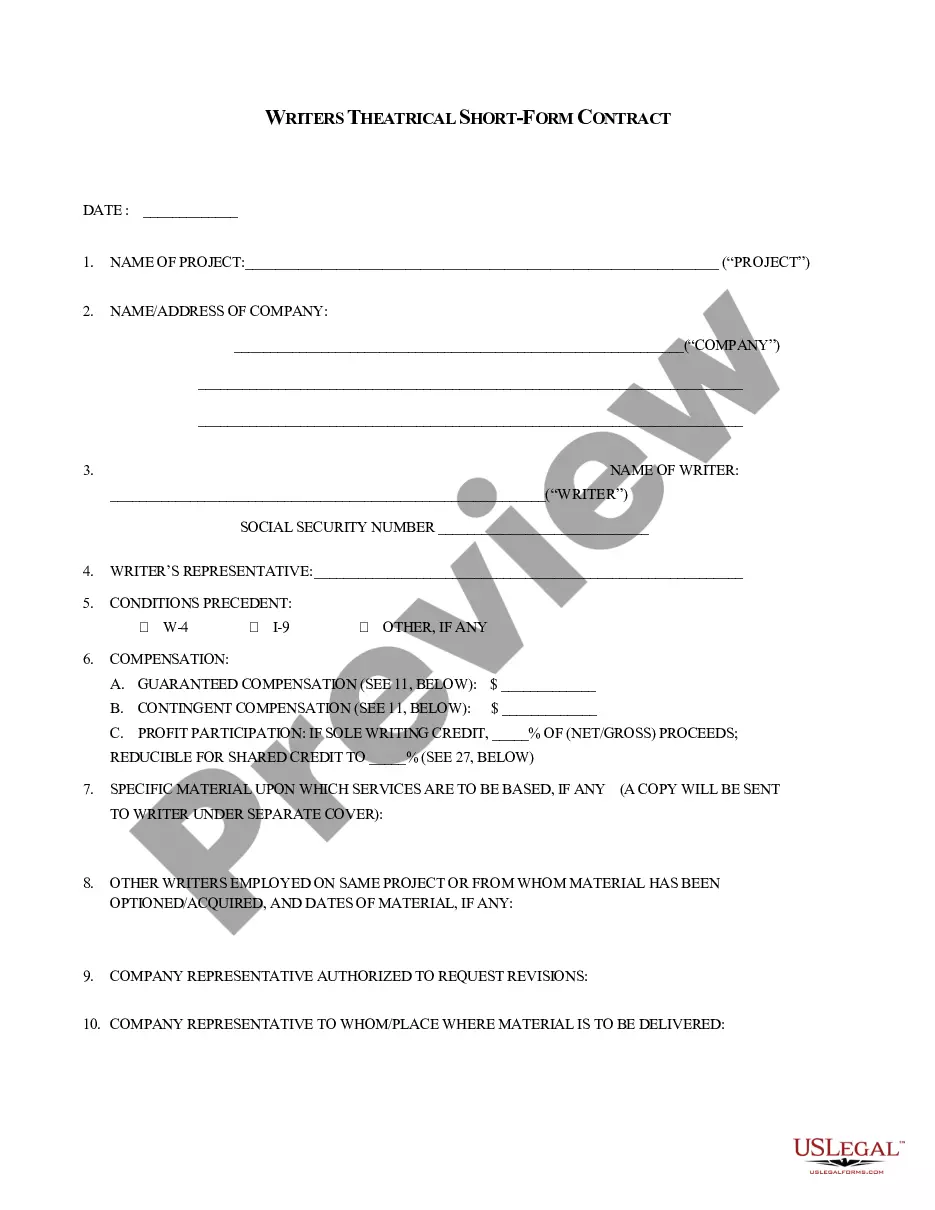
The Writers Guild of America - Theatrical Short Form Contract Writers Lending Agreement is a legal document that outlines the terms between a lending screenwriter and a motion picture production company. This form is specifically designed to ensure that both parties adhere to the provisions approved by the Writers Guild of America. Unlike other contract forms, this agreement includes specific compensation structures, conditions of service, and rights related to the written material provided by the writer.
What’s included in this form
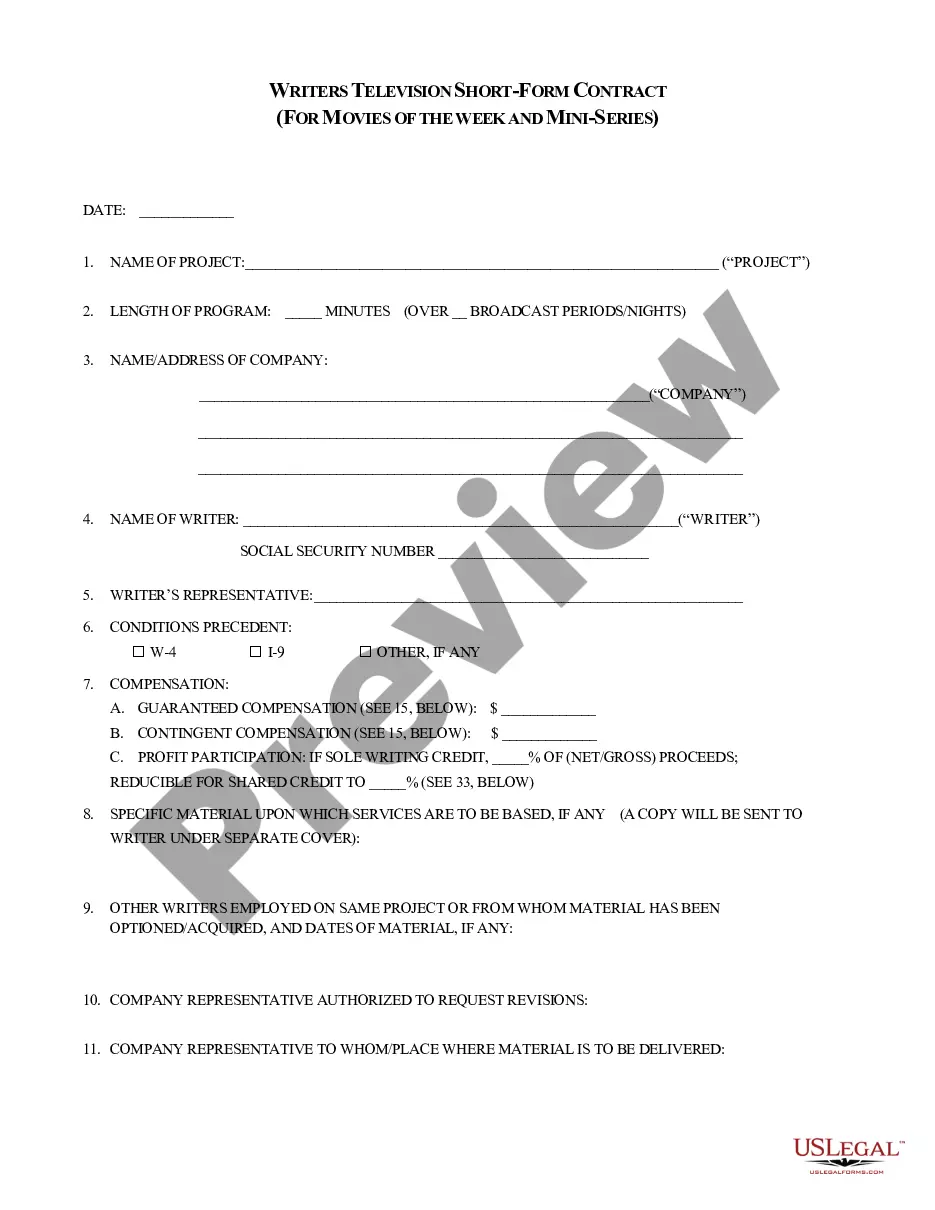
- Date of the agreement.
- Name and details of the project and producing company.
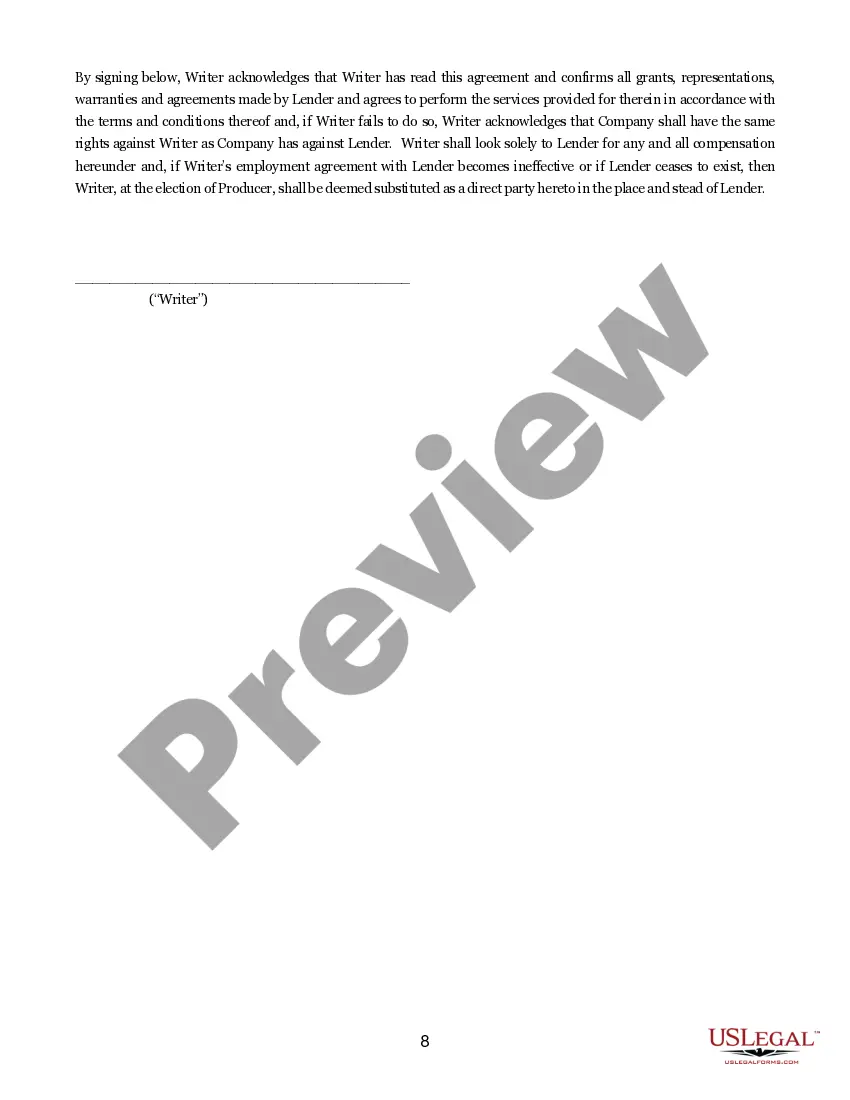
- Names and identification of the lender and writer, including any relevant tax identification numbers.
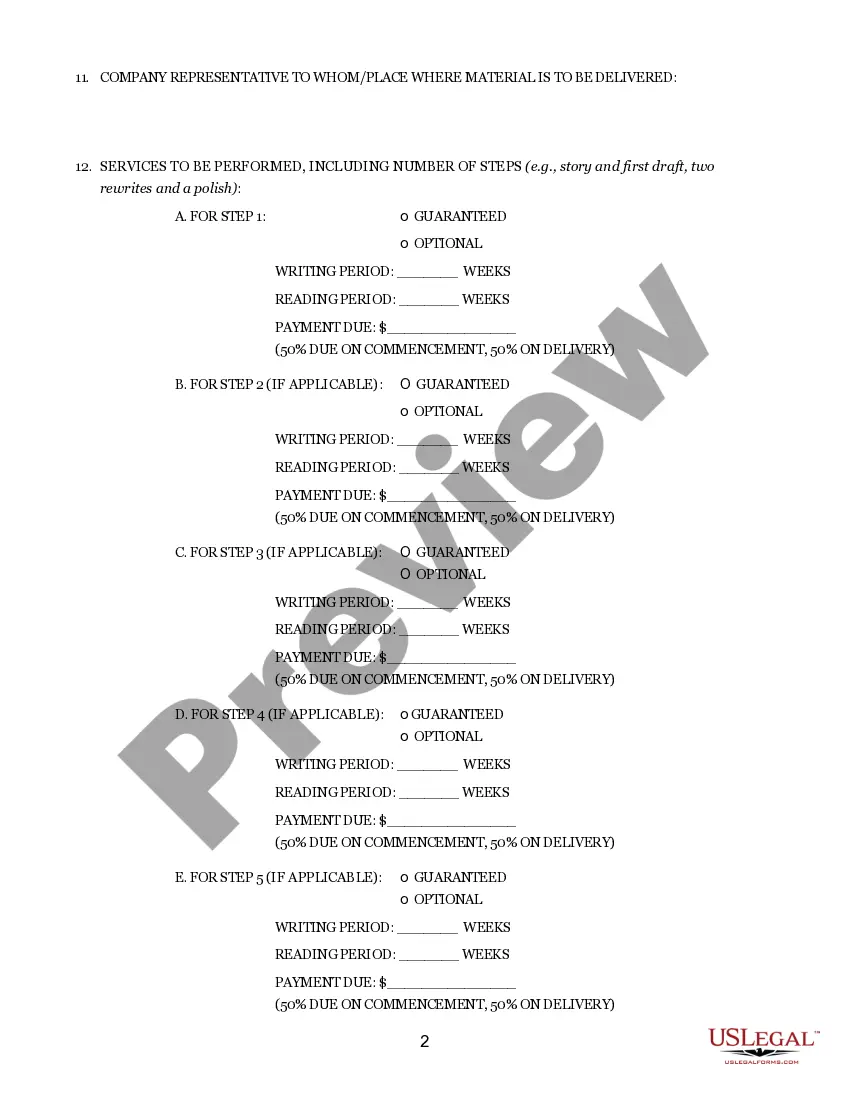
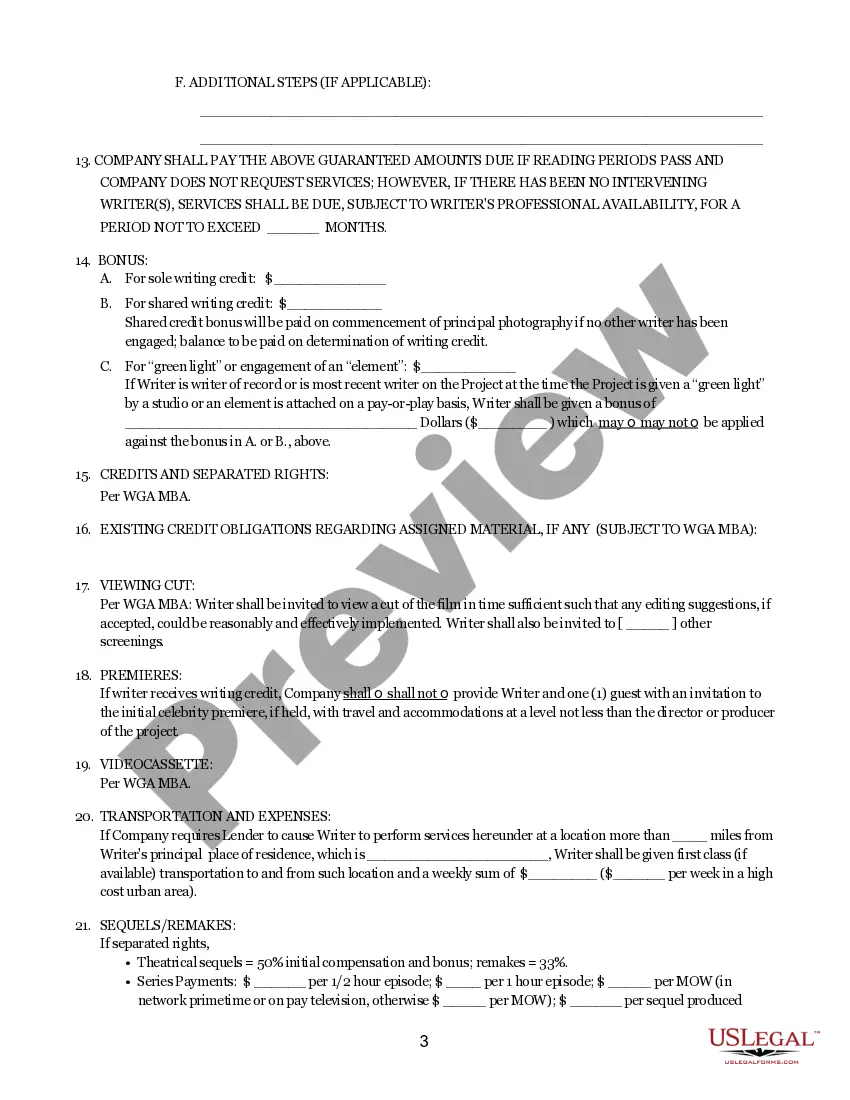
- Compensation details, including guaranteed and contingent amounts.
- Conditions precedent, such as W-4 and I-9 requirements.
- Services to be performed by the writer, detailed by steps and payment schedules.
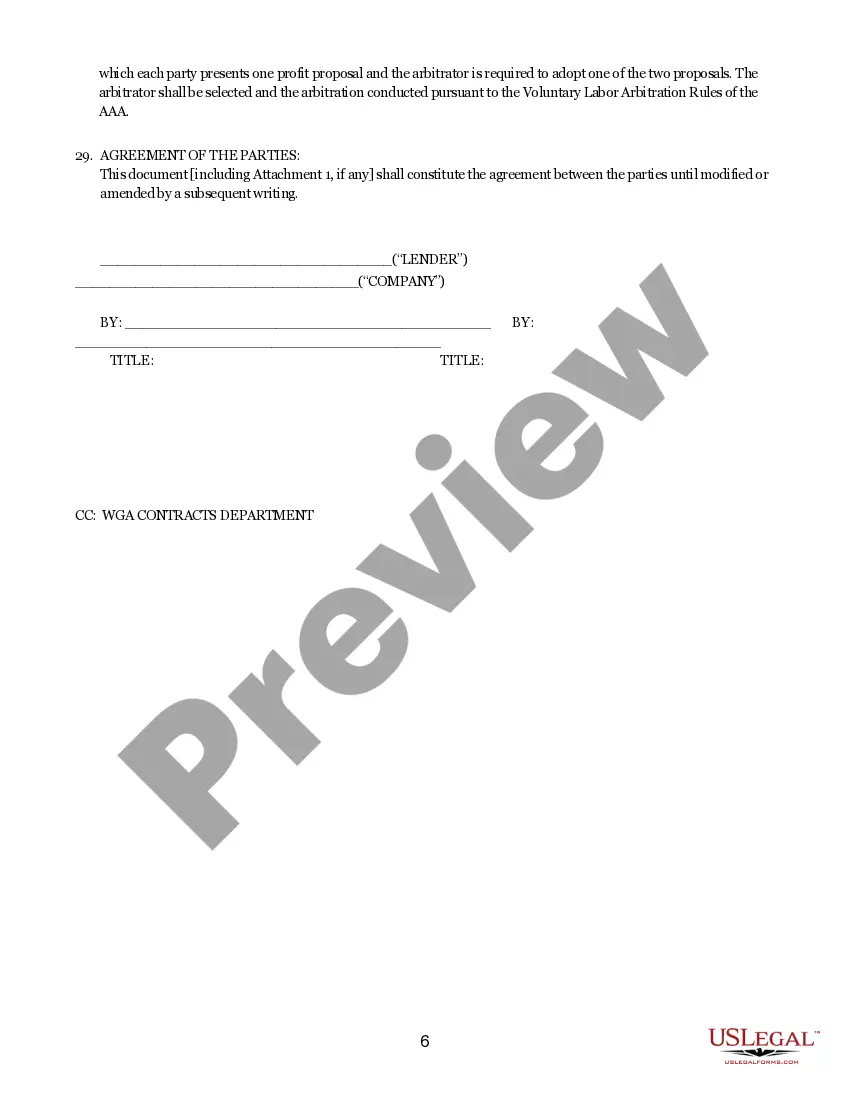
- Provisions for profit participation and bonuses based on writing credits.
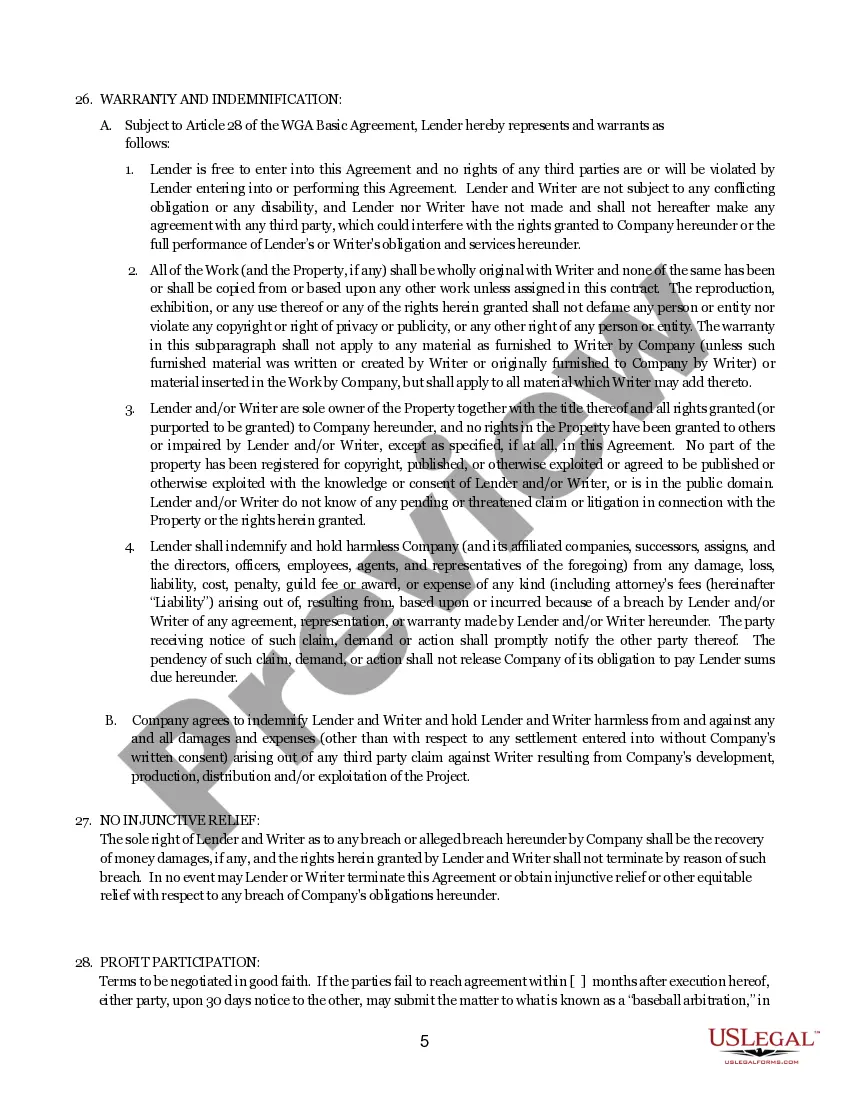
- Indemnification clauses assuring both parties against third-party claims.
When to use this document
This contract is suitable when a screenwriter has agreed to lend their services to a production company for a specific theatrical project. It is particularly useful in scenarios where the writer needs to outline their responsibilities, expected compensation, and the ownership of any works created during the process. This agreement helps to prevent disputes by clearly defining the terms of engagement and rights related to the written material.
Who should use this form
- Screenwriters seeking to lend their services to a film production.
- Production companies that need to formalize the terms with a writer for a specific project.
- Representatives of writers who manage their contracts with production companies.
- Entities within the film industry that require a structured agreement for collaboration.
Steps to complete this form
- Fill in the date of the agreement at the top of the contract.
- Provide the project name and the name and address of the production company.
- List the names and identification numbers for the lender and writer.
- Outline the compensation structure, detailing both guaranteed and contingent amounts.
- Specify the services to be performed by indicating the number of steps and their respective timelines.
- Both parties should review and sign the agreement to finalize the terms.
Notarization requirements for this form
This form does not typically require notarization unless specified by local law. Be sure to check any state-specific requirements before finalizing the agreement.
Get your form ready online
Our built-in tools help you complete, sign, share, and store your documents in one place.
Make edits, fill in missing information, and update formatting in US Legal Forms—just like you would in MS Word.
Download a copy, print it, send it by email, or mail it via USPS—whatever works best for your next step.
Sign and collect signatures with our SignNow integration. Send to multiple recipients, set reminders, and more. Go Premium to unlock E-Sign.
If this form requires notarization, complete it online through a secure video call—no need to meet a notary in person or wait for an appointment.
We protect your documents and personal data by following strict security and privacy standards.

Make edits, fill in missing information, and update formatting in US Legal Forms—just like you would in MS Word.

Download a copy, print it, send it by email, or mail it via USPS—whatever works best for your next step.

Sign and collect signatures with our SignNow integration. Send to multiple recipients, set reminders, and more. Go Premium to unlock E-Sign.

If this form requires notarization, complete it online through a secure video call—no need to meet a notary in person or wait for an appointment.

We protect your documents and personal data by following strict security and privacy standards.
Mistakes to watch out for
- Failing to include all parties' names and identification details, leading to potential legal issues.
- Not clearly defining the scope of services, which can create confusion later.
- Overlooking to specify payment conditions, which may lead to disputes regarding compensation.
- Neglecting to sign the agreement, rendering it unenforceable.
Why use this form online
- Convenience of downloading and customizing legal forms at any time.
- Editability allows for quick adjustments to meet specific project needs.
- Reliability of forms that are drafted or reviewed by licensed attorneys.
- Instant access to legal documentation saves time compared to traditional methods.
Looking for another form?






Form popularity
FAQ
Average Salary for a Contract WriterContract Writers in America make an average salary of $94,121 per year or $45 per hour. The top 10 percent makes over $175,000 per year, while the bottom 10 percent under $50,000 per year.
The simple answer is YES. You can write your own contracts. There is no requirement that they must be written by a lawyer. There is no requirement that they have to be a certain form or font.
Speech Writer. Politicians, celebrities and business executives rarely have the time to write their own speeches. Medical Writer. Technical Writer. Proposal Writer. Marketing and Sales Copywriter.
It isn't illegal to write a contract without an attorney.Two parties can agree between themselves and create their own contract. Contract law, however, requires that all contracts must contain certain elements to be valid and enforceable.
The folks over at Glassdoor have the average for freelance writer down a bit to $42,120. On PayScale.com, a part-time freelance writer salary is put somewhere in the range of $24,000 $115,000.
Yes you can. In fact, you don't even need to write it down for most things! Legal documents are just documents that have a purpose to do with law or legal arrangements.
Is Writers Work legit? Writers Work is a legit website for freelance writers. It isn't a scam. While there are many websites out there that rip off writers and waste their precious hours, Writers Work isn't one of them.
Contracts can be formed through a writing or created by oral agreement. For the purposes of contract drafting, this only refers to written agreements. Contract drafting is the act of writing down the terms and conditions of an agreement.
Names, contact information, and dates. The full names of both parties should appear at the beginning, and also throughout, any contract. Your role. Payment information. Deadlines. Ownership. Confidential information. Independent contractor terms. Limitation of liability.