Instructions for Completing Mortgage Deed of Trust Form
What is this form?
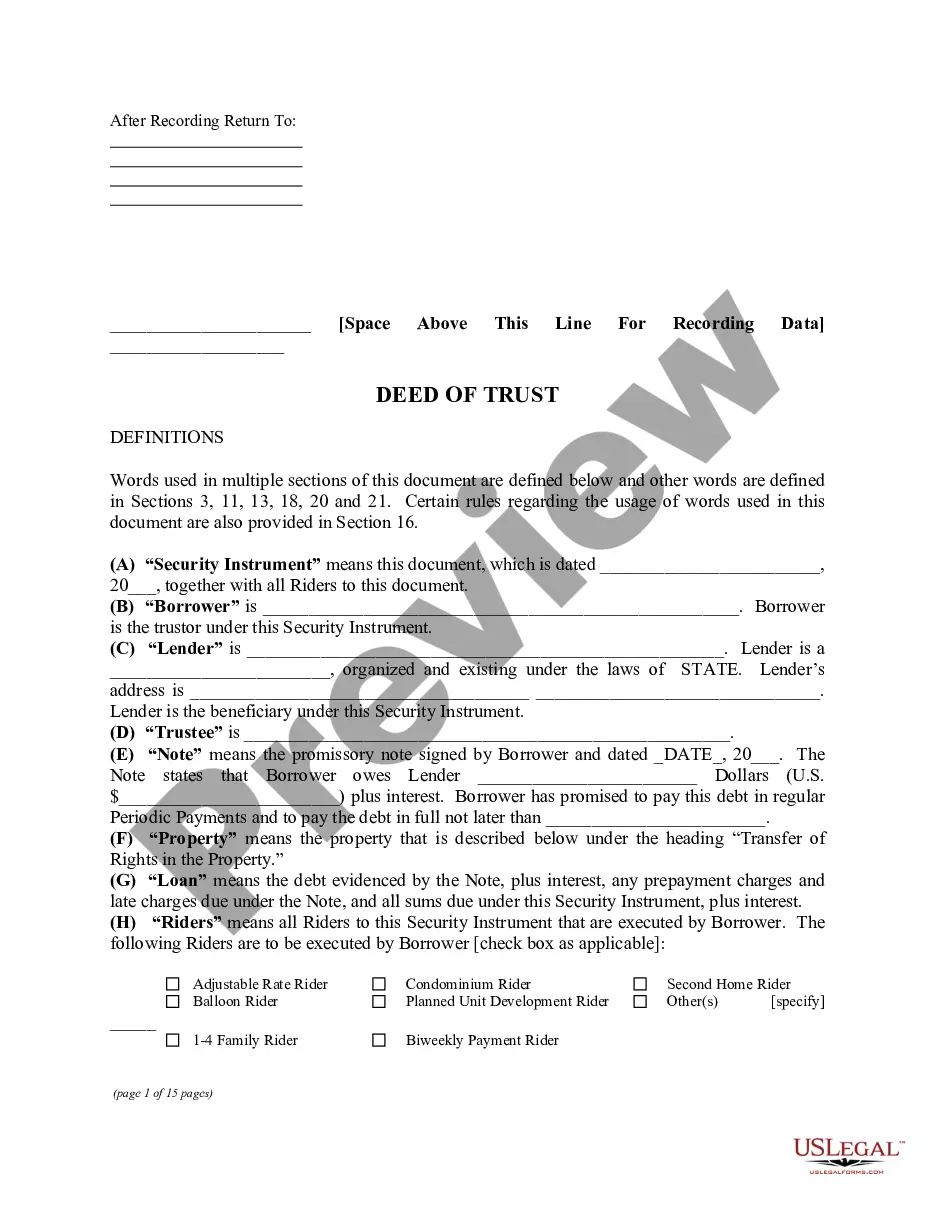
The Instructions for Completing Mortgage Deed of Trust Form provides essential guidance for users preparing a mortgage deed of trust. This document outlines how to accurately complete the deed, ensuring it meets legal standards. It differs from other mortgage-related forms by focusing specifically on the detailed instructions required for filling out this type of deed, which includes elements like title exceptions and property descriptions.
Form components explained
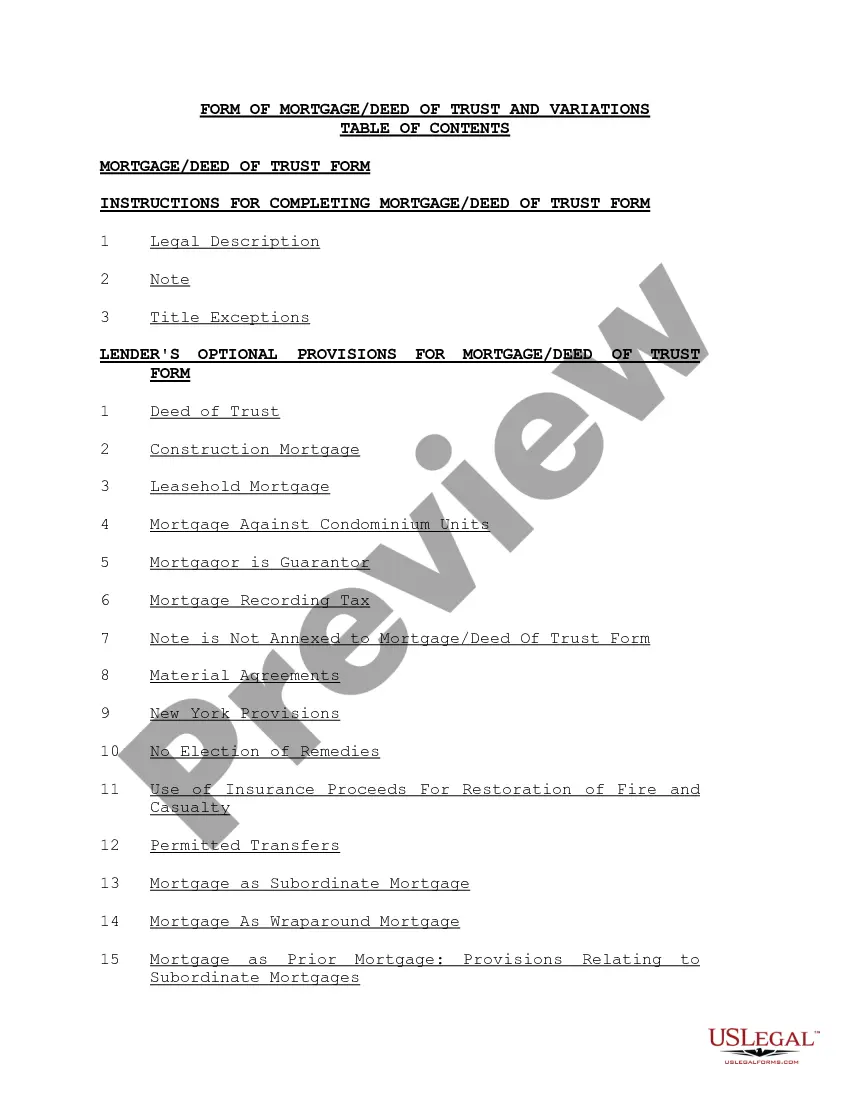
- Legal description of the real estate to be attached as Schedule A.
- Note secured by the mortgage to be attached as Schedule B.
- Title exceptions agreed upon by the lender to be annexed as Schedule C.
- Provisions for optional adjustments when securing a deed of trust instead of a mortgage.
- Instructions for defining terms such as Grantor and Beneficiary related to the deed of trust.

Common use cases
This form is required when a borrower seeks to secure a loan using a deed of trust as collateral. It is typically used in real estate transactions where the lender needs to establish a legal claim over the property in the event of default. Users will need this form when they want to ensure that all aspects of the mortgage deed are accurately prepared and comply with state laws.
Who should use this form
Users who should consider using this form include:
- Homebuyers seeking to secure a mortgage with a deed of trust.
- Lenders involved in real estate financing.
- Real estate attorneys preparing mortgage documents for clients.
- Borrowers who need clear instructions on how to complete the deed accurately.
Instructions for completing this form
Follow these steps to complete the Instructions for Completing Mortgage Deed of Trust Form:
- Identify and attach the legal description of the property as Schedule A.
- Include a copy of the note secured by the mortgage as Schedule B.
- Add any title exceptions as Schedule C, ensuring they align with the lender's title insurance policy.
- Adjust terms appropriately if using a deed of trust instead of a mortgage and specify roles of grantor and beneficiary.
- Review for completeness and accuracy before submission.
Notarization guidance
This form does not typically require notarization unless specified by local law.
Get your form ready online
Our built-in tools help you complete, sign, share, and store your documents in one place.
Make edits, fill in missing information, and update formatting in US Legal Forms—just like you would in MS Word.
Download a copy, print it, send it by email, or mail it via USPS—whatever works best for your next step.
Sign and collect signatures with our SignNow integration. Send to multiple recipients, set reminders, and more. Go Premium to unlock E-Sign.
If this form requires notarization, complete it online through a secure video call—no need to meet a notary in person or wait for an appointment.
We protect your documents and personal data by following strict security and privacy standards.

Make edits, fill in missing information, and update formatting in US Legal Forms—just like you would in MS Word.

Download a copy, print it, send it by email, or mail it via USPS—whatever works best for your next step.

Sign and collect signatures with our SignNow integration. Send to multiple recipients, set reminders, and more. Go Premium to unlock E-Sign.

If this form requires notarization, complete it online through a secure video call—no need to meet a notary in person or wait for an appointment.

We protect your documents and personal data by following strict security and privacy standards.
Mistakes to watch out for
- Failing to include the legal description of the property.
- Not attaching the note or title exceptions correctly.
- Incorrectly defining terms like Grantor and Beneficiary.
- Omitting key details about the lenderâs and borrowerâs identities.
- Using outdated or incorrect schedules that donât meet current legal standards.
Advantages of online completion
- Convenient online access allows users to complete the form at their own pace.
- Editable templates ensure accuracy and compliance with legal requirements.
- Quickly downloadable forms save time and reduce paperwork hassle.
- This form is legally enforceable when completed accurately and in accordance with state regulations.
- Failure to comply with specific instructions may result in the document being deemed invalid.
- All parties involved should retain copies for their records.
Summary of main points
- Ensure all components are properly completed and attached.
- Understand your obligations as both borrower and lender.
- Be aware of state-specific requirements for mortgage deeds.
Looking for another form?
Form popularity
FAQ
Some owners are put off using solicitors duke to the deed of trust cost. Individuals can write out their own, and use someone else as a witness. However, this may have errors or not be a legally binding document. The investment of getting a deed of trust when buying a property is often worth it in the long term.
Party information: names and addresses of the trustor(s), trustee(s), beneficiary(ies), and guarantor(s) (if applicable) Property details: full address of the property and its legal description (which can be obtained from the County Recorder's Office)
A deed of trust has a borrower, lender and a trustee. The trustee is a neutral third party that holds the title to a property until the loan is completely paid off by the borrower.
Yes, there are key differences between the two. With a deed, you transfer the ownership of the property to one party. In contrast, a deed of trust does not mean the holder owns the property. In an arrangement involving a deed of trust, the borrower signs a contract with the lender with details regarding the loan.
How much each person contributes to the deposit, and how much will be repaid to them. What percentage of the property each person will own, and how the money will be split if the property is sold. How much each person will pay towards the mortgage, and how the mortgage will ultimately be paid off.
A deed of trust involves three parties: a lender, a borrower, and a trustee. The lender gives the borrower money. In exchange, the borrower gives the lender one or more promissory notes. As security for the promissory notes, the borrower transfers a real property interest to a third-party trustee.
When your mortgage lender decides he wants to sell your mortgage loan to another lender, your mortgage lender will sign an assignment of deed of trust in favor of the new lender. This assignment gives the new lender the same lien on your property that your original lender had under the mortgage loan.
Whether you have a deed of trust or a mortgage, they both serve to assure that a loan is repaid, either to a lender or an individual person. A mortgage only involves two parties the borrower and the lender. A deed of trust adds an additional party, a trustee, who holds the home's title until the loan is repaid.
Party information: names and addresses of the trustor(s), trustee(s), beneficiary(ies), and guarantor(s) (if applicable) Property details: full address of the property and its legal description (which can be obtained from the County Recorder's Office)