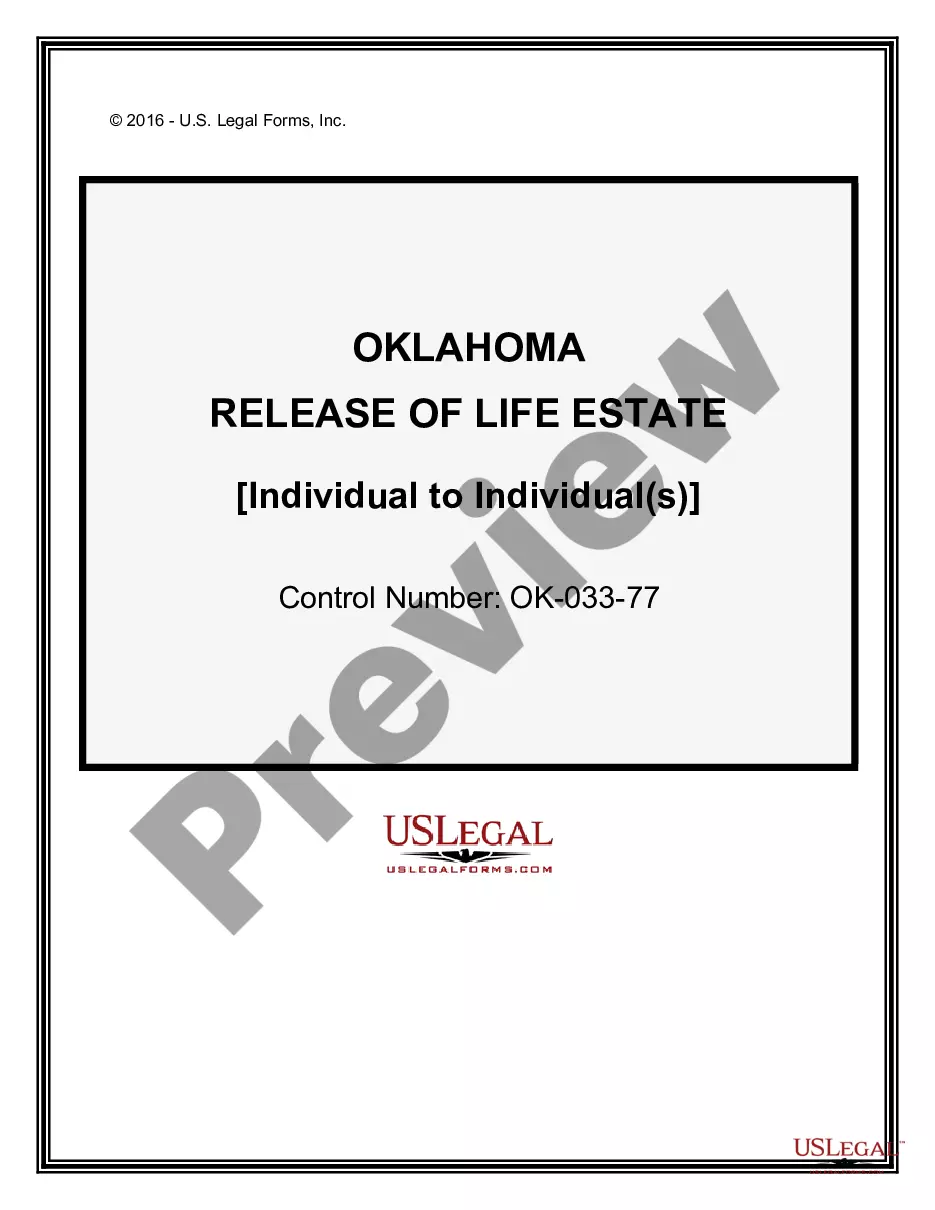
Oklahoma Release of Life Estate
Overview of this form
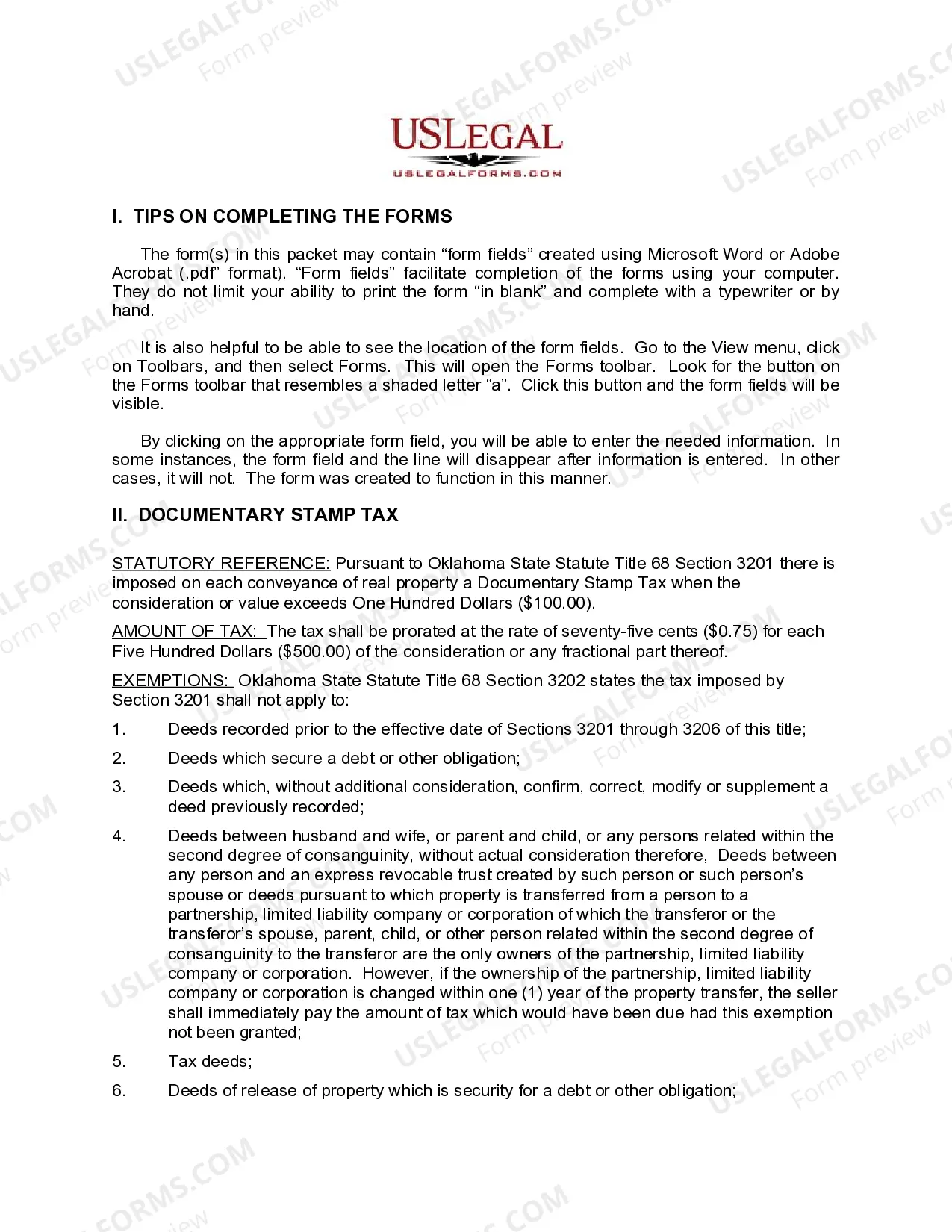
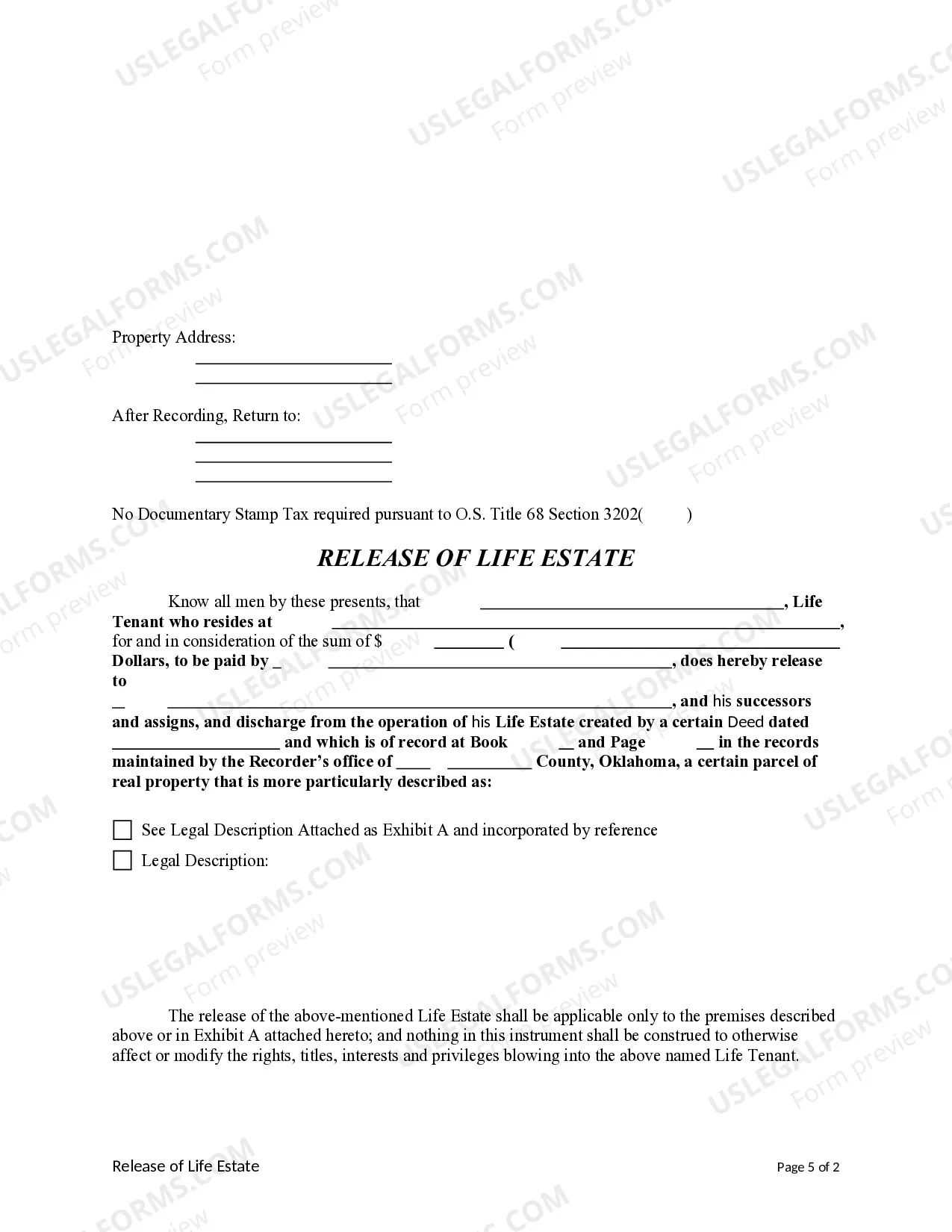
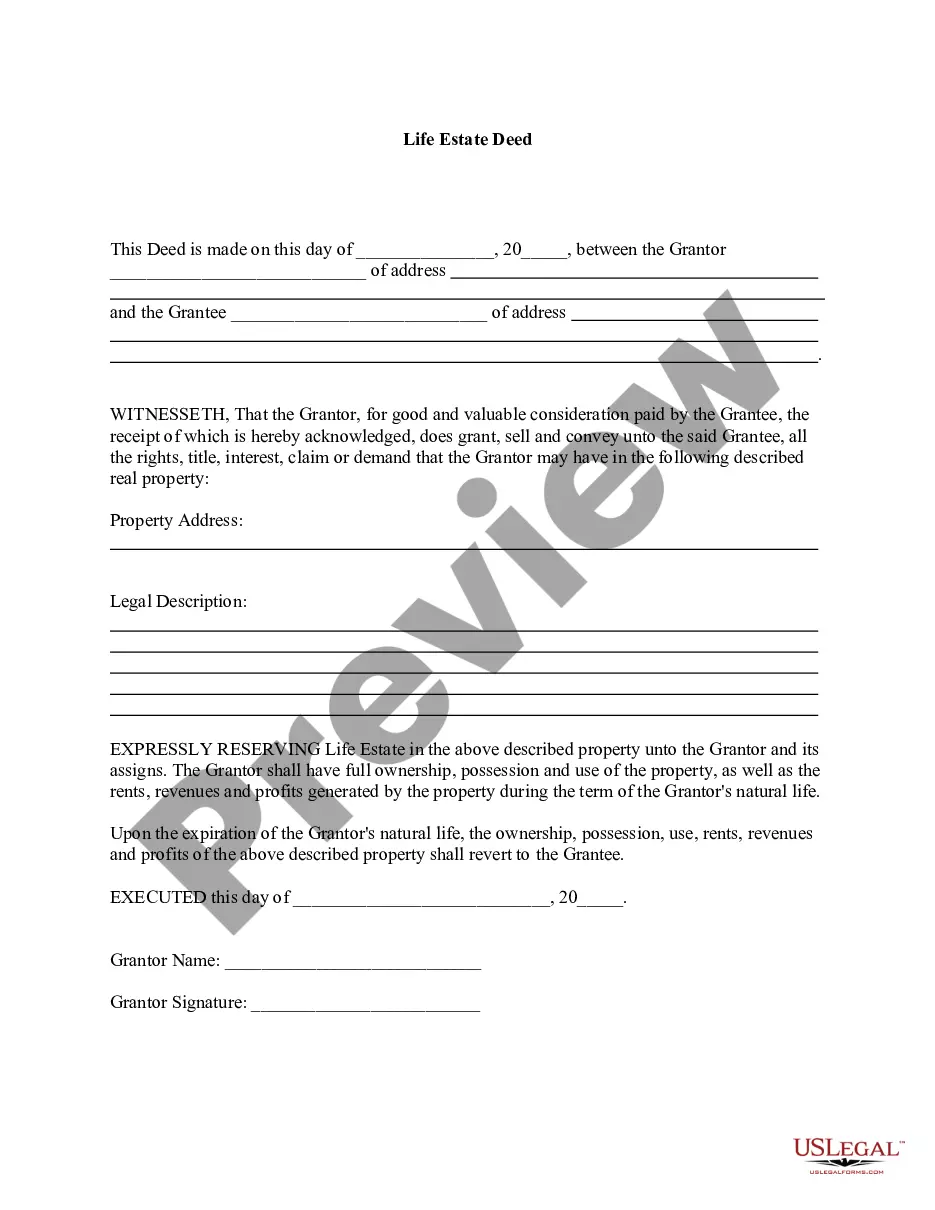
The Release of Life Estate is a legal document used by a Life Tenant to relinquish their interest in a property. This form allows the Life Tenant to formally give up their rights to the property, which may be needed in situations such as selling, transferring, or otherwise altering ownership. Unlike other property transfer forms, this release specifically addresses the rights of a Life Tenant and is vital for clearly documenting the intention to release those rights without transferring full ownership to another party.
Key components of this form
- Identification of the Life Tenant: The name and details of the individual relinquishing their life estate.
- Property Description: A clear description of the property involved, including the address.
- Effective Date: The date when the release of life estate becomes effective.
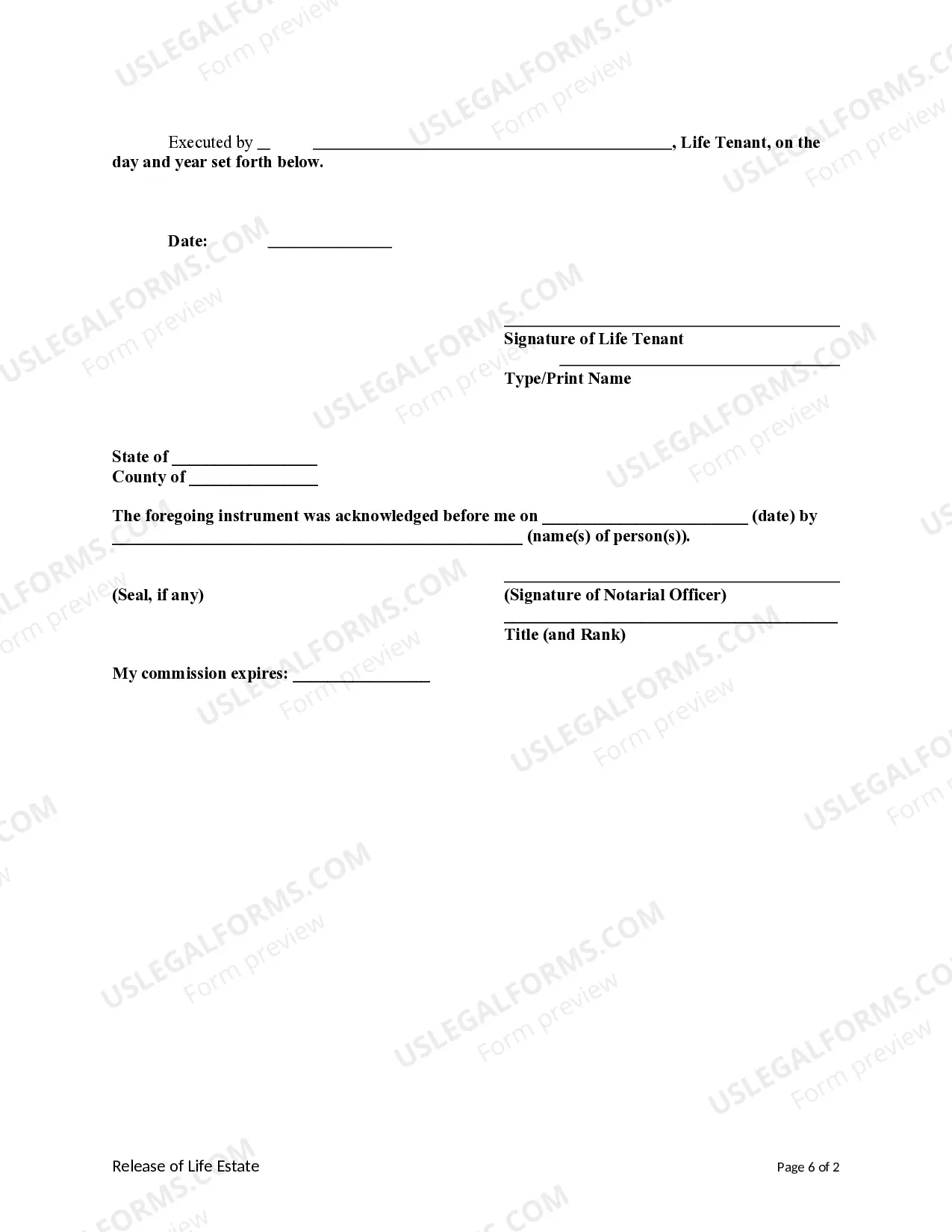
- Signatures: Signature sections for the Life Tenant and any witnesses as required by state law.
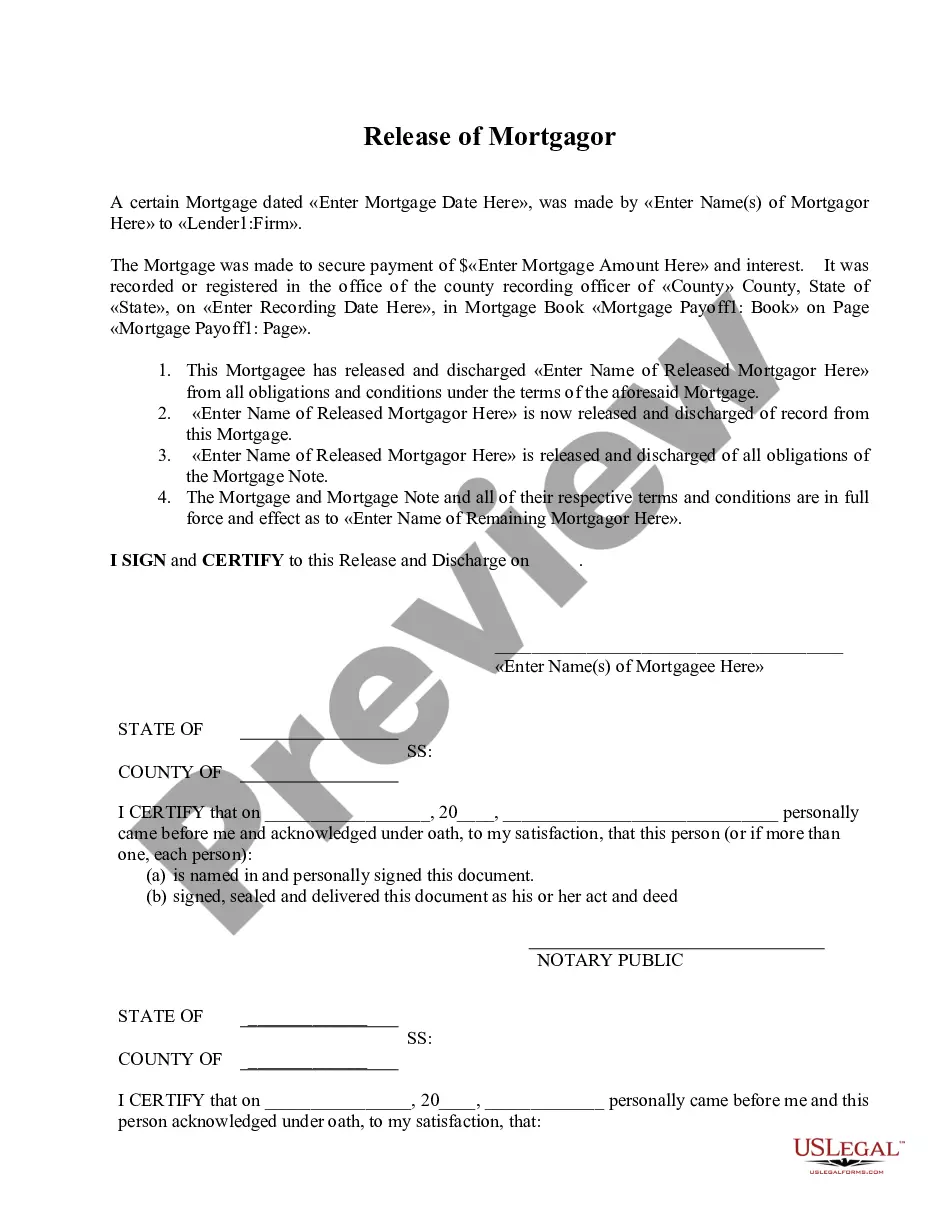
- Notary Acknowledgment: A section where a notarization may be required to validate the document.



When this form is needed
This form should be used when a Life Tenant wishes to formally release their interest in a property. Situations may include but are not limited to selling the property, transferring the life estate to another person, or resolving any disputes regarding the property among family members or co-owners. It is essential to use this form to ensure that all parties understand the change in rights concerning the property.
Who should use this form
- Individuals who hold a life estate and want to relinquish their rights to the property.
- Estate planners or family members managing the affairs of a deceased or elderly relative.
- Real estate professionals assisting clients in property transactions involving life estates.
- Anyone involved in the reallocation of property rights within a family or among co-owners.
Steps to complete this form
- Identify the parties involved: Clearly state the name of the Life Tenant releasing their interest.
- Specify the property: Provide a complete description of the property being released.
- Enter the effective date: Include the date on which the release will take effect.
- Gather signatures: Ensure that the Life Tenant signs the document, along with required witnesses.
- Notarize the document: If required, take the form to a notary public for verification.
Notarization requirements for this form
This form needs to be notarized to ensure legal validity. US Legal Forms provides secure online notarization powered by Notarize, allowing you to complete the process through a verified video call, available anytime.
Get your form ready online
Our built-in tools help you complete, sign, share, and store your documents in one place.
Make edits, fill in missing information, and update formatting in US Legal Forms—just like you would in MS Word.
Download a copy, print it, send it by email, or mail it via USPS—whatever works best for your next step.
Sign and collect signatures with our SignNow integration. Send to multiple recipients, set reminders, and more. Go Premium to unlock E-Sign.
If this form requires notarization, complete it online through a secure video call—no need to meet a notary in person or wait for an appointment.
We protect your documents and personal data by following strict security and privacy standards.

Make edits, fill in missing information, and update formatting in US Legal Forms—just like you would in MS Word.

Download a copy, print it, send it by email, or mail it via USPS—whatever works best for your next step.

Sign and collect signatures with our SignNow integration. Send to multiple recipients, set reminders, and more. Go Premium to unlock E-Sign.

If this form requires notarization, complete it online through a secure video call—no need to meet a notary in person or wait for an appointment.

We protect your documents and personal data by following strict security and privacy standards.
Common mistakes
- Failing to provide a complete property description can lead to ambiguity.
- Not including the effective date or signatures might render the document invalid.
- Overlooking state-specific notarization requirements can cause issues during recording.
Why complete this form online
- Convenience of completing the form from home or any location.
- Editability allows users to customize the document to their specific needs.
- Access to reliable templates drafted by licensed attorneys ensures legal compliance.
- Quick and easy downloading for immediate use.
Looking for another form?
Form popularity
FAQ
If the deceased was sole owner, or co-owned the property without right of survivorship, title passes according to his will. Whoever the will names as the beneficiary to the house inherits it, which requires filing a new deed confirming her title. If the deceased died intestate -- without a will -- state law takes over.
In most cases, the surviving owner or heir obtains the title to the home, the former owner's death certificate, a notarized affidavit of death, and a preliminary change of ownership report form. When all these are gathered, the transfer gets recorded, the fees are paid, and the county issues a new title deed.
If it was inherited, succession law comes into play. Once the beneficiaries and their shares, rights and liabilities are decided, the property has to be transferred in their names. For this you need to apply for property transfer at the sub-registrar's office.
When a person dies, beneficiaries might learn that the decedent made a deed that conflicts with the specific wording in his will. Generally, a deed will override the will. However, which legal document prevails also depends on state property laws and whether the state has adopted the Uniform Probate Code.
What happens to a life estate after someone dies? Upon the life tenant's death, the property passes to the remainder owner outside of probate.They can sell the property or move into and claim it as their primary residence (homestead). Property taxes will not be reassessed.
Get a copy of the probated will. Obtain a certified copy of the death certificate. Draft a new deed that names you as the property owner. Sign the new deed and have it notarized.
Property held in joint tenancy, tenancy by the entirety, or community property with right of survivorship automatically passes to the survivor when one of the original owners dies. Real estate, bank accounts, vehicles, and investments can all pass this way. No probate is necessary to transfer ownership of the property.
To dissolve a life estate, the life tenant can give their ownership interest to the remainderman. So, if a mother has a life estate and her son has the remainder, she can convey her interest to him, and he will then own the entire interest in the property.
A person owns property in a life estate only throughout their lifetime. Beneficiaries cannot sell property in a life estate before the beneficiary's death. One benefit of a life estate is that property can pass when the life tenant dies without being part of the tenant's estate.