Oklahoma Special Warranty Deed transferring Royalty Interest from an Individual to a Trust.
What is this form?
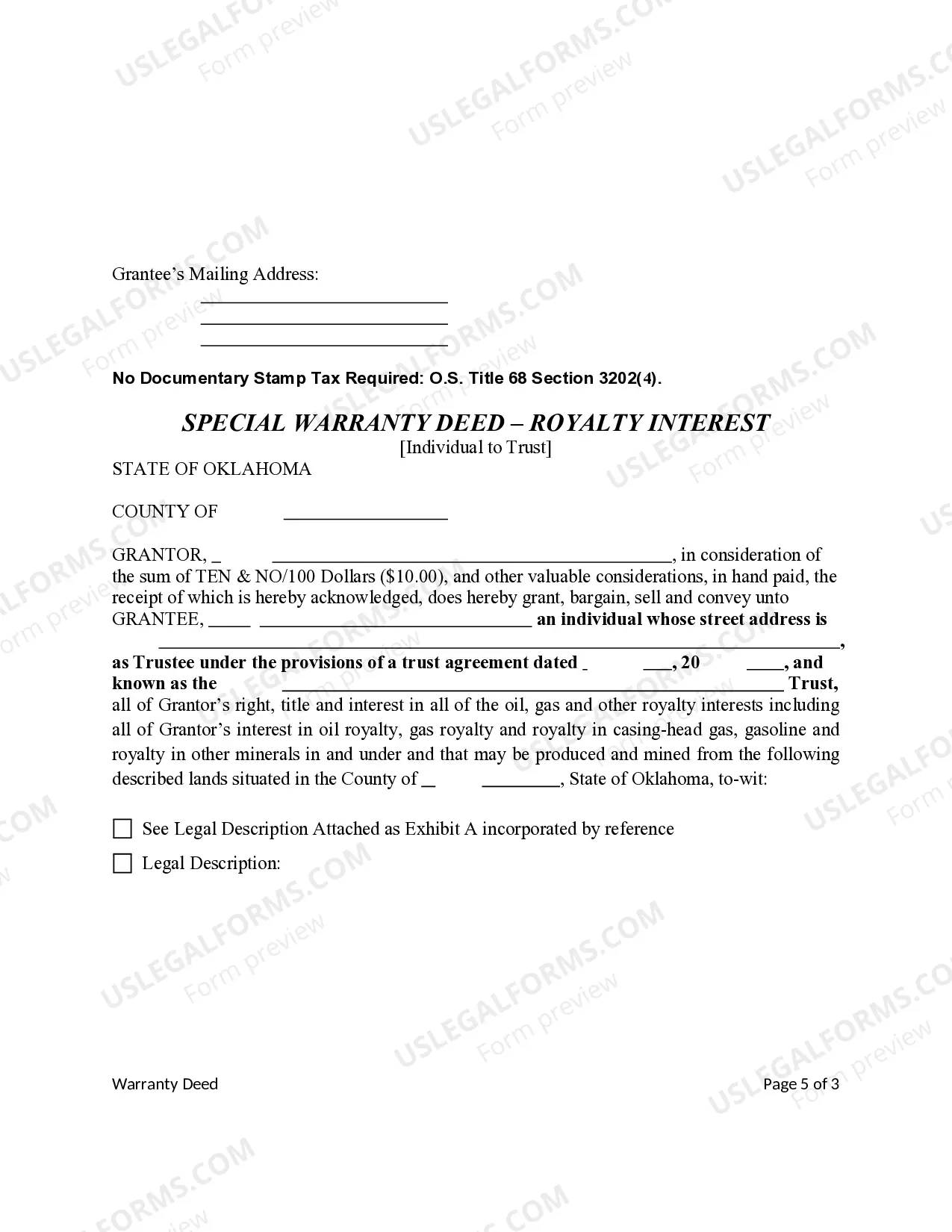
The Special Warranty Deed transferring Royalty Interest is a legal document that allows an individual (the Grantor) to transfer their royalty interest in minerals to a trust (the Grantee). This form specifically provides a limited warranty, where the Grantor only defends against claims made by individuals claiming through them, ensuring the trust receives clear rights to the royalty interest. Unlike a general warranty deed, which offers broader protections, this deed is tailored for specific scenarios involving trusts and royalty interests.
What’s included in this form
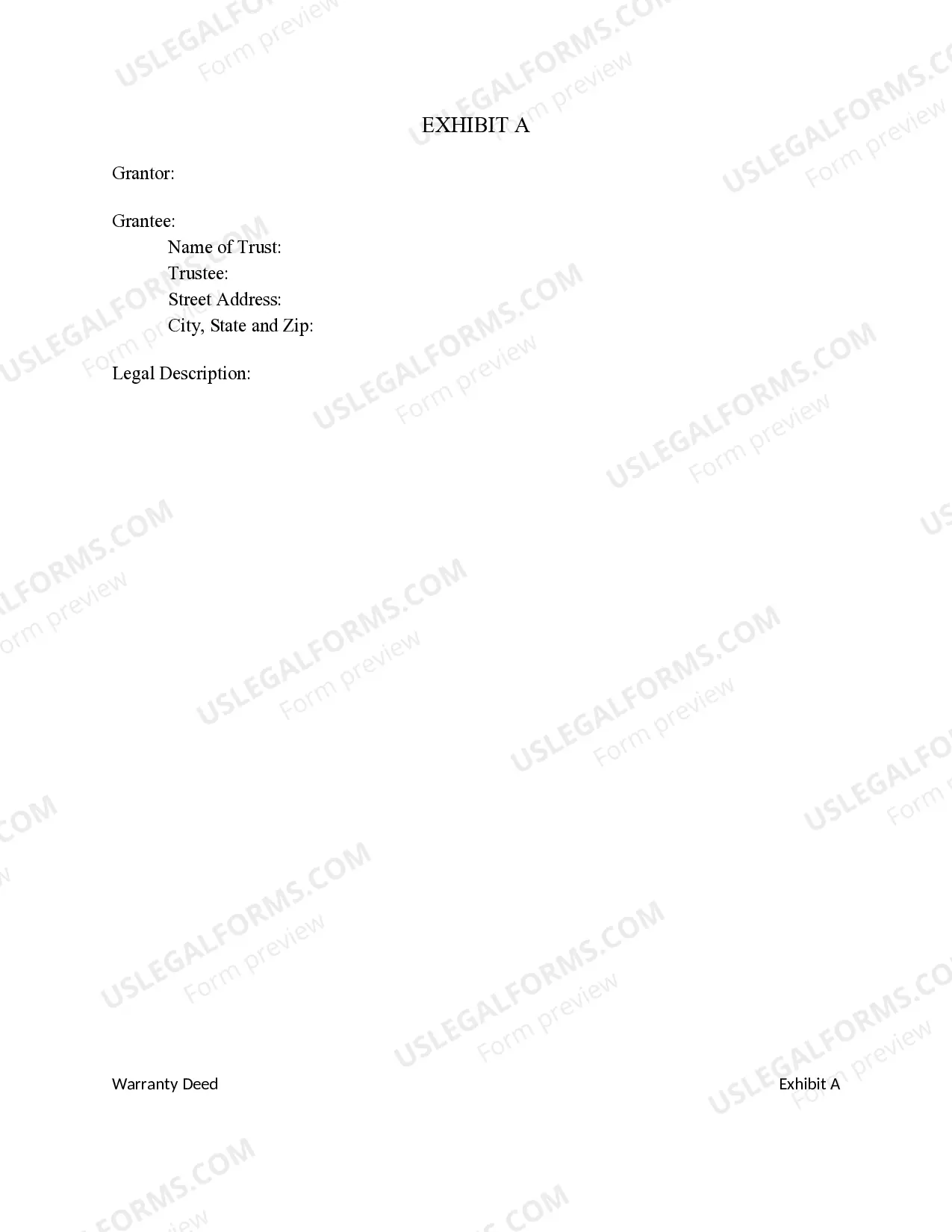
- Identification of the Grantor and Grantee, ensuring the proper parties are named.
- Description of the royalty interest being transferred in detail.
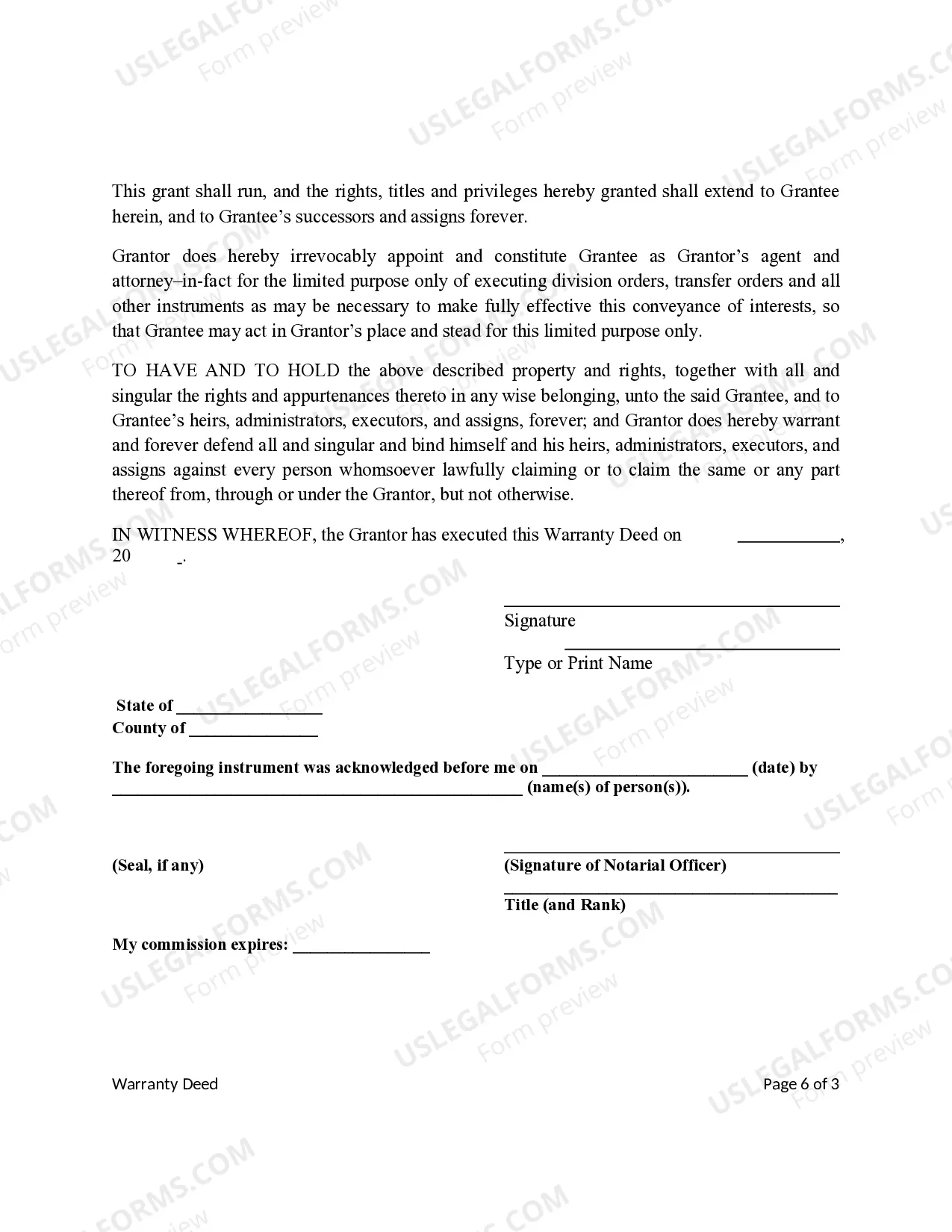
- Statement of the limited warranty, clarifying the Grantor's responsibilities.
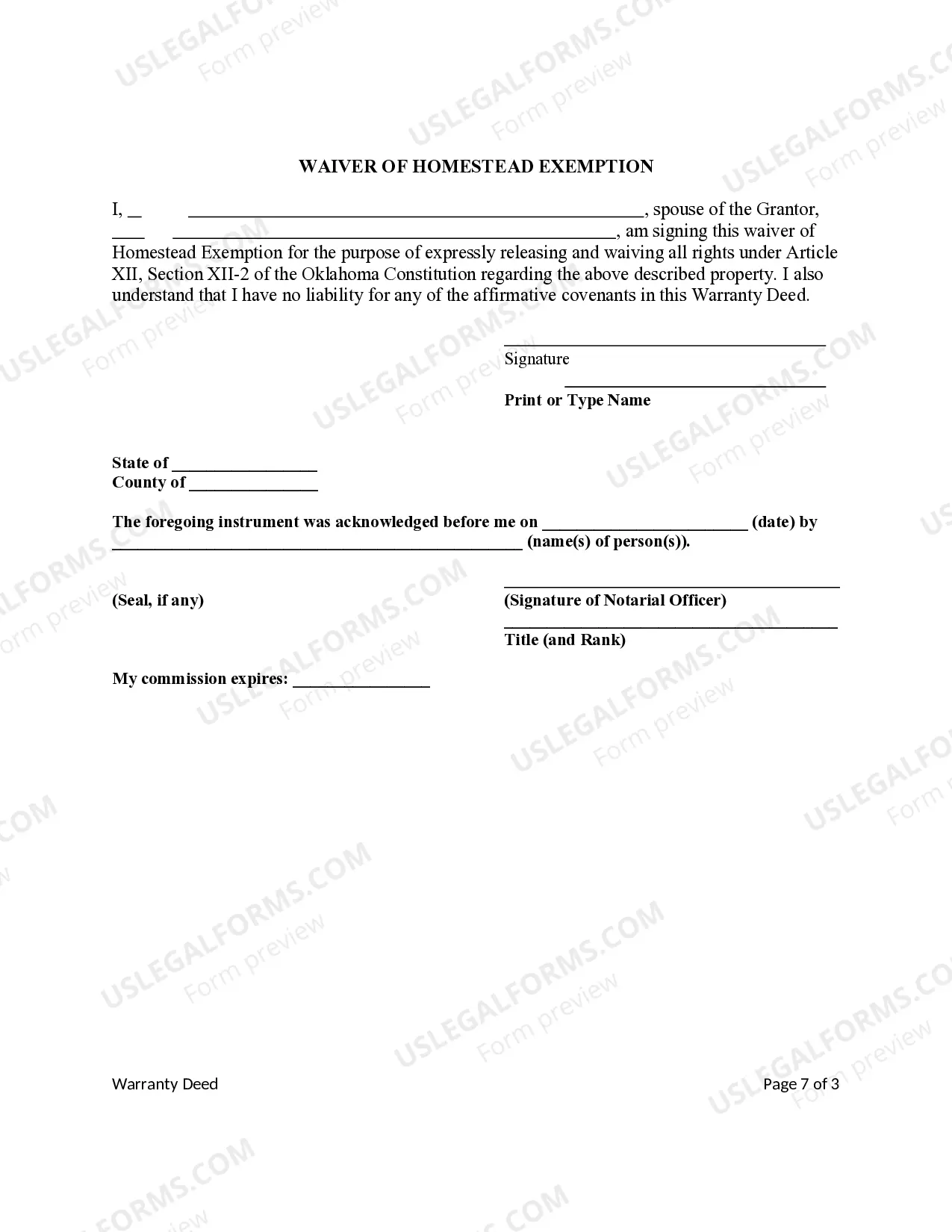
- Signatures of the Grantor and, if applicable, the Grantee or witnesses.
- Legal compliance statement confirming adherence to state laws.



Situations where this form applies
This form is used when an individual wishes to transfer their royalty interest in minerals to a trust. This situation typically arises during estate planning when an individual seeks to manage their assets through a trust or when they wish to simplify inheritance for beneficiaries. It is an important tool for ensuring clear ownership and management of mineral rights.
Who needs this form
This form is intended for:
- Individuals who own royalty interests in minerals and want to transfer them to a trust.
- Trustees managing assets that include mineral rights.
- Estate planners seeking to establish clear asset management structures.
Instructions for completing this form
- Identify the parties: Clearly name the Grantor (individual) and the Grantee (trust).
- Specify the property: Provide a detailed description of the royalty interest being transferred.
- Include the limited warranty statement to define the scope of the Grantor's responsibility.
- Gather signatures from the Grantor and any necessary witnesses or notaries, if required.
- Ensure compliance by including any required legal statements or certifications.
Notarization requirements for this form
This form does not typically require notarization unless specified by local law. Always check state requirements to ensure compliance.
Get your form ready online
Our built-in tools help you complete, sign, share, and store your documents in one place.
Make edits, fill in missing information, and update formatting in US Legal Forms—just like you would in MS Word.
Download a copy, print it, send it by email, or mail it via USPS—whatever works best for your next step.
Sign and collect signatures with our SignNow integration. Send to multiple recipients, set reminders, and more. Go Premium to unlock E-Sign.
If this form requires notarization, complete it online through a secure video call—no need to meet a notary in person or wait for an appointment.
We protect your documents and personal data by following strict security and privacy standards.

Make edits, fill in missing information, and update formatting in US Legal Forms—just like you would in MS Word.

Download a copy, print it, send it by email, or mail it via USPS—whatever works best for your next step.

Sign and collect signatures with our SignNow integration. Send to multiple recipients, set reminders, and more. Go Premium to unlock E-Sign.

If this form requires notarization, complete it online through a secure video call—no need to meet a notary in person or wait for an appointment.

We protect your documents and personal data by following strict security and privacy standards.
Avoid these common issues
- Not clearly identifying the parties involved in the transaction.
- Failing to provide a thorough description of the royalty interest.
- Omitting the necessary signatures or witness verification.
- Not adhering to state-specific requirements which may invalidate the deed.
Advantages of online completion
- Convenient access to legal forms without needing to visit a law office.
- Editability allows users to customize the form to fit their specific needs.
- Reliability in ensuring that the forms are updated to comply with the latest legal standards.
Main things to remember
- A Special Warranty Deed transfers Royalty Interest from an individual to a trust.
- The Grantorâs warranty is limited to claims arising from their ownership.
- Understanding state-specific requirements ensures the validity of the transfer.
Looking for another form?

Form popularity
FAQ
Contrary to normal expectations, the Deed DOES NOT have to be recorded to be effective or to show delivery, and because of that, the Deed DOES NOT have to be signed in front of a Notary Public. However, if you plan to record it, then it does have to be notarized as that is a County Recorder requirement.
Special warranties allow the transfer of property title between seller and buyer. The purchase of title insurance can mitigate the risk of prior claims to the special warranty deed.
When you're ready to transfer trust real estate to the beneficiary who is named in the trust document to receive it, you'll need to prepare, sign, and record a deed. That's the document that transfers title to the property from you, the trustee, to the new owner.
Fill out the "grantor" section of the warranty deed. The grantors are the givers, or current owners, of the property. Use the legal name of each grantor and insert current addresses after each grantor's name.
Locate the deed that's in trust. Use the proper deed. Check with your title insurance company and lender. Prepare a new deed. Sign in the presence of a notary. Record the deed in the county clerk's office.
A quitclaim deed can be used to transfer property from a trust, but a Special Warranty Deed seems to be a more common way to do this.
Retrieve your original deed. Get the appropriate deed form. Draft the deed. Sign the deed before a notary. Record the deed with the county recorder. Obtain the new original deed.
The Oklahoma general warranty deed is a type of legal document whereby an owner of a piece of property can sell his or her interest to another person.Once deeds are properly filled out and acknowledged by a notary, they are filed with the registrar of deeds in the county in which the property is located.
Step 1 Fill in the grantor's name and address along with indicating whether or not the grantor is married. Step 2 Enter the consideration to be paid for the property. Step 3 Write in the grantee's name and address and check the box showing how they intend to hold the property.