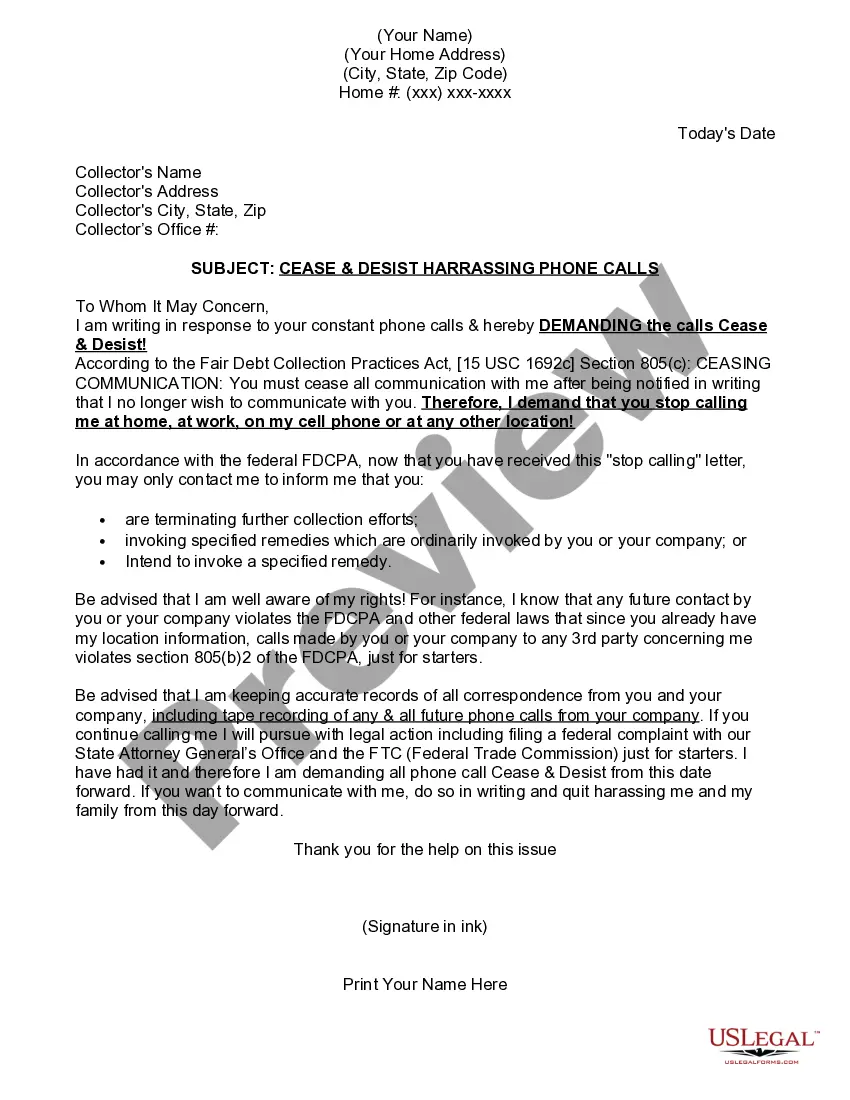
Cease and Desist Letter
About this form
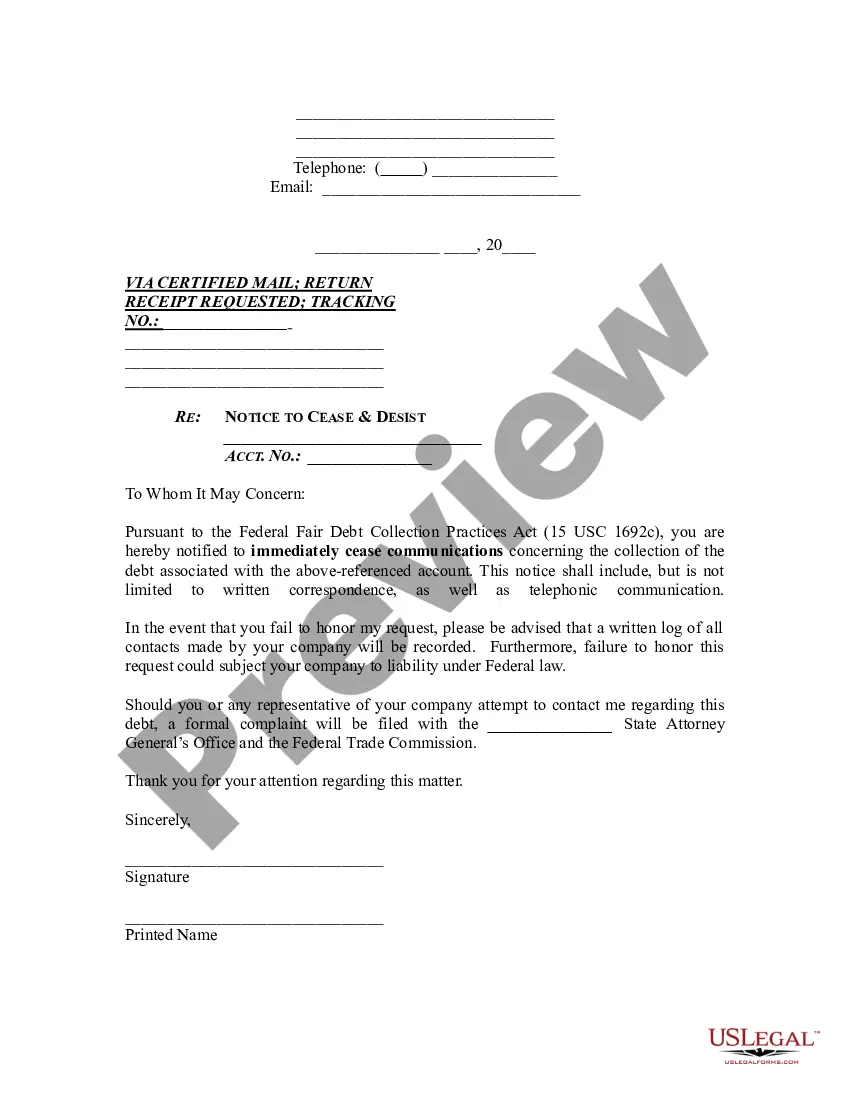
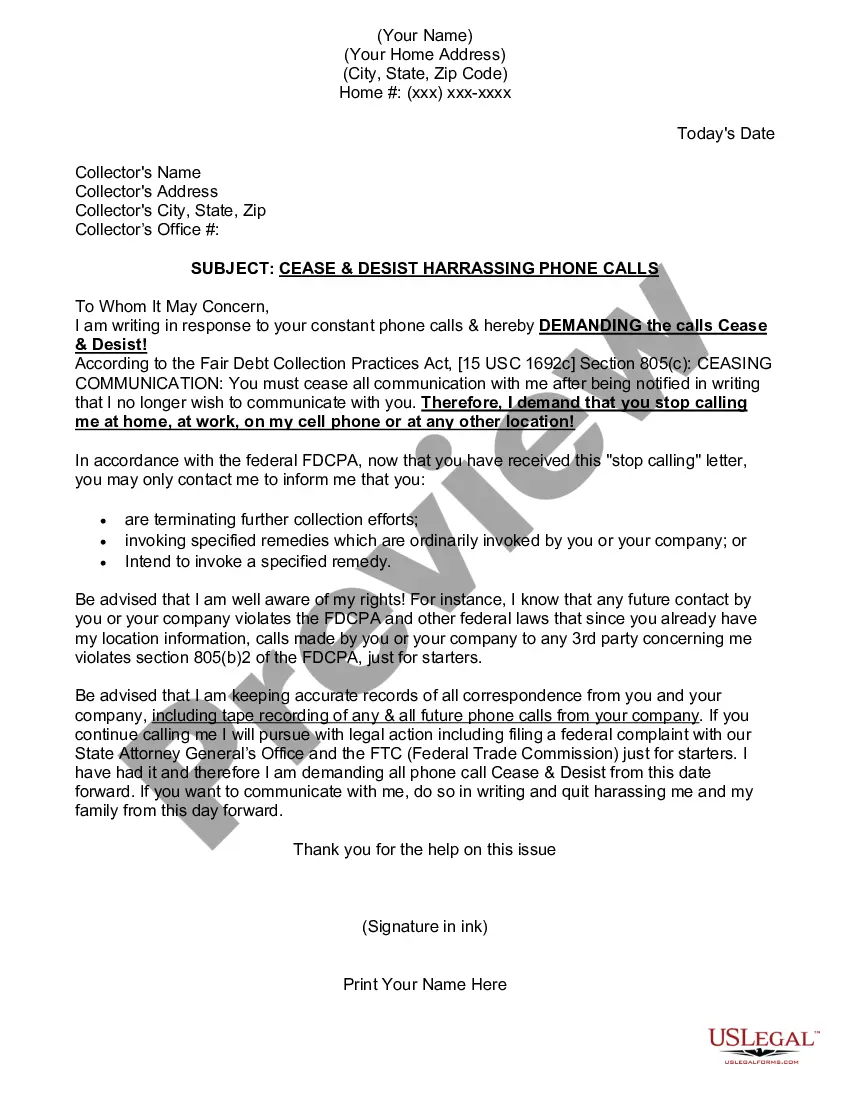
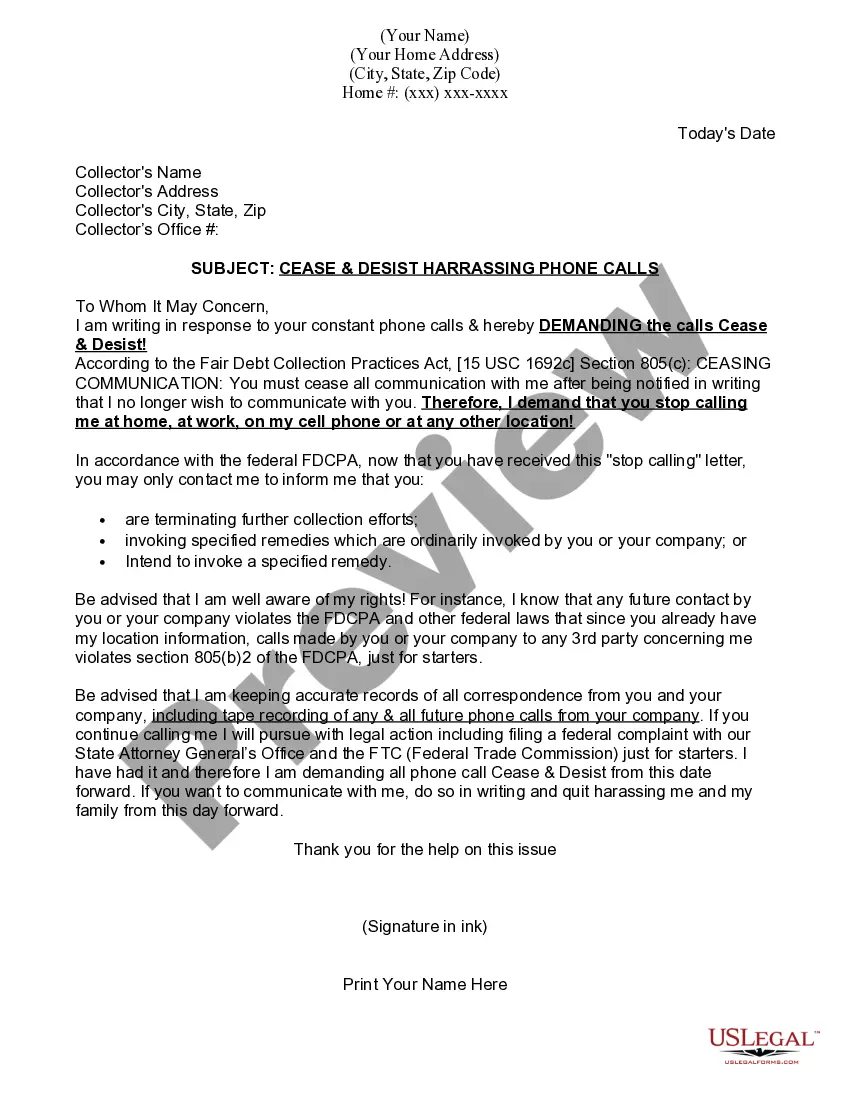
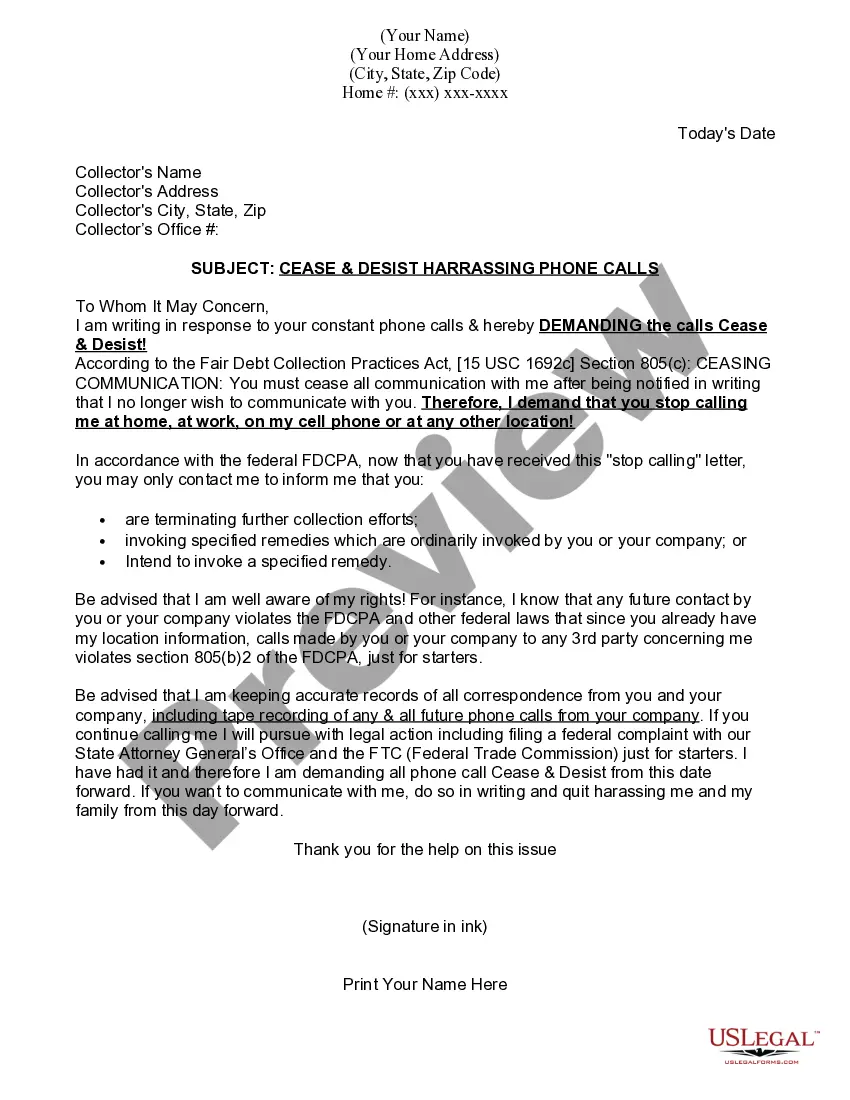
A cease and desist letter is a formal request that instructs a creditor or collection agency to stop contacting you. This letter serves as a notification of your intent to halt further communication regarding debts. It is specifically useful under the Fair Debt Collection Practices Act, which provides protections against harassment from debt collectors. This form is distinct from other types of letters as it addresses continuous and intrusive contact from collection agencies, asserting your rights in a clear, documented manner.
What’s included in this form
- Collector's name and contact information
- Clearly stated demand to cease communications
- Reference to relevant legal protections under the Fair Debt Collection Practices Act
- Consequences for non-compliance, including potential legal action
- Space for your signature and personal contact information

When to use this document
This form is particularly relevant if you are experiencing repeated and distressing phone calls from a collection agency or creditor. Use it if you no longer wish to be contacted regarding an outstanding debt and want to formally request that the calls stop. It can help assert your legal rights and initiate a more formal interaction with the creditor.
Who needs this form
- Consumers who are receiving harassing phone calls from creditors or collection agencies.
- Individuals who have already communicated their desire not to be contacted verbally.
- People who wish to document their request to cease communications for record-keeping or legal purposes.
Instructions for completing this form
- Enter the name and contact details of the collector or agency.
- Clearly state your demand for them to cease all communications.
- Include references to the Fair Debt Collection Practices Act to underline your rights.
- Specify the consequences if they continue to contact you.
- Sign the letter and provide your contact information for a formal closing.
Notarization guidance
This form usually doesn’t need to be notarized. However, local laws or specific transactions may require it. Our online notarization service, powered by Notarize, lets you complete it remotely through a secure video session, available 24/7.
Get your form ready online
Our built-in tools help you complete, sign, share, and store your documents in one place.
Make edits, fill in missing information, and update formatting in US Legal Forms—just like you would in MS Word.
Download a copy, print it, send it by email, or mail it via USPS—whatever works best for your next step.
Sign and collect signatures with our SignNow integration. Send to multiple recipients, set reminders, and more. Go Premium to unlock E-Sign.
If this form requires notarization, complete it online through a secure video call—no need to meet a notary in person or wait for an appointment.
We protect your documents and personal data by following strict security and privacy standards.

Make edits, fill in missing information, and update formatting in US Legal Forms—just like you would in MS Word.

Download a copy, print it, send it by email, or mail it via USPS—whatever works best for your next step.

Sign and collect signatures with our SignNow integration. Send to multiple recipients, set reminders, and more. Go Premium to unlock E-Sign.

If this form requires notarization, complete it online through a secure video call—no need to meet a notary in person or wait for an appointment.

We protect your documents and personal data by following strict security and privacy standards.
Typical mistakes to avoid
- Failing to include the collector's complete contact information.
- Not clearly stating your intention to cease communication, leading to confusion.
- Neglecting to keep a copy of the letter for your records.
- Using vague language that may weaken your request.
Why complete this form online
- Convenience of downloading and customizing the form to fit your needs.
- Quick access to professional legal language without needing to hire an attorney.
- Ability to edit the document as needed before sending it to the collector.
- Document reliability and immediate availability for urgent situations.
Legal use & context
A Cease and Desist Letter is recognized as a legitimate tool under the Fair Debt Collection Practices Act. This letter helps consumers exercise their right to stop harassing communications, providing a formal record of your request to collectors. It is important to understand, however, that while this letter asserts your rights, it does not eliminate your obligations under the original debt agreement.
Looking for another form?
Form popularity
FAQ
A Cease and Desist Letter is a formal request to stop debt-collection contact under the FDCPA. This form provides a ready template with the collector's name and contact, a clear demand to cease communications, a reference to FDCPA protections, stated consequences for non-compliance, and space for your signature to document the request.
Yes. You can draft one yourself, but this Cease and Desist Letter form provides a ready-to-use template with the essential elements: collector’s name and contact, a clearly stated demand to stop communications, a reference to FDCPA protections, a notice of potential consequences for non-compliance, and a signature block to document the request.
After sending the letter, keep copies and note dates of contact. If the collector continues to call or write, the form’s 'consequences for non-compliance' clause and FDCPA protections can support further steps, including formal complaints or pursuing legal remedies while you maintain records for your file.
A Cease and Desist Letter is a formal assertion of rights under the Fair Debt Collection Practices Act. It asks creditors or collectors to stop contacting you, and the form notes the potential consequences for non-compliance. It does not erase the debt, and continued harassment may lead to further action.
Yes. This standard form is designed for self-use and includes the key elements to stop contact and reference FDCPA protections. If your situation involves complex debts, multiple creditors, or business matters, consider consulting a licensed attorney for tailored advice.
Yes, sending one can prompt a response from the creditor even after the request to stop. The form guides you to cite FDCPA protections and to document non-compliance risks, which can support future actions. If unsure about potential outcomes, consult a licensed attorney for guidance.