Notice of Harassment and Validation of Debt
What is this form?
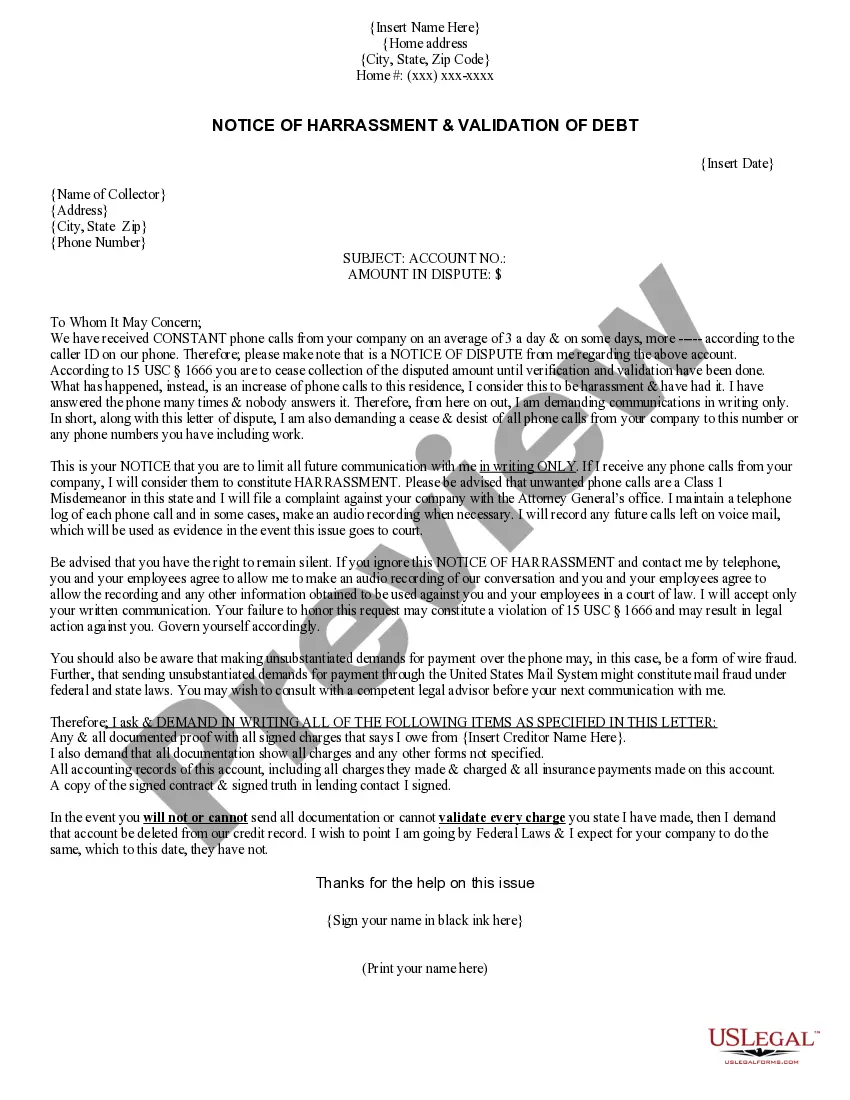
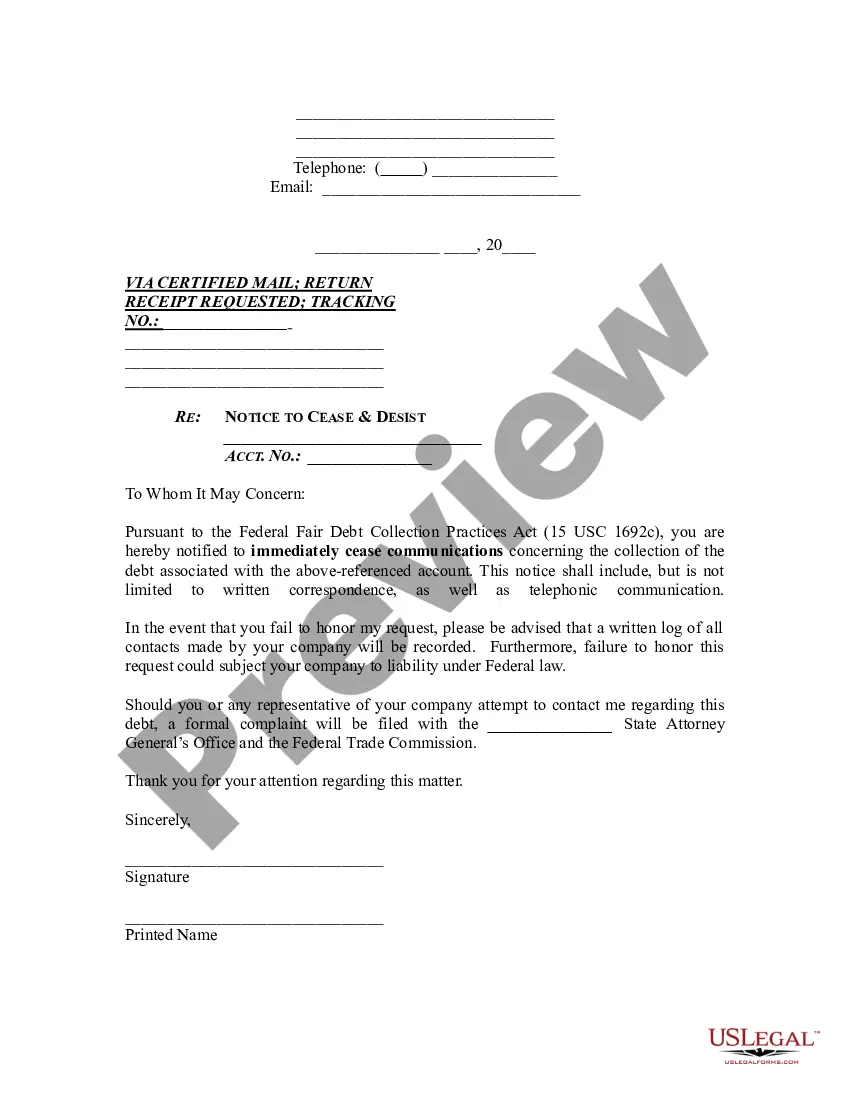
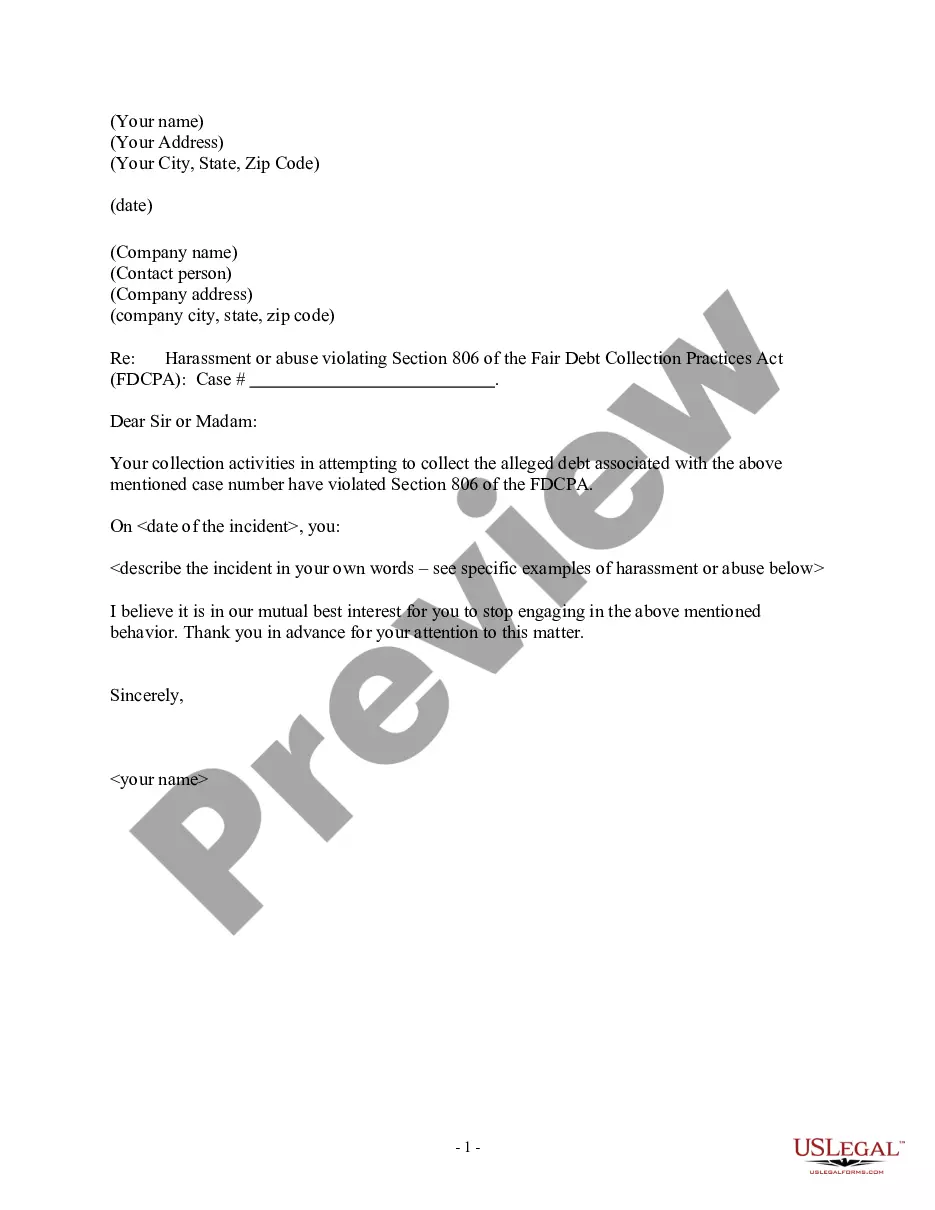
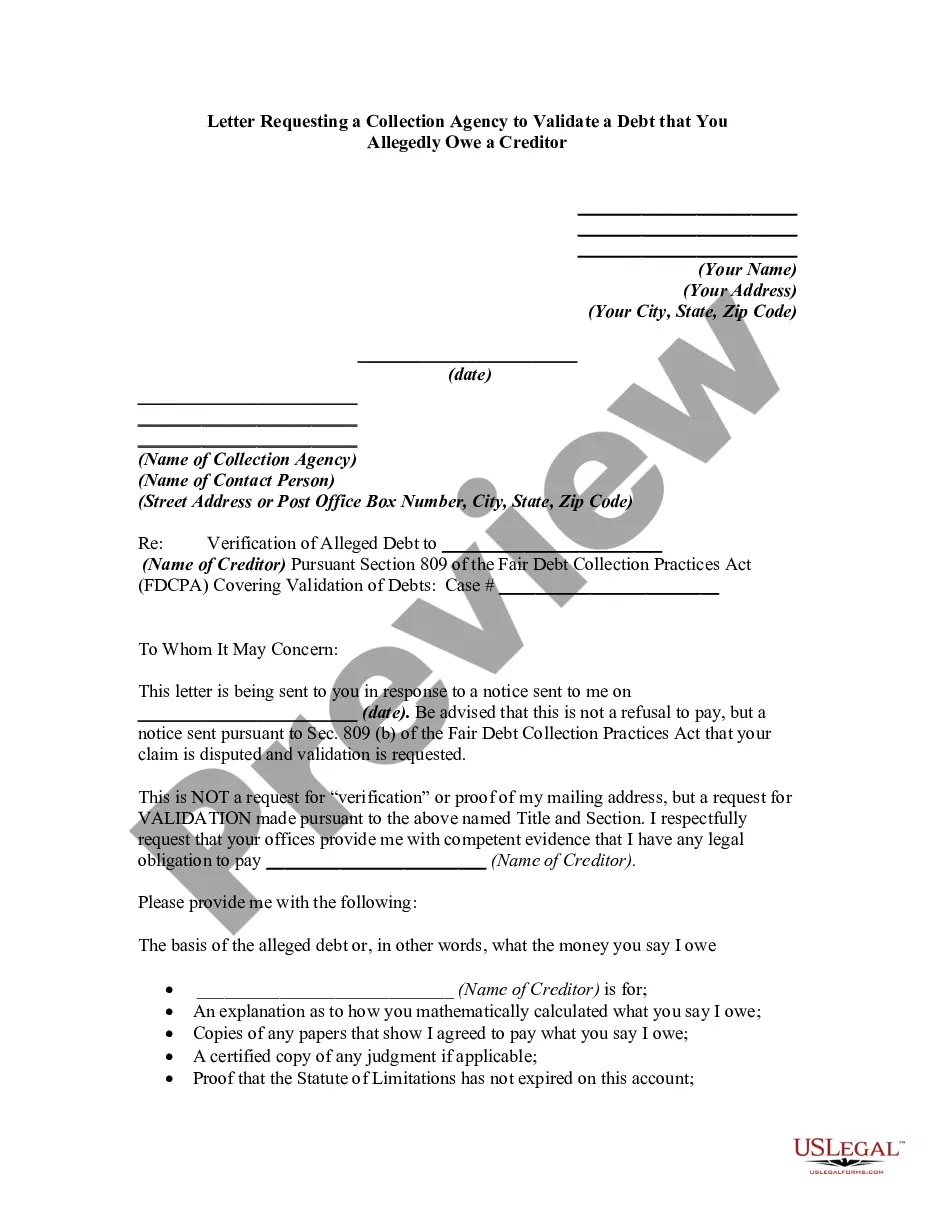
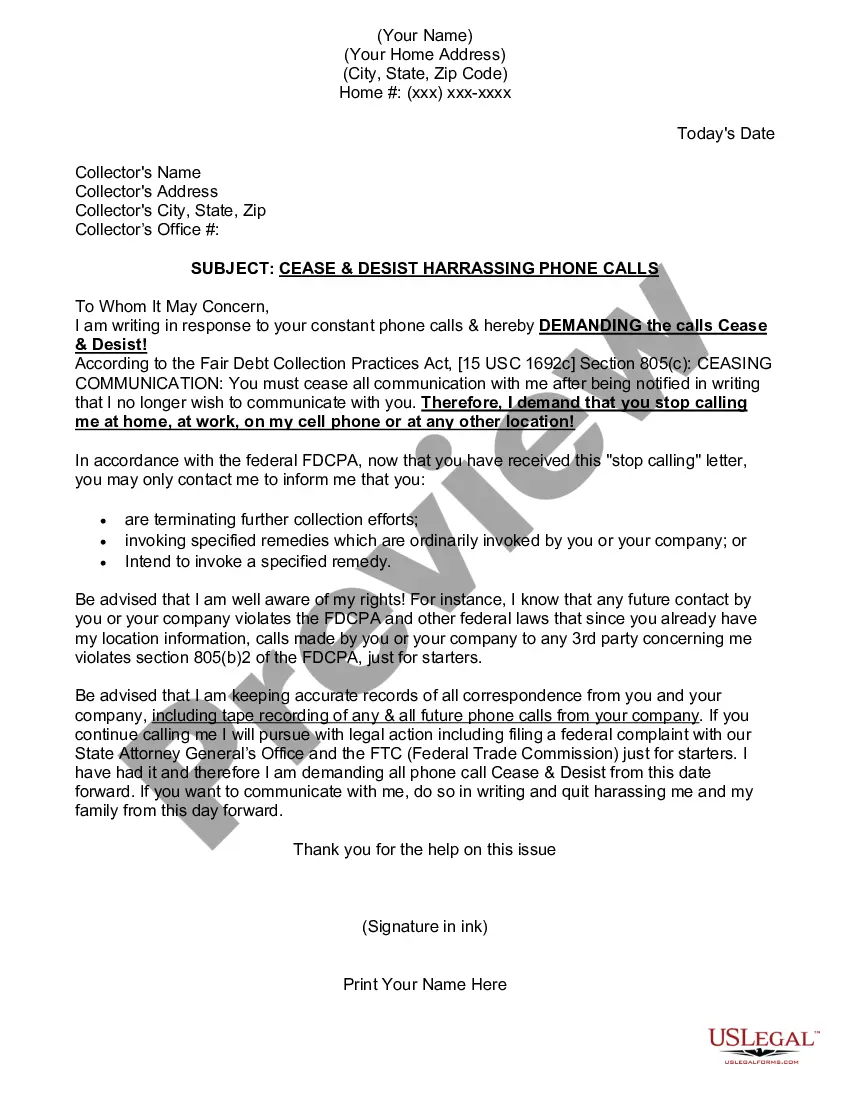
The Notice of Harassment and Validation of Debt form is designed to help individuals address persistent harassment from creditors. This form combines a cease and desist letter with a validation of debt request, empowering you to demand that creditors cease unwanted communication while providing you the means to dispute the debt in question.
Main sections of this form
- Date of notice.
- Creditor's name and contact information.
- Subject account number and amount in dispute.
- A clear statement demanding the cessation of phone calls.
- A request for validation of the debt.
- Your personal information, including your signature.
Situations where this form applies
This form should be used when you receive frequent phone calls or letters from creditors regarding a debt that you dispute. If you feel harassed or overwhelmed by the collection methods of a creditor, this form allows you to formally request they cease contact and validate the debt they claim you owe.
Who can use this document
- Individuals experiencing harassment from debt collectors.
- Consumers who dispute the validity of a debt.
- Any person who wishes to limit subsequent communication from creditors to written form only.
How to prepare this document
- Insert the date at the top of the form.
- Fill in the creditor's name and address details.
- Specify the subject account number and the amount you dispute.
- Clearly state your demand to cease all phone calls and request for validation of the debt.
- Provide your contact information and sign the document.
Does this document require notarization?
In most cases, this form does not require notarization. However, some jurisdictions or signing circumstances might. US Legal Forms offers online notarization powered by Notarize, accessible 24/7 for a quick, remote process.
Get your form ready online
Our built-in tools help you complete, sign, share, and store your documents in one place.
Make edits, fill in missing information, and update formatting in US Legal Forms—just like you would in MS Word.
Download a copy, print it, send it by email, or mail it via USPS—whatever works best for your next step.
Sign and collect signatures with our SignNow integration. Send to multiple recipients, set reminders, and more. Go Premium to unlock E-Sign.
If this form requires notarization, complete it online through a secure video call—no need to meet a notary in person or wait for an appointment.
We protect your documents and personal data by following strict security and privacy standards.

Make edits, fill in missing information, and update formatting in US Legal Forms—just like you would in MS Word.

Download a copy, print it, send it by email, or mail it via USPS—whatever works best for your next step.

Sign and collect signatures with our SignNow integration. Send to multiple recipients, set reminders, and more. Go Premium to unlock E-Sign.

If this form requires notarization, complete it online through a secure video call—no need to meet a notary in person or wait for an appointment.

We protect your documents and personal data by following strict security and privacy standards.
Mistakes to watch out for
- Failing to include all necessary personal and creditor information.
- Neglecting to keep a copy of the completed form for personal records.
- Not sending the form via a trackable method to ensure receipt.
Benefits of completing this form online
- Immediate access to legal language drafted by licensed attorneys.
- Convenient downloadable format that allows for easy editing and printing.
- Reliable templates that help ensure all legal requirements are met.
Legal use & context
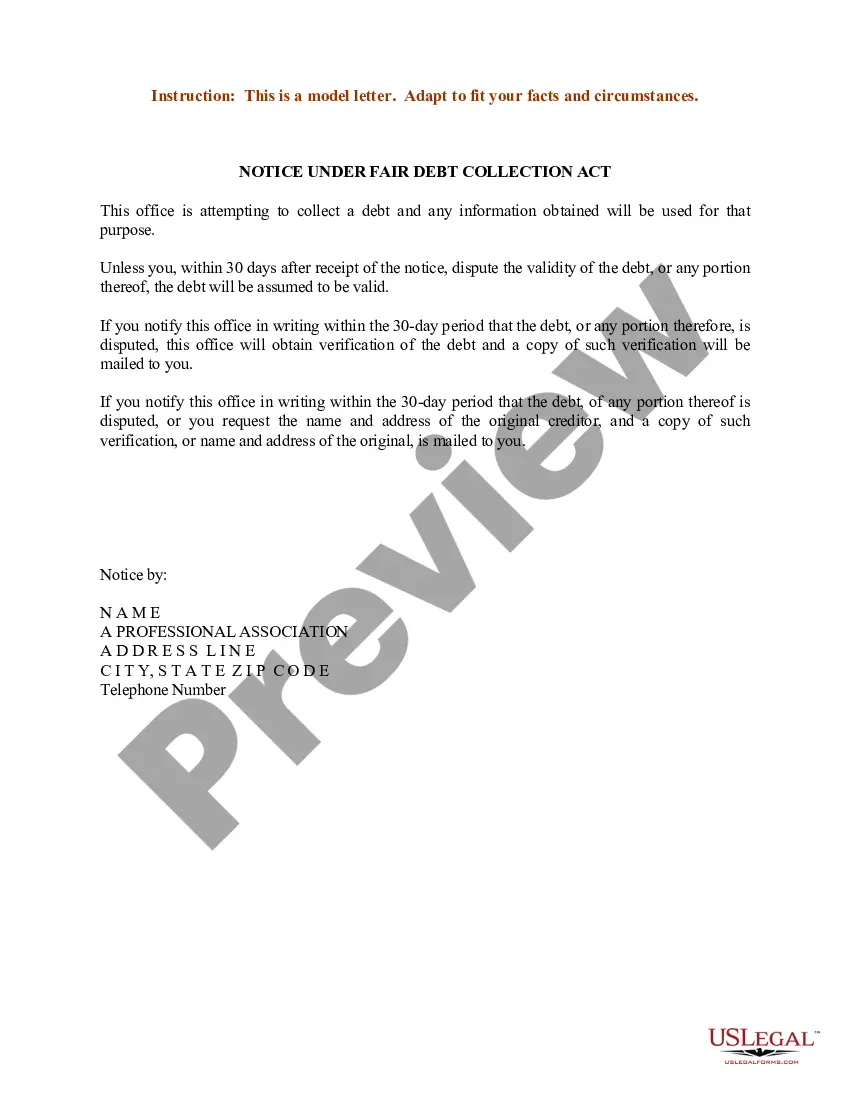
The Notice of Harassment and Validation of Debt serves as a formal communication to creditors regarding their obligations under the Fair Debt Collection Practices Act. It may be used in court to demonstrate that the sender has taken steps to rectify unwarranted collections.
What to keep in mind
- This form helps assert your rights against harassment from debt collectors.
- It combines cease and desist and validation requests into one document.
- Provide accurate information and document all communication for your records.
Looking for another form?



Form popularity
FAQ
This is important: You have just 30 days to respond to a debt validation letter. If you don't dispute the debt within 30 days, the debt is assumed valid. That means the debt collector can continue to contact you. You can send a dispute after 30 days.
If you believe a debt collector is harassing you, you can submit a complaint with the CFPB online or by calling (855) 411-CFPB (2372). You can also contact your state's attorney general .
A debt validation letter can be an effective tool for dealing with debt collectors.
Creditor harassment is any type of unsolicited and repeated contact from the creditor or a debt collection agency that disturbs you, frightens you, or makes you feel threatened.
The debt dispute letter should include your personal identifying information; verification of the amount of debt owed; the name of the creditor for the debt; and a request that the debt not be reported to credit reporting agencies until the matter is resolved or have it removed from the report, if it already has been
A debt validation letter should include the name of your creditor, how much you supposedly owe, and information on how to dispute the debt. After receiving a debt validation letter, you have 30 days to dispute the debt and request written evidence of it from the debt collector.
Debt validation is your federal right granted under the Fair Debt Collection Practices Act (FDCPA). To request debt validation, you must send a written request to the debt collector within 30 days of being contacted by the collection agency.
The term "debt validation letter" refers to a letter that an individual sends to their creditor or collection agency requesting proof that the debt in question is valid and not outside the statute of limitations for collecting the debt.
Under the Fair Debt collection Practices Act (FDCPA), I have the right to request validation of the debt you say I owe you. I am requesting proof that I am indeed the party you are asking to pay this debt, and there is some contractual obligation that is binding on me to pay this debt.