Gas Pipeline Public Road Access Ordinance
What this document covers
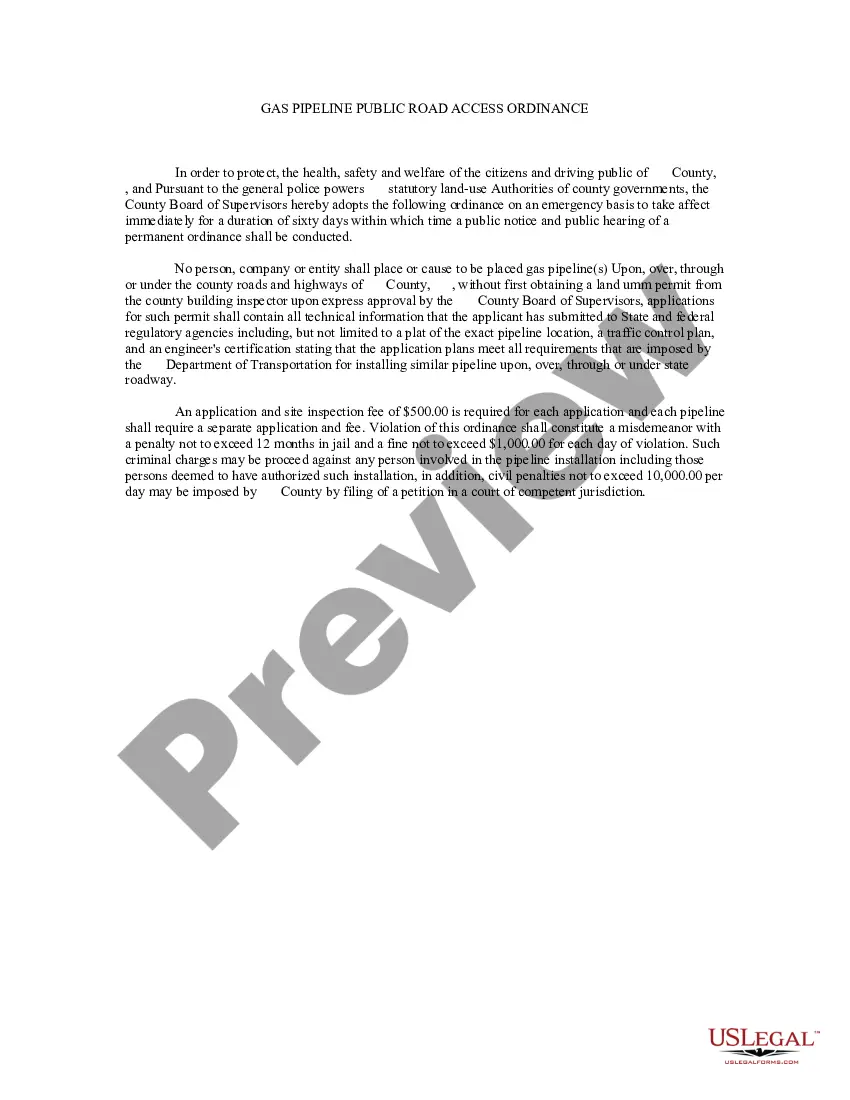
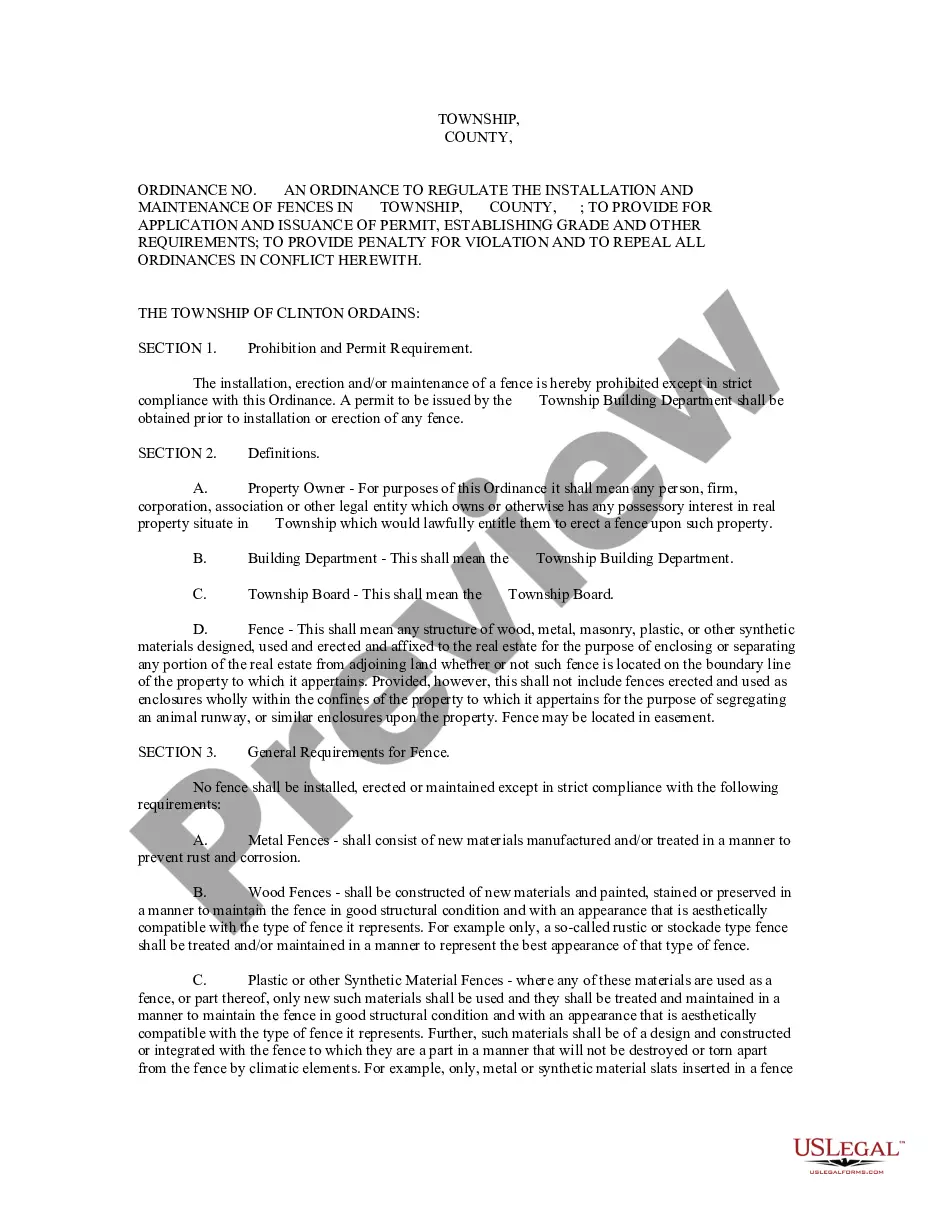
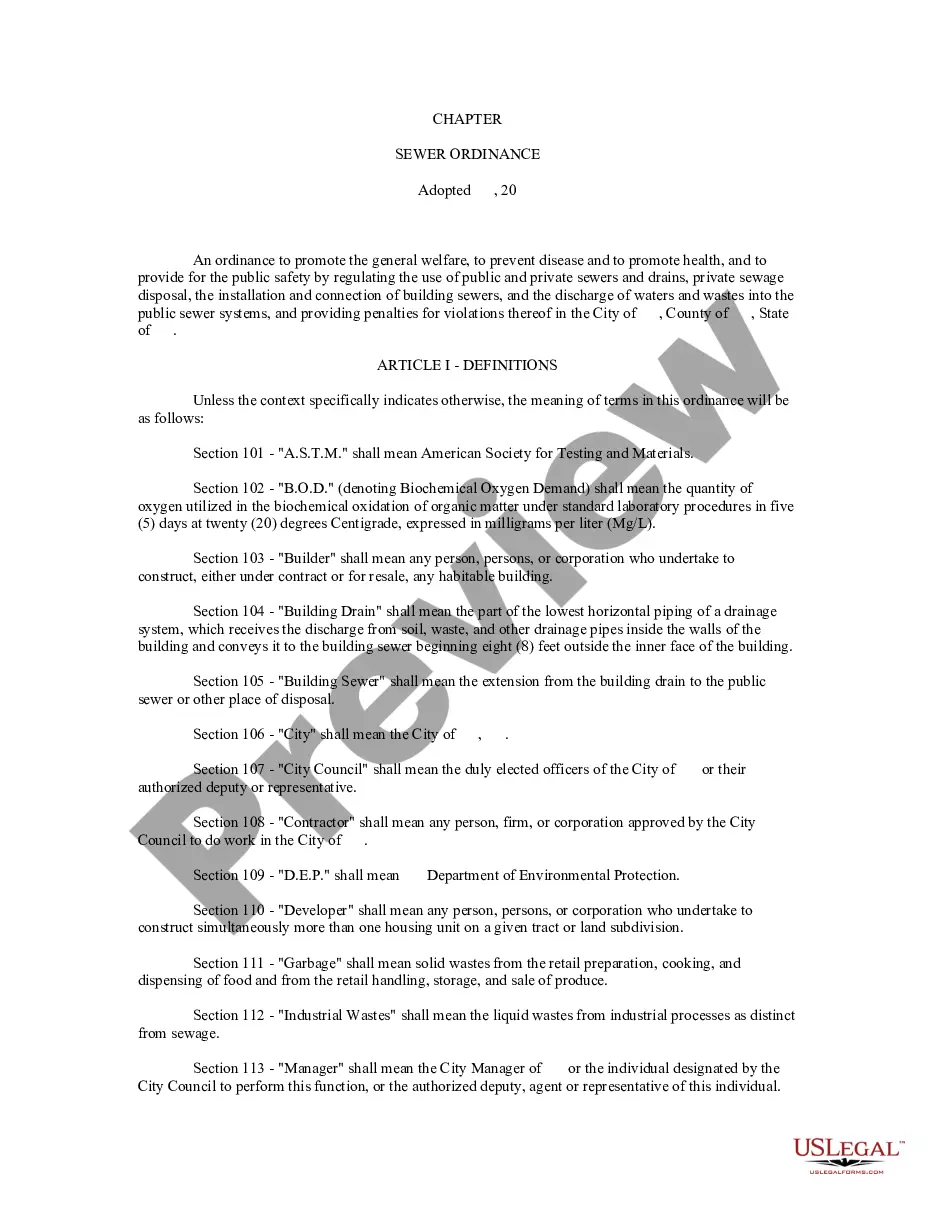
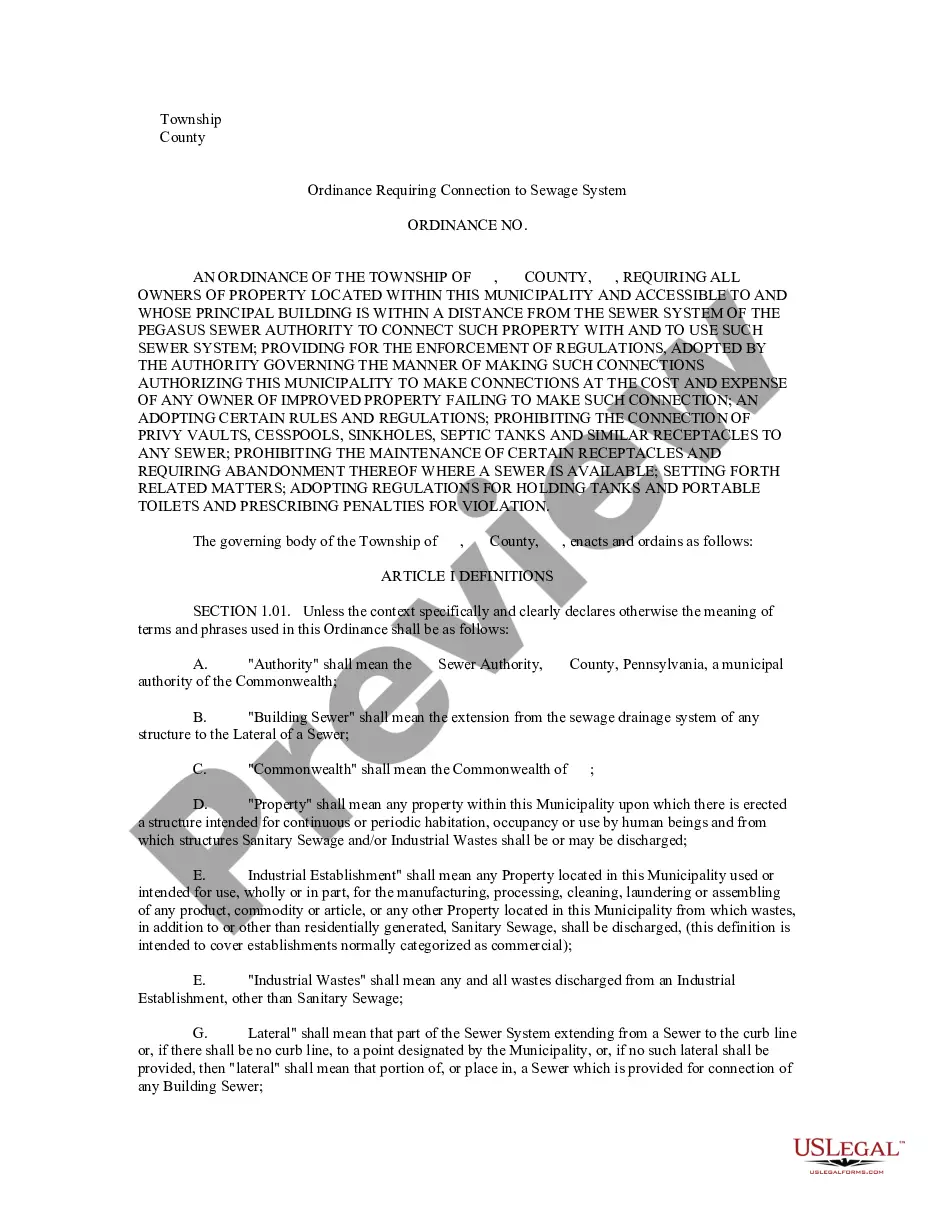
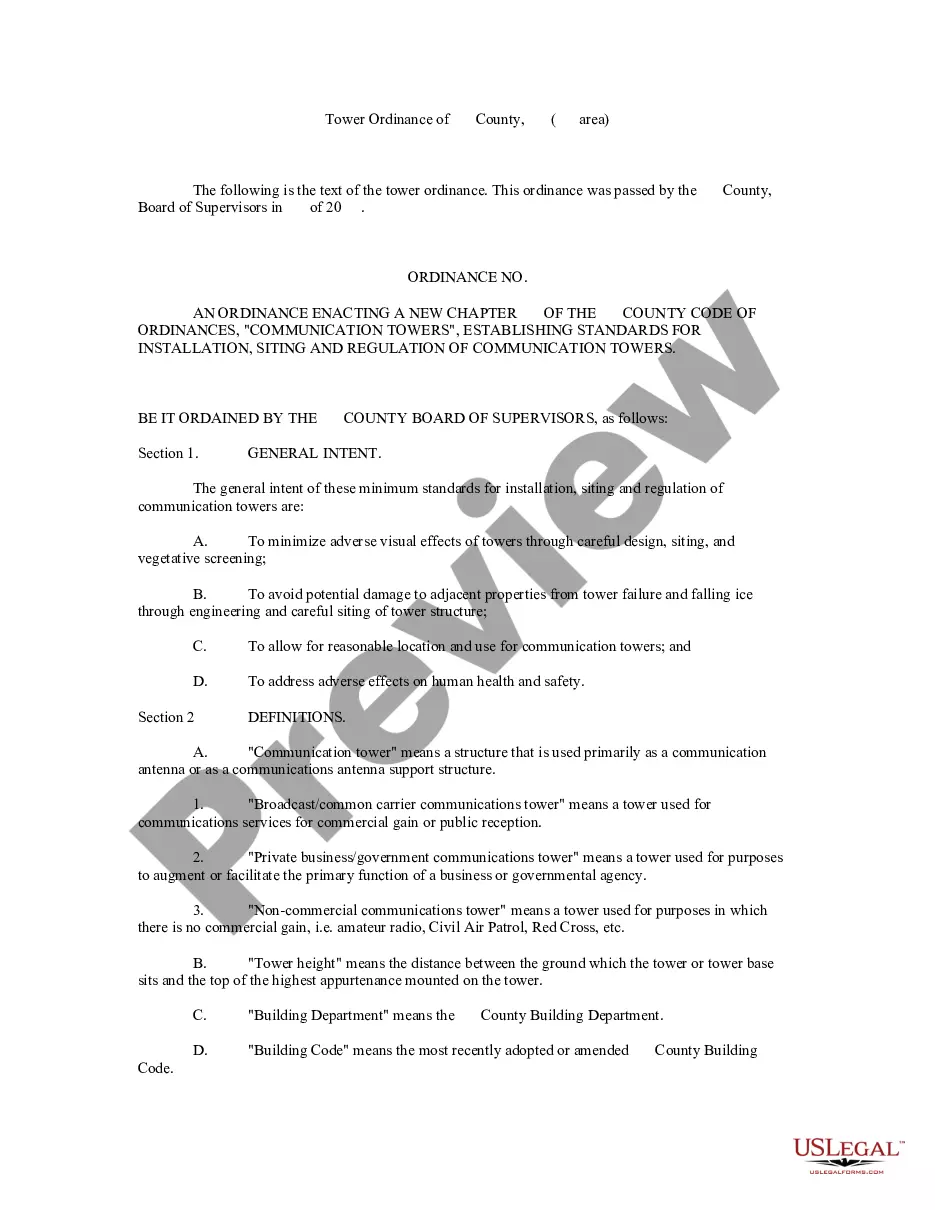
The Gas Pipeline Public Road Access Ordinance is a legal document that outlines the regulations surrounding the placement of gas pipelines under public roads within a county. Its primary purpose is to ensure the safety and welfare of the public while managing land use for gas pipeline installations. This ordinance is crucial for municipalities looking to establish clear protocols for pipeline permits, distinguishing it from general land-use regulations.
Form components explained
- Definition of terms related to gas pipelines and public road access.
- Requirements for obtaining a land use permit from the county building inspector.
- Detailed application information, including technical specifications and traffic control plans.
- Penalties for violations, including potential criminal charges and fines.
- Duration of the ordinance and provisions for a public hearing on a permanent ordinance.
Situations where this form applies
This form should be used when a person, company, or entity intends to install a gas pipeline under or over public roads within a county. It is essential in scenarios involving new pipeline projects or modifications to existing infrastructure that may affect public roadways. Utilizing this ordinance ensures compliance with local regulations and helps avert legal issues related to unauthorized installations.
Who this form is for
- Municipal government officials responsible for public safety and infrastructure.
- Entities planning to install gas pipelines across county roadways.
- Construction and engineering firms involved in gas pipeline projects.
- Legal professionals advising clients on land use and compliance with local ordinances.
How to prepare this document
- Identify the parties involved, including the applicant and the county government.
- Gather all necessary technical documentation as required by the county.
- Complete the application form, ensuring all required fields are filled out accurately.
- Submit the application along with the required fee of $500 for each pipeline.
- Prepare for a site inspection by the county building inspector as part of the permit process.
Does this form need to be notarized?
This form usually doesn’t need to be notarized. However, local laws or specific transactions may require it. Our online notarization service, powered by Notarize, lets you complete it remotely through a secure video session, available 24/7.
Get your form ready online
Our built-in tools help you complete, sign, share, and store your documents in one place.
Make edits, fill in missing information, and update formatting in US Legal Forms—just like you would in MS Word.
Download a copy, print it, send it by email, or mail it via USPS—whatever works best for your next step.
Sign and collect signatures with our SignNow integration. Send to multiple recipients, set reminders, and more. Go Premium to unlock E-Sign.
If this form requires notarization, complete it online through a secure video call—no need to meet a notary in person or wait for an appointment.
We protect your documents and personal data by following strict security and privacy standards.

Make edits, fill in missing information, and update formatting in US Legal Forms—just like you would in MS Word.

Download a copy, print it, send it by email, or mail it via USPS—whatever works best for your next step.

Sign and collect signatures with our SignNow integration. Send to multiple recipients, set reminders, and more. Go Premium to unlock E-Sign.

If this form requires notarization, complete it online through a secure video call—no need to meet a notary in person or wait for an appointment.

We protect your documents and personal data by following strict security and privacy standards.
Common mistakes to avoid
- Failing to provide complete technical documentation with the application.
- Not submitting the application fee along with the application.
- Overlooking the need for a site inspection or necessary approvals.
- Ignoring deadlines for public hearings or ordinance adoption processes.
Benefits of using this form online
- Convenient access to the ordinance template at any time.
- Ability to edit and customize the document to meet specific project needs.
- Reliable legal content drafted by licensed attorneys.
- Streamlined process for obtaining necessary permissions and approvals.
Looking for another form?





Form popularity
FAQ
Pipelines are generally regarded as a safe way to transport fuel, a far better alternative to tanker trucks or freight trains.Pipelines, on the other hand, can stay underground, carrying highly pressurized gas and oil for decades even up to a century and beyond.
Across the U.S. there are about 286 serious natural gas explosions per yearthe type that cause over $50,000 worth of damage, severe injury, or loss of life. Between 1998 and 2017, 15 people per year on average died in incidents related to gas distribution in the U.S.
A pipeline easement specifically gives the easement holder the right to build and maintain a pipeline on a landowner's property. It doesn't grant the easement holder actual ownership of the land, just a right to use the land for pipeline purposes.
API recommends setbacks of 50 feet from petroleum and hazardous liquids lines for new homes, businesses, and places of public assembly (API 2003). It also recommends 25 feet for garden sheds, septic tanks, and water wells and 10 feet for mailboxes and yard lights.
API recommends setbacks of 50 feet from petroleum and hazardous liquids lines for new homes, businesses, and places of public assembly (API 2003). It also recommends 25 feet for garden sheds, septic tanks, and water wells and 10 feet for mailboxes and yard lights.
Natural gas pipelines don't just raise concerns about the environment and private property rights they could also affect owners' wallets. Pipelines can reduce property values by 5 to 40 percent by making them less attractive to potential buyers, according to local Realtors.
For natural gas pipelines, the greatest risk is associated with fires or explosions caused by ignition of the natural gas, This can cause significant property damage and injuries or death.
API recommends setbacks of 50 feet from petroleum and hazardous liquids lines for new homes, businesses, and places of public assembly (API 2003). It also recommends 25 feet for garden sheds, septic tanks, and water wells and 10 feet for mailboxes and yard lights.
Since 2010, there have been 3,978 hazardous liquid pipeline incidents, including 10 fatalities, 26 injuries, 2,482 people evacuated, 120 fires, 15 explosions, and over $2.8 billion in property damage.