Grand Rights Tour License - Live Stage Performance of Dramatic - Musical Work
About this form
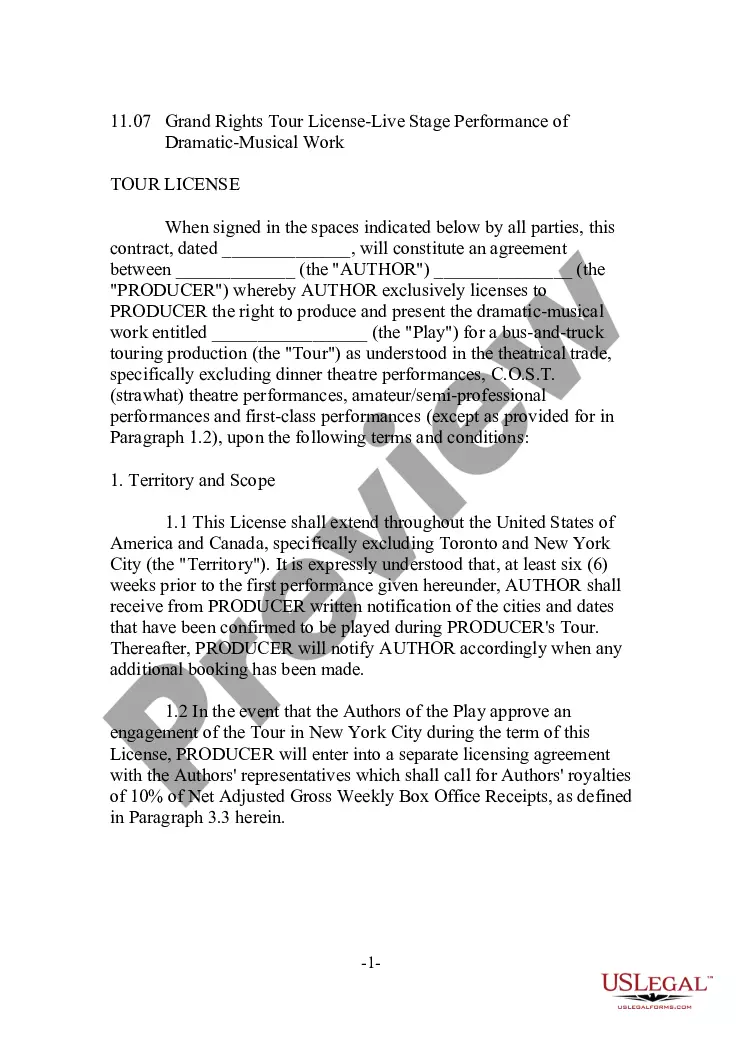
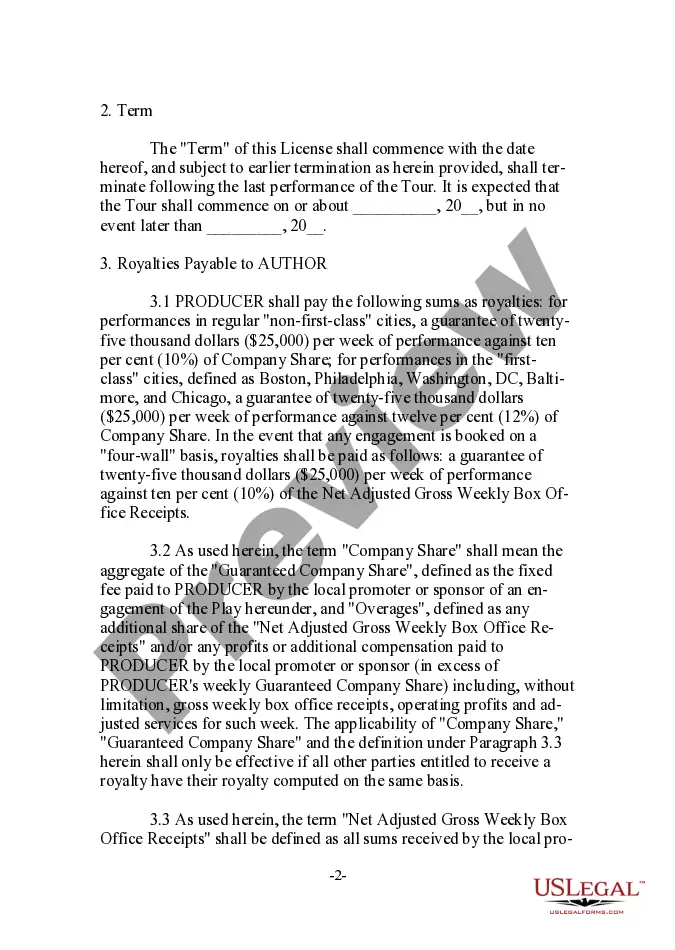
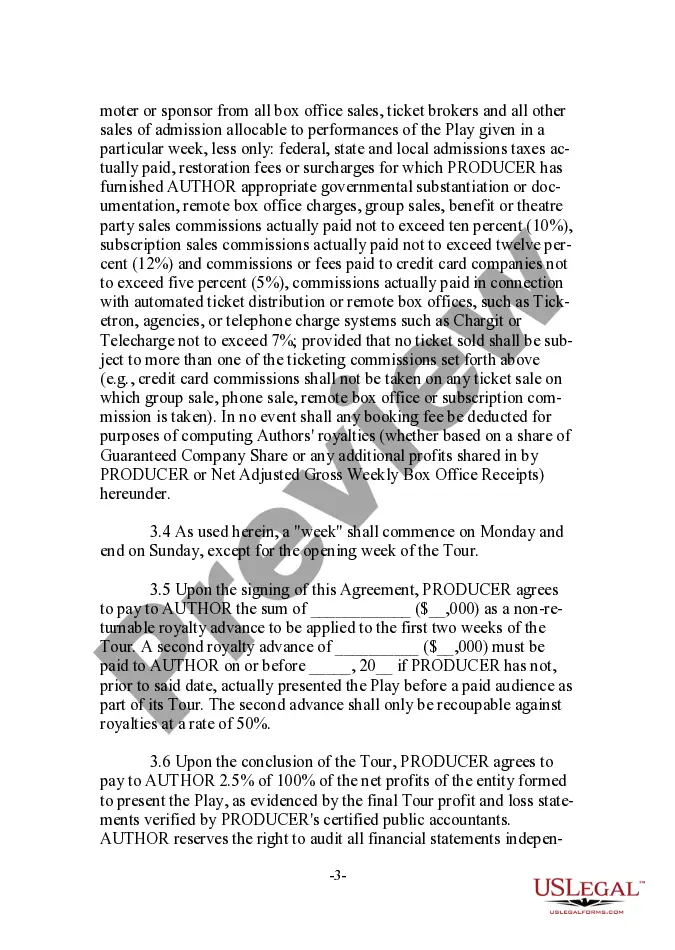
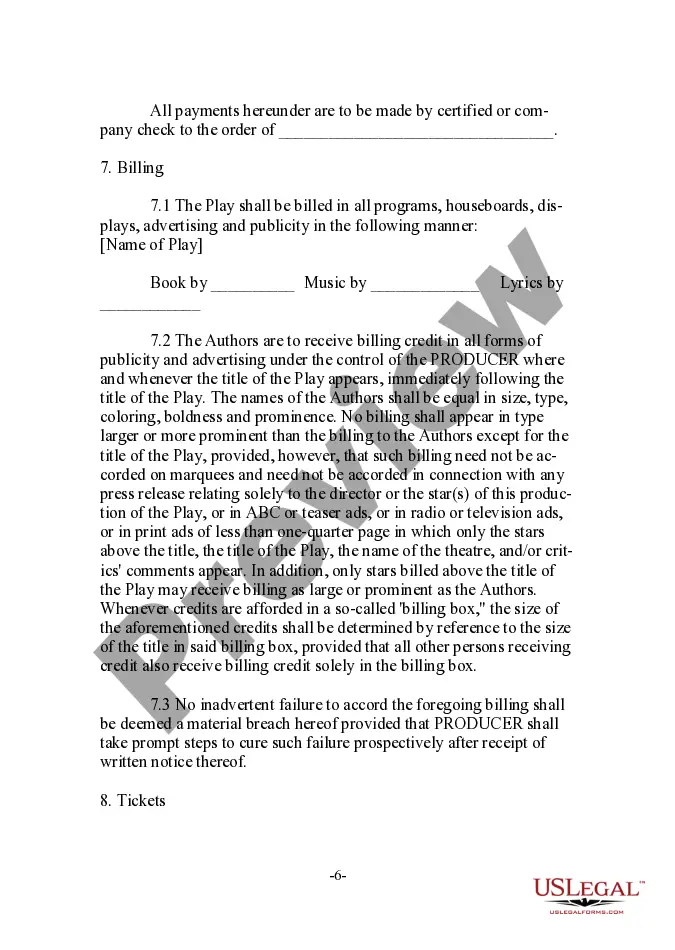
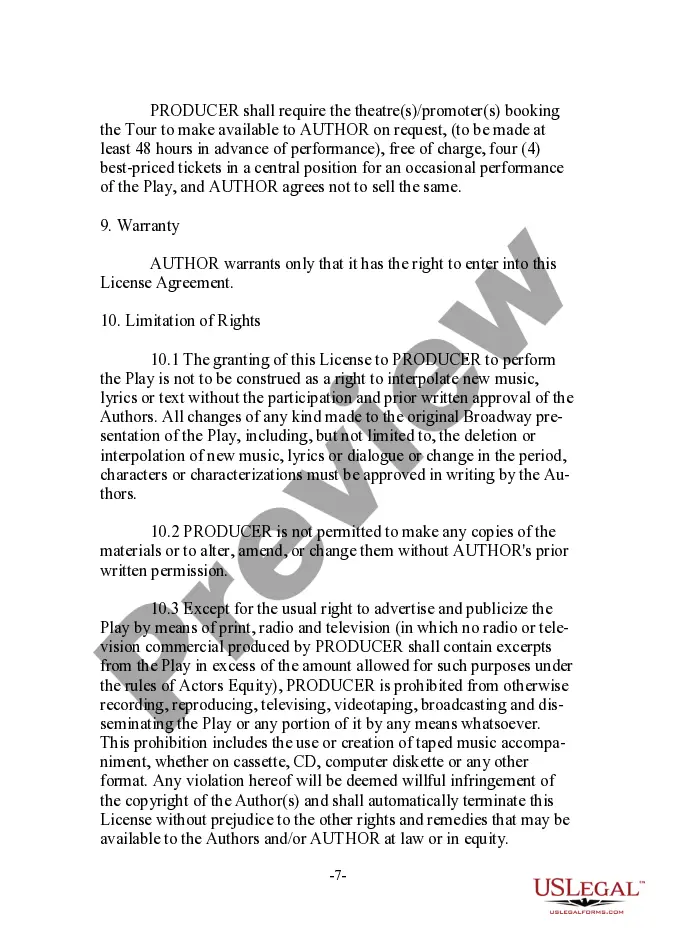
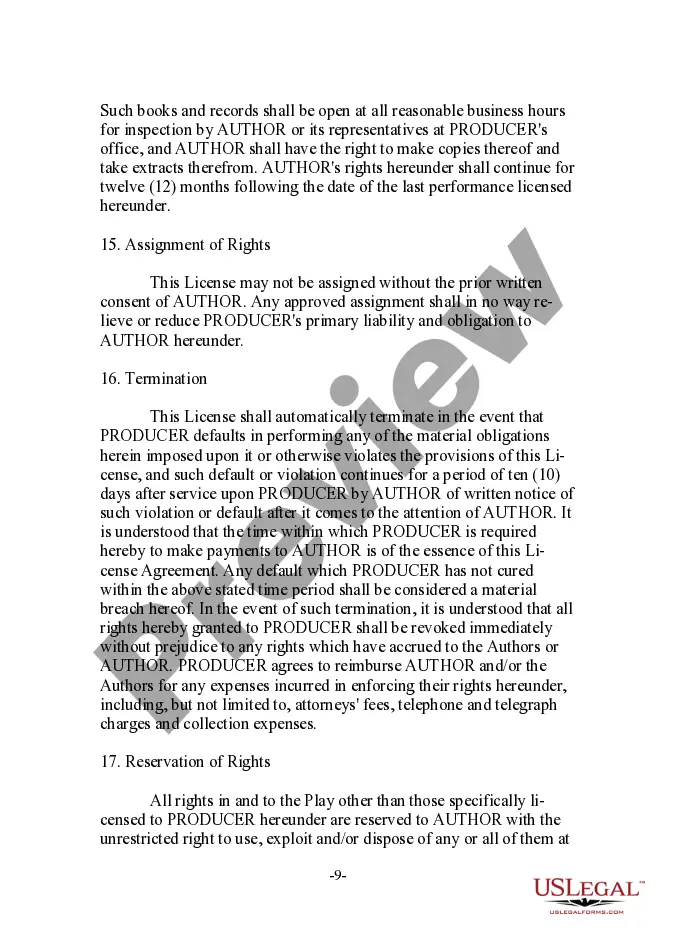
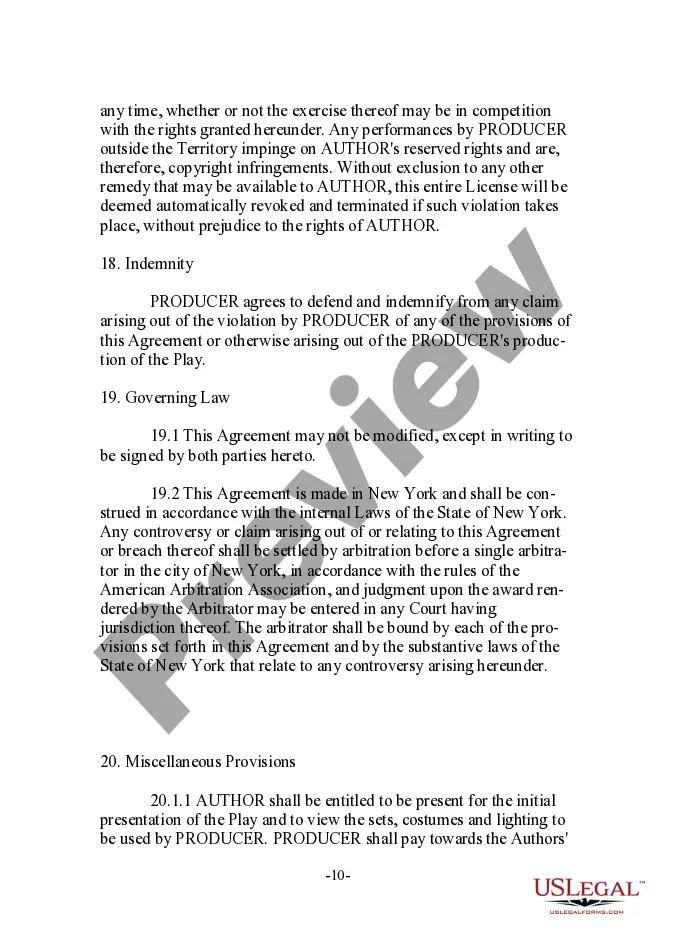
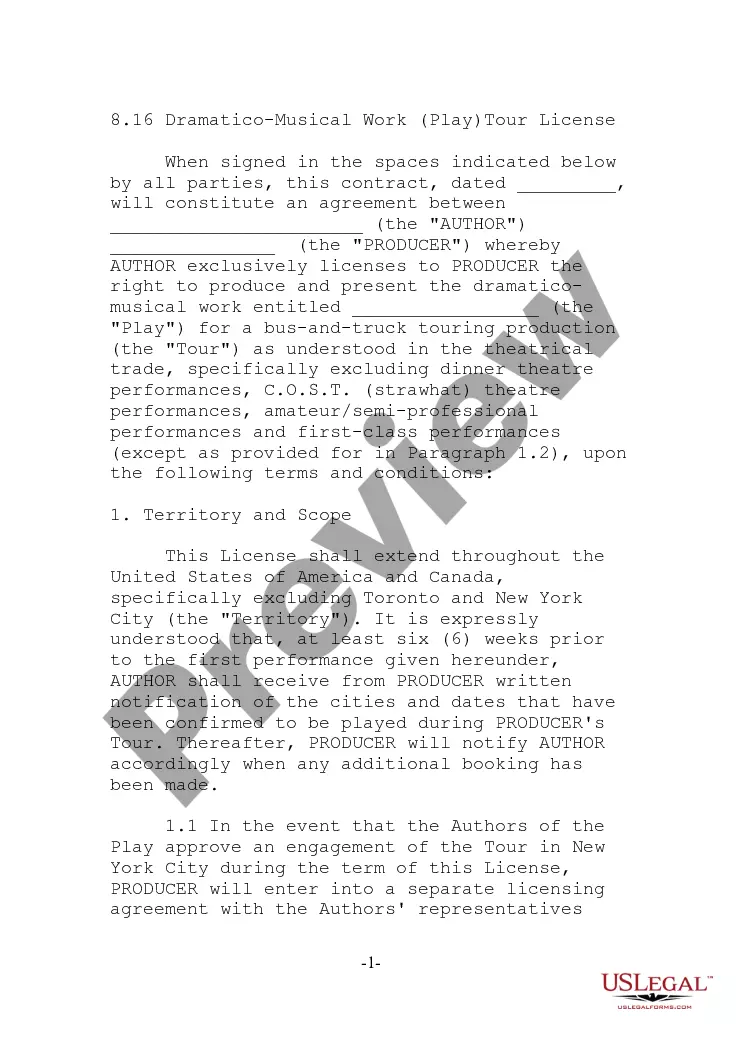
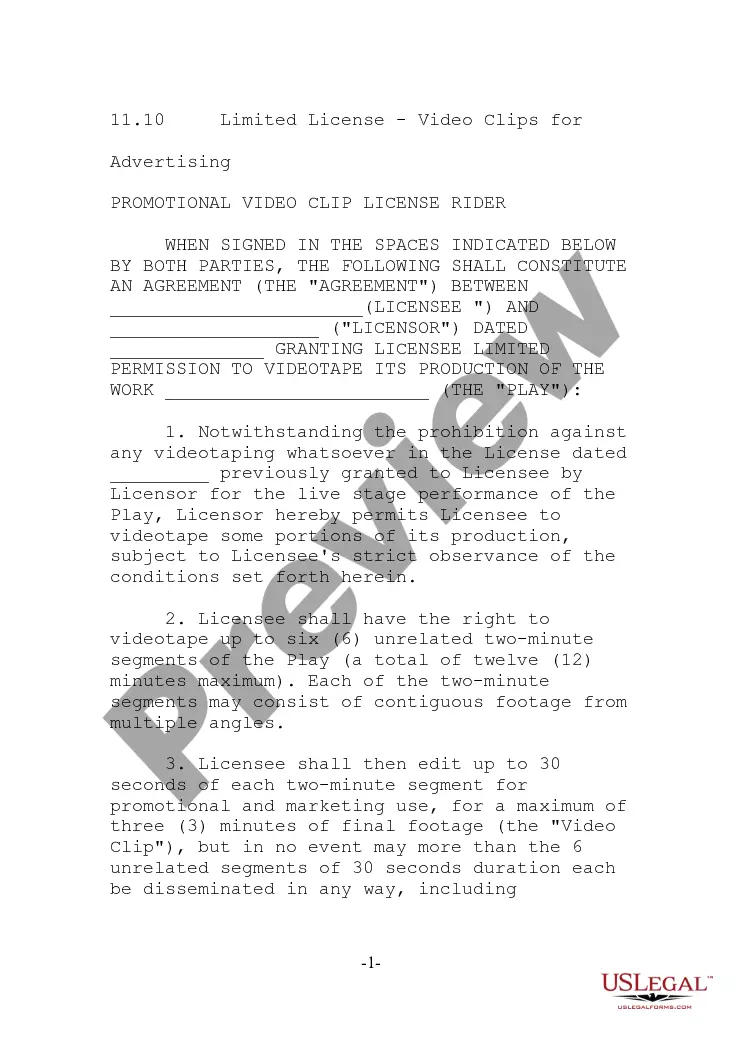
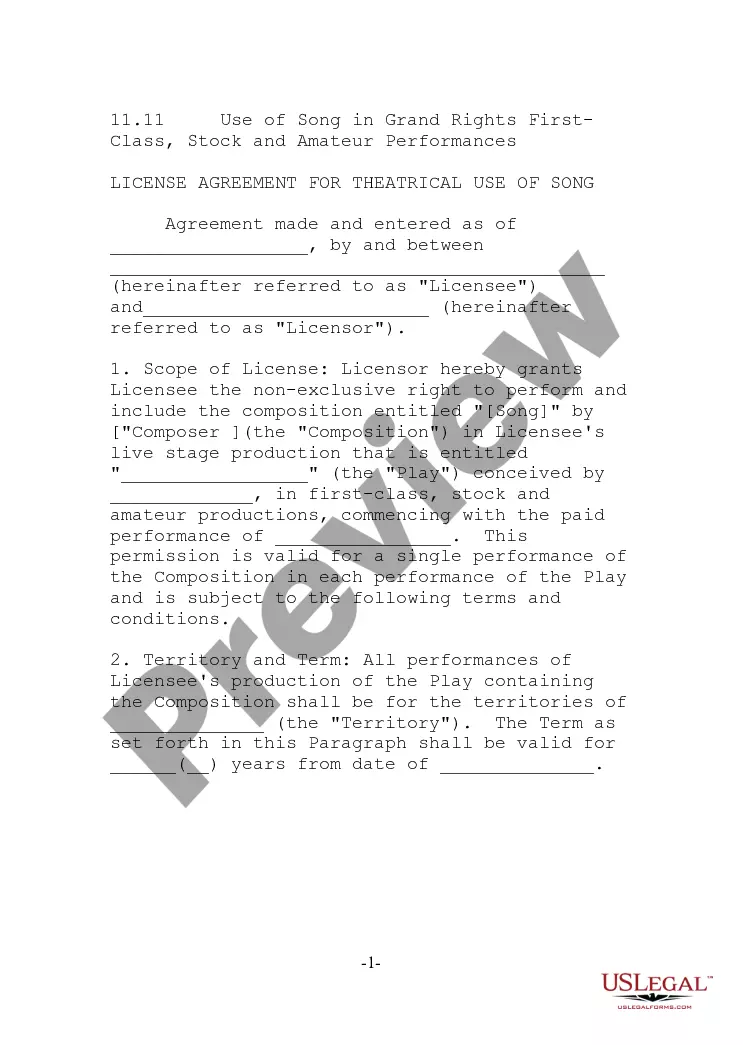
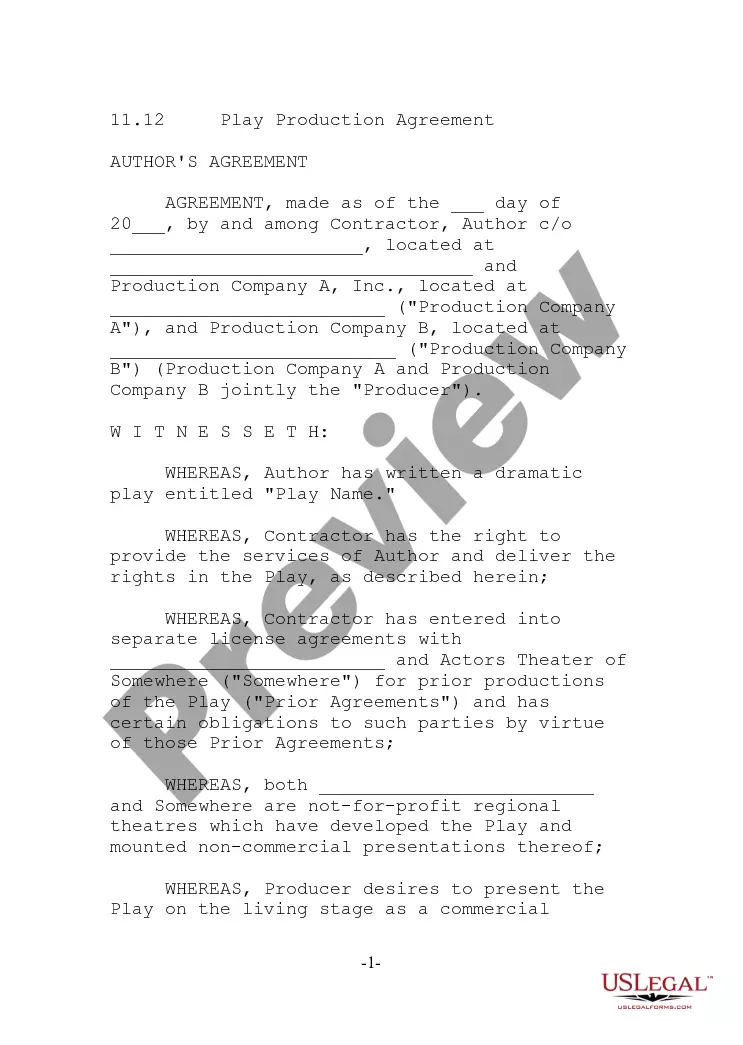
The Grand Rights Tour License for Live Stage Performance of Dramatic-Musical Works is a legal document that allows the Author to grant the Producer exclusive rights to perform their dramatic-musical work as part of a touring production. This form is essential to ensure proper permissions are granted and royalties are paid, distinguishing it from other performance agreements that may not cover touring specifics or royalty structures.
Main sections of this form
- Parties Involved: Identifies the Author and Producer who are entering into the agreement.
- Territory and Scope: Defines the geographical area where the production can take place and any exclusions.
- Term: Specifies when the agreement starts and ends, particularly in relation to performance dates.
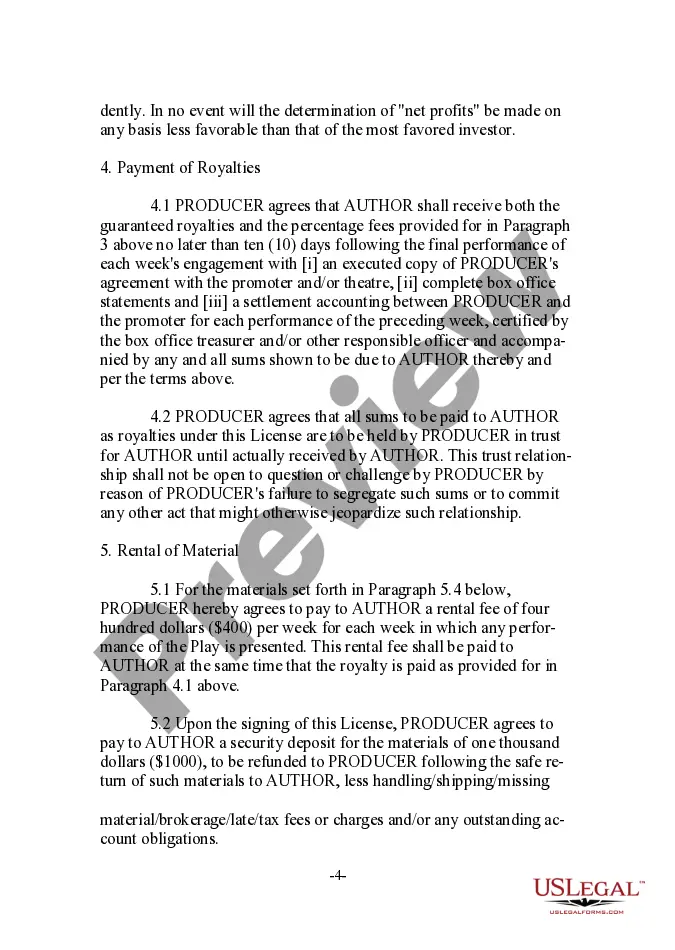
- Royalties: Details how royalties are calculated and the payment structure for the Author.
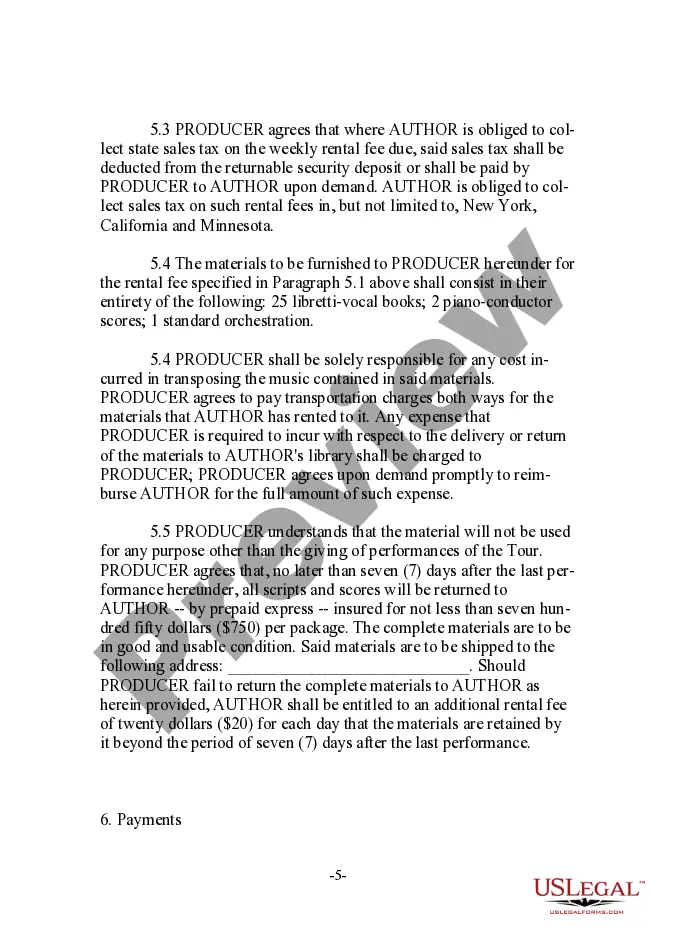
- Materials Rental Fee: Outlines the costs associated with renting necessary materials for performances.
- Warranties and Indemnities: States the responsibilities and protections for both parties against breaches of the agreement.

When to use this document
This form is used when a Producer intends to stage a live performance of a dramatic-musical work that will travel across multiple locations. It is necessary whenever the Producer seeks to obtain rights from the Author for a bus-and-truck touring production, ensuring all legalities around performances and royalties are clearly defined and protected.
Who this form is for
- Authors or creators of dramatic-musical works looking to license their intellectual property.
- Producers planning to tour a stage production in the U.S. and Canada, specifically excluding certain areas.
- Theatrical companies involved in bus-and-truck touring of live performances.
Completing this form step by step
- Identify the parties involved by entering the names of the Author and Producer.
- Specify the title of the dramatic-musical work to be licensed.
- Fill in the dates regarding the start and anticipated end of the tour.
- Complete royalty terms, including the guarantee amounts and percentage shares.
- Sign the form to validate the agreement by both parties.
Notarization guidance
Notarization is not commonly needed for this form. However, certain documents or local rules may make it necessary. Our notarization service, powered by Notarize, allows you to finalize it securely online anytime, day or night.
Get your form ready online
Our built-in tools help you complete, sign, share, and store your documents in one place.
Make edits, fill in missing information, and update formatting in US Legal Forms—just like you would in MS Word.
Download a copy, print it, send it by email, or mail it via USPS—whatever works best for your next step.
Sign and collect signatures with our SignNow integration. Send to multiple recipients, set reminders, and more. Go Premium to unlock E-Sign.
If this form requires notarization, complete it online through a secure video call—no need to meet a notary in person or wait for an appointment.
We protect your documents and personal data by following strict security and privacy standards.

Make edits, fill in missing information, and update formatting in US Legal Forms—just like you would in MS Word.

Download a copy, print it, send it by email, or mail it via USPS—whatever works best for your next step.

Sign and collect signatures with our SignNow integration. Send to multiple recipients, set reminders, and more. Go Premium to unlock E-Sign.

If this form requires notarization, complete it online through a secure video call—no need to meet a notary in person or wait for an appointment.

We protect your documents and personal data by following strict security and privacy standards.
Mistakes to watch out for
- Failing to clearly define the territory and scope of the license.
- Not specifying the correct dates for the term of the license.
- Overlooking important sections related to royalties and payments.
- Neglecting to provide accurate contact information for both parties.
Advantages of online completion
- Easy access to customizable legal templates that can be adapted to fit specific needs.
- Immediate download options to expedite the licensing process.
- Reliability of attorney-reviewed content, ensuring legal compliance and reducing potential disputes.
Legal use & context
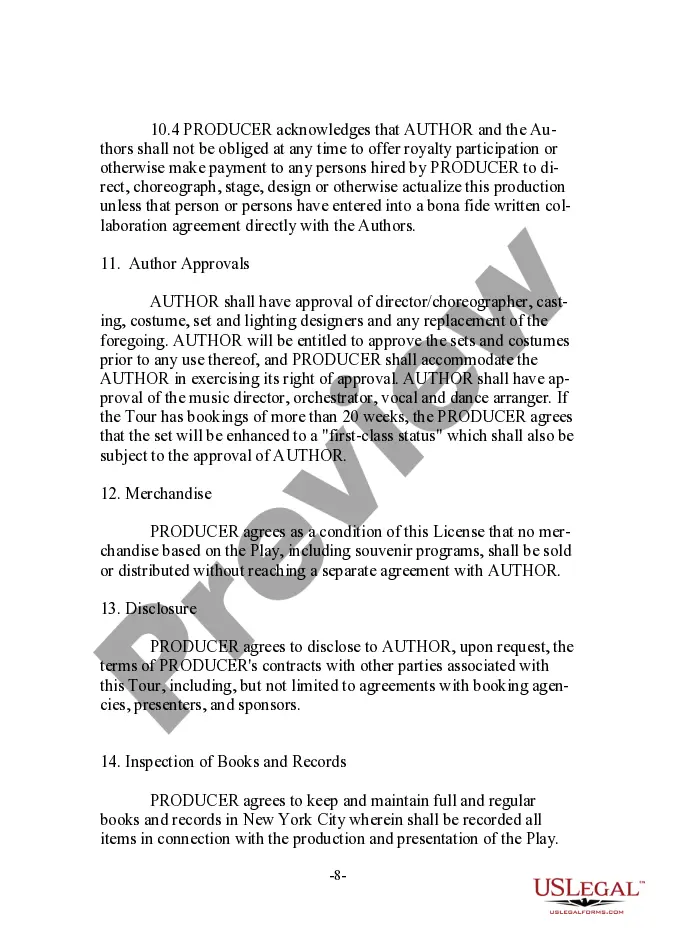
- The license granted is exclusive to the Producer for the specified tour and cannot be assigned without permission from the Author.
- Approvals from the Author are necessary for any significant changes to the performance.
- The form protects the rights of both parties regarding royalties and performance conditions.
Summary of main points
- This form is essential for legally touring a dramatic-musical work.
- Clear terms regarding territory, royalties, and rights must be established.
- Understanding and accurately completing this form can prevent disputes and financial loss.
Looking for another form?





Form popularity
FAQ
"Dramatic" (often referred to as "grand") rights in musical works are licensed by the composer or publisher, or other licensing agent for the work. Traditionally, in dramatic works, the main motivation is the telling of a story and the music serves to enhance the plot.
"Small Rights" is a term used to cover performances of individual songs in a concert or cabaret-type setting.While it is sometimes difficult to draw a distinction between dramatic and non-dramatic performances, a dramatic performance usually involves using a song to tell a story or as part of a story or plot.
The cost to license a copyrighted song can vary widely. The cost for a song from a small independent artist might be less than $100, while a track by a major artist or label can run thousands of dollars. Some licenses might also charge you a percentage of revenue instead.
The vast majority of musicals contained in these web pages are protected by Copyright. According to Copyright Law, no public performance or reading of a protected musical or any part of that musical may be given without prior authorisation from the Copyright Holder or their authorised agent.
Play Title. Producing organization. Place of performance (City, State & Theatre) Seating capacity. Ticket prices. Nonprofit or for-profit group. Number of performances. Performance dates.
The cost to license a copyrighted song can vary widely. The cost for a song from a small independent artist might be less than $100, while a track by a major artist or label can run thousands of dollars. Some licenses might also charge you a percentage of revenue instead.
1-800-952-7227 ASCAP. 212-220-3000 BMI. 615-320-0055 SESAC.
Grand rights is a type of music licensing, specifically covering the right to perform musical compositions within the context of a dramatic work. This includes stage performances such as musical theater, concert dance, and arrangements of music from a dramatic work.