Ohio Letter from Tenant to Landlord containing Notice to landlord to withdraw improper rent increase during lease
What this document covers
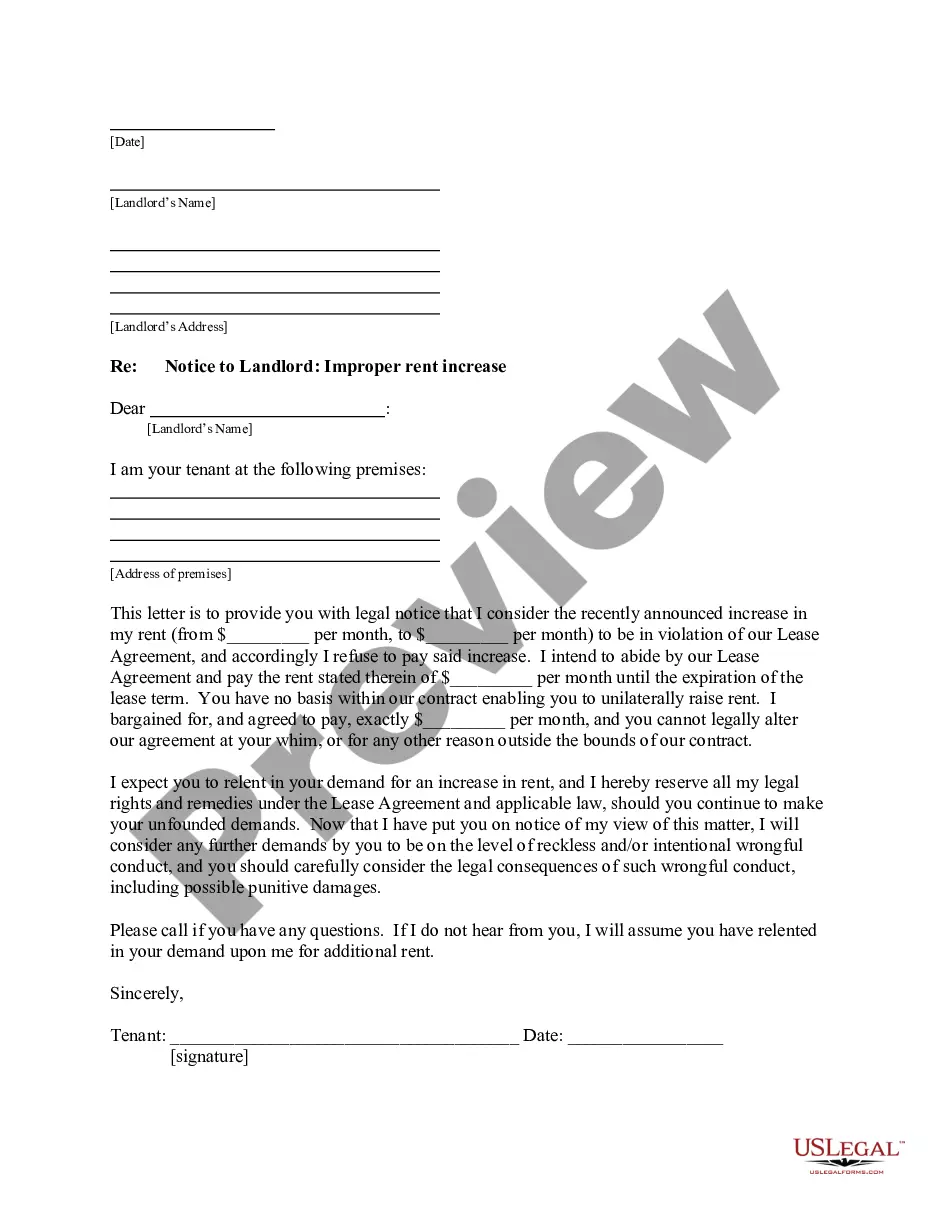
This Letter from Tenant to Landlord containing Notice to landlord to withdraw improper rent increase during lease is a formal communication from a tenant to their landlord. Its primary purpose is to contest an unwarranted rent increase and affirm the tenant's legal rights under the lease agreement. This form helps tenants maintain a clear record of their request to rescind the increase while also serving as a protective measure against potential disputes.
Key components of this form
- Identification of the tenant and landlord.
- A clear statement of the tenant's objection to the proposed rent increase.
- A declaration reserving the tenant's legal rights regarding the lease.
- Instructions regarding further communication and potential legal consequences.
- Signature and date fields for formal acknowledgment.
Situations where this form applies
This form should be used when a tenant receives notice of a rent increase during an ongoing lease and believes that the increase is unjustified. It serves as a formal declaration of the tenant's stance and allows them to assert their rights effectively. Utilizing this notice can be beneficial in avoiding legal disputes and ensuring that the landlord understands the tenant's position on the matter.
Who should use this form
- Tenants who have received notification of a rent increase during a lease term.
- Individuals looking to assert their legal rights under the rental agreement.
- Renters wanting to maintain a documented communication with their landlord related to rent disputes.
How to prepare this document
- Identify the parties involved: enter the full names and addresses of both the tenant and landlord.
- Specify the nature of the rent increase and why it is deemed improper.
- Include a statement reserving the tenant's legal rights regarding the matter.
- Sign and date the letter to provide a formal acknowledgment of the communication.
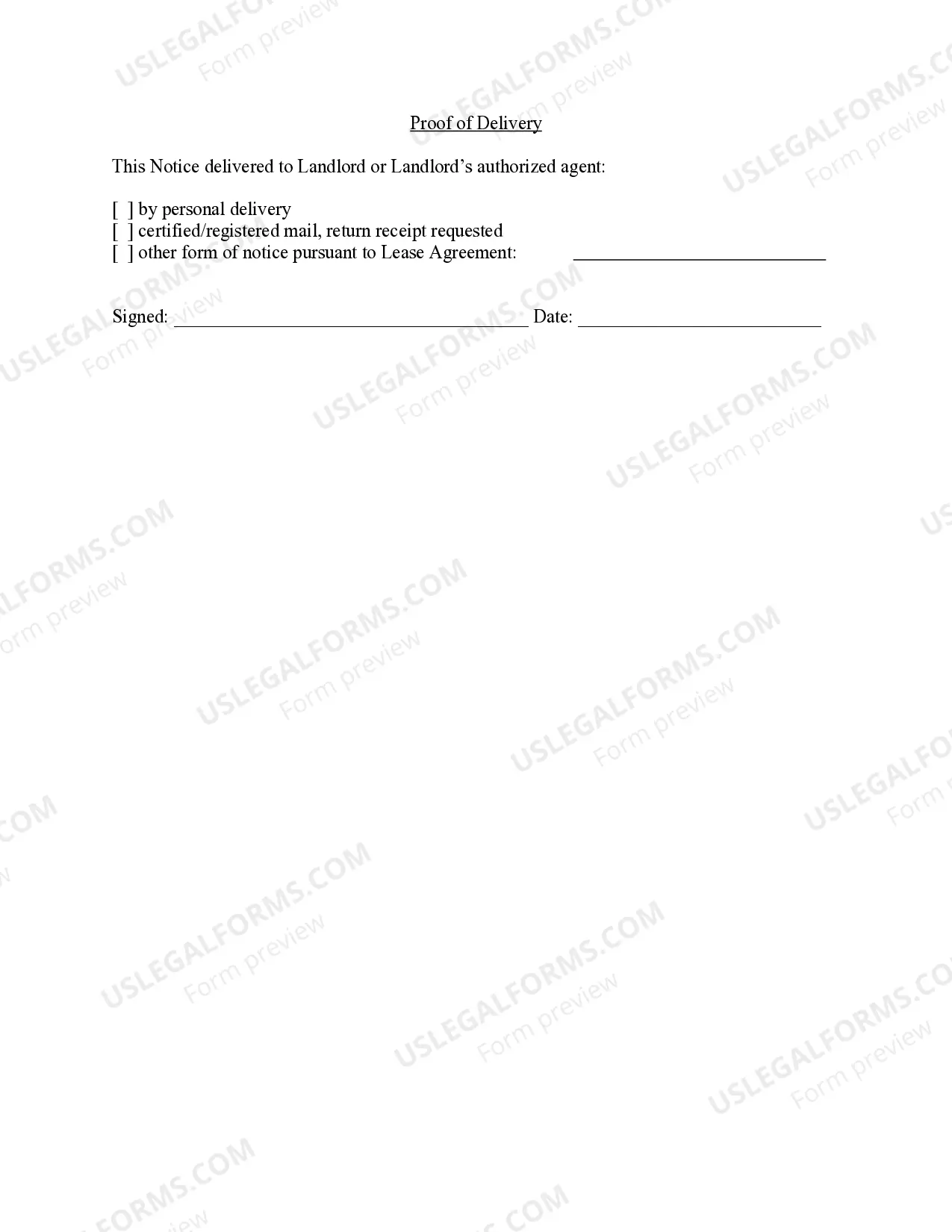
- Send the notice via an appropriate method, ensuring proof of delivery if necessary.
Is notarization required?
This form does not typically require notarization unless specified by local law. However, verifying local regulations can provide additional assurance regarding its legal standing.
Get your form ready online
Our built-in tools help you complete, sign, share, and store your documents in one place.
Make edits, fill in missing information, and update formatting in US Legal Forms—just like you would in MS Word.
Download a copy, print it, send it by email, or mail it via USPS—whatever works best for your next step.
Sign and collect signatures with our SignNow integration. Send to multiple recipients, set reminders, and more. Go Premium to unlock E-Sign.
If this form requires notarization, complete it online through a secure video call—no need to meet a notary in person or wait for an appointment.
We protect your documents and personal data by following strict security and privacy standards.

Make edits, fill in missing information, and update formatting in US Legal Forms—just like you would in MS Word.

Download a copy, print it, send it by email, or mail it via USPS—whatever works best for your next step.

Sign and collect signatures with our SignNow integration. Send to multiple recipients, set reminders, and more. Go Premium to unlock E-Sign.

If this form requires notarization, complete it online through a secure video call—no need to meet a notary in person or wait for an appointment.

We protect your documents and personal data by following strict security and privacy standards.
Avoid these common issues
- Failing to provide clear details regarding the contested rent increase.
- Not reserving legal rights explicitly, which may weaken the tenant's stance.
- Neglecting to sign and date the letter, making it less formal.
Why use this form online
- Instant access to a reliable legal form that is easy to fill out and download.
- Option to customize according to your specific circumstances and needs.
- Ensures compliance with typical legal standards and requirements.
Legal use & context
- The letter serves as a formal record of the tenant's dispute against an improper rent increase.
- It may enhance the tenant's legal standing if disputes arise in the future.
- Using this notice can help prevent potential retaliatory actions from the landlord.
Key takeaways
- The form enables tenants to contest unjust rent increases formally.
- It serves to protect the tenant's legal rights under the lease agreement.
- Proper completion and delivery of the notice can prevent potential disputes.
Looking for another form?
Form popularity
FAQ
Tenant's name. Property address. Landlord name and contact information. Date the letter is written. Date the rent increase will take effect. Amount of rent increase. Current cost of rent.
There is no rent control in the state of Ohio. A landlord can raise the rent any amount as long as tenants are given notice before they sign the lease agreement or any renewal agreement.
The rental property address, including unit number (if applicable) The names of all tenants on the lease agreement. The date the lease violation notice was written. The specific reason for the notice. The time and date the violation occurred (if applicable)
To end a month-to-month tenancy, a landlord must give a tenant at least a 30-day written notice to move. The notice must state the date by which the tenant needs to be out of the rental unit.
Essentially, this means your landlord can only raise rents if they're in line with the current market. The AST often has a section suggesting how much rents could increase by. The percentage is typically between 0.5 and 5%, with market rents expected to be somewhere in that bracket after a 12-month AST comes to an end.
Remember you're a business. Do your research. Raise the rent all at once or incrementally. Don't negotiate or ask tenants what they think a fair rent increase would be. Be courteous and firm. Find a template you like. Send a formal letter by certified mail. Give the tenant notice.
I am giving 1 month's notice to end my tenancy, as required by law. I will be leaving the property on (date xxxxx). I would like you to be at the property on the day I move out to check the premises and for me to return the keys. I also need you to return my tenancy deposit of (state amount).
Tenants in the state of Ohio are granted certain rights by the state's landlord-tenant code, including the right to fair housing, the right to a return of the security deposit, and the right to notice before landlord entry.
In most states, a landlord must give tenants notice at least 30 days before they'll enforce a rent increase. However, in other states like California, the notice can increase to 60 days' notice if the increase is more than 10% of the current rent rate.